
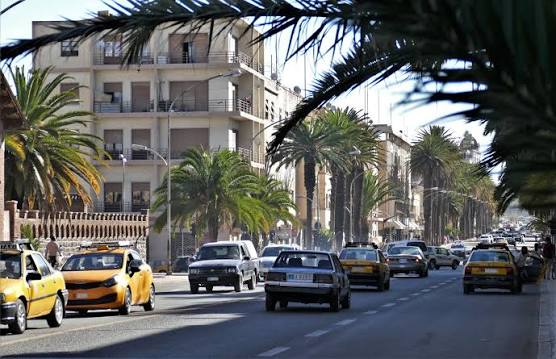
A Capital That Time Genuinely Forgot
Asmara was rebuilt at scale by Italian colonial planners after 1935, who applied the full range of contemporary European architectural styles, rationalist, Art Deco, futurist, to a highland African capital with more freedom and speed than they had at home. Over 400 buildings from that decade survive close to unaltered, which is what earned the historic core its 2017 UNESCO World Heritage listing as "Asmara: A Modernist City of Africa," the first entire modernist city ever inscribed in full. Wide palm-lined boulevards, Art Deco cinemas still showing films, and cafes serving espresso the way Rome did before the war: the effect is genuinely disorienting in the best way, a European interwar streetscape at 2,300 meters in the Horn of Africa.
What makes Asmara rare rather than merely pretty is how little it has to compete with. Independent tourism here is a fraction of what nearby Ethiopia receives, so the streets, cinemas and cathedrals are not staged for visitors; they are simply still in use, by a city of a few hundred thousand people getting on with an ordinary day around them.
The honest complications
Asmara is not a destination that rewards spontaneity. There are no ATMs or working foreign credit cards anywhere in the city, so every Nakfa you spend has to be cash you brought and exchanged at a state Himbol bureau. Internet access, including hotel wifi, is slow and unreliable by any international standard. Photographing government or military buildings is illegal and enforced, not a suggestion, and it is worth learning to recognize which buildings those are before you start taking pictures freely. None of this makes the city unsafe to walk, but it does mean Asmara asks more patience of a visitor than almost anywhere else this beautiful.
One walkable core, and the older quarters around it
Asmara's UNESCO-listed area covers the planned Italian-era center, Maekel Ketema, but the full city includes older neighborhoods that predate the colonial building boom and newer ones that came after independence. For a first visit, almost everything worth seeing sits within the historic core.
Maekel Ketema (Downtown)
The planned Italian-era center, built out through the late 1930s along Harnet Avenue and the streets that branch off it. Nearly every landmark building, cinema and cathedral in this guide sits inside this compact, flat, walkable district.
Abbashaul & Arbate Asmara
Named specifically in Asmara's UNESCO listing alongside the modernist core, these are the city's older, unplanned neighborhoods that existed before Italian rule and give a useful contrast to the geometric colonial-era streets nearby.
Sembel
A newer residential district with more modern housing, of little interest to a short visit but a reminder that Asmara, like any capital, has grown well beyond its 1930s footprint.
A short, reliable list rather than a long one
Asmara's hotel scene is small by the standards of most capital cities, and reliability matters more here than elsewhere given how little else there is to fall back on if a booking goes wrong. These three cover the range most visitors need.
Albergo Italia, at 13 Nakfa Avenue, is Asmara's classic colonial-era hotel, its halls and rooms still carrying the visible history of the building, and it sits just 7 km from Asmara International Airport, making it a practical first and last-night choice. Crystal Hotel, on Bihat Street, is a modern business-style option with air-conditioned rooms, a minibar, a 24-hour front desk and an airport shuttle available for $50 per vehicle one way, with rates starting around $99 a night. Sunshine Hotel, on Bidho Street, is a 3.5-star business-friendly property with free wifi, free parking, a business center and included breakfast, from around $91 a night, and is a dependable mid-range base within easy walking distance of the center.
Where Eritrean stews and Italian holdovers share a menu
Asmara's food scene runs on two parallel traditions that constantly overlap: Eritrean stews and injera on one side, and genuine Italian cooking, pasta, pizza, espresso, left behind by fifty years of colonial rule on the other. Both are usually available at the same table.
Ghibabo Restaurant and Pizzeria
One of Asmara's most talked-about dining rooms, serving injera piled with traditional stews alongside classic Italian pizza on the same menu, popular with both well-off locals and visiting travelers.
Mar Rossa & Ghirmay
Mar Rossa is a well-regarded address for straightforward Eritrean cooking, while Ghirmay serves traditional dishes inside a converted Eritrean house, a more intimate, domestic setting than the average restaurant dining room.
Bar Zilli
An Art Deco grill and bar on Harnet Avenue dating to 1930, one of the city's most recognizable vintage interiors, serving Eritrean dishes in a room that has barely changed its look since the late colonial period.
Cinema Roma's cappuccino
Cinema Roma is a working cinema and a genuine Italian-era relic, and the espresso bar attached to it is the classic spot for the cappuccino break that punctuates an Asmara day the way it would in an Italian town.
A UNESCO city best seen on foot
Asmara rewards unhurried walking more than any checklist of sights. The city's UNESCO value is cumulative, block after block of intact 1930s architecture, so the best approach is to pick a direction from Harnet Avenue and let the buildings do the work.
The Fiat Tagliero building
The crown of Asmara's modernist architecture and the one building nearly every visitor comes specifically to see: a 1938 former service station shaped like an aeroplane, its concrete wings cantilevered roughly 30 meters without visible support, an engineering feat that reportedly worried the building inspector enough that the architect had workers stand under it during construction to prove his confidence in it. Still a functioning fuel station today, seen easily from the street.
Cinema Impero and Cinema Roma
Cinema Impero, built in 1937, is Asmara's standout Art Deco cinema, its geometric facade and interior among the best-preserved examples of colonial-era entertainment architecture anywhere in Africa. A few minutes away, Cinema Roma is a smaller, still-operating cinema whose attached espresso bar makes it as much a coffee stop as a place to catch a film.
Three faiths, one street corner
From the steps of the Enda Mariam Orthodox Cathedral, built in 1938 on Arbate Asmara Street, you can see the bell tower of the Catholic Cathedral of Our Lady of the Rosary and the minaret of the Great Mosque, designed by Guido Ferrazza and completed in 1938 with an interior glass dome, all within view of one another. Together the three buildings are usually described as Asmara's three defining edifices, a visible, everyday example of the religious coexistence that shapes the city.
Medebar Market
Asmara's open-air recycling market, where old tires become sandals, flattened corrugated iron becomes buckets, and Italian olive tins become coffee pots and scoops. The southeastern section, devoted to grinding and selling spices, is worth the extra few minutes on its own.
The National Museum of Eritrea
A modest but useful stop for context on the country's history and cultures, with an entry fee of around 15 Nakfa, one of the cheapest paid attractions anywhere in the city.
One, two or three days on foot
Asmara's compact core means even one focused day covers the essentials, though three days lets the city's pace, and its cappuccino habit, properly set in.
- Morning
Harnet Avenue on foot. Cinema Impero, the Catholic Cathedral, the Great Mosque and Enda Mariam Cathedral, all within a short walk of each other.
- Midday
Lunch at Ghibabo. Injera and stews, or the Italian side of the menu if you'd rather.
- Afternoon
The Fiat Tagliero building and Medebar Market. The aeroplane-shaped station first, then the recycling market's spice section.
- Evening
Cappuccino at Cinema Roma, dinner at Bar Zilli. Coffee first, then the 1930s dining room on Harnet Avenue.
- Day 1
The one-day route above: Harnet Avenue's landmarks, Fiat Tagliero, Medebar Market, Cinema Roma and Bar Zilli.
- Day 2
National Museum and a slower pace. The museum in the morning, then Ghirmay or Mar Rossa for a quieter, more local lunch, and an unhurried second walk through Abbashaul and Arbate Asmara's older streets.
- Days 1-2
The two-day route above, at a gentler pace.
- Day 3
Day trip to Keren. The Monday livestock market if timing allows, the baobab shrine of St. Mariam Dearit, and the war cemeteries, about two hours each way (permit required in advance).
Small, flat and walkable, with a cash-only catch
Asmara International Airport (ASM) sits about 7 km from the city center, close enough that even budget hotels like Albergo Italia can arrange a short transfer. Turkish Airlines, Etihad Airways and Flydubai are the main international operators, alongside Egyptair from Cairo; there are no direct flights from the US or Western Europe, so most routings connect through Istanbul, Abu Dhabi, Dubai or Cairo.
Once in the city, the historic core is genuinely walkable: flat, compact and easy to navigate on foot in a day. Taxis cover longer distances or late-night trips cheaply. The one constraint that shapes everything else is money: there are no functioning ATMs or credit card facilities for foreign cards anywhere in Asmara, so bring enough USD or EUR cash for your entire stay and change it only at a state Himbol exchange bureau, keeping the receipts.
Inexpensive once you're here, cash-dependent throughout
Asmara is genuinely affordable by the numbers, priced in Nakfa at an official rate of 15 ERN to 1 USD, with hotels, food and local transport all inexpensive by international standards. The real budgeting challenge is logistical: carrying enough cash for the whole visit, since there is no way to withdraw more once you arrive.
- Simple guesthouse room
- Eritrean meals at local restaurants
- Walking plus the occasional taxi
- Crystal Hotel or Sunshine Hotel
- Restaurant meals at Ghibabo or Bar Zilli
- Airport transfer and taxis
- Albergo Italia's best rooms
- Private driver for Keren or Massawa
- Buffer cash for permits and extras
Calm streets, strict rules about cameras
Asmara is a genuinely calm city to walk, day or night, with little of the visible street crime found in many larger African capitals; this lines up with the US State Department's Level 2, Exercise Increased Caution rating for Eritrea overall, one step above the baseline and well short of a Do Not Travel warning. The concerns behind that rating are bureaucratic and political rather than personal safety on the street: travel restrictions, limited consular assistance, and the risk of wrongful detention for anyone who runs into trouble with the permit system or the photography rules.
The one rule that actually catches visitors: never photograph government buildings, military sites, the airport or anything resembling official infrastructure. This is enforced, with confiscation, detention or interrogation as genuine possible outcomes, not a theoretical warning. Ask before photographing people. Emergency numbers are Police 113, Ambulance 114, Fire 116, and 112 from a mobile phone; the US Embassy, at 179 Alaa Street, takes emergency calls at +291-1-12-00-04 at any hour.
Two trips worth the permit paperwork
Both trips below require a Ministry of Tourism travel permit, since they sit more than 25 km outside Asmara; apply in person a day or more before you plan to travel.
Keren
Eritrea's second-largest urban center, known for the baobab-tree shrine of St. Mariam Dearit, visited by both Christian and Muslim pilgrims, and a Monday livestock market trading camels, cattle and goats that has changed little in generations. Keren's Commonwealth and Italian war cemeteries and a wartime tank graveyard mark its role in past conflicts.
Massawa
The drive down from Asmara's 2,300 meters to sea level passes through three distinct climate zones in a single journey, one of the more dramatic short road trips in the region. Massawa's old town mixes Ottoman, Egyptian and Italian colonial architecture around a historic harbor, with the Dahlak Archipelago's islands reachable by boat for those with extra time.
Asmara FAQ
Is Asmara safe for tourists?
Yes, in the everyday sense: violent crime against visitors is rare and the city feels calm to walk. The real friction is bureaucratic, permits and cash, plus a strict ban on photographing government and military buildings.
How many days do I need in Asmara?
Two to three days covers the UNESCO core properly: one for the central boulevards and cinemas, one for the Fiat Tagliero building, markets and cathedrals, and a third if you add the National Museum or a day trip to Keren.
How much does Asmara cost per day?
Budget travelers manage on $35-55 a day; mid-range with a good hotel and a driver for day trips runs $90-140. There are no ATMs, so bring all the cash your visit needs.
When is the best time to visit Asmara?
October to March, the dry season, when highland Asmara sits at a comfortable 24-27°C by day and cools noticeably at night. It rarely feels uncomfortably hot at any time of year thanks to the 2,300-meter altitude.
What is Asmara famous for?
Its intact collection of 1930s Italian modernist and Art Deco buildings, inscribed by UNESCO in 2017 as the first entire modernist city on the World Heritage List, including the aeroplane-shaped Fiat Tagliero building and Cinema Impero.
Can I pay with a credit card in Asmara?
No. There are no functioning ATMs or credit card facilities for foreign cards anywhere in the city. Bring enough USD or EUR cash for your whole stay and change it only at a Himbol bureau.
Do I need a permit to visit Asmara itself?
No, only your visa is needed to be in Asmara. A separate permit from the Ministry of Tourism is required only for trips more than 25 km outside the city, including Keren and Massawa.
Is Asmara walkable?
Yes. The UNESCO-listed core is compact and flat enough to cover on foot in a day, with Harnet Avenue as the main spine connecting most of the landmark buildings, cinemas and cafes.
What should I eat in Asmara?
Eritrean stews like zigni and tsebhi with injera, plus genuine Italian holdovers: espresso, cappuccino and pasta, often on the same menu at restaurants like Ghibabo.
What Stays With You
Asmara does not announce itself the way most capital cities do. There is no skyline, no obvious monument on every postcard, just block after block of a very specific decade, held in place by decades of isolation that kept the developers, the chain hotels and the tour buses away. Standing under the wings of the Fiat Tagliero building, or hearing three different calls to prayer and bells within one short walk, is the kind of experience that does not photograph as well as it feels to be there.
Have your cash counted, your permit sorted if you're heading beyond the city, and go looking at Harnet Avenue with no particular schedule. That is how Asmara is actually meant to be seen.