
What You're Actually Getting Into
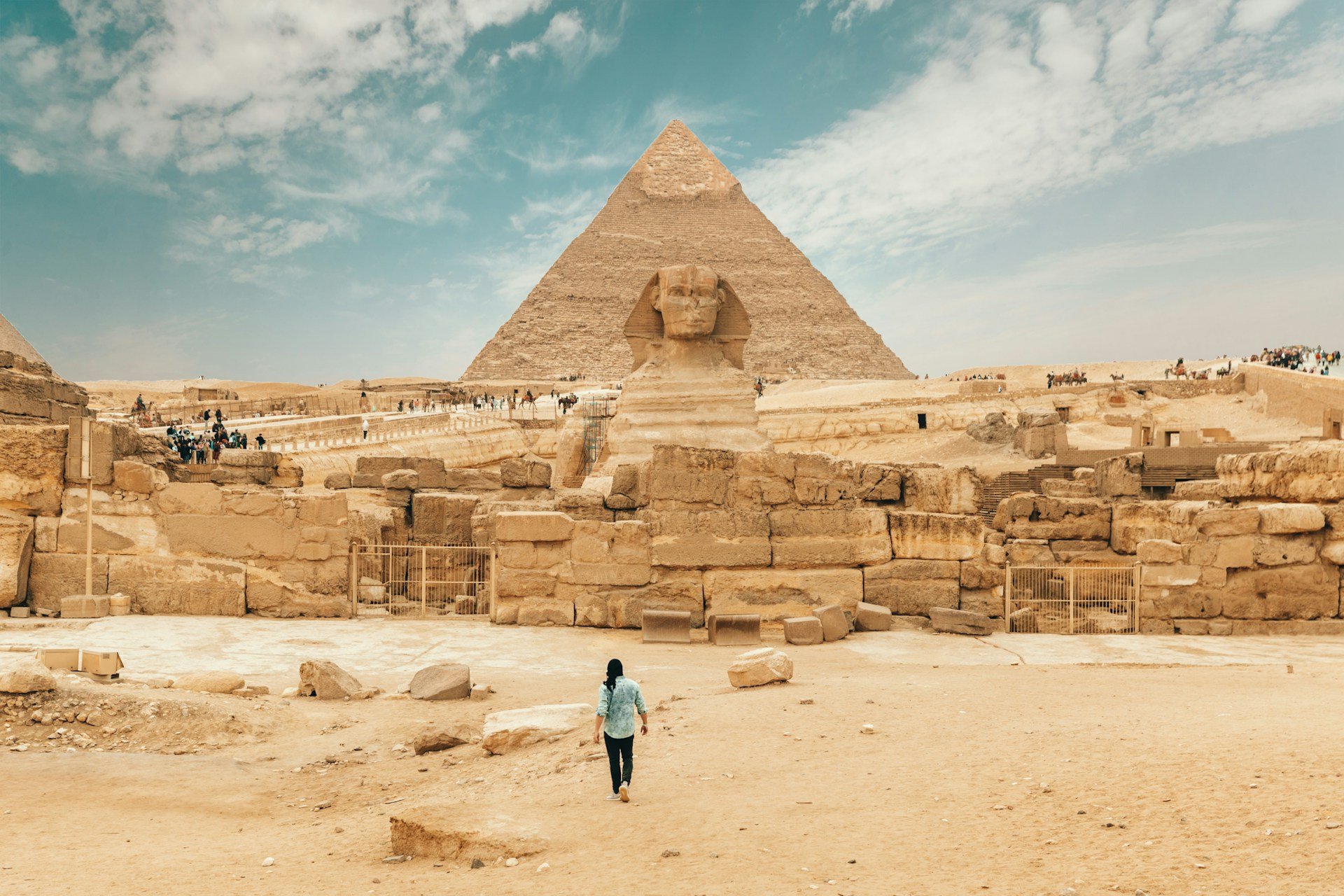
Egypt is the rare destination that gets billed as a bucket-list trip and then actually delivers on the billing, repeatedly, for a full week or two, without the letdown that usually sets in by day three. The Pyramids of Giza are 4,500 years old and still the largest stone structures most travelers will ever stand next to. The temples along the Nile between Luxor and Aswan carry painted hieroglyphs that have kept their color for three millennia. And in 2025 the country opened the Grand Egyptian Museum, a purpose-built home for the complete Tutankhamun collection that had never been displayed together before, next to the pyramids it was built to complement.
It is also, right now, one of the best-value major trips on the planet. The Egyptian pound has weakened sharply against the dollar and euro in recent years, trading near 48-50 to the dollar in mid-2026, which means hotels, guides, drivers and food all cost a fraction of what comparable quality runs in Europe. A private Egyptologist guide for a full day in Luxor costs less than a single museum-adjacent lunch in Rome.
The honest complications
Egypt is not a relaxed, wander-and-discover destination in the way Albania or Portugal are: the major sites are intensely touristed, hassle from unofficial guides, papyrus sellers and camel-ride touts is constant at Giza and Luxor, and navigating it well genuinely benefits from a licensed guide or driver rather than going fully independent. Cairo's traffic is some of the most chaotic in the world and crossing a street is a genuine skill. The US State Department rates Egypt Level 2 (exercise increased caution) with a Do Not Travel warning for Northern and Middle Sinai and parts of the Western Desert, areas that don't intersect with any standard itinerary but are worth knowing about before you look at a map. None of this changes the fact that the sites themselves are extraordinary; it just means the trip runs more smoothly with some structure around it than as a fully improvised backpacking route.
A History Worth Knowing
Egypt's Pharaonic civilization ran for roughly 3,000 years before Cleopatra, longer than the gap between Cleopatra and today. Persians, Greeks, Romans, Arabs, Ottomans and the British all ruled the Nile Valley in turn, each leaving a layer still visible on the ground: pyramids from the Old Kingdom, temples from the New Kingdom, mosques from the Fatimids and Mamluks, and colonial-era boulevards from the 19th century. The short version of how the country you're visiting got here.
- c. 3100 BCE
Unification. Upper and Lower Egypt are unified under Narmer, the first pharaoh, beginning three millennia of dynastic rule.
- c. 2560 BCE
The Great Pyramid. Built at Giza under Khufu during the Old Kingdom, and still the largest of the three main pyramids on the plateau.
- 30 BCE
Rome arrives. Cleopatra VII dies and Egypt becomes a Roman, then Byzantine, province for the next six centuries.
- 641 CE
Islamic conquest. Arab armies take Egypt from the Byzantines; the region gradually Arabizes and Islamizes over the following centuries.
- 969 CE
Cairo founded. The Fatimid dynasty establishes al-Qahira ("the victorious"), the walled city core that is now Islamic Cairo.
- 1517-1798
Ottoman rule. Egypt becomes an Ottoman province, governed locally by the Mamluks, a military caste, under nominal Ottoman authority.
- 1869
The Suez Canal. Opens under Khedive Ismail, transforming Egypt's strategic importance and deepening European financial control.
- 1882-1952
British occupation. Britain occupies Egypt in 1882; nominal independence follows in 1922 under a monarchy that Britain still effectively controls.
- 1952
The Free Officers revolution. Gamal Abdel Nasser and fellow officers overthrow the monarchy; Egypt becomes a republic.
- 2011
Tahrir Square. Mass protests during the Arab Spring end Hosni Mubarak's three-decade presidency.
Read the full history: pharaohs, the Suez Canal, Nasser and the modern republic
Ancient Egyptian history is conventionally divided into the Old, Middle and New Kingdoms, separated by intermediate periods of fragmentation. The Old Kingdom (c. 2686-2181 BCE) built the Giza pyramids; the Middle Kingdom restored order after collapse; the New Kingdom (c. 1550-1070 BCE), the era of Tutankhamun, Ramesses II and the Valley of the Kings, was Egypt's imperial peak, projecting power into the Levant and Nubia. After the New Kingdom, Egypt was ruled successively by Libyans, Nubians, Persians, and finally Alexander the Great's Ptolemaic dynasty, ending with Cleopatra VII's death in 30 BCE.
Roman and then Byzantine rule lasted until the Arab conquest of 641 CE. The Fatimid dynasty founded Cairo in 969 CE as their new capital, and successive Islamic dynasties, Ayyubids under Saladin, then Mamluks, built the mosques, madrassas and the Citadel that still define Islamic Cairo's skyline. The Ottomans absorbed Egypt in 1517 but ruled loosely through the Mamluks, who retained real power for another three centuries.
The 19th century brought Muhammad Ali, an Ottoman-Albanian officer who seized control in 1805 and modernized Egypt's military and economy, founding a dynasty that ruled until 1952. His descendant Ismail opened the Suez Canal in 1869 but bankrupted the country doing it, opening the door to British financial control and then, in 1882, military occupation. Formal independence came in 1922, but Britain retained real influence until the 1952 Free Officers revolution led by Gamal Abdel Nasser abolished the monarchy.
Nasser nationalized the Suez Canal in 1956, triggering an international crisis, and became the leading figure of pan-Arab nationalism. Egypt fought and lost the Sinai Peninsula to Israel in the 1967 Six-Day War, then fought the 1973 October War to partially reverse that outcome; President Anwar Sadat signed the Camp David Accords with Israel in 1979, returning Sinai in exchange for peace, a move that cost him his life in 1981. Hosni Mubarak then governed for three decades until the 2011 Tahrir Square revolution ended his presidency. Egypt today is led by President Abdel Fattah el-Sisi, in office since 2014, with tourism a central pillar of the government's economic strategy, visible in major recent investments like the Grand Egyptian Museum.
Top Destinations
Egypt's tourist geography runs along the Nile and the two seas that flank it: Cairo and Giza in the north, Luxor and Aswan strung along the river to the south, and the Red Sea coast to the east for the beach-and-diving half of a trip. Alexandria adds a Mediterranean, distinctly un-Pharaonic counterpoint. A week covers Cairo plus one more zone well; two weeks covers the full Nile route plus a few days of saltwater recovery.
Cairo, Giza and the pyramids
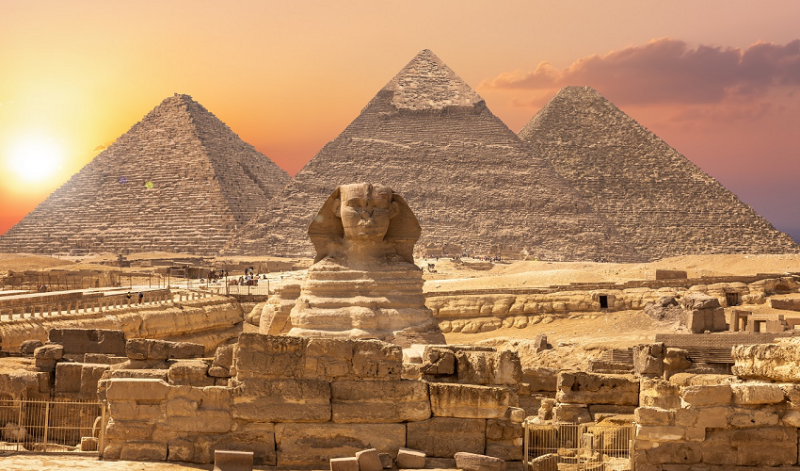
Cairo is a city of roughly 20 million people spread along the Nile, and the pyramids sit right at its western edge in Giza rather than out in some remote desert. The Grand Egyptian Museum, opened in 2025 next to the plateau, holds the complete Tutankhamun collection displayed together for the first time, alongside Khufu's reassembled solar boat. The original Egyptian Museum on Tahrir Square, open since 1902 and confirmed to stay open through at least 2030, still holds more than 170,000 artifacts including the Narmer Palette and the Tanis royal treasures. Between the two museums and the plateau itself, Cairo and Giza alone justify three or four days.
Luxor, the world's largest open-air museum
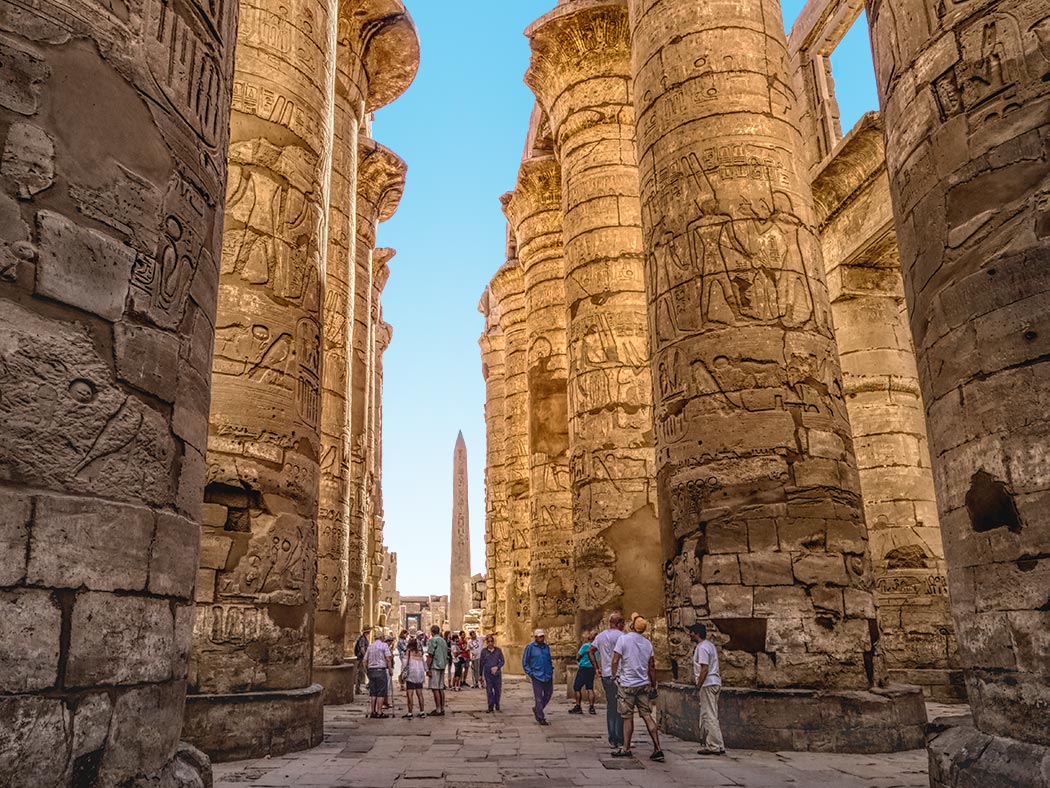
Luxor sits on the site of ancient Thebes, New Kingdom Egypt's capital, and the density of major monuments in a single small city is unmatched anywhere on earth. Karnak Temple, the largest religious complex ever built, and Luxor Temple sit on the east bank; the Valley of the Kings, where Tutankhamun's tomb was found intact in 1922, and the terraced Temple of Hatshepsut sit on the west bank across the river. A standard Valley of the Kings ticket covering three tombs runs about EGP 750 (~$14) for foreign adults; adding Tutankhamun's tomb specifically brings the total to about EGP 1,450 (~$27). Most visitors reach Luxor either by short domestic flight from Cairo or as the starting or ending point of a Nile cruise.
Aswan, Abu Simbel and a Nile cruise
Aswan is Egypt's Nubian south, calmer and more African in feel than Cairo, with the granite quarries that supplied ancient Egypt's obelisks and the Nile at its most scenic, dotted with feluccas and Elephantine Island. Abu Simbel, Ramesses II's colossal rock temple relocated in the 1960s to escape the rising waters of Lake Nasser, is a near-mandatory add-on, reachable by a roughly 3-hour bus or a short flight from Aswan (about $95 by bus, $195 by plane). Most visitors connect Luxor and Aswan by a 3 to 4 night Nile cruise, which also stops at Edfu and Kom Ombo temples along the way, from roughly $380-600 per person on a well-rated 5-star boat depending on season.
Hurghada, Sharm El Sheikh & the reefs
The Red Sea coast is where an Egypt trip goes to decompress after the museums and temples: warm, clear water, coral reefs close to shore, and resort infrastructure built specifically for European package tourism. Hurghada and Sharm El Sheikh are the two main hubs, both with direct international flights, and Dahab further up the Sinai coast has a slower, more backpacker-oriented pace built around its house reef. Diving conditions are best March to May and September to November, when visibility and water temperature both peak without the highest summer heat; July-August and December-February are the busiest, most expensive weeks.
Alexandria, the Mediterranean city
Alexandria is a different Egypt entirely: a Mediterranean port city founded by Alexander the Great, with a corniche, seafood restaurants and a faded belle-epoque grandeur rather than desert monuments. The ancient Library of Alexandria is gone, but the Bibliotheca Alexandrina, a striking modern reinterpretation opened in 2002, stands roughly where it once did. The 15th-century Citadel of Qaitbay occupies the site of the vanished Lighthouse of Alexandria, one of the original Seven Wonders. Reachable from Cairo by train in about 2-2.5 hours, making it an easy full day trip or a one-night add-on.
Beyond the main circuit
The zones above cover a first or second trip well. With extra days or a repeat visit, these reward the detour.
Saqqara & the Step Pyramid
Djoser's Step Pyramid at Saqqara predates Giza's smooth-sided pyramids by decades and is considered the world's oldest large-scale stone building. Far fewer crowds than Giza, and usually combined with nearby Dahshur and Memphis in a single day trip.
Dahshur's Bent & Red Pyramids
Dahshur holds two of Egypt's most architecturally important pyramids, including the Red Pyramid, the first successful true smooth-sided pyramid, and both are usually walked through with almost no other visitors.
St. Catherine's Monastery
A 6th-century Orthodox monastery at the foot of Mount Sinai, one of the oldest continuously operating monasteries in the world, reached from Sharm El Sheikh or Dahab rather than from the Nile Valley.
| Egypt | Jordan | |
|---|---|---|
| Daily budget | $35-55 gets you far; among the best value on earth | Noticeably pricier; Petra alone runs about $78/day without the Jordan Pass |
| The headline site | The Pyramids of Giza, the last standing ancient wonder | Petra, the rock-cut city, equally iconic |
| Trip shape | A river route: Cairo, then south along the Nile | Compact loop: Amman, Petra, Wadi Rum, the Dead Sea |
| Depth | 3,000 years of Pharaonic sites plus Islamic Cairo | One extraordinary site plus striking desert landscapes |
| Logistics | Larger country, benefits from a guide or cruise structure | Small and straightforward to self-drive |
Culture & Etiquette
Egypt is a majority Sunni Muslim country with a significant Coptic Christian minority, roughly a tenth of the population, and the two communities have shared the same streets, and often the same extended families, for centuries. Hospitality runs deep and genuine: being invited for tea or a meal by an Egyptian family is common and should be received warmly, though it comes bundled, at tourist sites specifically, with a parallel economy of guides, drivers and shopkeepers working commission systems that take some getting used to.
Do
- Dress modestly at religious sites and in general. Shoulders and knees covered for both men and women; women should carry a scarf for mosques. Red Sea resort towns are more relaxed around pools and beaches.
- Negotiate for anything without a printed price. Taxis, souvenirs and unofficial guides all run on negotiation; agree a price before the service starts, not after.
- Use your right hand for eating, greeting and handing over money; the left hand is traditionally considered unclean.
- Learn a few Arabic words. Shukran (thank you), min fadlak (please), aiwa/laa (yes/no). Egyptian Arabic is widely understood and effort is appreciated.
- Carry small EGP notes. Baksheesh (tipping) is expected for small services throughout the day: bathroom attendants, bag carriers, anyone who points you somewhere useful.
Don't
- Accept "free" gifts from strangers at markets or sites. A scarf or trinket pressed into your hand as a gift is a setup for a payment demand once you've accepted it.
- Photograph military, police or government buildings, including bridges and infrastructure in some areas; this is taken seriously and can result in real trouble.
- Show public affection beyond handholding; Egyptian public norms are conservative even in tourist areas.
- Assume a friendly stranger's directions are free. "Let me show you" from someone outside a site frequently ends at a relative's shop, with an expectation of a tip regardless.
- Drink tap water, even though it's chlorinated and technically treated; stick to sealed bottled water, widely available for 10-20 EGP.
Deeper culture: Ramadan, Coptic Christianity and Egyptian Arabic
Ramadan. During the Islamic holy month, many Egyptians fast from sunrise to sunset; restaurants stay open for tourists but some close during daylight hours outside hotels, and the atmosphere shifts to evening iftar gatherings and a livelier nightlife after dark. Dates shift each year on the lunar calendar; check before booking if avoiding or specifically wanting the Ramadan experience.
Coptic Christianity. Egypt's Coptic Orthodox Church traces its founding to Saint Mark in the 1st century CE and represents one of the oldest continuous Christian traditions in the world. Coptic Cairo, the old walled quarter near the Mar Girgis metro stop, holds several of the oldest churches in Egypt, including the Hanging Church, built atop a Roman fortress gatehouse.
Egyptian Arabic. The dialect spoken in Cairo and the Nile Valley is the most widely understood variety of Arabic across the Arab world, a legacy of Egypt's dominance of 20th-century Arabic film and television. Standard greetings and thanks go a long way with guides, drivers and shopkeepers.
Food & Drink
Egyptian food centers on legumes, bread and slow-cooked vegetables rather than the meat-heavy grills of the wider Middle East, which makes it unusually good for vegetarians almost by accident. The best of it is street food and neighborhood spots rather than hotel restaurants, and a full local meal rarely runs more than a few dollars.
Koshary ~$1-2
Egypt's national dish and the best-value meal in the country: rice, lentils, macaroni and chickpeas layered under a spiced tomato sauce and crispy fried onions. Sold everywhere from street carts to sit-down koshary chains; order it as a full meal, not a side.
Ful & Ta'ameya
Ful medames, slow-cooked fava beans mashed with oil, lemon and cumin, is Egypt's breakfast staple. Ta'ameya is the Egyptian version of falafel, made from fava beans rather than chickpeas, and greener and softer as a result.
Hibiscus tea & Egyptian coffee
Karkade, a tart, deep-red hibiscus tea, served hot or iced, is Egypt's signature non-alcoholic drink. Egyptian coffee is thick, unfiltered and similar to Turkish coffee, usually served with the grounds settled at the bottom of a small cup.
Molokhia
A thick, garlicky green soup made from jute leaves, usually served over rice with chicken or rabbit. An acquired texture for some visitors, worth trying at least once at a proper Egyptian restaurant.
Hawawshi ~$3-5
Spiced minced meat baked inside Egyptian flatbread until crisp, sold at butcher-adjacent street stalls, best eaten hot and immediately.
Om Ali
Egypt's signature dessert: a warm bread pudding with nuts, raisins and cream, baked until the top browns. Rich, filling and found on nearly every traditional restaurant menu.
When to Go & Itineraries
November through February is the most comfortable window nationwide, especially in Luxor and Aswan where summer heat is genuinely extreme. October and March are good shoulder months with smaller crowds. Spring (March-May) can bring the khamsin, a hot, dust-laden wind, and June through September is very hot away from the Red Sea coast, where the water and sea breeze make summer more bearable.
All four seasons compared, with temperatures
| Season | Verdict | Temps | Prices & crowds |
|---|---|---|---|
| Nov-Feb | Best | 20-29°C Cairo, cooler evenings in Luxor/Aswan | Peak season on the Nile; book cruises ahead |
| Oct & Mar | Good | 25-32°C | Shoulder pricing, smaller crowds |
| Apr-May | Caution | 30-38°C, khamsin wind risk | Lower prices; dust storms possible |
| Jun-Sep | Hot | 35-40°C+ Nile Valley; milder on the coast | Cheapest Nile Valley rates; Red Sea resorts stay busy |
Luxor and Aswan run several degrees hotter than Cairo year-round; summer daytime highs in Luxor regularly exceed 40°C. The Red Sea coast is the most livable option in peak summer.
Itineraries
Seven days covers Cairo and Giza thoroughly with a short Nile add-on. Two weeks allows the full Cairo-Luxor-Aswan-Red Sea route without feeling rushed at any stop.
- Days 1-3
Cairo & Giza. The Grand Egyptian Museum, the Giza plateau at opening, the Egyptian Museum on Tahrir Square, and an afternoon in Islamic Cairo around Khan el-Khalili.
- Days 4-5
Fly to Luxor. Karnak and Luxor Temple on the east bank, the Valley of the Kings and Hatshepsut's Temple on the west bank.
- Days 6-7
Aswan. Philae Temple, a felucca sail around Elephantine Island, and Abu Simbel as an early-morning add-on before flying back to Cairo.
- Days 1-4
Cairo & Giza, unhurried. Both museums, the full plateau including Saqqara and Dahshur as a day trip, and Islamic and Coptic Cairo.
- Days 5-9
Nile cruise, Luxor to Aswan. A 4-night cruise covering Karnak, the Valley of the Kings, Edfu, Kom Ombo and Philae, with Abu Simbel as an add-on from Aswan.
- Days 10-14
Red Sea coast. Fly to Hurghada or Sharm El Sheikh for five days of diving, snorkeling and recovery before flying home.
- Days 1-4
Cairo extended. Add a day trip to Alexandria by train and a slower pass through Islamic and Coptic Cairo.
- Days 5-10
Full Nile route. A 5-6 night cruise or overland route from Luxor to Aswan, with extra time at Karnak and Abu Simbel.
- Days 11-14
Sinai. St. Catherine's Monastery and Mount Sinai, then Dahab for a slower few days by the reef.
- Days 15-21
Red Sea, unhurried. A full week in Hurghada or Sharm El Sheikh with dive certification time built in.
Getting there & around
Cairo International Airport (CAI) is Egypt's main gateway, with EgyptAir, British Airways and most major European and Gulf carriers connecting from international hubs (about 5 hours from London). Domestic flights on EgyptAir connect Cairo to Luxor, Aswan, Hurghada and Sharm El Sheikh quickly and affordably, and are the practical way to cover Egypt's distances: Cairo to Luxor by road takes most of a day, by air under an hour and a half. Within Cairo, ride-hailing apps (Uber and Careem) are the easiest way to get around and avoid taxi-meter disputes; the Cairo Metro is cheap and useful for a few specific routes but doesn't yet reach the airport.
All transport options with prices: Metro, Uber, trains, cruises
| Option | Price | Notes |
|---|---|---|
| Cairo Metro | 8-20 EGP/ride | Cheap and useful downtown; doesn't reach the airport. |
| Uber/Careem, Cairo | 30-80 EGP within the city | The reliable way to avoid meter disputes; fare shown before confirming. |
| Airport transfer, CAI | 150-350 EGP (~$11-16) | Uber/Careem to central Cairo; agree a price first if using a street taxi. |
| Cairo-Alexandria train | From ~EGP 25 basic; more for VIP class | 2-2.5 hours on the fastest services; 37 daily departures. |
| Cairo-Luxor flight | Varies by season/booking window | EgyptAir, under 1.5 hours; the practical way to cover the distance. |
| Abu Simbel from Aswan | ~$95 by bus, ~$195 by plane | Early departure either way to see the temple before the heat and crowds. |
Practical prep: buy an Egyptian SIM at the airport or an eSIM before landing; Vodafone, Orange and Etisalat all have reliable coverage along the standard tourist route. Standard travel insurance works well for Egypt; if diving on the Red Sea coast, confirm the policy specifically covers scuba activities.
Where to stay
Cairo hostels
Downtown Cairo has Egypt's best hostel value: dorm beds from around $4 and private rooms from $15-30, walking distance to Tahrir Square and the Egyptian Museum. A practical, social base for a first Cairo stay.
Pyramid-view hotels
Marriott Mena House in Giza has the Pyramids and the Sphinx as its literal backyard, especially striking at sunrise, from roughly $270 a night. Budget pyramid-view options exist nearby from around $50.
Nile cruise cabins
A 5-star Luxor-to-Aswan cruise is effectively a floating hotel that also handles the Karnak-to-Abu Simbel logistics for you; budget summer sailings run cheaper than the November-February peak.
Red Sea resorts
Hurghada and Sharm El Sheikh run the full range from budget dive lodges to all-inclusive resorts; Dahab is the cheaper, more independent-traveler option of the three.
Budget Planning
Egypt is among the best-value major destinations in the world right now, a direct result of the Egyptian pound's sharp depreciation against the dollar and euro in recent years. Budget travelers eat and sleep well on $35-55 a day; the main costs that add up are entrance fees at multiple sites in one day and any Nile cruise or domestic flight segment.
- Hostel dorm or budget guesthouse $4-25
- Koshary and street food $1-4/meal
- Metro, shared taxis, walking
- One major site entrance per day
- 3-4 star hotel or Nile cruise cabin
- Restaurant meals $8-20/person
- Private driver or licensed guide
- Domestic flight segments as needed
- 5-star hotels and premium cruise cabins
- Private Egyptologist guide throughout
- Abu Simbel by air, not bus
- Red Sea dive resort add-on
Quick reference prices: koshary, tickets, transport
| Koshary, full portion | ~$1-2 |
| Bottled water, 1.5L | ~$0.20-0.40 |
| Giza plateau general admission | ~$13 (EGP 700) |
| Grand Egyptian Museum | ~$29 (EGP 1,450) |
| Valley of the Kings, base ticket | ~$14 (EGP 750) |
| Cairo Metro ride | ~$0.15-0.40 (EGP 8-20) |
| Uber, central Cairo | ~$0.60-1.60 (EGP 30-80) |
| Cairo-Alexandria train | From ~$0.50 basic |
| Nile cruise, 3-4 nights, 5-star | $380-600pp |
| Abu Simbel day trip from Aswan | $95 (bus) / $195 (flight) |
Prices reflect July 2026 research; the EGP has been volatile against major currencies, so treat these as a planning baseline in USD terms rather than a fixed quote.
Visa & Entry
Most Western passport holders, including the US, UK, Canada, Australia and EU citizens, need a visa for Egypt, but the process is straightforward. The official e-visa portal, visa2egypt.gov.eg, issues a single-entry 30-day visa for $30 or a six-month multiple-entry visa for $65; apply at least a week before departure. Visa on arrival for cash is also available at Cairo Airport and other entry points for many nationalities, but the e-visa avoids an arrivals-hall queue. Beware of third-party sites charging $90-160 for the same e-visa; only visa2egypt.gov.eg is official.
✓ Valid passport
At least 6 months validity from date of entry, with at least one blank page.
✓ Digital passport copy
Required to complete the e-visa application, along with a credit or debit card for the fee.
✓ Proof of onward travel
May be requested at immigration, along with accommodation details and evidence of sufficient funds.
✓ Apply 7+ days ahead
E-visa approval isn't always instant; applying a week or more before departure avoids last-minute stress.
Safety, Solo Women & Family
Egypt is safe for the standard tourist route. The US State Department rates Egypt Level 2, exercise increased caution, the same tier as France or the UK, with a Do Not Travel warning specifically for Northern and Middle Sinai and parts of the Western Desert near the Libyan border, none of which intersect with Cairo, Luxor, Aswan, Alexandria or the Red Sea resort towns, all of which the advisory notes remain open with visible tourist policing. The real, everyday friction for visitors is persistent touting and minor scams around tourist sites, not violent crime, which is rare against foreigners.
Tourist police
A dedicated tourist police force (call 126) patrols major sites and is generally responsive to harassment or scam complaints; don't hesitate to flag them down at Giza, Luxor or Khan el-Khalili.
Traffic
Cairo's traffic is genuinely chaotic and pedestrian crossings are an acquired skill; cross with a group of locals rather than alone when possible, and use ride-hailing apps rather than self-driving in the city.
Petty theft & pickpocketing
Occurs in crowded markets and transport hubs at typical big-city levels; keep bags zipped and in front of you at Khan el-Khalili and on the metro.
The border zones and areas to skip, per current advisories
Northern and Middle Sinai carry a Do Not Travel warning from the US and UK due to a history of extremist activity; this does not include South Sinai's coastal resort towns (Sharm El Sheikh, Dahab), which operate under normal tourist conditions with additional security.
The Western Desert near the Libyan border and some areas near the Sudan border also carry Do Not Travel guidance. None of these areas appear on any standard Egypt itinerary built around Cairo, the Nile Valley, Alexandria or the Red Sea coast.
The 3 scams to actually know about
Egypt's tourist-site economy runs on persistent, low-level hustling more than genuine danger, and knowing the patterns going in defuses nearly all of it. The full country list lives on our Egypt travel alerts page.
The "free gift" setup
A scarf, papyrus scroll or trinket is placed in your hands as a supposed gift; the moment you accept it, payment is demanded. Don't take anything offered unprompted, and hand it straight back if it happens.
Taxi overcharging
Street taxis frequently claim a broken meter or quote inflated flat rates, especially near hotels and the airport. Use Uber or Careem where the fare is fixed before the ride starts, or agree a price up front for a street taxi.
Fake papyrus
Cheap banana-leaf or rice-paper scrolls are widely sold as "hand-painted papyrus." Genuine papyrus feels textured and sturdy rather than smooth and flimsy; buy from a shop that will demonstrate the material, or accept you're paying souvenir prices either way.
Solo women travelers
Egypt is physically safe but socially demanding for solo women (around 6.5/10 on our scale): street harassment in the form of staring and unwanted comments is common in crowded urban areas, though it is rarely escalates beyond verbal and violent crime against tourists remains rare. Cairo, Luxor and Aswan's tourist zones are the most comfortable settings; navigating with a vetted driver or guide, especially for the Giza plateau and Khan el-Khalili, reduces the volume of hassle considerably. Practically: dress modestly (shoulders and knees covered), decline unsolicited help firmly and without excessive apology, and use Uber or Careem rather than street taxis after dark. Full detail on our Solo Woman Explorer pages.
Emergency numbers
Embassies in Cairo
112 is the general emergency number; 126 for the tourist police specifically handles incidents involving foreign visitors, including scams, theft and missing documents, with English-speaking staff. Most Western embassies sit in Garden City or Zamalek, close to Downtown Cairo.
- USA
- +20-2-2797-3300
- UK
- +20-2-2791-6000
- Germany
- +20-2-2728-2000
- France
- +20-2-3567-3200
- Canada
- +20-2-2461-2200
- Australia
- +20-2-2770-6600
Family travel
Egypt works well for families with kids old enough to be excited by pyramids and mummies rather than worn down by heat and long museum visits (around 7.5/10 on our scale). The Grand Egyptian Museum's scale and the Tutankhamun collection land well with children, a camel or horse ride at Giza is a reliable highlight, and a felucca sail on the Nile at Aswan is calm, scenic and easy on younger kids. Plan around the cooler months, build in downtime rather than a site every few hours, and carry water and sun protection constantly; the heat, not the crowds, is the main family-trip risk.
Egypt FAQ
Is Egypt safe to visit?
Yes, for the standard tourist route. Cairo, Luxor, Aswan, Alexandria and the Red Sea resorts operate normally with visible tourist policing. The US State Department rates Egypt Level 2 (exercise increased caution) and advises against travel to Northern and Middle Sinai and parts of the Western Desert, none of which are on a typical itinerary.
Do I need a visa for Egypt?
Most Western passport holders, including the US, UK, Canada, Australia and the EU, need a visa. The easiest route is the official e-visa at visa2egypt.gov.eg, $30 for a single-entry 30-day visa, applied for at least a week before departure. Visa on arrival for cash is also available at Cairo Airport for many nationalities.
How much does a trip to Egypt cost?
Budget travelers manage on $35-55 a day using hostels and street food, mid-range runs $80-160 including a Nile cruise portion, and a 5-star cruise with private guides pushes past $200 a day. The weak Egyptian pound, trading near 48-50 to the dollar in mid-2026, makes Egypt one of the best-value major destinations in the world.
When is the best time to visit Egypt?
November through February for the most comfortable temperatures, especially in Luxor and Aswan where summer heat is extreme. October and March are good shoulder months. Spring (March-May) can bring the khamsin, a hot, dusty wind, and June through September is very hot outside the Red Sea coast.
How many days do you need in Egypt?
Seven days covers Cairo and Giza plus a short Nile cruise or Luxor add-on. Two weeks allows an unhurried Cairo stay, a full Luxor-to-Aswan cruise with Abu Simbel, and a few days on the Red Sea coast.
Is the Grand Egyptian Museum open?
Yes. The Grand Egyptian Museum near Giza is open with the complete Tutankhamun collection. The original Egyptian Museum on Tahrir Square also remains open, confirmed through at least 2030, so both are worth visiting rather than one replacing the other.
Is it worth doing a Nile cruise?
Yes, if your trip includes Luxor and Aswan. A 3 to 4 night cruise between the two cities covers Karnak, the Valley of the Kings, Edfu, Kom Ombo and Philae Temple without repacking every night, from roughly $380-600 per person on a well-rated 5-star boat depending on season.
What language is spoken in Egypt?
Arabic, in the Egyptian dialect, which is widely understood across the Arab world thanks to Egyptian film and television. English is common in Cairo, Luxor, Aswan and Red Sea resorts in hotels, restaurants and with guides; less so once off the tourist track.
Is Egypt safe for solo female travelers?
Physically safe but socially demanding: street harassment in the form of staring and comments is common in crowded areas, while violent crime against tourists is rare. Dressing modestly, using vetted guides and drivers, and traveling with confidence go a long way.
Is Egypt good for families with kids?
Yes, especially for kids old enough to be excited by pyramids and mummies rather than overwhelmed by heat and crowds. The Grand Egyptian Museum, camel rides at Giza and a felucca sail on the Nile all land well with children; plan around the cooler months.
Is Egypt cheaper than Jordan?
Noticeably, often by 30-50% for a comparable trip. Egypt's larger tourism infrastructure and weaker currency stretch a budget further than Jordan, where Petra's entrance fee alone runs about $78 a day without the Jordan Pass.
What Stays With You
Nothing quite prepares you for the moment the Great Pyramid clears the rooftops on the drive in from the airport, still doing the job it was built to do 4,500 years later: making a visitor stop and recalibrate what "old" means. The temples at Karnak, walked through at the scale a New Kingdom pharaoh intended. The particular quiet of Philae Temple on an early Aswan morning, before the tour boats arrive. None of it photographs as large as it feels standing there.
Egypt rewards travelers who bring some structure, a guide here, a cruise there, and let the sites do the rest of the work. Go before the queue for the Grand Egyptian Museum gets as long as everyone currently expects it to.