
Egypt Travel Scams
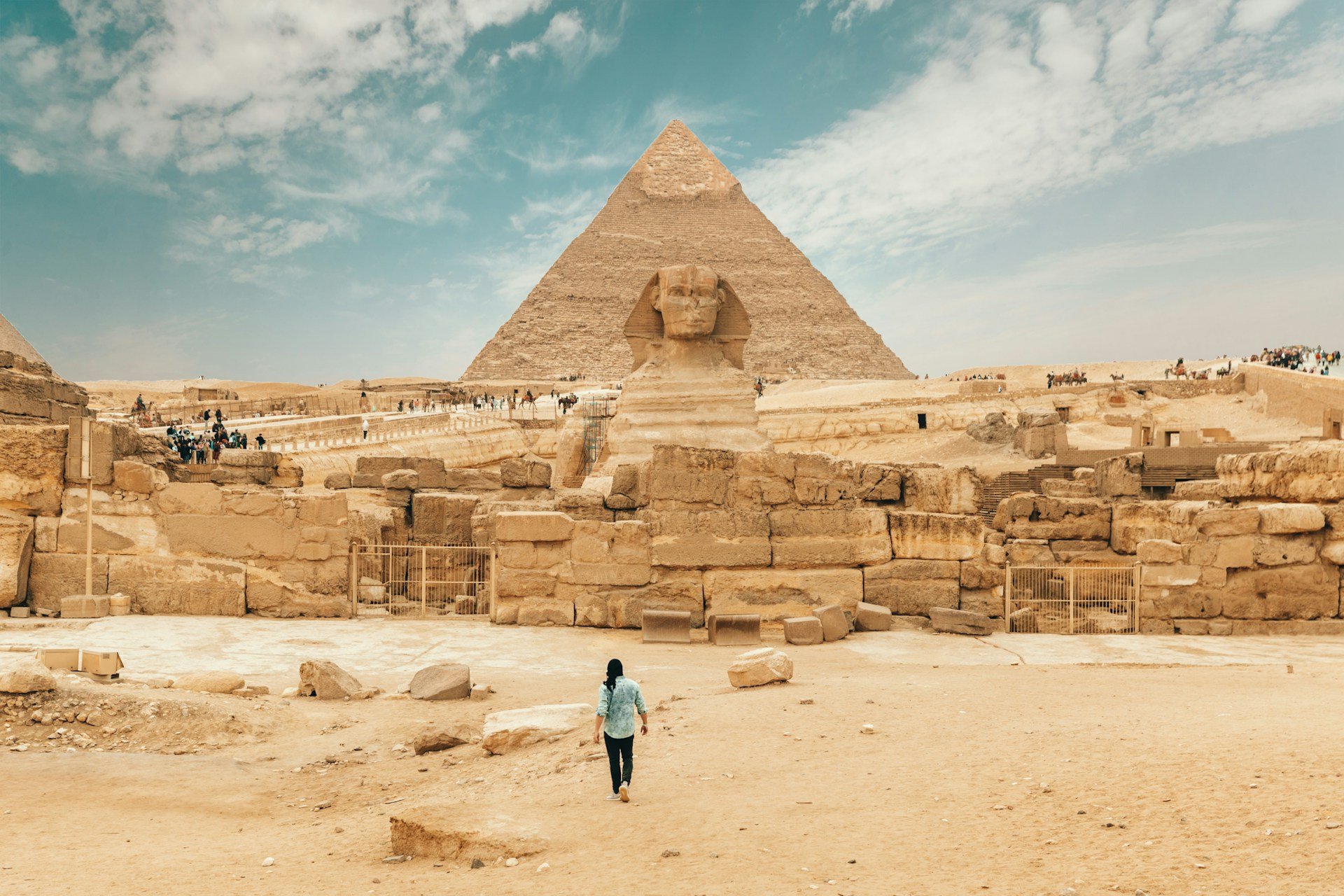
A man at the Giza plateau offers a camel ride for EGP 100 and demands EGP 1,500 when you're a kilometre from the entrance. A taxi driver in Luxor knows a papyrus shop where his cousin will give you special prices. A souvenir seller near the Egyptian Museum hands you a gift and then names his price. Egypt's tourist traps are among the world's most ancient in both senses. All of them are here.
Egypt Scam Overview 2026
Egypt's most frequently reported tourist trap. Agreed return price not honoured once mounted. Never board a camel or horse without written return price agreement.
Taxi and calèche drivers route tourists to papyrus shops, perfume shops, and "government" bazaars earning 20-40% commission. Pervasive in Cairo, Luxor, and Aswan.
Items pressed into hands — scarves, papyrus, flowers — immediately followed by payment demands. Pervasive at all major monuments. Never accept anything without agreeing the price.
Cairo airport taxi touts, unmetered Luxor cabs, and Nile felucca price ambushes. Careem and Uber resolve Cairo transport entirely.
Egypt Safety at a Glance
Cairo Scams
🐪 Giza Pyramids Camel and Horse Ride Extortion
This is Egypt's most consistently reported and most financially significant tourist trap. Camel and horse handlers at the Giza Plateau agree an outbound fare of EGP 50-200. Once you are mounted and they have walked you to a distant viewpoint — sometimes 1-2km from the entrance — the handler refuses to return without payment of EGP 500-2,000. Some become aggressive. Some take your shoes or hat and refuse to return them without payment. The agreed "ride price" is always redefined on arrival as either one-way, or for a shorter distance than actually travelled. The leverage is physical: you are on an animal, away from the entrance, in a large open plateau with no nearby assistance.
A variant: the handler offers to take your photograph from the camel for free. Once you are aboard for the photo, the same extortion begins.
Agree the complete return price in writing — on paper, photographed — before boarding. State explicitly: "Return price to this exact spot, EGP ___." Do not board without this. The fair negotiated rate for a proper Giza camel ride (including return to starting point) is EGP 150-300 depending on duration. If you are already mounted and extortion begins: dismount on your own initiative — you have the legal right to do so — and return to the ticket area on foot. Report immediately to the Tourist Police on-site (white uniforms, Tourist Police designation).
🏛 "Museum is Closed / Moved" Commission Routing
A friendly student or local near the Egyptian Museum tells you it is closed today or has moved to a new location. They offer to take you to the "correct" entrance or the "new location." The Egyptian Museum in Tahrir Square is open every day (08:00-17:00). The Grand Egyptian Museum (GEM) at Giza is a separate institution that opened in stages from 2023. Some scammers claim the museum "has moved to Giza" and direct tourists to Giza shops. Neither institution requires navigation assistance from street individuals. The approach always leads to a commission shop.
Walk to the entrance. The Egyptian Museum in Tahrir has a clearly visible entrance with ticket windows. The Grand Egyptian Museum has its own entrance adjacent to the Giza Pyramids complex. Both sell tickets at their own windows and are open on published schedules. Book through the official Egypt Tourism Authority website (egypt.travel) for skip-the-line timed tickets at the GEM.
📋 Unsolicited Gift Payment Demands
A vendor or individual presses an item into your hands — a small papyrus, a scarab, a shawl, a flower — saying it is a gift or a sample. Once you are holding it, they demand payment. Some place items in bags or around tourists' necks before the person can react. The social pressure of holding an item makes refusal feel rude; this is the deliberate mechanism. In Khan el-Khalili specifically, vendors call tourists into stalls for "just to look" and immediately begin showing expensive items, with assistants placing goods in tourists' hands or around their necks.
Do not accept anything placed in your hands near tourist sites. "La shukran" (No thank you) and keep your hands in your pockets or clearly closed. If an item is already in your hand: hand it back without engaging and walk on. You owe nothing for an unsolicited item pressed on you. In Khan el-Khalili: browsing is entirely possible and enjoyable — the key is to not enter any stall where you don't genuinely want to buy, and to keep your hands free at all times.
🏭 Khan el-Khalili Papyrus and Perfume Commission Shops
Cairo's commission shop ecosystem routes tourists through taxi drivers, hotel staff, and "student guides" to specific papyrus shops and perfume bazaars that pay 30-40% on all tourist purchases. The shops are expertly staffed, offer tea and hospitality, and apply sustained social pressure through a combination of the hospitality obligation and escalating interest in the visitor ("your home country," "how many children," "I have family there"). Products are overpriced 3-8x their real value. The perfume version specifically claims that Egyptian essential oils at "factory prices" are extraordinary investments — they are neither factory prices nor investment-quality products.
Shop independently by arriving at Khan el-Khalili on foot via Careem/Uber and entering the bazaar directly without a driver or guide. For genuine papyrus: the Dr Ragab Papyrus Institute (on the Nile, Giza side) sells certified genuine papyrus with clear provenance. For genuine Egyptian perfume: the El Abd Perfume shop on Muizz Street has been operating since 1928 and sells properly labeled essential oils. A price offered in a commission shop is always higher than the same product found independently.
Luxor & Aswan Scams
🚣 Calèche (Horse Carriage) Commission Routing
Luxor and Aswan calèche (horse carriage) drivers are a legitimate and atmospheric way to travel between sites. The scam version: a driver agrees to take you to Karnak Temple or the Valley of the Kings for a stated fare and en route proposes a stop at his brother's/cousin's/uncle's alabaster workshop, carpet shop, or papyrus gallery. The stop is "just two minutes" and earns the driver 30% on whatever you buy. Some drivers make the commission shop visits near-mandatory by claiming the onward route passes through the shop. Agreed fare disputes on arrival are also common.
Agree the fare and route explicitly before boarding — state "No stops, direct to [destination], EGP ___." Have the fare written on the driver's card or confirmed on paper. Fair Luxor calèche rates: within the East Bank EGP 50-100 per trip. For the West Bank sites (Valley of the Kings, Hatshepsut Temple): the government-run ferry (EGP 5) crosses to the West Bank; taxis and donkeys are available on the other side. Careem and Uber now cover Luxor city — use them to avoid calèche price disputes entirely.
🏓 Nile Felucca Price Ambush
Felucca (traditional sailboat) rides on the Nile are one of Egypt's genuine pleasures. The price ambush: a captain agrees a rate per person or per hour before departure. Mid-river or at the destination, the price is redefined — per person becomes per boat, or an additional "fuel" or "equipment" charge appears. Some captains agree a price then claim you misunderstood when you arrive. Others agree a round trip but at the destination ask for significantly more to return. The Nile provides similar leverage to the Giza camel situation: you are on the water, away from shore.
Agree the total price for the complete trip — departure point to return point — per boat not per person, including baksheesh expectations, before boarding. Fair Aswan felucca rates: EGP 100-200 per boat per hour. Get the agreed price confirmed by a second person or written down. Book through your hotel for a trusted captain reference. Egyptian Tourist Police are stationed at the main felucca departure points and intervene in price disputes.
🏛 Valley of the Kings Extra Tomb Charges
The standard Valley of the Kings ticket (EGP 360 for foreign nationals) includes access to any three open tombs. The tomb of Tutankhamun (EGP 300 extra), Tomb of Seti I (EGP 1,400 extra), and the Tomb of Ramesses V/VI require separate additional tickets. Individuals near the valley entrance sometimes claim that certain tombs are only accessible through a special "guide ticket" they can sell — this is false. All additional tomb tickets are sold at the official ticket office at the valley entrance. No guide has special access to any tomb that requires a separate ticket payment to the guide rather than the official window.
Buy all Valley of the Kings tickets — including supplemental tomb tickets — at the official ticket office at the valley entrance. The prices are posted clearly. No additional payment to any individual gives access to any tomb. Tutankhamun's tomb is worth the extra ticket; Seti I is exceptional but very expensive. A licensed guide with an official badge can provide historical context but cannot sell you better access than the ticket office provides.
🧱 Nubian Village Commission Routing, Aswan
Aswan's Nubian villages on Elephantine Island and across the river are genuinely worth visiting. Boat drivers and "Nubian guides" offer to take tourists to the villages for a small fee, then route them through craft shops and souvenir stalls where the guide earns commission. Some demand additional payment mid-trip claiming the original fare was "just for the boat, not the village entry." Others claim there is an entrance fee to the Nubian villages — there is none.
The public ferry to Elephantine Island runs from the Aswan corniche for EGP 5 per person. There is no entrance fee to any Nubian village. Go independently by public ferry, explore freely, and buy directly from village craftspeople without a guide taking commission. Aswan's Nubian hospitality is genuine and the villages are extraordinary — experiencing them without a commission-earning intermediary is significantly better.
Hurghada & Sharm el-Sheikh Scams
🏄 Dive and Snorkel Tour Misrepresentation
The Red Sea diving industry ranges from world-class to dangerous. Budget dive operators and snorkel tours sold at hotel pools and harbour fronts cut corners on equipment maintenance, boat safety, and guide-to-diver ratios. Trips advertised as visiting specific reefs (Brothers, Elphinstone, Shaab Abu Nuhas) sometimes visit lower-quality sites instead. Dive instructors at some budget operators lack verified PADI/SSI certification despite marketing as "certified instruction." Equipment condition at the cheapest operations is a genuine safety concern — regulators and buoyancy jackets that haven't been properly maintained are a physical risk, not a financial one.
Book diving and snorkel trips through PADI-certified dive centres with verified online reviews. The minimum quality floor: the dive centre displays its PADI Five-Star rating, equipment is visibly well-maintained, and guides can show current PADI certifications. Reputable Hurghada operators: Emperor Divers, Dive Tribe, Sub Aqua Club. Price below USD 40 for a boat diving trip including equipment is below the quality and safety threshold. Book through your hotel's recommended operators rather than harbour touts.
🚗 Hurghada and Sharm Transport Overcharging
Airport taxi touts at both Red Sea airports quote EGP 400-800 for journeys into the resort areas that cost EGP 100-200 on metered or app transport. The resort town layouts mean tourists often don't know how far their hotel is from the airport — touts exploit this. Pre-arranged hotel transfers are reliably priced; Careem and Uber are available in Hurghada.
Pre-arrange airport transfer with your hotel before arrival — this eliminates airport tout exposure entirely and the price is usually fair. In Hurghada, Careem operates and shows the price before booking. Sharm el-Sheikh has less app-taxi penetration — pre-booked hotel transfer or the official white taxi rank outside arrivals is the safest option. Agree any taxi price before getting in and confirm it covers the specific destination, not the general area.
🎁 Resort Beach Vendor Pressure
Public beach areas in Hurghada and Sharm see persistent vendors selling souvenirs, boat trips, and water sports at tourist prices. Some begin services (applying sunscreen, starting a massage) without clear agreement. The pressure is similar to Bali and Thai beach environments but less aggressive. Prices for water sports (parasailing, jet ski) are quoted without full cost breakdown — ask what the total amount includes before agreeing.
Agree price, duration, and what is included before any beach service begins. "La shukran" (No thank you) without engagement is the complete response to unwanted approaches. Most Red Sea resort hotels have private beaches that eliminate the public beach vendor pressure entirely.
Transport Scams
✈️ Cairo Airport Taxi Overcharging
Cairo airport touts inside and outside the terminal quote EGP 500-1,000 for journeys to central Cairo that cost EGP 150-300 via Careem or a metered taxi. Unofficial drivers approach arrivals inside the baggage hall. Some claim Careem and Uber don't work at the airport — they do, from designated pickup zones outside. The Cairo Metro Line 3 reaches the airport and connects to the city network for EGP 15-20 depending on distance — the cleanest and cheapest option for light luggage.
Book Careem before landing — it operates at Cairo Airport from designated pickup zones outside arrivals. The Cairo Metro Line 3 airport station (CAI Airport) connects to Attaba and Abdel Monem Riad stations for EGP 15-20 and is efficient for central Cairo destinations. Official white taxis at the regulated rank outside arrivals have a fixed airport surcharge of EGP 20 on top of the meter — a metered trip to central Cairo should cost EGP 150-250 total. Never follow anyone who approaches inside the terminal.
🚘 Cairo City Taxi Meter Refusal
Cairo taxis are metered but most drivers quote flat rates to tourists significantly above what the meter would show. A 5km Cairo journey: metered approximately EGP 30-50; flat-rate tourist quote EGP 100-200. Some drivers run the meter but take unnecessarily long routes, inflating the metered amount. Careem and Uber show the price before booking and take the fastest route — they are the recommended transport for all Cairo city journeys.
Use Careem or Uber for all Cairo city journeys. If using a metered taxi, insist "bi el-adaad" (by the meter) before getting in. Careem is particularly well-established in Egypt and pricing is transparent. InDrive (a fare-negotiation app) is also popular in Cairo and shows competitive prices.
An Airalo eSIM for Egypt activates before you board. Egypt coverage (Vodafone EG, Orange EG, Etisalat Misr) is good across Cairo, Luxor, Aswan, and the Red Sea coast. Careem, Uber, and offline maps all need a connection — have it before you exit Cairo Airport and step into the taxi approach zone.
Restaurant Traps & What Things Should Cost
What Things Actually Cost in Egypt 2026
🍽 Tourist Restaurant Bill Inflation and Phantom Charges
Tourist-facing restaurants near the Pyramids, Egyptian Museum, and Luxor temples charge 5-10x local prices and occasionally add phantom items. Bread, salads, and mezze placed on the table automatically appear on the bill. Service charges of 10-15% are common and may not be disclosed. Some restaurants apply a "foreigner price" significantly above the menu price.
Ask the price of anything placed on the table before eating it. Egypt's best food is at local restaurants rather than tourist-facing ones — the price difference is dramatic and the quality is frequently better. Walk two streets from any tourist site before choosing a restaurant. Itemize your bill before paying.
Egypt's currency has experienced significant fluctuation in recent years. A Wise card or Revolut gives the live interbank EGP rate with instant notifications. Use ATMs inside Banque Misr, Banque du Caire, or CIB branches — avoid standalone tourist-area machines. Always pay in EGP and decline DCC.
Shopping Traps
🧖 Fake Papyrus
Genuine papyrus — made from the papyrus reed (Cyperus papyrus) — is a legitimate and beautiful Egyptian souvenir. Over 90% of "papyrus" sold in Egyptian tourist shops is banana leaf, rice paper, or imported paper with Egyptian-style paintings applied. It deteriorates within months, often yellowing or cracking. Banana leaf papyrus bends and creases sharply; genuine papyrus is more flexible and shows visible woven reed fibres when held to light. Prices are similar for genuine and fake — the deception is purely in the presentation. The commission shop routing described above invariably ends at a "papyrus gallery" selling the banana leaf version as genuine at significant prices.
For genuine papyrus: the Dr Ragab Papyrus Institute on the Nile (Giza side, near the Sheraton) is the most reputable source with certified genuine production — you can watch the process. The Egyptian Museum gift shop carries certified genuine papyrus. The test: genuine papyrus doesn't crack when folded gently and shows woven reed fibres on the back. Any "papyrus" priced below EGP 100 for a small piece is not genuine.
💎 Alabaster and Antiquities Authenticity Claims
Upper Egypt has a genuine alabaster craft tradition and genuine alabaster workshops. Commission-routed tourist shops sell mass-produced alabaster-look items made from plaster at the price of hand-carved genuine alabaster. More seriously: some shops sell items claimed as "genuine antiquities" — scarabs, shabtis, amulets — that are modern mass-produced replicas at prices implying they are authentic archaeological objects. Genuine Egyptian antiquities cannot be legally sold or exported. Any vendor selling items as "real antiquities from my uncle's farm" is either selling fakes or involved in illegal cultural trafficking. The legal consequence for buyers: attempted export of genuine antiquities triggers serious criminal charges.
For alabaster: visit a working workshop in Luxor's West Bank (workshops are visible from the road with craftspeople actually working) and buy directly. For "antiquities": modern replica scarabs and shabtis are legitimate and widely available — buy them as what they are. Never buy anything described as a "genuine antiquity" for export; the legal risk is significant and the item is almost certainly not genuine anyway.
💰 Egyptian Bazaar Bargaining
Initial prices in Egyptian tourist markets are among the world's most inflated relative to final realistic prices — first quotes of 10-20x the fair price are common in Khan el-Khalili. This is the market convention rather than fraud. The process is expected and experienced market traders are deeply skilled at it.
Start at 10-15% of the first quoted price. Walk away when you reach your limit — being called back is the signal to go lower. Reference prices: small souvenir scarab EGP 20-50, alabaster canopic jar (small) EGP 100-300, cotton galabiya (full robe) EGP 150-350, quality spice bag EGP 30-80. The Egyptian bazaar experience is genuinely enjoyable when you understand and embrace the system rather than fighting it.
Solo Women Travelers
Egypt requires honest guidance for solo women. Street harassment — staring, verbal comments, following — is more prevalent in Egypt than in most other destinations in this series. It is reported by the majority of solo women who travel independently, particularly in Cairo, Luxor, and Aswan city centres. It is almost never physically dangerous and rarely escalates beyond persistent verbal approaches. The cumulative psychological impact of sustained unwanted attention is, however, genuinely fatiguing.
Practical measures that experienced solo women Egypt travelers consistently report as effective: group or guided tours for the Pyramids and Luxor Valley sites reduce isolation and provide social buffer; using Careem or Uber rather than individual taxis removes the driver relationship dynamic; dressing conservatively (covered shoulders and knees) in non-resort contexts significantly reduces approach frequency; staying in established mid-range or higher hotels (rather than very budget guesthouses in tourist strips) provides a safer base; and choosing Dahab or the Red Sea resorts over independent Luxor travel for first-time Egypt visits. The Red Sea resort towns of Hurghada and Sharm el-Sheikh have a noticeably different social atmosphere than the Nile valley cities — more international, less harassment-dense.
Universal Prevention Guide
Agree Return Price Before Mounting
Complete return trip price, to the exact starting point, written down, before boarding any camel or horse at the Pyramids or anywhere in Egypt. No written agreement, no ride. Dismounting on your own initiative is your right if extortion begins once you're mounted.
Careem and Uber for All Cairo Transport
Both apps operate throughout Cairo and Egypt's main tourist cities. They show the price before booking. Use them for every journey and remove the entirety of Egypt's taxi overcharging ecosystem from your trip in one step.
Accept Nothing Without Agreeing the Price
In Egypt, anything pressed into your hands — scarves, papyrus, flowers, children's drawings — is followed by a payment demand. "La shukran" and keep your hands closed or in your pockets near all tourist sites.
Official Ticket Windows Only
All Egypt attraction tickets — Pyramids, Valley of the Kings, Egyptian Museum, Karnak, Abu Simbel — are sold at official Ministry of Antiquities windows at each site entrance. Nobody on the street sells legitimate tickets. No guide provides access that cannot be bought at the official window.
Dr Ragab for Genuine Papyrus
The Dr Ragab Papyrus Institute is the most reliable source of certified genuine Egyptian papyrus in Cairo. Commission shop "papyrus galleries" almost exclusively sell banana leaf. The difference matters — genuine papyrus lasts; banana leaf deteriorates within months.
Tourist Police: 126
Egypt's Tourist Police operate at all major monument sites and respond quickly. Camel extortion, guide harassment, and overcharging disputes at tourist sites are their specific remit. At the Pyramids, at the Valley of the Kings, and at Karnak — Tourist Police are on site. Name them during any confrontational situation.
GetYourGuide lists reviewed operators for Pyramids and Sphinx tours with licensed Egyptologist guides, Luxor full-day West Bank tours, Nile felucca experiences with trusted captains, and Abu Simbel day trips from Aswan. Official ticket prices included, no camel extortion, no commission shop stops.
Reporting Scams in Egypt
What to Do if You're Scammed
Egypt Is One of Humanity's Greatest Achievements. Go Knowing This.
Written return price before mounting the camel. Careem for every Cairo journey. "La shukran" with your hands closed. Official ticket window only. Tourist Police at 126. Five rules that cover every major trap on this page. Egypt — the Pyramids at dawn before the crowds, the Valley of the Kings, the Great Temple of Abu Simbel, a felucca at dusk with the Nile going pink — is worth every hour of preparation. Go with the knowledge in this guide and you'll come back talking about the civilization, not the chaos.