
India Travel Scams
A man near Connaught Place says the government tourist office moved and offers to take you to the real one. A tuk-tuk driver outside the Taj Mahal says it's closed today and suggests an alternative. A Jaipur shopkeeper explains you can export gems duty-free and resell them at home for profit. India has the world's richest travel experience and some of its most sophisticated tourist traps. Every major one is documented here.
India Scam Overview 2026
India's most financially damaging tourist trap. Professional fake government tourism offices cancel train tickets and rebook at 5-10x the price. Active in Delhi, Agra, Jaipur, and Varanasi.
Tuk-tuk drivers and friendly locals claim major monuments are closed, routing tourists to commission shops instead. The monument is almost never actually closed.
Jaipur gem export profit scheme and similar investment pitches. Stones are low-quality or synthetic; the resale market described does not exist. Losses of USD 500-5,000 are common.
Airport taxi overcharging, tuk-tuk fare inflation, and pre-paid taxi touting. Ola and Uber eliminate this category almost entirely — install both before landing.
India Safety at a Glance
Delhi Scams
🏛 Fake Government Tourist Offices
This is India's most financially damaging tourist scam and the one that catches the most first-time visitors. Professionally run fake offices near Connaught Place and New Delhi Railway Station display signage with the words "India Tourism," "Government of India Tourist Office," or "Ministry of Tourism" — sometimes with official-looking government logos. Staff dress professionally and the offices have counters, computers, and printed materials. Tourists who enter receive the following: their legitimate train bookings are declared "cancelled," "invalid," or "on a dangerous route" and they are offered replacement transport at 5-10x the cost. Tours to Agra, Jaipur, and Varanasi are sold at EUR 200-800 for services available through legitimate operators for EUR 30-100. Some offices have taxi drivers positioned outside who deliver tourists to them. The losses reported range from EUR 100 to EUR 2,000+.
Never enter any tourist office that was recommended by a taxi driver, hotel reception that earns commission, or a "helpful local" near a train station. Verify your own train bookings directly at the IRCTC website (irctc.co.in) or at official Indian Railways ticket windows — your bookings are valid and will not be cancelled by anything a private office tells you. Book tours through verified platforms (GetYourGuide) or directly with your hotel.
🚫 "Monument Closed Today" Commission Routing
A tuk-tuk driver or a friendly local near a major monument says it is closed today — for a government ceremony, maintenance, security event, or national holiday. They offer to take you to an equally impressive alternative. The monument is almost never actually closed. The alternative is a carpet shop, gem dealer, or textile showroom where the driver earns 20-40% commission on whatever you buy. This scam runs at every major Delhi monument every day. The driver's confidence is complete because they have delivered this line hundreds of times to tourists who believed it.
Walk to the entrance of the monument yourself. Indian Archaeological Survey monuments follow published schedules at archeologicalsurvey.gov.in — the Red Fort, Humayun's Tomb, and Qutub Minar are open every day except Monday (Qutub Minar) and maintain consistent hours. If a person on the street says a monument is closed, walk to the entrance anyway and verify with the gate staff directly. The entrance will be open. Hire tuk-tuks and auto-rickshaws only for point-to-point transport at agreed metered or Ola/Uber prices — never accept "I will show you Delhi today" tour offers.
🚖 Delhi Airport Prepaid Taxi Overcharging
Delhi Airport has an official prepaid taxi booth outside arrivals. The legitimate prepaid taxi system sets fixed rates: to Connaught Place approximately INR 550-650, to Paharganj INR 400-500. Individuals inside the arrival hall claim to be from the official prepaid booth and sell "prepaid taxi tickets" at INR 1,000-2,500. Some legitimate-looking taxis outside the terminal charge dramatically above the prepaid rate because they were "arranged" by touts inside. The Metro Airport Express is the clear best option: Delhi Airport Metro Express to New Delhi Station takes 19 minutes for INR 60.
Take the Delhi Airport Metro Express — exit the terminal to the Metro station (well-signposted from all terminals), INR 60 to New Delhi Station in 19 minutes. If you need a taxi: book via Ola or Uber before exiting arrivals (both have pickup zones at DEL). The official prepaid taxi booth is outside the arrivals hall, not inside — any person inside offering prepaid taxis is not official. Never follow anyone who approaches you at baggage collection.
👷 New Delhi Railway Station Touts
New Delhi Railway Station is one of India's busiest and most tout-dense. The approach from Paharganj is lined with individuals who tell arriving tourists their hotel is "closed," "full," "under renovation," or "changed its name" and offer to take them to an alternative. The hotel is fine. The alternative earns commission. Inside and outside the station, individuals in railway-style uniforms claim to be official porters or booking assistants and lead tourists to fake tourist offices. Legitimate railway assistance is from RPF (Railway Protection Force) officers in navy blue, or official railway enquiry counters inside the main station building.
Book accommodation in advance and go directly to your pre-booked hotel regardless of what anyone on the street says about it. Your hotel is almost certainly fine. The Paharganj backpacker area is well-established — any claim that a specific hotel there has changed or closed is almost certainly false. At the station: the official Tourist Facilitation Centre at Platform 1 provides legitimate assistance. All train bookings are verifiable at irctc.co.in.
Agra Scams
🏛 "Taj Mahal Closed" and Commission Routing
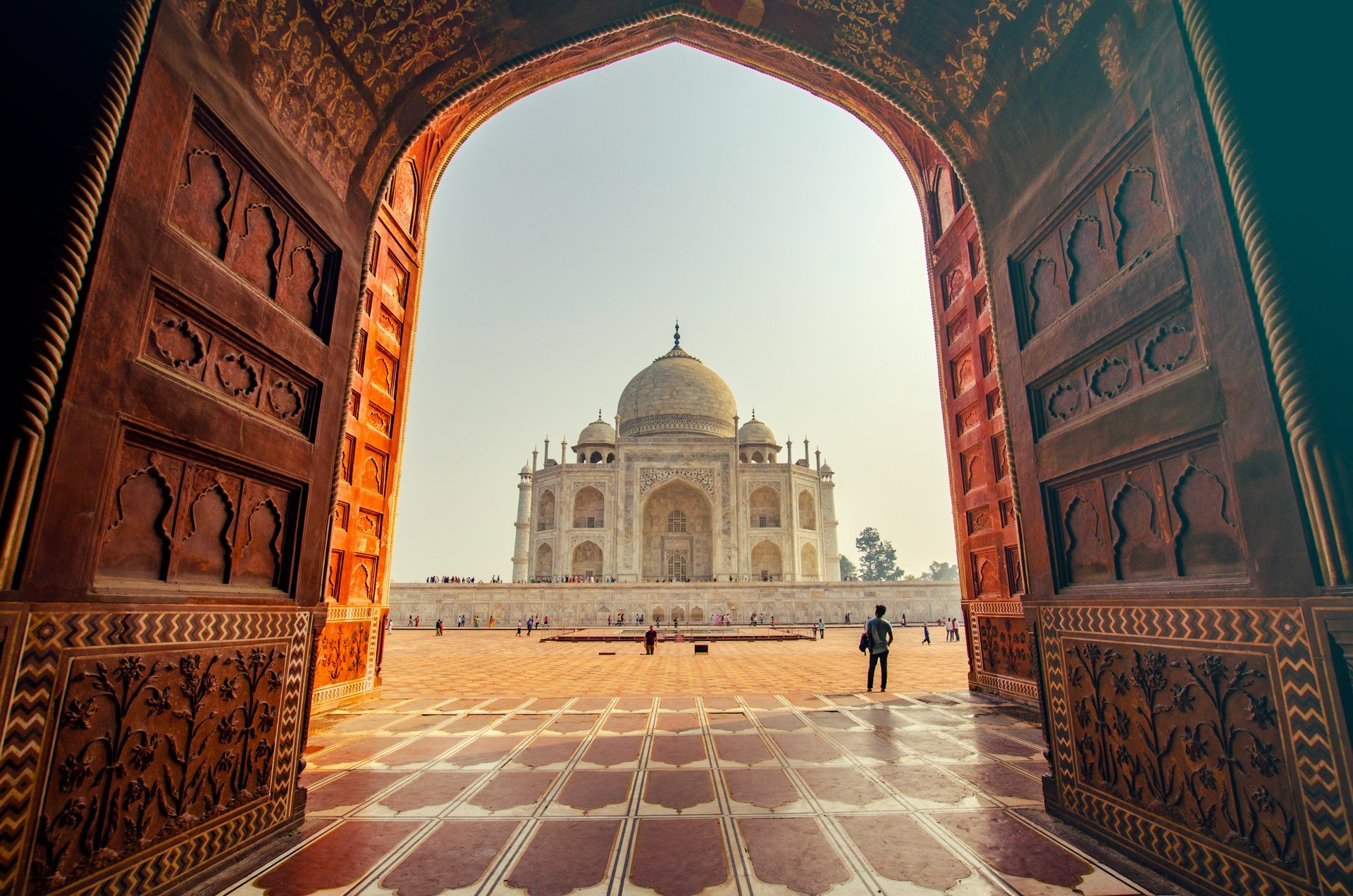
Agra's most consistent scam. Tuk-tuk drivers, auto-rickshaw drivers, and friendly locals near Agra Cantonment station and along the approach roads to the Taj tell tourists the monument is closed today. The Taj Mahal is closed every Friday — this is the only day it is closed. On every other day it is open from 30 minutes before sunrise to 30 minutes before sunset. After delivering the "closed" information, the driver offers to take you to "the best marble workshops" or "government-approved handicraft centers" — shops that pay 30-40% commission on all tourist purchases. The drivers are uniformly confident because they have delivered this line to thousands of tourists and many have believed it.
A variant: drivers near the Taj Mahal's west gate offer to "help" tourists find the ticket office. They lead to a different location — sometimes to a shop that sells fake tickets — collecting a commission at every step. The ticket offices are at the East, West, and South Gates, clearly marked with official Archaeological Survey of India signage.
Walk to the gate. The Taj Mahal opens 7 days a week except Friday. On Friday: visit the Agra Fort (also stunning, open on Fridays, INR 650 foreign national) or Fatehpur Sikri (40km from Agra, INR 610 foreign national). Buy tickets only at the official Archaeological Survey of India windows at the gates or at asi.payumoney.com. Never buy tickets from a person in the street or from a driver.
🏭 Marble Inlay and "Government Workshop" Shops
Agra has a genuine marble inlay (pietra dura) craft tradition descended from the artisans who built the Taj Mahal. It also has an extensive industry of shops presenting mass-produced marble-look items as genuine handmade inlay work, at prices inflated by the commission paid to the tuk-tuk or guide who delivered you. "Government approved" or "Government certified" on a shop sign means nothing — these are self-applied marketing terms, not official designations. Genuine hand-inlaid marble takes skilled craftspeople many hours per piece and is priced INR 3,000-15,000+ for quality work.
Visit shops independently rather than via a driver or guide who earns commission. The Shilpgram crafts village near the Taj Mahal's west entrance has artisans demonstrating genuine techniques. For genuine marble inlay: look for workshops where craftsmen are visibly working — the tools, the stone dust, the hours of visible labour distinguish genuine from mass-produced. Prices that seem too low for handmade work are not handmade work.
Jaipur Scams
💎 The Gem Export Profit Scam
Jaipur is a genuine gemstone and jewellery centre and the scam exploits this reality brilliantly. A friendly local — often a well-dressed, educated-seeming person — explains that India has removed export duties on gems and that there is a significant arbitrage opportunity: buy gems here at Indian wholesale prices, take them home, and resell to jewellers in Europe or North America at a profit of 100-300%. They offer to connect you with their family's or friend's gemstone business. The stones purchased are low-quality, synthetic, or significantly overvalued. The export/resale market described does not exist — gem imports face duties in destination countries and tourist-purchased stones have no ready resale market. Losses of USD 500-5,000 are the documented range.
A variant specifically targeting business-minded travelers: a "gemstone export company" offers to ship the stones home for you (avoiding customs declarations) — this adds fraud to the financial loss with potential legal consequences for the tourist.
There is no gem resale arbitrage opportunity for tourists. No amount of friendly explanation changes this. Any person who approaches you with this pitch is either naive or running a scam — and the well-dressed, credible presentation is the sophistication of the trap, not evidence of its legitimacy. If you want to buy Indian gems or jewellery as souvenirs, buy from established Jaipur gem dealers with fixed pricing (Gem Palace on MI Road is the most reputable), knowing you are paying for beauty and craftsmanship rather than investment value.
🚣 Tuk-Tuk Commission Shop Routing
Jaipur tuk-tuk drivers offer cheap or free city tours and invariably incorporate commission shop stops. The standard approach: a driver quotes INR 100-200 for a 2-3 hour city sightseeing tour — far below what the driving time alone is worth. The subsidy comes from the carpet, gem, textile, and block printing shops the driver visits during the "tour," where they earn 20-40% commission on everything the tourist buys. Some stops are genuinely interesting workshops; others are pure sales environments. The economic reality: when a driver quotes below-market rates for a tour, the shortfall is recovered from your purchases.
Pay a fair rate for transport (INR 300-500 for a half-day with Ola/Uber or agreed metered auto) and understand the tour will include no shops. If you want to visit Jaipur's craft workshops — which are genuinely excellent — go to the ones recommended by your hotel independently. Anokhi Museum (block printing), Jodhpur Handicrafts (textiles), and the Rajasthan Small Industries Development Corporation (government fixed-price crafts) are legitimate without commission dynamics.
🏛 Amber Fort "Entry Fee" Touts
The road to Amber Fort has persistent individuals claiming to collect entrance or parking fees at unofficial checkpoints before the actual fort entrance. Some dress in pseudo-official clothing. The official Amber Fort entrance fee (INR 550 for foreign nationals) is collected only at the fort gate — nothing is collected on the approach road. Elephant ride operators at the base also quote prices significantly above official rates and some are running operations that animal welfare organizations have repeatedly flagged for poor treatment standards.
Pay no "fees" to anyone on the road to Amber Fort. The only legitimate payment is at the official ticket window at the fort entrance. For elephant rides: the Rajasthan government has introduced regulations on elephant welfare and ride duration — only book through the fort's own official elephant ride service, not from touts on the approach road. Consider the jeep service as an alternative to elephants — it covers the same route.
Mumbai Scams
🚗 CST and Airport Taxi Overcharging
Mumbai's airport has prepaid taxi booths with fixed rates from BOM to various city zones — BOM to South Mumbai (Colaba, Fort) approximately INR 700-900. Unlicensed drivers inside the terminal quote INR 1,500-2,500. Mumbai's black-and-yellow metered taxis in the city are generally reliable but some refuse the meter for tourists and quote flat rates. The Mumbai Metro now reaches key tourist areas and is the best value transport option from many parts of the city.
From BOM: use Ola or Uber from the designated app pickup zones (faster, clearer pricing than prepaid). In the city: Ola and Uber eliminate all meter disputes. If using a black-and-yellow taxi: insist on the meter ("meter se chaliye" — please go by meter). Mumbai's Metro Line 1 and the expanding network cover many tourist routes cheaply. The local train (suburban railway) connects the length of the city for INR 10-30 — completely safe for tourists in first class compartments.
⛴ Gateway of India Boat Tour Overcharging
Boat trips from the Gateway of India to Elephanta Island (a UNESCO World Heritage Site with rock-cut cave temples) are a genuine Mumbai highlight. The official Maharashtra Tourism Development Corporation (MTDC) ferry runs the route at INR 250 return. Private operators at the gateway quote INR 500-800 for the same journey, sometimes claiming the government ferry is not running. Individual boat operators also offer "private" Harbour cruises at INR 300-500 for a 20-minute trip worth INR 100-150.
For Elephanta Island: the MTDC ferry (official government service) departs from the jetty adjacent to the Gateway of India on a published schedule and costs INR 250 return — buy tickets at the MTDC counter at the jetty. Arrive at the jetty directly without engaging any person who approaches you on the approach road. The MTDC ferry is clearly marked with official signage.
👷 Colaba Causeway and Dharavi Pickpockets
Colaba Causeway's dense street market and the approaches to Dharavi (Mumbai's famous urban neighbourhood, often marketed as a "slum tour" destination) see occasional pickpocketing in dense pedestrian crowds. Standard crowded-market awareness applies — lower intensity than Delhi or Agra but present in specific high-density zones.
Bag at the front, phone in an inside pocket in all crowded Mumbai markets. Dharavi tours booked through verified operators (Reality Tours and Travel is the most reputable, with proceeds supporting community projects) are safer than joining groups organised by individuals who approach at the entrance.
Transport Scams
🚣 Auto-Rickshaw and Tuk-Tuk Meter Refusal
Auto-rickshaws in Indian cities are legally required to use meters. In practice, drivers in tourist areas routinely refuse the meter and quote flat rates 3-10x the metered fare for tourists. The flat rate for a 5km auto journey in Delhi: quoted INR 200-400; metered INR 40-80. Some agree a pre-negotiated rate but add extra charges on arrival. Others quote in "dollars" or "euros" to tourists before revealing that the amount is the same in rupees — making a INR 200 trip sound like a EUR 2 bargain when it should cost INR 40.
Use Ola Auto or Uber Auto for all auto-rickshaw journeys — both apps include auto-rickshaw booking at metered rates with upfront pricing. If you want to negotiate a non-app auto: the correct approach is "meter se chaliye" (by meter please). Any driver who refuses the meter for a short city journey is quoting tourist rates. Walk to the next auto. Delhi Metro covers most tourist routes cheaply — the combination of Metro and Ola/Uber removes auto-rickshaw dependency almost entirely.
🚊 Train Ticket Cancellation and Rebooking Fraud
A variant of the fake tourist office scam specifically targeting train travel. Someone claiming to be a railway official or "tourist assistance" worker tells you your train is cancelled, overbooked, or on a dangerous route. They offer to cancel and rebook you on "safer" private transport (bus, taxi, or private train service) at 5-10x the cost of your original booking. Indian Railways trains are rarely cancelled for safety reasons and the IRCTC system shows all booking status in real time. Your booking status is verifiable at irctc.co.in with your PNR number — any PNR check on the official site that shows a confirmed booking is valid regardless of what any person on the street says.
Verify your train status at irctc.co.in using your PNR number at any time. A confirmed booking status means your train is running and your seat is reserved — no private party can change this or has authority over it. For train booking: use the IRCTC app or website directly, or book through Cleartrip or MakeMyTrip (legitimate third-party booking platforms). The Indian Railways tourist quota (available to foreign nationals) is accessible through IRCTC and provides reserved seats on popular routes.
An Airalo eSIM for India activates before you board. India coverage (Jio, Airtel, Vi) is excellent across all major cities and tourist routes. Ola, Uber, and IRCTC all need a working data connection — having it before you exit Delhi, Mumbai, or any arrival airport means you can book your onward transport before a single tout approaches you.
Restaurant Traps & What Things Should Cost
What Things Actually Cost in India 2026
🍽 Tourist Restaurant Bill Inflation and Phantom Items
Tourist-facing restaurants near the Taj Mahal, Red Fort, and Jaipur monuments charge 3-10x local prices and occasionally add items to bills that weren't ordered. Some apply a "tourist price" list rather than the displayed menu. Others add a "service charge" of 10-18% not disclosed on the menu. India's GST of 5-18% applies to restaurant bills and is legitimate when displayed; it must be shown on the menu.
Walk two streets away from any major tourist site before eating. The price-quality ratio at local dhabas (roadside restaurants) is excellent. Itemize your bill against what you ordered. India's GST on restaurant bills is legitimate; anything above this (extra "service charges," "tourist charges") is not. Zomato and Swiggy apps show accurate local restaurant prices and are useful for knowing what to expect before sitting down.
India is a largely cash economy — ATM withdrawals are frequent. A Wise card or Revolut gives the interbank INR rate with low ATM fees. Use ATMs inside SBI, HDFC, ICICI, or Axis Bank branches — avoid standalone tourist-area machines. Always decline DCC and pay in INR. India UPI payment apps (GPay, PhonePe) are increasingly accepted for tourist transactions and avoid cash handling entirely where available.
Shopping Traps
🏭 Government Emporium vs Commission Shop
The word "government" on a shop sign in India is not regulated and is freely applied by private businesses. "Government Approved," "Government Certified," "Government Cottage Industry," and similar signs mean nothing — they are marketing terms applied to private commission shops. Genuine government emporiums do exist: the Central Cottage Industries Emporium chain (Janpath, New Delhi, and other cities), and state-specific emporiums (Rajasthan Emporium, Kerala Emporium, etc.) on Baba Kharak Singh Marg in New Delhi are legitimate government-run operations with fixed prices and quality-certified products. Commission shops sent by tuk-tuk drivers are overwhelmingly not these.
For quality-assured Indian crafts at fair fixed prices: the Central Cottage Industries Emporium (Janpath 88, New Delhi — adjacent to the genuine India Tourism office) and the state emporiums on Baba Kharak Singh Marg are the correct destination. Prices are fixed, quality is certified, and no tuk-tuk driver earns commission from your purchase. For markets: the Dilli Haat in New Delhi is a government-curated craft market with stall-holding artisans from across India — it is excellent and honest.
👔 Pashmina Authenticity Claims
Genuine Kashmiri pashmina is among the world's finest fibres — it comes from the underbelly of the Changthangi goat and genuine Grade A pashmina is very expensive (INR 8,000-50,000+ for a shawl). Most pashmina sold to tourists is a blend of wool and viscose, or machine-made acrylic, presented as pure handmade pashmina. The ring test (genuine pashmina passes through a ring) is not a reliable indicator for blended fabrics. A burn test (genuine pashmina burns like hair, not plastic) is more reliable but not always practical in a shop context.
Buy pashmina from shops with GI (Geographical Indication) certification for Kashmiri pashmina — the GI tag is a government-backed quality guarantee. In Delhi, the government-run Cottage Industries Emporium stocks certified pashminas. Any shawl described as "pure pashmina" priced below INR 3,000 is blended or synthetic. The price of genuine Grade A pashmina reflects 3-5 days of hand-spinning and hand-weaving per shawl — it cannot be cheap.
Solo Women Travelers
India requires honest, specific guidance for solo women travelers. Street harassment — staring, unwanted comments, following, and occasional unwanted physical contact — is reported more frequently in North India (Delhi, Agra, Varanasi) than South India (Kerala, Karnataka, Tamil Nadu) or tourist-dense areas like Rajasthan that have significant experience with international visitors. It is most prevalent in less tourist-trafficked areas and least prevalent in modern urban neighborhoods, established tourist zones, and during daylight hours.
Specific practical measures that experienced solo women India travelers consistently report as effective: staying at guesthouses and hotels with established female-traveler reputations (book through platforms with recent reviews); dressing in accordance with local norms in religious and rural areas (covered shoulders and legs — a dupatta/scarf is versatile and respectful); using Ola or Uber's women's-only Ola S-Ride service in cities where it's available; traveling by day where possible and pre-booking accommodation to avoid arriving somewhere unfamiliar after dark; and joining organized tours for Varanasi ghats and rural Rajasthan where isolation creates more exposure.
South India — specifically Kerala, Goa, and the hill stations of Karnataka and Tamil Nadu — is consistently rated more comfortable for solo women travelers than the Golden Triangle. The coastal states have extensive experience with international tourism and cultural norms around public space are significantly different from Delhi or Agra.
Universal Prevention Guide
No Tourist Office That Wasn't Your Idea
Never enter any tourist office you were directed to by a taxi driver, local, or hotel reception earning commission. The only legitimate India government tourism office in Delhi is at 88 Janpath. Your train bookings are valid — verify at irctc.co.in with your PNR number before believing anyone who says otherwise.
Walk to the Gate
When anyone tells you a monument is closed: walk to the entrance yourself and ask the gate staff. The Taj Mahal is only closed on Fridays. Every other major Indian monument follows published schedules. No person on the street has more accurate information than the gate itself.
Ola and Uber for Everything
Install both before landing. Book in the app, verify driver details, then enter. These two apps eliminate the entirety of India's taxi, auto-rickshaw, and tuk-tuk overcharging ecosystem — the single largest financial risk category for tourists.
No Gem Resale Opportunity
There is no gem export arbitrage opportunity for tourists. Any person who approaches you with this pitch, however credible and friendly, is running a scam. The well-dressed presentation and the detailed economics are the sophistication of the trap, not evidence of legitimacy.
Central Cottage Industries for Crafts
The Central Cottage Industries Emporium on Janpath (New Delhi) and state emporiums on Baba Kharak Singh Marg are government-run with certified quality and fixed prices. Every "government approved" sign in a commission shop is marketing, not certification.
Save the India Tourist Helpline: 1800 111 363
The India Tourism toll-free helpline operates in English and multiple languages, 24/7. It handles tourist complaint reports and provides genuine assistance. Mentioning you will call it during a confrontational scam situation often resolves the situation immediately.
GetYourGuide lists reviewed operators for Taj Mahal guided tours with licensed archaeologist guides, Golden Triangle private tours, Varanasi sunrise boat trips, and Kerala backwater experiences. Official ticket prices, no fake offices, no commission shops on the route.
Reporting Scams in India
What to Do if You're Scammed
India Is One of the World's Great Journeys. Go Knowing This.
Never enter a tourist office you were directed to. Walk to the gate when someone says the monument is closed. Use Ola and Uber for every journey. There is no gem resale opportunity. Save 1800 111 363. Five rules that dismantle every major trap in this guide. India — the Taj at dawn, the chaos and colour of a Delhi market, a Kerala backwater at dusk, a Rajasthan fort turned amber in the evening light — is worth every hour of preparation to experience properly.