
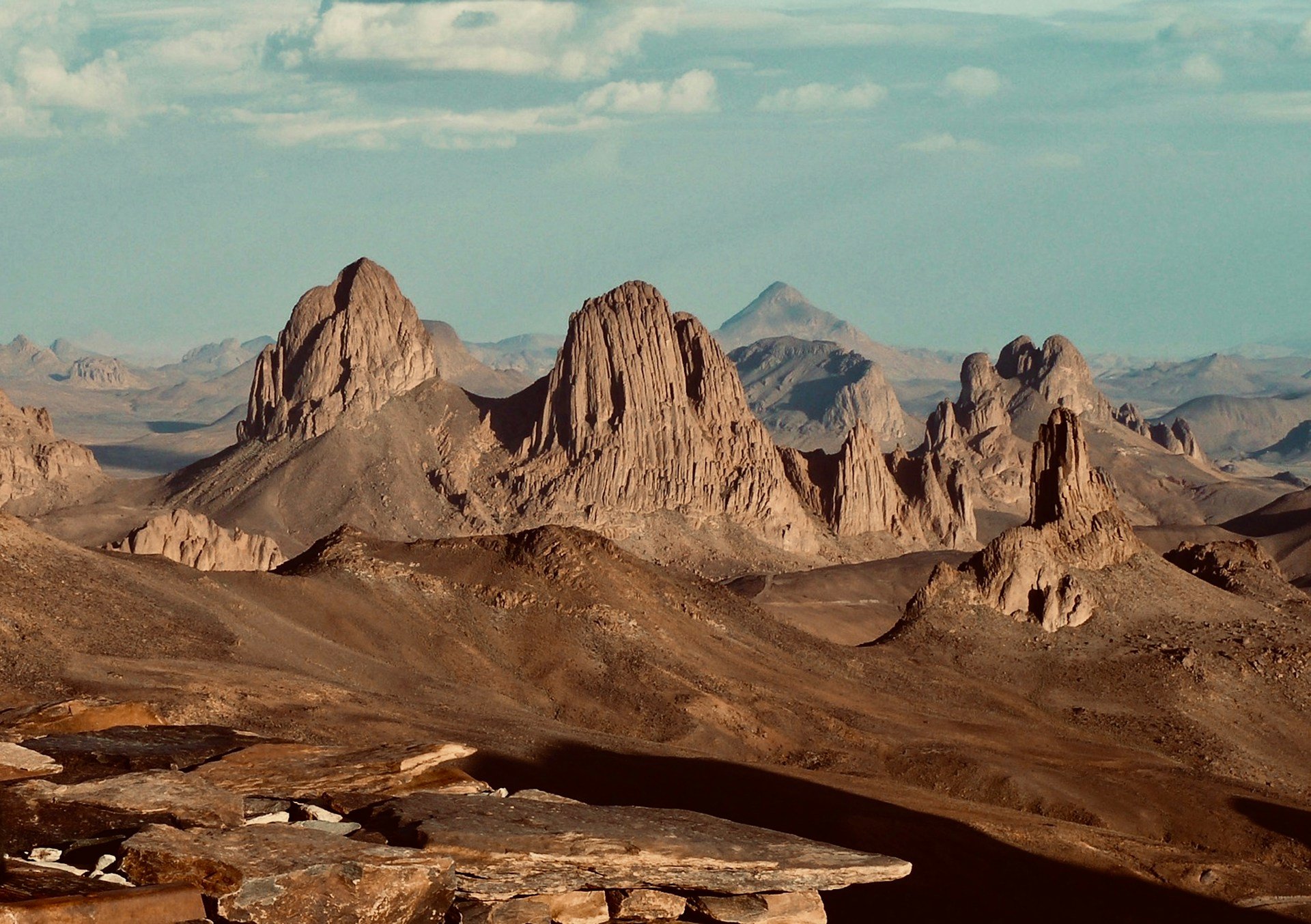
What You're Actually Getting Into
Algeria is the largest country in Africa, stretching from a Mediterranean coastline that looks like southern France to a share of the Sahara so vast it holds some of the oldest rock art on the planet in near-total silence. Decades of minimal tourism, first from a brutal civil war through the 1990s known as the Black Decade, then from a visa regime built more for oil and gas business travel than backpackers, mean the country most of North Africa's tourism has passed over has kept its sites essentially unfiltered by the crowds, souvenir stalls and photo-ops-first infrastructure that now define nearby Morocco.
What that also means: this is not a country you show up in and improvise. Visas are arranged in advance, the Sahara requires a licensed guide and a government permit, French is still the practical second language two generations after independence, and English gets you through a hotel lobby but not much further. None of it is difficult exactly, but none of it is casual either.
The honest complications
The visa costs money and takes planning: a US tourist visa runs $160 and is arranged through an embassy or consulate before you fly, not on arrival. The eastern and southern border regions carry a genuine, government-documented terrorism and kidnapping risk and are closed to casual travel, not just discouraged. Tourist infrastructure outside Algiers and the main coastal cities is thin: expect fewer English speakers, fewer fixed-price menus, and more checkpoints where a passport copy and patience go a long way. None of this makes Algeria unsafe for the itinerary most visitors actually take, but it does make it a country for travelers with some experience, not a first solo trip abroad.
A History Worth Knowing
Algeria's story runs from Berber (Amazigh) kingdoms and Roman provincial cities, through Arab and Ottoman rule, into 132 years of French colonization that ended only after one of the 20th century's most violent wars of independence. The single-party state that followed survived a civil war in the 1990s and a mass protest movement in 2019 that forced out a president who had ruled for two decades. None of this is background trivia: it explains the checkpoints, the French road signs, and why the country still treats outside visitors with more caution than its neighbors do.
- Antiquity
Numidia and Roman Africa. Berber kingdoms, then Roman provincial cities including Djemila and Timgad, still among the best-preserved Roman ruins anywhere.
- 7th century
Arab conquest. Islam and Arabic spread across the Maghreb, layering onto the existing Berber population and language rather than replacing it.
- 16th-19th c.
Ottoman regencies. Algiers becomes a semi-autonomous corsair power under nominal Ottoman authority, a base for Mediterranean privateering.
- 1830-1962
French colonization. Algeria is administratively absorbed into France itself, with large-scale European settlement and land seizure that defined the coming century.
- 1954-1962
The War of Independence. An immense, brutal conflict, most notoriously fought street by street in the Battle of Algiers, ending in independence declared on 5 July 1962.
- 1991-2002
The Black Decade. Civil war after canceled elections, an Islamist insurgency and a widely estimated death toll in the tens of thousands to around 200,000, still shaping the state's caution today.
- 2019-present
Hirak. Mass, largely peaceful protests force out a president of 20 years and open a slow, still-unfinished political transition.
Read the full history: Berbers, Rome, the Ottomans and the Black Decade
Algeria's Berber (Amazigh) population predates Arab settlement by millennia, and Tamazight, the Berber language, only became an official language alongside Arabic in 2016, following its recognition as a national language in 2002. The Kabylie region east of Algiers remains the country's Amazigh cultural heartland and the center of periodic tension over language and identity policy.
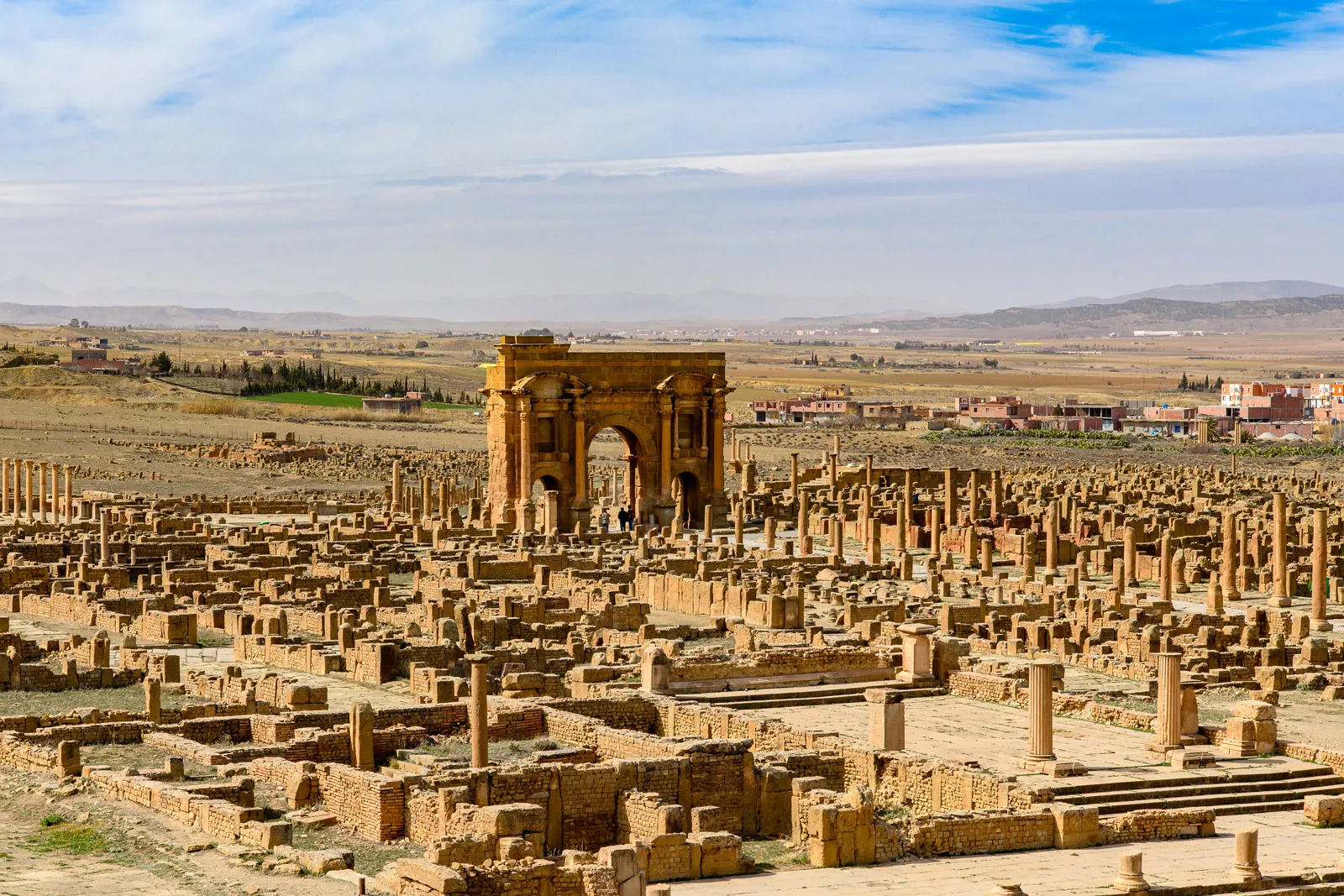
Rome's African provinces were genuinely prosperous, and the ruins at Djemila and Timgad, both UNESCO World Heritage Sites, are astonishingly complete precisely because Algeria's low tourist numbers meant less development pressure on the surrounding land than at comparable Mediterranean sites. Hippo Regius, near modern Annaba, was the seat of Saint Augustine, bishop there until his death in 430 CE as Vandal forces besieged the city.
French colonization from 1830 was administratively unusual: Algeria was legally part of metropolitan France, with large numbers of European settlers (the pieds-noirs) holding the best land and full French citizenship while the Muslim majority did not. The War of Independence that ended this arrangement, 1954 to 1962, killed an immense number of Algerians, contested between official Algerian estimates near 1.5 million and lower academic estimates, alongside French military and settler deaths, and it remains one of the defining anti-colonial conflicts of the 20th century.
The Black Decade. After the ruling FLN party canceled elections in 1992 that an Islamist party was poised to win, Algeria descended into a civil war against Islamist insurgent groups that lasted a decade and killed an estimated 44,000 to 200,000 people depending on the source, with entire villages massacred in some of its worst years. The war ended through a mix of military defeat of the insurgency and a national reconciliation and amnesty process in the early 2000s, and its legacy is a major reason the Algerian state remains cautious about security, foreign visitors and the international press to this day.
Hirak. In February 2019, mass weekly protests erupted against President Abdelaziz Bouteflika's bid for a fifth term after 20 years in power. The protests, notably peaceful and sustained for months, forced his resignation in April 2019 and continued afterward to press for deeper reform, a movement still referenced constantly in Algerian political life.
Top Destinations
Algeria splits naturally into the Mediterranean north, where nearly every visitor starts and most stay, and the Sahara south, which needs its own guided logistics entirely. The country is roughly four times the size of France, so the honest advice is to pick one region properly rather than skim several: a week covers Algiers and the north well, and the Sahara deserves its own trip.
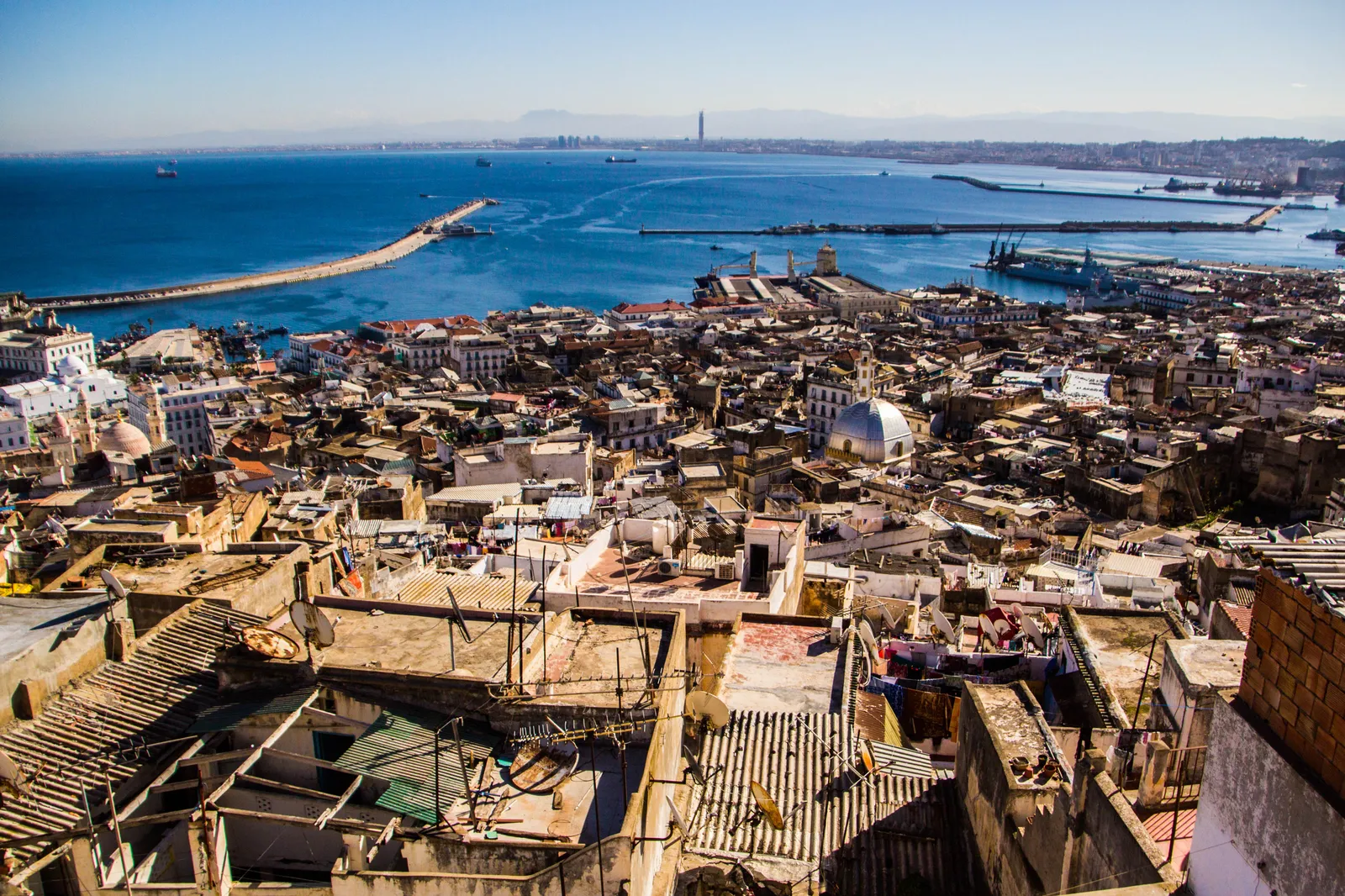
Algiers, the White City
Algeria's capital climbs from the Bay of Algiers up steep hills of white colonial buildings toward the UNESCO-listed Casbah, a maze of alleys and traditional houses that still functions as a real neighborhood rather than a museum piece. The Martyrs' Memorial and Notre Dame d'Afrique, a 19th-century basilica on a clifftop with an inscription addressed to Muslims and Christians alike, are the city's other landmark views. A full city guide, with neighborhoods, hotels, restaurants and a day-by-day plan, covers Algiers separately: see our Algiers city guide.
Djemila, Rome in the mountains
Djemila sits high in the Kabylie mountains, its forum, basilicas, triumphal arch and mosaics remarkably intact for a Roman provincial city, a UNESCO World Heritage Site since 1982. The dramatic mountain setting, rather than a flat coastal plain, sets it apart from most Roman ruins in the Mediterranean.
Timgad, the Pompeii of North Africa
Timgad's rigid Roman grid plan, arches, temples and library sit almost untouched against a stark mountain backdrop further south, earning it the nickname the "Pompeii of North Africa" for how completely its street plan survives. Both sites see only a trickle of visitors compared with Roman ruins in Italy or Tunisia.
Ghardaïa & the M'Zab Valley
Five fortified desert towns (ksour) rise from the M'Zab Valley in a striking, geometric harmony of pale earth architecture, the spiritual and cultural home of the Ibadi Mozabite community, a distinct Berber Muslim sect with its own strict urban planning traditions. Ghardaïa is the valley's main town and the easiest base for exploring the other four.
Tassili n'Ajjer
A UNESCO World Heritage Site and Biosphere Reserve in the far southeast, holding more than 15,000 prehistoric rock art sites, some dating back roughly 10,000 years, scattered across an otherworldly sandstone plateau. It's only accessible with a licensed guide and 4x4 transport arranged through a registered tour operator, and requires a government travel permit.
The Hoggar & Assekrem
Further west, the Hoggar mountains rise from the desert around the town of Tamanrasset, with the Assekrem plateau's sunrise and sunset views ranking among the Sahara's most spectacular. Like Tassili, this is guided-tour territory, not a self-drive destination.
Constantine, the City of Bridges
Constantine is built on a plateau split by a dramatic gorge, with seven bridges strung across it at different heights, giving the city one of the most striking urban profiles anywhere in North Africa. Roman, Arab and Ottoman-era layers stack through the old town above the ravine, and the bridges themselves, especially the pedestrian Sidi M'Cid, are worth the trip on their own.
Hidden gems beyond the main circuit
The zones above cover a first serious trip well. With extra days or a repeat visit, these reward the detour.
Béjaïa
A port city between mountains and Mediterranean, gateway to the Kabylie region's Amazigh culture and some of Algeria's most dramatic coastal scenery, still almost entirely off the international tourist map.
Hippo Regius
The Roman ruins of Saint Augustine's episcopal city, where he served as bishop until his death in 430 CE. Less complete than Djemila or Timgad, but historically loaded.
Assekrem
A volcanic plateau in the Hoggar range with a hermitage built by Charles de Foucauld and a sunrise view over jagged basalt peaks regularly named among the Sahara's best. Reached only with a guided tour from Tamanrasset.
Al Qal'a of Beni Hammad
The ruins of the first Hammadid capital, founded in 1007 and abandoned by 1152, a UNESCO World Heritage Site since 1980 with one of Algeria's largest surviving medieval mosques.
Timimoun
A red-earthed oasis town on the edge of the Grand Erg Occidental's dunes, known for distinctive Sudano-Sahelian mudbrick architecture unlike anywhere else in the country.
Chréa National Park
Algeria's best-known ski station, in the Atlas mountains above Blida, an easy winter day trip from the capital for snow most visitors don't expect to find in Africa.
Culture & Etiquette
Algerian culture blends Arab-Islamic tradition, Amazigh (Berber) heritage, and a French colonial legacy that still shows up in the language of business, higher education and street signs, more than sixty years after independence. Hospitality runs deep, mint tea and coffee are offered constantly, and family and community obligations sit above almost everything else. Algeria is a conservative Muslim-majority society in practice, more so outside Algiers than within it.
Do
- Accept tea or coffee when offered. Declining hospitality repeatedly reads as genuinely rude; a quick, appreciative acceptance costs you nothing and means a great deal.
- Dress modestly. Cover shoulders and knees at minimum; a headscarf isn't required of visiting women but is expected inside mosques.
- Know the weekend is Friday-Saturday, not Saturday-Sunday, a shift made in 2009 to align with global business days. Plan transport and business days around it.
- Carry a passport photocopy and keep the original secure; checkpoints, especially outside major cities, are routine and expect ID on request.
- Learn a few words of Arabic or French. Shukran or merci go a long way in a country where English is genuinely limited.
Don't
- Photograph government buildings, military installations or checkpoints. This isn't a suggestion, it's enforced, and can lead to serious trouble with authorities.
- Expect casual alcohol access. It's sold at a limited number of licensed hotels and venues, not at most restaurants, and public drinking is not the norm.
- Travel to eastern or southern border regions independently. These areas carry a documented terrorism and kidnapping risk and require permits or organized tours for good reason, not bureaucratic inconvenience.
- Assume Friday is a normal business day. Many shops and offices close for Friday prayers at midday even where the weekend has shifted.
- Wear shorts or sleeveless tops in smaller towns. Norms are more relaxed in central Algiers and tourist hotels, less so elsewhere.
Deeper culture: Amazigh identity, the French paradox, and Raï music
Amazigh (Berber) identity. Tamazight became an official language in 2016 after recognition as a national language in 2002, following decades of activism centered in the Kabylie region east of Algiers. Amazigh identity and language remain a live political and cultural topic, not a settled historical footnote.
The French paradox. Arabic has been the sole official language since 1963 as part of a deliberate post-independence Arabization policy, yet French remains dominant in higher education, medicine, engineering and much of business, a legacy that frustrates and defines Algerian public life in roughly equal measure.
Raï music. Born in Oran in the early 20th century and later fused with Western pop and rock, Raï became one of Algeria's most successful cultural exports internationally through artists like Cheb Khaled and Cheb Mami, even as it was periodically controversial at home for its frank lyrics.
Food & Drink
Algerian food shares a Maghreb base of couscous, slow-cooked stews and fresh bread with its neighbors, but with its own specific dishes and a coastal seafood layer in Algiers that Morocco and Tunisia don't share in quite the same way. Meals are substantial, portions generous, and mint tea or Algerian-style coffee follows nearly everything.
Couscous ~500-1,200 DZD
Algeria's national dish, steamed semolina with a rich vegetable and meat stew ladled over it. In Algiers, a coastal version made with fish or seafood is a specific local variation worth seeking out over the inland lamb version.
Chakhchoukha
Torn pieces of flatbread soaked in a rich stew of lamb or chicken, chickpeas and vegetables, heartier and more rustic than couscous, and a dish locals cook at home more than restaurants serve.
Karantika <$1
Algiers' iconic street food: a savory flan of chickpea flour, eggs and spices, baked until golden and served inside a baguette with harissa. Popular in the morning and at lunch, and the cheapest good meal in the city.
Chorba
A tomato-based soup with lamb, chickpeas and vermicelli or freekeh, especially central during Ramadan, when it's typically the dish that breaks the daily fast.
Mhajeb
Flaky semolina flatbread folded around a spiced tomato and onion filling, cooked on a griddle: a common breakfast or street snack across the country.
Makroudh
Diamond-shaped semolina pastry filled with date paste, fried or baked and soaked in honey syrup, the classic sweet to have alongside Algerian coffee or mint tea.
When to Go & Itineraries
March to May and September to November are best for the northern coast and cities: mild temperatures without the summer heat that regularly passes 35°C in Algiers and goes higher inland. The Sahara runs on the opposite calendar: October to March, when daytime desert heat is bearable and nights aren't dangerously cold, is the only sensible window for Tassili n'Ajjer or the Hoggar.
All four seasons compared, with temperatures
| Season | North (Algiers) | Sahara | Verdict |
|---|---|---|---|
| Mar-May | 16-24°C | Warming, still workable | Best for the north |
| Jun-Aug | 25-35°C+ | Dangerously hot, avoid | Hot; coast tolerable, Sahara no |
| Sep-Nov | 17-26°C | Cooling, becoming ideal | Best for the north |
| Dec-Feb | 9-16°C, rain | Cold nights, warm days | Best window for the Sahara |
Prices and conditions reflect July 2026 research and drift over time. Treat seasonal figures as a planning baseline.
Itineraries
A week covers the northern circuit adequately. Ten days to two weeks adds either a proper Sahara circuit or a slower pace through the Roman ruins and M'Zab Valley. Don't try to combine north and deep south into a single one-week trip; the internal logistics don't allow it comfortably.
- Days 1-3
Algiers. The Casbah, Notre Dame d'Afrique, the Martyrs' Memorial, and a day trip to the Roman ruins at Tipaza.
- Days 4-5
Constantine. Train or drive east (3-4 hours); the bridges, the old town above the gorge, and a half-day at Djemila en route or as a detour.
- Days 6-7
Return via the coast or M'Zab. Either loop back through Algiers, or fly to Ghardaïa for a last two days in the M'Zab Valley's ksour towns.
- Days 1-3
Algiers & Tipaza. The capital in full, plus the Roman ruins on the coast west of the city.
- Days 4-6
Constantine & the Roman sites. The bridges city, then Djemila and Timgad, both reachable from Constantine as day trips or a short onward drive.
- Days 7-10
Ghardaïa & the M'Zab Valley. A domestic flight south to the five ksour towns, a genuinely different pace and architecture from the north.
- Days 1-4
The 7-day north loop, compressed. Algiers, Tipaza, Constantine and Djemila at a fuller pace.
- Days 5-6
Ghardaïa & the M'Zab Valley. Fly south, two full days across the five towns.
- Days 7-14
A proper Sahara circuit. Fly onward to Djanet or Tamanrasset for a licensed multi-day 4x4 tour into Tassili n'Ajjer or the Hoggar and Assekrem, booked well in advance with a registered operator.
Getting there & around
Houari Boumediene Airport (ALG) outside Algiers is the main international gateway, with Air Algérie, Air France, Turkish Airlines and a handful of other carriers connecting from Europe and the Gulf; Oran and Constantine also have smaller international airports. Trains run by SNTF connect the main northern cities reasonably well, and domestic flights are the only practical way to reach the deep south towns that serve as Sahara gateways, like Djanet and Tamanrasset.
Transport specifics: trains, taxis, Sahara logistics
| Option | Notes |
|---|---|
| SNTF trains | Connect Algiers, Oran, Constantine and Annaba on the coastal network; comfortable and inexpensive by Western standards, schedules can shift. |
| Domestic flights (Air Algérie) | The only realistic way to reach Ghardaïa, Djanet, Tamanrasset and other southern gateway towns from the north. |
| Intercity taxis & private drivers | Common between northern cities; agree the fare before departure, meters are inconsistently used. |
| Sahara 4x4 tours | Multi-day trips into Tassili n'Ajjer or the Hoggar must go through a licensed local operator with the required government permits; this isn't optional paperwork. |
Practical prep: buy an Algerian SIM on arrival (Djezzy, Mobilis or Ooredoo, widely available at the airport), and confirm your hotel or tour operator can help with the passport registration and permits that some regions still require. Cash is essential outside major hotels; card acceptance is limited.
Where to stay
Capital hotels
Algiers has the country's most reliable hotel stock, from the hilltop El Aurassi to French-chain options; see our Algiers city guide for specific, vetted picks.
Ksour guesthouses
Smaller, family-run guesthouses inside or near the M'Zab's fortified towns are the way to experience the valley's architecture rather than just view it from a car.
Mid-range city hotels
Fewer options than Algiers but adequate international-standard hotels near the old town and the gorge, generally booked through the same platforms as elsewhere.
Tour-operator lodging
In Djanet and Tamanrasset, accommodation is usually bundled into the guided tour package rather than booked independently: desert camps and small guesthouses arranged by your licensed operator.
Budget Planning
Day-to-day prices in dinars are genuinely low, among the cheapest in the Mediterranean basin. What raises Algeria's real cost above what the dinar prices suggest is the visa fee, the need for a licensed guide and permits in the south, and a less mature budget-travel infrastructure than Morocco or Tunisia.
- Simple hotel room 4,000-7,000 DZD
- Street food & cheap restaurants 600-1,200 DZD/meal
- Trains and city taxis
- Free sites like the Casbah and Notre Dame d'Afrique
- 3-4 star hotels in Algiers or Constantine
- Restaurant meals with better service
- Private intercity drivers
- Entry fees and a local guide for ruins
- Licensed multi-day 4x4 tours, usually priced in euros
- Includes guide, permits, desert camps
- Domestic flights to Djanet or Tamanrasset
- Not optional for Tassili n'Ajjer or the Hoggar
Quick reference prices
| Street food (karantika, sandwich) | ~$1-3.50 |
| Cheap restaurant meal | 600-1,200 DZD ($4-8) |
| Simple hotel room | 4,000-7,000 DZD ($27-48) |
| Airport train to Gare Agha | ~80 DZD |
| Airport taxi to central Algiers | ~1,200 DZD (€8) |
| US tourist visa (embassy application) | $160 |
Prices reflect July 2026 research and drift over time, and Algeria's dual exchange rate (see Visa & Entry) adds real variability. Treat them as a planning baseline, not a quote.
Visa & Entry
Algeria requires a visa for nearly every nationality, including the US, UK, EU, Canada, Australia and New Zealand, and it is arranged in advance rather than issued on arrival for most itineraries. US citizens apply through the Algerian embassy in Washington D.C. or a regional consulate; the tourist visa fee is $160, and visa validity options include 90 days, 180 days, one year and two years, with a maximum stay of 90 days per entry.
✓ Valid passport
Typically at least 6 months' validity from your entry date; check current requirements with your consulate before applying.
✓ Hotel voucher or invitation
Most applications require proof of accommodation or a formal invitation letter as part of the paperwork.
✓ Return or onward ticket
Requested as part of most visa applications and sometimes checked again on arrival.
✓ A limited e-visa trial
Algeria has trialed an e-visa system since 2023 for a specific list of nationalities including the EU, UK, US, Canada, Australia, Japan and several Gulf states, with 5 to 10 working days' processing. Rollout is limited rather than universal, so confirm current eligibility with the embassy first.
Safety, Solo Women & Family
The US State Department rates Algeria Level 2, Exercise Increased Caution, specifically for terrorism and kidnapping risk near the eastern and southern borders and in Sahara regions away from the main tourist circuit. Algiers, Constantine, Oran and the established Sahara tour routes see very little violent crime against visitors, and a heavy, visible police presence is standard in cities. The border caution is real and specific, not a blanket warning about the whole country.
Border regions
Areas near the eastern and southern borders carry a documented terrorism and kidnapping risk. The government also restricts foreign travel there; treat this as a firm boundary, not a suggestion.
Checkpoints
Routine on intercity roads, especially outside the main cities. Carry your passport, stay polite, and never photograph a checkpoint or the personnel at it.
Petty theft
Bag snatching and pickpocketing occur in crowded markets, notably Bab El Oued in Algiers, at the level of a typical large North African city. Ordinary awareness is enough.
Two more things worth knowing: the Casbah and photography rules
The Casbah today. Once considered a risk area, the Casbah now sees regular police patrols and organized guided tours, and is broadly safe to visit with a local guide during the day.
Photography restrictions. Photographing government buildings, military sites, airports, ports and checkpoints is prohibited and enforced, sometimes strictly. When in doubt about a building or installation, don't photograph it.
Solo women travelers
Algeria is a conservative society, and solo women should expect near-constant staring in public, more a nuisance born of curiosity than an active threat, along with occasional unwanted comments in crowded areas. Covering shoulders, cleavage and knees, avoiding eye contact with persistent starers, and walking with visible purpose all reduce the intensity of the attention significantly. Women should not walk alone after dark in any Algerian city, a standard that applies to men too in unfamiliar areas but is worth stating plainly for solo women planning a route. Full detail on our Solo Woman Explorer pages.
Emergency numbers
Embassy contact and mountain/desert emergency notes
Calls to Algeria's emergency numbers are free from any phone, including prepaid phones with no credit. The US Embassy in Algiers (5 Chemin Cheikh Bachir Ibrahimi, El-Biar) can be reached at +213-770-08-2000 for American citizen emergencies; travelers of other nationalities should confirm their own embassy's current contact details before departure, since not all are reliably listed online.
Sahara emergencies: mobile signal is minimal to nonexistent across much of Tassili n'Ajjer and the Hoggar. Licensed tour operators carry satellite communication and know evacuation routes; this is one of the strongest practical reasons the guide requirement exists, not just a legal formality.
Family travel
Algeria is workable for families with some travel experience rather than a natural first international trip. The Casbah, Constantine's bridges and the Roman ruins at Tipaza, Djemila or Timgad are visually striking and easy for kids to engage with, but expect heat, uneven pavements, limited English, and a general lack of child-specific tourist infrastructure like changing facilities or menus. Ramadan timing also shifts daily rhythms, including restaurant hours, and is worth planning around either way.
Algeria FAQ
Is Algeria safe to visit?
Mostly yes in the north and on organized Sahara tours. The US State Department rates Algeria Level 2, Exercise Increased Caution, for terrorism and kidnapping risk concentrated near the eastern and southern borders, which the government also restricts. Algiers, Constantine, Oran and the main Sahara circuit see very little violent crime against tourists.
Do I need a visa for Algeria?
Yes, for almost every nationality, including the US, UK, EU and Canada. Most travelers apply through an Algerian embassy or consulate in advance; a US tourist visa costs $160. A limited e-visa trial covers some nationalities with 5 to 10 day processing, and visa-on-arrival only applies to itineraries with at least 70% of days in the deep south.
How much does a trip to Algeria cost?
Budget travelers manage on $30 to 60 a day. A simple hotel room runs 4,000 to 7,000 dinars ($27-48) and a cheap restaurant meal costs 600 to 1,200 dinars ($4-8). Guided Sahara tours cost considerably more and are usually priced in euros.
When is the best time to visit Algeria?
March to May and September to November for the northern coast and cities, avoiding summer heat that regularly passes 35°C. The Sahara is best October to March, when daytime desert heat is bearable and nights aren't dangerously cold.
How many days do you need in Algeria?
A week covers Algiers, Tipaza and one more northern city like Constantine or the M'Zab Valley well. Ten days to two weeks adds a proper Sahara circuit through Tassili n'Ajjer or the Hoggar, which needs its own guided logistics.
Can I visit the Algerian Sahara without a tour?
Not realistically. The Saharan regions require government travel permits, and sites like Tassili n'Ajjer's rock art are only accessible with a licensed local guide and 4x4 transport arranged through a registered tour operator.
What language is spoken in Algeria?
Arabic and Tamazight (Berber) are the official languages. French remains the de facto language of business, higher education and much daily signage, a colonial legacy that persists two generations after independence. English is limited outside hotels and tour operators.
Is Algeria safe for solo female travelers?
Algeria is conservative, and solo women report near-constant staring in public, more a nuisance than a danger, plus occasional catcalling in crowded areas. Covering shoulders, cleavage and knees reduces attention significantly, and women shouldn't walk alone after dark in any Algerian city.
Is Algeria good for families with kids?
Workable but light on child-specific infrastructure. The Casbah, Tipaza's Roman ruins and Constantine's bridges are visually striking for kids, though the heat, uneven pavements and limited English suit families with some travel experience more than a first trip abroad.
What currency does Algeria use, and can I exchange money easily?
The Algerian dinar (DZD) is a closed currency: you can't buy it before arrival and can't take much out. Algeria has an official exchange rate and a much weaker black market rate; only bank and official bureau exchanges are legal, even though the gap between the two is large.
Is Algeria cheaper than Morocco or Tunisia?
On paper, yes, prices in dinars are low. In practice the visa cost, guide requirements for southern regions, and less mature tourist infrastructure make an equivalent trip more expensive and logistically demanding than Morocco or Tunisia.
What Stays With You
Algeria is not an easy country to visit casually, and that friction is exactly why so little of it has been smoothed over for tourists. The Casbah is a real neighborhood, not a preserved set piece. Djemila and Timgad sit nearly empty on a normal afternoon in a way no Roman ruin in Italy does anymore. And the Sahara, once you've cleared the permits and hired the guide it genuinely requires, delivers rock art and silence that very few travelers on earth will ever see in person.
Go with the paperwork sorted, the border regions respected, and reasonable expectations about how much of the country is set up for you. What's left is one of the most underrated large countries anywhere.