
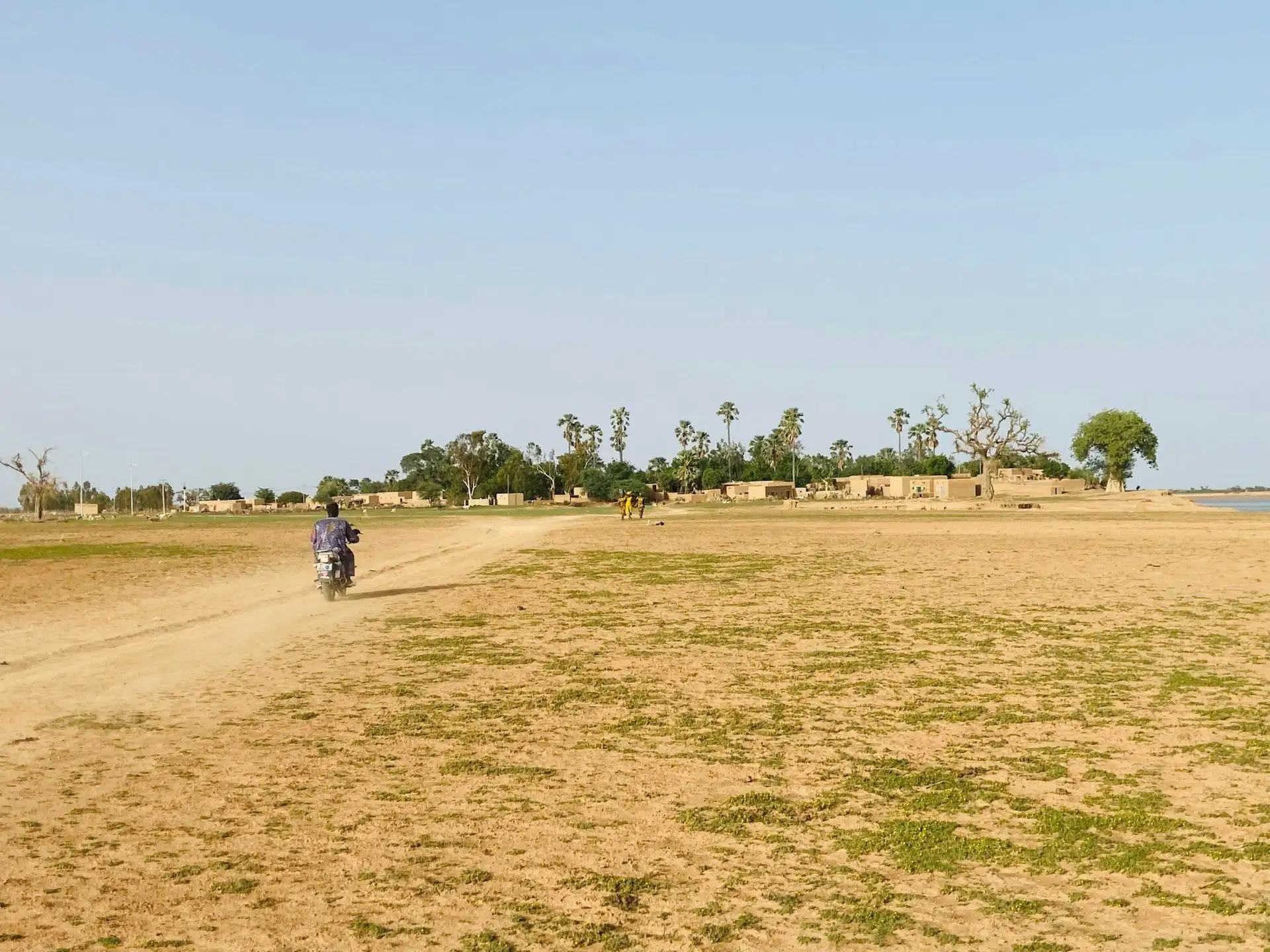
Mali
The richest man in history ruled here. The world's largest mud building stands here. The oldest university in sub-Saharan Africa was built here. Most of it is currently inaccessible. This page exists to explain what Mali is, what it was, and what it may one day be again.
The Current Situation
This page exists because Mali deserves to be understood, not just avoided. What happened here between roughly the 13th and 17th centuries — the Mali Empire, Timbuktu's manuscripts, Mansa Musa's pilgrimage to Mecca, the Sankore University, the Dogon people's centuries of culture on the Bandiagara Escarpment — is among the most important history in Africa. The world's largest mud-brick building stands in Djenné. More scholarly manuscripts than in any medieval European library were produced and preserved in Timbuktu. The kora and the ngoni and the griot tradition shaped what eventually became American blues and jazz. None of that stops being true because the country is currently going through a catastrophic security crisis.
The crisis began in 2012 when a Tuareg rebellion in the north, backed by armed groups returning from Libya after Gaddafi's fall, swept across the desert regions and captured Timbuktu and Gao. Jihadist factions then displaced the Tuareg rebels and imposed a brutal version of Sharia law, destroying ancient Islamic shrines in Timbuktu that they deemed idolatrous. French military intervention in 2013 pushed the jihadists out of the main cities, but they never left the countryside. Two military coups — in 2020 and 2021 — brought a military junta to power that expelled French forces and the UN peacekeeping mission and turned to Wagner Group mercenaries for security. The security situation has deteriorated since. Most of the country's UNESCO sites, including Timbuktu, Djenné, the Tomb of Askia in Gao, and the Bandiagara cliffs of Dogon Country, have been inaccessible to tourists for over a decade.
A strictly limited zone in far southern Mali — centered on Bamako and areas south of the capital toward Siby and the Guinean border — is considered passable with normal precautions by the most experienced travelers. Even here, the situation is described as volatile and changeable. Djenné, beloved by everyone who visited before 2012, sits in an area where jihadist-controlled villages are less than 20 kilometers from the town — yet the town itself has remained functional. Some adventurous travelers do visit it. None of them would tell you it is safe.
Mali at a Glance
A History That Changed the World
The geography explains everything. The Niger River — 4,180 kilometers long, the third-longest in Africa — curves through the Sahel in a great bend, creating a strip of agricultural possibility in an otherwise arid landscape. For thousands of years, this bend was where the Sahara met the savanna, where the salt of the desert met the gold of the south, where camel met canoe. Whoever controlled the bend controlled the trade. And from the 13th to the 17th century, that meant one of history's most extraordinary empires.
The Ghana Empire — not related to modern Ghana — controlled trans-Saharan trade for centuries before it, then fragmented. From its ruins, the Mandinka prince Sundiata Keita built something new. The legend of Sundiata is the foundational epic of West Africa: a sickly prince, unable to walk in childhood, who rose to defeat the tyrant Sumaoro Kanté at the Battle of Kirina around 1235 and unified the Mandinka clans into the Mali Empire. His story has been told by griots for 800 years and is still performed across the region today.
The empire that Sundiata founded reached its peak under Mansa Musa I, who ruled from roughly 1312 to 1337. Mansa Musa's pilgrimage to Mecca in 1324 is one of the most dramatic single acts in economic history. He traveled with a caravan of 60,000 people — soldiers, servants, scholars, and enslaved people — and 80 to 100 camels each carrying 136 kilograms of gold dust. He gave away gold so lavishly along the route through Egypt and into the Levant that he triggered a decade-long inflation crisis in those economies: the price of gold in Cairo did not recover for twelve years. European mapmakers included him in the Catalan Atlas of 1375, depicted seated on a throne holding a gold nugget, and his name reached every court in Europe as a byword for incomprehensible wealth. Some historians estimate his adjusted net worth at $400 billion, which would make him the wealthiest human being in recorded history.
But Mansa Musa's real legacy was not the gold he distributed. It was what he built on his return. He brought back from Mecca the architect Abu Ishaq al-Sahili, who helped design the Djinguereber Mosque in Timbuktu in the Sudano-Sahelian mud-brick style that became the signature of the region. He endowed the Sankore Mosque, which housed a university drawing scholars from across the Islamic world. At its height, Timbuktu had a population of around 100,000, a quarter of whom were students and scholars. The city held hundreds of thousands of manuscripts — in Arabic and Ajami (local languages written in Arabic script) — covering mathematics, astronomy, medicine, philosophy, history, and Islamic law. More manuscripts existed in Timbuktu than in any library in medieval Europe. When Europeans finally reached the city — René Caillié, disguised as a Muslim traveler, arrived in 1828 — they found not the golden city of legend but a city of mud buildings whose golden age had passed centuries earlier.
The empire fragmented after Mansa Musa's death. The Songhai Empire absorbed most of it, rose to its own peak under Askia the Great in the 15th and 16th centuries, and was then destroyed by a Moroccan invasion in 1591. French colonial rule arrived in the 1890s, and with it the name French Sudan. Independence came in 1960 under the name Mali — named for the great empire whose memory the new nation wanted to claim. From 1960 to 2012, Mali was considered one of West Africa's more stable democracies, however fragile. Tourism was a significant industry. The Festival in the Desert outside Timbuktu drew world music fans from across the globe. The Dogon villages on the Bandiagara Escarpment were a major draw. Then 2012 happened, and almost all of it stopped.
The "Lion King" defeats the tyrant Sumaoro Kanté at Kirina. The foundational event of West African history, still told by griots today.
The wealthiest person in human history rules Mali. His 1324 pilgrimage to Mecca crashes gold markets across Egypt and the Levant. He builds Timbuktu into the intellectual capital of the Islamic world.
Sankore University draws scholars from across Africa and the Islamic world. Hundreds of thousands of manuscripts are produced. A quarter of Timbuktu's 100,000 residents are scholars.
A Moroccan army crosses the Sahara and defeats the Songhai Empire. Timbuktu's golden age ends. The trans-Saharan trade routes begin their long decline.
French Sudan. The colonial economy extracts cotton and groundnuts. Bamako becomes the administrative capital. Independence in 1960 under Modibo Keïta.
Tuareg rebellion, then jihadist takeover of the north. Timbuktu falls. Shrines are destroyed. A military coup in Bamako. French intervention pushes jihadists back but doesn't end the insurgency.
Military takes power twice. French forces expelled. Wagner Group deployed. UN peacekeepers leave. Jihadist insurgency intensifies. Most of the country remains inaccessible.
The Places That Made Mali
Most of what Mali is famous for is currently inaccessible. This section covers those places honestly — not as destinations for 2026, but because understanding them is understanding Mali, and because knowing what is behind the closed door is the only way to appreciate why so many people grieve the current situation.
Timbuktu
Founded around 1100 CE as a seasonal Tuareg camp at the point where the Sahara meets the Niger. By the 14th century it was the greatest intellectual city in the world outside the Arab heartland. Three mosque-universities — Djinguereber, Sankore, and Sidi Yahia — formed a center of learning that attracted scholars from Egypt, North Africa, the Middle East, and across West Africa. The city held an estimated 700,000 manuscripts. Some were rescued before the jihadist occupation in 2012; others were burned. The city itself is relatively intact but road travel to it has been among the most dangerous in Africa for over a decade. In December 2025, a cultural biennial brought roughly 1,000 visitors to Timbuktu by chartered plane under police escort — the first significant foreign visitor presence in a decade. The road remains a guaranteed risk.
Djenné & the Grand Mosque
The Great Mosque of Djenné is the largest mud-brick structure on earth. The current building dates to 1907 but stands on the site of a mosque first built in the 13th century. Its three minarets, studded with wooden stakes that allow restoration workers to climb for the annual replastering, rise above a city that was itself one of the great trans-Saharan trade centers. Djenné's old town — all of it mud-brick, all of it UNESCO-listed — is built on an island in the Niger's inland delta. The surrounding area is controlled territory for jihadist groups, with the road from Ségou to Djenné having seen attacks. The city itself has remained functional. Some travelers with experienced local guides do visit. All of them accept real risk.
Dogon Country
The Bandiagara Escarpment — a 150-kilometer sandstone cliff face in central Mali — is home to the Dogon people, who fled to the cliffs in the 15th century to escape forced Islamization. Their villages cling to the rock face, granaries stacked in impossibly narrow ledges, masks carved for ceremonies that encode a cosmology of extraordinary sophistication. Dogon astronomers had detailed knowledge of the Sirius star system centuries before Western instruments could confirm it. The cliff villages and walking trails between them were one of the most celebrated travel experiences in West Africa. Since 2012 the area has suffered repeated ethnic conflict and jihadist infiltration. Even local guides from Bamako refuse to take tourists there.
The Niger River & Mopti
Mopti, where the Bani River meets the Niger, was the gateway to everything in the north: the jumping-off point for Timbuktu, for Dogon Country, for the inland delta's labyrinthine waterways. The town itself — built on three islands, its harbor full of pinasse boats, its market bringing Tuareg, Fulani, Songhai, and Bozo traders together — was one of the most alive river markets in West Africa. The road from Mopti north and east is an active conflict zone. The town itself has seen terrorist activity.
Tomb of Askia, Gao
The Tomb of Askia in the city of Gao — UNESCO World Heritage Site — is a pyramidal mud-brick monument built around 1495 for Askia the Great, the ruler of the Songhai Empire. It testifies, in UNESCO's own words, to "the power and riches" of an empire that controlled the trans-Saharan trade after the Mali Empire's decline. Gao is in the deep northeast, an area of active conflict, IEDs on roads, and regular attacks. The road from Bamako to Gao has been described as one of the most dangerous in the world.
Festival in the Desert
For a decade from 2001, the Festival au Désert — held near Essakane, north of Timbuktu — was one of the world's great music events. Tuareg nomads from across the Sahara, West African musicians, and international artists gathered in the sand dunes for three days of music around fires at night. Tinariwen, the Tuareg blues band that brought Saharan music to a global audience, were regulars. The festival was forced from its remote location in 2010, moved to the outskirts of Timbuktu, and then forced into exile entirely in 2012. It has not returned.
The South: What's Accessible
The far south of Mali — a corridor running roughly from Bamako south to Siby, east to Ségou, and west along the Guinean border — is considered the least dangerous part of the country. This is the area where some experienced travelers do go, with full awareness that even "least dangerous" in Mali 2026 carries real risk and that the situation can change overnight. Government advisories recommend against all travel; what follows is not a recommendation but an accurate description of what that zone contains and what the most adventurous, experienced visitors find there.
Bamako
A city of over two million on the Niger, with a music scene that has produced some of the most significant African artists of the 20th century — Ali Farka Touré, Salif Keita, Toumani Diabaté, Oumou Sangaré. The Grand Marché is one of West Africa's most vivid markets. The National Museum has excellent ethnographic collections. The city itself is considered more manageable than most of the country, though terrorist attacks have occurred even here, and travel outside the capital is restricted even for diplomats. The music bars in the Hippo Drome area are the best remaining reason to be in Bamako.
Ségou
200 kilometers northeast of Bamako on the Niger. A historic city with colonial-era architecture, a lively riverfront market, and good lodges. The Festival sur le Niger — held every February on the banks of the river — has continued since 2009 as the successor to the Festival in the Desert, bringing Malian and international musicians together in an atmosphere that, for those who have attended, captures something of what the original festival was. Ségou is considered the edge of the relatively manageable zone. Beyond it toward Djenné and Mopti, the risk profile changes sharply.
Siby & the Mandé Hills
Southwest of Bamako toward the Guinean border, Siby sits in a landscape of rocky outcrops and escarpments — the Mandé heartland, where the Mali Empire originated. The area has some of the best walking in the country, traditional Mandinka villages, and a relatively calm security profile. It is close enough to Bamako to day trip from the capital with a driver. The Camara Arch, a natural stone arch outside Siby, is the kind of extraordinary landscape that the chaos elsewhere in the country has entirely overshadowed.
Culture & Music
The crisis has not destroyed Malian culture. It has displaced it, pressured it, and silenced it in some of its original locations — but the music, the griot tradition, the textile arts, and the cultural identity of the Malian people are alive wherever Malians are. Understanding that culture is part of understanding why Mali matters, and why so many people — from ethnomusicologists to world music fans to historians of medieval Africa — care intensely about a country most tourists will not visit for years.
The Griot Tradition
The jeli — known in French as griot — is a hereditary oral historian, musician, and keeper of genealogical memory. Griot families have preserved the histories of West African kingdoms and noble families through song and spoken word for 800 years. The Epic of Sundiata, which exists in countless versions across the Mandé world, is the griot tradition's foundational text. Artists like Toumani Diabaté (kora), Salif Keita, and Oumou Sangaré carry this tradition into contemporary music. The blues tradition in America traces a direct acoustic line back through enslaved West Africans to the ngoni, the traditional lute that is the kora's ancestor. When you hear Mississippi blues, you are hearing an echo of Mali.
Malian Music Today
Despite the crisis, Malian music continues to be produced and performed, mostly outside Mali. Tinariwen — the Tuareg electric blues band from the desert around Kidal — have recorded in the Sahara and performed at major festivals worldwide. Fatoumata Diawara, a Malian singer, has become one of Africa's most prominent contemporary artists. The Festival sur le Niger in Ségou continues every February, drawing musicians who remember what the Festival in the Desert was and are keeping something of it alive by the river. Seek this music out. It is extraordinary.
Bogolan (Mud Cloth)
The traditional Malian textile — cotton cloth dyed with fermented mud in geometric patterns, each design carrying specific cultural meaning — is one of West Africa's most distinctive art forms. Originally worn by hunters, it became the basis for contemporary Malian fashion design. It is available in Bamako's markets and, in less touristed forms, in traditional villages around Ségou. The Malian fashion industry — centered on Bogolan and other traditional textiles — has been one of the more resilient creative industries through the crisis.
The Manuscripts
Before the jihadist occupation of Timbuktu in 2012, a librarian named Abdel Kader Haidara organized a network of smugglers to move hundreds of thousands of ancient manuscripts — in wooden trunks, in backpacks, hidden under produce — out of the city and down to Bamako by boat and road. An estimated 377,000 manuscripts were saved. They are now in storage, waiting for the conditions to safely return them. The Ahmed Baba Institute in Timbuktu, where many were stored, was partly burned during the occupation. The effort to save them is one of the most remarkable cultural rescue operations in history.
Mali is 90% Muslim and dress codes matter deeply, particularly in rural areas and markets. Covered shoulders and knees for everyone. Women should carry a headscarf for mosques and village visits.
"I ni ce" (good morning/day), "I ni wula" (good evening). Like across West Africa, beginning a conversation with the request rather than the greeting is considered rude. Greet first. Always.
Malian tea ceremony — three small glasses of sweet green tea, poured from height to create a froth, served slowly — is a ritual of hospitality. Declining is impolite. The three glasses represent stages of life.
In a country this security-volatile, a knowledgeable local guide is not optional. Their assessment of what is and isn't safe on a given day is more current and reliable than any guidebook or government advisory.
Enforced strictly and will result in detention and equipment confiscation. Do not photograph checkpoints, soldiers, or any government installation regardless of how harmless it seems.
Under any circumstances. Bandits, jihadists, and poor road conditions make night travel genuinely life-threatening. This is not a precaution. It is the rule that matters most.
Stop at all military checkpoints. Have documents ready. Follow instructions immediately and without argument. Checkpoints are one of the places where things go wrong most quickly.
Experienced travelers to high-risk areas know not to announce their movements. Do not post on social media about where you are or where you're going. Advance knowledge of visitor movements is how kidnapping is planned.
Food & Drink
Malian cuisine is built on millet, sorghum, rice, and the bounty of the Niger River. It shares the West African staple architecture of starchy base plus flavorful sauce, with the Sahelian influence of dried fish, peanuts, and spices layered over it. The food in Bamako ranges from excellent local restaurants to a surprisingly international scene, a legacy of the decades when Mali was a functioning tourism destination and a diplomatic hub.
Tô
The national staple — a stiff millet or sorghum porridge similar to West African fufu or East African ugali. Eaten with sauce: leafy green sauces (nono sauce), peanut sauce, or the dried fish and baobab leaf sauce called soumbala sauce. Roll it into a ball with your right hand, dip it in. Sold from cooks' stalls throughout Bamako for the equivalent of $1–2.
Niger River Fish
Capitaine (Nile perch) and catfish, grilled or fried, served with rice and spicy tomato sauce along the river in Bamako and Ségou. The poisson braisé — charcoal-grilled fish wrapped in newspaper — from riverside cooks is one of the great simple meals in West Africa. Fresh and inexpensive, eaten at a plastic table with a cold Castel beer.
Tigadèguèna
Peanut stew — the Malian national dish in practical terms. Slow-cooked with chicken or beef, onions, tomatoes, and a rich peanut paste. Served over rice or with tô. Every cook has their version. It is deeply satisfying and deeply Malian. Street stalls and family restaurants throughout Bamako serve it daily for $2–5.
Brochettes & Street Food
Grilled meat on skewers — beef, lamb, goat — sold at roadside grills throughout the capital, particularly around the Grand Marché in the evening. Brochettes with a baguette (French colonial legacy) and a hot sauce is the street food of choice for Bamakois of all classes. Also: aloco (fried plantain), dèguè (millet couscous with soured milk and mango).
Attaya (Tea Ceremony)
Three small glasses of green tea, very sweet, poured repeatedly from height between glasses and pot to create a froth. The process takes 20–30 minutes per round, and the three rounds represent the stages of life: the first bitter as death, the second sweet as life, the third light as love. Accepting all three and taking your time is the correct response. This is the social ritual of Mali.
Drinks
Mali is predominantly Muslim and alcohol is less visible than in coastal West Africa, but not absent. Castel and Flag beers are available in Bamako restaurants and bars catering to expatriates and tourists. Gnamankoudji — a cold hibiscus flower drink, sweetened — is the non-alcoholic refresher you'll drink constantly in the heat. Mango juice, when mangoes are in season in April and May, is extraordinary.
If You Go
This section is for travelers who have read everything above, understand the risks clearly, and are still considering going. It is not encouragement. It is the information that exists, presented accurately, for those who will proceed regardless. If you have any doubt about whether this trip is right for you, that doubt is the answer.
Local Guide — Non-Negotiable
An experienced Malian guide is not optional in Mali 2026. They need to have current contacts in the areas you plan to visit, a working relationship with local security actors, and the judgment to change plans immediately when necessary. Verify their track record with recent travelers. Do not hire someone at the airport or through a hotel you found online. Use personal recommendations from experienced Mali travelers.
Specialist Insurance
Standard travel insurance does not cover Mali. You need a specialist policy explicitly covering conflict zones that includes emergency medical evacuation. Confirm in writing that Mali is covered. Global Rescue and similar providers are the realistic options. Without this, a medical evacuation from Bamako to Dakar or Paris will cost tens of thousands of dollars out of pocket.
Security Posture
Do not share your movements publicly. Do not post on social media. Tell people you trust at home your full itinerary and a daily check-in schedule — if they don't hear from you by an agreed time, they should contact your country's emergency line. Carry copies of documents separately from originals. Follow your guide's instructions immediately and without debate.
Cash Only
Credit cards are accepted only in a handful of major hotels in Bamako. ATMs are limited and unreliable outside the capital. Bring enough XOF (CFA francs) or euros for your entire trip plus a substantial buffer. The Central Bank bureau de change on Koulikoro Road in Bamako offers exchange, though rates may lag. EUR is the easiest foreign currency to exchange.
Vaccinations & Health
Yellow fever vaccination is required for entry. Also strongly recommended: Hepatitis A, Typhoid, Meningitis (common in the Sahel), Rabies for rural travel, and malaria prophylaxis (essential throughout). Medical facilities in Bamako are limited; outside the capital they essentially don't exist. Medical evacuation insurance is your healthcare safety net.
Full vaccine info →Embassy Registration
Register with your embassy before arrival — STEP for Americans, FCDO registration for British nationals. Given the severity of the situation, your embassy should know you are in the country. Note that embassy capacity to assist in a crisis is extremely limited. The US Embassy has had periods of reduced staffing. Do not plan your exit around embassy help.
Visa & Entry
Most visitors require a visa for Mali, obtained before departure from a Malian embassy or consulate. The process has become more complicated since the military takeover, and visa issuance is at the discretion of the Malian government — which has, in practice, suspended visas to US citizens as of January 1, 2026. The situation is evolving and should be checked directly with the nearest Malian diplomatic mission before any travel planning.
Mali has suspended visas to US citizens as of January 2026. Other nationalities should verify current policy. Yellow fever certificate is mandatory for entry.
Safety in Mali
Terrorism
Al-Qaeda-linked JNIM (Jama'at Nusrat al-Islam wal-Muslimin) and Islamic State Sahel Province are active across most of the country. Both groups target Western nationals specifically for kidnapping and have carried out mass-casualty attacks on military and civilian targets including in and around Bamako.
Kidnapping
Western nationals have been kidnapped and held for ransom across Mali. Aid workers, journalists, and tourists have all been victims. The risk is concentrated on roads and in areas away from central Bamako, but the capital is not immune. Attacks are often planned in advance based on advance knowledge of movements.
IEDs
Improvised explosive devices have been documented on roads between major cities, including the roads to Gao, Kidal, Mopti, and the Timbuktu region. The road from Bamako to Ségou is considered safer than most; beyond Ségou, risk escalates dramatically.
Coup Government
Mali has been under military rule since two coups in 2020 and 2021. The transitional government has expelled Western ambassadors, press freedom has collapsed, and the rule of law is inconsistent. Arbitrary detention of foreigners has been reported. The government's relationship with Wagner Group mercenaries adds additional unpredictability.
Civil Unrest
Demonstrations occur in Bamako and can turn violent without warning. Anti-Western sentiment has increased since the expulsion of French forces. The fuel blockade of 2025 caused street-level tension throughout the country. Avoid any crowds or demonstrations.
Malaria & Health
Malaria is endemic year-round, intensified in the rainy season (June–October). Medical facilities in Bamako are limited; outside the capital they are essentially absent. Yellow fever and meningitis are present in the Sahel. Medical evacuation is the realistic emergency plan for anything serious.
Emergency Information
Key Contacts in Bamako
Most Western embassies are in the ACI 2000 and Badalabougou districts of Bamako. Several have reduced operations.
The Griot Remembers
In the Mande tradition, the griot is the keeper of memory. When a griot dies, an elder of the Mandinka community says that a library has burned — an analogy that takes on additional weight when you know what happened to the Ahmed Baba Institute in Timbuktu in 2012. The griot's job is to ensure that nothing important is forgotten, regardless of what is happening in the world outside the song.
Mali's history is not diminished by the current crisis. The fact that Timbuktu is currently inaccessible does not make it less extraordinary that a 14th-century African city held more manuscripts than any library in medieval Europe. The fact that Dogon Country is currently too dangerous to visit does not make the Dogon's cosmological knowledge less remarkable. The fact that Mansa Musa's golden age is 700 years in the past does not make his pilgrimage to Mecca less staggering in its scale and consequence. These things happened. They are part of human history. They belong to everyone's story of what human civilization has been capable of — not just Africa's story, the world's.
The griots would say that a story doesn't end because it goes quiet for a while. It waits. The manuscripts in storage in Bamako are waiting. The Dogon villages on the cliff face are waiting. The three mosque-universities in Timbuktu are waiting. Someday — not now, not safely now — people will go back. When they do, the songs will be ready.