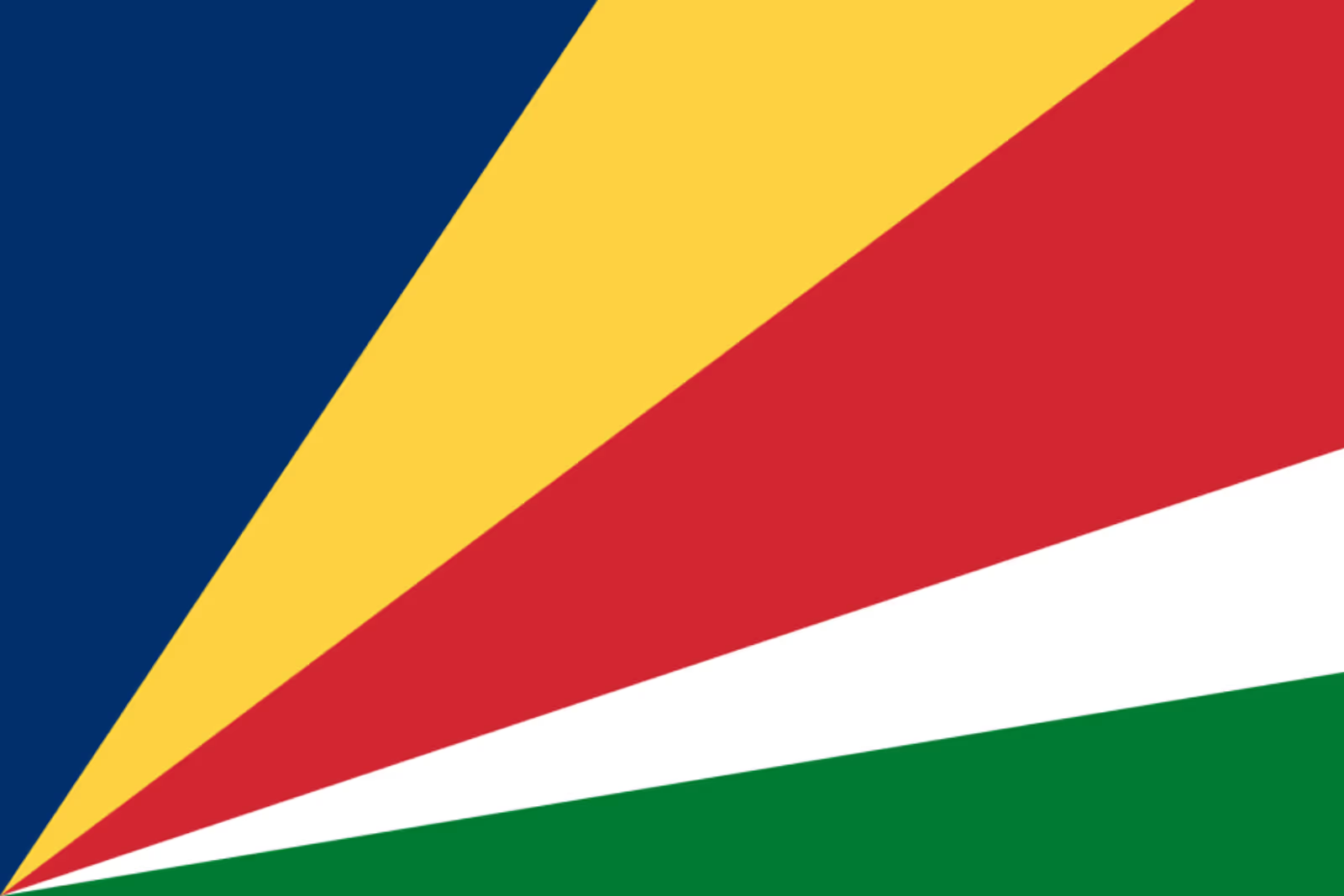
Seychelles
115 islands in the western Indian Ocean where the beaches genuinely look like someone arranged the granite boulders for effect, and the water is actually that color. The world's largest seed — the coco de mer — grows here and only here. Giant tortoises hundreds of years old walk freely. The Vallée de Mai is so ancient and strange that a Victorian British general declared it the Garden of Eden. This is what the superlatives are actually about.
What You're Actually Getting Into
Seychelles is expensive. This is the first thing to say, and the page says it clearly: this is one of the world's most expensive island destinations, with mid-range hotels starting at $200 per night and luxury properties reaching $3,000. The remoteness of the islands, their small scale, and decades of positioning as a premium tourism destination have made Seychelles unaffordable for most travelers. If you're looking for value-for-money beach holidays, Mozambique or Zanzibar are better options at a fraction of the cost.
What Seychelles offers that almost nothing else does: beaches that are genuinely, verifiably, objectively extraordinary. The combination of ancient granite boulders — some of the oldest exposed rock on earth, up to 650 million years old — with white sand, turquoise water, and tropical vegetation creates an aesthetic that photographers have not exaggerated. Anse Source d'Argent on La Digue and Anse Lazio on Praslin consistently rank among the world's most beautiful beaches, and they deserve the ranking.
Beyond beaches: wildlife and conservation at a level that is internationally significant. Seychelles has two UNESCO World Heritage Sites — the Vallée de Mai on Praslin (a prehistoric palm forest where the coco de mer grows) and the Aldabra Atoll (the world's largest raised coral atoll, home to over 100,000 giant tortoises and the Aldabra rail, the last flightless bird in the Indian Ocean region). The country devotes a larger percentage of its territory to marine and land conservation than almost any nation on earth. It doesn't permit oil drilling. It doesn't allow over-water bungalows. This is a deliberate policy choice that keeps the water clear and the reefs alive.
Victoria, the capital on Mahé, is the world's smallest capital city — you can walk it in under an hour. The population of the entire archipelago is about 98,000 people. This is not a country that overwhelms you with scale. It rewards you with detail: the color of the water at different times of day, the weight of a coco de mer nut, the indifference of a 200-year-old tortoise to your presence.
Seychelles at a Glance
A History Worth Knowing
The Seychelles were uninhabited when Europeans first encountered them — the islands appeared on Arab charts from the 9th century, and Portuguese sailors noted them in the early 16th century, but none settled permanently. This geological fact — that these mid-ocean granite islands had no indigenous population — matters for understanding what followed, because the entire human history of Seychelles is colonial and post-colonial, without a pre-colonial society to displace or assimilate.
The granite inner islands of Seychelles are among the oldest exposed rock on earth — fragments of the ancient supercontinent Gondwana, around 650 million years old, that broke away when Madagascar separated from India. This geological antiquity is what makes the Seychelles so biologically remarkable: species have been evolving in isolation here for millions of years, producing endemics found nowhere else.
France claimed the islands in 1756, naming them after Jean Moreau de Séchelles, France's finance minister. The first permanent settlement was established in 1770. French colonists brought enslaved Africans to work spice and coconut plantations — the population mix of European settlers, African enslaved people, and later indentured workers from India, Malaysia, and China produced the Creole culture and Seychellois Creole language that define the islands today. Britain took control during the Napoleonic Wars and administered Seychelles as a Crown Colony from 1811 until independence in 1976.
Independence came on 29 June 1976. A year later, in June 1977, Prime Minister France-Albert René led a coup that deposed the first president and established single-party socialist rule. René governed until 2004, overseeing a one-party state from 1977 to 1993, then multiparty elections that his party consistently won. The political transition to genuine multiparty democracy has been gradual; Seychelles is currently governed by Wavel Ramkalawan, who won the 2020 election in the country's first genuine peaceful transfer of power between parties — the first opposition victory in the country's history.
The islands' economy is built almost entirely on tourism (about 25% of GDP) and fishing (particularly tuna). The deliberate decision to position Seychelles as a premium, low-volume destination — rather than a mass tourism market — has kept the islands relatively uncrowded and the environment relatively intact. The Blue Economy framework, adopted in 2018, commits the country to sustainable ocean management. The islands completed a landmark debt-for-nature swap deal (the world's largest at the time) in 2016, converting foreign debt into funding for marine conservation. These policy choices are visible: the water is clear, the reefs are alive, the tortoises are everywhere.
The granite inner islands form from Gondwana — among the oldest exposed continental rock on earth. Species have been evolving in isolation ever since, producing the extraordinary level of endemism that makes Seychelles biologically unique.
France formally claims the uninhabited islands, naming them for the French finance minister. First permanent settlement established 1770 with French settlers and enslaved Africans. Spice and coconut plantations are established; Creole culture begins forming from the mix of populations.
Britain takes the islands during the Napoleonic Wars and administers them as a Crown Colony. The mixed colonial population continues under British rule; indentured workers arrive from India, Malaysia, and China, adding further layers to the Creole cultural blend.
Seychelles becomes independent, joining the Commonwealth. First President James Mancham leads a brief period of multiparty democracy before being deposed in 1977. Independence Day (29 June) remains the national holiday.
France-Albert René's SPUP governs as a one-party socialist state. The party takes control of major industries. Tourism is developed deliberately as a high-value, low-volume sector. The 1977 coup is context for understanding the islands' political history, though its immediate effects on visitors are invisible today.
Aldabra Atoll inscribed as a UNESCO World Heritage Site — recognition of its extraordinary conservation significance as the world's largest raised coral atoll and the ecosystem that protects over 100,000 giant tortoises.
The Vallée de Mai Nature Reserve on Praslin inscribed as UNESCO World Heritage Site — the prehistoric palm forest where coco de mer grows in its only wild setting. One of the smallest natural World Heritage Sites at 19.5 hectares.
Wavel Ramkalawan wins the presidential election — the first time an opposition candidate has won since independence. The peaceful transfer of power marks a significant democratic milestone for the archipelago.
Mahé, Praslin & La Digue
Most visits focus on the three main inner islands — Mahé (the largest and most developed), Praslin (the coco de mer island, with the finest beaches on Praslin), and La Digue (the smallest, slowest, and most pictured). The three can be combined in any order in 7–14 days, connected by fast ferries (Mahé–Praslin: ~1 hour; Praslin–La Digue: 15 minutes).
Mahé
The largest island (27km long), home to 86% of the population, the international airport, and the capital Victoria. Mahé is the practical base for most visits — where flights arrive, where ferries depart for the other islands, where the most extensive infrastructure exists. Victoria itself is worth a morning: the clock tower (a miniature of London's Vauxhall Bridge clock), the Sir Selwyn-Clarke Market (the best food market in the country), the Botanical Gardens where Aldabra tortoises roam freely among 200-year-old trees, and the National Museum.
Mahé's best beaches are on the west coast — Beau Vallon in the north (the main tourist beach, calm water, good for swimming and watersports), Anse Intendance in the southwest (dramatic, surf-swept, occasionally dangerous for swimming), and the quieter coves of the south. The Morne Seychellois National Park occupies 20% of the island and offers serious hiking through cloud forest, tea plantations, and rainforest to sweeping panoramic views. The Mission Lodge ruins in the park — a former plantation — provide the best elevated perspective over the island.
Praslin
Seychelles' second island holds the Vallée de Mai — a 19.5-hectare UNESCO World Heritage forest where the coco de mer palms grow in near-primeval conditions. The forest is so ancient and so strange — the massive double coconuts hanging from palm trees 30 meters tall, the near-silence broken only by endemic birds, the cathedral quality of the canopy — that in 1881 British General Charles Gordon visited and became convinced it was the Garden of Eden from Genesis. He was not wrong in the sense that the place is genuinely unlike anywhere else on earth.
Praslin's beaches — Anse Lazio in the northwest and Anse Georgette to its west — are consistently ranked among the world's finest. Anse Lazio specifically: a long arc of pale sand between two headlands of granite and palm, turquoise water grading to deep blue, waves that are swimmable without being entirely placid. This is not hyperbole. The Seychelles Black Parrot — the national bird, found only on Praslin — lives in the Vallée de Mai; around 1,382 individuals, the global total.
La Digue
The smallest of the three main islands, La Digue runs on bicycle and ox-cart time — cars are almost entirely absent, the roads are narrow, and the pace of life is a working demonstration of what happens when you remove motor vehicles from an island. Cycling from one beach to the next is the way you move here. Anse Source d'Argent — accessible through the L'Union Estate plantation (small entry fee) — is the most photographed beach in the Indian Ocean: ancient pink-grey granite boulders worn smooth by millennia of water, framing shallow turquoise coves of white sand. The photos you've seen are accurate. The Veuve Nature Reserve protects the last significant population of the Seychelles Paradise Flycatcher, a critically endangered black bird with spectacularly long tail feathers. Grand Anse and Petite Anse on the south coast require a hiking trail to reach and reward visitors with wild, uncrowded beauty.
Curieuse Island
A marine national park 15 minutes by boat from Praslin — former leper colony (ruins still stand), now home to over 300 free-roaming Aldabra giant tortoises who wander through mangroves, sandy clearings, and along the shore with complete indifference to visitors. Walking among them is extraordinary: these animals are 150–200+ years old, moving at a pace that suggests they have better things to think about than you. Coco de mer palms also grow wild here. The mangrove boardwalk is excellent. Most visits are organized as day trips from Praslin, including snorkeling on the surrounding reef.
Cousin Island Special Reserve
A 29-hectare island nature reserve 2km west of Praslin, managed by Nature Seychelles as a special reserve for seabirds and sea turtles. Over 300,000 birds of numerous species nest here — the density of bird life is extraordinary, with frigatebirds, tropicbirds, shearwaters, and warblers filling every tree. The endangered Seychelles Warbler recovered from near-extinction at Cousin and now has a healthy population. Day visits are strictly managed — only guided tours allowed, small groups, timed entry. Entry: approximately 600 SCR. Reserve in advance.
Aldabra Atoll
The world's largest raised coral atoll, 1,150km from Mahé, accessible only by live-aboard dive cruises and research expeditions — no commercial flights, no tourist infrastructure. Home to over 100,000 Aldabra giant tortoises (the world's largest wild population), the Aldabra rail (the last surviving flightless bird in the Indian Ocean region), undisturbed coral reefs, and one of the most intact marine ecosystems in the western Indian Ocean. UNESCO-listed since 1979. For most visitors, Curieuse is the practical tortoise encounter; Aldabra is for those with the time, budget, and determination to reach the edge of the world's conservation map.
Beaches
Seychelles beaches are justified in their fame. The combination of the ancient granite boulders (found nowhere else in ocean island beaches — granite is continental rock that doesn't normally form ocean islands, which is what makes Seychelles geologically extraordinary), the shade of the water, and the near-universal absence of development behind the beaches creates something that photographs cannot quite capture because photographs can capture appearance but not scale, temperature, or silence.
Important note: all beaches in Seychelles are public and free. Hotels on beachfronts cannot block access. You can access any beach from the road without going through hotel grounds. Beaches may have parking areas or bus stops nearby.
Anse Source d'Argent
The most photographed beach in the Indian Ocean — not a single beach but a series of coves separated by massive smooth granite boulders, each cove a slightly different shade of turquoise depending on depth and time of day. The water is shallow here (inside the reef), calm, and warm, making it excellent for swimming, floating, and photography. Access through the L'Union Estate plantation (small entry fee of around 115 SCR). The estate itself — copra production, giant tortoises in an enclosure, vanilla cultivation — is worth the 20-minute walk through it. Best visited in the morning before the day-trip boats arrive from Praslin. Can be crowded by mid-morning; the further coves are quieter.
Anse Lazio
Consistently voted among the world's most beautiful beaches and the argument is strong: a long arc of pale gold sand between two granite headlands, palm trees at the back, gradations of turquoise to deep cobalt in the water, gentle enough waves for swimming. Unlike Anse Source d'Argent, Anse Lazio is exposed rather than enclosed — the water is deeper, the waves are real, and the view extends to the open sea. Two excellent restaurants at the beach. Getting there requires a 20-minute downhill walk or taxi from the road — there's no direct vehicle access. Best in the southeast trade wind season (June–September) when the water at Anse Source d'Argent becomes rougher.
Anse Intendance
A 500-meter stretch of wild beach on Mahé's southwest coast — deep, fine white sand backed by dense palm and takamaka trees, strong rolling Atlantic-style waves that make it the best surf beach in the country and occasionally dangerous for swimming. Hawksbill turtles nest here; the Banyan Tree Resort monitors nesting sites and you can join turtle patrols during nesting season (October–February). No facilities beyond the resort's beach restaurant. Dramatic and beautiful in the way that dangerous-beautiful things are.
Anse Georgette
Just west of Anse Lazio, Anse Georgette is shorter, less visited, and entirely undeveloped — no sun loungers, no cafes, no tourist infrastructure. Access requires a prior booking through the Constance Lemuria Hotel (to walk through their grounds to the beach) or a 30-minute hike from Anse Lazio around the headland. The lack of reef means currents can be strong; ask locally before swimming. The reward for the effort: a beach with the same granite-and-turquoise aesthetic as its neighbor, usually much quieter.
Beau Vallon
The main tourist beach on Mahé — a long, calm, north-facing bay where most of the island's hotels are concentrated. Less dramatic than the famous photographed beaches but genuinely pleasant, the calmest on Mahé for swimming, and the only beach where you can reliably rent a sunbed. Water sports operators, restaurants, and bars line the back of the beach. Best September–April when the northwest wind makes the north coast calm; can be rough June–August. Not the reason to come to Seychelles, but perfectly enjoyable.
Grand Anse & Petite Anse
On La Digue's wild south coast, accessible via hiking trail from the island's interior — 30–45 minutes each way on foot or bike. Grand Anse is a long beach with strong surf unsuitable for swimming but dramatic in its scale and isolation. Petite Anse, further east, is smaller and more protected. The hike itself — through coastal forest with frequent bird sightings — is one of the best on La Digue. Bring water and food as there are no facilities at either beach.
Wildlife & Conservation
Seychelles is one of the world's most concentrated centers of endemic biodiversity — species found here and nowhere else, having evolved in isolation for millions of years. The islands have 13 endemic bird species, over 100 endemic plant species, endemic reptiles including the Seychelles wolf snake and tiger chameleon, and unique marine ecosystems. The country's conservation commitment is genuine and legally enforced: marine protected areas cover significant portions of the exclusive economic zone, hunting of protected species carries serious penalties, and development near sensitive habitats is restricted.
The Coco de Mer
The coco de mer (Lodoicea maldivica) is one of the most extraordinary plants on earth: a palm tree found naturally only on two Seychelles islands (Praslin and Curieuse), growing to 30 meters tall, producing the largest seed in the plant kingdom (up to 25kg, taking 7 years to germinate), with leaves up to 6 meters long and 3.5 meters wide — the largest leaf in the vegetable kingdom. The seed's anatomical shape (the female seed resembles a woman's pelvis; the male catkin is unmistakably phallic) led to centuries of legend. Local lore holds that on moonlit nights, the male trees uproot themselves and walk through the forest to mate with the female trees, and that anyone who witnesses this dies. The Vallée de Mai's forest is protected specifically for this species. To take a nut out of Seychelles, you need a government-issued certificate — they are tracked individually by serial number.
Aldabra Giant Tortoise
The Aldabra giant tortoise (Aldabrachelys gigantea) is the world's largest land tortoise and one of the longest-lived animals on earth — individuals regularly reach 150–200 years old. Esmeralda, a famous individual on Bird Island, is estimated at over 200 years old and weighs around 300kg. A Seychellois tradition holds that many families have a giant tortoise gifted at birth, and the tortoise often outlives the person. The wild population of over 100,000 on Aldabra is one of conservation biology's success stories — the atoll was threatened with a military airfield development in the 1960s that was ultimately cancelled, preserving the ecosystem intact. Tortoises can be encountered freely on Curieuse Island (300+), in the Botanical Gardens in Victoria, and at several resort sanctuaries.
Marine Life
The waters around Seychelles contain over 900 identified fish species, hawksbill and green sea turtles, whale sharks (October–January around Mahé and Praslin), manta rays (year-round at some dive sites), hammerhead sharks, and extensive coral communities on the inner bank. Snorkeling is excellent even from the beach at Beau Vallon and around the granite boulders at Anse Source d'Argent. Dive sites include St Anne Marine National Park (near Victoria), the Brissare Rocks (whale shark territory), and the outer bank drop-offs around Silhouette. The Seychelles Island Foundation's conservation fees for the Vallée de Mai and Aldabra fund marine research directly.
Endemic Birds
Thirteen endemic bird species call Seychelles home. The Seychelles Black Parrot (only on Praslin, approximately 1,382 individuals globally) is the national bird. The Seychelles Paradise Flycatcher (critically endangered, fewer than 200 individuals, only on La Digue's Veuve Reserve) is the most sought after by visiting birders — guided tours guarantee an encounter. Cousin Island has the highest bird density anywhere in Seychelles (300,000+ birds on 29 hectares). The Seychelles Warbler was one of conservation's greatest turnaround stories: reduced to 26 individuals on one island in 1968, now numbering in the thousands across several islands after managed translocation.
Creole Culture
Seychellois Creole culture is the product of the islands' colonial history: French settlers, enslaved Africans from the East African coast and Madagascar, and later workers from India, Malaysia, and China, all contributing to a blend that produced a distinct language (Seychellois Creole, a French-based Creole with Bantu, English, and Malagasy elements), cuisine, music, and social norms. The culture is relatively relaxed, English and French are both widely spoken alongside Creole, and the Christian tradition is dominant (76% Roman Catholic) but practiced alongside Hindu and Muslim communities without significant tension.
Sega & Moutya
Moutya is the deeper, older musical tradition — originally a protest song form created by enslaved Africans on the plantations, with a characteristic heavy drum beat and call-and-response vocal structure that expressed resistance under oppression. After emancipation, it evolved into a social music form. Sega (shared with Mauritius and Réunion) is the faster, more celebratory island dance music. Seggae — a fusion of sega with reggae — is the most popular contemporary form, heard in bars and restaurants across the islands. The Creole Festival in October celebrates Creole culture across the islands with music, food, and performance.
Conservation as Culture
Something unusual happens in Seychelles that is worth noting: conservation is not just policy but social value. The islands have produced a population that genuinely cares about their marine and terrestrial ecosystems — not because they have been told to care, but because the health of the reefs and forests directly connects to the quality of their lives and the continuation of their economy. This shows up in small ways: plastic bags are restricted, marine protected area rules are followed by local fishermen, tortoises that wander onto roads are moved carefully rather than driven around. Environmental stewardship functions as a component of Seychellois identity in a way that is rare even among countries with strong conservation records.
Craft & Art
The Creole culture has a strong craft tradition: hand-woven pandanus (screw pine) baskets and hats, batik-dyed cloth in tropical patterns, wood carvings of endemic wildlife (take these over the coco de mer nut for ease of transport — coco de mer export requires official documentation), and model boats of traditional Seychellois fishing vessels. The Domaine de Val des Prés on Mahé is the best place to buy genuine locally-made crafts — a craft village with demonstrations and fair prices, compared to the airport shops. The Saturday market in Victoria is cheaper and more authentic still.
Tortoises & Family
The tradition of gifting newborn children a giant tortoise — which will then outlive the child — is a specific Seychellois cultural practice that captures something essential about how the islands relate to their wildlife. The tortoise is not a pet in the conventional sense: it is a presence, a companion across generations, an animal older than anyone's grandparents that will still be there when the grandchildren are gone. This relationship to deep time — to animals that have been alive for 150 years and will continue for another 100 — is one of the genuinely unusual emotional textures of Seychellois daily life.
Seychellois Creole Food
Seychellois Creole cuisine blends African, French, Indian, and Chinese influences, centered on the extraordinary fresh seafood of the Indian Ocean. The spicing draws from the islands' historical position in the spice trade — turmeric, cinnamon, cardamom, chilli — applied to fish, octopus, shark, and shellfish with both French technique and South Asian seasoning. Hotel buffet food is fine but often a pale version of what Seychellois actually cook and eat. Finding the real version requires going to local restaurants and takeaways rather than resort dining.
Grilled Fish & Seafood
The Indian Ocean produces extraordinary fish — red snapper, barracuda, bourgeois (red emperor), yellowfin tuna — and the Seychellois way with them is most often straightforward: grilled over charcoal, served with a side of rice and coconut milk, pickled chilli sauce, and a wedge of lime. The quality of the fish — caught that morning, in many cases — makes technique secondary. Octopus curry, lobster in garlic butter, and jackfish (carangue) are the other seafood staples. Find them at local takeaway spots (called "take-away") and beach restaurants rather than hotel menus for the best version.
Shark Chutney
A distinctly Seychellois specialty: steamed shark meat (usually small reef shark) mixed with turmeric, lime juice, chilli, and bilimbi (a small sour fruit). The texture is soft and flaky; the flavor intensely seasoned. Eaten cold with bread or as a side at lunch. Found at the Victoria market in jars and at local restaurants as an appetizer. The canning of shark for this purpose is one of the traditional ways sharks caught as bycatch were used rather than wasted. An acquired taste for most visitors but worth trying.
Coconut-Based Dishes
Coconut — in oil, milk, and cream form — runs through Seychellois cooking the way olive oil runs through Mediterranean cooking. Coconut curry (kari koko) — fish or chicken or octopus in a coconut milk sauce spiced with turmeric, cardamom, and ginger — is the most common form. Ladob is a sweet dish of bananas, sweet potato, or breadfruit cooked in coconut milk with vanilla and nutmeg — served as dessert or side. Coconut bread. Coconut oil from the Victoria market. The smell of coconut oil cooking is the background note of every Seychellois kitchen.
Creole Curry & Rice
Seychellois rice dishes absorb Indian, Chinese, and French influences simultaneously. Riz creole — rice cooked with coconut milk and spices, served as a neutral starch alongside intensely flavored curries and chutneys — is the daily grain in most households. Bourgeois (red emperor fish) with chilli, garlic, and tomato is a classic combination. The cuisine is never bland — turmeric colors most dishes a vivid gold — and the level of heat is moderate to significant depending on the cook's hand with the pili-pili (bird's eye chilli).
Breadfruit
Breadfruit (Artocarpus altilis) is so central to Seychellois cooking that local legend holds any visitor who eats it will be compelled to return to the islands. It is eaten boiled, baked, fried, and curried — its starchy, potato-like flesh adapts to almost any preparation. The fried version with salt and pili-pili sauce is the most common street food form. Breadfruit chips, available at the Victoria market, are the best souvenir that doesn't require customs paperwork.
Kalou & Bacca
Kalou is palm wine — tapped from the coconut palm, sweet when fresh, increasingly alcoholic and sour through the day. Found at local bars and from informal sellers; quality varies enormously depending on how recently it was tapped. Bacca is sugarcane spirit — the local firewater, rough but functional. Seybrew is the national lager, produced since 1971, served cold everywhere and the correct accompaniment to grilled fish on a beach at 1pm. Fresh coconut water, drunk from a green coconut, is the non-alcoholic alternative and always excellent.
When to Go
Seychelles is outside the cyclone belt and has no single "wet season" — rainfall is spread through the year, with the main variable being which monsoon is blowing. The best periods are the transition months when neither monsoon dominates. The islands are visited year-round and there is no catastrophically bad time to go.
Apr–May & Oct–Nov
Transition MonthsThe ideal visiting windows: between monsoons, calm seas on all coasts, low wind, good diving visibility, pleasant temperatures (27–30°C), and lower tourist numbers than peak season. Whale sharks possible October–January. Sea turtles nesting on some beaches October–February. Seychellois generally agree these are the finest months weather-wise.
Nov – Mar
Northwest MonsoonHot, humid, occasional heavy rain (particularly on Mahé and Silhouette). The northwest wind makes north-facing beaches (Beau Vallon, Anse Lazio) calmer; south-facing beaches get rougher. Peak tourist season December–January means highest prices and most crowded. Good snorkeling and diving on the west side of the islands. Whale sharks possible until January. Festive atmosphere December.
Jun – Sep
Southeast Trade WindsCooler (24–27°C), drier, but windier — the southeast trade winds create rougher conditions on south and east facing beaches (Anse Source d'Argent becomes turbulent; Beau Vallon and Anse Lazio are calmer). Good snorkeling on the north side of islands. Fewer tourists than peak season. The wind also makes conditions better for sailing and kitesurfing.
Trip Planning
7–10 days covers the main three islands well. 14 days allows for an outer island addition or a more relaxed pace on the three main ones. Plan island-hopping around weather and activities: La Digue first (most photogenic), then Praslin (Vallée de Mai and Anse Lazio), then Mahé last for flights home.
Mahé — Arrival & Capital
Arrive at Mahé International Airport. Day 1: settle in, Victoria afternoon (market, botanical gardens, clock tower). Day 2: Mission Lodge hike in the morning (best panoramic view of the island), Beau Vallon beach in the afternoon, sunset from the waterfront. Pre-book your ferry to Praslin for Day 3 morning.
Praslin — Forest & Beaches
Day 3: early ferry to Praslin (1 hour). Vallée de Mai in the morning — go when it opens at 8am before tour groups arrive. Anse Lazio in the afternoon: hire a taxi or catch a bus to the trailhead. Day 4: Curieuse Island day trip — book through your hotel or the tourist office in Grand Anse. Tortoises, mangroves, leper ruins, snorkeling. Take the short ferry to La Digue in the evening.
La Digue — Bikes & Boulders
Day 5: hire a bike immediately at the La Passe jetty. Morning: Anse Source d'Argent through L'Union Estate (pay the estate entry). Afternoon: Veuve Reserve (Seychelles Paradise Flycatcher). Day 6: cycle the south coast road as far as Grand Anse. Pack a lunch — no facilities at the southern beaches. Afternoon: explore the quieter northern beaches around La Passe.
Return & Departure
Ferry back to Mahé (via Praslin). Final morning: Sir Selwyn-Clarke Market if it's a Saturday. Pick up breadfruit chips and local crafts. Airport transfer. Most flights depart Mahé in the evening or late night — check your timing and budget for a comfortable last few hours near the airport.
Mahé
Same as 7-day itinerary: Victoria market and gardens Day 1, Mission Lodge and Beau Vallon Day 2. Add: snorkeling at St Anne Marine National Park (easy day trip from Victoria by boat, excellent marine life).
Praslin
Three nights: Vallée de Mai Day 3 (morning), Anse Lazio afternoon. Curieuse Island Day 4 (full day). Day 5: Anse Georgette hike from Anse Lazio headland, Cousin Island afternoon (book ahead, guided only). Both in one day if organized efficiently.
La Digue
Three nights: Anse Source d'Argent Day 6, Grand Anse/Petite Anse hike Day 7 (pack provisions), Veuve Reserve and northern beaches Day 8. With three days on La Digue, you can actually slow down — which is the point of La Digue.
Return to Mahé
Two more nights on Mahé for the return. Day 9: Anse Intendance on the southwest coast, turtle monitoring if in season (Oct–Feb). Day 10: Domaine de Val des Prés craft village, final Victoria market visit, departure. Or add a half-day snorkel at Beau Vallon (whale sharks October–January).
Health
No malaria. No yellow fever (though certificate required if arriving from risk countries). No mandatory vaccinations. Tap water is safe to drink on Mahé. Healthcare on Mahé is adequate for minor issues; serious cases may need evacuation. Sun is intense — just below the equator. Apply sunscreen multiple times daily. Coral cuts can become infected quickly in tropical water; treat immediately.
Full health info →Money
Seychellois Rupee (SCR). Euro and USD are accepted at hotels, restaurants, and activity operators. SCR required for buses, local markets, small shops. ATMs in Victoria (Mahé), Grand Anse (Praslin), and La Passe (La Digue). Credit cards accepted at most tourist establishments. Dynamic currency conversion at hotels — always pay in SCR. Tipping is not obligatory but appreciated (10% at restaurants).
Connectivity
Cable & Wireless and Airtel Seychelles are the main carriers. Buy a local SIM on Mahé at the airport or Victoria — cheap and gives good 4G coverage on all three main islands. Coverage is limited on smaller outer islands. WiFi at most accommodation. Some beaches and boat trips are intentionally connectivity-free — embrace this.
Ocean Safety
Currents can be very strong at beaches without coral reefs (Anse Georgette, Grand Anse La Digue, Anse Intendance). Always check with locals before swimming at unfamiliar beaches. The sea temperature is excellent year-round (26–29°C); no wetsuit needed for snorkeling or diving. Box jellyfish occur occasionally — ask at dive operators about current conditions. Sea urchins on reef edges require protective footwear.
Coco de Mer Export
Taking a coco de mer nut out of Seychelles requires an official government certificate issued by the seller — these track individual nuts and confirm they were legally harvested. Always buy from licensed vendors (the certificate is the proof). Buying from unauthorized sellers is illegal and supports poaching of an endangered species. The certificate costs extra; it's worth it. The nut itself is extraordinary but large and heavy — factor this into luggage planning.
Environmental Rules
Take nothing from reefs (coral, shells, fish). Don't touch or stand on coral. Don't feed fish. Don't disturb nesting turtles. Don't approach tortoises aggressively — they are native wildlife, not zoo animals. Plastic bags are restricted. Sunscreen: use reef-safe formulations (no oxybenzone or octinoxate) — these chemicals bleach coral. The conservation rules are enforced and fines are real.
Transport in Seychelles
International Flights
Via Dubai, Doha, Nairobi, ParisSeychelles International Airport (SEZ) is on Mahé. Emirates and Etihad fly from their hubs; Air France from Paris; Kenya Airways via Nairobi; Turkish Airlines via Istanbul; and Air Seychelles has connections to several African cities. Most European visitors route via Dubai or Doha — typical journey time from Europe is 11–14 hours. The airport is 11km from Victoria.
Inter-Island Ferries
SCR 300–600/tripCat Cocos fast ferries: Mahé–Praslin (1 hour, multiple daily sailings), Praslin–La Digue (15 minutes, multiple daily). Schedules available at island jetties and online. Book in advance during peak season. The ferry is an essential part of the experience — the Indian Ocean scenery between islands is extraordinary. Luggage allowance: confirm with the operator.
Island Hopper Flights
From $80 one-wayAir Seychelles flies between Mahé and Praslin (15 minutes) — useful if you're pressed for time or prone to seasickness. Charter flights also serve private island resorts. For reaching the outer islands (Bird Island, Denis Island, Desroches), small plane connections are often the only option — typically organized through resort booking.
Buses (Mahé & Praslin)
SCR 5–10/rideMahé has an extensive bus network covering most of the island — remarkably cheap and a genuine way to see the island with Seychellois. Service can be infrequent and schedules vary; timetables available at the Victoria bus terminal. Praslin has a more limited bus service covering the main road. La Digue has no buses — bicycle is the transport.
Bicycles (La Digue)
SCR 100–150/dayThe only practical non-walking transport on La Digue. Hire at the jetty immediately on arrival — multiple operators, standard price. The island is small (10 square kilometers) and flat enough that cycling to all the main beaches is easily done in a day. Ox-carts are available for heavier luggage transport from the jetty.
Car Hire (Mahé & Praslin)
$50–100/dayAvailable on Mahé and Praslin — driving is on the left. Roads are narrow and winding; Mahé's mountain roads require care. A car is the most flexible way to explore Mahé's beaches and interior. Book in advance for peak season. Taxis are an alternative — agree fare before departing. Uber does not operate in Seychelles.
Accommodation in Seychelles
Accommodation in Seychelles ranges from self-catering guesthouses (the only genuine budget option) to some of the world's most expensive private island resorts. The private island resorts — North Island, Fregate, Desroches, Denis — target the ultra-luxury market and typically start at $1,500–3,000+ per night, fully inclusive. The difference between tiers is significant.
Private Island Resorts
$1,500–5,000+/nightNorth Island (11 villas, where the Duke and Duchess of Cambridge honeymooned), Fregate Island Private, Desroches Island Resort (Four Seasons), Bird Island Lodge, Denis Private Island. All-inclusive, private beaches, helicopters or charter planes for access, extraordinary conservation programs. These are genuinely singular experiences. They are also beyond the reach of most travelers and the page says so honestly.
Luxury Resorts (Main Islands)
$300–800+/nightFour Seasons Seychelles (Mahé, clifftop villas, infinity pools), Constance Lemuria (Praslin, Anse Georgette access), Anantara Maia (Mahé, private beach), Six Senses Zil Pasyon (Félicité Island). Excellent facilities, professional service, stunning locations. Book well ahead — these fill during peak season.
Self-Catering Guesthouses
$100–300/nightThe budget-minded approach to Seychelles: self-catering villas and guesthouses (maisons d'hôtes) run by local families, with kitchen facilities so you can buy from the market and cook your own food. Widely available on all three main islands; the standard is generally good and the hosts often provide the most genuine cultural experience. La Digue has the best concentration of affordable guesthouses. Book on Booking.com or Airbnb.
Mid-Range Hotels
$150–350/nightBerjaya Beau Vallon Bay (Mahé, good beach location), Bliss Hotel (Praslin, good value), Le Domaine de la Réserve (Praslin), various boutique hotels on all three islands. Standards vary; read recent reviews. The mid-range in Seychelles is genuinely expensive by most travelers' standards but offers the full island experience without the ultra-luxury premium.
Budget Planning
Seychelles is expensive. This deserves its own paragraph. The remoteness of the islands, the premium tourism positioning, and the small scale of supply versus demand all drive costs significantly higher than comparable beach destinations in the region. Budget travelers can visit — beaches are free, buses are cheap, self-catering exists — but expect to spend significantly more than in Zanzibar, Mozambique, or the Maldives' cheaper resorts.
- Self-catering guesthouse/villa
- Market shopping and cooking
- Buses and bicycles
- Free public beaches
- Ferry transport between islands
- Boutique hotel or mid-range resort
- Mix of restaurant and self-catering
- Car hire or taxis on Mahé
- Day trip to Curieuse or Cousin
- Snorkeling or one dive per day
- Four Seasons, Constance, or private island
- All-inclusive meals and activities
- Private boat and dive guide
- Helicopter transfers
- Exclusive experiences
Quick Reference Prices
Visa & Entry
Seychelles operates a Visitor's Permit system: all nationalities receive a free permit on arrival (up to 30 days, extendable to 3 months). No advance application. Requirements: valid passport (6+ months validity), confirmed accommodation, return ticket, and proof of sufficient funds ($150/day or equivalent). Yellow fever certificate required if arriving from risk countries.
Safety in Seychelles
Seychelles is one of Africa's safest destinations. Violent crime against tourists is extremely rare. The US rates it Level 1 (Exercise Normal Precautions). The primary risks are ocean-related (currents, sea conditions) rather than crime-related. Standard precautions apply in Victoria at night; the resort areas and islands are very safe.
Victoria & Main Islands
Very safe. Petty theft occurs occasionally in Victoria (market, bus station) — keep valuables discreet. After dark in Victoria, standard urban awareness applies. The resort areas, beaches, and outer islands are exceptionally safe. Violent crime involving tourists is extremely rare.
Beaches
Safe from crime; ocean currents are the real hazard. Rip currents and strong waves at exposed beaches (Anse Intendance, Grand Anse La Digue, Anse Georgette) can be dangerous. Always ask locals or your accommodation about current sea conditions before swimming at unfamiliar beaches. Look for a red or yellow flag system at managed beaches.
Ocean Swimming — Read This
The most significant safety risk in Seychelles is the ocean. Some beautiful beaches have very strong rip currents, especially during the southeast trade wind season (June–September). Never swim alone. Ask about conditions. At beaches with no reef protection, waves and currents can change rapidly. If caught in a rip current: don't fight it; swim parallel to shore until out of the pull, then swim in diagonally.
Sun
Seychelles is just south of the equator. The UV index is extremely high year-round. Sunburn happens in under 30 minutes for fair-skinned visitors without adequate protection. Reapply sunscreen every 2 hours, after swimming, and even on overcast days. Wear a rash guard for extended ocean time. Severe sunburn ruins a holiday; reef-safe sunscreen protects both you and the coral.
Emergency Information
Key Contacts
Book Your Seychelles Trip
Everything you need to plan and book your Seychelles journey.
The Coco de Mer
In the Vallée de Mai on Praslin, in what UNESCO has decided is a World Heritage forest and what Victorian British General Charles Gordon decided was the Garden of Eden, there is a palm tree that grows to 30 meters tall, takes 25 years to produce its first fruit, and produces the largest seed in the plant kingdom: the coco de mer, a double coconut weighing up to 25 kilograms that takes 7 years to germinate. The seed's shape is unmistakably anatomical — the female resembles a woman's pelvis; the male catkin is phallic in a way that requires no metaphor. This is not subtle. The tree evolved this way, apparently without embarrassment, in a forest on a small island in the Indian Ocean where it grows and nowhere else on the entire planet.
Local legend holds that on moonlit nights, the male trees uproot themselves and walk through the forest to find the female trees, and that anyone who witnesses this particular arboreal intimacy will die. This legend is the reason that, historically, people didn't go into the Vallée de Mai at night. It is also an extremely efficient conservation policy. The forest is ancient and largely unchanged — the canopy filters light into the slow green of an aquarium, the coco de mer leaves measure 6 meters long and 3.5 meters wide (the largest leaves in the vegetable kingdom), and the air is heavy with the smell of decomposing vegetation and a kind of vegetable stillness that feels genuinely prehistoric.
The coco de mer is tracked by serial number. Each nut that is legally sold receives a government certificate documenting its origin, because poaching is a real threat to an endangered species. When you buy one and the vendor attaches a certificate, you are participating in a conservation system that treats a fruit as a tracked individual. This is the Seychelles in miniature: a country that takes its biological heritage seriously enough to number its coconuts.
General Gordon's claim that this forest was Eden was, for a Victorian Christian soldier, a theological statement. For visitors today it is just an observation. There are places on earth that feel prior to human relevance — where the scale and age of things make the idea of human ownership seem temporary and slightly silly. The Vallée de Mai is one of them. The coco de mer was here, growing its enormous impossible seeds, before human beings arrived in these islands, before the Portuguese named them on their charts, before the French brought enslaved Africans to farm this soil. It will be here after whatever we make of the next few centuries. That perspective is available in the forest, free of charge, with a valid Visitor's Permit and a ferry ticket from Mahé.