
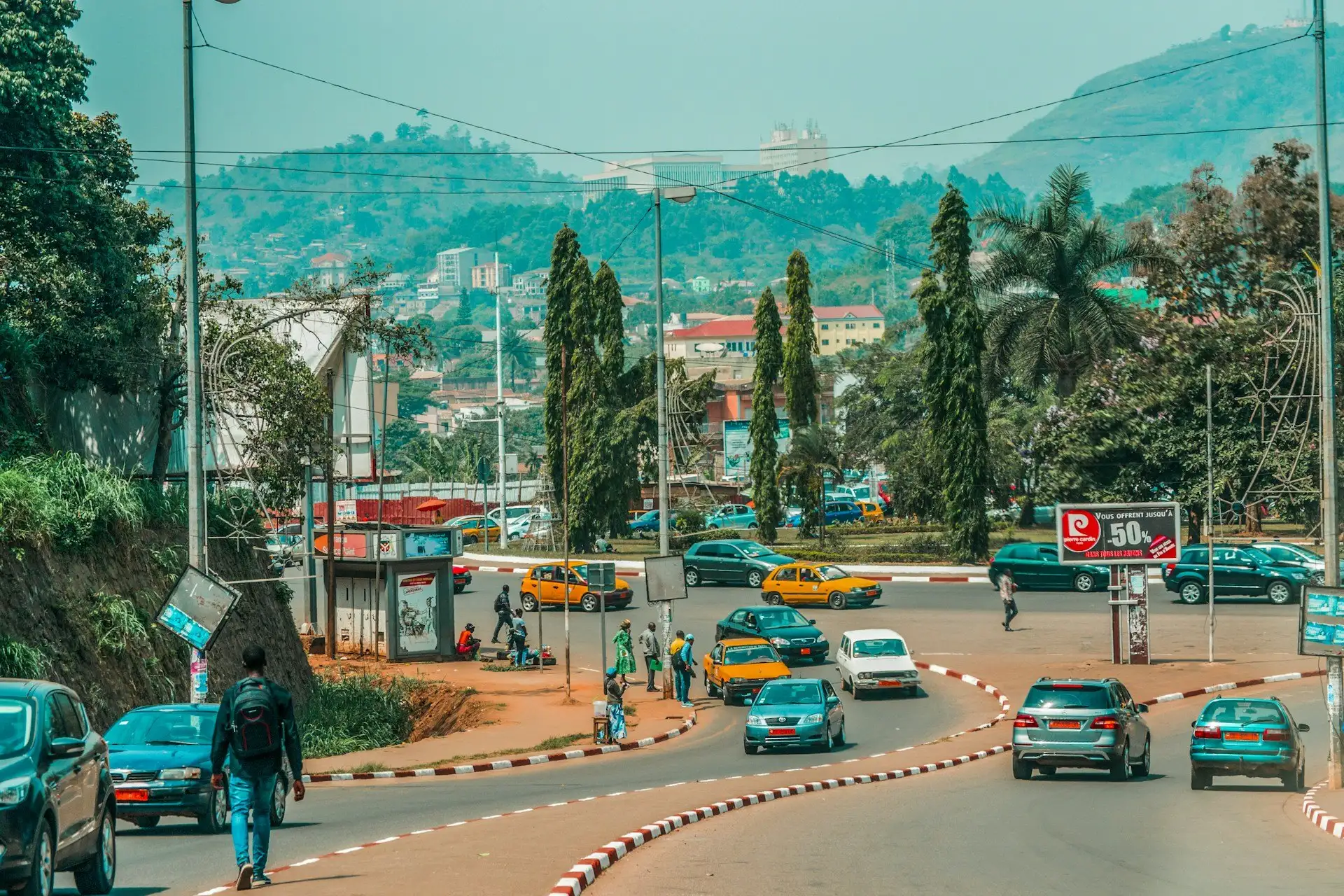
What You're Actually Getting Into
Cameroon fits an implausible range of geography into one country: Atlantic beaches and mangroves along the coast, dense rainforest in the south and east, the volcanic bulk of Mount Cameroon rising straight out of the ocean, cool rolling highlands in the west, and Sahelian savanna toward Lake Chad in the far north. That range is the origin of the country's own nickname, "Africa in miniature," and it's not marketing copy: few countries this size hold this many distinct landscapes and climates.
It is also, honestly, a country with an active internal conflict, and any guide that skips that isn't being straight with you. Douala, Yaoundé, Kribi and the western highlands around Foumban and Bafoussam are visited every week by business travelers, aid workers and a small but real trickle of tourists, with the same city-level precautions you'd use anywhere in the region. The Northwest and Southwest Regions, and the Far North near Lake Chad, are a different situation entirely, covered honestly in the Safety chapter, and this guide's destinations and itineraries are built around the parts of the country where you can actually travel right now.
The honest complications
Infrastructure outside Douala and Yaoundé is inconsistent: paved roads become laterite tracks quickly once you leave the main cities, and the rainy season (roughly March to November) can strand a rental car that would have been fine in December. Bureaucracy is a real cost of time, not just money, the eVisa and yellow fever requirements are both strictly enforced, and English is genuinely a second language for the roughly 80% of the country that speaks French as its working language, so plan around that gap outside Douala's business districts. And the Anglophone crisis, whatever your itinerary, is a fact about the country you're visiting: it has displaced hundreds of thousands of people internally and closed off two entire regions to casual travel since 2016-2017. None of this erases what's genuinely worth the trip in the two-thirds of the country that remains open, but it's the honest starting point.
A History Worth Knowing
Cameroon's borders and bilingual status both trace back to one decision: after Germany's Kamerun protectorate fell to Anglo-French forces in World War I, the League of Nations split the territory between France (roughly 80%) and Britain (20%). France's larger share became independent first, in 1960; the smaller British-administered zone voted to join it a year later, stitching one country together from two colonial administrations, two languages and two legal systems. That seam is still visible today, and it is the root of the conflict covered in the Safety chapter.
- 1884
German Kamerun. Explorer Gustav Nachtigal signs treaties with Douala coastal chiefs, establishing a German protectorate that will last just over three decades.
- 1916
Anglo-French partition. Anglo-French forces defeat the Germans in World War I; Britain and France divide the territory, formalized as League of Nations mandates in 1922.
- 1960
Independence. French Cameroun becomes independent on 1 January under President Ahmadou Ahidjo, with Yaoundé as capital.
- 1961
Reunification. Southern British Cameroons votes to join the new republic, forming the Federal Republic of Cameroon and creating the country's Anglophone minority regions.
- 1972
Unitary state. Ahidjo abolishes the federal structure by referendum, centralizing power in Yaoundé; the Reunification Monument there commemorates the 1972 union.
- 1982
Biya era begins. Ahidjo resigns and hands power to Paul Biya, who has governed since, making him one of the longest-serving heads of state in the world.
- 2016–2017
Anglophone crisis erupts. Protests by Anglophone lawyers and teachers over marginalization escalate into an armed separatist movement in the Northwest and Southwest Regions, ongoing today.
- 2025
Biya's eighth term. At around 92 years old, Biya is declared winner of the October 2025 presidential election, extending his rule to a planned 2032.
Read the full history: pre-colonial kingdoms, the Duala coast and the Grassfields
Long before European contact, the territory now called Cameroon held some of Central Africa's most sophisticated pre-colonial states. The Bamoun Kingdom, founded around 1394 in the western Grassfields, developed its own writing system under King Njoya in the early 20th century and maintains an unbroken royal line still resident in Foumban today. Along the coast, the Duala people built a trading relationship with European merchants that predates formal colonization by centuries, which is part of why Douala, not Yaoundé, became the country's commercial center.
German colonization from 1884 brought forced-labor plantation agriculture, particularly for cocoa and rubber, and a railway and road network aimed at extraction rather than connection, patterns that shaped the country's economic geography for a century after. The Anglo-French partition after World War I split not just administration but legal systems (French civil code versus British common law) and education, a duality that independence in 1960-61 papered over rather than resolved.
Ahmadou Ahidjo's 22-year rule built a highly centralized, one-party state; Paul Biya's subsequent four-plus decades in power have made Cameroon one of Africa's most durable authoritarian systems, surviving a 1984 coup attempt, periodic opposition unrest, and, since 2016, the Anglophone crisis, which the government has largely pursued through military means rather than the federalism or greater autonomy that initially triggered the protests. Understanding this history explains both the country's remarkable cultural depth, the Bamoun script and the Grassfields chiefdoms among Africa's most historically continuous political institutions, and the fault line running through its present.
Top Destinations
This chapter covers Douala, Yaoundé, the Kribi coast and the western highlands around Foumban and Bafoussam, the regions the US State Department and equivalent European advisories rate Level 2 or better and where routine travel happens. It deliberately does not cover Limbe, Buea, Mount Cameroon or the Northwest Region: they sit inside the Southwest and Northwest Regions currently under a Do Not Travel advisory, detailed fully in the Safety chapter. That's a real loss, Mount Cameroon in particular is one of West Africa's great hikes, but recommending it as a casual add-on wouldn't be honest given the current conflict.
Douala, the economic capital
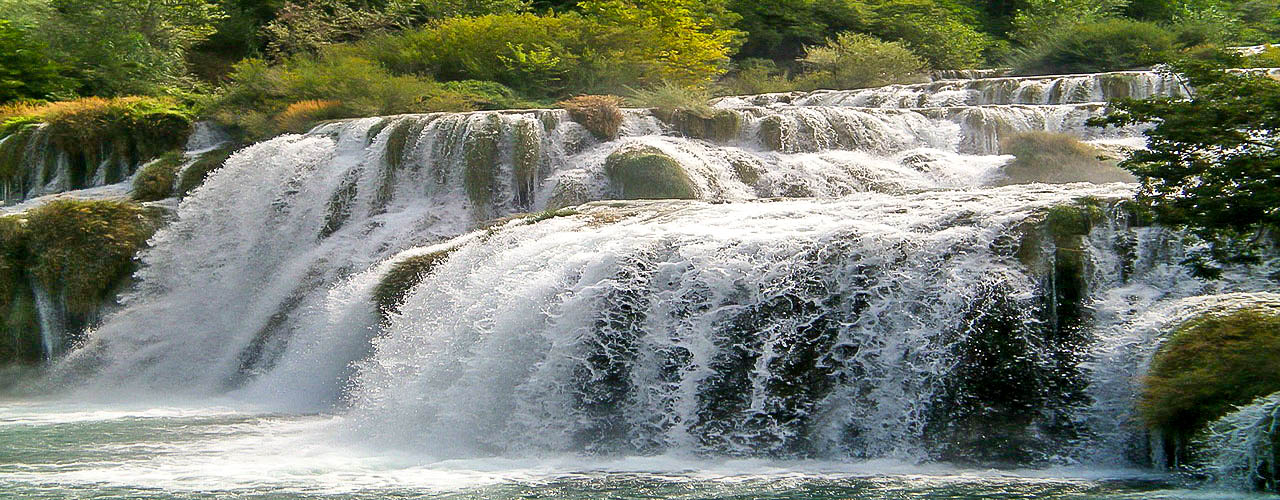
Cameroon's largest city and main international gateway is loud, hot, humid and genuinely rewarding once you're oriented. Bonanjo, the colonial-era district of embassies, banks and the Cathédrale Saint-Pierre-et-Saint-Paul, is the calmest base and holds the Doual'art contemporary art space and the Douala Maritime Museum. Akwa is the commercial and nightlife core, where Makossa music was born in the bars of the 1970s. Bonapriso has the best restaurants and the calmest evenings. Deido's Marché des Fleurs is the city's main handicraft and art market. Full neighborhood-by-neighborhood detail, restaurants and hotels are in our dedicated Douala city guide.
Yaoundé, the political capital
Yaoundé spreads across seven hills roughly three hours inland from Douala by road, greener and noticeably cooler than the coast. The National Museum, housed in a former presidential palace, is the country's best single stop for pre-colonial and colonial history, including Bamoun and Grassfields artifacts. The Reunification Monument, on a hill with panoramic city views, commemorates the 1972 union of the Francophone and Anglophone territories, worth visiting with that history in mind. Mont Fébé just outside the center has hiking trails and views over the whole city, and the sprawling Mfoundi Market is the place for fabric, spices and produce; go on a weekday morning before 10am.
Kribi, the beach town
Kribi, about 150km south of Douala by road in the South Region, is Cameroon's easiest beach escape: pale sand, palm-lined shoreline and a genuinely laid-back pace after Douala's noise. The signature sight is the Chutes de la Lobe, 8km south of town, one of the very few waterfalls in the world that pours directly into the ocean; you can reach it by a roughly 45-minute walk from central Kribi or by boat, which gets you close enough to feel the spray hit the surf. The town itself runs on fresh grilled fish and shrimp sold right off the beach, and it's a reasonable base for two or three unhurried days rather than a single rushed day trip.
Foumban & Bafoussam, the western highlands
The West Region's cool, volcanic-soil highlands, roughly 5 hours from Douala, hold Cameroon's most historically continuous kingdoms. Foumban is the seat of the Bamoun Kingdom, founded around 1394, and the Bamoun Sultan's Palace and Museum, rebuilt as a striking new structure that opened in 2024 with around 12,500 artifacts, houses royal regalia, thrones and manuscripts in Bamum script, the writing system King Njoya invented in the early 1900s. The palace remains an active royal residence, not just a museum, and the sultan's family still lives on the grounds. Bafoussam, the regional capital, is a practical base with a livelier market scene and noticeably cooler evenings than the coast, useful for chiefdom visits around Bandjoun and Baham.
Culture & Etiquette
Cameroon's defining cultural fact is its diversity: over 250 ethnic groups and a comparable number of indigenous languages, layered under an official bilingual French-English identity that itself reflects the colonial partition. Respect for elders and hierarchy runs deep across nearly all of the country's cultures, greetings are unhurried and genuinely matter, and the national football team, the Indomitable Lions, first African side to reach a World Cup quarterfinal in 1990, is close to a unifying civic religion.
Do
- Greet properly before any transaction. A rushed "how much" without a greeting first reads as rude; ask how someone is doing before getting to business, even briefly.
- Use your right hand for eating, giving and receiving, as in much of West and Central Africa.
- Dress modestly and conservatively, especially outside Douala's business districts and at religious sites; cover shoulders and knees.
- Learn a few words in French, even if you speak English at home: Bonjour, merci, s'il vous plaît go further than in almost any other single preparation.
- Negotiate at markets good-naturedly; haggling is expected and part of the social interaction, not just the price.
Don't
- Photograph government buildings, military checkpoints or police without permission. This is enforced and can lead to real trouble, not just an awkward interaction.
- Assume everyone speaks English. Roughly 80% of Cameroon operates in French day to day; outside Douala's international hotels and businesses, French carries you much further.
- Discuss the Anglophone crisis casually or take sides in conversation with strangers. It's a live, painful political and personal subject for many Cameroonians.
- Flash cash or valuables in markets or on public transport; petty theft is a real, ordinary-city-level risk in Douala and Yaoundé.
- Drink tap water. Stick to bottled or filtered water even in the main cities.
Deeper culture: Makossa & Bikutsi, the Grassfields chiefdoms, and Cameroonian football
Makossa and Bikutsi. Makossa, an urban dance music built on electric bass and guitar, was born in Douala's Akwa nightclubs in the 1970s and produced Cameroon's best-known musical export, Manu Dibango. Bikutsi, driven by fast balafon-style rhythms, developed among the Beti-Pahuin people of the Centre Region around Yaoundé. Both remain the sound of Cameroonian nightlife today, alongside newer Afrobeats and coupé-décalé influences.
The Grassfields chiefdoms. The Bamoun Kingdom around Foumban is the best known, but the wider western highlands hold dozens of traditional chiefdoms (fondoms) with their own rulers, palaces and masking traditions, some tracing continuous lineages back centuries. This traditional authority structure operates alongside, not instead of, the modern Cameroonian state, and chiefs remain influential local figures.
Football. The Indomitable Lions' 1990 World Cup run, reaching the quarterfinals as the first African team ever to do so, remains a genuine point of national pride that crosses every regional and linguistic line in the country. Expect football to come up in casual conversation more than almost any other topic, and expect strong opinions.
Food & Drink
Cameroonian food varies by region, but a handful of dishes travel across the whole country and show up on menus in Douala and Yaoundé regardless of where they originated. Expect bold, often spicy flavors built on palm oil, groundnuts, bitterleaf and smoked fish, eaten with your hands alongside a starchy staple: plantain, fufu, garri or pounded cocoyam.
Ndolé $3-6
The national dish, a stew of bitterleaf greens, ground peanuts, crayfish and palm oil, usually with fish or beef, cutting the bitterness with the nuttiness of the peanuts. It originated in Douala and remains most associated with the city.
Eru $3-6
Finely shredded eru (okok) leaves cooked with palm oil, waterleaf and smoked fish or beef, traditionally from the Southwest's Sawa communities but served countrywide, typically with garri or water fufu.
Achu $3-5
"Yellow soup": pounded cocoyam served with a vivid yellow palm-oil sauce spiced with kanwa (a local mineral salt) and meat, a Bamileke and Northwest staple found on menus throughout Douala and Yaoundé.
Street food: puff-puff, suya & soya $0.50-3
Puff-puff (sweet fried dough balls), suya (spiced grilled beef skewers) and soya (grilled fish or meat) are the everyday street standards, sold from stalls and grills across every city center after dark.
Kribi seafood $5-12
Grilled fish and shrimp sold directly off the beach in Kribi, usually with a spicy pepper sauce and plantains; some of the freshest, least fussy seafood in the country.
Beer & palm wine $1-3
33 Export and Castel are the dominant national beers, cheap and everywhere. Palm wine, tapped fresh from palm trees, is the traditional alternative and strongest early in the day before it ferments further.
When to Go & Itineraries
November to February is Cameroon's dry season and clearly the best window: lower humidity, passable roads even outside the main cities, and easier access generally. The rainy season runs roughly March to November, heaviest from June to September, when unpaved roads in the West Region and beyond the main highway corridors can become genuinely difficult.
Seasons compared, with temperatures
| Season | Verdict | Temps | Notes |
|---|---|---|---|
| Nov-Feb | Best | 23-31°C Douala, 18-27°C Yaoundé/West | Dry season, lowest humidity, best road conditions |
| Mar-May | Okay | 24-32°C coast | Rains build gradually; still workable for cities |
| Jun-Sep | Difficult | 22-29°C, very humid | Heaviest rain; unpaved roads outside cities can be hard going |
| Oct | Transitional | 23-30°C | Rains tapering; roads drying out ahead of the dry season |
The western highlands around Bafoussam and Foumban run 5-8°C cooler than Douala year-round, worth factoring into what you pack.
Itineraries
These routes stay within the regions currently rated safe for routine travel: Littoral, Centre, South and West. A week covers Douala, Yaoundé and Kribi comfortably; two weeks adds Foumban and the western highlands at an unhurried pace.
- Days 1–3
Douala. Bonanjo's colonial architecture and Doual'art, Akwa for food and nightlife, an evening in Bonapriso.
- Days 4–5
Kribi. Drive south (2.5-3 hrs), the Chutes de la Lobe, beach time and grilled seafood.
- Days 6–7
Yaoundé. Return via the capital: National Museum, Reunification Monument, Mont Fébé, before flying out or heading back to Douala.
- Days 1–3
Douala, as above.
- Days 4–6
Kribi, at a slower pace, including a boat trip to the Chutes de la Lobe.
- Days 7–8
Yaoundé. National Museum, Reunification Monument, Mfoundi Market.
- Days 9–12
Foumban & Bafoussam. The Bamoun Sultan's Palace and Museum, Grassfields chiefdom visits around Bandjoun, cooler highland evenings.
- Days 13–14
Return to Douala via the expressway, with a final night in Bonapriso.
Getting there & around
Douala International Airport (DLA) is the main international gateway, with Air France, Brussels Airlines and Turkish Airlines connecting from Europe (around 7-7.5 hours direct from Paris or Brussels, from roughly $550-650 round trip). Yaoundé Nsimalen (NSI) is the other option, more useful if the capital is your first stop. Within the country, a hired driver ($40-70/day) is the practical default over self-driving: road quality outside the Douala-Yaoundé expressway is inconsistent, signage is unreliable, and a local driver navigates checkpoints far more smoothly than a foreign-plated rental.
All transport options with prices: buses, taxis, domestic flights
| Option | Price | Notes |
|---|---|---|
| Intercity coaches | $6-15/route | Agences like Guaranty Express and Central Voyages run Douala-Yaoundé-Bafoussam; book the morning departures, which run more reliably. |
| Hired driver | $40-70/day | The practical way to reach Kribi or the West Region; arrange through your hotel rather than street touts. |
| City taxis (Douala/Yaoundé) | $1-3 shared, $4-8 private | Shared "clando" taxis follow fixed routes; agree the fare before getting in either way. |
| Domestic flights (Douala-Yaoundé) | $80-140 | Camair-Co operates the route in about 40 minutes; useful if road time is a constraint. |
Practical prep: buy a local SIM (MTN or Orange) on arrival for $2-5 plus data, or get an eSIM before landing. ATMs from Afriland First Bank, UBA and SCB Cameroun accept Visa and Mastercard in Douala and Yaoundé; carry cash outside those cities, where card acceptance drops off fast. Malaria prophylaxis is strongly recommended countrywide, and both the eVisa and yellow fever certificate should be sorted well before departure, not on arrival.
Where to stay
Budget guesthouses
Simple guesthouses in Douala's Akwa and Bonanjo districts and in central Yaoundé, usually with fan rooms and shared or basic private bathrooms. Book ahead by phone or WhatsApp rather than arriving cold.
Mid-range business hotels
Douala's Bonanjo and Akwa districts have the strongest concentration, with reliable air conditioning, pools and airport shuttles, our full picks are in the Douala city guide.
Kribi beach stays
Small beachfront hotels and bungalows along Kribi's shoreline, simpler than the coast resorts of Ghana or Senegal but with the sand and grilled seafood right outside.
Bafoussam & the West
Modest business hotels in Bafoussam make a practical base for visiting Foumban and the Grassfields chiefdoms; expect fewer amenities than the coast but genuinely warm hospitality.
Budget Planning
Cameroon is inexpensive by Western standards but not the cheapest option in the region; expect costs closer to neighboring Gabon than to, say, budget Southeast Asia. The CFA franc's peg to the euro makes prices predictable, and the main variable cost is transport, hiring a driver adds up quickly if you're covering ground.
- Guesthouse room $15-30
- Street food and market meals $2-4
- Shared taxis and coaches
- Free markets, walking, city exploring
- Business hotel $60-130
- Restaurant meals $6-15
- Hired driver for day trips $40-70
- Domestic flight Douala-Yaoundé
- Best available hotels in Douala
- Private driver for the full trip
- Fine dining and imported wine
- Kribi beachfront stays
Quick reference prices: street food, taxis, hotels
| Puff-puff or suya skewer | $0.50-1.50 |
| Ndolé at a local restaurant | $3-6 |
| 33 Export beer | $1-2 |
| Douala-Yaoundé coach | ~$8-12 |
| Douala airport taxi (official rate) | $8-13 |
| Guesthouse room | $15-30/night |
| Business hotel, Douala | $60-130/night |
| Hired driver, full day | $40-70 |
| eVisa (tourist, single entry) | ~$87.50 |
Prices reflect July 2026 research and drift over time. Treat them as a planning baseline, not a quote.
Visa & Entry
Cameroon requires nearly all foreign visitors to obtain an eVisa before travel; there is no visa-on-arrival option to rely on. Apply through the official portal, evisacameroon.com, well ahead of your trip: the tourist eVisa costs around $87.50, takes 3-5 business days to process, and permits a stay of up to 90 days. Third-party sites that charge significantly more for the same service rank well in search but add nothing beyond the official channel.
✓ Valid passport
At least 6 months validity from your entry date. Keep a photocopy separate from the original.
✓ Yellow fever certificate
Mandatory, not optional. Carry the International Certificate of Vaccination (yellow card) with your passport; it's checked on arrival.
✓ Approved eVisa
Applied for and approved before departure at evisacameroon.com; there is no reliable visa-on-arrival for most nationalities.
✓ Return/onward ticket
May be requested at immigration, along with proof of accommodation for your first nights.
| Cameroon | Gabon | |
|---|---|---|
| Landscape variety | Coast, rainforest, savanna and highlands in one country | Deeper, more continuous rainforest and wildlife-viewing |
| Daily budget | $35-50 gets you far | Noticeably pricier; Gabon's infrastructure costs more to access |
| Safety picture | Two regions under Do Not Travel; rest of the country stable | Generally stable countrywide, fewer regional restrictions |
| Culture & history | The Bamoun Kingdom, Makossa, 250+ ethnic groups | Bwiti spiritual tradition, coastal and forest peoples |
| Visa | eVisa required, ~$87.50, 90 days | eVisa required, comparable process |
Safety, Solo Women & Family
The US State Department rates Cameroon Level 2, Exercise Increased Caution, overall, but that single rating hides a country split into genuinely different risk zones. Douala, Yaoundé, Kribi and the West Region see routine travel with normal city-level precautions. The Southwest, Northwest and Far North Regions, plus a 20-kilometer band along the borders with Nigeria, Chad and the Central African Republic, are rated Level 4, Do Not Travel, for active armed conflict and terrorism. This isn't a blanket exaggeration to be cautious about: it's the specific, current advisory, and this guide's destinations and itineraries are built to stay inside the safer two-thirds of the country.
The Anglophone crisis
Armed conflict between separatist groups and government forces in the Northwest and Southwest Regions since 2016-2017, including armed clashes, IEDs and enforced weekly "ghost town" shutdowns in Buea and Bamenda. This is where Limbe and Mount Cameroon sit; see the Destinations chapter for why this guide excludes them.
Boko Haram, Far North
Terrorist attacks, IEDs and kidnapping risk in the Far North Region near Lake Chad and the Nigerian border. The US Embassy restricts even official travel here; it isn't part of any tourist itinerary.
Petty crime, Douala & Yaoundé
Ordinary city-level pickpocketing and opportunistic theft in markets, taxis and crowded transport hubs. Keep valuables secured and out of sight; this is the actual, everyday risk in the regions you'll visit.
What "Do Not Travel" means in practice, and why this guide takes it seriously
Some travelers report calmer recent conditions in Limbe specifically, helped by a heavy military presence, and a handful of independent trip reports describe uneventful visits to Buea and Mount Cameroon. This guide doesn't dispute those individual accounts. It also can't responsibly build them into a general-audience itinerary: the US State Department, UK FCDO, and equivalent French and German advisories all currently rate the Southwest and Northwest Regions Do Not Travel, citing armed clashes, kidnapping risk and IEDs, and the situation has shown no sustained improvement since the conflict began. If you have a specific, well-informed reason to go, get current on-the-ground information from people actually there right now, not a travel guide, and register with your embassy before you travel.
The 2 scams to actually know about
Full detail on our Cameroon travel alerts page, but two patterns account for most visitor complaints.
Airport taxi overcharging
Touts at Douala International Airport quote 20,000-30,000 XAF for a ride that should cost 5,000-8,000 XAF. Use the official airport taxi desk in the arrivals hall, which issues a fixed-price voucher, or arrange a hotel pickup in advance.
Fake police stops
Individuals posing as officials flag down vehicles, demand to see passports, and invent on-the-spot fines. Ask to be taken to the nearest real gendarmerie post rather than paying in the moment; genuine checkpoints don't object to this.
Solo women travelers
Cameroon is workable for solo women in Douala, Yaoundé and Kribi with real caution: expect persistent catcalling and unwanted attention more than in many other African destinations, and plan to travel in daylight, use reputable transport rather than hailing taxis off the street, and dress conservatively. Many solo women find joining a small organized tour or connecting with other travelers for the Kribi and West Region legs makes those trips considerably easier than doing them entirely alone. Full detail on our Solo Woman Explorer pages.
Emergency numbers
US Embassy in Yaoundé and health precautions
The US Embassy is in Yaoundé, Avenue Rosa Parks in the Mbankolo Quartier (+237-22220-1500). Medical services are limited even in Douala and Yaoundé, and trauma and ambulance response is not consistently available; any serious injury or illness may require medical evacuation at your own expense, which is why comprehensive travel insurance covering evacuation matters more here than in most destinations.
Health basics: malaria prophylaxis for the full trip, yellow fever vaccination (mandatory for entry), and standard travel vaccinations kept current. Drink bottled or filtered water, and bring a basic medical kit; pharmacies in Douala and Yaoundé are reasonably well stocked but rural areas are not.
Family travel
Doable in the stable regions with real preparation rather than casual planning: malaria prophylaxis for children, bottled water without exception, and up-to-date vaccinations matter more here than in most family destinations, and medical care outside Douala and Yaoundé is limited enough that a health issue can complicate a trip quickly. Kribi's calm beaches are the easiest, lowest-stress stop for families, and the National Museum in Yaoundé works well for school-age kids interested in history. This is not a first-time-abroad family destination; it rewards families with some developing-world travel experience already.
Cameroon FAQ
Is Cameroon safe to visit?
It depends entirely on the region. Douala, Yaoundé, Kribi and the West Region are visited routinely with normal city precautions. The US State Department rates Cameroon Level 2 overall but advises Do Not Travel to the Southwest, Northwest and Far North Regions, and within 20km of the borders with Nigeria, Chad and the Central African Republic, due to an active separatist conflict and Boko Haram activity.
Do I need a visa for Cameroon?
Yes. Nearly all foreign visitors need an eVisa, applied for online before departure at evisacameroon.com. The tourist eVisa costs around $87.50, takes 3-5 business days to process, and allows a stay of up to 90 days.
Do I need a yellow fever vaccine for Cameroon?
Yes, it's mandatory. Cameroon requires proof of yellow fever vaccination for entry, and border officials do check. Carry your International Certificate of Vaccination (the yellow card) with your passport at all times.
What is the Anglophone crisis?
A separatist conflict in Cameroon's English-speaking Northwest and Southwest Regions that began in 2016-2017, when protests over the marginalization of the Anglophone minority escalated into an armed independence movement against the Francophone-led government. The conflict is ongoing and both regions are under a Do Not Travel advisory.
How much does Cameroon cost per day?
Budget travelers manage on $35-50 a day, mid-range on $70-130. Street food costs $2-4, a guesthouse room runs $15-30, and a private driver for a day trip costs $40-70, often the better option over self-driving.
When is the best time to visit Cameroon?
November to February, the dry season, when roads are passable and humidity is lower. The rainy season runs March to November, heaviest June to September, when unpaved roads outside the main cities can become difficult.
What language is spoken in Cameroon?
French and English are both official, a legacy of the colonial partition between France and Britain, though roughly 80% of the country speaks French and 20% English. Over 250 indigenous languages are also spoken; Duala is common on the coast and Ewondo around Yaoundé.
Can I visit Mount Cameroon or Limbe right now?
Officially, no. Mount Cameroon, Buea and Limbe all sit inside the Southwest Region, which is under a Do Not Travel advisory due to the Anglophone conflict: armed clashes, IEDs and weekly enforced business shutdowns have hit Buea specifically. Some travelers report calmer conditions in Limbe itself, but this guide can't respectably recommend a Level 4 region as a casual day trip.
Is Douala or Yaoundé better to visit?
Douala is the commercial capital, the main international gateway, and the base for the coast; Yaoundé is the political capital, greener and hillier, with the National Museum and the Reunification Monument. Most first trips base in Douala and treat Yaoundé as a stop en route to the West Region.
What is Cameroon's national dish?
Ndolé, a stew of bitterleaf greens, ground peanuts, crayfish and palm oil, usually with fish or beef, served with plantains or fufu. It originated in Douala and is the dish most associated with the country.
Is Cameroon Francophone or Anglophone?
Both, officially. Cameroon is one of the few genuinely bilingual countries in Africa, a legacy of being split between French and British administration after World War I. In practice French dominates outside the Northwest and Southwest Regions.
Is Cameroon good for families with kids?
Workable in the stable regions with careful planning: malaria prophylaxis, bottled water and up-to-date vaccinations matter more here than in most family destinations, and medical care outside Douala and Yaoundé is limited. Kribi's calm beaches are the easiest family stop.
What Stays With You
Cameroon rewards travelers who do their homework and then show up anyway. The waterfall at Kribi that pours straight into the Atlantic, the walk through Bonanjo's fading colonial facades to a plate of ndolé in Bonapriso, the sultan's palace at Foumban where a king who invented his own alphabet still has descendants living on the grounds: none of it is packaged for tourists, because tourism here hasn't been packaged yet.
That's also why this guide spends as much time as it does on the parts of the country it isn't recommending. Go for the two-thirds that's open, go informed about the third that isn't, and don't let anyone, including this guide, tell you the whole picture is simpler than it is.