
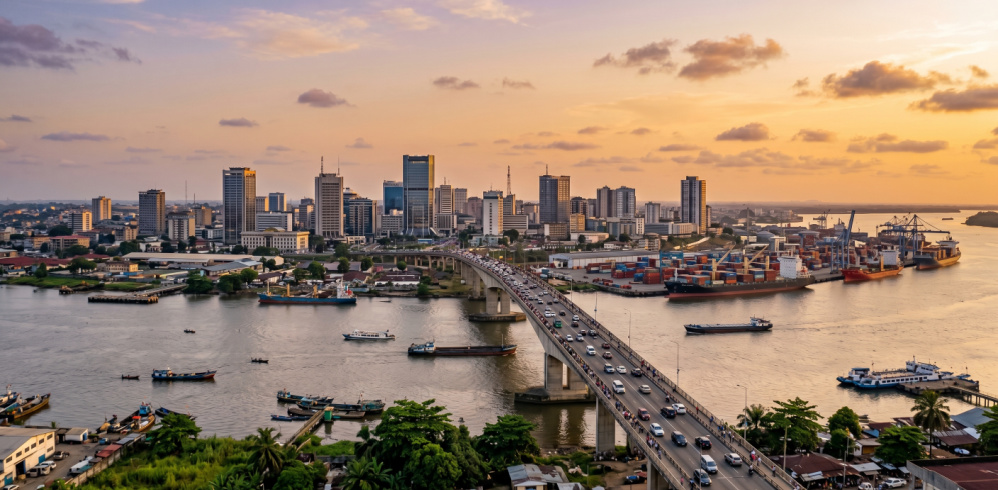
Cameroon's engine room, not its postcard
Douala has never tried to be pretty for visitors, and that's part of its appeal if you're the kind of traveler who wants the real texture of a place over a curated version of it. The port that handles most of Central Africa's shipping traffic sits a few streets from Bonanjo's fading German and French colonial facades, and Akwa's bars still carry the bass-heavy DNA of Makossa, the music genre Douala gave the world in the 1970s. It's humid nearly year-round, the traffic can be genuinely difficult, and none of the main sights are dressed up for tourism.
What Douala has instead is honesty and access: it's the country's main international gateway, its best food city, and the practical base for reaching Kribi's coast and Yaoundé's museums. Spend your first afternoon adjusting to the pace rather than fighting it, and the city opens up considerably faster than its reputation suggests.
The honest complications
Heat and humidity are constant except during the November-February dry season, and Douala's traffic can turn a 10-minute drive into 45 minutes with no warning. English is a genuine second language here; French carries you much further outside international hotels. Petty theft happens in crowded markets and shared taxis at the level of any large developing-world city, and the airport taxi touts are among the most persistent in the region, covered fully in the Safety chapter. None of this is unusual for a city its size and role, but it's worth arriving with realistic expectations rather than a resort-town mindset.
Four districts that matter, and one to skip after dark
Douala's neighbourhoods are defined by their colonial-era origins and their relationship to the Wouri River. Where you base yourself comes down to how central you want to be and how much nightlife noise you can tolerate.
Bonanjo
The former German and French administrative quarter holds the Cathédrale Saint-Pierre-et-Saint-Paul, most embassies and banks, the Doual'art contemporary art space, and the Douala Maritime Museum. It's the calmest, most orderly part of the city and the base most first-time visitors and business travelers choose.
Akwa
Chaotic, dense and musically important: Makossa was born in Akwa's bars and clubs in the 1970s, and "Joy Street" still carries that nightlife energy today. It's also the city's main commercial strip, with the widest range of restaurants, shops and mid-range hotels within walking distance of each other.
Bonapriso
An upscale, leafier residential district a short taxi ride from Bonanjo and Akwa, with Douala's strongest concentration of good restaurants, including waterfront dining looking over the Wouri estuary. If dinner matters more to you than nightlife noise, base here.
Deido
Across the river from central Douala, Deido is where the city's daily life happens away from any tourist gaze: the Marché des Fleurs is the main stop for hand-carved masks, bronze figurines and traditional textiles, with bargaining expected.
Bonanjo for calm, Akwa for convenience
Douala's hotel scene is thinner and pricier than a comparably sized city in Southeast Asia or North Africa, a function of business travel dominating demand over tourism. These picks cover the realistic range for visitors.
In Akwa, Akwa Palace is the established 4-star choice, from around $110-130 a night, with an outdoor pool, fitness centre, an on-site casino and airport transfer arranged through the front desk, a reasonable trade-off for the peace of mind on arrival. In Bonanjo, K Hotel Douala is a smaller boutique option a short walk from Bonanjo Park, and Hôtel Beau Rivage sits within walking distance of Doual'art and the Douala Maritime Museum, both comfortable, business-oriented properties rather than resort-style stays.
Budget guesthouses cluster in Akwa and Bonanjo, generally $15-30 a night for a fan or basic air-conditioned room; book by phone or WhatsApp ahead of arrival rather than turning up unannounced, since availability and English-language booking pages are inconsistent.
Ndolé, grilled fish and the city's own kitchen
Douala is where ndolé, Cameroon's national dish, actually comes from, and the city takes that seriously. The food scene runs from street-side grills to sit-down waterfront restaurants, almost all of it built around bold, palm-oil-and-peanut flavors rather than anything toned down for outsiders.
Ndolé
Bitterleaf greens stewed with ground peanuts, crayfish and palm oil, usually with fish or beef, served with plantains or fufu. It originated here, and restaurants across Akwa and Bonapriso serve versions worth comparing against each other.
Le Paquebot
An open-air terrace restaurant on the Wouri estuary, serving fresh seafood with the water and passing pirogues as the view. Open daily 11am to 11pm; go for sunset if you can time it.
Saga Africa
A long-running Akwa institution serving Cameroonian and pan-African dishes in a warm, secure setting, open daily from 11am to midnight including Sundays. A reliable choice for a first proper Cameroonian meal.
Street food: puff-puff, suya & soya
Fried dough balls, spiced grilled beef skewers, and grilled fish sold from stalls across Akwa and Bonapriso once the evening cools down. This is how most Douala residents actually eat, and it's some of the best value food in the city.
A working city, best explored between meals
Douala's sights are fewer and less polished than a typical city break destination, and that's honestly part of the point: this is a two-to-three-day stop built around food, music and street life more than a checklist of monuments.
Bonanjo's colonial streets
The Cathédrale Saint-Pierre-et-Saint-Paul anchors Bonanjo's colonial-era architecture, worth a slow walk past rather than a rushed photo stop. Doual'art, a contemporary art space embedded in the neighbourhood, has been commissioning public art installations around Douala since the 1990s and is one of the better windows into the country's contemporary creative scene. The Douala Maritime Museum, nearby, covers the port's central role in the country's economy.
Akwa after dark
Akwa is where to spend an evening rather than an afternoon: the streets around "Joy Street" carry Makossa's legacy in the bars and clubs still operating there, and the neighbourhood's restaurant density makes it easy to combine dinner and a night out without much planning.
Marché des Fleurs
Deido's main handicraft market is the place for hand-carved wooden masks and statues, bronze figurines, beaded jewelry and traditional instruments. Bargaining is expected and part of the experience; go with a rough target price in mind and enjoy the negotiation.
The Wouri estuary
Douala's identity is bound up with the river: watching cargo traffic and pirogues from a Bonapriso waterfront restaurant at sunset is a low-key but genuine way to understand why the city exists where it does.
One, two or three days, planned around the heat
Douala rewards a slower pace than a typical city break: mornings for walking, afternoons for indoor stops or rest, evenings for the food and nightlife the city does best.
- Morning
Bonanjo on foot. The Cathédrale, Doual'art, and a slow walk through the colonial-era streets before the heat builds.
- Midday
Ndolé in Bonapriso. A proper sit-down lunch, then rest through the hottest part of the afternoon.
- Evening
Akwa for dinner and a drink. Saga Africa or Le Boj, then a walk past Joy Street to feel the nightlife energy even if you don't stay out late.
- Day 1
The one-day route: Bonanjo, ndolé lunch, Akwa in the evening.
- Day 2 morning
Marché des Fleurs in Deido. Handicraft shopping and bargaining before the market gets busy.
- Day 2 evening
Sunset dinner at Le Paquebot. The Wouri estuary view in Bonapriso, a good closing note for a short trip.
- Days 1-2
The two-day route above, at a gentler pace.
- Day 3
Day trip to Kribi. A 2.5-3 hour drive south to the coast and the Chutes de la Lobe, or extend into an overnight if you can spare it. See the Day Trips chapter for details.
Taxis and patience, in that order
Douala International Airport (DLA) sits about 10km southeast of the centre; the drive takes 20-45 minutes depending on traffic. Use the official airport taxi desk inside the arrivals hall, which charges a fixed fare, roughly 5,000-8,000 XAF ($8-13) to Bonanjo or Akwa, and issues a voucher before you get in the car. Don't negotiate with touts who approach you before you reach the desk; see the Safety chapter for the specific overcharging pattern to expect.
Within the city, shared "clando" taxis run fixed routes for $1-3, while a private taxi hailed or arranged through your hotel runs $4-8 for most central trips. The Heetch app operates in Douala and works similarly to Uber, a good way to avoid fare negotiation entirely. Moto-taxis are cheap and common but involve more risk than a car; use them for short hops in daylight if at all.
Best time to visit and getting to Yaoundé or Kribi
Douala has a hot, humid tropical climate with a dry season from December to February and a long rainy season from March to November, heaviest June to September. November through February is clearly the easiest window: lower humidity and better conditions for day trips.
Onward travel: Yaoundé is about 3 hours by road via the toll expressway, or a 40-minute Camair-Co flight. Kribi is about 2.5-3 hours south by road; a hired driver ($40-70/day) is the practical way to do it as a day trip or overnight. Intercity coaches (Guaranty Express, Central Voyages) cover both routes for $6-15 if you're not in a hurry.
Inexpensive by Western standards, not by regional ones
Douala costs less than a European or North American city but more than budget Southeast Asia; hotels are the biggest expense relative to everything else, since the market skews toward business travel rather than backpacker infrastructure.
- Guesthouse room $15-30
- Street food and market meals $2-5
- Shared clando taxis $1-3
- Free markets and neighbourhood walking
- Business hotel like Akwa Palace $110-130
- Restaurant meals $6-15
- Heetch or private taxis
- Doual'art, Maritime Museum entry
- Top business hotels
- Private driver for the full stay
- Waterfront dining in Bonapriso
- Kribi extension with a private car
Ordinary city risks, one neighbourhood to avoid, two scams to know
Douala sits in the Littoral Region, rated stable by the US State Department and routinely visited for business and, increasingly, tourism. The real risks are ordinary big-city ones: pickpocketing in crowded markets and shared taxis, and the airport taxi overcharging pattern that catches unprepared arrivals more than any other single issue.
The two things that actually catch visitors: airport taxi overcharging, where touts quote 20,000-30,000 XAF for a ride that should cost 5,000-8,000 XAF, avoided entirely by using the official taxi desk or a pre-arranged hotel pickup; and fake police stops, where individuals posing as officials flag down taxis, demand to see passports, and invent on-the-spot fines, best handled by insisting on being taken to the nearest real gendarmerie post rather than paying in the moment. Full detail on our Cameroon travel alerts page.
Avoid New Bell after dark, a district with a higher rate of opportunistic crime than the rest of the city. Emergency number is the national 112 from any phone; for the wider country's regional safety picture, including the Do Not Travel areas this guide's day trips deliberately avoid, see the full Cameroon country guide.
Kribi's coast and the capital, both within reach
Douala's position makes it a workable base for two very different trips, one to the beach, one to the capital. Both stay within regions currently rated safe for routine travel.
Kribi & the Chutes de la Lobe
Cameroon's easiest beach escape, about 150km south of Douala: pale sand, grilled seafood sold right off the beach, and the Chutes de la Lobe, a rare waterfall that pours directly into the Atlantic, 8km south of town and reachable by a 45-minute walk or a short boat ride. Worth an overnight if you can spare it rather than a rushed single day.
Yaoundé
Cameroon's political capital, spread over seven hills and noticeably cooler than the coast. The National Museum, housed in a former presidential palace, and the Reunification Monument, commemorating the 1972 union of the country's Francophone and Anglophone territories, are the two stops worth the trip on their own.
Foumban & the West Region
Further afield and best as an overnight rather than a day trip: the Bamoun Sultan's Palace and Museum in Foumban, rebuilt with around 12,500 artifacts and reopened in 2024, sits at the center of a kingdom founded around 1394 that still has an active royal court. The cooler highland climate around Bafoussam is a genuine change of pace from Douala's heat.
Douala FAQ
Is Douala safe for tourists?
Douala sits in the Littoral Region, rated stable and routinely visited. The real risks are ordinary city ones: petty theft in markets and taxis, and inflated airport taxi fares. Avoid the New Bell neighbourhood, especially after dark, and use standard city awareness elsewhere.
How many days do I need in Douala?
Two to three days covers the city itself: Bonanjo's colonial streets and Doual'art, Akwa for food and nightlife, and an evening in Bonapriso. Add two or three more for a Kribi beach trip or a stop in Yaoundé.
How much does Douala cost per day?
Budget travellers manage on $35-50 a day with guesthouses and street food; mid-range runs $70-130 with a business hotel and restaurant meals. Douala is inexpensive by Western standards but not the region's cheapest city.
What is the best area to stay in Douala?
Bonanjo for embassies, banks and the calmest streets; Akwa for nightlife and central convenience; Bonapriso for the best restaurants and a quieter residential feel. First-time visitors generally do best in Bonanjo or Akwa.
How do I get from Douala airport to the city centre?
Use the official airport taxi desk in the arrivals hall, which charges a fixed fare of roughly 5,000-8,000 XAF ($8-13) to Bonanjo or Akwa and issues a voucher before you get in the car. The drive takes 20-45 minutes depending on traffic.
What is ndolé and where should I eat it in Douala?
Ndolé is Cameroon's national dish, a stew of bitterleaf greens, ground peanuts, crayfish and palm oil with fish or beef, and it originated in Douala. Restaurants across Akwa and Bonapriso serve it; expect $3-6 for a generous portion.
Can I day-trip to Limbe or Mount Cameroon from Douala?
Not currently recommended. Limbe, Buea and Mount Cameroon all sit inside the Southwest Region, which is under a US State Department Do Not Travel advisory due to the ongoing Anglophone conflict. Kribi and Yaoundé are the day and overnight trips this guide can responsibly recommend.
Is Douala walkable?
Bonanjo and central Akwa are walkable in the cooler morning hours, but Douala's heat, humidity and traffic make taxis the practical choice for most trips across town, especially between neighbourhoods like Bonapriso and Deido.
Do I need to speak French in Douala?
It helps enormously. Douala is majority Francophone, and while English is spoken in international hotels and some business contexts, a few French phrases go much further in markets, taxis and everyday interactions.
What is the best time to visit Douala?
November to February, the dry season, when humidity drops and travel around the city and to Kribi is easiest. The rainy season runs March to November, heaviest June to September.
What Stays With You
Douala doesn't hand you an easy postcard, and that's exactly the point. The city runs on its own logic: the port, the Wouri's tidal rhythm, Akwa's bars still playing the bass lines they invented fifty years ago, and a plate of ndolé that every other version in the country is quietly measured against. None of it was arranged for visitors, which is why the parts that do land, a sunset over the estuary from Bonapriso, a market stall's version of suya better than any restaurant's, feel earned rather than staged.
Go with the humidity in mind, keep your expectations realistic about the pace, and let Akwa's evenings do the work a guidebook's checklist usually tries to do instead.