
A capital that has been the capital for a thousand years
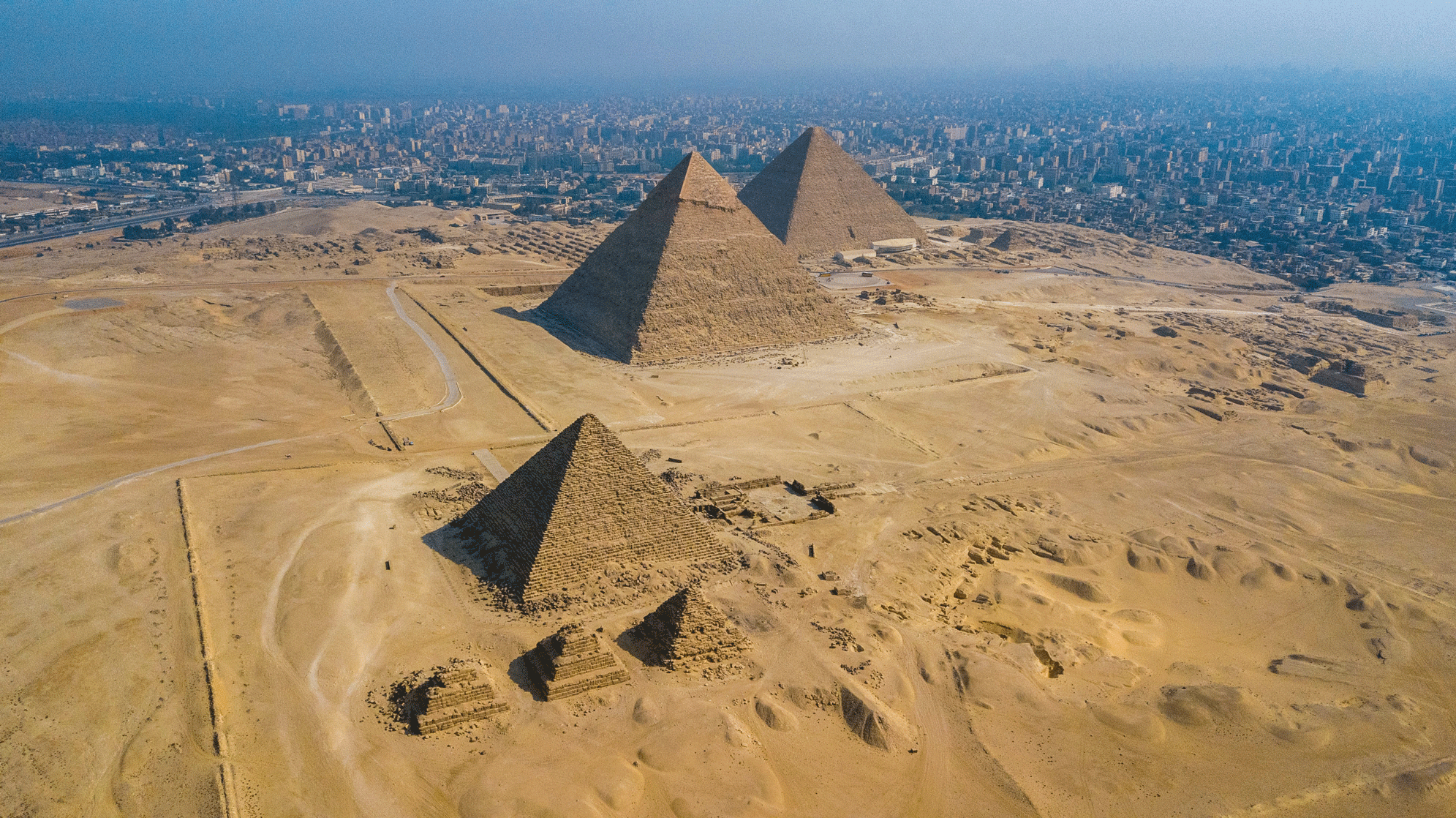
Cairo has been Egypt's political and cultural center since the Fatimids founded it in 969 CE, and the layers show: Roman fortress walls in Coptic Cairo, Fatimid and Mamluk mosques in the medieval core, 19th-century boulevards downtown modeled on Haussmann's Paris, and a sprawling modern megacity of roughly 20 million people wrapped around all of it. Then, at the western edge where the city finally gives up and the desert begins, the Pyramids of Giza, still doing at nearly five thousand years old exactly what they were built to do.
What changed recently is the Grand Egyptian Museum, which opened in 2025 next to the plateau and gives Cairo a second world-class museum to go with the original on Tahrir Square. The city has never had more reason to slow down and spend an extra day, and the currency situation, the Egyptian pound trading near 48-50 to the dollar in mid-2026, means that extra day costs remarkably little.
The honest complications
Cairo is not a relaxed city to just wander. Traffic is some of the most chaotic anywhere, crossing a major road takes real nerve, and the air quality on a still day is genuinely rough. Around the major tourist sites specifically, unofficial guides, papyrus sellers and camel-ride touts create a level of hassle that first-time visitors underestimate; a licensed guide or driver smooths this out considerably and, at Egyptian prices, costs very little to arrange. None of this undermines what the city actually delivers, it just means Cairo rewards a bit of planning more than a fully improvised visit.
Five areas, one river running through all of them
Cairo's neighbourhoods sit along or near the Nile, with Giza and its pyramids across the river to the west. Where you base yourself comes down to budget, how much nightlife you want, and how much you're willing to pay for a pyramid view.
Downtown
Downtown Cairo's grid of early-20th-century boulevards, centered on Tahrir Square, holds the city's best hostel and budget hotel value alongside the Egyptian Museum and easy Metro access. It's crowded, loud, and genuinely lively, with faded belle-epoque facades above street-level chaos. The natural base for a first visit on any budget.
Garden City
A small district of tree-lined streets and early-20th-century villas on the river, a fifteen-minute walk from Tahrir Square, holding most of Cairo's Western embassies and several of its top hotels, including the Four Seasons Cairo at Nile Plaza and the Kempinski Nile Hotel. Quieter than Downtown with better Nile views, at a price premium.
Zamalek
An island district in the Nile connected to both banks by bridge, Zamalek has Cairo's best concentration of rooftop bars, restaurants and boutique shopping, plus the Cairo Tower for a panoramic city view. Calmer streets than Downtown after dark, with the nightlife concentrated indoors and on rooftops rather than spilling onto the pavement.
Maadi
A green, low-rise, expat-favoured suburb about thirty minutes south of Downtown by car, with tree-lined streets and a slower pace than the city center. Better suited to a longer stay or a base near Metro Line 1's southern stations than a short first visit.
Giza
Technically its own city, Giza is where the pyramids are and where a small cluster of hotels, most famously the Marriott Mena House, let you wake up and see the Great Pyramid from your window. Worth at least one night for travellers who can afford it; otherwise a straightforward Uber or taxi ride from anywhere in central Cairo.
From the best hostel value in North Africa to a pyramid out your window
Cairo's hotel range runs from some of the cheapest genuinely good hostels anywhere to five-star properties that would cost triple in Europe. These picks cover the range, and each earns its place.
At the top for a specific, unrepeatable view, Marriott Mena House in Giza has the Great Pyramid and the Sphinx as its literal backdrop, a former royal hunting lodge turned five-star hotel, from around $270 a night and worth it for the sunrise view alone. In Garden City, the Four Seasons Cairo at Nile Plaza and the Kempinski Nile Hotel both sit directly on the river with full-service spas and some of the best Nile-front pools in the city, while over in Zamalek the Sofitel Cairo Nile El Gezirah occupies the southern tip of Gezira Island with water on three sides.
For a strong mid-range option near the plateau, Steigenberger Pyramids Cairo runs from around $143 a night with pyramid-adjacent grounds at a fraction of the Mena House rate. At the budget end, Downtown's Tahrir Square Hostel and Cheers Hostel Cairo are two of the most consistently recommended backpacker addresses in the city, both walking distance to the Egyptian Museum, with dorm beds from around $4 and private rooms from $15-30.
Koshary, ful and one of the best-value food scenes anywhere
Cairo's food is built on legumes and bread rather than the meat-forward grills of the wider Middle East, and it is astonishingly cheap: a full sit-down meal at a proper local restaurant rarely tops a few dollars. The best food is street food and multi-generational institutions, not hotel restaurants.
Koshary
Egypt's national dish: rice, lentils, macaroni and chickpeas under spiced tomato sauce and crispy fried onions, sold at stalls and sit-down chains citywide. Felfela in Downtown, an eclectic institution near Tahrir Square that has been serving Egyptian classics since the 1950s, does an excellent version alongside the rest of its menu.
Egyptian home cooking
Abou El Sid in Zamalek is Cairo's best-known address for traditional Egyptian cooking in a proper sit-down setting: molokhia, stuffed pigeon, and mezze served in a room decorated like an old Cairo apartment, popular enough that reservations are worth making ahead.
Coffee & sheesha at El Fishawy
El Fishawy, Cairo's oldest cafe, has been pouring tea and coffee in the heart of Khan el-Khalili since 1771 and has hosted everyone from Egyptian royalty to Nobel laureate Naguib Mahfouz. Sit on the terrace, order karkade or Egyptian coffee, and watch the bazaar go past.
Naguib Mahfouz Cafe
Inside the Khan El Khalili Restaurant complex and named for the Nobel-winning novelist, this Oberoi-run address has served visitors to the bazaar since 1989: reliable air-conditioning, a trustworthy kitchen, and live music after 6pm alongside traditional Egyptian mezze and grills.
Two museums, one plateau, and a medieval city in between
Cairo's sights split naturally into ancient Egypt (Giza and the two museums), Islamic Cairo (mosques and the bazaar), and Coptic Cairo (the old Christian quarter). A well-run three days moves through all three without doubling back across the city more than necessary.
Giza and the Grand Egyptian Museum
Go to the Giza plateau at opening, before the tour buses arrive from central Cairo hotels around 9-10am: general admission (about EGP 700, ~$13) covers the Sphinx enclosure and the Queens' Pyramids, with the Great Pyramid interior a separate EGP 1,000 climb that most first-time visitors are satisfied skipping. Next door, the Grand Egyptian Museum, opened in 2025, holds the complete Tutankhamun collection together for the first time and Khufu's reassembled solar boat, for about EGP 1,450 (~$29). Give the GEM a minimum of three unhurried hours.
The Egyptian Museum and Downtown
The original Egyptian Museum on Tahrir Square, open since 1902 and confirmed to remain open through at least 2030, holds more than 170,000 artifacts including the Narmer Palette and the Tanis royal treasures, a different core collection from the GEM rather than a redundant stop. Downtown around it holds Cairo's colonial-era architecture and its best budget food, including Felfela a few streets from the square.
Islamic Cairo and Khan el-Khalili
The medieval walled core founded by the Fatimids in 969 CE holds the Al-Azhar Mosque, founded in 970 CE and still home to one of the world's oldest universities, and the Citadel of Saladin, the 12th-century hilltop fortress with sweeping views over the old city. Khan el-Khalili, the bazaar at the district's heart, is best explored slowly with a stop at El Fishawy for tea and a wander down El-Moez Street, one of the best-preserved medieval streetscapes in the Islamic world.
Coptic Cairo and the Nile
South of Downtown, Coptic Cairo (Mar Girgis metro stop) is a walled quarter built partly atop a Roman fortress, holding the Hanging Church, a 9th-century Coptic church suspended above the old gatehouse towers and free to enter, along with several of Egypt's oldest surviving churches and a synagogue in a few compact blocks. End a day with a felucca sail on the Nile, traditional lateen-sail boats that circle the islands of Gezira and Roda for an hour or two at sunset, from roughly $35-65 depending on whether lunch or a private boat is included.
One, two or three days, planned around the heat and the crowds
Three full days covers Cairo's essentials properly; even one focused day delivers the Giza-and-museum core. Start early each day, both for the light and to beat the tour-bus crowds at the major sites.
- Early morning
Giza plateau at opening. The Great Pyramid, the Sphinx and the Queens' Pyramids before the 9-10am tour-bus arrivals.
- Midday
Grand Egyptian Museum. Three unhurried hours with the full Tutankhamun collection and Khufu's solar boat.
- Afternoon
Downtown & koshary at Felfela. A short Uber to Tahrir Square, lunch, and a quick pass through the Egyptian Museum if time allows.
- Evening
Felucca on the Nile. An hour or two on the water at sunset from Gezira or Roda Island.
- Day 1
The one-day route: Giza at opening, the Grand Egyptian Museum, Downtown and Felfela, felucca at sunset.
- Day 2 morning
Egyptian Museum on Tahrir Square. The Narmer Palette and Tanis treasures, then a coffee break Downtown.
- Day 2 afternoon
Islamic Cairo. Al-Azhar Mosque, the Citadel of Saladin, and El-Moez Street.
- Day 2 evening
Khan el-Khalili & El Fishawy. Tea on the terrace of Cairo's oldest cafe, then dinner at Naguib Mahfouz Cafe.
- Days 1-2
The two-day route above, at a gentler pace.
- Day 3 morning
Coptic Cairo. The Hanging Church and the old walled quarter near Mar Girgis metro station.
- Day 3 afternoon
Zamalek. The Cairo Tower for a panoramic view, a late lunch at Abou El Sid, and a slow wander through the island's leafier streets.
A sprawling city built for cars, navigated best by app
Cairo International Airport (CAI) is the main gateway, with EgyptAir, British Airways and most major carriers connecting from international hubs (about 5 hours from London). Uber and Careem both operate at the airport with the fare fixed before you confirm, running roughly 150-350 EGP ($11-16) to central Cairo; the Cairo Metro doesn't currently reach the airport, though a slower, cheaper bus runs to Abdel Moneim Riad station near Tahrir Square.
Inside the city, Uber and Careem are the easiest way to get around (roughly 30-80 EGP for most central trips) and avoid the meter disputes and inflated flat rates that street taxis are known for. The Cairo Metro is cheap (8-20 EGP per ride) and useful for a handful of specific routes, including Mar Girgis for Coptic Cairo, but doesn't cover most tourist sites directly. Walking works well within Downtown, Garden City and Zamalek in short stretches, but Cairo's wide, fast roads and limited pedestrian infrastructure mean anything beyond 15-20 minutes is easier by app.
Best time to visit and practical prep
Cairo is most comfortable November through February, with daytime temperatures around 20-29°C. October and March are good shoulder months. Spring (March-May) can bring the khamsin, a hot, dust-laden wind, and June through September is very hot, with daytime highs regularly above 35°C.
Practical prep: buy an Egyptian SIM at the airport or an eSIM before landing; Vodafone, Orange and Etisalat all have reliable coverage across the city. Dress modestly for mosques and the bazaar (shoulders and knees covered), and carry small EGP notes for baksheesh, tipping expected for small services throughout the day.
One of the best-value major capitals anywhere
Cairo is dramatically cheaper than any comparable Western capital, a direct result of the Egyptian pound's depreciation against the dollar and euro. Hostels are excellent at the budget end, mid-range hotels and restaurants are genuinely affordable, and the main costs that add up are multiple site entrances in one day and any Giza-area splurge hotel.
- Hostel dorm $4-15
- Koshary, ful and street food $3-8
- Metro and Uber $2-5
- One major site entrance per day
- 3-4 star hotel $60-120
- Restaurant meals $10-25
- Uber/Careem throughout the day
- Grand Egyptian Museum, Giza plateau
- Marriott Mena House or equivalent $270+
- Private licensed Egyptologist guide
- Fine dining and private felucca
- Private driver for day trips
Safe for the standard route, with real hassle to plan around
Cairo is safe for tourists sticking to the standard sites. Violent crime against visitors is rare, and a dedicated tourist police force (call 126) patrols Giza, the museums and Khan el-Khalili specifically to help foreign visitors with scams, theft or harassment. The US State Department rates Egypt Level 2 overall, exercise increased caution, the same tier as France or the UK, with its Do Not Travel guidance limited to Sinai's interior and parts of the Western Desert, nowhere near Cairo.
The three things that actually catch visitors: persistent touting at Giza and Khan el-Khalili from unofficial guides, papyrus sellers and "free gift" scammers, best handled by a firm decline and continuing to walk; Cairo's traffic, genuinely some of the most chaotic anywhere, so cross with a group of locals where possible and use Uber or Careem rather than self-driving; and pickpocketing in crowded markets and on the metro, at typical big-city levels. Emergency number is 112, with 126 for the English-speaking tourist police specifically.
Older pyramids, a Mediterranean city, and a desert oasis
Cairo's position at the head of the Nile Delta makes it a strong base for day trips in three directions: older pyramid sites just south, the Mediterranean coast two hours north, and a desert oasis to the southwest.
Saqqara, Dahshur & Memphis
Saqqara holds Djoser's Step Pyramid, older than Giza's smooth-sided pyramids and considered the world's oldest large-scale stone building (entry about EGP 600, ~$11), usually combined with nearby Dahshur, home to the Red Pyramid, the first successful true smooth-sided pyramid, and Memphis, ancient Egypt's original capital. Far fewer crowds than Giza, and a full circuit of all three takes about half a day.
Alexandria
Egypt's Mediterranean second city, founded by Alexander the Great, makes an easy full day trip by train, with 37 daily departures and fast services covering the distance in around two hours. The Bibliotheca Alexandrina, a striking modern reinterpretation of the ancient Library of Alexandria, and the 15th-century Citadel of Qaitbay, built on the site of the vanished Lighthouse of Alexandria, are the two anchor sights, with a seafood lunch on the corniche in between.
Fayoum Oasis & Wadi El Rayan
Egypt's largest oasis, a green depression fed by the Nile and centered on Lake Qarun, a striking contrast to the surrounding desert. Guided day trips typically combine the lake, home to flamingos and other birdlife, with the Wadi El Rayan waterfalls, Egypt's only waterfalls, formed in 1970 from agricultural drainage overflow, and a felucca sail. A full 8-hour day from Cairo with hotel pickup.
Cairo FAQ
Is Cairo safe for tourists?
Yes, for the standard tourist areas. Violent crime against visitors is rare; the main issues are persistent touting at tourist sites, pickpocketing in crowded markets, and Cairo's genuinely chaotic traffic. A dedicated tourist police force (126) patrols major sites.
How many days do I need in Cairo?
Three full days covers it well: one for the Grand Egyptian Museum and Giza plateau, one for the Egyptian Museum and Islamic Cairo, one for Coptic Cairo and a Nile felucca sail. A fourth day fits Saqqara and Dahshur or a trip to Alexandria.
How much does Cairo cost per day?
Budget travellers manage on $35-55 a day with hostels and street food; mid-range runs $80-150. Cairo is one of the best-value major capitals in the world thanks to the weak Egyptian pound.
When is the best time to visit Cairo?
November through February for the most comfortable temperatures. October and March are good shoulder months. Spring can bring the khamsin, a hot dusty wind, and summer (June-September) is very hot with daytime highs regularly above 35°C.
Is the Grand Egyptian Museum worth it?
Yes. It holds the complete Tutankhamun collection displayed together for the first time, plus Khufu's reassembled solar boat, for about $29 (EGP 1,450). Pair it with the original Egyptian Museum on Tahrir Square, which remains open and holds a different core collection.
What is the best area to stay in Cairo?
Downtown or Garden City for first-timers: central, walkable to the Egyptian Museum and Tahrir Square, with the widest range of budgets. Giza for a pyramid-view splurge. Zamalek for nightlife and calmer, leafier streets.
How do I get from Cairo airport to the centre?
Uber or Careem cost roughly 150-350 EGP ($11-16) to central Cairo with the fare fixed before you confirm. The Cairo Metro does not currently reach the airport; a slower, cheaper airport bus runs to Abdel Moneim Riad station near Tahrir Square.
Do I need a guide for the pyramids?
Not required, but genuinely useful. A licensed Egyptologist guide adds context the site itself doesn't provide and reduces hassle from unofficial touts, and given local prices it costs a fraction of a comparable guided visit in Europe.
Is Cairo walkable?
Central areas like Downtown, Garden City and Zamalek are walkable in short stretches, but Cairo is a sprawling city built around traffic, not pedestrians, and crossing wide roads takes some nerve. Use Uber or Careem for anything beyond a 15-20 minute walk.
Is tap water safe in Cairo?
It's treated and technically drinkable but heavily chlorinated and hard on unaccustomed stomachs. Stick to sealed bottled water, sold everywhere for 10-20 EGP.
What Stays With You
Cairo does not perform for visitors any more than it has to, and that is exactly why it delivers. The city gets on with being a twenty-million-person capital, traffic and calls to prayer and the smell of grilling corn on a street corner, while the Pyramid sits there at the edge of it, unbothered, the way it has been unbothered for forty-five centuries. The first glimpse of the Great Pyramid from the ring road, the tea at El Fishawy while the bazaar moves past, the koshary that cost less than the bottled water next to it: none of it was staged, which is why it sticks.
Take the felucca out at sunset on your last evening, watch the city catch the light across the water, and understand why nobody who has been to Cairo describes it as just another capital.