
Morocco vs Egypt at a glance
Ten rounds, scored honestly. Egypt takes history by a distance; Morocco takes culture and food just as clearly. Select a category to jump to the full comparison.
| Category | MoroccoEgypt |
|---|---|
| The ten rounds | |
| HistoryFive thousand years against a medieval timescale | Egypt wins, emphatically |
| CultureMedinas that are lived-in and accessible | Morocco wins, clearly |
| DesertEasier access and better infrastructure | Morocco wins, narrowly |
| FoodOne of the world's great cuisines | Morocco wins |
| BeachesThe Red Sea is a top-five diving destination | Egypt wins, clearly |
| CostA weaker pound and remarkable street food | Egypt wins, narrowly |
| Things to doA Nile cruise and balloons vs Atlas treks and cooking | Different traditions |
| Getting aroundA simpler classic circuit | Morocco wins, narrowly |
| WeatherBoth best from October to April | A genuine tie |
| SafetyEasier for solo and first-time travellers | Morocco wins, narrowly |
| Best for | |
| History and archaeology buffsThe Pyramids, Karnak and Abu Simbel | Egypt |
| Food-led travellersTagine, pastilla and mint tea | Morocco |
| Divers and snorkellersThe Red Sea is world-class | Egypt |
| OverallLiving culture or ancient monuments | Depends on your priorities |
Living antiquity vs ancient monuments
Morocco and Egypt are both extraordinary, but they deliver entirely different kinds of extraordinary. Understanding that distinction is everything.
A medieval Islamic civilisation that is still alive
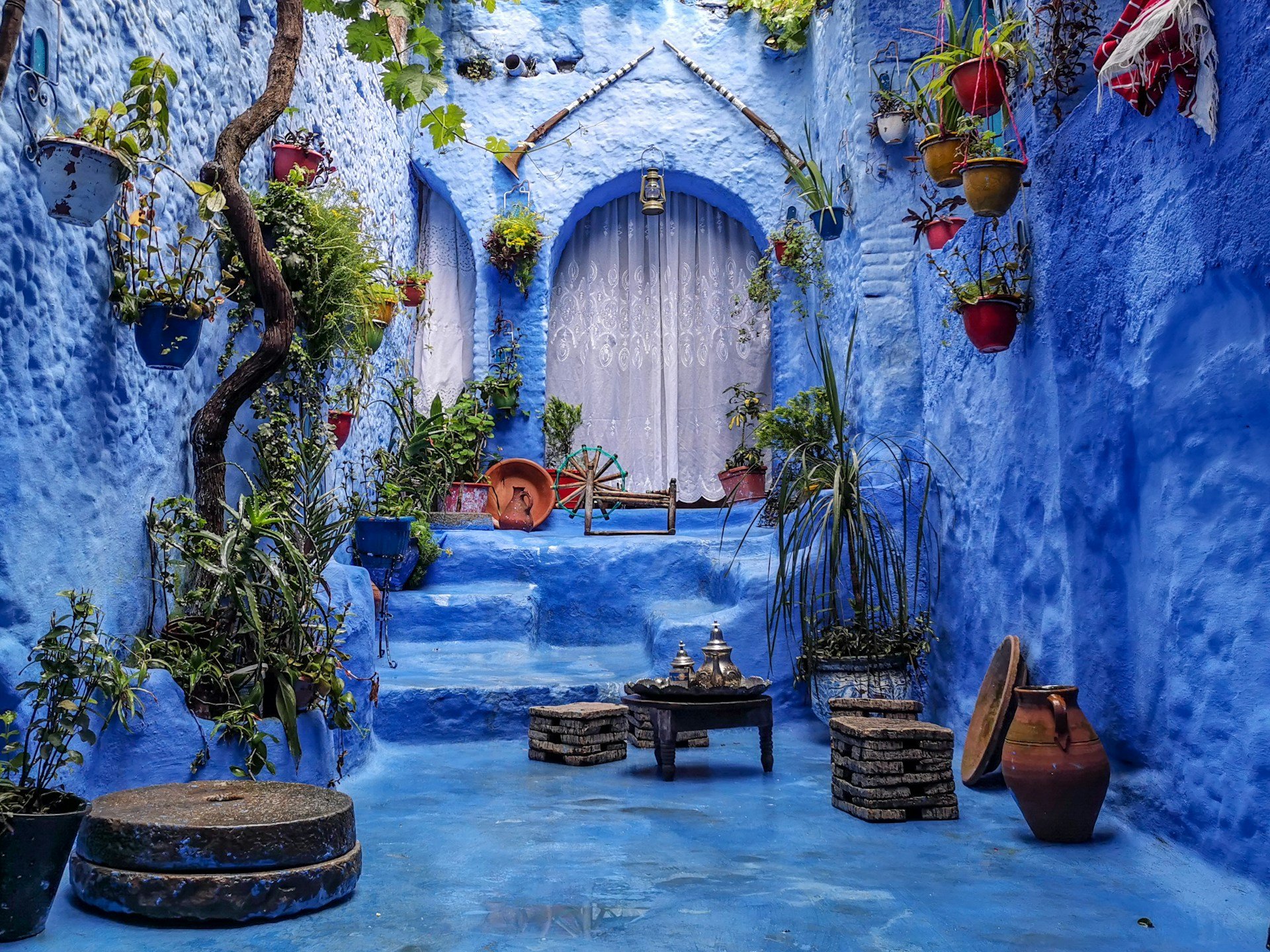
Fez's medina, founded in 789 AD, is the world's largest living medieval city: 9,000 lanes, no cars and over 300 mosques. Marrakech's Djemaa el-Fna, blue Chefchaouen, the Sahara dunes of Erg Chebbi and the Atlantic surf coast sit just 14km from Europe.
The world's most concentrated ancient history
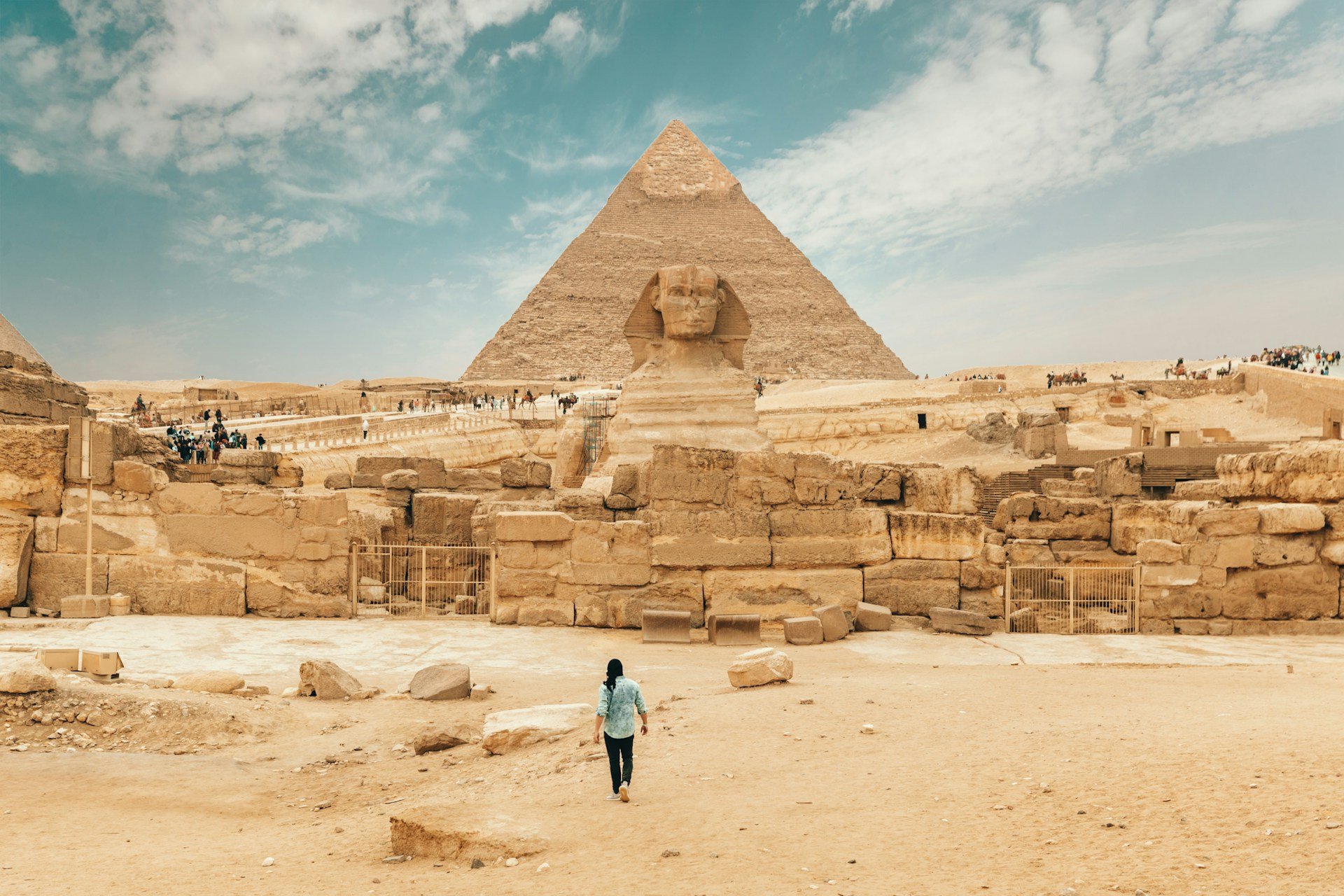
The Great Pyramid of Khufu, around 2560 BC, is the last surviving wonder of the ancient world. Luxor holds the Valley of the Kings and Karnak, Abu Simbel is among history's most ambitious monuments, and the Red Sea offers world-class diving.
Key facts side by side
| Fact | 🕌 Morocco | 🏛️ Egypt |
|---|---|---|
| Mid-range daily budget | €50–90 | €40–70 |
| Visa, most Western passports | None, 90 days | E-visa required, ~$25 |
| Best season | Mar–May & Sep–Nov | Oct–Apr, avoid 40°C+ summer |
| Main airports | Marrakech, Casablanca, Fez | Cairo, Luxor, Sharm, Hurghada |
| Must-see | Marrakech, Fez, Chefchaouen, Sahara | Giza, Luxor, Aswan, Abu Simbel |
| UNESCO sites | 9 | 7, including Giza and Luxor |
| Signature journey | Erg Chebbi overnight camel trek | Luxor to Aswan Nile cruise |
| Food highlight | Tagine, couscous, pastilla, mint tea | Koshari, ful medames, kofta, om ali |
Typical 2026 prices excluding flights.
Round 1 of 10
Ancient history and monuments
Egypt wins, emphatically
Egypt's ancient civilisation is in a category of its own. Morocco's medieval heritage is genuinely outstanding.
 🕌 Morocco
9 UNESCO sites: medieval Islamic cities and Volubilis
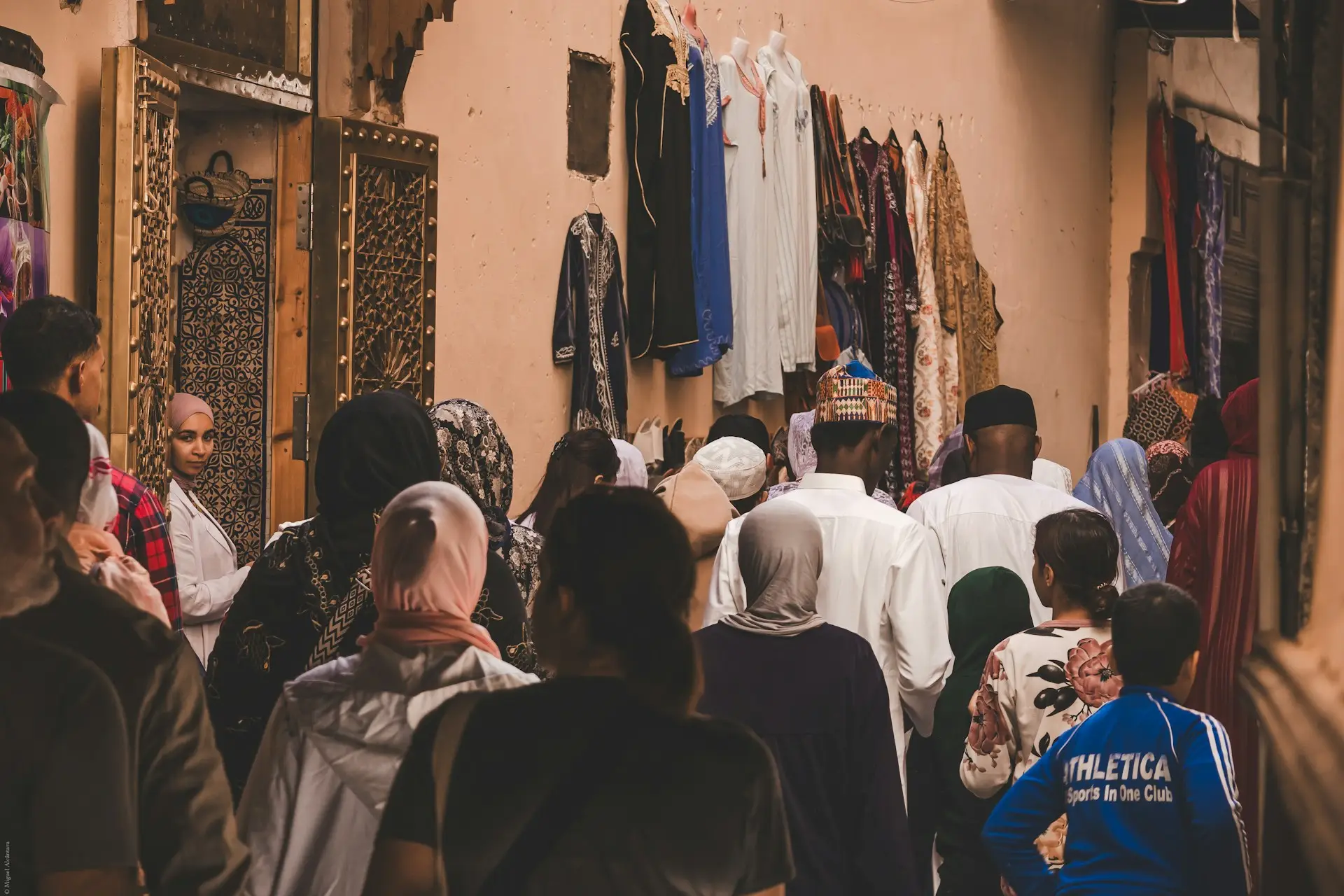
Fez's medina and the Al-Qarawiyyin university, founded 859 AD, anchor a heritage that runs on a medieval Islamic timescale. Marrakech adds the Saadian Tombs and Ben Youssef Medersa, Volubilis a Roman layer, and Aït Benhaddou a painted kasbah. A headline attraction elsewhere, here it shares the stage with the Sahara and the food.
- Don't miss
- Fez medina, Volubilis, Aït Benhaddou
 🏛️ Egypt
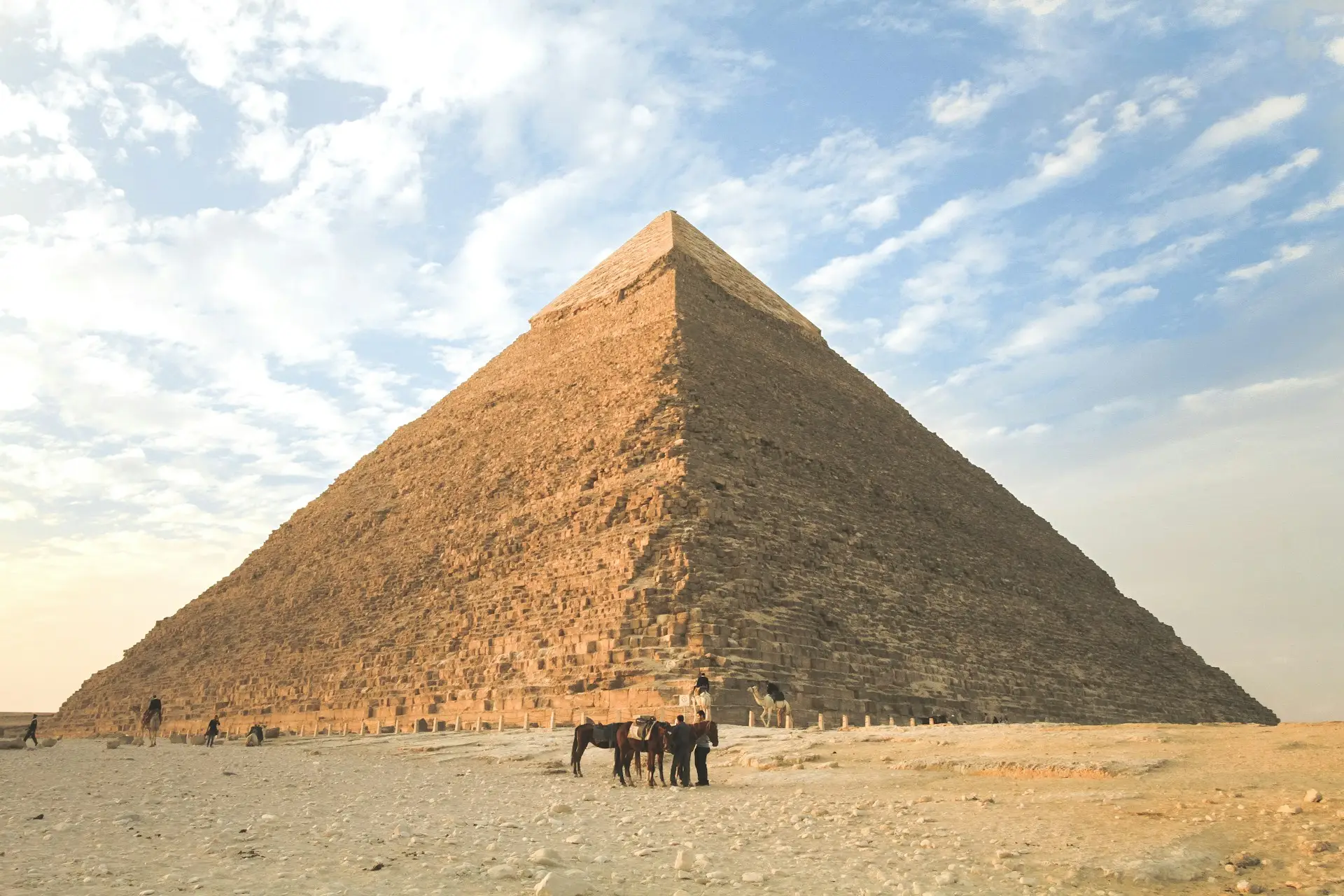
The Pyramids, Valley of the Kings and Karnak
The Great Pyramid, the Sphinx and the Grand Egyptian Museum's complete Tutankhamun collection sit near Cairo. Luxor holds more ancient monuments per square kilometre than anywhere on earth: Karnak, Luxor Temple and 65 royal tombs. Abu Simbel completes the deepest well of any travel destination.
- Don't miss
- Giza, Karnak, the Valley of the Kings
Round 2 of 10
Living culture and city experience
Morocco wins, clearly
Morocco's medinas are among the world's most immersive living cultural experiences. Egypt's culture is rich but harder for visitors to reach.
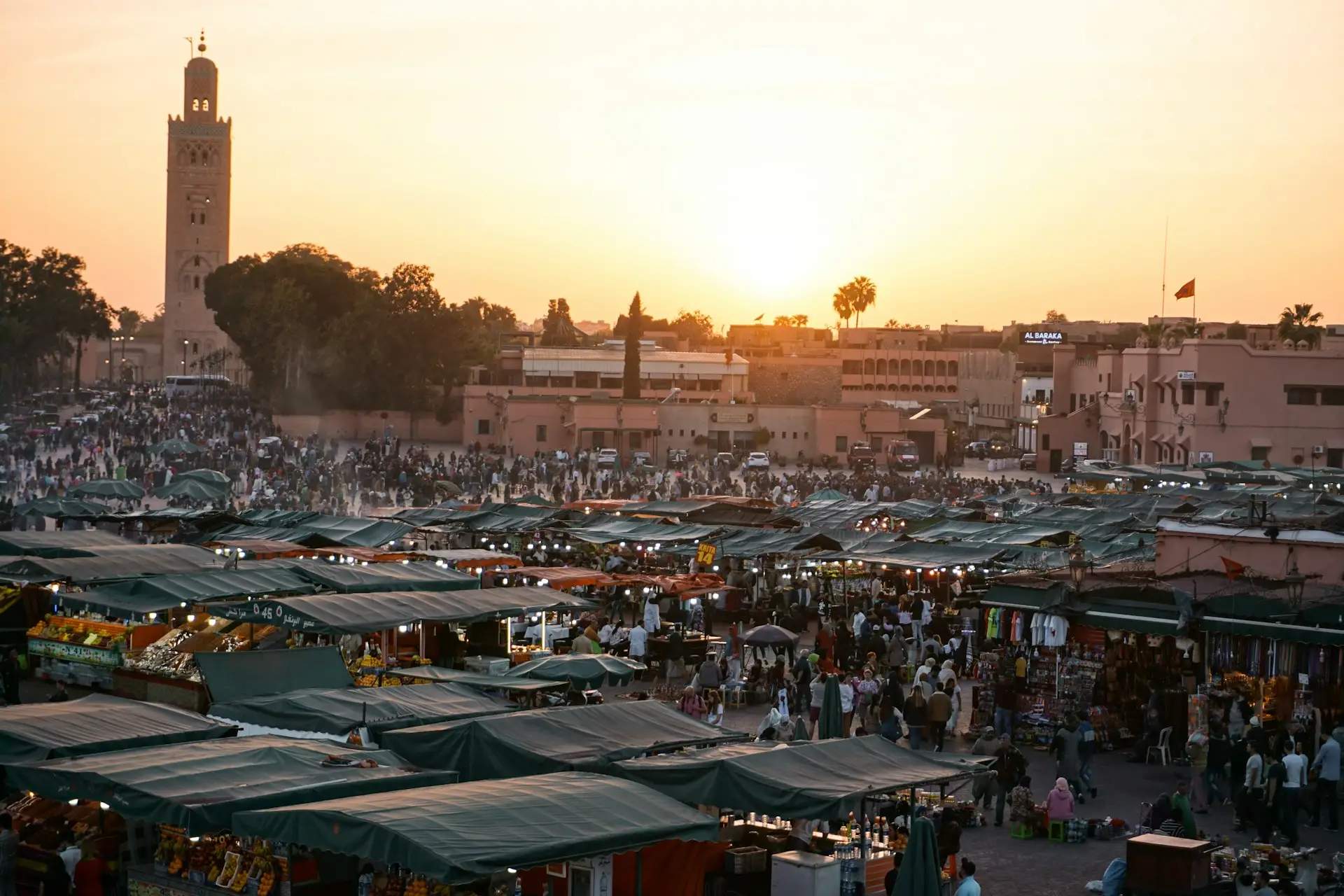 🕌 Morocco
Fez, Djemaa el-Fna and Chefchaouen, culture still fully alive
Fez's tanneries still use 11th-century stone vats, visible from riad rooftops. Djemaa el-Fna turns from juice stalls to a night-time spectacle of food, storytellers and gnawa musicians, and Chefchaouen's blue lanes are one of Morocco's iconic images.
- Don't miss
- Fez tanneries, Djemaa el-Fna at dusk
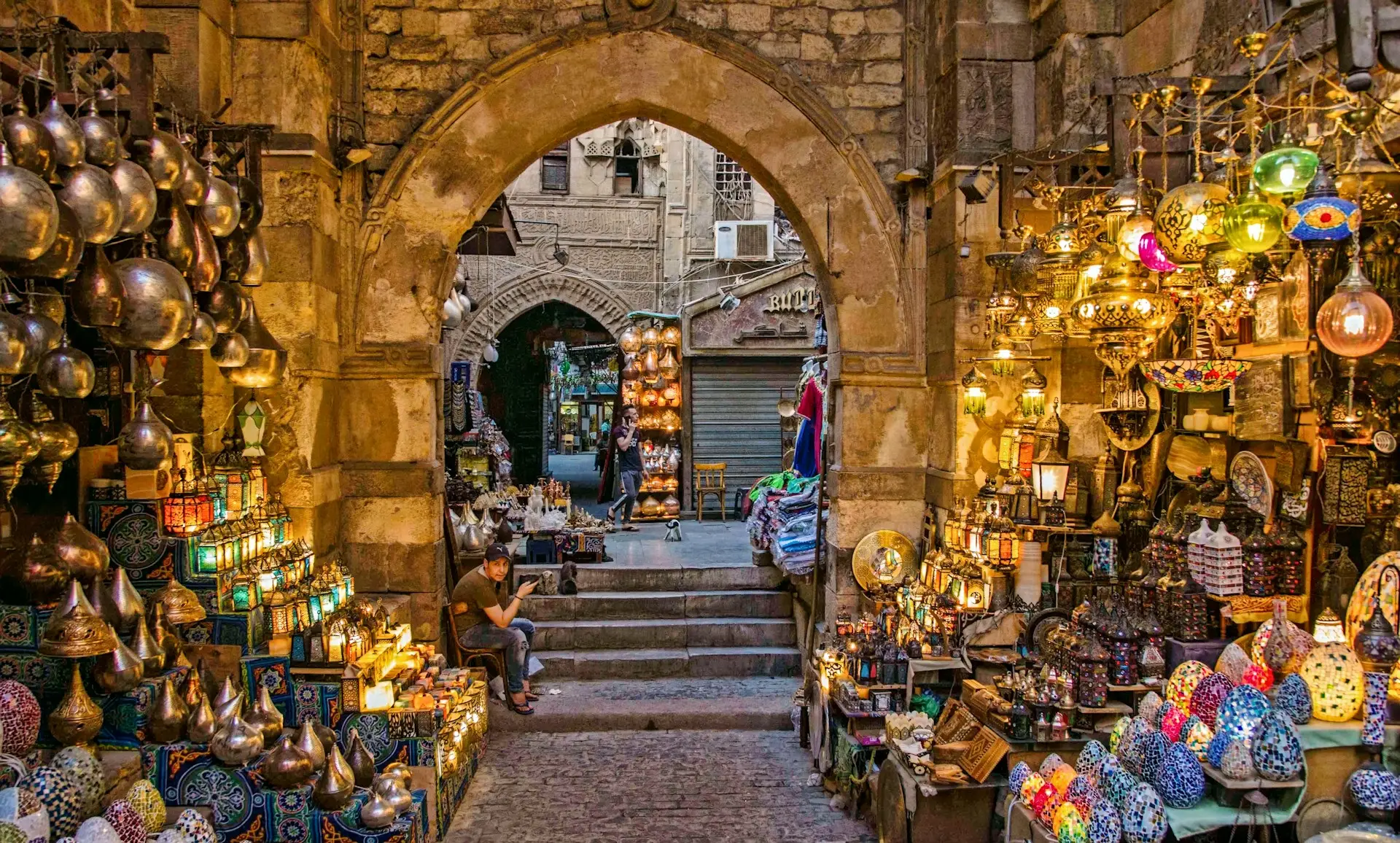 🏛️ Egypt
Khan el-Khalili, the Nile and Islamic Cairo
Islamic Cairo holds over 600 monuments, Al-Azhar dates to 970 AD, and a felucca at sunset from Aswan is almost mythic. But the gap between tourist Egypt and daily Egyptian life is wider, and a megacity of 22 million can overwhelm rather than enchant.
- Don't miss
- Islamic Cairo, a felucca on the Nile
Round 3 of 10
Desert experience
Morocco wins, narrowly
Both countries reach the Sahara. Morocco integrates it into the standard itinerary; Egypt's deserts are wilder but need deliberate detours.
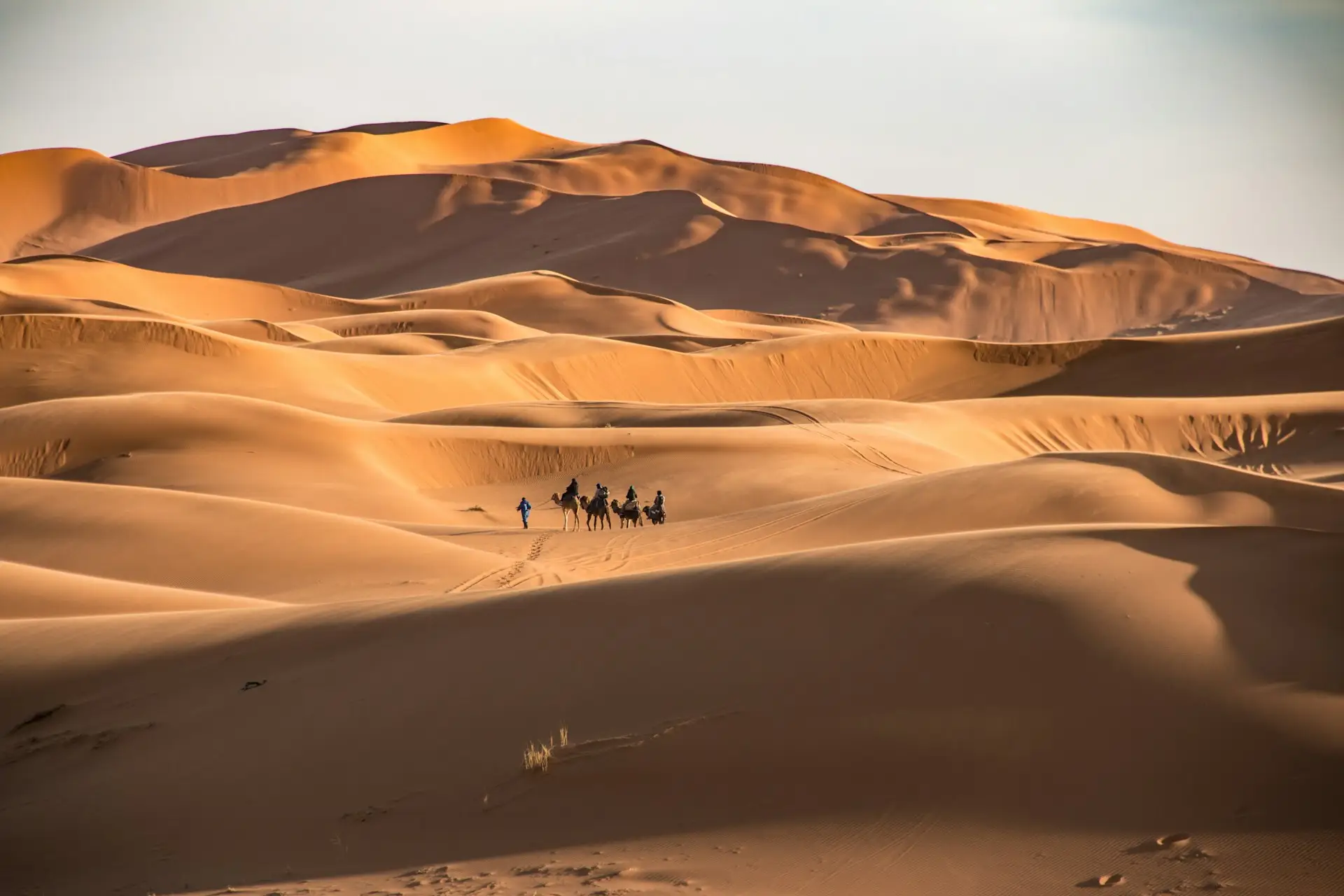 🕌 Morocco
Erg Chebbi and the Draa Valley, the classic Sahara circuit
Dunes rise 150m from the flat hammada, shifting from pale gold to crimson at sunset. The camel-to-camp overnight under a dense sky is deservedly popular, and the approach through kasbah-lined valleys and the Todra and Dades gorges adds days of exploration.
- Don't miss
- Erg Chebbi sunrise, the Todra Gorge
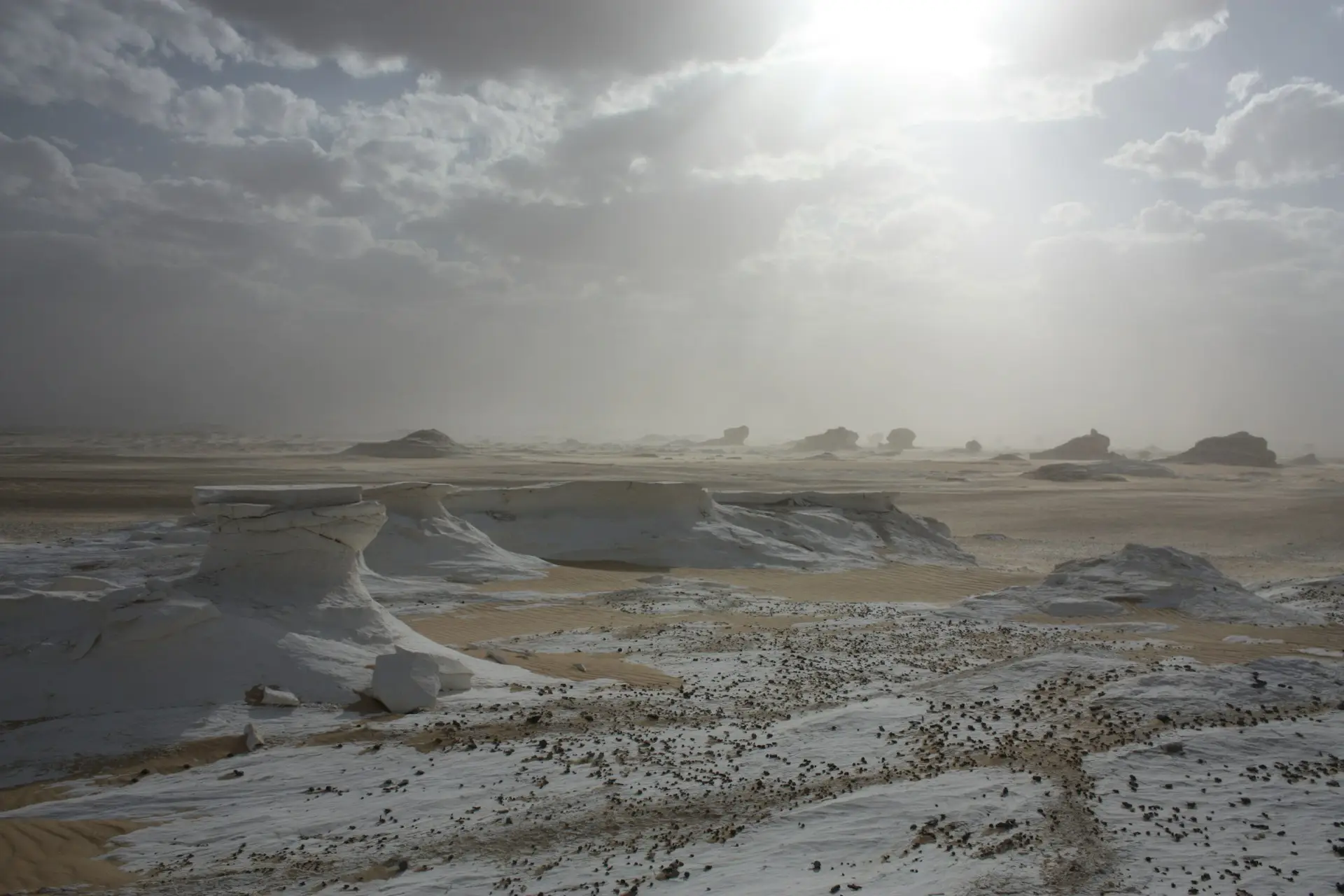 🏛️ Egypt
The White Desert, Siwa Oasis and the Western Desert
The White Desert's chalk formations rise from a flat plain like mushrooms and ice cream cones, reached on a two-night camping trip. Siwa Oasis, near the Libyan border, has the Oracle Temple where Alexander was endorsed. Wilder and less visited than Morocco's circuit.
- Don't miss
- White Desert, Siwa Oasis
Round 4 of 10
Food and cuisine
Morocco wins
Moroccan cuisine is one of the world's great food traditions. Egyptian street food is excellent and extraordinarily cheap.
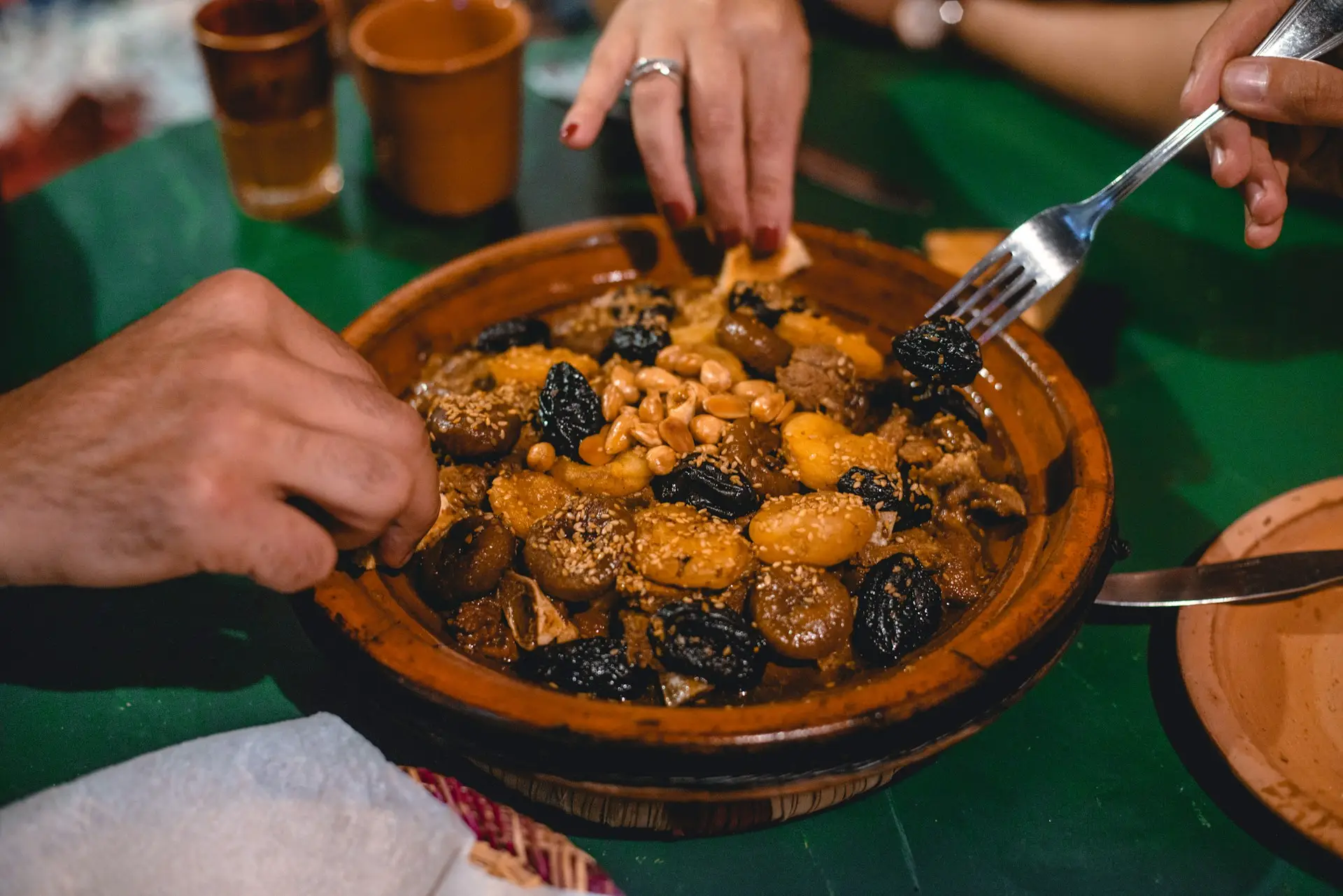 🕌 Morocco
Tagine, pastilla, couscous and the ritual of mint tea
A layering of Berber, Arab, Andalusian and African influences: slow-cooked tagines, the sweet-savoury pastilla, and Friday couscous, UNESCO-listed. Mint tea poured from height is hospitality as much as preparation, and Marrakech's restaurants now add modern technique.
- Must eat
- Lamb tagine, pastilla, Friday couscous
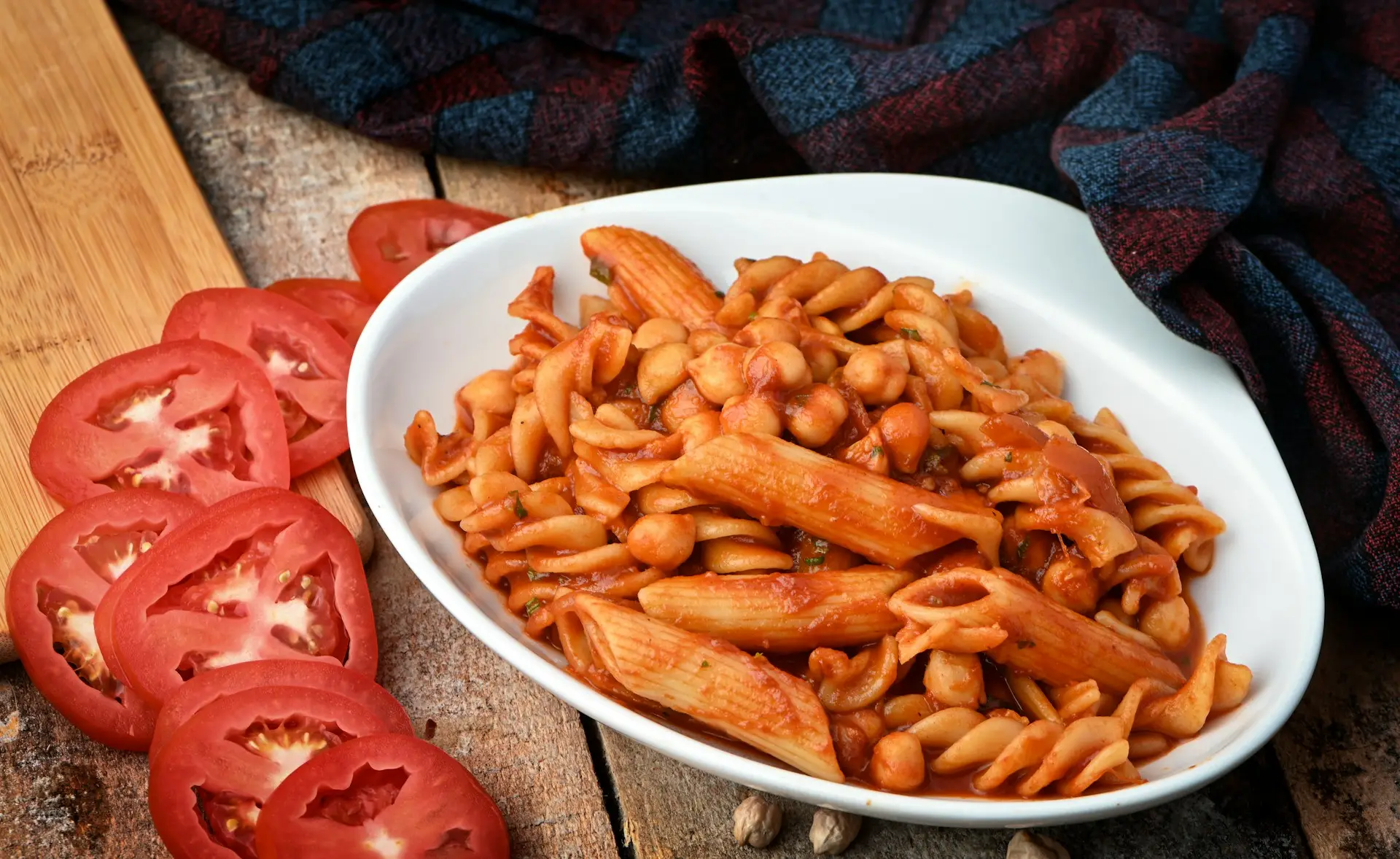 🏛️ Egypt
Koshari, ful medames and kofta at extraordinary prices
Koshari, layers of rice, lentils, pasta and crispy onions, costs €0.50–1.50 and is Egypt's national dish. Ful medames is the national breakfast, ta'ameya is a lighter fava falafel, and om ali is the signature dessert. You can eat very well on €5–8 a day.
- Must eat
- Koshari, ful medames, om ali
Round 5 of 10
Beaches and water
Egypt wins, clearly
Egypt's Red Sea is one of the world's top diving destinations. Morocco's Atlantic coast has world-class surf, in cooler water.
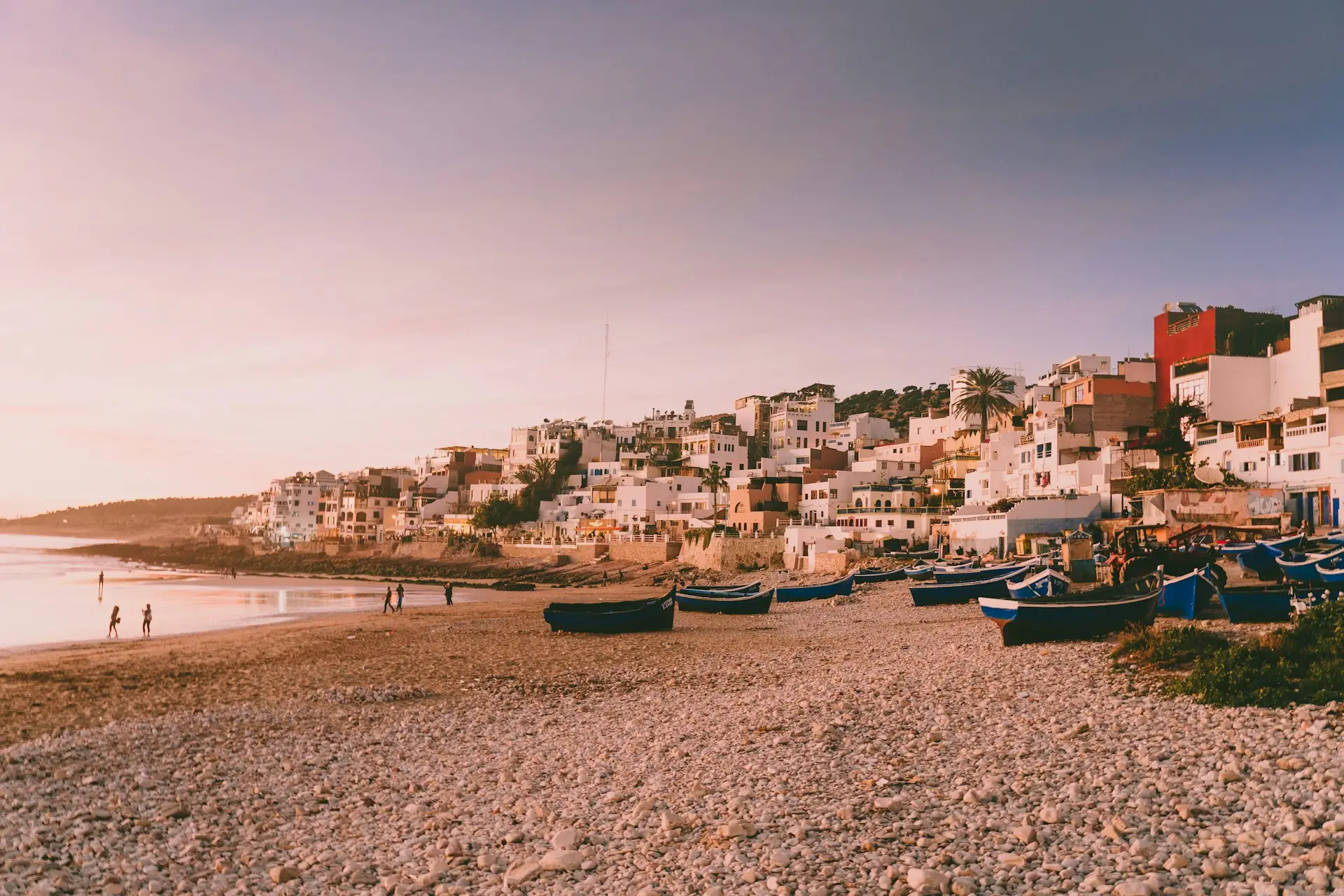 🕌 Morocco
Taghazout surf, Essaouira wind and the Atlantic coast
Taghazout has consistent swells from October to April and a relaxed surf-camp scene, while Essaouira's trade winds make it a premier kitesurfing spot. The coast rewards active travellers, not classic sun-and-sea holidaymakers, and the water is cooler.
- Don't miss
- Taghazout, Essaouira
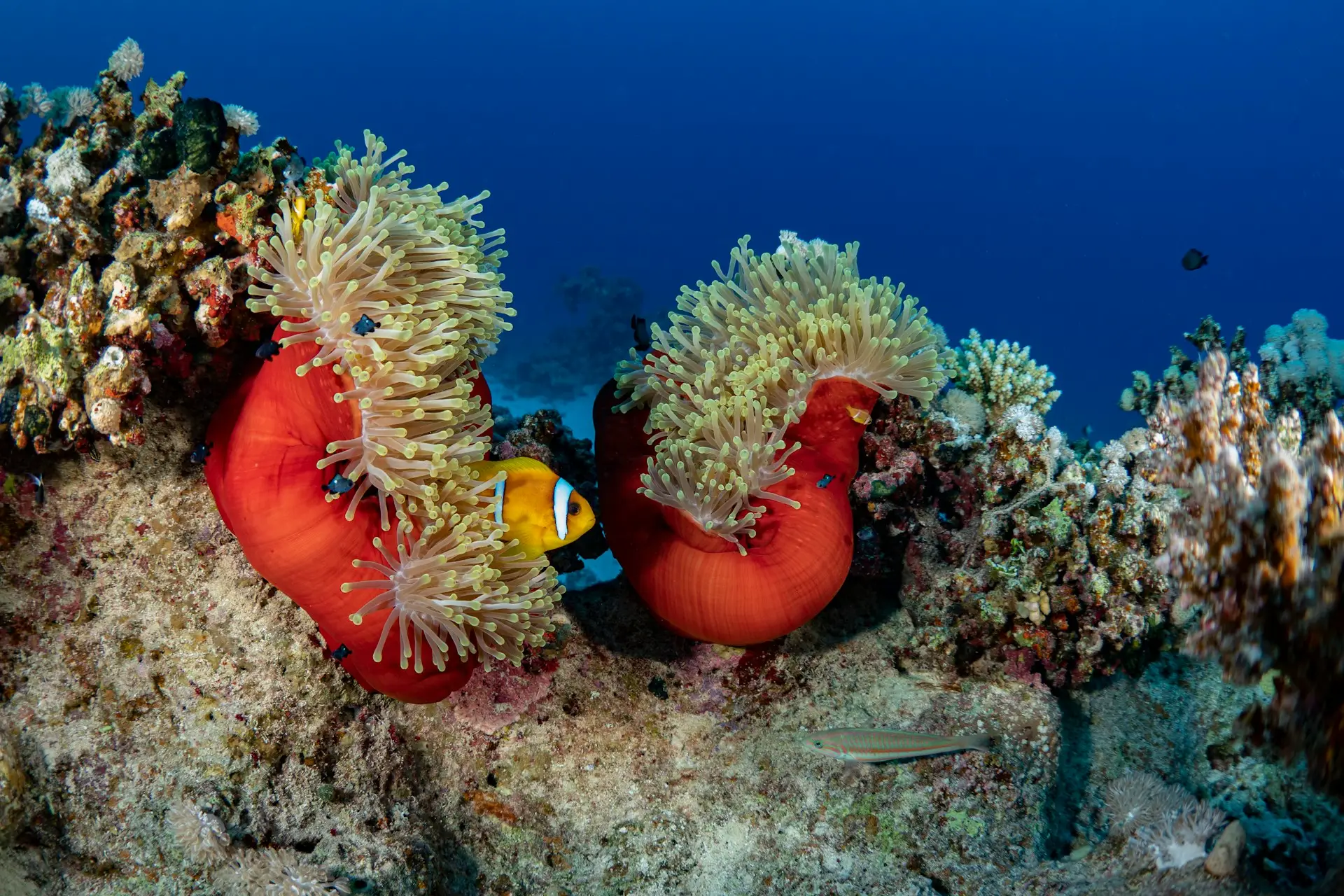 🏛️ Egypt
The Red Sea: diving and snorkelling at Dahab, Hurghada and Sharm
Over 1,200 fish species and exceptional coral, warm at 22–28°C all year. Dahab's house reefs are snorkellable from shore with 25–30m visibility, Ras Mohammed has superb wall dives, and Hurghada suits beginners.
- Don't miss
- Dahab, Ras Mohammed National Park
Round 6 of 10
Which is cheaper, Morocco or Egypt?
Egypt wins, narrowly
Both are excellent value. Egypt is marginally cheaper, especially for food and local transport.
| Typical cost | 🕌 Morocco | 🏛️ Egypt |
|---|---|---|
| Budget accommodation | €15–40/night | €10–30/night |
| Mid-range hotel | €50–120/night | €35–90/night |
| Street food meal | €2–5 | €0.50–2 |
| Mid-range restaurant | €10–25/person | €8–18/person |
| Major site entry | €5–15 | €15–30, Tutankhamun extra |
| Desert overnight | €60–120 camel and camp | €50–90 White Desert camping |
| Nile cruise, 4 nights | n/a | €200–500 |
| Intercity transport | €10–25 CTM bus | €5–15 train or bus |
Typical 2026 prices in euros, excluding flights.
The currency advantage: Egypt's pound has weakened sharply against the euro, dollar and sterling, so a comfortable mid-range day currently costs around €50–70. Morocco matches it at the budget end but its stronger tourist infrastructure lifts mid-range prices slightly.
Round 7 of 10
Things to do beyond the headline sights
Different traditions
Egypt has the Nile and the Red Sea; Morocco has the mountains and hands-on culture.
| Activity | 🕌 Morocco | 🏛️ Egypt |
|---|---|---|
| River journeys | Not applicable | A Luxor to Aswan Nile cruise or a felucca |
| Mountain trekking | The High Atlas, including Toubkal, North Africa's highest peak | Sinai's Mount Sinai sunrise climb |
| Hot air ballooning | Over the Marrakech plains | Over Luxor's temples at dawn |
| Cooking and craft classes | Tagine classes and medina artisan workshops | Limited |
| Diving and snorkelling | Atlantic, cooler and rougher | The Red Sea, world-class |
| Surfing and kitesurfing | Taghazout and Essaouira | Red Sea kitesurfing at El Gouna |
Honest verdict: a real split between a country of hands-on cultural immersion and one of big set-piece experiences.
Round 8 of 10
Getting around
Morocco wins, narrowly
Both are easy to tour with a guide or driver. Morocco's classic circuit is simpler to do independently.
CTM buses, trains and the Al Boraq high-speed line
CTM and Supratours buses link the main cities comfortably, trains serve Marrakech, Fez and Casablanca, and the Al Boraq high-speed line connects Tangier and Casablanca. The Sahara leg is best by tour or a 1-hour flight to Errachidia.
Trains, sleepers, domestic flights and Nile boats
Trains and overnight sleepers link Cairo with Luxor and Aswan, domestic flights cover long distances cheaply, and ride-hailing works well in Cairo. Sites are spread out and touts are persistent, so many visitors book a driver or guide for each leg.
Round 9 of 10
When to go: the best time for Morocco and Egypt
A genuine tie
Both share an optimal window. October to April is best for both, and summer is brutal.
Regional exceptions: Morocco's Atlantic coast and mountains stay cooler in summer, and Egypt's Red Sea coast is manageable year-round for beach and diving holidays. March–May and October–November are best for sightseeing in both. Ramadan affects restaurant hours and alcohol availability in both.
Round 10 of 10
Is Morocco or Egypt safer for tourists?
Morocco wins, narrowly
Both are generally safe at established tourist destinations. Morocco is the more straightforward choice for solo and first-time visitors.
🕌 Morocco: what to watch
- Touts and faux guides in the medinas; a firm "no, thank you" and agreed prices up front help.
- Petty theft in crowded souks; keep valuables secure.
- Border regions Avoid the Western Sahara borders.
- Modest dress is advisable, especially outside tourist areas.
🏛️ Egypt: what to watch
- Touts and overcharging at the Pyramids and temples; agree prices before any ride or service.
- Heavy security is maintained at Giza, Luxor, Aswan and the Red Sea resorts.
- Border regions Avoid the Sinai interior and the Libyan border.
- Heat and dehydration are a real daily risk at open-air sites.
Check your government's travel advisory before booking either, and apply standard awareness of touts, secure valuables and modest dress.
Which is better for specific trips?
Egypt for history lovers, divers and budget travellers. Morocco for food lovers, first-timers and surfers.
History and archaeology buffs
Egypt
Five thousand years of monuments with no equivalent anywhere.
Food-led travellers
Morocco
One of the world's great cuisines, in riads and on Djemaa el-Fna.
Divers and snorkellers
Egypt
Dahab and Ras Mohammed rival the best dive sites on earth.
First-time North Africa visitors
Morocco
No visa, simpler infrastructure and a forgiving classic circuit.
Budget travellers
Egypt
Koshari for €1 and cheap hotels on a weakened pound.
Surfers and kitesurfers
Morocco
Taghazout and Essaouira offer reliable Atlantic waves and wind.
Nile cruisers
Egypt
A Luxor to Aswan cruise is one of the world's great journeys.
Short-trip travellers
Morocco
Seven to ten days covers Morocco well.
Can you combine Morocco and Egypt in one trip?
Yes. Direct flights between Casablanca or Marrakech and Cairo take 4 to 5 hours, and an 18 to 21 day combination works well.
Morocco: days 1 to 9
- Days 1–3
Marrakech. Djemaa el-Fna, the medina and Ben Youssef Medersa.
- Days 4–6
Fez. The medina, tanneries and Al-Qarawiyyin.
- Days 7–9
Sahara. Erg Chebbi overnight camp via the Draa and Ziz valleys.
Egypt: days 10 to 18
- Days 10–13
Cairo and Giza. The Pyramids, the Grand Egyptian Museum and Islamic Cairo.
- Days 14–17
Nile cruise. Luxor to Aswan: Karnak, the Valley of the Kings and Abu Simbel.
- Day 18
Fly home. Or extend with Red Sea diving at Dahab.
When to go: March–May or October–November suit both countries. Carry cash in local currency and dress modestly in both.
Verdict: Morocco or Egypt?
There's no single overall winner. Living culture or ancient monuments, your motivation decides.
Choose Morocco if…
Morocco, for culture, food and the Sahara circuit
The right choice when immersive living culture, extraordinary food and a well-organised circuit are the priorities, and a first North Africa visit calls for something accessible and varied.
- Living medieval culture, Fez and Djemaa el-Fna
- Food is a primary motivation
- First-time North Africa, no visa
- The Marrakech to Fez to Sahara circuit
- Chefchaouen is on the list
- Surfing or kitesurfing
- A shorter trip of 7 to 10 days
Choose Egypt if…
Egypt, for the Pyramids, the Nile and the Red Sea
The right choice when the Pyramids and ancient history are the primary motivation, a Nile cruise is wanted, or Red Sea diving is on the itinerary. Also the better value.
- The Pyramids are the bucket-list goal
- Ancient Egyptian history is the main interest
- A Nile cruise is on the itinerary
- Red Sea diving at Dahab or Sharm
- Budget is a primary consideration
- The Valley of the Kings and Karnak
- Abu Simbel is a specific goal
Weigh it for your own trip
Select everything that matters to you.
Pick what matters on this trip and the needle will move.
Morocco vs Egypt: frequently asked questions
Is Morocco or Egypt better for history?
Egypt wins, and it is not close. The Pyramids of Giza are 4,500 years old, and the Valley of the Kings, Karnak, Abu Simbel and the Grand Egyptian Museum make it the world's most concentrated ancient history destination. Morocco's heritage, Fez's 1,200-year-old medina, Volubilis and the Saadian Tombs, is outstanding but medieval in timescale.
Is Morocco or Egypt better for culture?
Morocco wins for immersive living culture. Fez is the world's largest living medieval city, Djemaa el-Fna is UNESCO Intangible Heritage, and riad hospitality and mint tea make the culture accessible. Egypt's culture is equally fascinating but the gap between tourist and daily life is wider, and Cairo can overwhelm on first encounter.
Is Morocco or Egypt safer for tourists?
Both are generally safe at established destinations. Morocco is the more straightforward for solo and first-time travellers, with strong tourist infrastructure and police presence in the medinas. Egypt maintains heavy security at Giza, Luxor, Aswan and the Red Sea resorts. Avoid border regions in both and check government advisories.
Is Morocco or Egypt cheaper?
Both are excellent value, Egypt marginally cheaper, especially for street food (koshari at €0.50–1.50), local transport and non-luxury accommodation. A comfortable mid-range day is €40–70 in Egypt against €50–90 in Morocco.
What is the best time to visit Morocco and Egypt?
October to April for both. Summer reaches 38–45°C inland in both countries. March–May and October–November give mild temperatures of 18–28°C and manageable crowds. Morocco's coast and mountains are cooler in summer, and Egypt's Red Sea is fine year-round for diving.
How do you get around Morocco and Egypt?
Morocco has CTM and Supratours buses, trains and the Al Boraq high-speed line between Tangier and Casablanca. Egypt has trains, overnight sleepers, cheap domestic flights and Nile boats, but long distances and persistent touts mean many visitors book drivers or guides.
Is food better in Morocco or Egypt?
Morocco's cuisine is widely ranked among the world's top five, with tagines, pastilla and couscous. Egypt's is less celebrated but its street food, koshari, ful medames and ta'ameya, is excellent and remarkably cheap. Morocco wins on depth, Egypt on value.
Can you combine Morocco and Egypt in one trip?
Yes. Direct flights between Casablanca or Marrakech and Cairo take 4 to 5 hours with Royal Air Maroc and EgyptAir. Allow 18 to 21 days: 8 to 10 nights in Morocco (Marrakech, Fez, Sahara), then Cairo and Giza for 3 nights and a 4-night Nile cruise.
There's no wrong answer here
Morocco and Egypt are compared so often because both are transformative and completely different. Pick on what you want from this trip: the intensity of living culture and food, or the unfathomable depth of time. Better still, do both, a short flight links them.