
Maldives vs Seychelles at a glance
Eleven rounds, scored honestly. Maldives takes diving and marine wildlife by a distance; Seychelles takes cost and land nature just as clearly. Beaches and honeymoon romance are two of travel's great unresolved debates. Select a category to jump to the full comparison.
| Category | MaldivesSeychelles |
|---|---|
| The eleven rounds | |
| BeachesCalm perfect lagoons vs dramatic granite boulders | A genuine tie |
| Diving & snorkellingManta rays, whale sharks, 30m+ visibility | Maldives, emphatically |
| CostSelf-catering and real price flexibility | Seychelles, clearly |
| Nature & wildlifeMarine megafauna vs Coco de Mer and giant tortoises | Seychelles, narrowly |
| HoneymoonTotal seclusion vs romance with variety | A genuine tie |
| FoodResort board plans vs real Creole restaurants | Seychelles, narrowly |
| NightlifeResort bar only vs a little real variety | Seychelles, narrowly |
| Things to doWater sports and spa vs hiking and island-hopping | A genuine tie |
| Getting aroundNo $200-600 seaplane transfer required | Seychelles, narrowly |
| WeatherTwo monsoon patterns, both year-round viable | A genuine tie |
| SafetyBoth very safe, different practical risks | Draw |
| Best for | |
| Serious diversAmong the world's top five diving destinations | Maldives |
| Budget-conscious luxury travellersSelf-catering chalets and local restaurants exist | Seychelles |
| Wildlife & hiking enthusiastsGiant tortoises, Coco de Mer, jungle trails | Seychelles |
| OverallNo outright winner; it comes down to priorities | Depends on your priorities |
The aquatic cathedral vs the prehistoric garden
They sit 3,000km apart in the same ocean and share the same reputation for being the world's most beautiful island destinations, yet they are utterly different places shaped by completely different geology, ecology and tourism philosophies.
The planet's lowest-lying country, and the home of the overwater bungalow
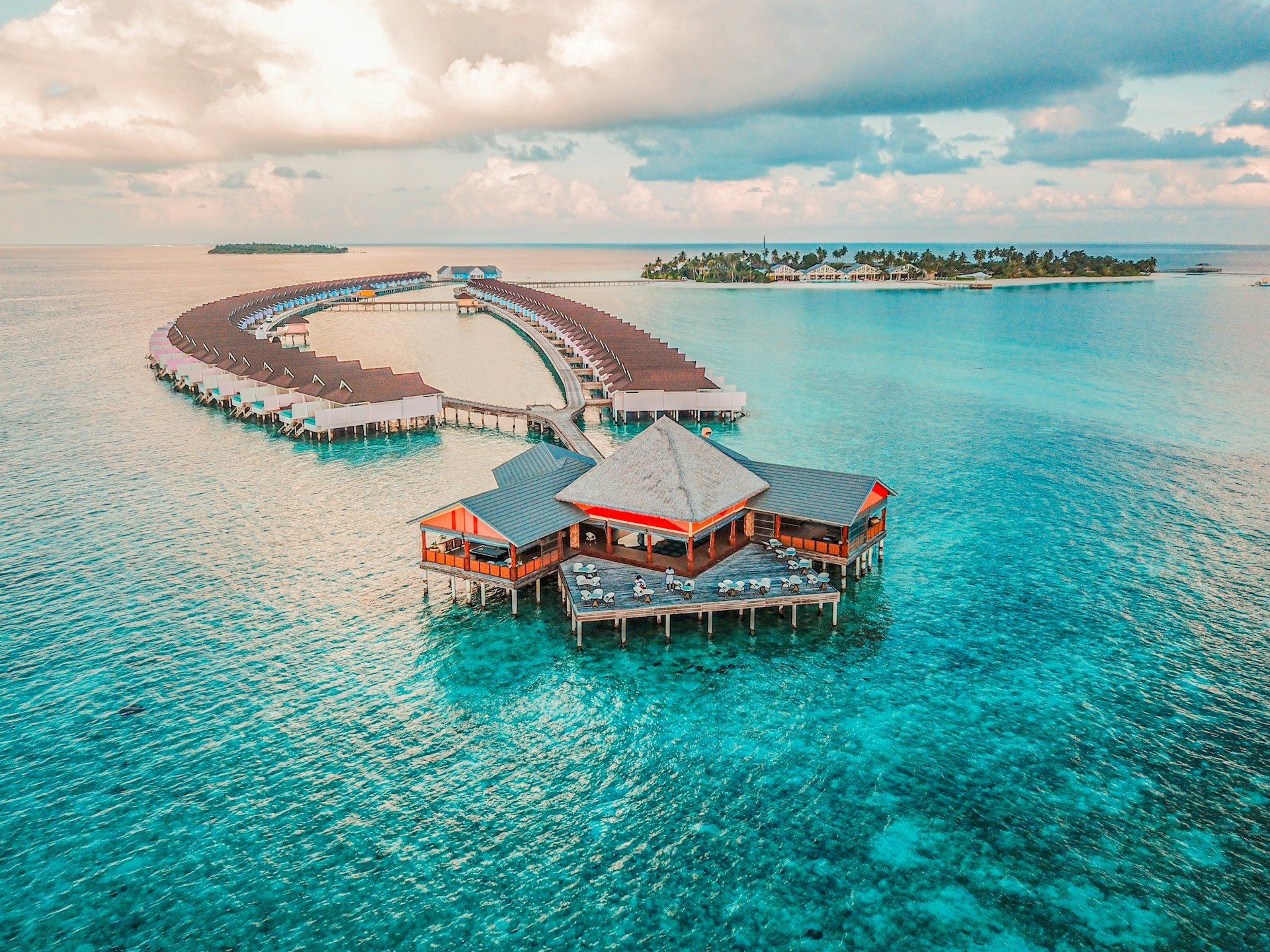
An archipelago of 1,200 coral islands spread across 26 atolls, none rising more than 2.4 metres above sea level. Each atoll is a ring of white sand and coconut palms around a lagoon of impossible turquoise. Most resorts occupy entire private islands, you are the only guests, and the whole island is your resort.
Ancient granite remnants of Gondwana, isolated for 65 million years
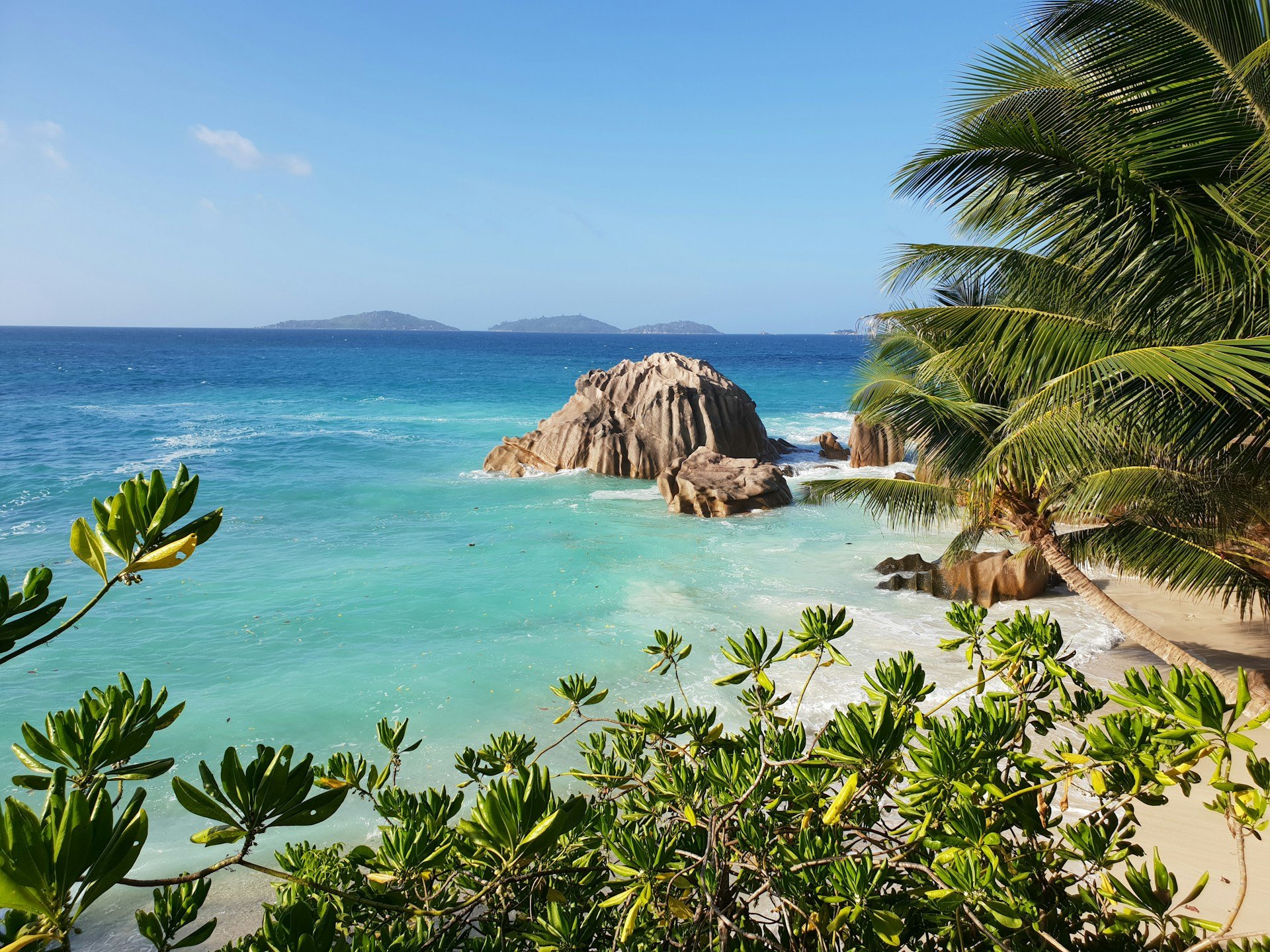
The granite inner islands, Mahé, Praslin, La Digue, are among the oldest exposed rock formations on earth, producing endemic species found nowhere else: the Coco de Mer palm, the giant Aldabra tortoise, the Seychelles black parrot. Unlike the Maldives, the Seychelles has a real local population, genuine Creole culture and the option to island-hop.
Key facts side by side
| Fact | 🐠 Maldives | 🌴 Seychelles |
|---|---|---|
| Typical nightly cost | $500–2,000+ resort, $100–200 guesthouse | $200–1,500, wide range |
| Best season | Nov–Apr, dry, calm, best diving | Apr–May & Oct–Nov, calmest winds |
| Main airport | Malé (MLE), seaplane to most resorts | Mahé (SEZ), ferry or small plane onward |
| Highest point | 2.4m, entirely flat | Morne Seychellois, 905m, jungle hiking |
| Alcohol | Resort islands only | Freely available everywhere |
| Local culture | Minimal, resorts are private islands | Yes, Creole culture, markets, local life |
| Diving quality | World-class, mantas, whale sharks | Good, but bleaching has impacted coral |
| Visa, most passports | Free on arrival, 30 days | Free on arrival, visitor's permit |
Typical 2026 prices excluding international flights.
Round 1 of 11
Beaches
A genuine tie
Both have stunning beaches of entirely different character. The Seychelles has arguably the most photographed beach on earth.
 🐠 Maldives
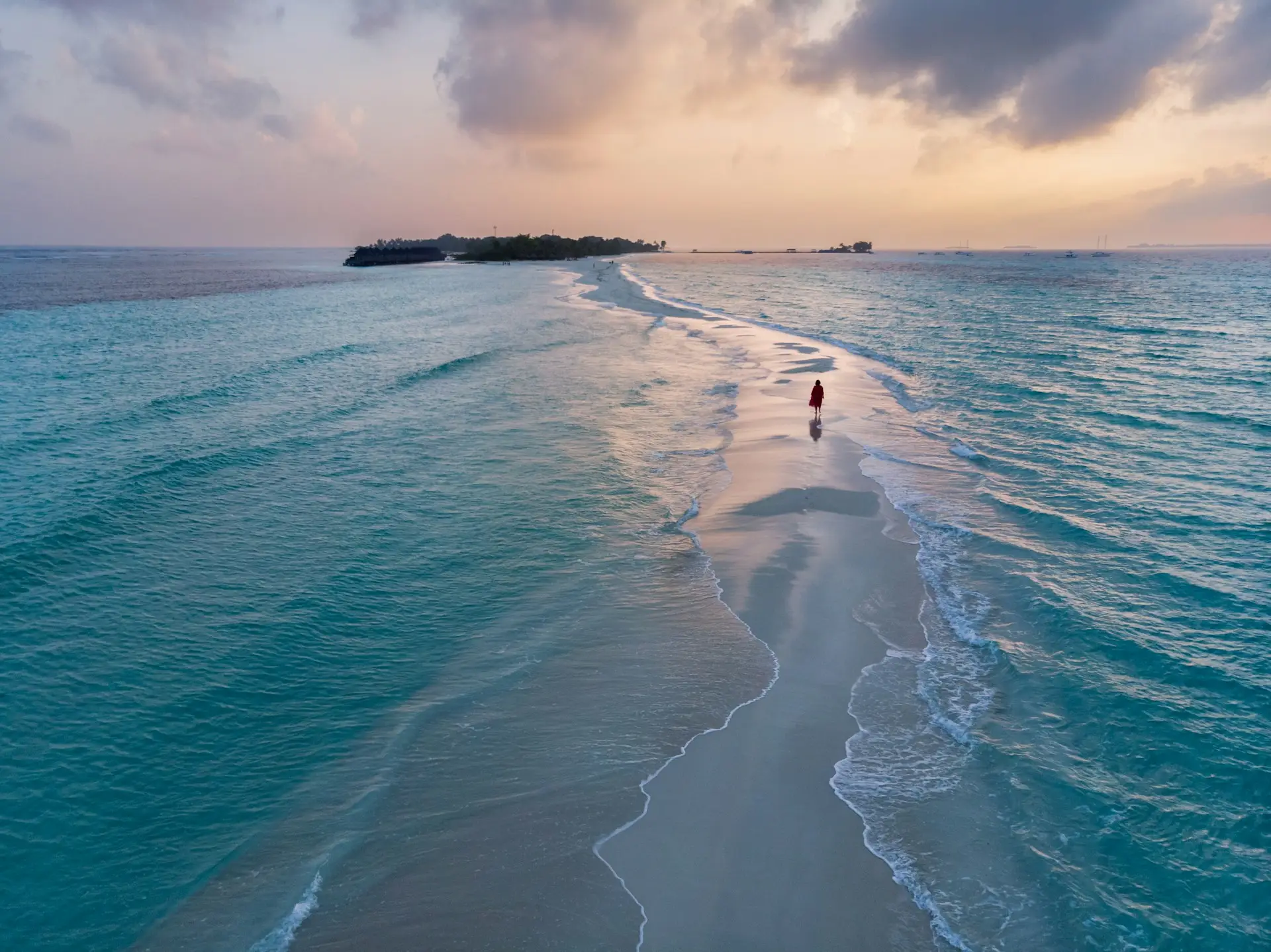
Powder-white sandbanks and calm turquoise lagoons
Each private island resort is encircled by powder-fine white coral sand, lapped by water grading from mint-green in the shallows to deep cobalt at the reef edge. Lagoons are almost always calm enough to swim in year-round at 28–30°C. The low-tide sandbanks are among the most otherworldly features in ocean travel.
- Don't miss
- A private sandbank, your resort's house reef
 🌴 Seychelles
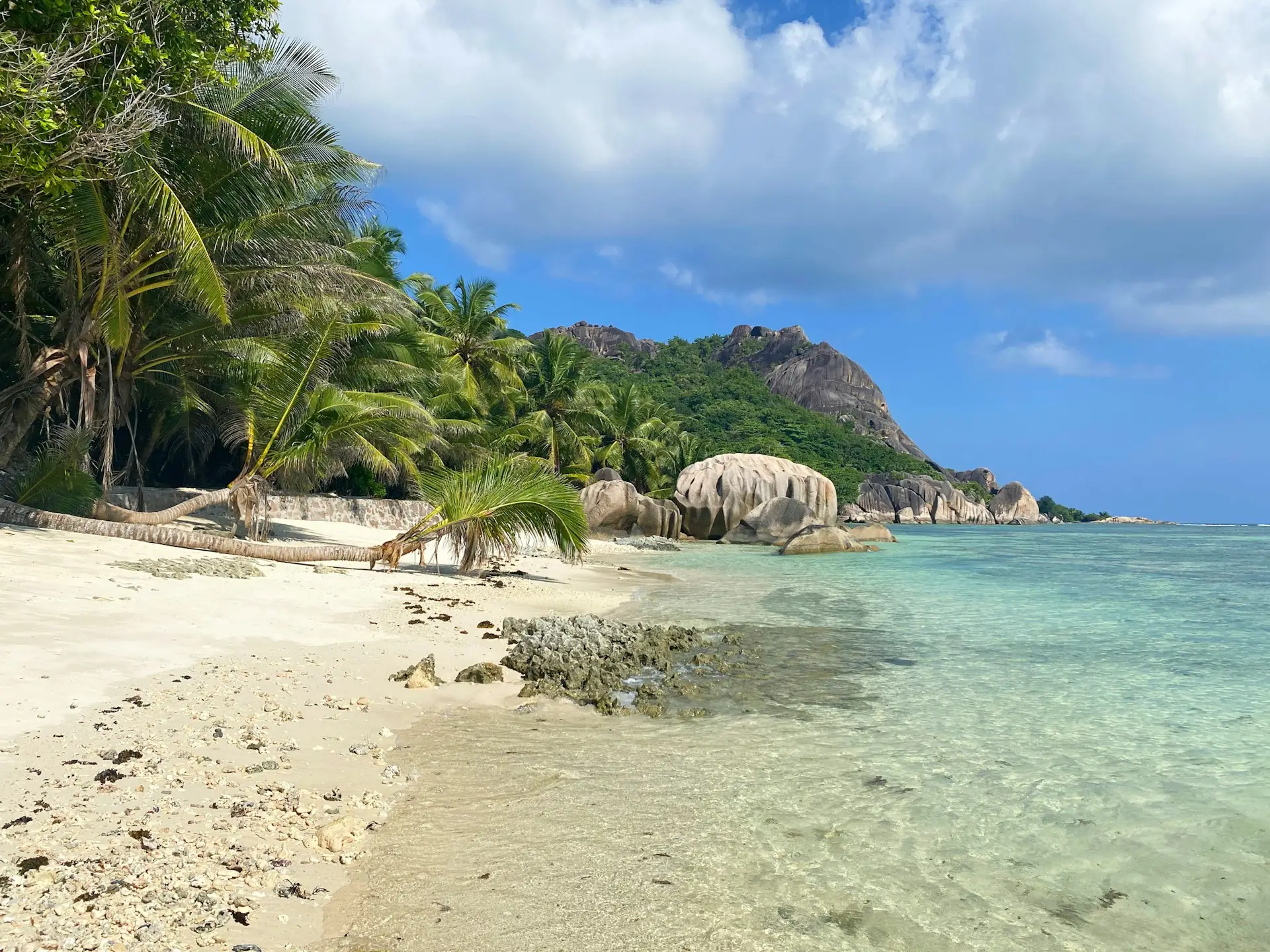
Anse Source d'Argent, the most photographed beach on earth
Consistently ranked among the world's most beautiful beaches, a series of small coves separated by ancient pink-tinged granite boulders worn smooth by millennia of tidal action. Anse Lazio on Praslin is a long golden arc with good snorkelling directly off the beach. No flat atoll can replicate this scenery.
- Don't miss
- Anse Source d'Argent, Anse Lazio
Honest verdict: Maldives wins for consistency, calm swimming conditions and the particular visual perfection of the atoll lagoon. Seychelles wins for individual drama and visual variety. A genuine tie between two different aesthetics.
Round 2 of 11
Snorkelling and diving
Maldives wins, emphatically
Below the surface is where these two destinations diverge most dramatically. The Maldives is among the world's top five diving destinations.
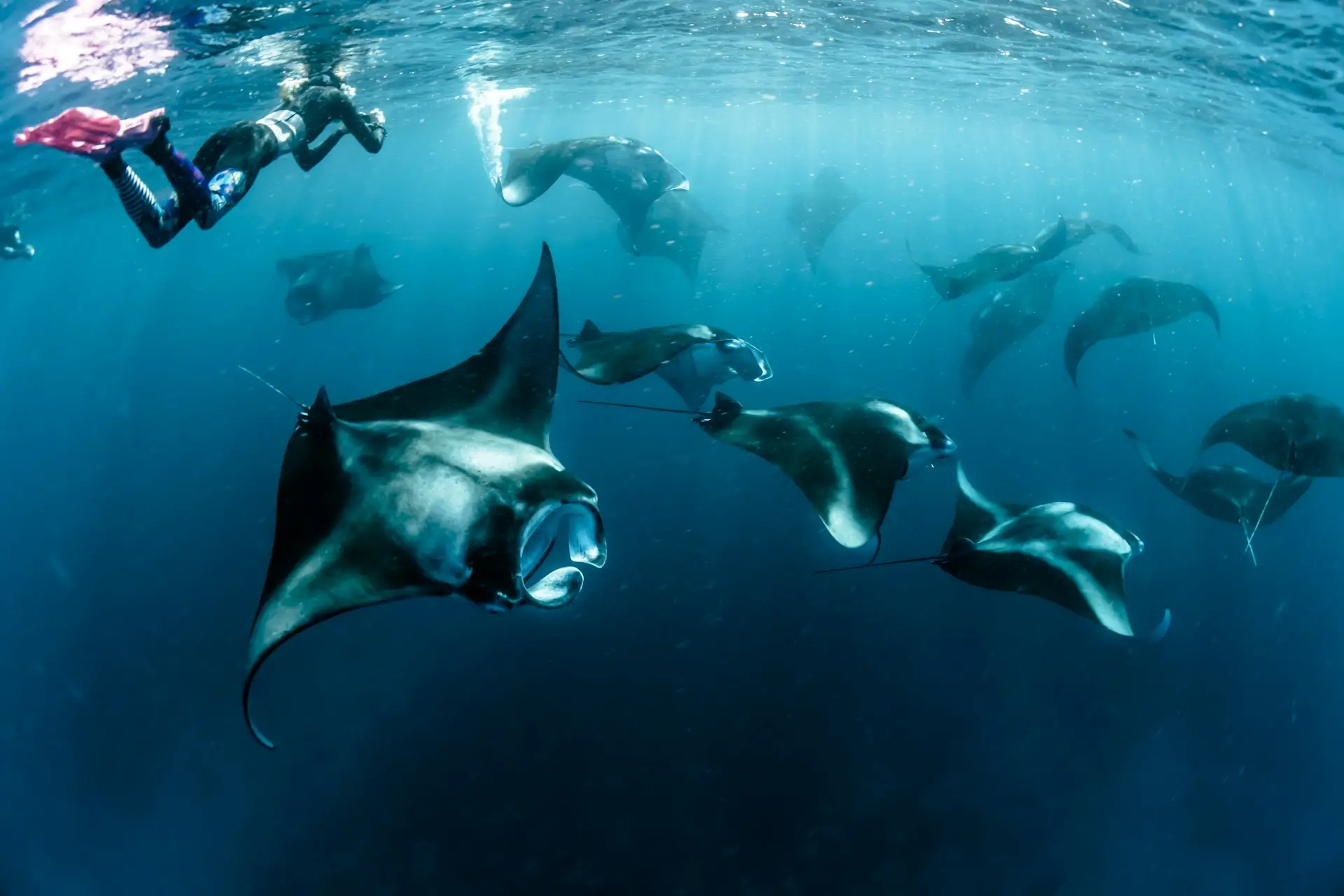 🐠 Maldives
Mantas, whale sharks and pristine reefs
Manta ray cleaning stations where dozens circle in formation are accessible on day dives from most resorts. Whale shark aggregations are predictable near South Ari Atoll, and hammerhead schools gather at Rasdhoo. Water clarity, 30+ metres visibility on most dive days, is extraordinary, and even jetty snorkelling reveals reef sharks and turtles.
- Don't miss
- South Ari Atoll whale sharks, manta cleaning stations
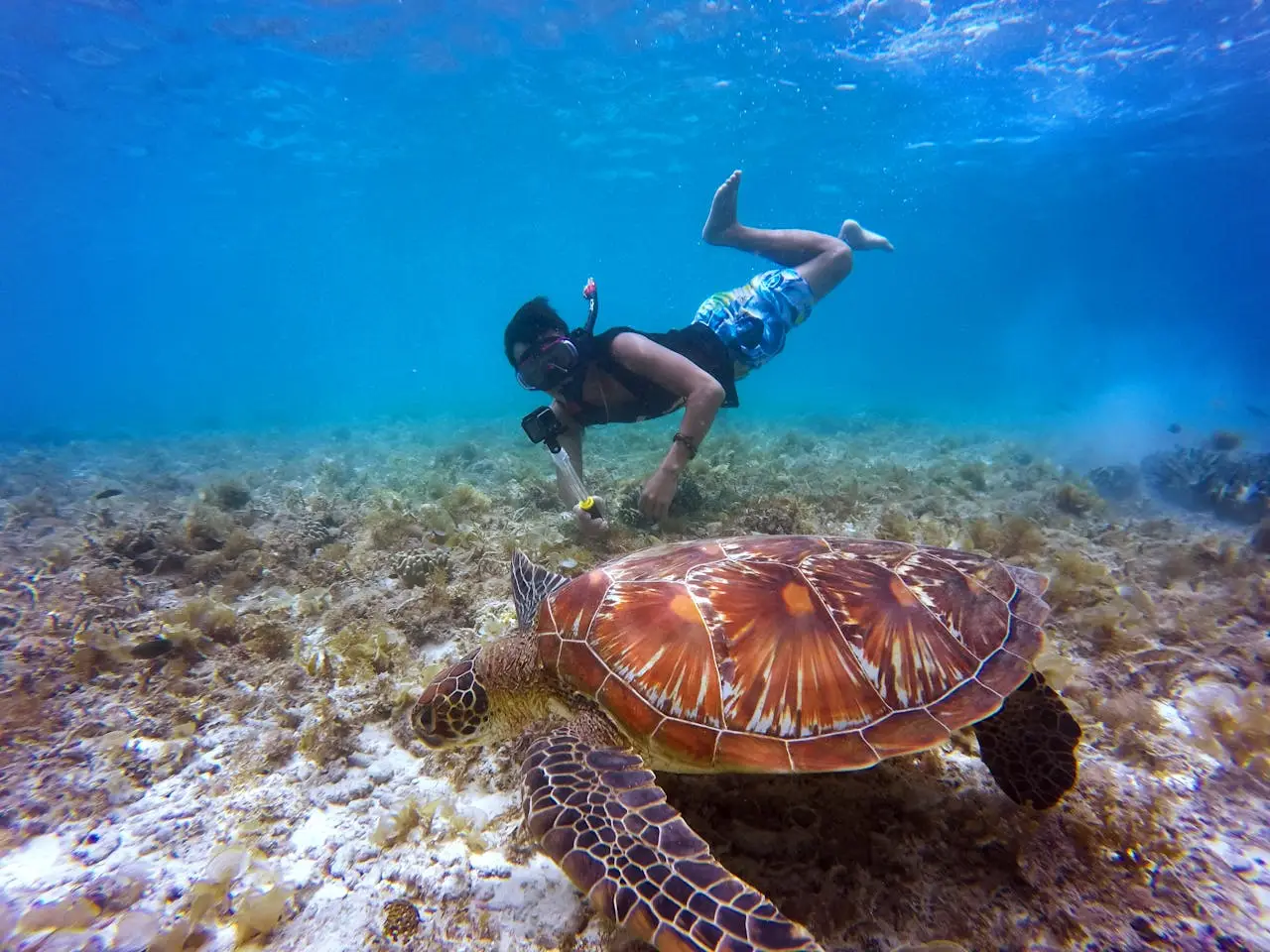 🌴 Seychelles
Good, but coral bleaching has taken a toll
Sainte Anne Marine National Park and Anse Lazio offer genuinely good underwater experiences with turtles and reef fish, but the inner island reefs have been significantly affected by bleaching events in 1998 and 2016. The outer atolls are much better but require extra travel and aren't as accessible as the Maldives' resort reefs.
- Don't miss
- Sainte Anne Marine Park, Anse Lazio
Round 3 of 11
Which is cheaper, Maldives or Seychelles?
Seychelles wins, clearly
Neither destination is cheap, but the Seychelles offers more flexibility at different price points.
| Typical cost | 🐠 Maldives | 🌴 Seychelles |
|---|---|---|
| Budget entry point | $80–180 (local island guesthouse) | $150–300 (self-catering chalet) |
| Mid-range resort | $400–900/night | $300–700/night |
| Overwater villa, luxury | $1,000–5,000+/night | $600–2,000/night, fewer options |
| Meals, resort | $60–150/person, often mandatory | $30–80/person, self-catering option |
| Alcohol | $8–18/drink, heavily taxed | $4–10/drink |
| Inter-island transport | $200–600 seaplane each way | $20–80 ferry, $60–200 small plane |
| Diving / excursions | $80–150/dive | $60–120/dive |
Typical 2026 prices in USD, excluding international flights.
Bottom line: a realistic week in the Seychelles costs $3,000–8,000 per couple; a realistic week in the Maldives costs $5,000–15,000+ at a mid-to-luxury resort. The Seychelles' key advantage is flexibility, self-catering, local ferries and Creole restaurants, none of which is possible at a Maldives private island resort.
Round 4 of 11
Nature and wildlife
Seychelles wins, narrowly
The Seychelles' ancient isolation has created an ecosystem found nowhere else, giving it the edge overall despite the Maldives' marine advantage.
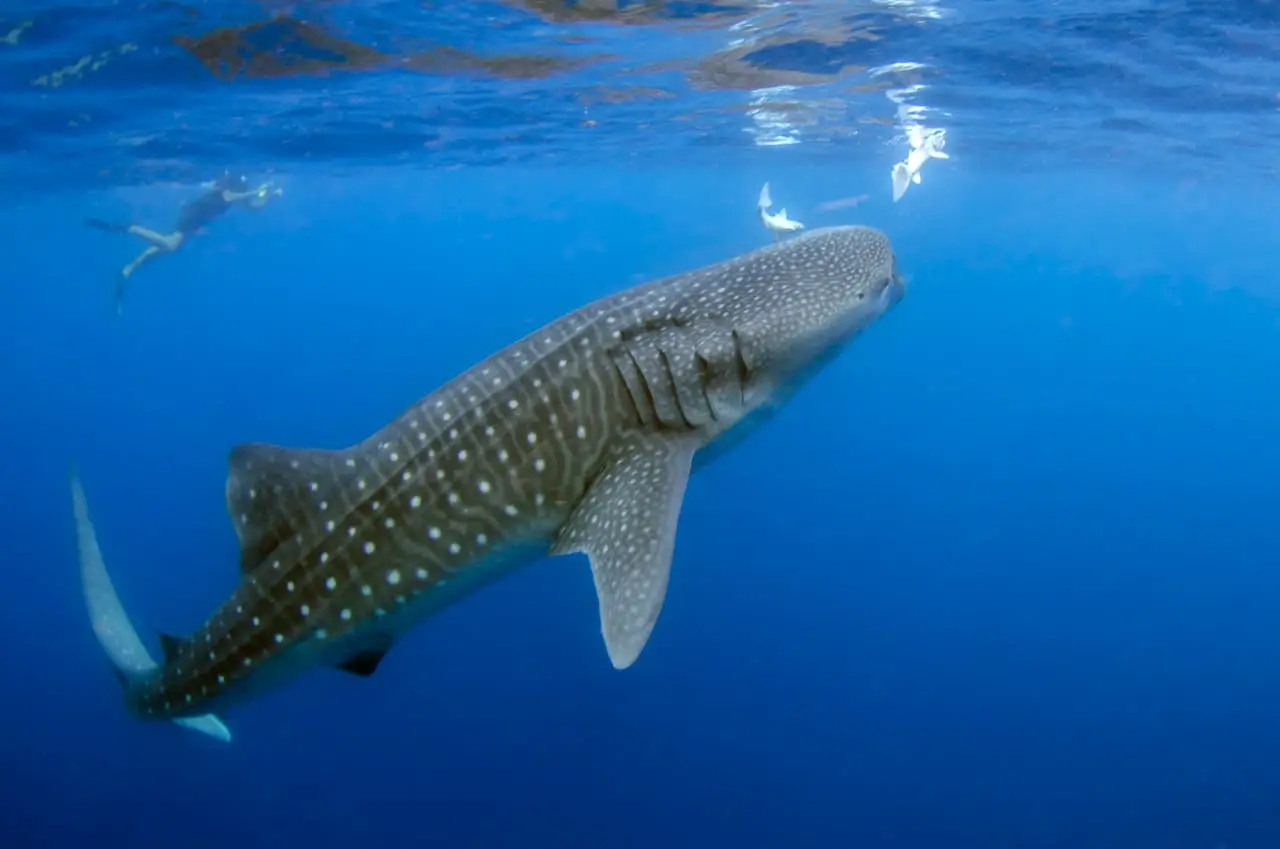 🐠 Maldives
Marine megafauna, the ocean's greatest creatures
Whale sharks are reliably encountered near South Ari Atoll year-round. Manta rays gather at cleaning stations, reef sharks and sea turtles are common, and spinner dolphins bow-ride resort boats. Above water, the Maldives is beautiful but simple, flat coral islands with few endemic land species.
- Don't miss
- South Ari whale sharks, manta cleaning stations
 🌴 Seychelles
Coco de Mer, giant tortoises, a living Gondwana ecosystem
Vallée de Mai on Praslin, a UNESCO site, is the only place on earth the Coco de Mer palm grows wild, its nut the world's largest seed. Giant Aldabra tortoises, the largest land tortoises on earth, roam Curieuse Island. The Seychelles black parrot and Seychelles magpie-robin round out wildlife with no Maldives equivalent.
- Don't miss
- Vallée de Mai, Curieuse Island's giant tortoises
Round 5 of 11
Honeymoon and romance
A genuine tie
Both are among the world's top honeymoon destinations. The choice depends on what kind of romantic experience you want.
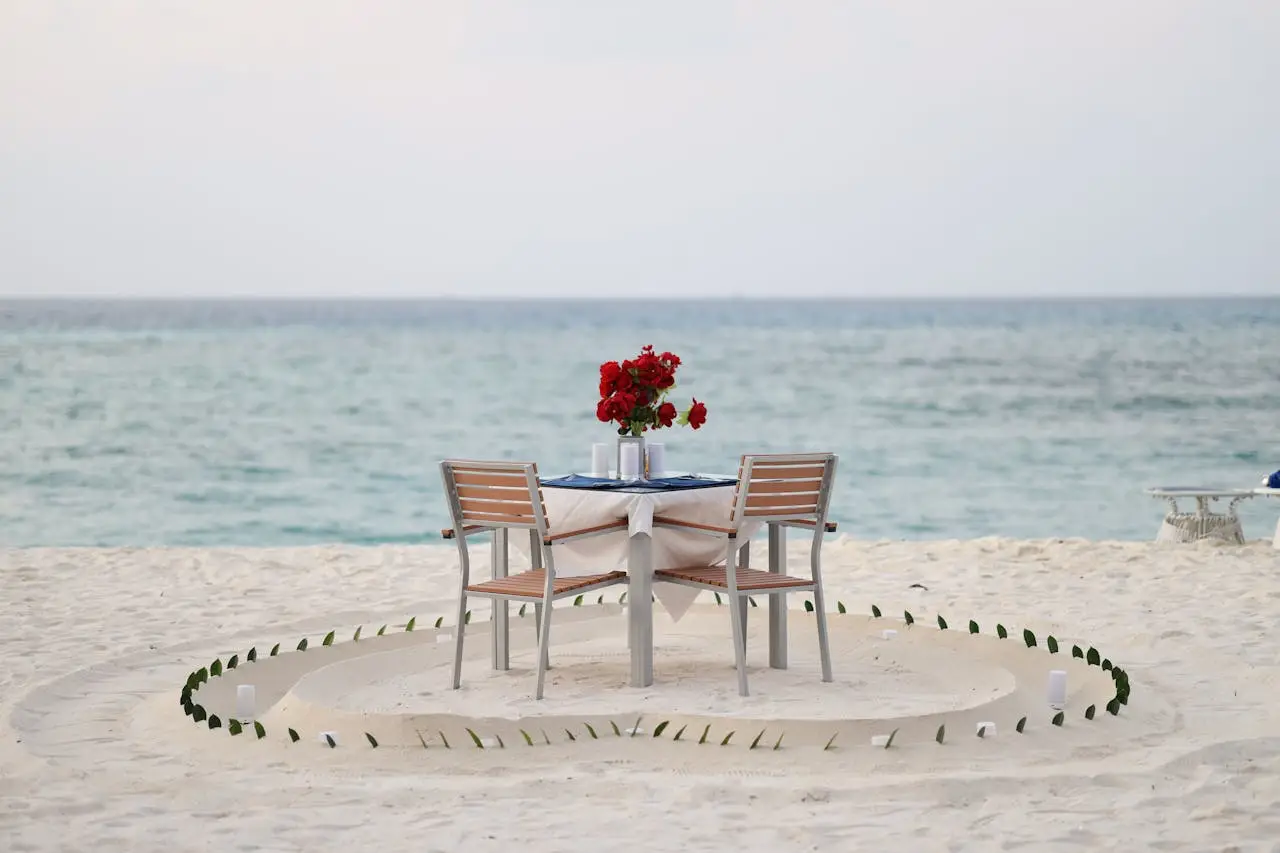 🐠 Maldives
Total seclusion, a world of two
A private overwater villa means your world is your deck, your plunge pool and breakfast delivered by canoe at sunrise. Private sandbank dinners, a table on a remote sandbar with lanterns and Champagne, are among the world's most theatrical romantic gestures. The trade-off: enforced seclusion can feel claustrophobic after 5–6 days for restless travellers.
- Signature moment
- A private sandbank dinner
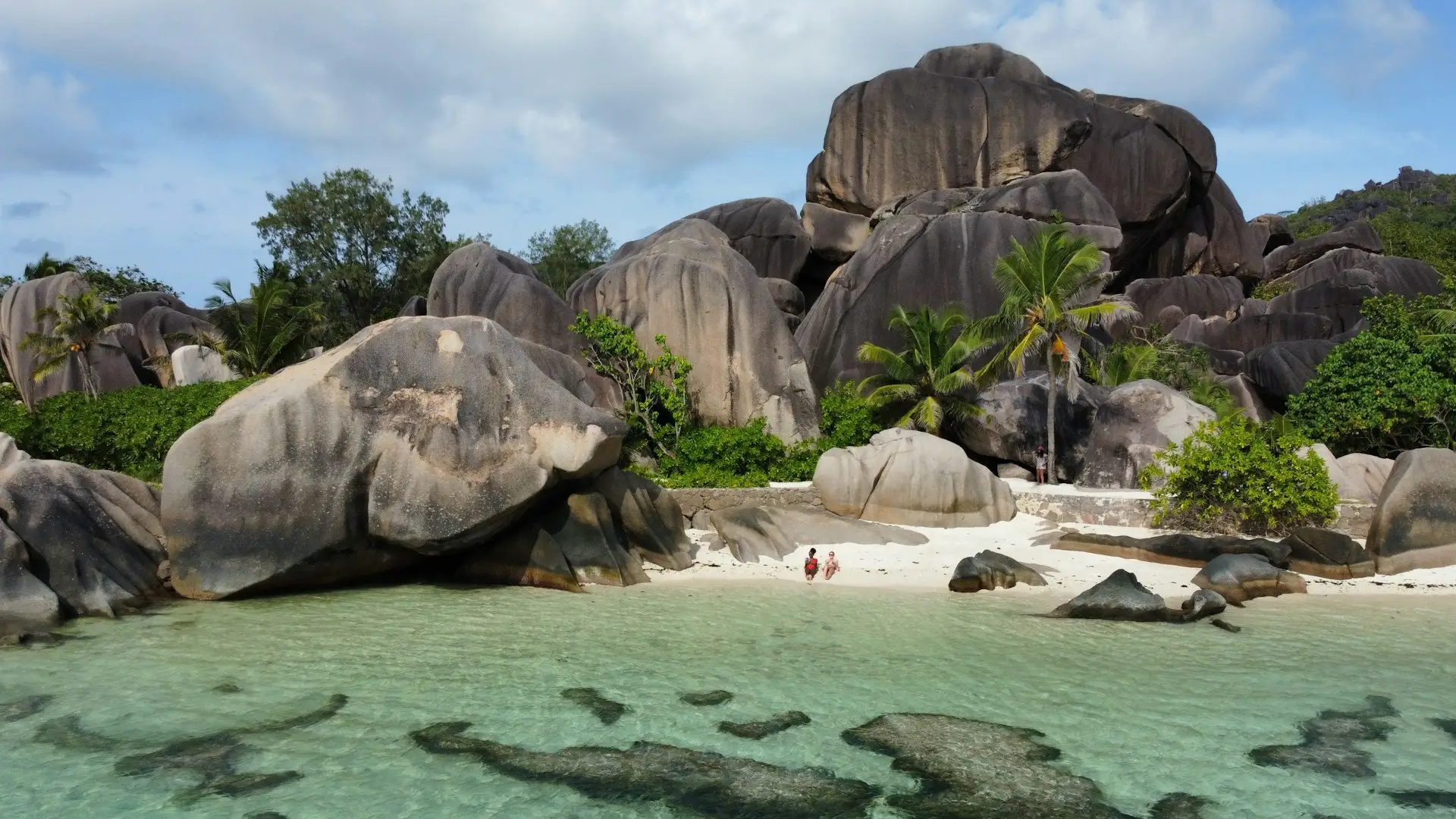 🌴 Seychelles
Romance with variety and discovery
Island-hopping from Mahé to Praslin to La Digue gives each day a new setting: Creole dinners, sunset boat trips around granite boulders, cycling to a deserted beach. For couples who want romance alongside curiosity rather than pure retreat, the Seychelles is the better fit, and it tends to be cheaper per night at equivalent quality.
- Signature moment
- Cycling La Digue to a hidden cove
Honest verdict: a genuine tie. Your temperament, retreat vs explore, determines the winner more than either destination's objective quality.
Round 6 of 11
Food
Seychelles wins, narrowly
Maldives dining is excellent but resort-bound. The Seychelles offers real local restaurants alongside its resort food.
High-end resort dining, with little choice to eat elsewhere
Maldives resorts serve genuinely excellent international cuisine and fresh seafood curries, teppanyaki nights and overwater sushi restaurants are common at higher-end properties. The catch is structural: almost all resorts sit on private islands, so you eat where you're staying, usually on a half-board or all-inclusive plan with no local alternative.
- Must try
- Maldivian seafood curry (garudhiya), resort teppanyaki
Creole cooking, real restaurants, and the option to self-cater
Grilled fish, octopus curry, breadfruit and chilli-tamarind sauces reflect African, French, Indian and Chinese influences. Local restaurants on Mahé and La Digue serve genuine Creole food at a fraction of resort prices, and self-catering chalets let you cook your own, an option that simply doesn't exist in the Maldives.
- Must try
- Octopus curry, grilled red snapper, Creole rice
Round 7 of 11
Nightlife
Seychelles wins, narrowly
Neither is a nightlife destination. Both are quiet by design, but the Seychelles has a little more genuine variety.
Your resort's bar, and not much else
Local islands follow conservative Islamic customs and alcohol is banned outside resorts, so evenings are confined entirely to your resort's own bar or beach lounge, usually a DJ or live acoustic set a few nights a week. It's romantic and relaxed rather than lively, which suits most Maldives travellers just fine.
Still quiet, but with real options beyond the resort
Mahé's Beau Vallon strip has a small cluster of beach bars and a casino, and some resorts host beach barbecue nights with live sega music, the Seychelles' Afro-French-influenced folk dance. It's still an early-to-bed destination overall, but there's more to do than a single resort bar.
Round 8 of 11
Things to do beyond the beach
A genuine tie
Maldives excels at water-based resort activities; Seychelles at land-based exploration. Different traditions, comparable depth.
| Activity | 🐠 Maldives | 🌴 Seychelles |
|---|---|---|
| Water sports | Jet ski, kayak, paddleboard from your resort deck | Available, more limited resort infrastructure |
| Spa & wellness | Overwater spa treatments are a genuine specialty | Good resort spas, less of a signature |
| Hiking | None, entirely flat | Morne Seychellois National Park trails |
| Island-hopping | Limited, mostly single-resort stays | Mahé, Praslin and La Digue by ferry |
| National parks | Marine only | Vallée de Mai, Morne Seychellois, Curieuse |
| Sandbank & sunset excursions | A genuine specialty, private sandbank picnics | Boat trips around granite islets |
Honest verdict: a real tie between two different travel styles, resort-centred water activities in the Maldives against land-based exploration and island-hopping in the Seychelles.
Round 9 of 11
Getting around
Seychelles wins, narrowly
Both require a transfer beyond the main airport. The Seychelles' options are cheaper and more flexible.
Seaplane transfers, spectacular but costly
Most resorts require a seaplane transfer from Malé, a genuinely beautiful 20 to 45 minute flight over the atolls, but at $200 to $600 return per person, and seaplanes only operate in daylight, so a late arrival often means an overnight in Malé first.
Ferries and short flights, cheaper and more frequent
Inter-island ferries between Mahé, Praslin and La Digue run several times daily for $20 to $80, and small domestic flights cost $60 to $200. This flexibility makes multi-island itineraries straightforward in a way the Maldives' resort-island model doesn't allow.
Round 10 of 11
When to go: the best time for the Maldives and Seychelles
A genuine tie
Both run on monsoon and trade-wind patterns rather than a single dry season. Both are viable year-round.
Maldives: the dry northeast monsoon (November to April) is the main season, calm seas and ideal diving. May to October brings the southwest monsoon with rougher western atolls, though whale shark sightings actually peak in this window. Seychelles: April–May and October–November are the calmest, windless periods; June–September brings breezier southeast trades and December–March the wetter northwest monsoon.
Round 11 of 11
Is the Maldives or Seychelles safer for tourists?
A draw
Both are very safe, with negligible violent crime against tourists. The practical risks differ.
🐠 Maldives: what to watch
- Remoteness is the real risk, medical evacuation from a distant atoll to Malé can take hours by boat or seaplane.
- Strong currents at some house reefs and channel dive sites; follow resort dive-guide briefings.
- Crime against tourists is negligible, resorts are private islands with their own security.
- Respect local-island customs, modest dress and no alcohol away from resort islands.
🌴 Seychelles: what to watch
- Petty theft is a little more common on the more populated Mahé, secure valuables in cars and rooms.
- Strong currents on some south and west-facing beaches during the southeast trade wind season.
- Violent crime against tourists is very rare.
- Sun exposure is intense year-round given the near-equatorial position; reef-safe sunscreen is a must at snorkelling spots.
In both destinations, ordinary travel precautions cover the real risks, neither has a meaningful crime problem against visitors.
Which is better for specific trips?
Maldives for serious divers, overwater-bungalow bucket-listers and pure-seclusion honeymooners. Seychelles for wildlife lovers, hikers and budget-conscious luxury travellers.
Serious divers & snorkellers
Maldives
Manta rays, whale sharks and 30m+ visibility put it among the world's top five diving destinations.
Wildlife & hiking enthusiasts
Seychelles
Giant Aldabra tortoises, the Coco de Mer palm and real jungle trails have no Maldives equivalent.
Overwater bungalow bucket-listers
Maldives
The Maldives invented, or at least perfected, this exact experience.
Budget-conscious luxury travellers
Seychelles
Self-catering chalets and local restaurants offer genuine price flexibility.
Couples wanting pure seclusion
Maldives
A private island resort where the world contracts to just the two of you.
Couples wanting variety
Seychelles
Island-hopping between Mahé, Praslin and La Digue adds discovery to the romance.
Foodies wanting local culture
Seychelles
Real Creole restaurants and markets exist alongside resort dining.
Travellers wanting total all-inclusive ease
Maldives
Nothing to plan once you arrive, everything is handled by one resort.
Can you combine the Maldives and Seychelles in one trip?
Yes, though it requires routing through a hub, there are no direct flights. It's genuinely one of the world's most expensive holiday combinations.
Maldives: days 1 to 7
- Day 1
Arrive Malé (MLE). Seaplane or speedboat transfer to your resort, book an early arrival to make the daylight-only seaplane window.
- Days 2–6
Resort island. House-reef snorkelling, a whale shark or manta excursion at South Ari or a nearby atoll, a private sandbank dinner.
- Day 7
Transfer back to Malé for your onward flight, routing via Dubai to the Seychelles.
Seychelles: days 8 to 15
- Days 8–10
Mahé. Settle in, Morne Seychellois National Park hiking, Beau Vallon beach and a Victoria market visit.
- Days 11–12
Praslin. Ferry from Mahé (1 hour). Vallée de Mai's Coco de Mer forest, Anse Lazio beach.
- Days 13–15
La Digue. Ferry from Praslin (15 minutes). Anse Source d'Argent, ox-cart and bicycle exploration, before flying home via Mahé.
Getting between them: most combinations route through Dubai (Emirates), Abu Dhabi (Etihad) or Nairobi (Kenya Airways). Many couples instead split the two destinations across separate trips given the combined cost.
Verdict: Maldives or Seychelles?
There's no single overall winner. The most important question is whether you're choosing the ocean or the island.
Choose Maldives if…
Maldives, for seclusion and the ocean
The right choice when the overwater villa is a dream you've held for years, when diving with manta rays and whale sharks is a bucket-list item, or when total romantic isolation is the entire point.
- The overwater bungalow experience is specifically the goal
- Diving or snorkelling is central, mantas and whale sharks
- Complete seclusion and privacy is what you need
- You want everything handled, true all-inclusive
- Budget is not the primary constraint
- A honeymoon of pure retreat rather than exploration
Choose Seychelles if…
Seychelles, for variety and discovery
The right choice when the world's most dramatically beautiful beaches are the goal, when island-hopping appeals, when you want genuine wildlife on land, or when budget matters.
- Anse Source d'Argent is specifically on your bucket list
- Island variety and the ability to move around matter
- Land wildlife, giant tortoises, Coco de Mer, endemic birds
- You want flexibility, self-catering, local restaurants, ferries
- Budget is a real consideration
- A honeymoon with exploration alongside romance
Weigh it for your own trip
Select everything that matters to you.
Pick what matters on this trip and the needle will move.
Maldives vs Seychelles: frequently asked questions
Is the Maldives or Seychelles better for a honeymoon?
Both are among the world's top honeymoon destinations, delivering romance differently. The Maldives wins for pure seclusion and the iconic overwater bungalow experience. The Seychelles wins for couples who want variety alongside romance, island-hopping between Mahé, Praslin and La Digue. A Maldives overwater villa honeymoon typically costs $500-1,500+ per night; the Seychelles offers comparable romance at $300-800/night. Your budget and whether you prefer total seclusion or gentle variety determines the winner.
Is the Maldives or Seychelles better for snorkelling and diving?
The Maldives wins emphatically. It sits in the Indian Ocean's richest marine territory, with coral atolls harbouring manta ray cleaning stations, whale shark aggregation points and hammerhead schools, and visibility often 30+ metres. The Seychelles offers good snorkelling at Anse Lazio and Sainte Anne Marine Park, but coral bleaching has impacted the inner island reefs. For any trip where diving is the primary purpose, the Maldives is the clear choice.
Is the Maldives or Seychelles more expensive?
The Maldives is significantly more expensive at the resort tier, $500-900/night mid-range, $1,500-5,000+ luxury, usually all-inclusive or half-board. The Seychelles has no budget tourism either, but self-catering chalets on La Digue or Praslin run $150-300/night with the option to cook your own meals, impossible at most Maldives resorts. The Seychelles offers a genuine range from $200 to $2,000+ per night; the Maldives starts higher and goes much higher.
Which has better beaches, the Maldives or Seychelles?
Genuinely close, but of different character. Maldives beaches are uniformly beautiful, powder-fine white sand and calm turquoise lagoons perfect for swimming. Seychelles beaches are more dramatic, the pink-tinged granite boulders at Anse Source d'Argent on La Digue are consistently ranked among the world's most beautiful beaches. The Maldives wins for calm swimming and consistency; the Seychelles wins for the most dramatic individual beaches.
What is the best time to visit the Maldives and Seychelles?
The Maldives has two monsoon seasons: the dry northeast monsoon (November to April) is the main tourist season with calm seas and ideal diving conditions. The Seychelles has year-round warm weather (26-30°C), with April-May and October-November the calmest, most beautiful periods. Both destinations are year-round viable, though shoulder season pricing can save 30-40 percent in the Seychelles.
Can you combine the Maldives and Seychelles in one trip?
Yes, though it requires routing through a hub, there are no direct flights, most combinations route through Dubai, Abu Dhabi or Nairobi. A combined trip of 12 to 16 days works well: 5-7 nights in the Maldives, fly via Dubai to the Seychelles, 5-6 nights across Mahé, Praslin and La Digue. It is genuinely one of the world's most expensive holiday combinations, and many couples split the two destinations across separate trips instead.
Is the food different in the Maldives compared to the Seychelles?
Yes. Maldives dining happens almost entirely inside your resort, high-end international cuisine and fresh seafood curries, usually on a half-board or all-inclusive plan with little choice to eat elsewhere. Seychelles food is Creole, grilled fish, octopus curry, breadfruit and chilli-tamarind sauces, available at real local restaurants on Mahé and La Digue alongside resort dining, giving genuinely more variety and the option to self-cater.
Is the Maldives or Seychelles safer for tourists?
Both are very safe, with negligible violent crime against tourists, most resorts in both countries are private islands with their own security. The Maldives' main practical risk is remoteness, medical evacuation from a distant atoll can take hours. The Seychelles has a little more petty theft on the more populated islands like Mahé, easily avoided with normal precautions.
There's no wrong answer here
The Maldives and Seychelles are compared so often because both are extraordinary, just built on opposite relationships with the ocean. Pick on what you want from this trip: total marine seclusion and the world's best diving, or dramatic granite scenery and genuine land wildlife. Better still, do both, they're both worth the trip, even if not the same one.