
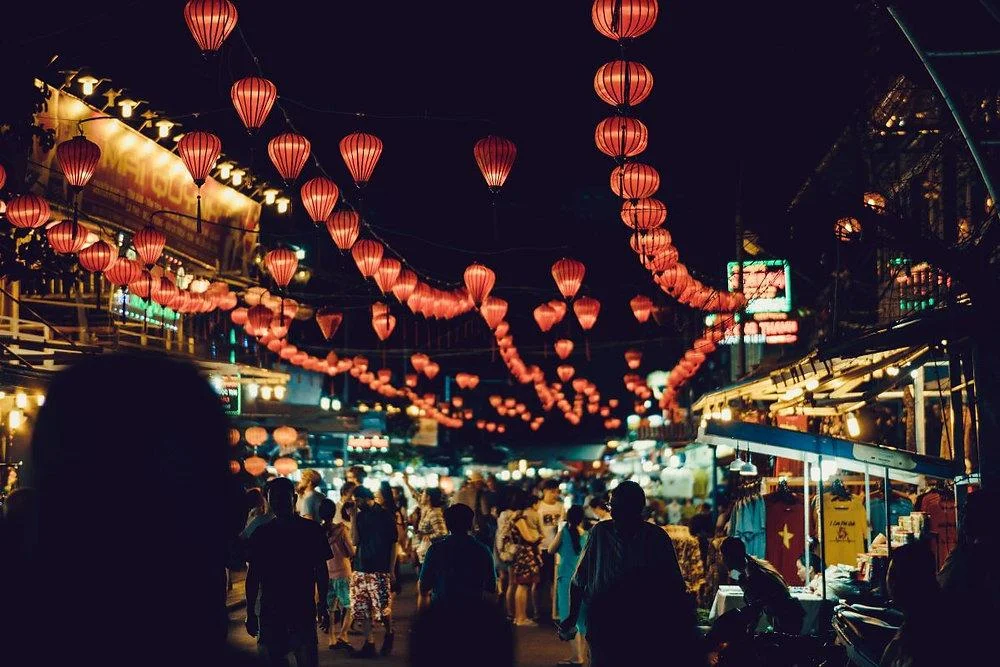
A thousand-year-old capital that still feels lived-in
Hanoi has been Vietnam's political and cultural center on and off since 1010, and the Old Quarter's tangle of 36 streets, each historically named for the single trade its guild sold there, still functions as a working neighborhood rather than a preserved relic. French colonial villas and tree-lined boulevards sit a few minutes' walk from that chaos, a legacy of Hanoi's decades as the capital of French Indochina. The city rewards slow mornings: coffee at a plastic-stool cafe watching the street wake up is as core to the Hanoi experience as any single monument.
What's changed in the last decade is the speed of everything else. Grab has replaced haggling with taxi drivers, new expressways have cut the drive to Ha Long Bay from four hours to two and a half, and a wave of well-run hostels and boutique hotels has made independent travel far easier than it was even five years ago. But two streets back from the tourist strip, Hanoi is still a city that belongs to Hanoians first.
The honest complications
Crossing the street is the thing every first-time visitor has to get past: motorbikes flow in numbers that look impossible to navigate until you commit to a steady pace and let them move around you, rather than stopping or sprinting. The Old Quarter's most touristed corners, especially around Hoan Kiem Lake on weekend nights, get genuinely crowded, and a handful of restaurants there quote inflated tourist prices without a menu. Air quality in Hanoi is also a real, if usually low-grade, concern in the dry winter months, worth knowing about if you have respiratory sensitivities. None of it changes that Hanoi remains one of Asia's best-value, most walkable capital cities.
Four areas that matter, all within a short Grab ride
Hanoi's center is compact enough that where you stay mostly affects noise level and walking distance rather than access. The choice comes down to how much street energy you want outside your door.
Old Quarter
The historic heart of Hanoi, 36 narrow streets north and west of Hoan Kiem Lake, each still loosely tied to the trade it's named for: Hang Bac (silver), Hang Gai (silk), Hang Ma (paper goods). This is where the street food, the night market and the Bia Hoi Corner all are, and also where the motorbike horns and karaoke bars run latest. Staying here means everything is a five-minute walk; pack earplugs for the weekend crowds.
French Quarter
South and east of Hoan Kiem Lake, wide tree-lined boulevards, colonial villas and the Hanoi Opera House give this area a quieter, more polished feel than the Old Quarter, without losing the central location. The Sofitel Legend Metropole Hanoi anchors the area's grand-hotel history. A short walk gets you into the Old Quarter's chaos when you want it.
West Lake (Tay Ho)
Hanoi's largest lake, ringed by expat-friendly cafes, larger serviced apartments and a slower pace than the center, about 15-20 minutes from the Old Quarter by Grab. Best for longer stays, families wanting more space, or travelers who've already done a first trip and want to see how Hanoians actually live day to day.
Ba Dinh
Home to the Ho Chi Minh Mausoleum, the Presidential Palace and the One Pillar Pagoda: wide ceremonial streets and green space rather than a place to base yourself, but worth a focused half-day visit early, before the mausoleum's late-morning closure.
From a colonial grand dame to $8 hostel dorms
Hanoi's accommodation spans one of Asia's most storied historic hotels down to hostels that consistently rank among the best value in Southeast Asia. These picks cover every budget.
At the top, Sofitel Legend Metropole Hanoi has been Hanoi's grand address since 1901, hosting Charlie Chaplin and Graham Greene in its French colonial-era rooms; today its Bamboo Bar by the pool and the Michelin-recognized French menu at Le Beaulieu make it worth a visit even if you stay elsewhere, from about $300 a night. In the boutique luxury bracket, Hotel de l'Opera Hanoi (from $150), an MGallery property steps from the Opera House, pairs French colonial architecture with contemporary interiors and one of the French Quarter's best rooftop pools.
For character at a mid-range price, Apricot Hotel (from $90) is an art-filled boutique overlooking Hoan Kiem Lake with an impressive collection of contemporary Vietnamese paintings on every floor, while the La Siesta family of boutique hotels, including La Siesta Premium Hang Be and La Siesta Classic Ma May, are Old Quarter reliables known for their rooftop pools and breakfast, from $50.
At the budget end, Hanoi Central Backpackers Hostel (from $8) is one of the longest-running names in the Old Quarter's hostel scene, known for its free breakfast, nightly beer hour and rooftop social scene that built much of Hanoi's backpacker reputation.
Bun cha, egg coffee and plastic stools, in that order
Hanoi's food culture is built on street food eaten at tiny plastic tables, and the best meals here are consistently the cheapest, not the most expensive. The city's northern style is more restrained and herb-forward than the sweeter southern Vietnamese cooking of Ho Chi Minh City.
Bun cha
Grilled pork patties and pork belly served in a sweet-sour fish sauce broth with rice noodles and herbs. Bun Cha Huong Lien on Le Van Huu street became internationally famous after Barack Obama ate here with Anthony Bourdain in 2016; the table is preserved under glass. Expect a queue, and order the "combo Obama" if you want exactly what they had.
Cha ca
Turmeric and dill-marinated fish, grilled tableside over a charcoal brazier and folded into rice noodles with peanuts and shrimp paste. Cha Ca La Vong, on the street that takes its name from the dish, has served essentially this one meal since 1871.
Egg coffee
Whipped egg yolk and condensed milk over strong Vietnamese coffee, invented at Cafe Giang on Nguyen Huu Huan street during a 1940s milk shortage and still run by the founder's family at the original address. It tastes like a warm, coffee-flavored custard and is far better than it sounds.
Bia hoi
Fresh, unpasteurized draft beer brewed daily and served ice-cold on tiny plastic stools. The Bia Hoi Corner at the junction of Ta Hien and Luong Ngoc Quyen streets is the classic scene: backpackers and locals shoulder to shoulder from sundown to the early hours.
A city best explored on foot, then by cyclo
Hanoi's sights cluster into a few walkable pockets, with the Ho Chi Minh Complex the one exception that needs its own morning. This chapter walks through the city roughly the way a good two to three days would.
Hoan Kiem Lake and the Old Quarter
Start at Hoan Kiem Lake early, when locals are doing tai chi around the water and the red Huc Bridge to Ngoc Son Temple is quiet. From there, lose an hour or two wandering the Old Quarter's 36 streets, each still loosely tied to its historic trade. In the evening, catch a 45-to-60-minute show at the Thang Long Water Puppet Theatre, a centuries-old rice-paddy art form performed over a waist-deep pool, tickets $4-8, and arrive 30 minutes early since seats aren't always assigned.
The Ho Chi Minh Complex
Go early: the Ho Chi Minh Mausoleum in Ba Dinh Square, where the embalmed body of Ho Chi Minh lies in state, has strict hours and a modest dress code, and closes to visitors by late morning. The complex also includes his wooden stilt house, the colonial-era Presidential Palace (viewed from outside), and the One Pillar Pagoda, an 11th-century pagoda built on a single stone pillar to resemble a lotus flower.
Temple of Literature
Vietnam's first national university, founded in 1070 and dedicated to Confucius: peaceful courtyards, lotus ponds, and stone stelae carved with the names of doctoral graduates going back centuries, resting on stone turtles. Give it an unhurried hour; it's one of the few genuinely quiet major sights in the city center.
Train Street
A residential lane where homes sit close enough to the tracks that you could touch a passing train, now lined with cafes that clear their tables and chairs off the rails a few minutes before each scheduled train. Access has tightened in recent years to registered cafes only; check current opening status and buy a drink at one of the compliant cafes rather than trying to access the tracks independently.
Evenings around the lake
Weekend nights, the streets around Hoan Kiem Lake close to traffic for a walking street and pop-up night market: street performers, badminton games in the road, and stalls selling everything from grilled corn to knockoff sunglasses. It's one of the few times the Old Quarter's motorbike noise actually stops.
One, two or three days, planned street by street
Two to three full days covers Hanoi properly before you head out to Ha Long Bay or Ninh Binh. Even one well-planned day delivers the essentials.
- Morning
Hoan Kiem Lake and the Old Quarter. Tai chi by the lake, then wander the 36 streets, coffee at a plastic-stool cafe.
- Midday
Bun cha for lunch. Bun Cha Huong Lien or a local equivalent, then the Temple of Literature.
- Afternoon
Ho Chi Minh Complex. The stilt house, Presidential Palace grounds and One Pillar Pagoda (mausoleum itself needs an early-morning visit if you want to go inside).
- Evening
Water puppets and Bia Hoi Corner. A show at Thang Long Water Puppet Theatre, then draft beer on plastic stools at Ta Hien street.
- Day 1
The one-day route: lake, Old Quarter, bun cha, Ho Chi Minh Complex, water puppets, Bia Hoi Corner.
- Day 2 morning
Ho Chi Minh Mausoleum at opening. Arrive early for the mausoleum itself, then the Temple of Literature at a slower pace.
- Day 2 afternoon
Train Street and egg coffee. A compliant cafe on Train Street for a passing train, then egg coffee at the original Cafe Giang.
- Day 2 evening
Cha ca dinner. Cha Ca La Vong or a nearby equivalent, then a rooftop bar back toward the French Quarter.
- Days 1-2
The two-day route above, at a gentler pace.
- Day 3
West Lake. A slower morning around Tay Ho's cafes and the Tran Quoc Pagoda, Hanoi's oldest Buddhist temple, on its small peninsula in the lake.
Walkable center, Grab for everything else
Hanoi's Old Quarter and lake area are compact enough to walk, but crossing streets among constant motorbike traffic is the real skill to learn: commit to a steady pace and let bikes flow around you rather than stopping or sprinting. From Noi Bai Airport (HAN), 28km north of the city, Grab costs about 250,000-350,000 VND ($10-14) and takes 40-50 minutes in normal traffic; a metered taxi runs similarly, while Airport Bus 86 costs about 45,000 VND (under $2) and takes 50-80 minutes.
Inside the city, Grab (both car and motorbike-taxi options) is the default way to cover distances beyond walking range: fixed fares shown upfront avoid the meter-tampering that occasionally catches visitors in traditional taxis. A ride across the city center runs $1-4. Cyclos, the pedal-powered rickshaws, are a slower, more scenic (and pricier per kilometer) way to see the Old Quarter, agree a price before setting off.
Best time to visit and Tet
Hanoi has four real seasons, unusually for Vietnam. March-April and September-November are the sweet spots: warm, manageable humidity, less rain than summer. December-February is cool and can be grey and drizzly, sometimes dropping to single digits at night. May-August is hot, humid and the wettest stretch of the year, with short, heavy downpours most afternoons.
Tet, the Lunar New Year, usually falls in late January or early February and is Vietnam's most important holiday: many family-run restaurants and shops close for up to a week, transport gets crowded as the country travels home, but the weeks immediately before are beautifully decorated with peach blossom and kumquat trees for sale on every corner.
One of Asia's best-value capital cities
Hanoi is noticeably cheaper than Ho Chi Minh City's District 1 for comparable hotels and dining, and cheaper again than almost any Western European or North American capital. The main cost trap is eating at Old Quarter restaurants with English picture menus and no prices, which charge a real markup over street stalls a block away.
- Hostel dorm $6-12
- Street food meals $1-3
- Grab rides & walking
- Free lake walk plus one paid sight
- Boutique hotel $50-90
- Restaurant meals $6-15
- Grab plus the occasional tour
- Water puppet show, a museum
- Sofitel Metropole or equivalent $250+
- Fine dining at Le Beaulieu
- Private Ha Long Bay charter
- Private guide and driver
One of Southeast Asia's safer capitals, with the traffic as the real risk
Hanoi rates well for visitor safety: violent crime against tourists is rare, and the city feels safe to walk at night in the Old Quarter, French Quarter and around West Lake. Hanoi is also solid for solo female travelers: harassment is less common than in some other regional capitals, though the same big-city caution applies as anywhere.
The things that actually catch visitors: traffic, the single biggest real risk, so cross deliberately and never assume a green light or crosswalk guarantees right of way; drive-by bag or phone snatching by motorbike passengers, concentrated in the busiest tourist pockets, so keep bags on the building side of the sidewalk and phones out of sight near traffic; and fake taxis at Noi Bai Airport, so book Grab before leaving arrivals rather than accepting a tout's offer. Emergency numbers are 113 (police), 114 (fire) and 115 (ambulance).
Ha Long Bay alone justifies flying into Hanoi
Hanoi's position in the north makes it the best base in Vietnam for karst-country day and overnight trips. Three are worth the detour, and all three run daily by organized tour or private transfer.
Ha Long Bay
Nearly 2,000 limestone karst islands rising from the water, Vietnam's most iconic landscape and a UNESCO World Heritage Site. A day trip runs 12-13 hours round-trip for roughly 2.5-3 hours actually on the water, kayaking and a cave stop included in most packages; an overnight cruise is the better experience if your schedule allows it, since the bay empties out after the day boats leave.
Ninh Binh (Trang An & Tam Coc)
Often called "Ha Long Bay on land": the same limestone karsts, but navigated by small rowing boat through rice paddies and cave tunnels rather than by cruise ship. A typical full-day tour combines the Trang An or Tam Coc boat ride, the Hoa Lu ancient capital temples, and either cycling through the countryside or the steep climb up Mua Cave for a panoramic viewpoint.
Sapa
A former French hill station in the far northwest, best done as a two-to-three-day trip rather than a rushed day out: an overnight sleeper train or bus, then trekking through the Muong Hoa Valley's rice terraces to Hmong, Dao and Giay villages. The Fansipan cable car reaches Indochina's highest peak in about 15 minutes for those short on time.
Hanoi FAQ
Is Hanoi safe for tourists?
Yes, Hanoi is one of the safer capital cities in Southeast Asia. Violent crime against tourists is rare; the main concerns are traffic and petty theft like bag-snatching in crowded tourist spots. Standard city awareness is all you need.
How many days do I need in Hanoi?
Two to three full days covers the city well: one for the Old Quarter and Hoan Kiem Lake, one for the Temple of Literature and the Ho Chi Minh Complex, and a third if you want to add Train Street and West Lake at a slower pace. Most visitors then add a Ha Long Bay or Ninh Binh trip.
How much does Hanoi cost per day?
Budget travelers manage on $25-35 a day with hostels and street food; mid-range runs $60-100. Hanoi is one of the cheapest capital cities in Asia to visit well.
When is the best time to visit Hanoi?
March-April and September-November: warm days, manageable humidity, lower rain than summer. December-February is cool and can be grey and drizzly; June-August is hot, humid and the wettest stretch of the year.
Is Hanoi or Ho Chi Minh City better for a first visit?
Hanoi suits travelers prioritizing history, the Old Quarter's architecture, and easy access to Ha Long Bay, Ninh Binh and Sapa. Ho Chi Minh City suits those who want faster city energy, nightlife and the Mekong Delta. Many itineraries do both.
How do I get from Noi Bai Airport to central Hanoi?
Grab costs about 250,000-350,000 VND (roughly $10-14) and takes 40-50 minutes. A metered taxi costs similarly. Airport Bus 86 costs about 45,000 VND (under $2) and takes 50-80 minutes.
What is the best area to stay in Hanoi?
The Old Quarter for first-timers who want food and sights on the doorstep. The French Quarter for a calmer, more polished base near the Opera House. West Lake (Tay Ho) for longer stays or families who want quieter streets and lake views.
Do I need to speak Vietnamese in Hanoi?
No. English is common in hotels, restaurants and tourist areas, though less so at street food stalls. A few words, cam on (thank you), xin chao (hello), go a long way and are genuinely appreciated.
Is Hanoi walkable?
The Old Quarter and central lake area are walkable, but crossing streets among constant motorbike traffic takes getting used to: walk at a steady, predictable pace and let bikes flow around you. Grab covers longer distances cheaply.
Can I do Ha Long Bay as a day trip from Hanoi?
Yes, though an overnight cruise is better if you have the extra day. Day trips run 12-13 hours round-trip including about 4 hours of driving each way, for roughly 2.5-3 hours actually on the water.
What Stays With You
Hanoi doesn't perform for visitors any more than it has to. The city gets on with its morning: tai chi by the lake, motorbikes loaded with impossible cargo, the same family running the same pho stall for three generations, and lets you walk through the middle of it with a coffee in hand. The plastic stool at Bun Cha Huong Lien, the first sip of egg coffee at Cafe Giang, the moment the karst islands of Ha Long Bay come into view after the drive out: none of it was staged for you, which is why it sticks.
Go to Hoan Kiem Lake at first light before you leave, when the tai chi groups are out and the motorbikes haven't started yet, and see the city the way Hanoians actually do.