
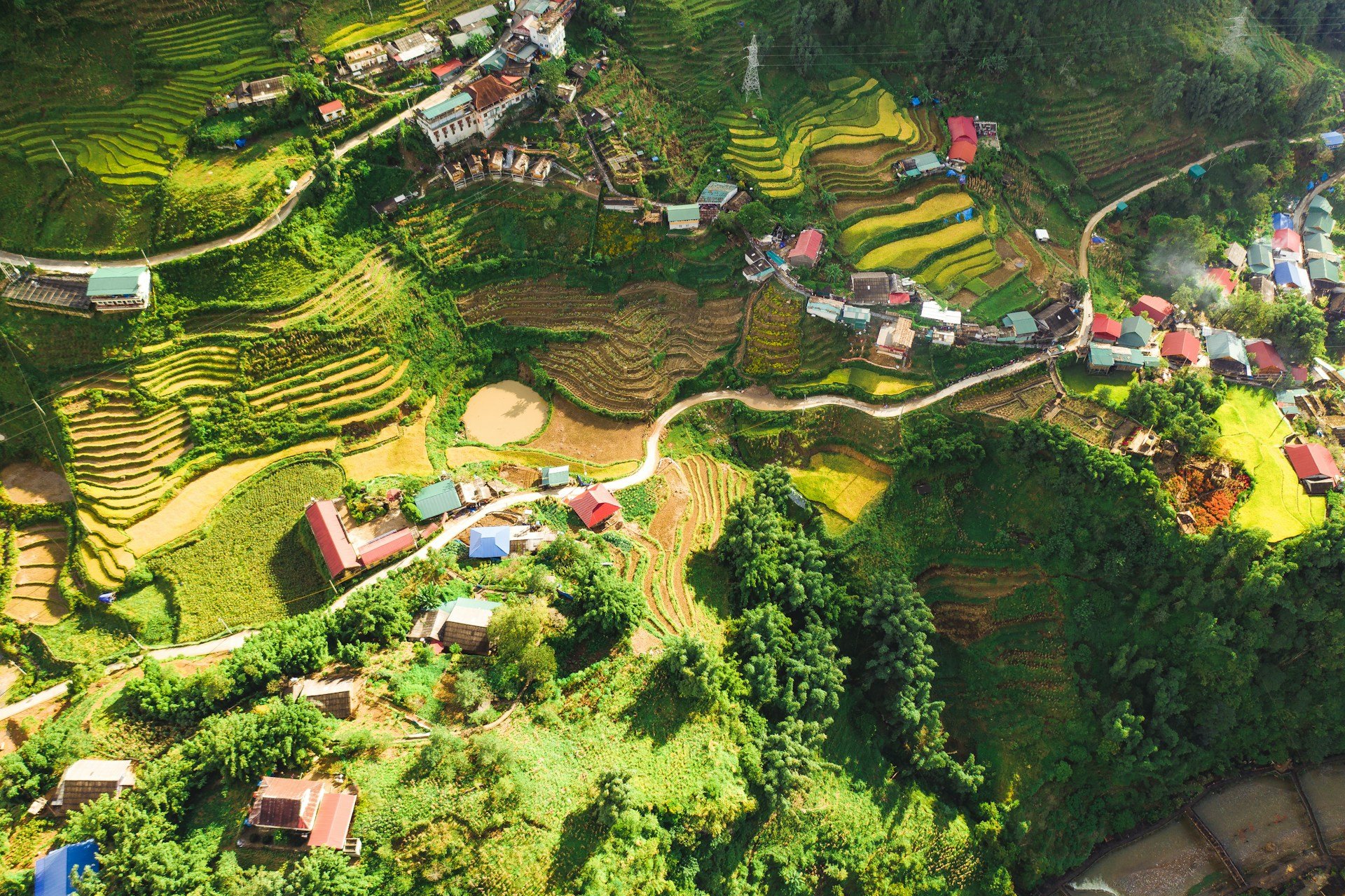
What You're Actually Getting Into
Laos is Southeast Asia's only landlocked country, wedged between Thailand, Vietnam, China, Cambodia and Myanmar, and it is still the quietest stop on the well-worn backpacker route between Bangkok and Hanoi. Where Thailand built an industry around tourism and Vietnam moves at a permanent sprint, Laos runs on a slower rhythm the Lao themselves call bor pen nyang, roughly "no worries." One-party socialist since 1975 and among the poorest countries in ASEAN by income, it is also home to some of the best-preserved Buddhist heritage in the region, a genuinely spectacular stretch of the Mekong, and a hospitality that has not yet been reshaped by mass tourism.
Almost all visitors follow the same loop: fly into Luang Prabang or Vientiane, head overland or by train to Vang Vieng, and finish in the capital. That circuit is well set up, safe, and increasingly easy since the Laos-China Railway cut cross-country travel times from days to hours. Step off it, into the Plain of Jars or the far south, and infrastructure thins out fast.
The honest complications
Laos carries the heaviest bombing legacy of any country on earth: between 1964 and 1973, the US dropped roughly two million tons of ordnance during the "Secret War," and an estimated 80 million submunitions never exploded. Clearance work continues today, decades later, and it shapes where you can safely walk in rural provinces, a fact the country addresses directly rather than hides. Roads outside the main tourist towns are slow, ATMs are scarce once you leave the circuit, ordinary bank cards sometimes fail at Lao terminals, and ordinary buses can run hours behind schedule. None of it derails a well-planned trip to Luang Prabang, Vang Vieng and Vientiane; it does mean venturing further needs real planning.
A History Worth Knowing
Laos traces its founding to 1353, when the warrior-prince Fa Ngum united Lao principalities into Lan Xang, the "Kingdom of a Million Elephants," and made Theravada Buddhism the state religion. Centuries of splintering, Siamese and Vietnamese dominance, and French colonization followed, before independence in 1953 dropped Laos straight into the Cold War: a decade-long, largely covert American bombing campaign against communist forces, followed in 1975 by a Pathet Lao takeover that ended the monarchy and created today's one-party Lao People's Democratic Republic.
- 1353
Lan Xang founded. Fa Ngum unites Lao muang into the "Kingdom of a Million Elephants," with Theravada Buddhism as the state religion.
- 1893
French Indochina. France establishes a protectorate over Laos, folding it into French Indochina alongside Vietnam and Cambodia.
- 1953
Independence. Full sovereignty is granted as French colonial rule in Indochina collapses.
- 1964–1973
The Secret War. The US conducts a covert bombing campaign against communist Pathet Lao and North Vietnamese supply lines, making Laos, per capita, the most heavily bombed country in history.
- 1975
Lao PDR founded. The Pathet Lao take full power, the 600-year monarchy ends, and the country becomes a one-party socialist republic.
- 1997–present
Opening up. Laos joins ASEAN in 1997; the Laos-China Railway opens in December 2021, cutting Vientiane-Luang Prabang travel from a full day's drive to about two hours.
Read the full history: the Secret War and the UXO legacy
Lan Xang splintered into three rival kingdoms, Luang Prabang, Vientiane and Champasak, in the early 18th century, leaving the region vulnerable to Siamese and, later, Vietnamese domination before France absorbed all three into Indochina in the 1890s. Luang Prabang's royal line survived as figurehead monarchs under both French and, later, independent Lao rule, which is why the city still carries a royal palace rather than a colonial one.
The Secret War is the defining trauma of modern Laos and the reason UXO awareness appears throughout this guide rather than as a footnote. Between 1964 and 1973 the US Air Force flew roughly 580,000 bombing missions over Laos, officially neutral, targeting the Ho Chi Minh Trail and Pathet Lao positions, dropping more ordnance than the US used against Germany and Japan combined in the whole of the Second World War. Estimates suggest up to 80 million of the roughly 270 million submunitions dropped failed to detonate; UXO Lao, the national clearance body, estimates full clearance is still generations away, and more than 20,000 Lao civilians have been killed or injured by leftover ordnance since the bombing stopped.
After 1975 Laos aligned closely with Vietnam and the Soviet bloc, nationalizing industry under hardline socialism before a 1986 economic liberalization program, modeled loosely on Vietnam's Doi Moi reforms, gradually opened the country to private enterprise, foreign investment and, eventually, tourism. ASEAN membership in 1997 and the China-backed railway project completed in 2021 mark the two clearest steps toward the more connected, more visited Laos of today, though the Lao PDR remains a one-party state with no legal opposition.
Top Destinations
Laos runs roughly north to south along the Mekong, and nearly every itinerary follows the same spine: Luang Prabang in the north, Vang Vieng in the middle, Vientiane on the central plain, with the Plain of Jars and the far south as detours for travelers with extra time. The Laos-China Railway has made the northern leg fast; everything south and east of Vientiane still runs on slower roads and longer bus rides.
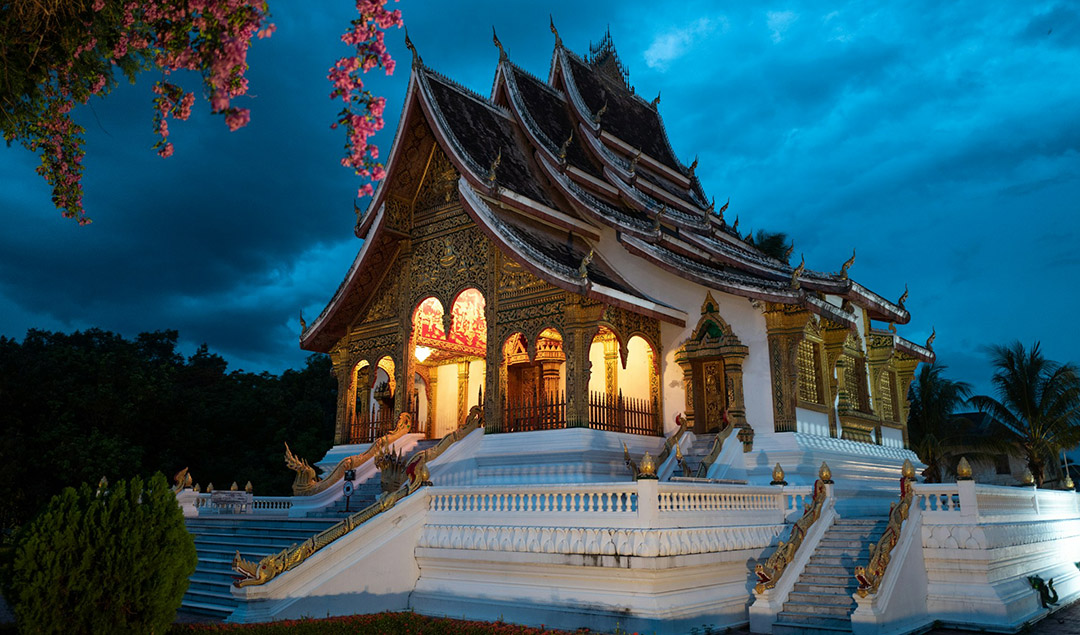
Luang Prabang, the UNESCO former royal capital
Laos's most visited town by a wide margin, and its best first-time base: a UNESCO World Heritage peninsula between the Mekong and Nam Khan rivers, packed with gilded temples, French colonial shophouses, and the dawn alms-giving procession that draws visitors from across the region. It's the natural anchor for any Laos trip and gets its own complete Luang Prabang city guide, covering where to stay, what to eat, Kuang Si Falls and the Pak Ou Caves in full.
Vientiane, the low-key capital
Vientiane is officially the capital and largest city, but it's often described as the sleepiest capital in Southeast Asia: a compact riverside city of gilded stupas, French colonial streets and tamarind-shaded boulevards rather than a mega-city sprawl. Pha That Luang, the gold-covered stupa that is Laos's national symbol, and the Patuxai, a triumphal arch built to commemorate independence from France with a climbable viewing platform, are the two essential stops. Most visitors give Vientiane one or two days at the start or end of a Laos trip rather than basing themselves here, since Luang Prabang carries the temples-and-atmosphere role more completely.
Vang Vieng, karst rivers and caves
A small town ringed by dramatic limestone karst mountains riddled with caves, on the Nam Song River between Luang Prabang and Vientiane. Vang Vieng earned a rough reputation in the 2000s for unregulated river tubing and heavy partying; a 2012 government crackdown shut down the worst of the riverside bars and the town has rebuilt itself since as a genuine eco-adventure hub, with kayaking, caving, rock climbing, hot-air balloon rides over the karsts at sunrise, and blue-lagoon swimming holes. Tubing still operates, more safely regulated than before, but caution around alcohol still matters here specifically, see the Safety chapter.
Plain of Jars, the archaeological mystery
A UNESCO World Heritage landscape in remote Xieng Khouang province, scattered with thousands of massive stone jars dating to the Southeast Asian Iron Age (roughly 500 BCE to 200 CE), whose original purpose (funerary urns is the leading theory) is still debated. Reached from the town of Phonsavan, usually by a long bus ride from Luang Prabang, Vang Vieng or Vientiane, or increasingly by domestic flight. This is also one of the most heavily UXO-affected parts of the country: the main jar sites are cleared and marked for visitors, and straying off the marked paths is not a theoretical risk here the way it is elsewhere.
Si Phan Don & the Bolaven Plateau
Southern Laos runs on its own, slower circuit, based around Pakse. Si Phan Don, the "4,000 Islands," is a stretch of the Mekong studded with islets, best known for the backpacker islands of Don Det and Don Khon: bamboo bungalows, hammocks over the river, and a pace that makes Luang Prabang feel busy. Inland, the Bolaven Plateau is Laos's coffee-growing highland, threaded with waterfalls and reachable as a multi-day loop by motorbike or jeep out of Pakse. It's a genuine detour, a day or more of travel from the northern circuit, and worth it only if the itinerary has room.
Culture & Etiquette
Laos is roughly 65 percent Theravada Buddhist, with animist and traditional beliefs woven in throughout, particularly among the country's many ethnic minority groups. Buddhism structures daily life visibly, in the orange-robed monks who are simply part of the street scene in any Lao town, in the temples at the center of every village, and in the calm, unhurried social style Lao people call bor pen nyang, an equivalent to the Thai "mai pen rai": no worries, let it go.
Do
- Greet with the nop. Palms pressed together at chest height with a slight bow, similar to the Thai wai, is the traditional Lao greeting and always appreciated even if a handshake is now common with foreigners.
- Dress modestly at temples. Cover shoulders and knees, and remove shoes before entering any temple building.
- Remove shoes before entering homes and some guesthouses. Look for a pile of shoes at the entrance as the cue.
- Keep your cool. Losing your temper in public, even over a genuine problem, causes the Lao person you're dealing with to lose face and rarely gets a faster result.
- Learn a few words. Sabaidee (hello), khop jai (thank you) go a long way and are met with genuine warmth.
Don't
- Touch a monk if you're a woman, including their robes, and don't hand anything directly to a monk; place items down for them to pick up instead.
- Touch anyone's head or point your feet at a person, a Buddha image, or a temple altar; the head is considered the most sacred part of the body, the feet the least.
- Raise your voice or show public anger. It's read as a serious loss of self-control and damages both parties' standing.
- Photograph the alms-giving ceremony from close range or with flash. See the etiquette notes in the Luang Prabang city guide before you go.
- Assume Laos is "Thailand but quieter." The politics, history and pace are genuinely distinct, not a discount version of a neighboring country.
Deeper culture: the baci ceremony and the French legacy
The baci (sou khuan) ceremony. A traditional Lao welcoming and blessing ritual in which white cotton strings are tied around a guest's wrists by community elders while they offer blessings for good health and good fortune. Visitors are sometimes invited to experience a baci at a village homestay or a cultural show; the strings are traditionally left on for at least three days.
The French legacy. Decades of colonial rule left a lighter mark on Laos than on Vietnam, but it shows up in the baguette sandwiches (khao ji) sold from carts across Luang Prabang and Vientiane, in strong Lao coffee served with condensed milk, and in scattered colonial-era shophouse architecture, especially around Luang Prabang's UNESCO core.
Food & Drink
Lao food shares DNA with Thai and Vietnamese cuisine but has a sharper, herbier identity of its own, built around sticky rice, fresh herbs, fermented fish sauce and a fearless approach to chili and bitterness. The unofficial national trio is sticky rice, laap and green papaya salad, and you'll find all three, done well and cheaply, from street stalls to sit-down restaurants.
Laap $2-5
Widely considered the national dish: minced meat or fish, tossed with lime juice, fish sauce, fresh herbs and toasted ground rice for crunch, served with a mountain of sticky rice on the side. Order it "sook" (cooked) unless you specifically want the raw version.
Sticky Rice (Khao Niew)
Steamed, not boiled, in a woven bamboo basket until soft and slightly chewy, then eaten by hand, rolled into a small ball and dipped into whatever sauce or dish is on the table. There's a local saying that you haven't really eaten a meal without it.
Beerlao $1-2
The national beer, brewed with Mekong rice and hops, and a genuine source of national pride: smooth, light and, by most travelers' accounts, one of the better lagers in the region.
Tam Mak Houng $1-3
Green papaya salad, pounded in a mortar with chili, lime, fish sauce and often fermented crab paste. Spicier and funkier than the Thai som tam most travelers know, and worth trying at the source.
Sai Oua
A northern Lao grilled pork sausage, packed with lemongrass, galangal and kaffir lime leaf, a specialty of the Luang Prabang region in particular.
Lao Coffee (Kaafe)
Grown on the Bolaven Plateau in the south and served strong, dripped through a small cloth filter, traditionally with sweetened condensed milk, a lasting trace of the French colonial period.
When to Go & Itineraries
November through February is Laos's cool, dry season and the best all-round window: comfortable temperatures, low humidity, and the Mekong still high enough for river travel. March and April turn hot and hazy, sometimes with smoke from agricultural burning affecting visibility. May to October is the wet season: cheaper, greener, with waterfalls at their fullest, but with heavier rain and occasional flooding on rural roads.
All three seasons compared, with temperatures
| Season | Verdict | Temps | Notes |
|---|---|---|---|
| Nov-Feb | Best | 15-28°C | Cool, dry, comfortable; peak season prices and crowds by regional standards |
| Mar-Apr | Hot | 25-38°C | Hottest months, sometimes hazy from crop burning |
| May-Oct | Wet | 24-32°C | Cheaper and greener; heaviest rain Jul-Sep, waterfalls at their fullest |
Luang Prabang and Vientiane sit in the low river valleys and run warmer; Vang Vieng and the Bolaven Plateau are slightly cooler thanks to elevation. Nights in the northern hills from December to February can drop into the low teens Celsius.
Itineraries
Seven days covers Luang Prabang and Vang Vieng comfortably. Two weeks adds Vientiane and either the Plain of Jars or a slow boat down the Mekong, without feeling rushed.
- Days 1-3
Luang Prabang. The alms-giving ceremony at dawn, Wat Xieng Thong and Mount Phousi, a day at Kuang Si Falls and the Pak Ou Caves.
- Days 4-5
Vang Vieng. Train from Luang Prabang (roughly 1-1.5 hrs). Kayaking, caving, a sunrise balloon ride over the karsts.
- Days 6-7
Vientiane. Train onward (roughly 1 hr from Vang Vieng). Pha That Luang, the Patuxai, a slow Mekong sunset before flying home.
- Days 1-4
Luang Prabang, unhurried. The full city guide circuit plus a slower pace, with a day trip to a weaving village along the Nam Khan.
- Days 5-6
Plain of Jars. Bus or flight to Phonsavan, a full day across the marked, cleared jar sites with a local guide.
- Days 7-9
Vang Vieng. Kayaking, caving, and a rest day by the Nam Song River.
- Days 10-11
Vientiane. Temples, the COPE Visitor Centre (a sobering, well-regarded look at the UXO legacy and its survivors), riverside dinner.
- Days 12-14
Optional extension: fly south to Pakse for Si Phan Don's slow river islands or the Bolaven Plateau's coffee and waterfalls.
Getting there & around
Most visitors fly into Luang Prabang (LPQ) or Vientiane's Wattay International (VTE), often via Bangkok, with onward flights or overland connections. The Laos-China Railway, opened in December 2021, is the single biggest change to getting around: high-speed EMU trains cover Vientiane to Luang Prabang in about two hours for roughly $18-25, replacing what used to be a full day on a mountain road. Buses remain the budget option on routes the railway doesn't cover, and are considerably slower.
All transport options: trains, buses, the Mekong slow boat
| Option | Price | Notes |
|---|---|---|
| Laos-China Railway | $6-25 | Vientiane-Luang Prabang ~2 hrs; Vientiane-Vang Vieng ~1 hr. Book ahead in peak season. |
| VIP/local buses | $8-20/route | Covers routes the railway doesn't, including south to Pakse. Slower and less comfortable than the train. |
| Mekong slow boat | ~$25-30/day, 2 days | Huay Xai to Luang Prabang via an overnight stop in Pakbeng; scenic but not fast, roughly 8-9 hrs each day. |
| Domestic flights (Lao Airlines) | $60-150 | Connects Vientiane, Luang Prabang, Pakse and Phonsavan; useful for skipping long bus legs to the south or Plain of Jars. |
| Tuk-tuks & songthaews | $1-5/ride | Standard in-town transport in every Lao city; agree the fare before getting in. |
Crossing borders: the Laos-China Railway continues north to Kunming; the Thai-Lao Friendship Bridge connects Vientiane to Nong Khai, Thailand by road and rail; land borders also exist to Vietnam and Cambodia, though visas should be arranged before arrival rather than assumed on arrival at smaller crossings.
Where to stay
Guesthouses & hostels
The backbone of Lao budget travel in Luang Prabang, Vang Vieng and Vientiane alike: family-run guesthouses with fan or basic air-con rooms, plus a growing hostel scene aimed at the backpacker circuit.
Boutique & mid-range hotels
Converted colonial shophouses and purpose-built boutique properties are strongest in Luang Prabang's UNESCO core, with river-view rooms and small pools common at this tier.
Luxury resorts
Luang Prabang has Laos's best luxury concentration, including riverside and jungle-set properties with international-standard spas and dining; full detail in the city guide.
Riverside bungalows
Vang Vieng and Si Phan Don both specialize in simple bamboo bungalows directly on the water, a genuinely different, slower register of Lao travel than the towns.
Budget Planning
Laos is one of the cheapest countries in Southeast Asia to travel, even with prices creeping up alongside the tourism recovery since the pandemic. Both the Lao kip and US dollars are widely accepted in tourist areas, with change often given in kip; Thai baht is also usable near the Thai border.
- Guesthouse dorm or basic room $8-18
- Street food & markets $3-8
- Local buses and tuk-tuks
- Free temples, one paid sight
- Boutique guesthouse or 3-star hotel
- Restaurant meals $6-15/person
- Laos-China Railway between towns
- Kayaking, caving or a cooking class
- Luxury Luang Prabang resorts
- Fine dining and premium wine list
- Private guides and drivers
- Domestic flights over long bus rides
Quick reference prices: food, transport, entry fees
| Laap with sticky rice | $2-5 |
| Beerlao (large) | ~$1-2 |
| Lao coffee, street stall | ~$0.50-1 |
| Kuang Si Falls entry | ~$2.50 (20,000 kip) |
| Royal Palace Museum, Luang Prabang | ~$1.50 (30,000 kip) |
| Vientiane-Luang Prabang train | $18-25 |
| Guesthouse double room | $10-25/night |
| Boutique hotel, Luang Prabang | $60-120/night |
| e-visa | $45-50 |
Prices reflect August 2026 research and drift over time. Treat them as a planning baseline, not a quote; both kip and USD figures should be reconfirmed closer to travel given kip exchange rate movement.
Visa & Entry
Most nationalities, including the US, UK, EU and Australia, need a visa for Laos; there is no broad visa-free allowance the way there is in neighboring Thailand. The two practical options are an e-visa arranged in advance, or a visa on arrival at major airports and land borders. Both are single-entry only. The official government e-visa portal is the authoritative source; several third-party sites charge a markup for the same service.
✓ e-Visa
$45-50 depending on nationality, 3-5 working days processing (up to 7 in peak season), valid 60 days from issue for a 30-day stay. Apply before you travel.
✓ Visa on arrival
$30-35 depending on nationality, available at major airports and land borders, 30-day stay, extendable twice for a total of 90 days at local immigration offices. Bring a passport photo and USD cash.
✓ Valid passport
At least 6 months validity from your date of entry, required for both visa routes.
✓ Single entry
Both the e-visa and visa on arrival are single-entry. Leaving Laos and returning requires a fresh visa.
| Laos | Cambodia | |
|---|---|---|
| Daily budget | $20-35 covers a comfortable budget trip | Similarly cheap, slightly more developed tourist infrastructure |
| Signature sight | Luang Prabang's temples and the dawn alms-giving ceremony | Angkor Wat and the wider Angkor temple complex |
| Pace | Slower, quieter, less built for mass tourism | Busier around Siem Reap, quieter on the coast and islands |
| Getting around | Fast now on the Laos-China Railway between the north and the capital | Mostly road-based; no comparable rail network yet |
| Visa | e-visa or visa on arrival, ~$30-50 | e-visa or visa on arrival, broadly similar cost |
Safety, Solo Women & Family
Laos carries a Level 2 (Exercise Increased Caution) rating from the US State Department, the same general tier as much of Southeast Asia, with a more serious Level 3 (Reconsider Travel) flagged specifically for Xaisomboun Province due to ongoing unrest, well outside any standard itinerary. Violent crime against tourists is rare on the Luang Prabang-Vang Vieng-Vientiane circuit. The two risks that actually deserve attention are unexploded ordnance in rural areas, and tainted alcohol in Vang Vieng's backpacker bars.
Unexploded ordnance (UXO)
A real, documented legacy of the Secret War, concentrated in rural provinces including parts of Xieng Khouang, Savannakhet and Houaphan. Tourist sites are cleared and marked; the rule everywhere off a paved road or marked path is simple: never touch metal objects in fields or forests, and stay on established trails.
Tainted alcohol in Vang Vieng
The US State Department has issued a health alert over suspected methanol-laced alcohol linked to tourist deaths in Vang Vieng. Stick to sealed, brand-name drinks, avoid unmarked "free shots" and any "happy" menu items advertising special ingredients, and be skeptical of unusually cheap alcohol.
Traffic & river safety
Motorbike accidents are a leading cause of injury for tourists; many rental bikes go out without helmets or a check of the renter's experience. River currents around Vang Vieng's tubing routes and Si Phan Don's rapids are stronger than they look; don't swim alone or after drinking.
Two more things worth knowing: drug laws and petty crime
Drug laws are strict and enforcement, while inconsistent, can be severe; possession of even small amounts can carry serious legal consequences. The "happy" pizzas, shakes and teas sometimes advertised in backpacker areas may contain undisclosed substances and have been linked to serious illness; treat them the same way you'd treat any unregulated substance.
Petty crime is low-level but present: bag snatching from moving motorbikes, opportunistic theft from unlocked guesthouse rooms, and inflated tuk-tuk fares for tourists arriving at airports or bus stations without agreeing a price first. None of it approaches the seriousness of violent crime, which remains rare against foreign visitors.
The 3 scams to actually know about
Laos is not a high-scam destination by regional standards, but a few patterns catch uninformed visitors. The full country list lives on our Laos travel alerts page.
Tainted alcohol in Vang Vieng
Covered in detail above: stick to sealed, brand-name drinks and avoid unmarked "free" shots or "happy" menu items, especially in backpacker bar areas.
Motorbike rental deposit disputes
Some rental shops claim pre-existing damage at return to withhold a cash or passport deposit. Photograph the bike from every angle before riding off, and where possible use a shop that takes a card deposit rather than your passport.
Unmetered tuk-tuk overcharging
Drivers at Luang Prabang and Vientiane's airports and bus stations often quote inflated first prices to arriving tourists. Agree the fare before getting in, or ask your guesthouse for a fair-price benchmark in advance.
Solo women travelers
Laos rates reasonably well for solo women travelers (7.5/10 on our scale), especially on the main tourist circuit, where street harassment is uncommon and the pace is generally relaxed. Standard precautions apply: keep an eye on drinks in Vang Vieng's bar scene, avoid isolated riverbanks or trails after dark, and dress modestly at temples, including keeping the alms-giving ceremony at a respectful distance rather than close-up. Full detail on our Solo Woman Explorer pages.
Emergency numbers
Embassies and practical emergency notes
English-language support on these lines is inconsistent outside Vientiane and Luang Prabang; for serious medical issues, contact your guesthouse or hotel first, since staff can often reach help faster than a cold call to a national line, and consider evacuation insurance given Laos's limited hospital infrastructure, especially outside the capital.
- USA (Vientiane)
- +856-21-267-000
- UK (via Bangkok)
- +66-2-305-8333
- France (Vientiane)
- +856-21-267-100
- Australia (Vientiane)
- +856-21-353-800
UXO awareness: the COPE Visitor Centre in Vientiane is a well-regarded, non-sensational introduction to the Secret War's ongoing UXO legacy and the survivors it still affects; several past builds in this guide have found it one of the more valuable stops for understanding the country's recent history.
Family travel & pets
Laos works well for families with a slower travel style: Kuang Si Falls' shallow pools, boat trips on the Mekong, and the general lack of high-pressure tourist crowds all suit kids. The heat and long overland travel times between towns are the main planning constraints, and the alms-giving ceremony asks for a level of stillness and quiet that works better with older children than toddlers.
Pet travel notes
Bringing pets into Laos requires a veterinary health certificate, current rabies vaccination, and import permissions arranged in advance; given Laos's limited veterinary infrastructure outside the capital, this is a genuinely complex undertaking best handled through a specialist pet relocation service rather than independently.
Laos FAQ
Is Laos safe to visit?
Yes, for the standard circuit. The US State Department rates Laos Level 2 (Exercise Increased Caution), the same tier as much of Southeast Asia. Violent crime against tourists is rare; the real risks are traffic, unmarked unexploded ordnance off established paths in rural areas, and tainted alcohol in backpacker areas like Vang Vieng.
Do I need a visa for Laos?
Yes, most nationalities including the US, UK, EU and Australia need a visa. An e-visa costs $45-50, takes 3-5 working days and allows a 30-day stay. Visa on arrival is available at major airports and land borders for $30-35 and can be extended twice for a total of 90 days.
How much does Laos cost per day?
Budget travelers manage on $20-35 a day with guesthouses and street food, mid-range runs $50-90, and comfortable travel with boutique hotels and private guides starts around $120-200. Laos is one of the cheapest countries in Southeast Asia.
When is the best time to visit Laos?
November through February: cool, dry and comfortable, with the Mekong still high enough for river travel. March and April are the hottest months. May to October is the wet season, cheaper and greener but with heavier rain and fuller waterfalls.
How many days do you need in Laos?
Seven days covers Luang Prabang and Vang Vieng well. Two weeks adds Vientiane, the Plain of Jars or a slow boat down the Mekong, without feeling rushed.
What is Luang Prabang known for?
A UNESCO World Heritage former royal capital on the Mekong, known for its gilded Buddhist temples, the dawn alms-giving ceremony, French colonial architecture and Kuang Si Falls nearby. It is Laos's most visited town by a wide margin.
Is Vang Vieng tubing safe?
Safer than its 2000s reputation after a 2012 government crackdown and safety overhaul, but not risk-free: alcohol-related accidents on the river still happen, and the US State Department has issued alerts over suspected methanol-tainted alcohol sold in some bars. Stick to sealed, reputable drinks and avoid "happy" menu items.
What is the Plain of Jars?
A UNESCO World Heritage site in Xieng Khouang province with thousands of large stone jars, dating from the Southeast Asian Iron Age, scattered across dozens of sites. It's remote, reached from Phonsavan, and one of the few places where unexploded ordnance clearance is a visible, ongoing part of daily life.
Is Laos safe for solo female travelers?
Generally yes, especially on the well-trodden Luang Prabang-Vang Vieng-Vientiane route, where street harassment is uncommon. Standard precautions apply at night in backpacker bar areas, and women should avoid touching monks or their robes.
What language is spoken in Laos?
Lao is the official language, a tonal language related to Thai. English is spoken in tourist areas of Luang Prabang, Vang Vieng and Vientiane, and French survives in some older signage and vocabulary as a legacy of colonial rule; it's not a practical second language for visitors.
Is Laos landlocked and part of ASEAN?
Yes to both. Laos is Southeast Asia's only landlocked country, bordered by China, Vietnam, Cambodia, Thailand and Myanmar, and has been a member of ASEAN since 1997.
What Stays With You
Laos doesn't perform for visitors the way its neighbors sometimes do. The monks walking through the mist at dawn aren't a show; the baci strings tied around your wrist aren't a photo prop; the jars scattered across a highland plateau still keep their secret. It's a country that carries real weight, an unfinished war still surfacing from the ground decades later, alongside real lightness: a cold Beerlao by the Mekong, a slow boat with nowhere else to be.
The phrase worth taking home is bor pen nyang, no worries. Go before the railway and the rest of the region's tourists change what that means here.