
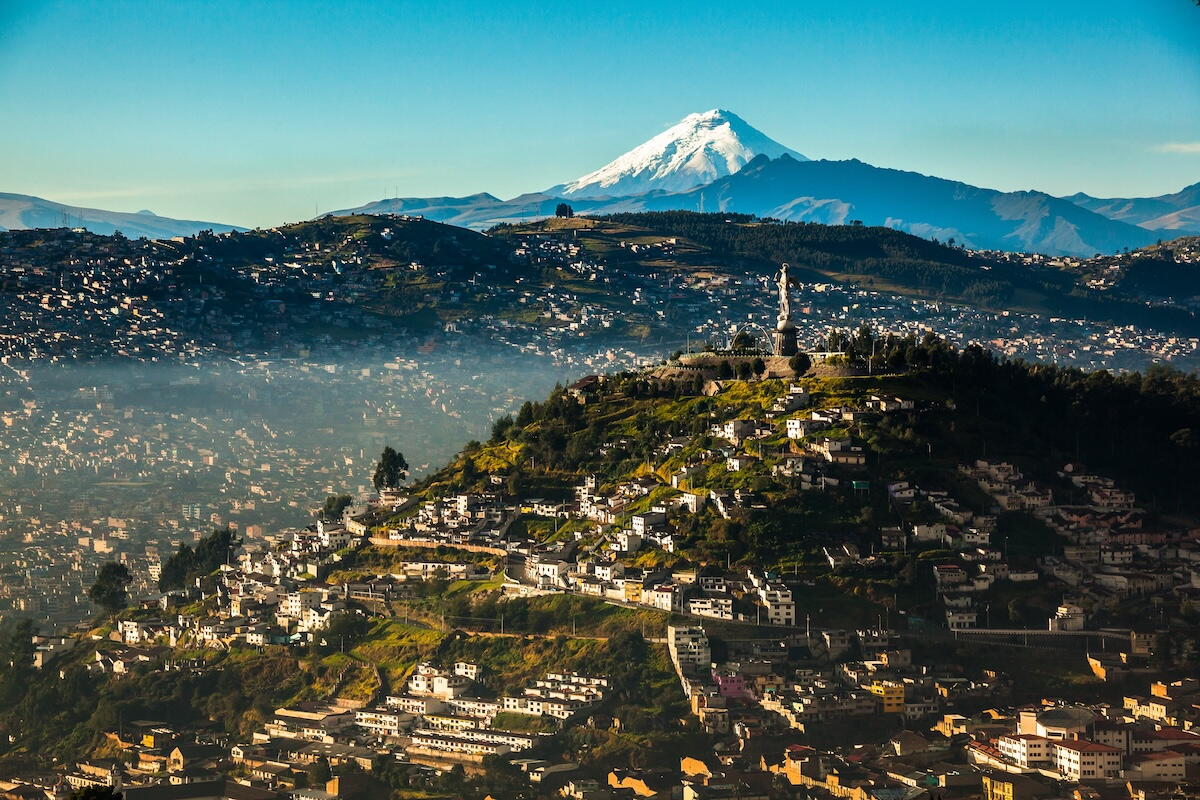
The highest capital that isn't trying to prove it
Quito stretches along a narrow Andean valley at 2,850 meters, hemmed in by volcanoes on both sides, which is why the city is long and thin rather than sprawling in every direction. Its Centro Histórico is the largest and best-preserved historic center in the Americas, a genuine, still-functioning neighborhood of 16th and 17th-century churches and convents rather than a roped-off museum piece, and it earned UNESCO World Heritage status in 1978, the first city anywhere to receive it.
What surprises most visitors is how much the altitude runs the show. The air is thinner, the sun is stronger, and the temperature barely shifts across the year because Quito's climate is set by elevation, not season. Two or three unhurried days, with a slow first afternoon to adjust, is the right pace, both for the body and for a city that rewards actually looking up at what's on the buildings rather than rushing between them.
The honest complications
Quito's Old Town is genuinely stunning by day and genuinely quiet, in the wrong way, after dark, when most restaurants close and the street population thins out; plan evenings in La Mariscal, La Floresta or Guápulo instead. Petty crime and, less commonly but seriously, express kidnapping via unofficial taxis are real enough that "never hail a cab on the street" isn't overcaution, it's the standard local advice. And the altitude catches people who fly in and start sightseeing immediately: a mild headache or shortness of breath on day one is normal, not a sign anything is wrong, but it's worth planning around rather than pushing through.
A long valley, five neighbourhoods that matter
Quito runs roughly north to south along its valley, and where you base yourself is a trade-off between colonial atmosphere, nightlife, and how comfortable you feel walking home after dark.
Old Town (Centro Histórico)
The historic center is Quito's postcard: Plaza de la Independencia, the gold-leaf interior of La Compañía church, and balconied colonial houses on nearly every block. It's well-policed and busy by day, but genuinely empties out once the offices and day-tour buses clear, with fewer dining options after dark than the northern neighbourhoods. Staying here means waking up inside the sight itself; just plan dinner elsewhere or eat early.
La Mariscal
Quito's main tourist district, centered on Plaza Foch, holds the highest concentration of hostels, travel agencies, bars and international restaurants. It's the easiest landing spot for a first visit, especially solo, with budget hostel dorms from $8-15 and mid-range hotels from $40-80, though the same nightlife that makes it convenient means it needs more street-smarts after dark than the Old Town does by day.
La Floresta
A quieter, more residential district next to El Ejido park, La Floresta has become Quito's bohemian corner: independent coffee shops, small galleries, and the Ocho y Medio cinema and its attached tavern, a longstanding hangout for the city's creative crowd. Walking distance from both La Mariscal and the Old Town, it's a good base for a calmer stay without losing central access.
Guápulo
A colonial-era village clinging to the ravine below La Floresta, connected by a steep cobbled street lined with bars and small restaurants that fill up on weekend evenings. It feels like its own town rather than a Quito neighborhood, and the walk down (and the taxi back up) is part of the appeal.
La Carolina & the North
Quito's modern north, business towers, shopping malls, and La Carolina Park's running paths and rowboats, is where much of the city's business and upper-middle-class residential life happens. Less atmospheric than the Old Town but generally calmer after dark, and the location for chains and business hotels like Wyndham Garden Quito.
From a Relais & Châteaux mansion to South America's best-rated hostel
Quito's accommodation splits cleanly between Old Town colonial conversions with real historical weight and modern business hotels in the north, with a genuinely excellent hostel scene bridging the gap for budget travellers.
At the top, Casa Gangotena occupies a restored early-20th-century mansion directly on Plaza San Francisco in the Old Town, a Relais & Châteaux property with a third-floor terrace looking out over the plaza and the hills beyond, from around $350-540 a night depending on season and room category. A few streets away, Illa Experience Hotel, set in a 17th-century house, takes its name from the Quechua word for sacred light and leans into sensory details, scented linens, a coffee ritual, dishes tied to Ecuadorian childhood memory, at a similarly high boutique price point.
For colonial character without Gangotena's rates, Hotel Patio Andaluz is built around a arcaded courtyard in a national-monument house 150 meters from Plaza de la Independencia, thirty-two rooms furnished in carved colonial-style wood, and a solid upper-midrange choice for travellers who want the Old Town setting without the top-tier price tag.
At the budget end, Community Hostel Quito sits in the historic center with a rooftop bar looking out over the Basílica and El Panecillo, communal tables, and dorms from around $8 a night, while The Secret Garden Quito, twice voted best hostel in the country, adds a sun terrace, free bikes and evening events to the same budget bracket. For a straightforward mid-range business stay in the modern north, Wyndham Garden Quito offers reliable rooms and a restaurant near La Carolina.
Llapingachos, avant-garde tasting menus, and canelazo after dark
Quito's food scene runs from $3 market almuerzos to tasting menus that have put Ecuador on the international culinary map for the first time. Both ends are worth doing; the market lunch teaches you more about how the city actually eats.
Llapingachos & Cuy
Mama Clorinda, open since 2004 just off Plaza Foch, is the reliable address for highland classics: llapingachos, pan-fried potato and cheese patties, served with steak or with cuy, roasted guinea pig, for visitors who want to try Ecuador's most traditional Andean dish in a proper sit-down setting rather than a market stall.
Contemporary Ecuadorian tasting menus
Zazu, a Relais & Châteaux trophy winner, runs a seven-course tasting menu built around Ecuadorian ceviche, foie gras and precisely cooked meats in the business heart of the city. Nuema, the first Ecuadorian restaurant to land on the Latin America's 50 Best list, pushes further into avant-garde territory with a seasonal tasting menu built entirely around domestic ingredients. Both need reservations well ahead.
La Ronda after dark
La Ronda, a restored colonial pedestrian street, turns from a quiet daytime art strip into one of the liveliest few blocks in the city after sundown, especially Thursday to Saturday: canelazo, a hot cinnamon and naranjilla drink cut with aguardiente, and empanadas de viento sold from open doorways while peñas play traditional Andean music inside.
Rooftop views
Vista Hermosa, on a rooftop terrace in the Old Town, pairs traditional Ecuadorian dishes and international plates with a panoramic view over the historic center's domes and towers, best timed for sunset.
A city best seen from a plaza floor and a cable car both
Quito rewards a slow walk through the Old Town by day and a ride above it by cable car for perspective. Most of what matters is either free or under $10.
The Old Town on foot
Start at Plaza de la Independencia, ringed by the Presidential Palace, the cathedral and the archbishop's palace, then walk the few blocks to La Compañía de Jesús, whose interior is covered almost entirely in gold leaf, one of the most extravagant Jesuit church interiors in South America (small entry fee, no photos inside). The Basílica del Voto Nacional, a neo-Gothic landmark with gargoyles carved as Galápagos iguanas and tortoises rather than European grotesques, lets you climb its towers for one of the best views over the Old Town's rooftops. Finish at Plaza San Francisco, anchored by Casa Gangotena on one corner and the Franciscan monastery on the other.
TelefériQo
The TelefériQo cable car climbs the eastern slope of Pichincha volcano to over 4,000 meters, well above the city, with views back over the whole valley and, on a clear day, Cotopaxi's cone on the horizon. Tickets cost $9 for adults and $7 for children, running 9am to 7pm; dress warmly, the top station is noticeably colder than the city below, and skip it on your first day if you're still adjusting to the altitude.
Evenings in La Floresta and Guápulo
Once the Old Town quiets down, La Floresta's cafes and the cinema-tavern at Ocho y Medio or the bars lining Guápulo's steep main street are where the evening actually happens. Both are a short, inexpensive taxi ride from La Mariscal or the Old Town, and neither should be walked to after dark.
Museums
The Casa del Alabado museum of pre-Columbian art, in a restored Old Town colonial house, is a quieter, well-curated counterpoint to the city's colonial-era churches, and the Centro Cultural Metropolitano hosts rotating exhibitions in a former Jesuit college a block from the main plaza.
One, two or three days, planned around the altitude
Two to three days covers Quito itself properly; a rushed single day still delivers the Old Town's essentials. Keep the first afternoon light regardless of how many days you have.
- Morning
Old Town. Plaza de la Independencia, La Compañía's gold interior, and the towers of the Basílica del Voto Nacional for the view.
- Midday
Llapingachos at Mama Clorinda, or a $3 market almuerzo if you'd rather eat where locals do.
- Afternoon
TelefériQo. The cable car up Pichincha for the valley view, weather and altitude adjustment permitting.
- Evening
La Ronda. Canelazo and empanadas de viento on Quito's liveliest colonial street.
- Day 1
The one-day route above: Old Town, TelefériQo, La Ronda in the evening.
- Day 2 morning
Casa del Alabado. Pre-Columbian art in a quiet Old Town house, then coffee in La Floresta.
- Day 2 afternoon
Guápulo. The walk down the cobbled street, a late lunch, and a taxi back up.
- Day 2 evening
A tasting menu at Zazu or Nuema, booked ahead, for the other end of Quito's food scene.
- Days 1-2
The two-day route above, at a gentler pace to finish adjusting to the altitude.
- Day 3, option A
Otavalo Market. A full-day trip north for South America's largest indigenous market, best on Saturday.
- Day 3, option B
Cotopaxi & Quilotoa. A long day tour to the volcano and the crater lake south of the city.
Long, thin, hilly, and easier by taxi after dark
Mariscal Sucre International Airport (UIO) sits in Tababela, about 35km east of the centre, itself around 450 meters lower than the city, so the drive in is a genuine climb. A registered taxi from the official arrivals booth costs $25-45 and takes 45-90 minutes depending on traffic; Uber runs $15-25, and public buses to the Río Coca, Quitumbe or Carcelén terminals cost a flat $2 but take an hour to ninety minutes including the connection into town.
Within the city, the Metro de Quito, the Trolebús and the Ecovía bus lines cover the length of the valley cheaply, though pickpocketing on crowded carriages is common enough that bags stay in front, not on your back. Uber and app-dispatched taxis are inexpensive, $3-10 for most central trips, and are the recommended way to move around after dark rather than hailing a cab on the street, which carries a real, documented risk of express kidnapping in both Quito and Guayaquil.
Best time to visit and the altitude adjustment
Quito's temperature is set by its 2,850-meter elevation more than by the calendar: daytime highs run a fairly constant 18-21°C year-round, dropping to 7-9°C at night. June to September is the driest, clearest stretch, with October to May bringing more frequent afternoon rain, though rarely for the whole day.
The altitude adjustment is worth taking seriously on arrival: rest on day one rather than sightseeing immediately, drink more water than feels necessary, and go easy on alcohol for the first 24 to 48 hours. Most people adjust within a day or two; if symptoms are severe or don't improve, treat it as a medical matter, not something to push through.
One of South America's more affordable capitals
Quito is noticeably cheaper than most Western capitals and comparable to, or a touch above, Ecuador's national average given its role as the capital. The hostel scene keeps the budget end genuinely low, and the main cost trap is tourist-priced restaurants directly on the main Old Town plazas.
- Hostel dorm $8-15
- Market almuerzos $2.50-4
- Metro, Trolebús and Ecovía $0.35
- Free Old Town walking plus TelefériQo
- Boutique hotel or guesthouse $80-150
- Restaurant meals with drinks $20-40
- Uber around the city
- A guided day tour to Otavalo or Cotopaxi
- Casa Gangotena or equivalent $350+
- Tasting menus at Zazu or Nuema
- Private guides and transfers
- A day tour with a private vehicle
Fine by day in the tourist zones, deliberate about taxis at night
Quito's Old Town, La Mariscal, La Floresta and La Carolina are well-trafficked and generally comfortable to walk by day with normal city awareness. The two things that actually matter are what happens after dark and how you get around: the Old Town empties out and is best left for a taxi home rather than a walk, and unofficial or unmarked taxis have been linked to express kidnapping cases in both Quito and Guayaquil, where a rider is forced to withdraw cash from multiple ATMs over several hours.
Use Uber or a registered taxi called by your hotel, every time, especially at night; treat this as a rule, not a suggestion. Pickpocketing on the Trolebús and Ecovía lines and in crowded markets is the more common, less dangerous risk, addressed with a bag worn in front and a phone kept off restaurant tables. The emergency number nationwide is 911 (ECU 911), which coordinates police, fire and ambulance response from a single line.
Two of Ecuador's best sights sit within two hours of the city
Quito's position at the center of the Andean highlands makes it an excellent base for day trips. Two are worth planning for specifically, and both run as guided tours if you'd rather not navigate the mountain roads yourself.
Otavalo Market
One of the largest indigenous markets in South America, run by the Kichwa-Otavalo people, with textiles, weavings and crafts spread across the town's plazas. Saturday is the biggest and most authentic market day; Wednesday is a smaller secondary option. Most visitors go as a full-day trip, roughly $40-60 with transport, though staying overnight avoids the tour-bus rush.
Cotopaxi & Quilotoa
Cotopaxi National Park, less than two hours south, centers on one of the world's highest continuously active volcanoes, with wild horses grazing the páramo grassland below the snow line; entry to the park itself is free. Many day tours continue on to Quilotoa, a turquoise crater lake at nearly 3,900 meters ($2 entrance), making for a long but rewarding combined day. Both sit at serious altitude, so this is a better third-day trip than a first-day one.
Middle of the World Monument
The Mitad del Mundo monument marks the equator (give or take a few hundred meters from the GPS-accurate line, a point of local trivia) with a small museum complex and photo-op straddling both hemispheres. It's a shorter, less demanding half-day than Otavalo or Cotopaxi, and combines easily with either as an add-on.
Quito FAQ
Is Quito safe for tourists?
Quito's Old Town, La Mariscal, La Floresta and La Carolina are well-trafficked and generally fine by day with normal precautions. The real risks are pickpocketing on crowded public transport and unofficial taxis linked to express kidnapping, not violent street crime against tourists in the main tourist zones. Avoid hailing cabs on the street, especially after dark.
How many days do I need in Quito?
Two to three full days covers the city well: one for the Old Town and the Basílica, one for the TelefériQo and the modern north or Guápulo, and a third for a day trip to Otavalo or Cotopaxi. Add a day to acclimatize if you're arriving straight from sea level.
How much does Quito cost per day?
Budget travellers manage on $40-60 a day with hostels and market almuerzos; mid-range runs $80-140. Quito is noticeably cheaper than most Western capitals and on par with or slightly above the Ecuadorian national average.
When is the best time to visit Quito?
Quito's temperature barely changes across the year due to its altitude and equatorial location; June to September is the driest stretch with the clearest mountain views, while any month can bring an afternoon downpour. Pack layers regardless of season.
Do I need to acclimatize to the altitude in Quito?
Quito sits at 2,850 meters and many visitors feel mild effects, headache or breathlessness, in the first day or two. Rest on arrival, hydrate, go easy on alcohol, and delay strenuous hikes or the Cotopaxi day trip until you've settled in.
How do I get from Quito airport to the centre?
Mariscal Sucre International Airport sits in Tababela, about 35km east of the centre. A registered taxi from the official booth costs $25-45 and takes 45-90 minutes depending on traffic; Uber runs $15-25, and public buses to the city terminals cost a flat $2 but take longer.
What is the best area to stay in Quito?
Old Town for the colonial atmosphere and landmark sights, though it quiets down after dark. La Mariscal is the most convenient base for first-timers, with the most hostels, restaurants and nightlife. La Floresta suits travellers who want a calmer, more local feel within walking distance of both.
Do I need to speak Spanish in Quito?
English is common in hotels, tour operators and higher-end restaurants in Old Town, La Mariscal and La Floresta, but thins out quickly elsewhere. A few basic Spanish phrases go a long way and are expected as a courtesy before any transaction.
Is Quito walkable?
The Old Town and La Mariscal are walkable in daylight, but the altitude makes hills more tiring than they look on a map, and safety guidance favors taxis or Uber after dark rather than walking between neighbourhoods.
Can I use Uber in Quito?
Yes, and it's the recommended way to move around the city, especially at night. Uber and app-dispatched taxis are safer than hailing an unmarked cab on the street, which has been linked to robbery and express kidnapping cases.
What Stays With You
Quito does not flatten itself for visitors: it stays at 2,850 meters, it keeps its Old Town full of working churches instead of souvenir stalls, and it makes you slow down whether you meant to or not. The gold interior of a 400-year-old church seen properly because you weren't rushing, the view from the Basílica's tower with the whole valley laid out and a volcano on the horizon, a glass of canelazo on La Ronda while a peña plays somewhere behind a doorway: none of it asks to be impressive, which is exactly why it is.
Give the altitude its due on day one, and the rest of the city will meet you more than halfway.