
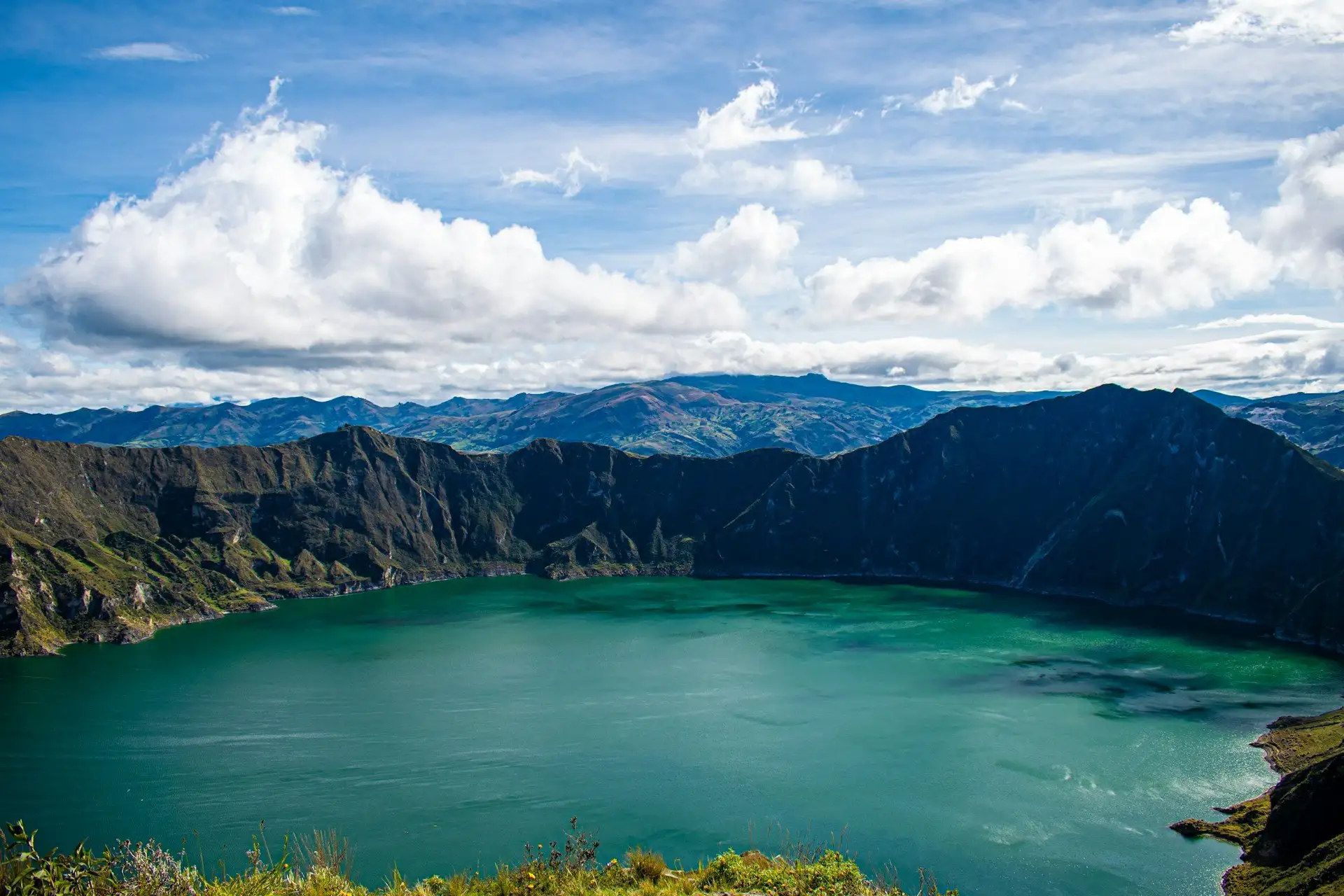
What You're Actually Getting Into
Ecuador is named after the line it straddles, and that geographic fact explains almost everything else about it: a country small enough to cross by bus in a day that nonetheless contains Andean volcanoes over 5,000 meters, Amazon rainforest, Pacific beaches and, a short flight offshore, the Galápagos archipelago that gave Darwin his theory. It dollarized in 2000 after a banking collapse destroyed its own currency, the sucre, and has run on the US dollar ever since, an unusual arrangement that makes it one of the most straightforward countries in South America for a first-time visitor to budget for.
Quito, the capital, sits at 2,850 meters in a long Andean valley and holds the largest and best-preserved historic center in South America, a UNESCO World Heritage Site since 1978. From there, the rest of the country radiates outward: the Avenue of Volcanoes running south past Cotopaxi, the cloud forests and thermal towns of the highlands, the Amazon basin descending east, and the Galápagos, which most visitors treat as a trip within the trip, expensive relative to the mainland but genuinely unlike anywhere else on earth.
The honest complications
Ecuador's security picture has deteriorated since 2020, driven by cocaine trafficking through Pacific ports and a prison system that spilled into open gang warfare; the government declared an internal armed conflict against criminal organizations in January 2024, and the US State Department raised its advisory accordingly. This is real and worth taking seriously, but it is also heavily concentrated in specific places, parts of Guayaquil, the northern Esmeraldas coast, the Colombian border, and pockets of a few coastal provinces, that sit well outside where a first-time visitor actually goes. The standard Quito-Andes-Galápagos circuit is a different, calmer country. Altitude is the other honest complication: Quito's 2,850 meters and the volcano day trips above it catch travelers who fly in and start sightseeing immediately, rather than resting on day one.
A History Worth Knowing
Long before it was Ecuador, this territory held sophisticated cultures for millennia before the Inca arrived from the south in the late 15th century, ruled it for barely fifty years, then lost it to Spain, whose 300-year colonial rule left Quito full of baroque churches and a language, Spanish, that still shares the highlands with Kichwa and a dozen other indigenous tongues. Independence, a border war with Peru not settled until 1998, a currency collapse solved by adopting someone else's money, and a recent, serious rise in organized crime bring the story up to today.
- Pre-1460s
Before the Inca. Diverse cultures including the Cañari in the southern highlands and coastal societies like the Manteño built distinct civilizations across what is now Ecuador for thousands of years.
- 1460s–1533
Inca rule, briefly. Huayna Capac completes the Inca conquest of Ecuador by the century's end; a succession war between his sons Atahualpa and Huáscar fatally weakens the empire just as the Spanish arrive.
- 1534
Spanish conquest. Sebastián de Belalcázar founds Spanish Quito on the ruins of the Inca settlement. Colonial rule and the Real Audiencia de Quito, established 1563, last nearly 300 years.
- 1822
Battle of Pichincha. Antonio José de Sucre defeats Spanish forces on the slopes above Quito, securing the territory's independence, which initially joins Simón Bolívar's Gran Colombia.
- 1830
Ecuador separates. The republic breaks from Gran Colombia and takes its name from the equator running through it.
- 1998
Peru border settled. A peace treaty finally resolves a territorial dispute in the Amazon that had triggered wars in 1941 and 1995.
- 2000
Dollarization. Hyperinflation and a banking collapse destroy the sucre; Ecuador adopts the US dollar as its official currency.
- 2020–present
Security crisis. Cocaine trafficking through Pacific ports and prison gang warfare escalate sharply; President Noboa declares an internal armed conflict against criminal organizations in January 2024.
Read the full history: pre-Inca cultures, the Correa era and rights of nature
Ecuador's pre-Columbian history is often flattened into "the Inca," but the Inca Empire only controlled the region for roughly fifty years before the Spanish arrived. Cultures like the Cañari around present-day Cuenca and Ingapirca, and coastal societies further west, had their own distinct traditions and metalwork long before Cusco's armies marched north under Huayna Capac. The civil war between his sons Atahualpa, based in Quito, and Huáscar, based in Cusco, split the empire in two just before Francisco Pizarro's men arrived on the coast, a timing that historians generally agree made the Spanish conquest considerably easier than it might otherwise have been.
Independence in 1822 and 1830 gave way to a turbulent 19th century of regional rivalry between the conservative highlands and the liberal, commercially minded coast, a tension that still colors Ecuadorian politics and the rivalry between Quito and Guayaquil today. The 20th century brought oil wealth from the Amazon starting in the 1970s, decades of political instability, and a long-running border dispute with Peru over Amazonian territory that flared into open conflict in 1941 and again in 1995 before a 1998 treaty finally settled it.
Correa and Buen Vivir. President Rafael Correa's decade in office (2007-2017) rewrote the constitution in 2008 to enshrine Sumak Kawsay, or "Buen Vivir" ("good living"), an indigenous-influenced philosophy of harmony between people and nature that made Ecuador the first country in the world to grant legal rights to nature itself. Oil revenue funded significant social spending and infrastructure; falling oil prices and rising debt complicated the years that followed.
The security crisis. What changed sharply after 2020 was cocaine trafficking: Ecuador's Pacific ports, especially around Guayaquil, became a major transit route for Colombian and Peruvian cocaine headed to the US and Europe, and rival gangs, some with links to Mexican cartels, fought for control both on the streets and inside an overcrowded prison system that saw repeated deadly riots. President Daniel Noboa declared an "internal armed conflict" against 22 criminal organizations in January 2024 after a wave of violence including a live television station takeover. The effect on tourism has been real but geographically specific, concentrated in Guayaquil, the northern coast and border provinces rather than the Andean and Galápagos circuit most visitors follow.
Top Destinations
Ecuador divides cleanly into four worlds: the Andean highlands running north to south through the middle, the Amazon basin (the Oriente) to the east, the Pacific coast to the west, and the Galápagos Islands, roughly 1,000 kilometers offshore. Nobody does all four properly in a single trip; most first-timers anchor around Quito and the highlands, then add either the Galápagos or the Amazon depending on budget and time.
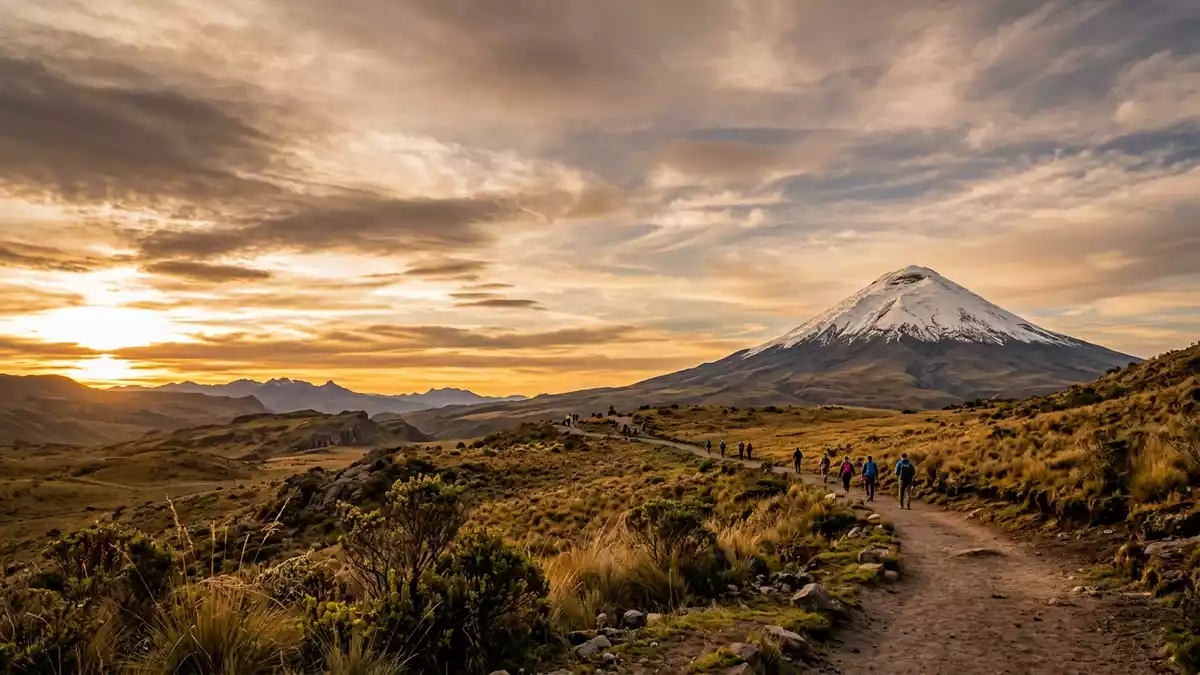
Quito, the high capital
Quito holds the largest and best-preserved historic center in the Americas, a dense grid of colonial churches, plazas and balconied houses at 2,850 meters, with the snow line of Pichincha volcano visible from several of its streets. It's covered in full in our dedicated Quito city guide: neighborhoods, hotels, restaurants and a proper itinerary. Budget two to three days before heading out to the surrounding volcanoes.
Cotopaxi National Park
Cotopaxi, one of the world's highest continuously active volcanoes at 5,897 meters, anchors a national park of high-altitude páramo grassland less than two hours south of Quito, with wild horses grazing below the snow line and Limpiopungo Lake reflecting the cone on clear mornings. Entry to the park is free; most visitors go as a half or full-day tour from Quito rather than independently, since the access roads and altitude (you enter around 3,800 meters) reward local knowledge.
The Galápagos Islands
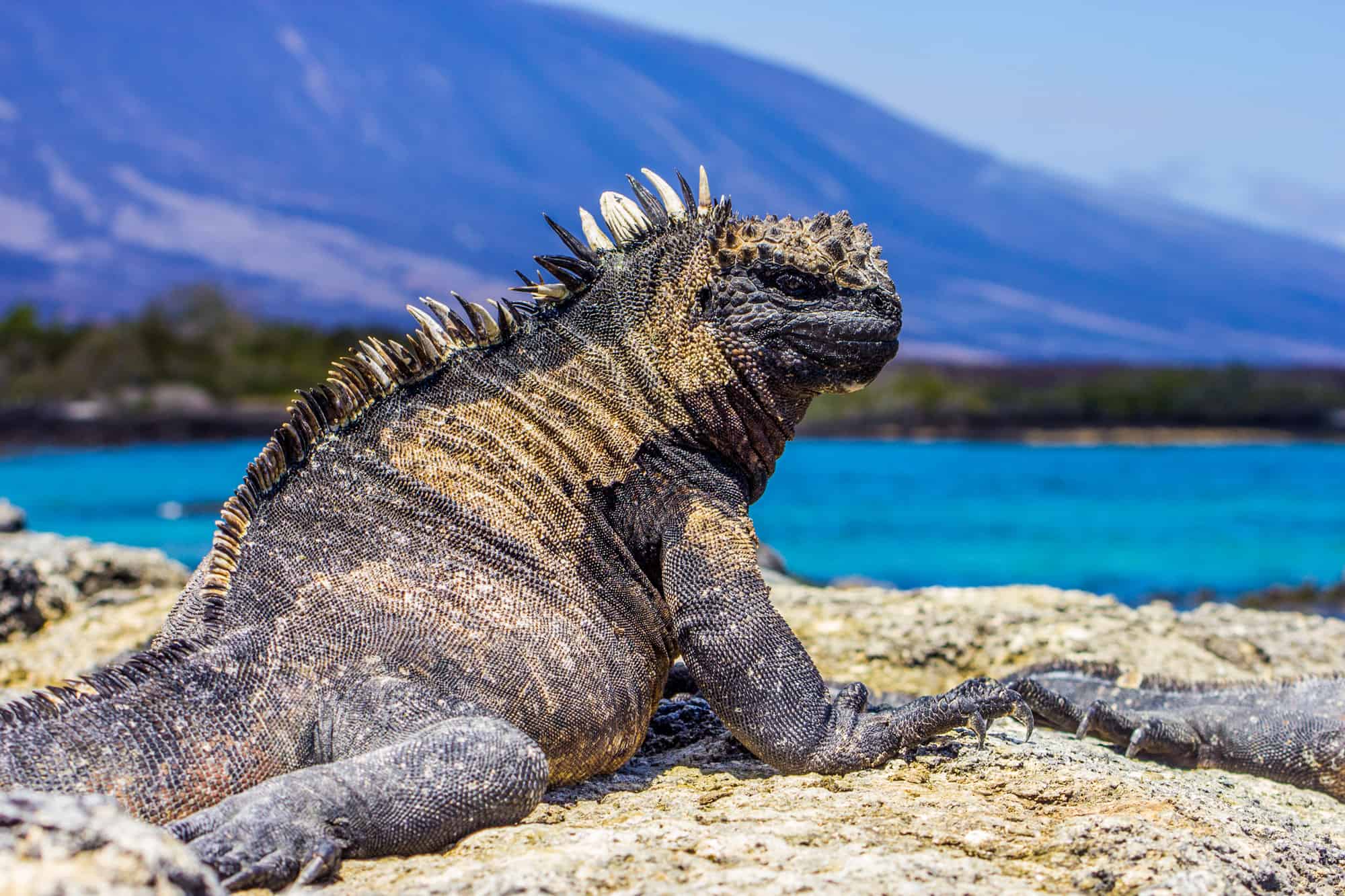
The Galápagos sit almost 1,000 kilometers off the Ecuadorian coast, reached by a roughly 1.5-hour flight from Quito or Guayaquil to Baltra or San Cristóbal. This is the reason many visitors come to Ecuador at all: giant tortoises, marine iguanas found nowhere else on earth, blue-footed boobies performing their mating dance in the open, and sea lions that treat the beaches as their own, largely unbothered by people, since almost none of the archipelago's wildlife evolved a fear of humans. Every visitor pays a $200 National Park entrance fee and a $20 transit control card in cash on arrival, on top of flights and accommodation or a cruise.
The choice is land-based travel, staying in hotels on Santa Cruz or San Cristóbal and taking day boats to nearby sites, or a live-aboard cruise that reaches more remote islands and covers more ground in less time. Land-based trips are meaningfully cheaper; cruises range from modest first-class boats to small luxury vessels costing several hundred dollars a day and up. June to November brings cooler water, choppier seas and the best wildlife-watching and diving; December to May is warmer, calmer and better for snorkeling with young kids.
Otavalo & the northern highlands
Otavalo, two hours north of Quito, holds one of the largest indigenous markets in South America, at its biggest on Saturdays, with textiles, weavings and crafts sold by the Kichwa-Otavalo people who have traded here for centuries. Most visitors go as a day trip, though staying overnight avoids the tour-bus crowds and allows time for the nearby crater lakes of Cuicocha and Mojanda.
Baños, the adventure town
Baños de Agua Santa sits in a steep valley in the shadow of the active Tungurahua volcano, its name coming from the thermal springs that draw Ecuadorians on weekend trips. It has become the country's adventure sports hub: canyoning, whitewater rafting, mountain biking down the "Route of the Waterfalls," and the Casa del Árbol treehouse swing, with Tungurahua smoking on the horizon behind it.
Cuenca, the southern colonial city
Cuenca, Ecuador's third-largest city, is a UNESCO World Heritage-listed colonial center of blue-domed cathedrals and rivers crossed by stone bridges, calmer and arguably better preserved than parts of Quito's old town, and a major hub for the genuine Panama hat industry, which despite the name originated here and around Montecristi on the coast. The nearby Cajas National Park, a high-altitude landscape of over 200 lakes, is an easy day trip.
The Oriente
Ecuador's slice of the Amazon basin is reached from gateway towns like Tena, Puyo or Coca, then by road and river to a lodge; the Cuyabeno and Yasuní reserves hold exceptional biodiversity, including pink river dolphins, caimans, monkeys and, in Yasuní, some of the highest species counts recorded anywhere on the planet. Lodges range from simple community-run stays to comfortable ecolodges, typically booked as 3 to 5-night packages including meals, guiding and river transport, since independent travel in the deeper reserves isn't practical.
This is a genuinely different trip from the Andes or Galápagos: humid, insect-heavy, and paced around dawn and dusk wildlife activity with an indigenous or naturalist guide, usually Kichwa, Shuar or Waorani communities who host and interpret the forest for visitors.
Montañita & Puerto López
Montañita is Ecuador's best-known surf town, a compact, party-oriented beach strip popular with backpackers; Puerto López, further south, is calmer and the base for boat trips to Isla de la Plata, nicknamed the "poor man's Galápagos" for its blue-footed boobies and frigatebirds, and for humpback whale watching from June to September.
Guayaquil
Ecuador's largest city and main port has a genuinely improved riverfront promenade, the Malecón 2000, and the colorful Las Peñas neighborhood climbing Santa Ana hill behind it. It's also where the State Department's most serious warnings concentrate, specifically the southern districts; the Malecón, Las Peñas and the northern city are a different, more manageable proposition, but this is not a city to wander without checking current guidance first.
Hidden gems beyond the main circuit
The zones above cover a first or second trip well. With extra days, these reward the detour.
Ingapirca
Ecuador's largest surviving Inca ruin, built over an earlier Cañari site, with the distinctive Inca stonework fused visibly to the older foundations. Small compared to Peru's ruins, but the only site of its kind in the country.
Mindo
A cloud forest town on the western slope of the Andes, dense with hummingbird species and a serious birdwatching circuit; also does zip-lining and chocolate-farm tours for a less adrenaline-focused day.
Vilcabamba
A small valley town with a long-standing, loosely evidenced reputation for resident longevity, now better known for a relaxed expat community, hiking, and horseback trips into the surrounding Podocarpus foothills.
Papallacta Hot Springs
Thermal pools set against páramo scenery on the road toward the Amazon, popular as a soak before or after an Oriente trip, or as a standalone day or overnight from Quito.
Chimborazo
Ecuador's tallest peak at 6,263 meters is, due to the equatorial bulge of the earth, the point on its surface farthest from the planet's core, closer to the sun than Everest's summit. Climbable only with technical experience and a guide; the visitor center and vicuña-grazed slopes are accessible to everyone.
Cajas National Park
Over 200 glacial lakes scattered through high páramo an hour from Cuenca, popular for day hikes and trout fishing, with weather that changes fast enough to justify the layers everyone tells you to bring.
Culture & Etiquette
Ecuador's population blends Spanish colonial heritage with a strong and visible indigenous presence, fourteen officially recognized nationalities including Kichwa, Shuar and Waorani communities, most concentrated in the highlands and Amazon. Family is central, greetings are warm and physical (a handshake at minimum, a cheek kiss between women and between men and women in most social settings), and life outside the capital runs on a notably relaxed relationship with the clock.
Do
- Greet properly before getting to business. A brief exchange of pleasantries before any transaction or request is expected and its absence reads as rude, not efficient.
- Carry small bills and coins. Vendors, taxis and small shops routinely can't break $20s or $50s; keep a stock of $1, $5 and $10 notes.
- Dress modestly in indigenous communities and churches. Cover shoulders and knees for churches; ask before photographing people, particularly in traditional Andean and Amazonian communities.
- Learn a few Spanish phrases. Buenos días, por favor, gracias. English thins out fast once you leave Quito, Cuenca and Galápagos tourism businesses.
- Ease into the altitude. Rest on your first day in Quito or Baños before hiking, drinking heavily, or heading straight up to Cotopaxi.
Don't
- Hail an unmarked taxi off the street, especially in Quito or Guayaquil at night. Use a ride app or a hotel-called registered taxi instead; this is the single most repeated safety piece of advice for a reason.
- Expect punctuality at social events. "Ecuadorian time" running 30 minutes to an hour late is normal for informal gatherings; business meetings run closer to schedule.
- Drink tap water outside major hotels. Bottled or filtered water is the standard practice nationwide, including in Quito.
- Assume the whole country matches the news headlines. The security crisis is real but geographically specific; treat it with the same regional nuance you'd apply to crime statistics in any large country rather than writing off the whole trip.
- Flash expensive electronics or jewelry in crowded markets, bus terminals or Quito's Old Town after dark, where opportunistic theft, not violent crime, is the realistic risk.
Deeper culture: indigenous nationalities, Kichwa, Buen Vivir and Inti Raymi
Fourteen nationalities. Ecuador officially recognizes fourteen indigenous nationalities, from the Kichwa of the highlands and northern Amazon, the country's largest, to the Shuar and Waorani further into the rainforest and smaller coastal groups. Each maintains distinct language, dress and social structures rather than forming a single homogenous "indigenous culture."
Kichwa. A variant of Quechua, the Inca administrative language, still spoken by well over a million people, mainly in the highlands, and holding official status alongside Spanish in Kichwa-speaking communities under the constitution.
Sumak Kawsay / Buen Vivir. The 2008 constitution's guiding philosophy, drawn from indigenous Andean thought, frames development as harmony between people, community and nature rather than pure economic growth, and includes the world's first constitutional rights granted to nature itself.
Inti Raymi. The Inca sun festival, celebrated around the June solstice, particularly in Otavalo and Cotacachi, blends pre-Columbian ritual with Catholic feast days for St. John and St. Peter, a genuinely syncretic celebration rather than a tourist reenactment.
Food & Drink
Ecuadorian food shifts noticeably by altitude and coast: hearty potato and corn dishes in the cold highlands, seafood-forward ceviches on the coast, and tropical fruit and fish along the Amazon's rivers. Fine cacao is a genuine national strength, Ecuador grows some of the world's most prized chocolate-making beans, and a set lunch (almuerzo), soup, a main and juice, rarely costs more than $3 to $4 outside tourist zones.
Ceviche $6-12
The Ecuadorian version is served in a tomato-based citrus broth rather than dry like Peru's, usually with shrimp or fish, and comes with popcorn and plantain chips (chifles) for texture. Coastal towns and Guayaquil do it best, but good versions are everywhere.
Locro de Papa & Llapingachos
Locro is a creamy potato and cheese soup, often topped with avocado, a highland staple against the cold. Llapingachos, pan-fried potato and cheese patties served with fried egg, chorizo or steak, are the classic highland lunch plate.
Hornado & Cuy
Hornado is whole roast pig, crackling skin and all, sold by the plate at highland markets. Cuy, roasted guinea pig, is an Andean delicacy going back centuries, an acquired dish for most visitors but a genuine window into highland food culture.
Encebollado $3-5
A tuna, yuca and pickled onion stew, Guayaquil's beloved hangover cure, eaten at breakfast with fried plantain and a squeeze of lime at market stalls across the coast.
Fine Cacao & Chocolate
Ecuador's Nacional cacao variety is prized internationally for its floral, complex flavor; small-batch chocolate makers around Quito, Mindo and Guayaquil sell bars and run tasting tours.
Canelazo $2-4
A hot cinnamon drink made with naranjilla fruit juice and aguardiente cane liquor, drunk against the highland chill, especially on Quito's La Ronda street after dark.
When to Go & Itineraries
Ecuador sits on the equator, so "best time to visit" is really four separate questions depending on which region you mean. The highlands, including Quito, run a mild, fairly constant temperature year-round and are driest June to September; the coast is warmest and sunniest December to April and cooler, cloudier (locally called garúa) June to November; the Amazon rains most months with a slightly drier stretch August to January; and the Galápagos works year-round, warm and calm December to May, cooler with better wildlife visibility and rougher seas June to November.
All four regions compared, with temperatures
| Region | Best window | Temps | Notes |
|---|---|---|---|
| Highlands (Quito) | Jun-Sep, also Dec-Jan | 8-21°C year-round | Fairly constant by altitude, not season; mornings clear, afternoons can bring rain any month |
| Pacific coast | Dec-Apr | 24-31°C | Warm, sunny, rainy season; Jun-Nov is cooler and greyer (garúa) but fine for surfing |
| Amazon (Oriente) | Aug-Jan (drier) | 22-31°C, humid | Rain is possible any day of any month; this is a rainforest |
| Galápagos | Year-round | 21-30°C | Dec-May warm/wet, best snorkeling; Jun-Nov cool/dry, best wildlife & diving, choppier seas |
Quito's temperature barely shifts across the year thanks to its altitude and equatorial location; what changes is rainfall, not heat. Pack layers for the highlands regardless of season.
Itineraries
Seven days covers the Andean highlands well on their own. Two weeks lets you add the Galápagos or the Amazon; three weeks does one of each plus the coast, without the trip feeling rushed.
- Days 1-2
Quito. Rest and acclimatize on arrival, then the Old Town, the TelefériQo cable car, and one evening on La Ronda.
- Day 3
Otavalo. Day trip north for the Saturday market (adjust the schedule if traveling other days) and the Cuicocha crater lake.
- Day 4
Cotopaxi & Quilotoa. A long day tour combining the volcano and the crater lake, or split across two shorter days.
- Days 5-7
Baños. Thermal baths, the waterfall bike route, canyoning or the Casa del Árbol swing, then back to Quito for departure.
- Days 1-3
Quito & Cotopaxi. Old Town, TelefériQo, and a Cotopaxi/Quilotoa day tour.
- Days 4-5
Otavalo & Baños. Saturday market, then south to Baños for adventure sports and the thermal pools.
- Days 6-7
Cuenca. Fly or bus south for the colonial center, a real Panama hat, and a Cajas National Park day hike.
- Days 8-14
Galápagos. Fly from Quito or Guayaquil for a week split between land-based stays on Santa Cruz and San Cristóbal, or a live-aboard cruise.
- Days 1-4
Quito, Cotopaxi & Otavalo, at a gentler pace, adding Mindo's cloud forest for a day.
- Days 5-7
Baños & the Quilotoa Loop. Multi-day hike between Kichwa villages around the crater lake.
- Days 8-10
Cuenca & Ingapirca. The southern colonial city plus Ecuador's largest Inca ruin.
- Days 11-14
The Amazon. A lodge stay in Cuyabeno or Yasuní via Coca or Tena.
- Days 15-21
Galápagos, unhurried. A full week combining land-based time and day boats, or an extended cruise.
Getting there & around
Quito's Mariscal Sucre International Airport (UIO) and Guayaquil's José Joaquín de Olmedo International Airport (GYE) are the two main international gateways, both served by LATAM, Avianca, Copa and US carriers from major hubs. Domestic flights between Quito, Guayaquil, Cuenca and the Galápagos are affordable and frequent; given how mountainous and winding the highland roads are, flying rather than a long bus ride is often worth the extra cost for anything beyond a few hours. Since Ecuador uses the US dollar, American visitors need no currency exchange at all.
All transport options with prices: buses, domestic flights, taxis
| Option | Price | Notes |
|---|---|---|
| Intercity buses | $1-8/route | Extensive, cheap network from major terminals (Quitumbe, Carcelén in Quito). Quito to Baños: ~3.5 hrs, ~$4. |
| Domestic flights | $60-150 | Quito-Cuenca or Quito-Guayaquil around an hour; book ahead for better fares and connections to Galápagos flights. |
| Flights to Galápagos | $400-650 return | From Quito or Guayaquil to Baltra or San Cristóbal, roughly 1.5-2.5 hrs depending on routing. |
| Uber & registered taxis | $3-10 (Quito) | Uber works well in Quito; use it or a hotel-called taxi rather than hailing on the street. |
Practical prep: an Ecuadorian SIM or an eSIM before landing covers most of the country; signal thins out fast in the Amazon and on remote hikes. Standard travel insurance works well, but confirm it covers high-altitude activity and Galápagos cruises specifically, since some policies exclude both. Trip.com offers fixed-price airport pickups from UIO.
Where to stay
Andean haciendas
Converted colonial-era farm estates around Cotopaxi, Otavalo and the highlands, many still working farms, offering horseback riding and volcano views. A genuinely distinct Ecuadorian accommodation experience.
Galápagos stays
Hotels on Santa Cruz and San Cristóbal range from simple to high-end; live-aboard cruise boats bundle accommodation, meals, guiding and transport, and are priced per day rather than per room.
Amazon ecolodges
Multi-night packages in Cuyabeno or Yasuní bundle meals, a naturalist or indigenous guide, and river transport from the gateway town; independent travel within the reserves isn't practical.
Coastal surf hostels
Montañita and Puerto López have Ecuador's cheapest and most social backpacker scene, dorm beds and hammock terraces a short walk from the beach.
Budget Planning
The mainland is one of South America's better values: dollarized pricing, cheap market lunches, and an extensive bus network keep daily costs low outside the Galápagos, which runs on its own, considerably higher, cost structure regardless of travel style.
- Hostel dorm $8-15
- Almuerzo set lunches $2.50-4
- Intercity buses between towns
- Free national parks and markets
- Boutique hotel or guesthouse
- Restaurant meals $12-20
- Domestic flights over long bus rides
- Guided day tours $30-65
- Best available hotels in Quito & Cuenca
- Private guides and transfers
- Fine dining, tasting menus
- Excludes Galápagos, priced separately
Quick reference prices: lunch, buses, park fees
| Almuerzo set lunch | $2.50-4 |
| Local city bus | $0.35 |
| Quito-Baños intercity bus | ~$4-5 |
| Coffee (café con leche) | $1.50-2.50 |
| Hostel dorm bed | $8-15/night |
| TelefériQo cable car | $9 adults |
| Cotopaxi/Quilotoa day tour | $56-65 |
| Domestic flight (Quito-Cuenca) | $60-100 |
| Galápagos park fee + transit card | $220 cash, on arrival |
| Galápagos flight, round trip | $400-650 |
Prices reflect September 2026 research and drift over time, especially Galápagos flights and cruise rates in peak season. Treat them as a planning baseline, not a quote.
Visa & Entry
Ecuador has a permissive visa regime for most Western passports: US, EU, UK, Canadian, Australian and New Zealand citizens enter visa-free for up to 90 days within any rolling 12-month period on a T-3 tourist stamp, issued on arrival with no application or fee. Rules do change; Ecuador's Ministry of Foreign Affairs and the Migración Ecuador entry portal are the authoritative sources, not third-party paid "e-visa" sites that rank well in search but charge for something that's free.
✓ Valid passport
At least 6 months validity from date of entry. Keep a photocopy or photo of the biodata page separate from the original.
✓ Onward or return ticket
May be requested at immigration; airlines sometimes check before boarding.
✓ FRA customs form
A free online customs registration completed before arrival, generating a QR code to present at the airport, required since July 2025.
✓ 90 days, rolling 12 months
Not 90 days per entry: leaving and re-entering doesn't reset the clock, a rule that catches out travelers doing a border run expecting a fresh 90 days.
| Ecuador | Peru | |
|---|---|---|
| Signature site | Galápagos wildlife, unmatched anywhere | Machu Picchu & the Inca Trail |
| Size & logistics | Compact, short domestic flights | Much larger, longer overland journeys |
| Currency | US Dollar, no exchange for Americans | Peruvian Sol |
| Altitude | Quito 2,850m, manageable | Cusco 3,400m plus a multi-day trek |
| Daily budget | $30-55 gets you far on the mainland | Comparable, but Cusco/Machu Picchu pricing runs higher |
Safety, Solo Women & Family
The US State Department rates Ecuador Level 2, "Exercise Increased Caution," as of August 2026, citing crime, terrorism, unrest and kidnapping risk in specific areas. Several zones sit at Level 4, "Do Not Travel": Guayaquil south of Portete de Tarqui Avenue, the cities of Huaquillas and Arenillas in El Oro province, Quevedo, Quinsaloma and Pueblo Viejo in Los Ríos province, Durán canton in Guayas province, and Esmeraldas City and the coast and border area north of it. Additional Level 3 "Reconsider Travel" areas include northern Guayaquil, the rest of El Oro and Los Ríos provinces, areas south of Esmeraldas City, and the provinces of Sucumbíos, Manabí, Santa Elena and Santo Domingo. None of this touches Quito's historic tourist zones, Cuenca, Baños, Otavalo, the Andean highlands generally, or the Galápagos, which is why the standard first-time circuit is a meaningfully different risk profile from the advisory headline.
Express kidnapping
Criminals in unmarked or unofficial taxis have forced riders to withdraw cash from multiple ATMs over several hours, mainly in Quito and Guayaquil. Use Uber or a registered taxi called by your hotel, never hail one on the street, especially at night.
Petty theft
Pickpocketing concentrates on crowded public transport (the Trolebús and Ecovía lines), bus terminals and busy markets. Keep bags in front of you and phones out of back pockets in these settings.
Altitude
Quito sits at 2,850 meters; mild headaches or breathlessness on arrival are common. Rest on day one, hydrate, and go easy on alcohol before any strenuous activity or a volcano day trip.
Two more things worth knowing: no-go zones and the Guayaquil exception
Border and coastal hotspots. The areas under Level 4 advisories, the Colombian border zone, northern Esmeraldas, and specific districts around El Oro and Los Ríos, are driven by narcotics trafficking and gang violence largely disconnected from tourism infrastructure. There is little reason for a typical visitor to pass through them, and no part of the standard itinerary in this guide requires it.
Guayaquil. Ecuador's largest city carries the country's most serious specific warnings, concentrated south of Portete de Tarqui Avenue. The Malecón 2000 riverfront, Las Peñas neighborhood and the northern city function differently and see regular tourist traffic, but check current guidance before visiting rather than assuming the whole city is equally safe or equally risky.
The 3 scams to actually know about
Ecuador's scam landscape is more about opportunistic theft than elaborate cons, and knowing the patterns going in avoids nearly all of it. The full country list lives on our Ecuador travel alerts page.
Unofficial taxis
Unmarked cars offering rides outside airports and bus terminals have been linked to express kidnapping and robbery. Use Uber, an app-dispatched taxi, or one called directly by your hotel, every time, in every city.
Distraction theft
A common pattern in crowded plazas and markets: someone spills something on you or offers unsolicited help while an accomplice removes a bag or phone. Politely decline unsolicited assistance and keep valuables zipped and in front of you.
Change shortchanging
Given the scarcity of small bills, some vendors "can't find" correct change from larger notes. Carry small denominations and count change before walking away, especially at bus terminals and street stalls.
Solo women travelers
Ecuador is workable for solo women with real precautions rather than casual ones. The core rule is transportation: never hail a taxi on the street, use Uber or a registered, hotel-called car, in every city, at every hour. Quito and Guayaquil after dark deserve the same caution any solo traveler would apply in a large Latin American city; the Galápagos and smaller highland towns like Baños and Cuenca are considerably more relaxed. Harassment can occur on public transport and in nightlife areas; dressing modestly in indigenous communities and rural towns is a matter of cultural respect as much as safety. Full detail on our Solo Woman Explorer pages.
Emergency numbers
Embassies in Quito and practical emergency notes
ECU 911 is Ecuador's unified emergency line, coordinating police, fire, ambulance and rescue services from a single number nationwide, and it's the number to call for any emergency. The US Embassy in Quito sits at Avigiras E12-170 y Eloy Alfaro (+593-2-398-5000) and enrolls citizens in the STEP program for security alerts. Most other Western embassies and consulates are concentrated in Quito's northern business districts.
- USA
- +593-2-398-5000
- UK
- +593-2-297-0800
- Canada
- +593-2-245-5499
- Germany
- +593-2-397-9330
- France
- +593-2-394-3800
- Australia
- via Santiago, +56-2-2550-3500
Family travel & pets
The Galápagos is widely considered Ecuador's safest and most family-friendly region: calm wildlife encounters, warm shallow water for snorkeling, and a slow pace that suits kids especially well. The mainland Andean circuit works too with normal city precautions; altitude in Quito and on volcano day trips is the main thing to introduce gradually rather than plunge straight into with young children.
Altitude with kids, and bringing pets
Altitude with children: Quito's 2,850 meters can affect kids the same way it affects adults, mild headache or fatigue on arrival. Plan an easy first day, keep them hydrated, and delay high-altitude add-ons like Cotopaxi (entering around 3,800 meters) by a day or two.
Pets: Ecuador requires a valid rabies vaccination certificate, a general health certificate issued shortly before travel, and advance notice to the airline; the Galápagos has its own strict biosecurity controls and additional permitting that make bringing pets there impractical for visitors.
Ecuador FAQ
Is Ecuador safe to visit?
The US State Department rates Ecuador Level 2, Exercise Increased Caution, mainly for narcotics-related crime concentrated in specific areas: parts of Guayaquil, the Esmeraldas coast and the Colombian border, and pockets of El Oro and Los Rios provinces. Quito, Cuenca, Baños, Otavalo and the Galapagos, the standard first-time circuit, see routine tourist crime, not the violence driving those warnings.
What currency does Ecuador use?
The US dollar. Ecuador adopted it in 2000 after a banking collapse and hyperinflation wiped out the sucre, so American visitors need no currency exchange at all, though carrying small bills matters since change for $20s and $50s is often scarce.
Do I need a visa for Ecuador?
Citizens of the US, EU, UK, Canada, Australia and New Zealand enter visa-free for up to 90 days within any rolling 12-month period on a T-3 tourist stamp, no application or fee required. You'll also need to complete the free online FRA customs form before arrival for a QR code.
When is the best time to visit Ecuador?
It depends which Ecuador you mean. The highlands are driest June to September, the coast is warmest and sunniest December to April, the Amazon rains year-round with a slightly drier window August to January, and the Galapagos works any month, warm and wet December to May, cooler and better for wildlife June to November.
How many days do you need in Ecuador?
Seven days covers the Andean highlands circuit: Quito, Otavalo, Cotopaxi and Baños. Two weeks adds the Galapagos or the Amazon; three weeks does both properly along with the coast and Cuenca.
How much does the Galapagos cost?
Beyond the flight from the mainland, every visitor pays a $200 National Park entrance fee and a $20 transit control card in cash on arrival. Land-based budget travel runs $80-130 a day beyond that; cruises start around $250 a day and climb sharply for smaller, higher-end boats.
Ecuador or Peru, which should I visit?
Different trips. Peru has Machu Picchu, deeper Inca history and more dramatic scale; Ecuador is smaller and easier to move around, dollarized, and has the Galapagos, which Peru cannot match. Many travelers combine both if time allows.
Is Ecuador in the European Union or Schengen area?
No, Ecuador is a South American republic with no relationship to the EU or Schengen; this question doesn't apply, though the 90-day visa-free allowance works on a similar rolling basis.
What language is spoken in Ecuador?
Spanish is the official language nationwide. Kichwa and 13 other indigenous languages have official status in their communities, mainly in the highlands and Amazon. English is common in Quito, Cuenca and Galapagos tourism businesses, much less so elsewhere.
Is Ecuador safe for solo female travelers?
Workable with real precautions. Use Uber or registered taxis rather than hailing on the street, especially at night, avoid unmarked cabs entirely given documented express-kidnapping cases, and treat Quito and Guayaquil after dark with the same caution as any large Latin American city.
Is Ecuador good for families with kids?
The Galapagos in particular rates as the country's safest region and suits kids especially well, with calm wildlife encounters and warm water. The mainland circuit works too with normal city precautions; altitude in Quito and Baños is the main thing to ease into gradually with children.
Does Ecuador have altitude sickness concerns?
Quito sits at 2,850 meters and some visitors feel mild headaches or breathlessness on arrival. Rest on day one, drink water, go easy on alcohol, and it typically passes within a day or two; it becomes more relevant again on volcano day trips like Cotopaxi.
What Stays With You
Ecuador's trick is compression. Nowhere else lets you stand on a smoking volcano's flank in the morning and, within the same week, snorkel beside a sea lion that has never learned to be afraid of you. The country is small enough that none of it feels like a separate trip bolted onto another, and dollarized enough that the arithmetic never gets in the way of paying attention to what's actually in front of you.
Go for the Galápagos if that's what pulled you in, but don't skip the Andes to get there faster. The volcano-lined highlands are the part of Ecuador most visitors didn't know they came for, until they were standing in them.