

What You're Actually Getting Into
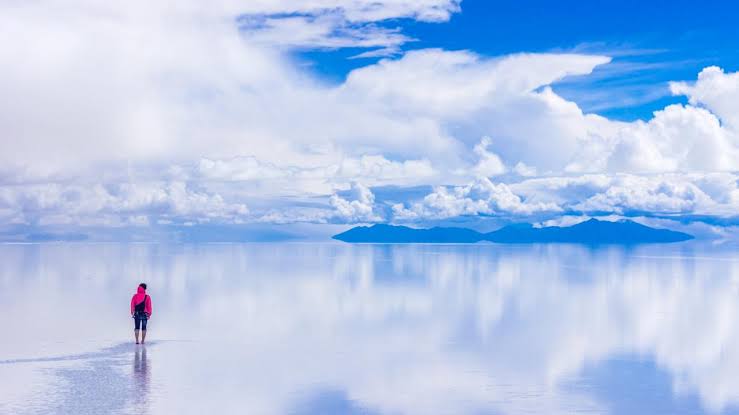
Bolivia is the country that makes superlatives feel earned rather than marketed. The Salar de Uyuni is the largest salt flat on Earth, 10,582 square kilometers of blinding white crust that turns into a perfect mirror when a thin layer of rainwater covers it. La Paz, the seat of government, sits in a canyon at 3,600 meters with the satellite city of El Alto sprawling across the rim above it at 4,150 meters, making it, depending on how you count, the highest de facto capital on the planet. Lake Titicaca, the highest large navigable lake in the world, sits on the border with Peru. Inside a single country the size of Texas and California combined, you can stand on a glacier, sleep in a jungle lodge listening to howler monkeys, and eat dinner in a colonial city founded on the richest silver deposit the Spanish Empire ever found.
Bolivia is also, unavoidably, going through a hard year. The country is landlocked and heavily dependent on imported fuel, and a prolonged dollar shortage and fuel crisis have produced real inflation, queues at gas stations, and periodic road blockades tied to political protest. None of this closes the country to visitors; flights operate normally and the main tourist circuit functions, but it means a Bolivia trip in 2026 rewards flexibility more than a tightly locked itinerary.
The honest complications
Bolivia in 2026 is dealing with a genuine economic crisis: a dollar shortage that pushed the exchange rate onto a floating, market-based system in June 2026, and chronic diesel and gasoline shortages that have triggered road blockades in several departments over the course of the year, including a 90-day state of exception declared in June that has been extended amid continued protest activity. None of this has pushed Bolivia past a Level 2 "exercise increased caution" advisory, and it hasn't stopped flights, but it does mean overland journeys between cities can be disrupted with little warning. Build at least one buffer day into any itinerary that depends on a flight out, and check local news or your hotel before a long bus ride. The other honest complication is altitude: La Paz, Uyuni and Potosi all sit above 3,600 meters, and altitude sickness is a genuine risk that ruins more trips than crime does.
A History Worth Knowing
Bolivia's high plains were home to the Tiwanaku civilization a thousand years before the Inca arrived, and the country's identity today is still built on that pre-Columbian depth: it is the most indigenous nation in South America, with Aymara and Quechua spoken daily alongside Spanish. Named after independence leader Simon Bolivar, Bolivia has lost more territory to its neighbors than perhaps any other South American country, including its entire Pacific coastline, and its politics since have swung between military rule, revolution and, since 2006, the country's first indigenous-led government.
- 300-1000 CE
Tiwanaku. A sophisticated civilization on the altiplano near Lake Titicaca develops raised-field agriculture and monumental stone architecture centuries before the Inca.
- 15th century
Inca expansion. The Inca Empire absorbs the Aymara kingdoms of the altiplano, layering Quechua language and administration over existing indigenous structures.
- 1545
Potosi silver. Spanish colonizers discover the immense silver deposits of Cerro Rico, which goes on to fund a large share of the Spanish Empire's global spending for two centuries, at brutal human cost to forced indigenous and enslaved labor.
- 1825
Independence. Bolivia declares independence from Spain and is named for Simon Bolivar.
- 1879-1884
War of the Pacific. Bolivia loses its entire Pacific coastline and the port of Antofagasta to Chile, becoming permanently landlocked, a grievance the country still raises internationally.
- 1952
National Revolution. Universal suffrage, land reform and the nationalization of the tin mines reshape the country's politics.
- 2006-2019
Evo Morales. Bolivia's first indigenous president nationalizes hydrocarbons, rewrites the constitution and governs for 13 years before resigning amid a disputed election.
- 2025-present
Rodrigo Paz & the current crisis. A new government takes office promising market reforms just as falling gas exports and a dollar shortage trigger the fuel crisis and protests still unfolding in 2026.
Read the full history: Tiwanaku, the mita, the Chaco War and 190 coups
Long before either the Inca or the Spanish arrived, the Tiwanaku civilization built one of the most sophisticated pre-Columbian societies in South America on the shores of Lake Titicaca, developing raised-field farming techniques that dramatically increased crop yields at extreme altitude. The ruins at Tiwanaku, 70 kilometers west of La Paz, are one of the most significant and least-visited major archaeological sites on the continent.
Spanish colonization from the 1530s onward found its center of gravity at Potosi, where the silver mountain of Cerro Rico was worked under the mita system, a rotational forced-labor draft that conscripted indigenous communities and, later, enslaved Africans, under conditions with an appalling death toll. Potosi's silver output was so vast that the Spanish phrase "vale un Potosi," worth a fortune, entered the language.
Independence in 1825 did not bring stability. Bolivia has lost territory in nearly every border war it has fought: the Pacific coastline to Chile in the War of the Pacific (1879-1884), and a further loss to Paraguay in the Chaco War (1932-1935) over the Gran Chaco region, later found to hold far less oil than either side had gambled on. Between independence and the modern era, Bolivia is frequently cited as having experienced roughly 190 coups and attempted coups, a figure so consistently repeated in Bolivian political history that it has become a kind of dark national shorthand for the country's instability.
The 1952 National Revolution, led by the MNR party, introduced universal suffrage regardless of literacy or property, redistributed land away from a small landholding elite, and nationalized the tin mines that had dominated the economy since the silver ran out. Military rule returned in the 1960s and persisted, with intervals, into the 1980s, followed by a bruising hyperinflation crisis and a shift toward neoliberal economic policy.
Evo Morales, an Aymara former coca-grower's union leader, won the presidency in 2005 and took office in January 2006 as Bolivia's first indigenous head of state, a genuinely historic moment in a country where indigenous Bolivians had long been politically marginalized. His government nationalized the hydrocarbons sector, rewrote the constitution to recognize Bolivia's plurinational, multi-indigenous character, and presided over a period of real poverty reduction funded substantially by natural gas exports. He resigned in November 2019 amid a disputed election and mass protests; his MAS party's Luis Arce won the presidency in 2020. Rodrigo Paz took office in late 2025 promising market-oriented reform, immediately inheriting the fuel and currency crisis that defines Bolivia's news cycle in 2026.
Top Destinations
Bolivia's main circuit runs from La Paz across the altiplano to the Salar de Uyuni, with natural detours to Potosi and Sucre, Lake Titicaca, and, for a completely different register, the Amazon lowlands around Rurrenabaque. The distances are large and the roads are variable, so most visitors combine buses on the well-traveled tourist routes with a domestic flight or two rather than trying to drive everything.
La Paz, the chaos capital
La Paz is the seat of government and the base almost every visitor uses. The Mi Teleferico cable car network, the highest and longest urban gondola system in the world, doubles as public transport and the best sightseeing in the city; ride the red line to Mirador station for a full view of the canyon and Mount Illimani beyond. The Witches' Market on Calle Linares sells dried llama fetuses and herbal remedies from Aymara yatiri healers, and the steep, layered streets around it are worth simply walking. Our full La Paz city guide covers where to stay, eat and how to handle the altitude on arrival.
The world's largest salt flat
The Salar de Uyuni covers 10,582 square kilometers at 3,656 meters, the fossilized bed of a prehistoric lake. In the dry season (May-October) it is a blinding white crust that plays tricks with scale and perspective, the classic forced-perspective photographs. In the wet season, especially January and February, a thin layer of standing water turns the entire surface into a mirror that erases the horizon. Most visitors reach Uyuni town by overnight bus or flight from La Paz, then join a 1-day or 3-day 4WD tour; the 3-day version continues into the Siloli Desert and the colored lagoons near the Chilean border. Book with an established operator and expect to pay $100-280 depending on length and comfort level.
Potosi, the silver mountain
Potosi, at 4,090 meters one of the highest cities in the world, is a UNESCO World Heritage Site built on the wealth, and the appalling human cost, of the Cerro Rico silver mines that bankrolled the Spanish Empire for two centuries. Cooperative miners still work the mountain today in conditions that visiting journalists have repeatedly described as brutal, and guided mine tours are the city's defining, sobering experience. The colonial center, with the Casa de la Moneda mint museum, reflects the wealth that once flowed through it.
Sucre, the white city
Sucre, Bolivia's constitutional capital and also UNESCO-listed, is a well-preserved colonial city of whitewashed buildings at a comparatively gentle 2,750 meters, a common first stop for altitude acclimatization before heading higher. The Casa de la Libertad, where Bolivia's declaration of independence was signed, and the dinosaur footprints at Cal Orck'o on the edge of town are the standout sights.
Copacabana & Isla del Sol
Lake Titicaca, the highest large navigable lake in the world, straddles the border with Peru. Copacabana, the lakeside town on the Bolivian side, is the jumping-off point for Isla del Sol, the Inca-era Island of the Sun with Inca ruins, terraced hillsides and no cars. A day trip from La Paz is possible but rushed, roughly 3.5 hours each way by road and boat; staying a night on the island is the better version of the trip if time allows.
Rurrenabaque & the Bolivian Amazon
Rurrenabaque is the gateway to two very different Amazon experiences: pampas tours along the Yacuma River, where wildlife spotting (pink river dolphins, caimans, capybaras) is easy because the terrain is open, and jungle tours deeper into Madidi National Park, one of the most biodiverse protected areas on Earth, where the forest is denser and the wildlife harder to see but the immersion is total. Fly from La Paz (45 minutes) rather than taking the 18 to 20-hour bus, which is rough even by Bolivian standards.
Beyond the main circuit
With extra time, these spots reward the detour and rarely make the standard first-timer list.
Valle de la Luna
An eroded landscape of clay and rock spires just outside La Paz, easy to combine with the Zona Sur neighborhoods on a half-day trip.
Oruro during Carnaval
Bolivia's most important festival, a UNESCO-recognized three-day explosion of masked dance and music, the diablada, in the run-up to Ash Wednesday.
Santa Cruz
Bolivia's largest, wealthiest and lowest-altitude city, more a business hub than a tourist draw, but a useful acclimatization-free entry point via Viru Viru airport.
Culture & Etiquette
Bolivia is the most indigenous country in South America by population share: over 36 recognized indigenous nations, with Aymara and Quechua the largest and most visible. This is not a background fact for tourism, it shapes the language you hear in markets, the clothing (the bowler hat and layered skirts of Aymara cholitas are everyday dress, not costume), the reverence for Pachamama, Mother Earth, in everyday ritual, and the political landscape since 2006. Coca leaf chewing is legal, ancient and completely ordinary; offering or accepting coca leaves is a basic social gesture, not a drug reference.
Do
- Try coca leaf tea (mate de coca) or leaves. Widely used against altitude fatigue and offered as routine hospitality; it is not the same as cocaine and is completely legal within Bolivia.
- Ask before photographing people, especially Aymara women in traditional dress. Some expect a small tip for posed photos; a friendly ask first goes a long way.
- Dress modestly at religious sites and in rural indigenous communities.
- Learn a few words of Spanish, and if you can manage it, a greeting in Aymara or Quechua; it lands well outside the main tourist strips.
- Carry small bills and coins. Bolivia is largely a cash economy and change is often genuinely scarce.
Don't
- Take coca leaves out of the country. Legal to consume in Bolivia, illegal to export; customs at the airport will confiscate them and can escalate the encounter.
- Get in an unmarked taxi off the street, particularly alone or at night. Use a radio taxi, a hotel-arranged car, or a ride app.
- Assume everyone speaks Spanish as a first language. In rural altiplano communities, Aymara or Quechua may be the primary language; patience and a smile travel further than volume.
- Skip acclimatization. Arriving in La Paz and immediately hiking, drinking heavily or exerting yourself is the single most common way tourists end up genuinely sick.
- Photograph military, police or border installations. Standard practice across the region and enforced inconsistently but seriously when it is.
Deeper culture: cholitas, Pachamama and Carnaval de Oruro
Cholitas. Aymara and Quechua women in bowler hats, embroidered shawls and layered skirts are a defining visual of highland Bolivia, and the look carries real social and political weight: cholita dress was historically stigmatized and has become, since the Morales era, a point of visible indigenous pride. Cholita wrestling, a lucha libre-style spectacle in El Alto, has become a tourist draw in its own right.
Pachamama. Reverence for Pachamama, Mother Earth, runs through both indigenous and mestizo Bolivian culture: small offerings of coca leaves, alcohol or cigarettes to the earth before a journey, a new house or a business venture are common and are not treated as folklore by the people doing them.
Carnaval de Oruro. A UNESCO Intangible Cultural Heritage-listed festival held on the weekend before Ash Wednesday in the mining city of Oruro, 230 kilometers south of La Paz. The diablada, masked dancers representing a battle between good and evil, blending Catholic and pre-Columbian miners' devotion to El Tio, the deity of the mountain, is the centerpiece. Accommodation books out months ahead.
Food & Drink
Bolivian food is hearty, altitude-adapted and centered on potatoes (Bolivia has thousands of native varieties), quinoa, and meat, with real regional variation between the highlands and the lowland east. The best of it is at markets and unpretentious local counters, not at restaurants aimed at tourists, which have historically lagged behind the quality of the raw ingredients.
Saltenas ~$1
Bolivia's signature street food: a baked pastry parcel filled with a juicy stew of beef or chicken, olives, egg and potato, eaten as a mid-morning snack before the juice escapes. Best from a busy local counter, mid-morning, before they sell out.
Silpancho
A Cochabamba specialty that has become a national staple: a thin breaded and fried meat cutlet over rice and potatoes, topped with a fried egg, tomato and onion. Filling, cheap, everywhere.
Anticuchos $1-3
Skewers of marinated beef heart grilled over charcoal and served with boiled potato and spicy peanut sauce. The classic Bolivian evening street food, sold from carts from around 7pm.
Api con Pastel
A thick, warm, cinnamon-spiced purple corn drink, drunk for breakfast alongside a sugar-dusted fried pastry (pastel). The classic Bolivian morning combination, sold at market stalls from dawn.
Chairo
A hearty La Paz soup of lamb or beef, chuno (freeze-dried potato), vegetables and herbs, built for altitude and cold mornings.
Singani
Bolivia's national spirit, a grape brandy distilled at high altitude, drunk neat or in a chuflay (singani, ginger ale and lime). Worth trying at least once.
When to Go & Itineraries
Bolivia's seasons are really about altitude and rain rather than temperature swings. The dry season, May to September, brings clear skies, the classic white Uyuni crust and the most reliable road conditions. The wet season, November to March, brings the flooded Uyuni mirror effect (best January-February) at the cost of muddier roads and a higher chance of weather-related delays, on top of the political and fuel-related disruptions already possible in 2026.
Season by season, with the Uyuni tradeoff explained
| Season | Verdict | Uyuni | Notes |
|---|---|---|---|
| May-Sep | Best overall | White crust, reliable access | Dry, cold nights on the altiplano, most reliable roads |
| Jan-Feb | Good for Uyuni specifically | Mirror effect | Rain can cancel tours; muddier roads elsewhere |
| Mar-Apr, Oct | Good shoulder | Transitional | Fewer crowds, variable Uyuni conditions |
| Nov-Dec | Riskier | Early wet season | Unpredictable rain onset |
Altiplano cities (La Paz, Uyuni, Potosi) see cold nights year-round due to altitude, sometimes below freezing even in the dry season. The Amazon lowlands around Rurrenabaque are warm and humid all year.
Itineraries
Ten days covers the essential circuit. Two weeks or more adds a second region without rushing the altitude adjustment that every itinerary here needs to respect.
- Days 1-3
La Paz. Two easy days to acclimatize: Mi Teleferico, the Witches' Market, Valle de la Luna, a half-day at Tiwanaku.
- Days 4-5
Lake Titicaca. Bus to Copacabana, a night on Isla del Sol, back to La Paz.
- Days 6-8
Salar de Uyuni. Overnight bus or flight to Uyuni, a 3-day 4WD salt flat and lagoon tour.
- Days 9-10
Return. Fly back to La Paz (more reliable than the return bus) with a buffer day before your international flight.
- Days 1-3
La Paz & Titicaca, as above.
- Days 4-6
Sucre. Fly or bus south; the colonial center, Cal Orck'o dinosaur footprints, gentler altitude at 2,750m.
- Days 7-8
Potosi. Two hours from Sucre; the Cerro Rico mine tour and the Casa de la Moneda.
- Days 9-11
Salar de Uyuni, reached from Potosi or Sucre by bus, then the 3-day 4WD tour.
- Days 12-14
Return to La Paz by flight from Uyuni, with a buffer day before departure.
- Days 1-4
La Paz & Titicaca extended, with a full day for cholita wrestling in El Alto and a slower Isla del Sol visit.
- Days 5-9
Sucre & Potosi, unhurried, with day trips around Sucre for weaving villages.
- Days 10-13
Salar de Uyuni extended tour into the Siloli Desert and colored lagoons, exiting toward San Pedro de Atacama or looping back.
- Days 14-18
Rurrenabaque & the Amazon. Fly from La Paz for a combined pampas and Madidi jungle tour.
- Days 19-21
Return to La Paz with a real buffer before international departure.
Getting there & around
El Alto International Airport (LPB), serving La Paz at 4,061 meters, is one of the highest international airports in the world and the main gateway, with Boliviana de Aviacion (BoA) the principal domestic and regional carrier alongside connections via Panama City, Lima, Santiago and Miami. Santa Cruz's Viru Viru airport (VVI) sits at a much lower altitude and is a useful alternative entry point if you'd rather acclimatize gradually by road afterward. Between Bolivian cities, domestic flights (BoA, Amaszonas) are the more reliable option in 2026 given the fuel and blockade situation; long-distance buses are cheap and cover every route but are subject to the same disruptions as all road transport.
Practical prep: SIM cards, altitude medication and buffer days
Connectivity: buy a local SIM (Entel or Tigo) at the airport, or an eSIM before landing. Signal is patchy in the Amazon and on the salt flats.
Altitude: talk to your doctor about acetazolamide (Diamox) before you go if you're worried about altitude sickness, especially if flying directly into La Paz rather than acclimatizing gradually via Santa Cruz or Sucre first. Coca tea, hydration and a slow first 48 hours help most people.
Buffer days: given the 2026 fuel and blockade situation, build at least one spare day before any international flight out of La Paz, and check with your hotel or tour operator about road conditions before a long overland leg.
Where to stay
Backpacker hostels
La Paz and Uyuni both have a strong hostel scene aimed at the salt-flat and Death Road crowd, with tour desks that can book onward travel directly.
Mid-range city hotels
Sopocachi in La Paz and the colonial centers of Sucre and Potosi have the best concentration of comfortable, well-located mid-range stays.
La Paz Zona Sur design hotels
La Paz's lower-altitude, upscale Zona Sur district has Bolivia's best design-forward hotels, a genuine step up in comfort at the end of a demanding trip.
Uyuni salt hotels
Several tour operators include a night in a hotel built largely from salt blocks on the edge of the Salar as part of multi-day packages, a genuine novelty and generally comfortable.
Budget Planning
Bolivia is South America's most affordable major destination, consistently cheaper than Peru for a comparable circuit. The complicating factor in 2026 is the currency situation: Bolivia moved from a long-fixed exchange rate to a floating, market-based rate in June 2026 amid a dollar shortage, and the rate you actually get can vary meaningfully depending on where you exchange money.
- Hostel dorm bed $8-14
- Market meals and saltenas $2-5
- Long-distance buses between cities
- Free markets, viewpoints and the Witches' Market
- Private hotel room $30-80
- Restaurant meals $6-15
- A domestic flight or two
- A 3-day Uyuni tour, amortized
- Design hotels in La Paz's Zona Sur
- Private guides and 4WD tours
- Fine dining, including Gustu in La Paz
- Amazon lodge stays
Money in 2026: the dollar shortage, cash tips and reference prices
Bolivia's central bank ran short of dollars through 2025 and into 2026, and the government moved from a fixed exchange rate to a floating, market-based rate in June 2026. In practical terms this means the rate you get for cash dollars at a casa de cambio can differ meaningfully from the ATM rate, and both can shift over the course of your trip. Bring crisp, undamaged US dollar bills, since banks, hotels and exchange houses routinely reject notes that are torn, marked or heavily worn, and check current rates through your bank or a currency-tracking app rather than relying on a fixed figure. Card acceptance is improving but cash is still king outside hotels and the more established restaurants.
| Salteña from a local counter | ~$1 |
| Market lunch (almuerzo) | $2-4 |
| Restaurant meal (mid-range) | $6-15 |
| Hostel dorm bed | $8-14/night |
| Mid-range hotel double | $30-80/night |
| 3-day Uyuni salt flat tour | $150-280 |
| Death Road mountain bike day | $70-170 |
| El Alto airport to La Paz taxi | ~$8-12 |
Prices reflect September 2026 research and are unusually likely to drift given the ongoing currency situation. Treat them as a planning baseline, not a quote, and expect some variation on the ground.
Visa & Entry
Bolivia dropped its visa requirement for US citizens in December 2025, joining EU member states, the UK, Canada, Australia, Japan and South Korea, who can already enter visa-free for tourism. Most Western passport holders now get an initial 30-day stamp on arrival, extendable twice for 30 days each, up to 90 days total per calendar year. Every foreign visitor, regardless of nationality, must also complete SIGEMIG, Bolivia's mandatory online pre-registration, before arrival.
✓ Valid passport
At least 6 months' validity beyond your arrival date.
✓ SIGEMIG registration
Free, takes 8-10 minutes at migracion.gob.bo, opens up to 30 days before travel. Complete it 2-7 days ahead and bring the QR code it emails you; skipping it is the most common cause of delays at El Alto airport.
✓ Yellow fever certificate (conditional)
Required if you're traveling to or through lowland regions below 2,300 meters east of the Andes, including the Amazon around Rurrenabaque, Santa Cruz, Beni and Pando.
✓ Currency declaration limits
Cash entering Bolivia is capped at $50,000 and cash leaving is capped at $20,000; amounts above that must be declared.
| Bolivia | Peru | |
|---|---|---|
| Daily budget | $35-50, South America's cheapest major circuit | $45-65, noticeably pricier |
| Signature site | Salar de Uyuni, the world's largest salt flat | Machu Picchu, more famous, far busier |
| Infrastructure | Rougher, currently disrupted by fuel/blockade issues | More developed tourist infrastructure |
| Crowds | Genuinely under-visited outside peak Uyuni season | Heavily visited, advance booking often required |
| Shared highlight | Lake Titicaca (Copacabana & Isla del Sol side) | Lake Titicaca (Puno & Uros Islands side) |
Safety, Solo Women & Family
The US State Department rates Bolivia Level 2, exercise increased caution, as of August 2026, the same tier as most of South America; the exception is Chapare province, rated Level 4, do not travel, due to narcotrafficking-linked violence, and which sits well outside any standard tourist itinerary. The honest picture for 2026 is that Bolivia's ongoing economic crisis has real safety implications, mainly petty crime linked to economic hardship and the possibility of road blockades, rather than a threat to visitors following normal tourist routes with normal caution.
Fake police scams
Well-documented in La Paz: plainclothes "officers" stop tourists claiming to check for counterfeit money or drugs, then rob them. Bolivian police cannot legally stop and search you on the street without a written order from a prosecutor; walk to the nearest real police station or a busy public place instead of complying on the spot.
Express kidnapping & taxis
Short-term opportunistic abductions targeting tourists, particularly those traveling alone, have occurred around La Paz's Cementerio General and Sopocachi areas. Use radio taxis (with the company name and number on the roof) or a ride app rather than hailing a car on the street, and never share a taxi that already has other passengers in it.
Road blockades
Political protest in Bolivia frequently takes the form of road blockades that can appear with little warning, disrupting bus travel and occasionally the roads to and from airports. Never attempt to drive or walk through an active blockade; check local news and your accommodation before any overland journey.
Two more things worth knowing: petty crime and altitude sickness
Petty crime is common in crowded tourist spots, on buses and at bus terminals, and has risen alongside the economic crisis. Don't leave bags unattended, use a money belt on overnight buses, and be wary of strangers offering unsolicited help at terminals, a common distraction technique.
Altitude sickness causes more ruined Bolivia trips than crime does. Symptoms (headache, nausea, dizziness, shortness of breath) typically appear within the first 24-48 hours in La Paz, Uyuni or Potosi. Descend and seek medical help if symptoms are severe or worsening; most cases resolve with rest, hydration and time.
The 2026 situation, honestly
Bolivia's dollar and fuel shortages triggered a wave of protests and road blockades earlier in 2026 serious enough that the government declared a 90-day state of exception in June, later extended amid continued unrest. None of this has moved the country past a Level 2 advisory or closed the main tourist circuit, and air travel has continued operating normally throughout. The practical upshot for visitors: check current conditions close to your trip, keep some flexibility in overland connections, avoid demonstrations and roadblocks entirely rather than trying to cross them, and don't schedule an international flight for the same day as a long bus ride out of the interior.
Solo women travelers
Bolivia is manageable for solo women with real precautions rather than a destination to relax the usual rules in. The specific, documented risks, fake police stops and express kidnapping attempts, are aimed at tourists generally rather than women specifically, but the standard advice applies with extra weight: use radio taxis or ride apps exclusively, avoid walking alone late at night around the Cementerio General and Sopocachi areas of La Paz, and keep your accommodation and travel plans loosely shared with someone you trust. The hostel and tour-group scene around Uyuni and La Paz makes it easy to team up with other travelers for the salt flat tours and Death Road, which most solo women end up doing anyway.
Emergency numbers
US Embassy La Paz and travel insurance notes
The US Embassy in La Paz can be reached at +591-2-216-8000, with an after-hours duty officer at +591-2-216-8500. There's also a US Consular Agency in Santa Cruz at +591-3-351-3477. Enroll in the State Department's free STEP program before you travel so the embassy can reach you in an emergency. Travel insurance that explicitly covers high-altitude activities and medical evacuation is worth the extra cost given how remote parts of the Uyuni and Amazon circuits are from serious medical care.
Family travel
Bolivia works for families who are comfortable with a slower pace and take altitude seriously for kids as well as adults. The Mi Teleferico cable cars in La Paz are genuinely exciting for children, and the salt flats produce the kind of photos kids remember for years, but build in rest days rather than a packed schedule, and consider entering via lower-altitude Santa Cruz or Sucre first if traveling with younger children.
Bolivia FAQ
Is Bolivia safe to visit right now (2026)?
Bolivia is at Level 2, exercise increased caution, from the US State Department as of August 2026, the same tier as most of South America. The country is in a real economic crisis (fuel and dollar shortages) that can produce sudden road blockades, and the Chapare region is a Do Not Travel zone for drug-trade violence. Standard tourism is fine with awareness and flexible plans; avoid Chapare.
Do I need a visa for Bolivia?
Citizens of the US, EU, UK, Canada, Australia, Japan and South Korea do not need a visa for tourism and get up to 90 days per calendar year. Everyone must complete the free SIGEMIG online pre-registration at migracion.gob.bo before arrival and show the QR code at the border.
How much does Bolivia cost per day?
Budget travelers manage on $35-50 a day, mid-range on $80-120. Bolivia is South America's most affordable country: a market meal costs $2-4 and a hostel dorm bed is $8-14.
When is the best time to visit Bolivia?
May to September, the dry season: clear skies, passable roads and the classic white Uyuni salt crust. January and February bring the flooded mirror effect at Uyuni but complicate overland travel elsewhere.
How many days do you need in Bolivia?
Ten days covers La Paz, the Uyuni salt flats and one more region well. Two weeks adds Potosi and Sucre or the Amazon at Rurrenabaque without rushing.
What is the best way to see the Uyuni salt flats?
A 1-day or 3-day 4WD tour booked in Uyuni town with an established operator. Visit May-October for the blinding white salt crust, or January-February for the flooded mirror effect, though rain can cancel tours.
Which is Bolivia's real capital, La Paz or Sucre?
Both, technically. Sucre is the constitutional capital and seat of the judiciary; La Paz is the seat of government, home to the president, congress and most ministries, and is where almost every visitor actually goes.
Do I need to worry about altitude sickness in Bolivia?
Yes, take it seriously. La Paz sits at 3,600 meters and El Alto airport at 4,061 meters, among the highest in the world. Rest on arrival, hydrate, avoid alcohol and strenuous activity for the first two days, and consider coca tea or acetazolamide.
Is Bolivia cheaper than Peru?
Yes, noticeably. Bolivia's $35-50 a day budget range beats Peru's comparable $45-65, and Uyuni tours, hotels and market food all run cheaper than Peru's equivalent circuit around Cusco and Machu Picchu.
Is Bolivia safe for solo female travelers?
Manageable with real precautions. Petty crime, fake-police scams and occasional express kidnapping attempts specifically target tourists, so use radio taxis or apps rather than hailing cars on the street, and avoid the Cementerio General area of La Paz after dark.
Is Bolivia good for families with kids?
It works well for families comfortable with a slower, higher-altitude trip. The Mi Teleferico cable cars fascinate kids and the salt flats are visually unforgettable, but the altitude affects children too, so build in rest days.
What language is spoken in Bolivia?
Spanish is the language of business and tourism. Bolivia also recognizes 36 indigenous languages, with Aymara and Quechua the most widely spoken; English is limited outside hotels and tour agencies.
What Stays With You
Bolivia does not smooth its own edges for visitors, and that is precisely why it lodges itself in your memory differently than almost anywhere else in South America. The salt flat that erases the horizon. The gasp of thin air walking uphill in La Paz. The miner who has spent thirty years inside Cerro Rico explaining, without self-pity, exactly what that costs a body. None of it is packaged, which means none of it feels like it was made for you, which is exactly why it stays.
Come with flexibility, respect for the altitude, and reasonable expectations about a country mid-crisis, and Bolivia will hand you the most unfiltered stories of your South American trip.