
What You're Actually Getting Into
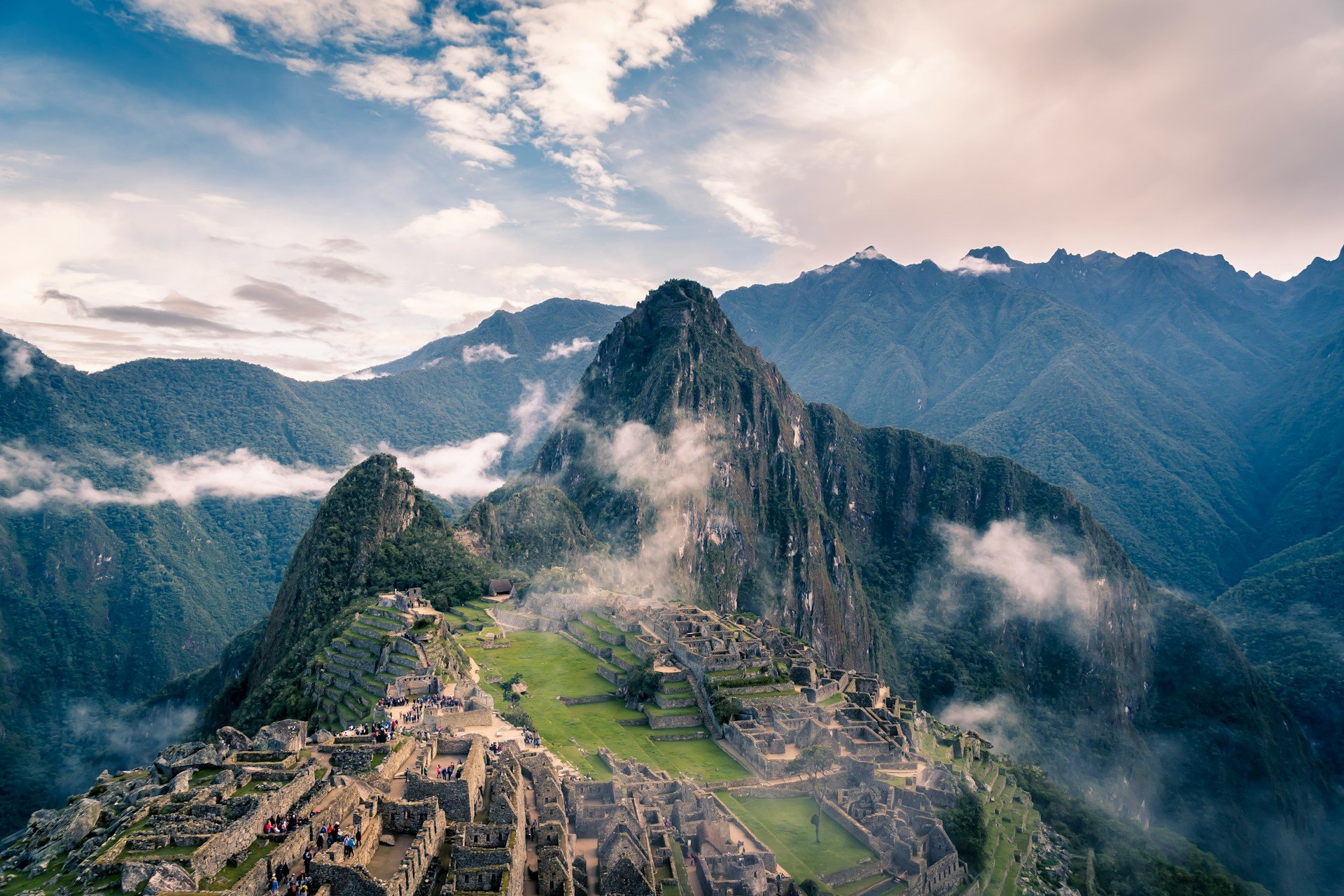
Peru is the country that gave the world the potato, the tomato and Machu Picchu, and it still runs on a logic that predates the empire that built any of it. The Inca state that Francisco Pizarro's small band of conquistadors toppled in 1532 was itself only about a century old, the final flowering of civilizations stretching back four thousand years in these same valleys. What survived the conquest, in the terracing that still holds up Andean farms, in Quechua still spoken by millions, in textile patterns unchanged for centuries, is why Peru rewards more than a photo at the ruins.
It is also, unusually for a country this rich in ancient sites, one of the best places on earth to eat. Lima's restaurant scene, built by chefs like Gastón Acurio who took market ingredients most of the world had never heard of and treated them as a national cuisine worth taking seriously, has put Peru on best-restaurant lists for over a decade. You can spend a trip chasing ruins and altitude, or chasing ceviche and pisco, and either one justifies the flight.
The honest complications
Cusco sits at 3,400 meters and altitude sickness catches a meaningful share of visitors who skip acclimatization, more on that in the Safety chapter. Peru has cycled through unusual political turnover in the past decade, including multiple presidents removed by Congress, and demonstrations that block roads and rail lines do happen with little warning, occasionally affecting access to Machu Picchu for a day or two. Machu Picchu itself, between the entrance ticket, the train and the bus up from Aguas Calientes, is genuinely expensive relative to the rest of the country, and the Inca Trail's daily permit cap means peak-season slots sell out months ahead. None of this is a reason to skip Peru; it's a reason to book the trek and the train early and build a spare day into the itinerary.
A History Worth Knowing
The Inca Empire that most visitors come to see was the last in a long line of Andean civilizations, and it lasted less than a century before Spanish steel, horses and smallpox brought it down. What Pizarro's men found at Cajamarca in 1532, then took apart piece by piece over the following decades, was the largest pre-Columbian state in the Americas: a road network of roughly 40,000 kilometers, a system of knotted-cord accounting called quipu, and stonework at Sacsayhuamán and Machu Picchu still admired for precision that needed no mortar.
- c. 1438-1533
Inca imperial expansion. Under Pachacutec and his successors, the empire grows from the Cusco valley to stretch from modern Ecuador to Chile.
- 1532-1533
The conquest begins. Francisco Pizarro captures Emperor Atahualpa at Cajamarca, exploiting a recent Inca civil war; Cusco falls the following year.
- 1535-1572
Colonial Peru established. Pizarro founds Lima in 1535 as the new capital; Inca resistance from Vilcabamba is finally crushed in 1572.
- 1780-1781
Túpac Amaru II's uprising. A major indigenous rebellion against Spanish colonial rule, brutally suppressed but a precursor to independence movements.
- 1821-1824
Independence. José de San Martín declares independence in Lima in 1821; Simón Bolívar's forces secure it decisively at the Battle of Ayacucho in 1824.
- 1980-2000
Internal armed conflict. The Shining Path insurgency and the state's response kill tens of thousands before the group's collapse after leader Abimael Guzmán's 1992 capture.
Read the full history: before the Inca, the conquest, and the road to today
The Inca were latecomers by Andean standards. The Chavín culture built ceremonial centers in the northern highlands from around 900 BCE, the Nazca etched their vast desert lines between roughly 500 BCE and 500 CE, and the Moche and later Chimú built sophisticated coastal states, the Chimú capital of Chan Chan near modern Trujillo the largest adobe city in the Americas, before the Inca absorbed or conquered them all in the 15th century.
The conquest itself turned on a civil war: Atahualpa had just defeated his brother Huáscar for the throne when Pizarro's roughly 168 men arrived at Cajamarca in 1532, ambushed the emperor's unarmed retinue, and held him for a ransom room reportedly filled once with gold and twice with silver, before executing him anyway. Manco Inca, installed as a puppet ruler, later led a major rebellion in 1536 that nearly retook Cusco; when it failed, the remnant Inca state retreated to Vilcabamba in the jungle, holding out until 1572.
The Viceroyalty of Peru, centered on Lima, became Spain's wealthiest American possession, built substantially on silver mined at Potosí, in modern Bolivia, using a forced indigenous labor system, the mita, that killed enormous numbers of workers over two and a half centuries. Independence in the 1820s did not end inequality between the coastal, largely European-descended elite and the Andean indigenous majority, a tension that resurfaced violently in the 1980s and 1990s when the Maoist Shining Path insurgency and the military's counter-response killed an estimated 69,000 people according to Peru's Truth and Reconciliation Commission, concentrated overwhelmingly in poor, rural, Quechua-speaking communities far from the coast.
Machu Picchu's rediscovery. The citadel was never truly "lost," local farming families knew of it, but American historian Hiram Bingham brought it to international attention in 1911 while searching for the last Inca refuge of Vilcabamba, and Yale's removal of thousands of artifacts became a decades-long diplomatic dispute that ended with their return to Peru between 2011 and 2012.
Top Destinations
Peru is roughly the size of France, Spain and Portugal combined, split into three utterly different worlds: the arid Pacific coast, the Andean highlands, and the Amazon basin covering nearly two-thirds of the country. Most first trips combine Lima with the Cusco-Sacred Valley-Machu Picchu circuit; longer trips add the deep south or the jungle.
Cusco, the Sacred Valley & Machu Picchu
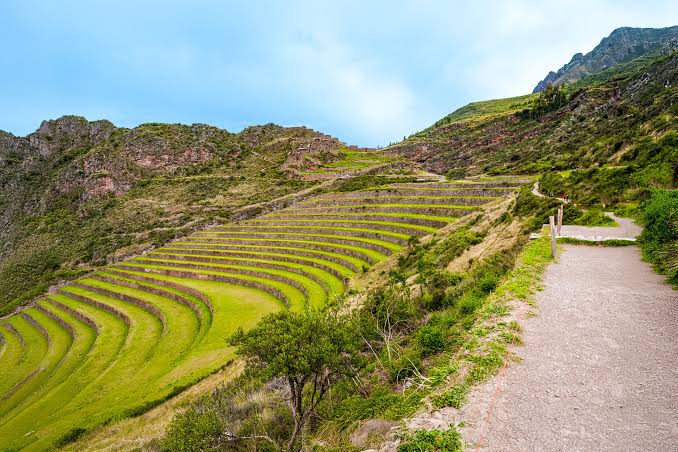
The historic Inca capital and the reason most people book the flight. Cusco's colonial core sits directly on Inca foundations, the massive polygonal stonework at the base of the cathedral and along Calle Hatun Rumiyoc among the best examples of construction the empire is remembered for. From Cusco, the Sacred Valley towns of Pisac and Ollantaytambo hold their own major ruins and markets, and Machu Picchu itself, reached by train and bus rather than by road, remains the single most-photographed site in South America for good reason. We cover Cusco, the valley and the trek options in full in our dedicated Cusco city guide.
Lima, the food capital
Peru's sprawling capital sits on a coastal desert bluff, permanently softened by a grey marine fog called garúa for much of the year, and most travelers see it only as a one or two-night bookend to the Andes. That undersells it: the clifftop districts of Miraflores and Barranco hold some of the best restaurants in Latin America, from ceviche counters to tasting-menu destinations that regularly rank among the World's 50 Best. The Larco Museum's pre-Columbian gold and erotic pottery collections, the colonial center around the Plaza Mayor, and the paragliders launching off the Miraflores boardwalk at sunset are worth the extra day.
Arequipa, the White City, & Colca Canyon
Arequipa's colonial center is built almost entirely from sillar, a pale volcanic stone that gives the city its nickname and glows at sunset under the watch of El Misti volcano. The Santa Catalina Monastery, a walled colonial city within the city, is the standout sight. Most visitors continue two to three hours north to Colca Canyon, twice the depth of the Grand Canyon at its deepest point, where the Cruz del Cóndor viewpoint offers a genuine chance to watch Andean condors ride the morning thermals at close range.
Lake Titicaca & Puno
The world's highest navigable lake straddles the border with Bolivia at nearly 3,812 meters, higher than Cusco and worth a day of acclimatization before arriving if you haven't already spent time in the highlands. From the lakeside town of Puno, boats reach the Uros Islands, artificial islands built and continually rebuilt from totora reeds by a community descended from a pre-Inca culture, and Taquile Island, known for hand-woven textiles recognized by UNESCO. It pairs naturally with a crossing into Bolivia for travelers continuing to La Paz or the Salar de Uyuni.
The Peruvian Amazon
Nearly 60 percent of Peru is Amazon rainforest, reached most easily from Cusco via a short flight or long drive to Puerto Maldonado, gateway to the Tambopata National Reserve and Manu National Park, two of the most biodiverse protected areas on the planet. Further north, Iquitos, the largest city in the world unreachable by road, is the jumping-off point for multi-day riverboat trips into the northern Amazon. Lodges typically run two to five-night packages with guided night walks, canopy towers and wildlife-spotting boat trips; June to September is drier and generally easier for wildlife viewing.
Hidden gems beyond the main circuit
The zones above cover a first or second trip well. With extra days or a repeat visit, these reward the detour and see a fraction of Machu Picchu's crowds.
Nazca Lines
Enormous geoglyphs etched into the desert between roughly 500 BCE and 500 CE, best seen from a small overflight plane from Nazca or Ica; their purpose is still debated by archaeologists.
Huacachina
A genuine desert oasis village wrapped around a palm-fringed lagoon, surrounded by towering sand dunes for sandboarding and dune-buggy rides at sunset.
Kuélap
A walled pre-Inca fortress city built by the Chachapoyas culture, perched above a cloud forest valley near Chachapoyas: comparable in scale to Machu Picchu, visited by a fraction of the people.
Paracas & the Ballestas Islands
A boat trip past the Ballestas Islands turns up sea lions, Humboldt penguins and enormous seabird colonies, often paired with a stop at the Paracas Candelabra geoglyph on the way south to Nazca.
Chan Chan
The largest adobe city ever built in the Americas, capital of the pre-Inca Chimú kingdom, its walls still carved with wave and sea-creature motifs after a thousand years of coastal erosion.
Gocta Waterfall
One of the tallest waterfalls in the world by some measurements, only documented internationally in 2005, reached by a half-day hike through cloud forest near Chachapoyas.
Culture & Etiquette
Peru's population is a genuine three-way blend, roughly a quarter indigenous, a majority mestizo, and significant Afro-Peruvian and Asian-Peruvian communities whose influence shows up everywhere in the food. Quechua and Aymara are official languages alongside Spanish, spoken daily by millions in the highlands, and reverence for Pachamama, mother earth, persists alongside Catholicism in a genuinely blended rather than merely surface-level way.
Do
- Greet before you ask anything. A "buenos días" before a question, even to a shopkeeper or market stall, is expected and its absence reads as brusque.
- Accept coca tea if offered. Mate de coca is the standard, legal, non-narcotic response to altitude discomfort and is offered as ordinary hospitality in hotels and homes across the highlands.
- Ask before photographing people, especially in traditional dress in markets and villages; some individuals expect a small tip for photos and it's a reasonable exchange.
- Learn a few words of Quechua beyond Spanish if you're spending real time in the highlands: "añay" (thank you) goes further than you'd expect.
- Carry small bills. Soles in denominations above 20 or 50 are hard for street vendors and taxi drivers to break.
Don't
- Rush your first day at altitude. Treating Cusco like a normal city on arrival is the single most common mistake visitors make.
- Assume all "Inca" sites are Inca. Many of the most impressive ruins, Chan Chan, Kuélap, the Nazca Lines, predate the Inca by centuries; conflating all pre-Columbian Peru into "Inca" understates the country's depth.
- Bargain aggressively at artisan markets. Modest negotiation is normal, but many textiles and crafts represent real skilled labor; treat the asking price as a starting point, not an insult.
- Drink tap water anywhere in the country without filtering or boiling it first; bottled or filtered water is standard practice even for Peruvians in most cities.
- Assume Spanish alone will do in remote highland villages, where Quechua may be the first or only language for older residents.
Deeper culture: Pachamama, the coca leaf, and Peru's culinary renaissance
Pachamama and syncretic belief. Offerings of coca leaves, chicha (corn beer) or small trinkets to Pachamama, especially before a long journey or at the start of planting season, remain common practice alongside Catholic observance, particularly in the highlands. It is not performed for tourists; it is a living practice.
The coca leaf. Distinct from cocaine in its raw form, coca has been chewed and brewed as tea in the Andes for thousands of years to combat altitude, hunger and fatigue. It is legal and openly sold in Peru; travelers should be aware, though, that coca tea and leaves cannot legally be brought home to most other countries.
The culinary renaissance. Peru's rise as a global food destination over the past two decades, led by chefs like Gastón Acurio and Virgilio Martínez, reframed ingredients that were once considered peasant food, native potato varieties, quinoa, Amazonian fruits, as the foundation of fine dining. Several Lima restaurants now regularly appear on the World's 50 Best Restaurants list, an extraordinary trajectory for a cuisine largely unknown internationally before the 2000s.
Food & Drink
Peruvian food draws on four distinct larders, the Pacific coast, the Andean highlands, the Amazon, and layered waves of Chinese and Japanese immigration, and the result is regularly ranked among the best national cuisines in the world. Coastal Lima is the place for seafood; the highlands around Cusco specialize in hearty, high-altitude cooking built around potatoes, corn and meat.
Ceviche $8-15
Peru's national dish: raw white fish cured in lime juice with red onion, chili and cilantro, traditionally eaten before 3pm when the fish is freshest. Best on the coast, especially Lima; less common in landlocked Cusco.
Lomo Saltado $6-12
A wok stir-fry of beef, onion, tomato and soy sauce, served over fries and rice, born from 19th-century Chinese immigration and now found on nearly every menu in the country.
Pisco Sour $5-9
The national cocktail: pisco grape brandy shaken with lime juice, egg white, syrup and bitters into a frothy, sharp drink. Order it at a proper bar rather than a tourist-menu restaurant for the real version.
Causa $4-8
Cold mashed yellow potato, seasoned with lime and chili, layered with chicken, tuna or avocado. A staple starter across the coast.
Cuy (Guinea Pig) $12-20
Roasted or fried whole, a genuinely Andean dish rather than a novelty for tourists, most commonly eaten around Cusco and the highlands.
Aji de Gallina $6-10
Shredded chicken in a creamy, mildly spicy yellow chili sauce over rice, one of the most common home-cooking dishes in the country.
When to Go & Itineraries
Peru's three geographic zones run on three different calendars. The Andean highlands, including Cusco, the Sacred Valley and Machu Picchu, have a clear dry season from May to September, the best window for trekking and generally the most popular time to visit. The coast, including Lima, runs opposite: grey and cool with the garúa fog from May to November, warm and sunny from December to April. The Amazon is a rainforest year-round, but June to September is comparatively drier and better for wildlife spotting.
All regions and seasons compared, with temperatures
| Region | Best months | Temps | Notes |
|---|---|---|---|
| Cusco & Sacred Valley | May-Sep (dry) | 18-20°C day, near 0°C night | Jun-Aug busiest and coldest nights; Apr & Oct-Nov good shoulder |
| Lima & coast | Dec-Apr (sunny) | 22-28°C | May-Nov: grey garúa fog, rarely rains, 16-20°C |
| Lake Titicaca/Puno | May-Sep | 10-16°C day, well below 0°C night | Higher and colder than Cusco |
| Amazon | Jun-Sep (drier) | 25-32°C, high humidity | Rain possible year-round regardless of season |
Peru sits entirely in the Southern Hemisphere tropics and subtropics, but altitude, not latitude, drives temperature: Cusco and Puno are cold specifically because of elevation, not time of year.
Itineraries
Ten days covers the classic Lima-Cusco-Machu Picchu route without rushing. Two weeks adds the deep south; three weeks fits the Amazon as well.
- Days 1-2
Lima. Arrive, one full day for Miraflores, Barranco and a ceviche lunch, fly to Cusco the next morning.
- Days 3-4
Cusco & acclimatization. A gentle first day, then the city sights and a Sacred Valley day trip to Pisac and Ollantaytambo.
- Days 5-6
Machu Picchu. Train from Ollantaytambo, overnight in Aguas Calientes or an early train up, a full day at the citadel.
- Day 7
Return to Cusco or Lima for departure.
- Days 1-2
Lima. Full food-focused stay, Miraflores, Barranco, the Larco Museum.
- Days 3-7
Cusco, Sacred Valley & Machu Picchu. As the 7-day plan, with an extra day for the Rainbow Mountain or Humantay Lake day trip.
- Days 8-10
Lake Titicaca. Bus or flight to Puno, a full day on the lake visiting Uros and Taquile.
- Days 11-14
Arequipa & Colca Canyon. Bus from Puno, a night in Arequipa, two days including Cruz del Cóndor at sunrise, fly home from Arequipa or back via Lima.
- Days 1-3
Lima extended. Add a Paracas/Ballestas Islands and Nazca Lines side trip on the way south.
- Days 4-10
Arequipa, Colca & Titicaca. The southern loop at a relaxed pace.
- Days 11-16
Cusco, Sacred Valley & Machu Picchu. Add the Salkantay or Inca Trail trek instead of the train if booked far enough ahead.
- Days 17-21
The Amazon. Fly from Cusco to Puerto Maldonado for a 3-4 night jungle lodge stay before returning home via Lima.
Getting there & around
Jorge Chávez International Airport (LIM) in Lima is the main international gateway, with direct flights from major US, European and South American hubs. Nearly all domestic connections, including to Cusco (CUZ), Arequipa and Puerto Maldonado, route through Lima on LATAM, Sky Airline or JetSmart, with the Lima-Cusco hop taking about 90 minutes. Long-distance buses, notably Cruz del Sur, connect major cities overnight and are comfortable and reliable by regional standards, but distances are large: Lima to Cusco by road takes over 20 hours.
Trains, altitude routing, and practical prep
| Option | Price | Notes |
|---|---|---|
| Domestic flight Lima-Cusco | $70-180 | ~90 min; book weeks ahead in Jun-Aug for better fares |
| PeruRail / IncaRail to Machu Picchu | from ~$140 round trip | From Ollantaytambo or Poroy; book as early as possible in peak season |
| Cruz del Sur overnight bus | $25-60 | Main intercity routes; reclining "cama" seats on longer routes |
| Local taxis/Uber | $2-8 | Uber operates in Lima, Cusco and Arequipa; safer than hailing on the street |
Altitude routing matters: flying straight into Cusco (3,400m) from sea level hits harder than arriving via a night or two in the lower Sacred Valley (about 2,800m) first. If your itinerary allows it, consider landing in Cusco but sleeping your first night or two in Ollantaytambo or Urubamba before going higher.
Practical prep: buy a Peruvian SIM (Claro, Movistar or Entel, 5-10 soles for basic data) at the Lima or Cusco airport, or an eSIM before landing. Travel insurance should cover high-altitude trekking specifically if you're doing the Inca Trail or Salkantay. Tap water is not safe to drink anywhere in the country; bottled or filtered water is standard.
Where to stay
Hostels
Cusco and Lima both have well-developed hostel scenes with social atmospheres, included breakfasts and organized day trips; see our Cusco city guide for specific picks.
Mid-range hotels
Converted colonial houses in Cusco, Arequipa and Lima's Miraflores and Barranco districts offer character and central locations well above chain-hotel standard for the price.
Sacred Valley luxury lodges
High-end properties around Urubamba and Yucay combine altitude-friendly lower elevation with spa facilities and direct Machu Picchu train access, popular for splitting a multi-night Cusco stay.
Amazon lodges
Packages near Puerto Maldonado or along the Iquitos river routes bundle accommodation with guided excursions; prices depend heavily on remoteness and season.
Budget Planning
Peru is inexpensive for day-to-day costs, food, local transport and hostels are all cheap by international standards, but Machu Picchu access is a genuine fixed cost that pushes the overall trip budget higher than neighboring Bolivia or Ecuador. Plan for it as a separate line item rather than folding it into a daily average.
- Hostel dorm $10-20
- Menu del día lunches $3-6
- Local buses and colectivos
- Salkantay trek over the Inca Trail
- Boutique hotel or private hostel room
- Restaurant dinners $10-25/person
- Domestic flights over long buses
- Guided day trips and museum entries
- Sacred Valley luxury lodges
- Private guides throughout
- Fine dining in Lima
- Premium Machu Picchu train service
Quick reference prices: meals, transport, entry fees
| Menu del día lunch | 10-20 soles ($3-6) |
| Coffee | 5-10 soles (~$1.50-3) |
| Restaurant dinner (mid) | $8-20 |
| Pisco sour at a bar | $5-9 |
| Domestic flight Lima-Cusco | $70-180 |
| Machu Picchu entrance ticket | 152-200 soles (~$40-55) |
| Train Ollantaytambo-Aguas Calientes | from ~$140 round trip |
| Rainbow Mountain day tour | $50-80 |
Prices reflect September 2026 research and drift over time, especially train fares and peak-season tour pricing. Treat them as a planning baseline, not a quote.
Visa & Entry
Peru has a straightforward visa regime for most Western passports: citizens of the US, EU, UK, Canada, Australia and New Zealand don't need a visa for tourism. Immigration officers have discretion to grant up to 183 days within a 365-day period, but in practice they typically stamp 90 days by default, so ask explicitly for more time on arrival if your trip needs it. Extensions cannot be arranged from inside Peru, only at the point of entry.
✓ Valid passport
At least six months' validity from your date of arrival is the standard requirement.
✓ TAM Virtual
Arriving via Lima's Jorge Chávez Airport issues your entry record electronically; there's no paper card or passport stamp, verifiable through Peru's Migraciones portal.
✓ Return/onward ticket
May be requested at immigration, particularly for air arrivals.
✓ Ask for full time needed
Request up to 183 days explicitly if your trip requires it; the default stamp is 90 and can't be extended domestically.
| Peru | Bolivia | |
|---|---|---|
| Daily budget | $45-70, pushed up by Machu Picchu costs | Noticeably cheaper across the board |
| Signature sight | Machu Picchu, built infrastructure, higher cost | Salar de Uyuni, wilder and less developed |
| Altitude | Cusco at 3,400m, Titicaca higher | La Paz at 3,640m, Uyuni comparable |
| Food scene | World-class, especially Lima | Simpler, still good regional specialties |
| Tourist infrastructure | Extensive, well-organized | Rougher edges, more independent travel |
Safety, Solo Women & Family
Peru carries a US State Department Level 2, Exercise Increased Caution rating, the same tier as France, Italy or the UK. The one area under a firm Do Not Travel warning is the VRAEM region, the Apurímac, Ene and Mantaro river valleys, which sits well away from the standard tourist circuit; Cusco, the Sacred Valley, the Inca Trail and Machu Picchu are explicitly excluded from that warning. The realistic risks for visitors are petty theft and, occasionally, roadblocks from political demonstrations, not violent crime targeting tourists.
Petty theft
Bag-slashing and pickpocketing occur in crowded markets, bus terminals and tourist zones. Use a money belt for documents, keep bags in front of you on crowded transport, and don't display phones or jewelry openly.
Protests & roadblocks
Demonstrations over political and economic issues occur regularly and can shut down roads, rail lines and, occasionally, access to Machu Picchu for a day. Build a spare day into any itinerary involving trains or long-distance buses.
Altitude sickness
Not a crime risk but a genuine health one: Cusco's 3,400m elevation affects a meaningful share of visitors. Rest on arrival, hydrate, and see our Cusco guide for full acclimatization advice.
Two more things worth knowing: express kidnapping and weather disruption
"Express kidnapping" is rare but documented: a victim is briefly held and forced to withdraw money from an ATM. It is not a routine tourist risk, but avoiding unlicensed taxis hailed on the street, especially late at night or alone, is the standard precaution that prevents nearly all reported cases.
El Niño weather disruption is forecast to affect Peru into 2027, with heavy rainfall, flooding and landslides possible, particularly on the north coast and in the Andes during the wet season. This can cause road closures and transport delays; check conditions close to any trip involving overland travel between November and April.
The 3 scams to actually know about
Peru's tourist circuit is well organized, and outright scams are less common than in some destinations, but three patterns catch uninformed visitors repeatedly.
Fake or unlicensed tour agencies
Storefront agencies in Cusco selling Inca Trail permits or Rainbow Mountain tours at implausibly low prices sometimes fail to deliver, especially for treks requiring official permits. Book trekking permits and multi-day tours through established operators with verifiable reviews and a physical, licensed office.
Unlicensed taxi overcharging
Unofficial drivers approach arrivals at Lima and Cusco airports before the official rank and quote inflated fares. Use the airport's official taxi desk, a pre-booked transfer, or Uber, which operates in both cities.
Counterfeit or short-changed currency
Torn, worn or counterfeit soles occasionally get passed to tourists in change. Check bills you receive, especially higher denominations, and get familiar with genuine sol security features before you arrive.
Solo women travelers
Peru's main tourist circuit, Lima, Cusco, the Sacred Valley and Machu Picchu, sees large numbers of solo female travelers every year without serious incident, helped by an established hostel and tour infrastructure used to independent travelers. The standard precautions apply: use Uber or licensed taxis rather than hailing cabs on the street, particularly at night, keep your phone and bag secured on crowded buses and in markets, and dress in layers appropriate to the conservative highland towns outside the main tourist areas. Full detail on our Solo Woman Explorer pages.
Emergency numbers
Tourist police, iPerú offices, and altitude emergencies
The Tourism Police (POLTUR) maintains dedicated units in Lima and Cusco specifically to assist foreign visitors with theft reports and lost documents; officers are more likely to speak English than general police. iPerú, the official government tourist information service, operates offices at both major airports and in city centers, and can direct you to the right office for anything from a stolen passport to a medical referral.
Altitude emergencies: most hotels in Cusco and Puno keep supplemental oxygen on hand for guests with severe symptoms. If soroche symptoms are severe or persistent, headache that doesn't respond to rest and fluids, confusion, or shortness of breath at rest, seek medical attention rather than pushing through; Cusco has clinics experienced specifically in treating altitude sickness.
Family travel & pets
Peru works well for families with kids old enough to manage altitude and long travel days; the Amazon lodges and Sacred Valley's gentler ruins tend to land better with children than a full Inca Trail trek. Altitude affects children the same way it affects adults, so build in the same acclimatization time. Guinea pigs as pets versus cuy as a menu item is a conversation worth having with kids before the Cusco food chapter comes up at dinner.
Traveling with pets, and altitude in children
Pets: Peru requires an official health certificate and proof of rabies vaccination issued shortly before travel for dogs and cats; requirements are stricter than short-haul European travel and are rarely relevant for a standard tourist trip, most visitors do not bring pets to Peru.
Children and altitude: there's no reliable way to predict which children will struggle at altitude any more than adults. Plan the same rest day in Cusco before any activity, keep kids hydrated, and have a pediatric-safe fever reducer on hand as headache and mild fever are common early symptoms.
Peru FAQ
Is Peru safe to visit?
Yes, for the places nearly all visitors go. The US State Department rates Peru Level 2, Exercise Increased Caution, the same tier as France or the UK, and explicitly excludes Cusco, the Sacred Valley, the Inca Trail and Machu Picchu from its one real hotspot warning, the VRAEM region. Petty theft and occasional protests that block roads are the realistic risks, not violent crime against tourists.
Do I need a visa for Peru?
Citizens of the US, EU, UK, Canada, Australia and New Zealand don't need a visa for tourism. Immigration typically stamps 90 days on arrival even though the legal maximum is 183 days in a 365-day period, so ask for more time at the border if you need it: it cannot be extended once you're inside the country.
How many days do you need in Peru?
Ten days covers Lima, Cusco, the Sacred Valley and Machu Picchu comfortably. Two weeks adds Lake Titicaca or Arequipa and Colca Canyon. Three weeks fits the full southern circuit plus a few days in the Amazon.
What is the best time to visit Peru?
May to September is the dry season in the Andes and the best window for Cusco, the Sacred Valley, Machu Picchu and any trek. Shoulder months of April and October to November give good weather with fewer crowds and lower prices. The Amazon is drier from June to September; the coast around Lima is grey and cool from May to November regardless of the Andean season.
How much does Peru cost per day?
Budget travelers manage on $45-70 a day using hostels and menu-del-dia lunches, mid-range runs $90-160, and comfortable travel with private guides and better hotels starts around $200. Machu Picchu itself, between the entrance ticket and the train, is the single biggest line item in most Peru budgets.
Do I need to worry about altitude sickness in Peru?
If you're going to Cusco, yes, it sits at 3,400 meters. Spend your first day resting, drink coca tea, avoid alcohol and strenuous activity for 24 to 48 hours, and consider a night in the lower Sacred Valley first. Most people adjust within two to three days; a small minority need supplemental oxygen or a Diamox prescription.
How far in advance should I book Machu Picchu?
The Classic Inca Trail sells its 200 daily permits four to six months ahead for June-August departures. Machu Picchu entrance tickets and trains can often be arranged a few weeks out in shoulder season, but book the Inca Trail specifically as early as you can, or plan on the unrestricted Salkantay trek instead.
Is Peru good for solo female travelers?
Generally yes, especially on the well-trodden Lima-Cusco-Machu Picchu circuit, where large numbers of solo women travel every year without incident. Use licensed taxis or Uber rather than hailing cabs on the street, keep valuables out of sight, and take the usual precautions you would in any major tourist destination at night.
What language do people speak in Peru?
Spanish is the main language everywhere tourists go. Quechua and Aymara are also official languages and widely spoken in the Andean highlands, including around Cusco. English is common in hotels, tour agencies and restaurants in Cusco, Lima and Arequipa, less so elsewhere.
Is Peru cheaper than Bolivia?
No, Bolivia is generally cheaper, especially for accommodation and local transport. Peru's tourist infrastructure and specific costs like Machu Picchu tickets, trains and Inca Trail permits push its per-day average higher, though everyday meals and local buses are still inexpensive by international standards.
What should I pack for Peru?
Layers. Cusco and the Andes swing from strong midday sun to near-freezing nights year round, the Amazon is hot and humid, and Lima is mild and grey. Sunscreen and a hat matter more at altitude than people expect, and broken-in walking shoes are essential for Inca ruins and the Sacred Valley's cobblestones.
What Stays With You
Everyone who visits Peru remembers the first sight of Machu Picchu through the morning cloud, and it deserves the memory. But what actually stays with most travelers longer is smaller: the taste of a ceviche eaten standing up at a Lima counter, the particular blue of Titicaca at nearly 4,000 meters, a Quechua greeting from a woman selling potatoes she grew herself in a valley her family has farmed for longer than anyone can date.
Peru does not ask you to imagine its past the way some ruins do. The terraces are still farmed. The textiles are still woven the old way because it's still the best way. Go acclimatized, go hungry, and build in the spare day.