
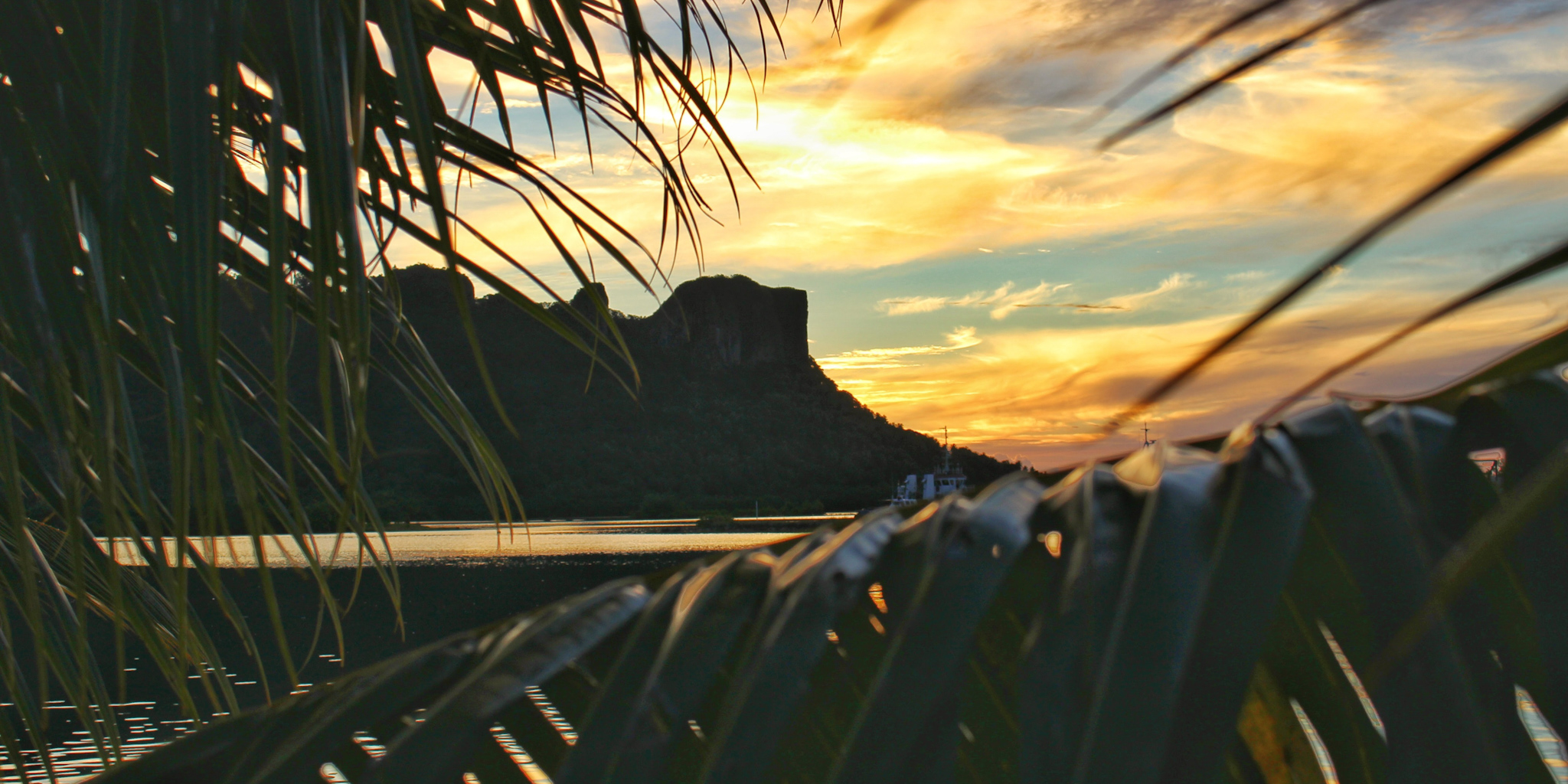
Pohnpei's only real town, and almost everyone's way in
Kolonia sits on Pohnpei's north coast beneath the basalt profile of Sokehs Rock, a small grid of streets that holds most of the island's hotels, restaurants and shops in a few walkable blocks. It has been the seat of four different colonial administrations, and each one left something behind: a 19th-century Spanish fortress wall, a lone German mission bell tower, and Japanese gun batteries still sitting in the jungle above town. None of it is curated into a museum district. It's just there, woven into a working Pacific town that mostly exists for the people who live in it.
What Kolonia is not is a resort town. The people you'll share a hotel breakfast with are far more likely to be NGO staff, dive operators or government contractors than fellow tourists, and the pace of service, of everything, runs on what locals call island time. Lean into it. The reward is Nan Madol forty minutes down the Circle Island Road, sakau bars that have served the same drink the same way for generations, and an evening at Sokehs Rock's summit with the whole reef laid out below and almost nobody else up there.
The honest complications
Kolonia is one of the wettest towns on earth, and the rain doesn't pause for your itinerary; pack accordingly and build slack into every plan. There's no ride-hailing app and no taxi rank waiting at the airport, so a hotel pickup arranged in advance is close to mandatory. Tap water isn't safe to drink, the internet is satellite-based and slow, and the United Airlines Island Hopper that got you here runs only a few times a week and cancels or delays often enough that Pohnpei residents barely react to it anymore. None of this makes Kolonia a hard place to visit, but it does make it a place that rewards a traveler who plans for friction rather than one expecting a polished Pacific city break.
A town small enough to walk, laid out along two streets
Kolonia has no formal neighbourhoods in the way a bigger city does, but it breaks naturally into a few zones that decide how far you'll walk for dinner.
Central Kolonia
The town's commercial spine, where Kaselehlie Street and Ohmine Street hold the bulk of Kolonia's diners, bakeries and shops, plus the Kolonia waterfront fish market. Staying here puts hotels like Island Palms Hotel and Joy Hotel a short walk from Ellen's Market, Ace Hardware and most of the restaurants in this guide.
Mangrove Bay causeway
A man-made spit at the head of the bay between Sokehs Island and Kolonia, home to Mangrove Bay Hotel, the Pohnpei Surf and Dive Club, and views across to Sokehs Rock. Slightly removed from the town center but the best base for divers and surfers, and for anyone who wants a lagoon view with breakfast.
Upper Kolonia & Nett
Heading north toward Pohnpei International Airport, the road passes the Bank of Guam branch and thins out into a quieter, more residential stretch, home to hotels like Cliff Rainbow Hotel and Seabreeze Hotel, the latter the first hotel you pass coming from the airport.
A handful of real hotels, no chains, no resorts
Kolonia's hotel scene is small, local-owned, and short on polish but long on character; expect geckos on the walls, occasional power blips, and the sound of roosters as part of the deal rather than a flaw. These are the properties worth knowing.
On the water, Mangrove Bay Hotel, on the causeway that hosts the Pohnpei Surf and Dive Club, is the island's top pick: comfortable, beautifully furnished rooms looking over the Yacht Harbor toward Sokehs Rock, free Wi-Fi, an open-air bar and restaurant on site, from about $120 a night. A step down in price and up in classic character, 7 Stars Inn, opposite the Pohnpei Botanical Garden, has been carefully renovated with single, double and deluxe rooms, its own Riverside Restaurant for breakfast, and Lefty's Bar, a sports bar downstairs, popular with visiting military and construction crews.
For a hillside view over Kolonia Harbor and Mangrove Bay, Ocean View Plaza Hotel is a solid mid-range pick; ask for an ocean-side rather than mountain-side room to catch Pohnpei's sunsets, and its Orchid Restaurant does an open-air dinner worth the trip even if you're staying elsewhere. Cliff Rainbow Hotel in upper Kolonia, ten minutes from the airport, is Pohnpei's long-standing budget-to-mid option, popular with Peace Corps volunteers on R&R, with its own car rental desk and a restaurant known locally for pizza, steak and mangrove crab, from around $42 a night for a standard room.
At the budget end, Joy Hotel on Ohmine Street is one of the island's oldest, central and simple, with its Joy Restaurant downstairs serving the popular Joy Lunch bento of fried fish, sashimi, soup, rice and salad; repeat guests get a discount and staff speak English, Pohnpeian and Japanese. Island Palms Hotel, right in the town center across from Kolonia Elementary School, puts you a one-to-five-minute walk from Ellen's Market and the town's food trucks. Yvonne's Hotel, popular with business travelers, is spotless if unglamorous, with its own cafe-style restaurant, Kia's. And Seabreeze Hotel, the first hotel you pass coming from the airport, runs a Wednesday lunch buffet at its on-site Red Snapper restaurant and can arrange snorkeling, diving and Nan Madol excursions through Paradise Tour Service.
Sakau, mangrove crab and a lot of Japanese-Pohnpeian fusion
Kolonia's food scene is small but genuinely varied for a town this size, shaped by decades of Japanese administration, a resident Filipino and Chinese community, and whatever the reef delivers that morning. Nobody is cooking for Instagram here; the good places are good because locals keep going back.
Sakau (kava)
Pohnpei's ceremonial drink, pounded by hand from pepper-plant root and strained through hibiscus bark, served nightly from makeshift roadside bars across Kolonia. It's mildly numbing rather than intoxicating, and sharing a cup after dark is one of the most unfiltered slices of Pohnpeian life a visitor can walk into; ask your hotel which nakamal is welcoming to outsiders that night.
Mangrove crab & reef fish
Cliff Rainbow's restaurant is best known locally for its mangrove crab, pizza and steak, while Mangrove Bay Sushi Bar, next to the hotel of the same name, serves genuinely fresh sushi and seafood over harbor views. China Star, on Dekehtik Island near the airport, folds mangrove crab and reef fish into big, family-style Chinese-island fusion plates.
Japanese-Pohnpeian set meals
Joy Restaurant, downstairs from Joy Hotel, is the reference point: udon, the best sashimi in town by local reputation, sushi, katsu and teriyaki chicken, with the bento-style Joy Lunch the dish to order. Town's Diner does its own well-regarded combo plate of fried chicken, breaded fish and sashimi, plus pies and a Snickers cheesecake, and runs an in-house cafe, Chill, for coffee and the island's only boba tea.
Casual & quick
Arnold's, next to Blue Nile in a small prefab building, has a menu with dishes found nowhere else on the island and attentive service. Tua's Takeout & Sushi on Seidonokawa Street does build-your-own combo plates and poke bowls with a strong local following. One World Plaza, on Kapwar E Sou Road, mixes sushi, teppanyaki and seafood with smoothies, lattes and free Wi-Fi.
Buffets & coffee
Red Snapper at Seabreeze Hotel runs a Wednesday buffet, and MyShore on the causeway does a Monday buffet alongside its regular fresh-seafood, skewer and cocktail menu with lagoon views. For coffee, Deja Brew next to 7 Stars Store is the local favorite and does custom cakes; Namiki Donuts on Kaselehlie Street sells out its plain donuts most mornings to a queue of regulars.
A basalt city, a jungle-covered gun battery, and a town full of colonial ghosts
Pohnpei's sights are spread out enough that a rental car or a hired driver does more for your trip than any amount of walking. This chapter moves roughly the way three unhurried days would.
Nan Madol & Kepirohi Waterfall
Nan Madol, a UNESCO World Heritage Site since 2016, is a prehistoric complex of close to 100 artificial islets built from stacked prismatic basalt columns, constructed by the Saudeleur dynasty roughly between 1200 and 1600 CE. It sits off Temwen Island, about 35km and 45 to 60 minutes from Kolonia along the Circle Island Road, the final stretch unpaved. The site crosses private land, so expect to pay cash access fees in stages, roughly $10 to $15 total between the trail landowners and the site itself, and to wade through shallow water at high tide to reach the main islet, Nan Douwas; wear shoes you don't mind getting wet. A few minutes further on, Kepirohi Waterfall, Pohnpei's most photographed, fans a wide sheet of water over a pyramid of basalt rock into a shallow pool; it's an easy five-minute walk from the road for a separate cash fee of around $10, and the water is not safe to swim in due to upstream runoff.
Kolonia town itself
The Spanish Wall, the remnant of 19th-century Fort Alphonso XII, sits quietly in a small park in the middle of town, European masonry that feels genuinely strange in a tropical Pacific setting. A short walk away, the solitary German Bell Tower is all that survived of a German Catholic mission destroyed in WWII. Nearby, Kapingamarangi Village is home to a community originally from the outer atoll of the same name, known island-wide for intricate wood carving; it's a good stop to see artisans working, not a formal museum. The Kolonia fish market on the waterfront rounds out a town walk with the most direct look at Pohnpei's reef-to-plate economy.
Sokehs Rock
The basalt cliff visible from almost anywhere in Kolonia and from the airport runway is a roughly hour-long climb to the summit, past Japanese WWII coastal gun emplacements still sitting in the jungle, identical to the battery on Temwen Island near Nan Madol. The payoff is a 360-degree view over the reef, the mangroves and the whole town, and Cupid's Bar & Grille at the base is a good spot for a drink with a last look at the rock before heading to the airport.
Diving, surfing and the water
Pohnpei's dive scene is small and mostly do-it-yourself by regional standards: Pohnpei Surf and Dive Club, based at Mangrove Bay, and Club Pareo, which caters mainly to Japanese visitors, are the two operators, with sites ranging from Manta Road's resident manta population on the north side to steep outer-reef walls at the barrier passes; visibility can exceed 30 meters on incoming tides. Surfers come for P-Pass (Palikir Pass), at its best from September to April with the most consistent barrels in January and February. For a gentler afternoon, MERIP (the Marine Environmental Research Institute of Pohnpei), based on the old PATS campus near Temwen, rents tandem ocean kayaks for about $10 a day for paddling the mangrove channels around Nan Madol.
One, three or five days, planned around the rain and the tide
Three full days covers Kolonia and Pohnpei's essentials properly; a single day, if that's all the Island Hopper's schedule allows, still delivers Nan Madol and a sakau bar. Build a spare half-day into any plan since Pohnpei's rain doesn't check anyone's itinerary.
- Morning
Nan Madol & Kepirohi. Hire a driver through your hotel; go early to beat the afternoon rain and the incoming tide at the ruins.
- Afternoon
Kolonia town. The Spanish Wall, the German Bell Tower, and the fish market on the waterfront.
- Evening
A sakau bar. Ask your hotel which nakamal to visit that night; dinner at Joy Restaurant or Cliff Rainbow.
- Day 1
The one-day route above: Nan Madol, Kepirohi, town, sakau.
- Day 2
Sokehs Rock in the morning before the day heats up, Kapingamarangi Village woodcarvers, lunch at Town's Diner or One World Plaza, evening drink at Cupid's Bar & Grille.
- Day 3
Water day. A dive or snorkel trip with Pohnpei Surf and Dive Club, or, if you're not diving, a kayak paddle from MERIP through the mangrove channels near Temwen.
- Days 1-3
The three-day route above, at a gentler pace.
- Day 4
Ant Atoll. A boat day trip out to the white sand and lagoon the main island's mangrove coast doesn't have; arrange permission and transport through a Kolonia tour operator or the Pohnpei Surf and Dive Club.
- Day 5
Slack day. Given how often the Island Hopper runs late, keep this open, or use it for a second dive, more waterfalls, or simply another evening at a nakamal.
No ride-hailing, no taxi rank, and a hotel front desk that runs your logistics
Pohnpei International Airport (PNI) is served only by United Airlines' Island Hopper, a few flights a week on the Honolulu-Majuro-Kwajalein-Kosrae-Pohnpei and Guam-Chuuk-Pohnpei routes; there is no other scheduled carrier. There's no taxi queue waiting at arrivals and no Uber, Grab or Indrive anywhere on the island, so arrange a hotel pickup before you land; most hotels run a shuttle for free or a flat $10-20 fee.
Within Kolonia, taxis run a flat rate of about $2 per person to anywhere in town, cash only, caught at taxi stands or called ahead rather than hailed; a ride out to Palikir, the national capital, runs closer to $5. A rental car, around $65-75 a day and arranged through most hotel front desks, is the only practical way to reach Nan Madol, the waterfalls and Sokehs Rock's trailhead independently, and it's worth it even for a short stay given how spread out Pohnpei's sights are. Kolonia itself is small and walkable in the cooler morning hours, though the humidity makes anything beyond a few blocks a job better left to a $2 taxi.
Connectivity, water and best time to visit
Internet on Pohnpei is satellite-based and noticeably slower than most travelers are used to; enough for messaging and email, not for streaming. A local SIM from FSM Telecommunications Corporation covers calls and basic data, sold at a desk at the airport during business hours or at their main Kolonia office; an eSIM bought before you land is a sensible backup.
Tap water is not safe to drink anywhere on Pohnpei; stick to bottled water or the 5-gallon purified jugs most hotels provide. There is no true dry season since the island sits close to the equator, but December through April is relatively drier, with January-February bringing the most consistent surf at P-Pass; May through September brings heavier rain and the most dramatic waterfalls.
The flight is the expense, not the ground
Once you've paid for the Island Hopper, daily spending in Kolonia is genuinely moderate. The main cost traps are the cash-only entry fees at Nan Madol and Kepirohi, and the fact that ATMs are few enough that running out of cash is a real inconvenience, not a minor one.
- Budget hotel (Joy, Island Palms) $30-45
- Local diner meals $8-15
- Flat-rate taxis $2/ride
- Sakau bar evening $1-2/cup
- Waterfront hotel (Mangrove Bay, Ocean View Plaza) $80-120
- Rental car $65-75/day
- Nan Madol & Kepirohi entry fees
- A dive trip or Ant Atoll day out
- Best available hotel and a hired driver
- Multi-day dive package
- Private guided touring of the whole circuit
- Buffer for flight delays needing an extra hotel night
Low crime, real natural risks, and a genuinely slow rescue chain
Kolonia is a low-crime town within a country the US State Department rates Level 1, Exercise Normal Precautions. The practical risks for visitors are less about crime and more about the environment: the humidity and rain, leptospirosis risk in untreated water, dangerous currents at the barrier reef passes, and the reality that medical evacuation from Pohnpei is slow and expensive if something goes seriously wrong.
UK and Australian government advisories both note reported sexual assaults nationally and advise extra caution after dark or in isolated spots, a standard precaution worth taking anywhere with limited street lighting and infrastructure. Petty theft is uncommon but not unheard of around the market and busy public spaces; keep bags closed and cash split up rather than in one pocket. Hospital facilities in Kolonia are basic; anything beyond routine care typically means evacuation off-island, so comprehensive travel insurance with medical evacuation cover is essential, and dive accident cover specifically if you're diving, given how few decompression chambers exist in the FSM. Emergency number is 911.
The white sand Kolonia's own coast doesn't have
Pohnpei's main coastline is almost entirely mangrove, so the postcard lagoon look means getting on a boat. Two trips are worth the day each.
Ant Atoll
A private marine reserve about 16km offshore, reached by an hour-long boat ride that can be rough in open water. This is where Pohnpei's turquoise lagoon and white sand actually exist, a sharp contrast to Kolonia's mangrove coast. Access requires permission, typically arranged through the Nanpei family or booked as a package through a Kolonia tour operator or the Pohnpei Surf and Dive Club; bring your own food and water, since there's little to no infrastructure on the atoll itself.
Sokehs Island
Connected to Kolonia by a short causeway, Sokehs Island holds Kepindau and Pohn Pillap, two smaller waterfalls easily combined with a Sokehs Rock hike into a single half-day loop without needing a boat at all.
Kolonia FAQ
Is Kolonia safe for tourists?
Yes, overall. The FSM rates Level 1, Exercise Normal Precautions, from the US State Department, and Kolonia itself is low-crime. Stay aware at night, since UK and Australian advisories both note reported sexual assaults nationally, and keep valuables secured in crowded spots like the market.
How many days do I need in Kolonia and Pohnpei?
Three to four full days covers it well: one for the town itself and a sakau bar, one for Nan Madol and Kepirohi Waterfall, one for Sokehs Rock, and a spare day for a boat trip to Ant Atoll or in case the Island Hopper runs late.
How much does Kolonia cost per day?
Budget travelers manage on $70-100 a day with a simple hotel and local diners; mid-range, with a waterfront hotel and a rental car, runs $150-220. Flights to and from Pohnpei are the real expense, not costs on the ground.
When is the best time to visit Kolonia?
There's no true dry season; Pohnpei is one of the wettest places on earth. December to April is relatively drier, and January-February brings the most consistent surf at P-Pass. Expect frequent short, heavy showers whenever you go.
How do I get from Pohnpei International Airport to Kolonia?
Arrange a hotel pickup in advance; there is no taxi rank waiting at the airport and no ride-hailing app. Most Kolonia hotels offer a shuttle, sometimes free and sometimes a flat $10-20 fee, so confirm this when you book.
What is the best area to stay in Kolonia?
Central Kolonia around Kaselehlie Street and Ohmine Street for walkable access to restaurants and the market; the Mangrove Bay causeway area for waterfront views and the surf and dive club on site.
Do I need to speak Pohnpeian in Kolonia?
No. English is the official language and is spoken fluently across hotels, restaurants and government. A greeting like kaselehlie (hello) is appreciated but never required.
Is the tap water safe to drink in Kolonia?
No. Stick to bottled or purified water, including for brushing teeth, and don't swim in waterfall pools expecting them to be clean; tropical runoff carries a real leptospirosis risk.
How do I visit Nan Madol from Kolonia?
By rental car or hired driver along the Circle Island Road, about 35km and 45-60 minutes each way; the final stretch is unpaved. Expect to pay separate cash access fees to the site and to the private landowning families along the trail.
Are there ATMs and can I use a credit card in Kolonia?
A handful of ATMs exist at the Bank of Guam, Bank of FSM and FSM Telecom branches, and they're not fully reliable. Major cards work at larger hotels and stores; small restaurants, taxis and site entry fees are cash only.
What Stays With You
Kolonia doesn't dress itself up for visitors, mostly because there haven't been enough of them to make it worth trying. The Spanish wall sits in its park because nobody got around to moving it. The sakau bar serves the same drink the same way because that's simply what happens in Kolonia after dark, tourist or not. Nan Madol is a short, muddy drive away rather than a queue and a gift shop.
Climb Sokehs Rock on your last evening, watch the light go over the reef and the mangroves, and understand why the people who make it out here so rarely regret the flights it took to arrive.