
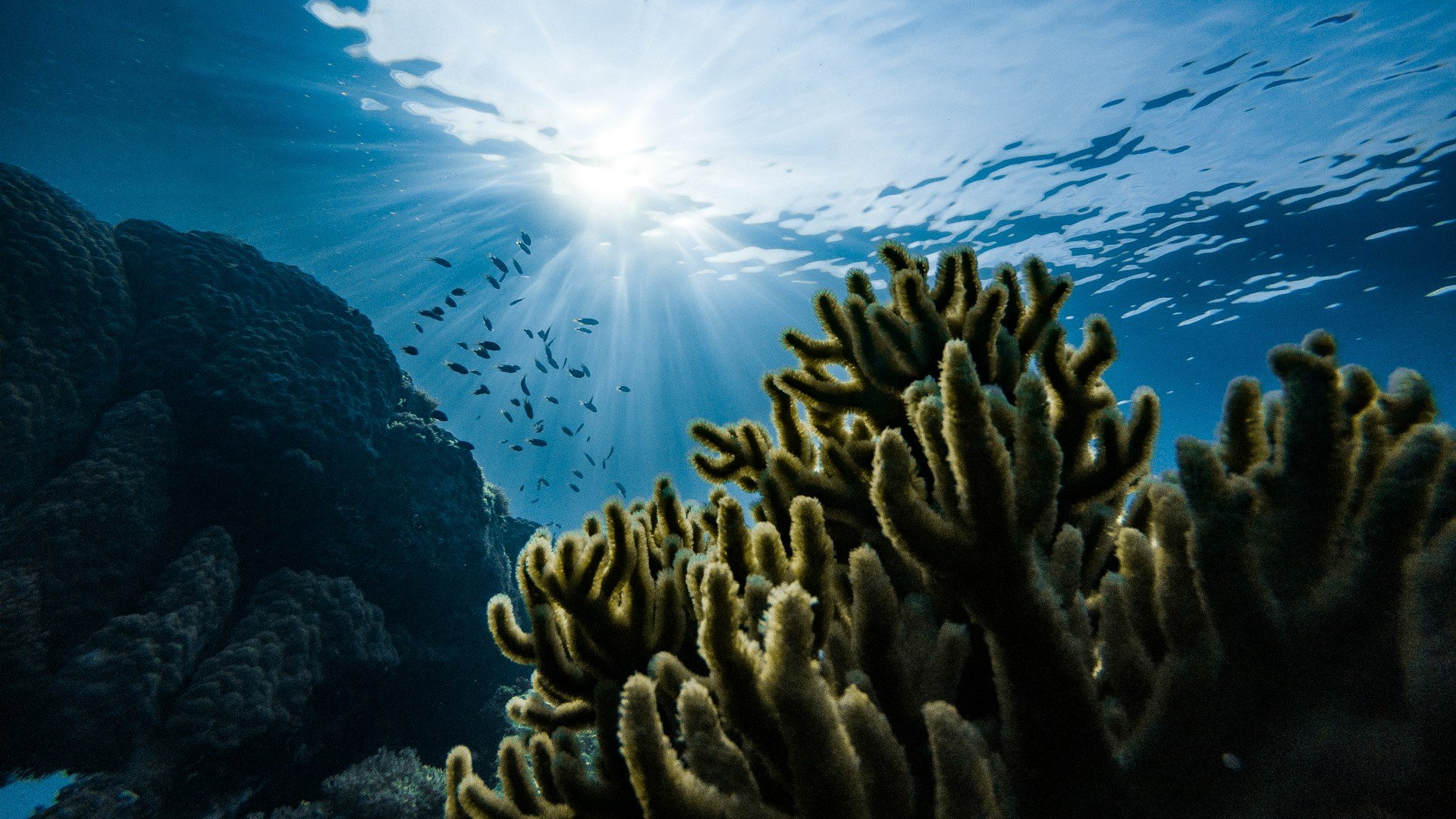
What You're Actually Getting Into
The Federated States of Micronesia is not one island but four states spread across roughly 2,700 kilometers of the western Pacific, from Yap in the west to Kosrae in the east, with a combined land area smaller than New York City. Each state has its own indigenous language, its own culture, and almost nothing in common with the others beyond the US Dollar and a shared flag. Most travelers who make it here are divers chasing Truk Lagoon's sunken fleet or Yap's manta rays, researchers, or people on a genuine quest to see somewhere the algorithm hasn't found yet. Tourist infrastructure exists but is thin: this is a place NGO staff, government contractors and dive obsessives pass through, not a place with a resort strip.
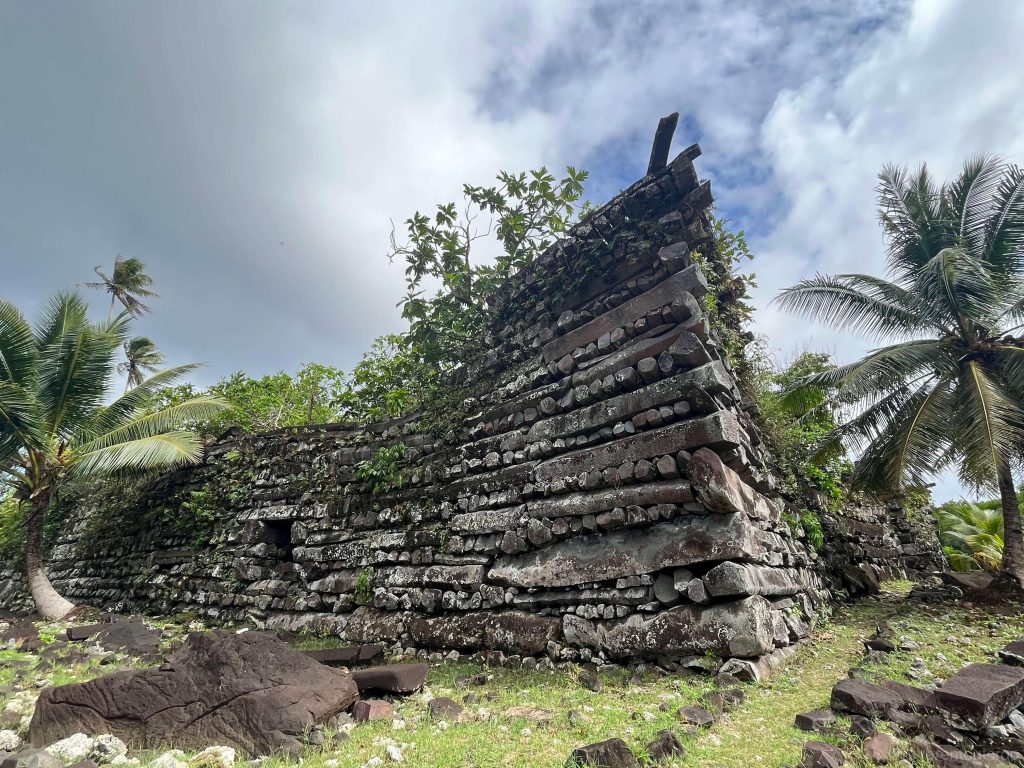
What that thinness buys you is Nan Madol, a prehistoric city of basalt log walls built directly on a coral reef off Pohnpei, with almost nobody else there when you visit. It buys you sakau bars in Kolonia serving a kava-like drink pressed by hand exactly as it has been for centuries. It buys you Yap villages where stone money the size of cartwheels still functions as currency, tracked by oral history rather than physical possession. None of it is staged for visitors, because there aren't enough visitors to stage it for.
The honest complications
Getting here and between states is the real cost of a Micronesia trip, not what you spend once you land. United Airlines' Island Hopper is the sole scheduled carrier on both routes into the country, flights run only a few times a week, fares are high by regional standards, and delays and cancellations are common enough that locals have stopped being surprised by them. Once on the ground, tap water is not safe to drink, internet is satellite-based and slow, there is no ride-hailing and taxis in the main towns don't wait at the curb, and each state operates on its own unhurried clock. None of this is a reason to skip Micronesia. It is the reason so few people go, and the reason the ones who do rarely regret it.
A History Worth Knowing
Austronesian navigators settled these islands roughly 3,500 years ago, developing wayfinding and engineering skills advanced enough to build Nan Madol, a megalithic complex of nearly 100 artificial islets, centuries before European contact. Spain, Germany, Japan and the United States each administered the islands in turn over the following century and a half, and the scars and structures of that succession, from a colonial-era stone wall in Kolonia to WWII gun batteries in the jungle, are still part of the landscape. Independence came in 1986 under a unique arrangement with the US that persists today.
- c. 1200-1600 CE
Nan Madol built. The Saudeleur dynasty constructs a megalithic ceremonial and residential complex on the reef off Pohnpei's Temwen Island, using stacked prismatic basalt columns transported by raft.
- 1886
Spanish colonial claim. Spain formalizes control of the Caroline Islands after a papal arbitration settles a dispute with Germany.
- 1899
Sold to Germany. Spain, defeated in the Spanish-American War, sells the Carolines to Germany, which develops the copra trade.
- 1914-1945
Japanese administration. Japan seizes the islands in WWI and rules under a League of Nations mandate; Chuuk becomes a major fortified naval base, destroyed in the 1944 Operation Hailstone air raids.
- 1947-1986
US Trust Territory. The United Nations creates the Trust Territory of the Pacific Islands under US administration after WWII.
- 1986
Independence. The FSM becomes fully self-governing under a Compact of Free Association with the US, which handles defense and provides financial assistance.
- 2023
Compact renewed. The US and FSM sign a further 20 years of Compact funding, worth about $3.3 billion, extending the arrangement through 2043.
Read the full history: the Saudeleur dynasty, stone money and the war in the Pacific
Nan Madol and the Saudeleur dynasty. Pohnpeian oral history holds that the Saudeleur rulers, who unified the island under a centralized dynasty for the first time, built Nan Madol as their ceremonial and political seat, and that the dynasty was eventually overthrown by a culture hero named Isokelekel, who founded the more decentralized nahnmwarki chieftain system that Pohnpeian villages still recognize today. The basalt columns were quarried elsewhere on the island and floated to the site, an engineering feat that remains partly unexplained.
Yap's stone money. Yap's rai, giant limestone discs, were quarried in Palau and transported hundreds of kilometers by canoe and raft, a journey dangerous enough that pieces lost at sea were still considered valid currency, since everyone knew the stone existed even if it wasn't physically present. Ownership was and still is tracked through oral history and village consensus rather than possession, a system some economists cite as an early conceptual ancestor of decentralized ledgers.
Colonial succession. Spain's claim from 1886 gave way to Germany in 1899 after the Spanish-American War, and Germany's copra-focused administration ended when Japan occupied the islands in 1914 during WWI, formalized as a League of Nations mandate in 1920. Japan settled the islands heavily, and by the eve of WWII the Japanese population in Micronesia outnumbered the indigenous population. Chuuk, then Truk, became Japan's most heavily fortified Pacific base, the "Gibraltar of the Pacific," until the US Navy's Operation Hailstone air raids of February 1944 sank more than 50 ships and destroyed over 250 aircraft in two days, the wrecks that divers now visit as Truk Lagoon.
From trusteeship to Compact. The postwar UN Trust Territory of the Pacific Islands, administered by the US, eventually split into several separate political entities; the FSM adopted its own constitution in 1979 and became fully independent in 1986 under a Compact of Free Association, a status distinct from full independence in that the US remains responsible for defense and provides direct financial assistance, while FSM citizens can live and work freely in the US. That Compact was renewed in 2023 for a further 20 years of funding through 2043.
The Four States
The FSM's four states, Yap, Chuuk, Pohnpei and Kosrae, run west to east and are each reached only by the same limited United Airlines schedule, so most trips focus on one or two rather than all four. Pohnpei, covered in full in our Kolonia city guide, is the easiest first state to visit and the natural base for a first trip.
Pohnpei, the garden island and the easiest base
Pohnpei is the FSM's largest and highest island, a volcanic mass draped in rainforest and mangrove and famously one of the wettest places on earth. Kolonia, the old commercial town, is the practical base: it has the widest range of hotels and restaurants, the most reliable logistics, and the shortest drive to Nan Madol and the Kepirohi waterfall. Beyond the ruins, Pohnpei's draws are its waterfalls, its sakau bars, the P-Pass surf break, and boat trips out to Ant Atoll, where the mangrove-lined main coast finally gives way to the white sand and turquoise lagoon most people picture when they hear "Pacific island." See the full Kolonia city guide for hotels, restaurants and a street-by-street plan.
Chuuk, the world's biggest wreck-diving site
Truk Lagoon, inside Chuuk's barrier reef, holds more than 50 Japanese WWII shipwrecks sunk in the February 1944 Operation Hailstone raids, still loaded with tanks, aircraft and personal effects and now encrusted in coral. It is consistently ranked among the best wreck-diving destinations on earth, reachable via liveaboards and shore-based dive resorts out of Weno, the state capital. Outside diving there is little tourist infrastructure, and UK and Australian government advisories both flag Chuuk specifically for a higher baseline crime risk than the other three states, so keep valuables secured and take normal urban precautions after dark.
Yap, stone money and resident manta rays
Yap is the FSM's most culturally traditional state: village life still runs on custom, some outer islanders wear traditional dress day to day, and the giant limestone rai, stone money discs quarried in Palau centuries ago and rafted across open ocean, still sit in village stone-money "banks" and change hands for major transactions by oral agreement rather than by moving the stone. Yap's manta ray channels are equally well known among divers, with resident reef mantas visiting cleaning stations year-round. Village visits generally expect a modest approach and, in many cases, a small courtesy of betel nut or a similar gift; ask your hotel or guide about current local etiquette before visiting a village independently.
Kosrae, the quiet one
Kosrae is the smallest and least-visited FSM state, a single high island ringed by reef walls with visibility regularly exceeding 30 meters and a fraction of the dive traffic of Chuuk or Yap. Above water, the island's interior rainforest and the silhouette of Mount Finkol, known locally as the Sleeping Lady for its profile, draw a small but dedicated hiking crowd. Tourist infrastructure is minimal even by FSM standards: this is the state for travelers who have already done Pohnpei and want somewhere quieter still.
Beyond the standard circuit
Most first trips stop at Pohnpei, or Pohnpei plus Chuuk. With more time or a specific interest, these are worth building a state around.
Ant Atoll
A private marine reserve about an hour offshore by boat, reachable with permission arranged through a local tour operator or the Nanpei family. It is the closest Pohnpei gets to postcard white sand, since the main island's coast is almost entirely mangrove.
Sokehs Rock
A basalt cliff visible from most of Kolonia and the airport, with an hour-long trail to WWII-era Japanese gun batteries still sitting in the jungle and a 360-degree view over the reef, mangroves and town.
Yap's manta cleaning stations
Unlike seasonal manta destinations elsewhere in the Pacific, Yap's channel passes hold resident reef mantas that visit cleaning stations close to shore year-round, making sightings unusually reliable for a non-liveaboard trip.
Culture & Etiquette
Treat "Micronesian culture" as four cultures, not one: Pohnpeian, Chuukese, Yapese and Kosraean each have their own language and customs, and what's polite in one state can be a genuine misstep in another, especially in Yap's traditional villages. What runs across all four is a matrilineal clan structure in Pohnpei and Chuuk, a chiefly hierarchy that still governs land and formal occasions, and an expectation of modest dress that's stricter than most Pacific destinations, particularly for women.
Do
- Dress modestly. Cover shoulders and thighs away from hotels and dive boats, and expect this to be enforced more strictly in Yap's villages than in Kolonia.
- Accept sakau if it's offered. Sharing a cup at a Pohnpeian nakamal is a genuine gesture of hospitality, not a tourist performance.
- Ask before photographing people, ceremonies or private property, and expect a more formal answer around chiefly events on Pohnpei or Chuuk.
- Learn a greeting in the local language. Kaselehlie (Pohnpeian) goes further than English alone in Kolonia.
- Carry cash. The FSM uses the US Dollar exclusively and ATMs are few and not fully reliable; small businesses are cash-only.
Don't
- Touch or remove anything from a WWII wreck or battle site, in Chuuk or elsewhere. Many are official war graves and removal is illegal.
- Assume one state's customs apply to another. A relaxed approach on Pohnpei doesn't transfer to a Yap outer-island village.
- Wear swimwear away from a beach or resort pool. Modest dress expectations extend into towns.
- Drink tap water or swim in waterfall pools expecting them to be clean. Tropical runoff carries a real leptospirosis risk; stick to bottled or purified water.
- Show up to a traditional village unannounced. Arrange visits through a hotel, guide or tour operator, especially in Yap.
Deeper culture: matrilineal clans, the nahnmwarki system and stone money economics
Matrilineal descent. On Pohnpei and Chuuk, clan membership and land rights typically pass through the mother's line, and women hold significant informal authority within extended family structures even where public and ceremonial roles are more visibly male.
The nahnmwarki system. Pohnpei is divided into traditional chiefdoms, each headed by a nahnmwarki (paramount chief) and a nahnken (talking chief), a system that runs alongside the modern state government and still governs land, titles and major ceremonial occasions like the November yam feast.
Stone money as a living system. Yap's rai are not museum pieces: large discs still sit in named village locations and change ownership through community-witnessed agreement for major transactions like land or marriage, a system that works precisely because the stone's location and history are common knowledge, not because anyone moves it.
Food & Drink
Micronesian food leans on what the reef, the mangroves and a handful of staple crops provide: reef fish, mangrove crab, breadfruit, taro and coconut, alongside a strong Japanese influence from decades of administration and a steady stream of imported rice and canned goods that isolation makes a genuine part of the diet. Kolonia's restaurant scene, small as it is, runs mostly local-Japanese-Filipino fusion rather than anything resembling Western Pacific-resort food.
Sakau $1-2/cup
Pohnpei's ceremonial drink, pounded from pepper-plant root and strained through hibiscus bark, served nightly at roadside nakamal bars around Kolonia. Mildly numbing rather than intoxicating; a genuine local ritual, not a tourist show.
Reef fish & mangrove crab
Fresh catch grilled or served sashimi-style is the backbone of every Kolonia menu; mangrove crab is a Pohnpei specialty worth seeking out specifically, and the sushi at the seafront restaurants uses fish caught the same day just offshore.
Breadfruit, taro & yams
Staple starches grown across all four states; yams carry particular prestige on Pohnpei, where farmers compete to grow the largest ahead of the November kamadipw en wahu yam feast.
Japanese-influenced set meals
Decades of Japanese administration left a lasting mark: bento-style lunch sets with fried fish, sashimi, miso soup and rice are a Kolonia lunchtime standard at local diners.
Sushi & poke
Same-day reef fish makes Kolonia's small sushi and poke counters better than the setting suggests; a few also handle special-order trays for events.
Wednesday buffets
Several Kolonia hotel restaurants run a weekly lunch buffet, typically Wednesday, as the easiest way to sample a wide spread of local and Filipino-influenced dishes in one sitting.
When to Go & Itineraries
There is no true dry season anywhere in the FSM; it's an equatorial climate with year-round rain that varies in intensity rather than disappearing. Pohnpei and Kosrae are the wettest, with a relatively drier window from December to April that also brings the best surf at Pohnpei's P-Pass. Typhoon risk is low for Pohnpei and Kosrae but real for Chuuk and especially Yap, running roughly August to November; plan travel to those two states outside that window where possible.
Season by season, state by state
| Window | Verdict | Notes |
|---|---|---|
| Dec-Apr | Best overall | Relatively drier on Pohnpei and Kosrae; best surf at P-Pass Jan-Feb; lower typhoon risk everywhere |
| May-Jul | Good, wetter | Heavier rain but rivers and waterfalls at their most dramatic; typhoon risk still low |
| Aug-Nov | Caution for Chuuk & Yap | Peak typhoon season for the western states; Pohnpei and Kosrae less exposed but still wet |
Pohnpei is among the wettest places on earth, averaging roughly 10,000mm of rain a year; expect frequent but often short, intense showers rather than all-day rain.
Itineraries
The Island Hopper's limited schedule, not distance, sets the pace of any FSM itinerary. Build in slack: a canceled or delayed leg is common enough to plan around rather than hope against.
- Days 1-2
Kolonia, Pohnpei. Settle in, the Spanish Wall and German Bell Tower in town, an evening at a sakau bar.
- Days 3-4
Nan Madol & Kepirohi. A driver or guided day trip to the ruins and the waterfall just beyond them.
- Days 5-7
Sokehs Rock & Ant Atoll. A hike to the WWII gun batteries, then a boat day out to Ant Atoll for the white sand the main island doesn't have.
- Days 1-7
The 7-day Pohnpei route above, at a gentler pace.
- Days 8-14
Chuuk. Fly onward via the Island Hopper's eastbound route; a shore-based dive resort out of Weno covers the Truk Lagoon wrecks over several days.
- Days 1-7
Pohnpei, as above.
- Days 8-14
Chuuk, for Truk Lagoon diving.
- Days 15-21
Yap or Kosrae. Yap for stone money villages and manta rays, or Kosrae for quiet reef walls and the Sleeping Lady hikes; the Island Hopper schedule will largely decide which is practical on your dates.
Getting there & around
United Airlines' Island Hopper is the only scheduled service into the FSM, running two routes a few times a week: Honolulu-Majuro-Kwajalein-Kosrae-Pohnpei westbound, and Guam-Chuuk-Pohnpei eastbound. There is no other commercial carrier serving the country on a reliable schedule. Fares are high for the distance, delays and outright cancellations happen often enough that experienced travelers build a spare day or two into any itinerary with a connecting flight afterward, and each free checked bag is capped at 27.6kg with fees for anything beyond that.
Getting around within a state: taxis, rental cars, and the M/V Caroline Voyager
| Option | Price | Notes |
|---|---|---|
| Taxis (Kolonia) | ~$2/person flat | No ride-hailing apps; taxis don't wait at the airport curb, so arrange a hotel pickup in advance |
| Rental car | ~$65-75/day | The only practical way to reach waterfalls and Nan Madol independently; most hotels run their own rental service |
| Inter-state flight | Varies, high | Every FSM state has its own airport, but the Island Hopper's schedule, not price alone, is the real constraint |
| M/V Caroline Voyager (sea) | Low, erratic schedule | A supply ship making irregular loops between islands; the cheapest way to island-hop if you have time to spare, contact the FSM Marine Division for current schedules |
Practical prep: tap water is not safe to drink anywhere in the FSM; stick to bottled or purified water, including for brushing teeth. Internet is satellite-based and slow across all four states; download offline maps and anything you need before you land. A local SIM from FSM Telecommunications Corporation covers calls and basic data once you arrive. Book an eSIM before landing as a backup, since coverage is inconsistent.
Where to stay
Budget, central Kolonia
Simple, clean local hotels a short walk from restaurants and markets, popular with long-term project workers as much as travelers. See our Kolonia city guide for specific picks.
Mid-range, harbor or hillside views
A step up in comfort with private balconies and better breakfast, still firmly local in character rather than international-chain polish.
Waterfront, Kolonia's best
Pohnpei's top lodgings sit directly on the water with lagoon and Sokehs Rock views, an on-site restaurant, and the most reliable Wi-Fi on the island.
Dive resorts, Chuuk & Yap
Shore-based dive resorts and liveaboards in Weno (Chuuk) and Colonia (Yap) are typically booked as part of a dive package that includes boat transfers and gear.
Budget Planning
Micronesia's real cost isn't daily spending, it's getting here and moving between states on the only available flights. Once on the ground, a budget day in Kolonia is genuinely moderate: cheap taxis, affordable local meals, and free or low-cost sights.
- Budget hotel, central Kolonia $30-50
- Local diner meals $8-15
- Flat-rate taxis $2/ride
- Sakau bar evening $1-2/cup
- Waterfront hotel $80-120
- Rental car $65-75/day
- Nan Madol & Kepirohi entry fees
- A guided day trip or dive outing
- Best available hotels or a dive resort package
- Private driver and guided touring
- Inter-state flights to add a second state
- Multi-day dive packages in Chuuk or Yap
Quick reference prices: entry fees, taxis, departure costs
| Sakau (kava), roadside | $1-2/cup |
| Taxi within Kolonia | ~$2/person flat |
| Local diner meal | $8-15 |
| Nan Madol trail & site access | ~$13-15 total, paid in stages |
| Kepirohi Waterfall entry | ~$10 |
| Rental car | $65-75/day |
| Budget hotel, Kolonia | $30-50/night |
| Airport departure fee (cash) | ~$25/person |
Prices reflect research current to September 2026 and can drift, especially entry fees set by private landowning families, which have risen over the past few years. Treat them as a planning baseline, not a quote, and keep spare cash on hand at any site.
Visa & Entry
Entry is visa-free for most travelers: citizens of the US, EU, UK, Australia, Canada, New Zealand, Japan, South Korea, Schengen countries, Singapore, Malaysia and Israel receive a 30-day tourist stamp on arrival. Rules and reciprocal agreements do change; the FSM national government and your nearest FSM embassy or consulate are the authoritative sources.
✓ Valid passport
At least 120 days' validity from your date of entry, longer than the more common 6-month rule elsewhere.
✓ Onward or return ticket
Given the Island Hopper's limited schedule, book this loosely and confirm it covers your intended length of stay.
✓ Proof of sufficient funds
May be requested at immigration; a bank statement or return ticket receipt is usually enough.
✓ Extensions available
Stays can typically be extended up to 90 days total through the Division of Immigration in Pohnpei, for a fee per extension.
| Micronesia (FSM) | Palau | |
|---|---|---|
| Signature diving | Truk Lagoon's WWII wrecks; Yap's resident mantas | Blue Corner's sharks and pelagics; Jellyfish Lake |
| Access | United Island Hopper only, a few flights a week | More frequent regional connections via Guam and Asia |
| Crowds | Genuinely under-visited outside dive resorts | Busier, with a more developed tourist industry |
| Culture | Four distinct states and languages in one country | A single, more unified Palauan culture |
| Visa | Free, 30 days for most passports | Free, 30 days for most passports |
Safety, Solo Women & Family
The US State Department rates the FSM Level 1, Exercise Normal Precautions, its lowest risk category, and the UK and Australian governments both describe overall crime levels as low. The real risks for visitors are natural rather than criminal: typhoons, earthquakes, tsunamis and dangerous ocean currents are all realistic possibilities across a country made entirely of Pacific islands, and medical evacuation, if you need it, is slow and expensive given how few flights serve the country.
Natural hazards
Typhoons run roughly August to November and hit Chuuk and Yap hardest; earthquakes and tsunamis are possible anywhere. Monitor local advisories and follow hotel or embassy guidance if a warning is issued.
Crime & personal safety
Overall crime is low, but UK and Australian advisories flag reported sexual assaults and note higher risk after dark or in isolated spots; Chuuk carries a specifically elevated crime rating versus the other three states.
Water & health
Tap water isn't safe to drink; waterfall pools can carry leptospirosis, so admire rather than swim unless a local confirms it's safe. Medical facilities are basic and decompression chambers exist in only a couple of locations, a real consideration for divers.
Two more things worth knowing: WWII ordnance and LGBT+ travelers
Unexploded WWII ordnance is a genuine background risk around former battle sites, particularly on Chuuk and Yap; stay on marked trails and never touch or move old military hardware, on land or underwater. It is also illegal to remove anything from wreck or battle sites, many of which are recognized war graves.
LGBT+ travelers: same-sex relationships are not widely socially accepted across the FSM, and public affection between same-sex partners may draw unwanted attention. There is no specific law criminalizing same-sex relationships, but discretion is the practical norm outside private settings.
Solo women travelers
The FSM is workable for solo women with the same precautions you'd use in any low-crime but low-infrastructure destination: UK and Australian advisories both note reported sexual assaults, with risk higher after dark, in isolated areas, or where alcohol is involved, and specifically higher in Chuuk. Dress modestly, especially in Yap's villages, arrange airport and evening transport through your hotel rather than walking unfamiliar streets after dark, and let someone know your plans before a boat trip to an atoll or a solo hike. Full detail on our Solo Woman Explorer pages.
Emergency numbers
Embassies, hospitals and mountain or ocean rescue
Pohnpei, as the seat of national government, hosts the country's main foreign missions, including the US and Australian embassies, both in or near Kolonia. Hospital facilities across all four states are basic; anything beyond routine care typically means evacuation to Guam, Hawaii or the Philippines, which is why comprehensive travel insurance with medical evacuation cover, and specifically dive accident cover if you're diving, is essential rather than optional here.
If you're diving: confirm your dive operator's safety equipment and your own insurance covers evacuation to a decompression chamber before you get in the water; chamber access in the FSM is limited to a small number of locations.
Family travel & pets
The FSM works for families who are comfortable with a slower pace and thinner infrastructure than a typical Pacific resort trip: waterfalls, the fish market and the Nan Madol boat approach all land well with kids, and Micronesian hospitality toward children is genuine. The main practical limits are medical (basic facilities, so bring what you need) and logistical (the Island Hopper schedule leaves little room for changed plans).
Kids at Nan Madol and the waterfalls, and bringing pets
Nan Madol and the waterfalls both involve some walking on uneven, sometimes muddy terrain and, depending on the tide, wading through shallow water to reach the main islet at Nan Madol; sturdy water-friendly shoes make both far more manageable with kids. Bring your own snacks and water, since there is little food infrastructure at either site.
Pets: importing animals into the FSM involves veterinary health certificates, current vaccinations and advance permits from national quarantine authorities; contact the FSM Division of Immigration or your airline well ahead of travel, since requirements are stricter than in many countries given the ecological sensitivity of small island states.
Micronesia FAQ
Is the Federated States of Micronesia safe to visit?
Yes. The US State Department rates it Level 1, Exercise Normal Precautions, and crime against visitors is low. Watch for petty theft, be aware at night since sexual assaults have been reported, and take natural hazards like typhoons and earthquakes seriously. Elevated caution applies specifically in Chuuk state.
Do I need a visa for Micronesia?
No, for most passport holders, including the US, EU, UK, Australia, Canada, New Zealand, Japan and South Korea. You get a 30-day stamp on arrival with a passport valid 120 days beyond entry, an onward ticket and proof of sufficient funds.
What currency does Micronesia use?
The US Dollar exclusively. ATMs are limited to a handful of machines in each state capital and are not fully reliable, so carry more cash than you think you need.
How do you get to Micronesia?
United Airlines' Island Hopper is the only scheduled option, flying Honolulu-Majuro-Kwajalein-Kosrae-Pohnpei westbound and Guam-Chuuk-Pohnpei eastbound a few times a week. Flights are infrequent, expensive and prone to delay, so keep onward connections loose.
When is the best time to visit Micronesia?
There is no true dry season. Pohnpei and Kosrae are wettest, with a relatively drier window from December to April. Chuuk and Yap carry higher typhoon risk from August to November.
How many days do you need in Micronesia?
A week covers one state properly, most often Pohnpei. Two to three weeks lets you island-hop to Chuuk, Yap or Kosrae, working around the limited flight schedule.
What is Nan Madol?
A prehistoric megalithic complex of roughly 100 artificial islets off Pohnpei, built from stacked basalt columns by the Saudeleur dynasty between about 1200 and 1600 CE. It became a UNESCO World Heritage Site in 2016, and is also listed as endangered.
Is Chuuk the same as Micronesia?
No. Chuuk is one of the FSM's four states, known for Truk Lagoon's WWII wreck diving. The other three, Yap, Pohnpei and Kosrae, each have their own language, culture and character.
Is Micronesia expensive?
Yes, mainly because of the cost and scarcity of flights, both to get there and to move between states. Costs on the ground, guesthouses, meals and taxis, are moderate once you have arrived.
What language is spoken in Micronesia?
English is the official language of government and is widely spoken. Each state also has its own language: Pohnpeian, Chuukese, Yapese and Kosraean, plus Nukuoro and Kapingamarangi on outer atoll communities.
Is Micronesia good for scuba diving?
Yes. Chuuk's Truk Lagoon wrecks and Yap's year-round manta ray channels are world class. Pohnpei and Kosrae offer quieter reef and wall diving with excellent visibility and far fewer divers.
Is Micronesia safe for solo female travelers?
Generally yes with standard precautions. UK and Australian government advisories note reported sexual assaults, so avoid isolated areas after dark and take extra care in Chuuk state specifically.
What Stays With You
Micronesia doesn't try to convince you it's worth the trip. There's no marketing budget, no influencer circuit, no queue at Nan Madol. You wade out to a thousand-year-old basalt city on a coral reef and there might be nobody else there. You share a cup of sakau at a roadside bar with people who have no reason to perform hospitality for a stranger and do it anyway. You dive a WWII wreck still holding the shape of the day it sank.
None of it is easy to reach, and that's exactly why it still feels like something you found rather than something you were sold. Book the flights loosely, carry more cash than you think you need, and go before the Island Hopper's schedule is the only thing anyone remembers about getting there.