
What You're Actually Getting Into
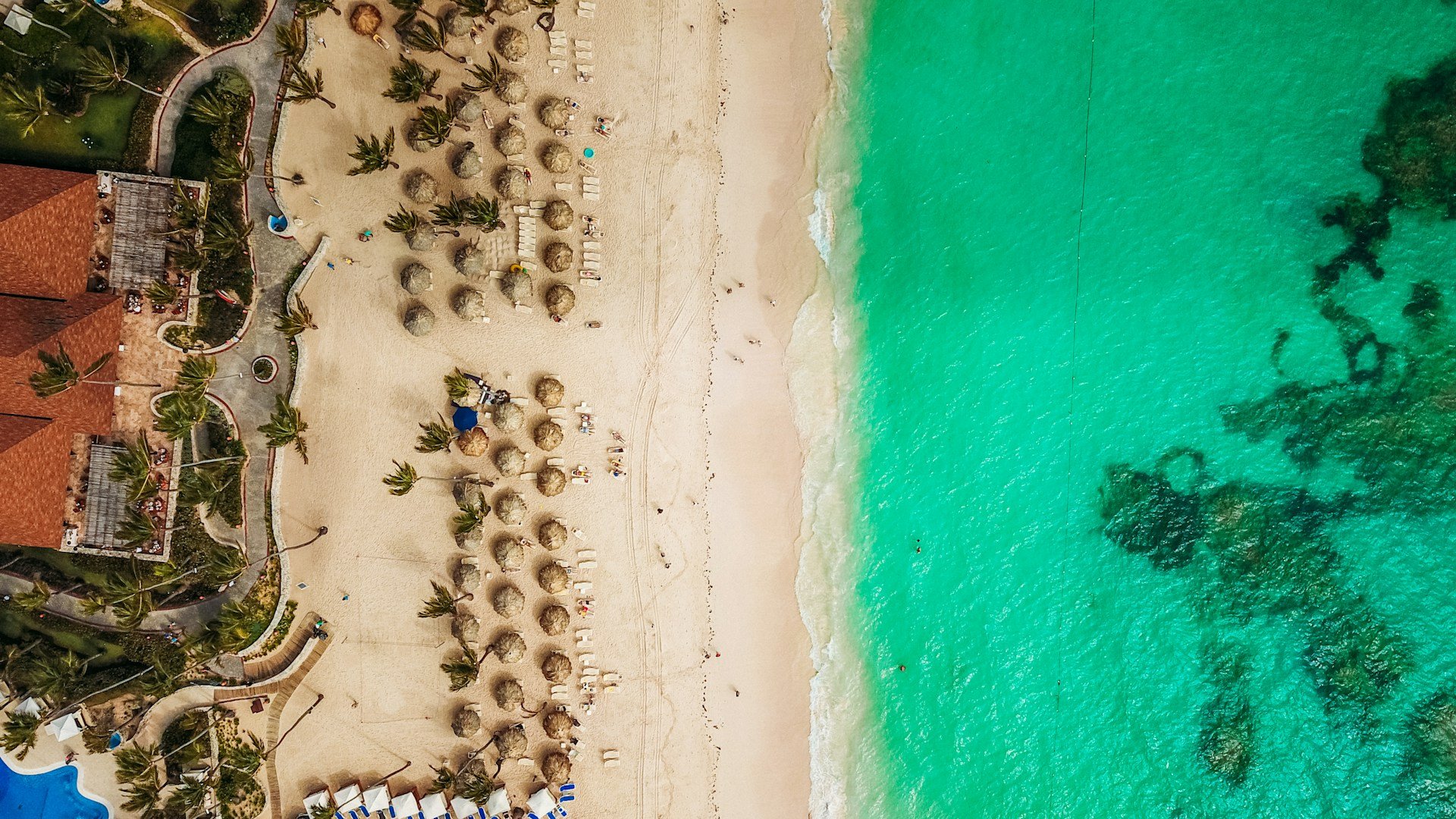
The Dominican Republic occupies the eastern two-thirds of Hispaniola, the island it shares with Haiti, and has built the largest tourism economy in the Caribbean almost entirely on the strength of its coastline. Punta Cana alone has more all-inclusive resort rooms than most Caribbean nations have hotel rooms of any kind, and the country receives more visitors each year than the rest of the Caribbean's island nations combined. That scale is the whole story for most travelers: it's why direct flights from a dozen US and Canadian cities are cheap, why the resort infrastructure is so mature it barely resembles the rest of the country, and why an all-inclusive week here costs meaningfully less than an equivalent week in the Bahamas or Turks and Caicos.
But the resort strip is a small, self-contained slice of a much bigger and more textured country. Santo Domingo's Zona Colonial is the oldest continuously inhabited European settlement in the Americas, its cathedral and fortress predating anything the Spanish built in Mexico or Peru. The Cordillera Central holds the Caribbean's highest peak and a cool, misty coffee-and-vegetable-farming interior that has nothing in common with a Bávaro beach chair. And merengue and bachata, both now on UNESCO's intangible heritage list, come from a country whose cultural output vastly outweighs its size.
The honest complications
The US State Department rates the country Level 2, Exercise Increased Caution, for crime, and that's a real classification, not boilerplate: violent crime affects Dominicans and visitors alike, road safety is genuinely poor by international standards, and the resort bubble, while heavily policed, is not the whole country. Most visitors who stay inside organized tourism infrastructure and use common sense have entirely trouble-free trips, but this isn't a place to wander unfamiliar neighborhoods after dark or rent a scooter without a helmet. The country also shares an island with Haiti, and that border relationship carries real, ongoing tension around migration that occasionally surfaces in the news; it has essentially no bearing on a Punta Cana or Santo Domingo vacation, but it's part of the country's context and worth understanding rather than ignoring.
A History Worth Knowing
Christopher Columbus landed on Hispaniola in December 1492, and the settlement his brother Bartholomew founded four years later, Santo Domingo, became the first permanent European city in the Americas: the first cathedral, the first fortress, the first hospital and the first university in the hemisphere were all built there before Cortés had even reached Mexico. What followed was nearly four centuries of contested colonial and post-colonial history with the western third of the island, now Haiti, before the Dominican Republic secured its own independence in 1844 and spent much of the 20th century under one of Latin America's most brutal dictatorships.
- 1492-1496
Arrival and founding. Columbus lands in December 1492; his brother Bartholomew founds Santo Domingo in 1496, the first permanent European settlement in the Americas, rebuilt on the Ozama River's west bank in 1502 after a hurricane.
- 1697-1804
The island splits. Spain cedes the western third of Hispaniola to France in 1697; it becomes Haiti in 1804 after the only successful slave revolt to found a nation.
- 1822-1844
Haitian occupation and independence. Haiti occupies the eastern two-thirds of the island for 22 years. Dominican independence is declared on 27 February 1844, led by Juan Pablo Duarte's La Trinitaria movement.
- 1930-1961
The Trujillo era. Rafael Trujillo seizes power in 1930 and rules with absolute control until his assassination in 1961, a period that includes the 1937 massacre of Haitians at the border.
- 1966-1996
Balaguer and the transition. Joaquín Balaguer dominates politics for three decades before a democratic transition consolidates in the 1990s.
- 1990s-present
The tourism boom. Punta Cana's resort corridor develops from empty coastline into the Caribbean's largest concentration of all-inclusive hotels; the country becomes the region's most-visited by far.
Read the full history: Columbus, Trujillo and the 1937 massacre
Before Columbus, Hispaniola was home to the Taíno, an Arawakan-speaking people organized into five chiefdoms. Spanish colonization was catastrophic for the Taíno population, and within decades enslaved Africans were being brought to the island, beginning the demographic and cultural mixing that defines the country today. Santo Domingo's Zona Colonial, a UNESCO World Heritage Site since 1990, still holds the Alcázar de Colón (the palace of Columbus's son Diego, as Viceroy of the Indies), the Catedral Primada de América (the first cathedral in the New World), and the Fortaleza Ozama, the first military fortress built by Europeans in the Americas.
Spain formally ceded the western third of the island to France in the 1697 Treaty of Ryswick; that territory became Haiti in 1804 following the Haitian Revolution, the only slave revolt in history to result in the founding of a state. The Dominican side declared independence from Spain in 1821 but was almost immediately annexed by Haiti, beginning a 22-year occupation that ended with the Dominican War of Independence: a small group led by Juan Pablo Duarte, Matías Ramón Mella and Francisco del Rosario Sánchez seized the Puerta del Conde fortress in Santo Domingo on 27 February 1844 and forced out the Haitian garrison.
Rafael Trujillo seized power in a 1930 military coup and ruled, directly or through puppet presidents, until his assassination on 30 May 1961. His regime is remembered for its secret police, suppression of civil liberties, and the 1937 Parsley Massacre: over roughly a week in October 1937, the Dominican Army killed Haitians and Haitian-descended Dominicans along the border region, reportedly identifying victims by whether they could pronounce the Spanish word for parsley, perejil, in the Haitian Kreyòl accent. Estimates of the death toll are genuinely disputed across historical sources, ranging from roughly 9,000 to over 20,000; there is no single agreed-upon figure, and the event remains a significant, unresolved wound in Dominican-Haitian relations that occasionally resurfaces in immigration policy debates today.
After Trujillo, Juan Bosch's brief democratic presidency was overthrown in a 1963 coup, leading to the 1965 Dominican Civil War and US military intervention. Joaquín Balaguer, a Trujillo-era figure, then dominated Dominican politics for much of the next three decades. Democratic consolidation through the 1990s coincided with the deliberate development of Punta Cana as a resort destination, and tourism has since become the country's largest source of foreign income, with the Dominican Republic now drawing more visitors annually than any other Caribbean nation.
Top Destinations
Most visitors never leave the Punta Cana resort corridor, and a perfectly good week doesn't require them to. But the country divides into distinct zones worth knowing about if you want more than a sunbed: the colonial capital, the whale-watching peninsula, the north coast's watersports towns, and a genuinely cool mountain interior that surprises anyone who assumes the whole country is beach weather.
Santo Domingo, the oldest city in the Americas
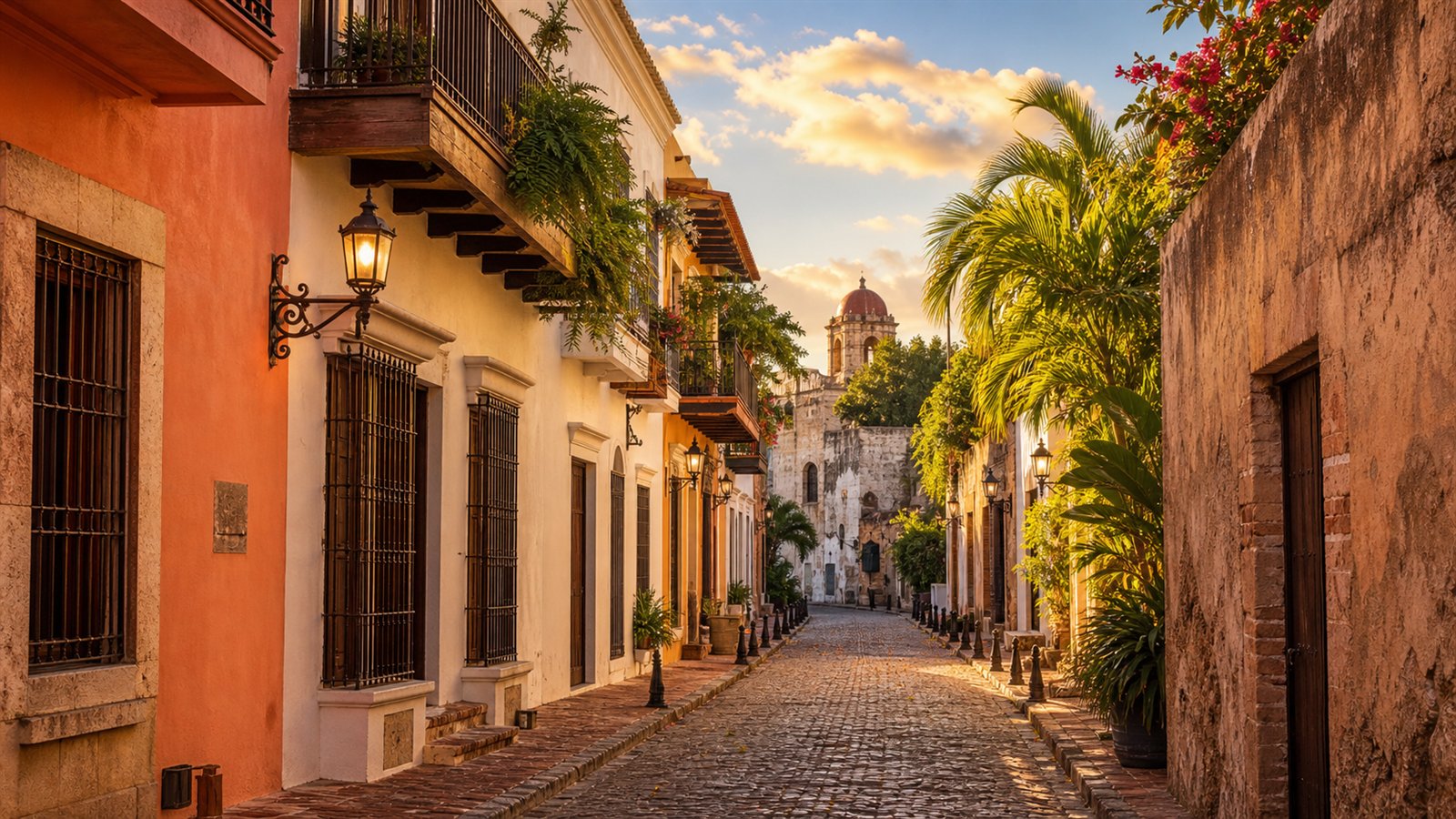
Founded in 1496, Santo Domingo's Zona Colonial is a genuinely different kind of Caribbean city break: a UNESCO World Heritage Site of 16th-century stone streets holding the first cathedral, first fortress and first hospital built by Europeans anywhere in the hemisphere. The Catedral Primada de América anchors the Parque Colón, the Alcázar de Colón (built for Columbus's son Diego as Viceroy of the Indies) overlooks the Ozama River, and the Fortaleza Ozama's tower has stood since the earliest years of the colony. Calle Las Damas, the first paved street in the Americas, runs the length of the old town. It's roughly 2.5 to 3 hours by road from Punta Cana, viable as a very long day trip but better as an overnight addition to a longer itinerary.
Samaná, for humpback whales
Samaná Bay is one of the world's most reliable humpback whale nurseries: thousands of whales migrate here from the North Atlantic to mate and give birth, with the season running roughly mid-January to late March and peaking in February. Whale-watching boats depart from Samaná town itself. On the peninsula's north side, Las Terrenas has a laid-back, part-French, part-Dominican beach-town feel with Playa Bonita and Playa Cosón nearby, while Las Galeras at the eastern tip is quieter still, a fishing village with largely empty beaches. Reaching Samaná from Punta Cana is a genuine commitment, 3.5 to 4 hours each way by road, which makes it a poor day trip and a good reason to build a separate leg into a longer itinerary during whale season.
Puerto Plata, Sosúa & Cabarete
The north coast, sometimes called the Amber Coast, is older tourism territory than Punta Cana and has a different character. Puerto Plata, founded in 1502, is the historic gateway city. Sosúa has an unusual history as a refuge for Jewish families fleeing Nazi persecution from 1940 onward, and its small synagogue and cemetery still mark that community's presence. Cabarete, just east, is one of the world's premier kitesurfing and windsurfing destinations, with roughly 300 windy days a year and a laid-back surf-town scene built almost entirely around the sport; the main wind season runs June to August with a secondary window December to April.
Jarabacoa & Constanza, the cool interior
The Cordillera Central holds Pico Duarte, at 3,098 meters (10,164 feet) the highest peak in the Caribbean, and a mountain climate that surprises visitors who assume the whole country is beach weather: daytime temperatures around 25-29°C with genuinely cool nights. Jarabacoa is the base for hikers and rafters, with waterfalls, coffee farms and the Pico Duarte trailhead nearby; Constanza, higher and cooler still, is Dominican vegetable and flower-farming country. Neither sees anything close to Punta Cana's tourist volume, and both reward travelers willing to trade beach time for a genuinely different side of the country.
Isla Saona & La Romana
Isla Saona sits inside Cotubanamá National Park off the southeast coast and is the single most popular day trip from both Punta Cana and Bayahibe: boat operators run from Bayahibe (about 1.5 hours from Punta Cana by road) out to the island, typically stopping at a shallow sandbar known as the Natural Pool en route. Nearby La Romana is home to Casa de Campo, whose Teeth of the Dog golf course, designed by Pete Dye in 1971 with seven holes running along the ocean, is consistently ranked among the best in the Caribbean.
Culture & Etiquette
Dominican culture runs on merengue, bachata and baseball, roughly in that order of national self-image and reverse order of global fame. Both merengue and bachata are inscribed on UNESCO's Representative List of the Intangible Cultural Heritage of Humanity, merengue since 2016 and bachata since 2019, and both are inescapable in restaurants, taxis and resort lobbies alike. Baseball is the deeper obsession: the Dominican Republic produces more Major League Baseball players than any other country outside the US, with 108 Dominican-born players on 2024 Opening Day rosters alone, and stars like Pedro Martínez, Vladimir Guerrero and David Ortiz occupy a cultural status closer to national heroes than athletes.
Do
- Learn a little Spanish. Dominican Spanish is fast and drops a lot of consonants, but a few basic phrases go a long way outside the resort bubble, where English is far less common.
- Expect warmth and informality. Dominicans are generally direct, loud in a friendly way, and quick to strike up conversation; this isn't rudeness, it's the default social register.
- Carry small pesos for tips and street food. Card and dollar acceptance is near-universal in resorts, but small transactions outside them go more smoothly in cash.
- Dress modestly for churches in Santo Domingo's Zona Colonial: shoulders and knees covered is the standard expectation.
- Use official taxis or your resort's transport rather than hailing unmarked vehicles, especially outside tourist zones.
Don't
- Display valuables openly. Phones, jewelry and cash left visible are the most common targets for opportunistic theft, both inside and outside resort zones.
- Rent a scooter or motorbike without real experience. Dominican road conditions and driving norms are genuinely demanding, and the country's traffic fatality rate is among the highest in the hemisphere.
- Agree to a "free" tour or excursion without reading the fine print. Timeshare presentations are commonly disguised as free breakfasts, discounted excursions or "welcome gifts," and run far longer and harder-sell than advertised.
- Assume the whole country is the resort strip. Dominican daily life, especially inland and in Santo Domingo's working neighborhoods, looks nothing like Punta Cana, and treating the two as interchangeable misses most of what's genuinely interesting here.
- Wade into water when a red flag is flying. Rip currents on the Atlantic-facing beaches are a real, documented hazard, not a formality.
Deeper culture: Dominican Spanish, Taíno heritage and the Haiti relationship
Dominican Spanish is known for dropping the final "s" and "d" sounds (pescado becomes something closer to "pesca'o"), swapping syllable-final "r" for "l" or a light vowel sound, and speaking noticeably faster than most other Spanish dialects. It also carries vocabulary from Taíno (guagua, meaning bus) and West African languages, reflecting the country's mixed heritage.
Taíno heritage survives mostly in place names, food (cassava bread, or casabe, is a direct Taíno legacy) and a few cultural touchstones like the hammock, but the Taíno population itself was largely wiped out within decades of Spanish colonization. What remains is genetic and cultural rather than a living, distinct community.
Dominican-Haitian relations remain genuinely complicated, shaped by the 1937 massacre, the shared and contested colonial history of the island, and ongoing tension over Haitian migration into the Dominican Republic amid Haiti's continuing instability. This has essentially zero practical bearing on a tourist trip to Punta Cana or Santo Domingo, but it is a real, live political issue in the country rather than a purely historical one, and it's worth understanding rather than treating the two nations as interchangeable "Caribbean neighbors."
Food & Drink
Dominican food outside the resort buffet is simple, starchy, and built around a handful of dishes eaten almost daily. It rewards a single meal off-resort more than almost anywhere else in the Caribbean: a plate that costs $5 at a local comedor bears little resemblance to the same ingredients dressed up for a resort dinner menu.
La Bandera Dominicana $3-10
The everyday lunch, eaten across the country: white rice, stewed red beans, and stewed meat, usually chicken, named "the Dominican flag" for its colors. This, not any resort dish, is what Dominicans actually eat most days.
Mangú
Mashed boiled green plantains, classically served for breakfast with "los tres golpes," the three hits: fried eggs, fried cheese and fried salami, often topped with pickled red onions.
Mamajuana
A traditional infused drink of rum, red wine and honey steeped with dried tree bark, roots and herbs, sold as bottled kits in every souvenir shop. Recipes vary by household; treat any aphrodisiac claims as marketing rather than fact.
Sancocho
A hearty stew combining up to seven types of meat with root vegetables like yuca, yautía and plantain, traditionally made for large family gatherings and special occasions rather than an everyday meal.
Presidente $2-4
The national pilsner, brewed since 1935 in Santiago and now the country's dominant beer brand, served ice-cold everywhere from beach bars to gas stations.
Fresh seafood $12-25
Grilled snapper, mahi mahi and lobster show up on beachfront restaurant menus throughout Punta Cana and the north coast, generally priced by weight; confirm the per-pound rate before ordering.
When to Go & Itineraries
December through April is the dry season and the best all-around window: lower humidity, minimal rain, and no hurricane risk. The Atlantic hurricane season officially runs 1 June to 30 November, peaking in the weeks around mid-September, though direct hits on the Punta Cana coast specifically are relatively infrequent compared with the wider Caribbean. May, June and August through November bring the heaviest rain, with September typically the wettest month.
Season-by-season breakdown, with temperatures
| Season | Verdict | Temps | Notes |
|---|---|---|---|
| Dec-Apr | Best | 25-29°C coast | Dry season, no hurricane risk, peak resort prices around Christmas/New Year |
| May-Jul | Good | 27-31°C coast | Hurricane season begins 1 June; still generally fine, watch forecasts |
| Aug-Oct | Caution | 28-32°C coast | Peak hurricane season (mid-Aug to mid-Oct); heaviest rainfall, lowest resort prices |
| Nov | Good | 26-29°C coast | Hurricane season winding down; shoulder-season prices |
Jarabacoa and Constanza in the mountains run noticeably cooler year-round, with nighttime temperatures as low as 16°C even in summer. Samaná's whale season (mid-January to late March) is a reason to specifically target the heart of the dry season if whale watching is a priority.
Itineraries
A week is enough for a proper Punta Cana resort stay with one day trip. Two weeks lets you combine the resort coast with Santo Domingo's colonial core and, in whale season, Samaná.
- Days 1-2
Settle into Punta Cana. Arrive, adjust, get familiar with your resort and the beach in Bávaro or Cap Cana.
- Day 3
Isla Saona. Full-day boat trip from Bayahibe, with a stop at the Natural Pool sandbar.
- Days 4-5
Resort time and one activity. Golf at Corales or Punta Espada, a Scape Park visit to Hoyo Azul, or a catamaran trip, alongside ordinary beach days.
- Days 6-7
One off-resort meal and departure. A comedor lunch or a dinner at Palma Real Shopping Village before flying out.
- Days 1-5
Punta Cana. The seven-day plan above, compressed slightly to leave room for the rest of the country.
- Days 6-8
Santo Domingo. Drive or transfer to the capital (2.5-3 hrs), two full days in the Zona Colonial: the Alcázar de Colón, the cathedral, Fortaleza Ozama and Calle Las Damas.
- Days 9-12
Samaná (whale season only, mid-Jan to late Mar). Transfer to Samaná (3.5-4 hrs from Punta Cana, shorter from Santo Domingo), whale watching in season, time in Las Terrenas. Outside whale season, substitute Jarabacoa's waterfalls and mountain air instead.
- Days 13-14
Back to the coast. A final beach stretch, either back in Punta Cana or on the north coast around Cabarete, before departure.
Getting there & around
Punta Cana International Airport (PUJ) is the country's busiest, with direct flights from dozens of US and Canadian cities as well as Europe; Santo Domingo's Las Américas International Airport (SDQ) is the second major gateway and the better choice if the capital is your main focus. Distances between destinations are large enough that a rental car, an organized transfer, or an internal flight matters more here than in a small European country: driving from Punta Cana to Santo Domingo takes 2.5 to 3 hours, and to Samaná 3.5 to 4 hours, each way.
Transport options and practical prep
| Option | Notes |
|---|---|
| Private airport transfer | The standard choice for resort guests; book through your hotel or a licensed operator rather than an unmarked driver at arrivals. |
| Rental car | Available at both major airports; road quality and driving norms outside resort zones require real attention and defensive driving. |
| Domestic flights | Connect Santo Domingo, Punta Cana, Puerto Plata and Samaná's El Catey airport, useful for saving hours on the Samaná leg specifically. |
| Intercity buses | Caribe Tours and Metro Servicios Turísticos run comfortable coaches between major cities at a fraction of a private transfer's cost. |
Practical prep: complete the free E-Ticket entry form at eticket.migracion.gob.do any time after booking and before airport check-in, it covers up to seven family members on one form. Buy a Dominican SIM or eSIM before landing, since resort wifi can be inconsistent and a local data connection makes ride-hailing and maps far more reliable off-property. Standard travel insurance is worth having given the road safety context above.
Where to stay
Punta Cana resorts
The country's default choice for a first trip: dense, well-run all-inclusive resorts along Bávaro, Cap Cana and Uvero Alto, covered in full detail in our Punta Cana city guide.
Santo Domingo's Zona Colonial
Boutique hotels in converted colonial buildings put you within walking distance of the cathedral, the Alcázar and Calle Las Damas, a genuinely different experience from a resort stay.
Las Terrenas & Samaná
Smaller, independently run beach hotels rather than mega-resorts, with a laid-back pace and easy access to whale-watching boats in season.
Cabarete & the north coast
Surf-and-kite-focused guesthouses and small hotels aimed at watersports travelers rather than families or resort-goers, with a younger, more independent feel.
Budget Planning
The Dominican Republic can be a $50-a-day country or a $500-a-day country depending entirely on whether you stay inside an all-inclusive resort or travel more independently. Resort pricing swings hard by season: December through the holidays runs highest, and September, deep in hurricane season, is typically the cheapest month to book.
- Guesthouse or budget hotel outside resorts
- Comedor meals $3-10
- Intercity buses (Caribe Tours, Metro)
- Free beaches and self-guided sightseeing
- 3 to 4-star all-inclusive resort
- Off-resort restaurant meals $15-30
- Rental car or private transfers
- One or two paid excursions
- 5-star or luxury adults-only resort
- Private excursions and golf
- Casa de Campo or Cap Cana-tier stays
- Domestic flights instead of road transfers
Quick reference prices
| Street food (empanada, yaniqueque) | $1-3 |
| Comedor meal (la bandera dominicana) | $3-10 |
| Presidente beer | $2-4 |
| Off-resort restaurant dinner | $15-30 |
| 3-star all-inclusive resort | from ~$70/night |
| 4 to 5-star all-inclusive resort | $150-370/night |
| Isla Saona day trip | $59-80/person |
| Scape Park / Hoyo Azul entry | ~$129 adult |
Prices reflect August 2026 research and drift over time, especially resort rates, which move constantly with season and demand. Treat them as a planning baseline, not a quote, and always verify at time of booking.
Visa & Entry
Most Western nationalities, including the US, Canada, the UK, the EU and Australia, need no visa for Dominican tourism. What's mandatory instead is the E-Ticket, a free online entry, customs and health declaration form that replaced the old paper tourist card system. The Ministry of Tourism's official entry requirements page is the authoritative source; older blog posts referencing a paid "$10 tourist card" are describing a system that no longer exists.
✓ E-Ticket form
Free, mandatory, completed online at eticket.migracion.gob.do any time after booking and before airport check-in. Covers up to seven family members per submission and generates a QR code for immigration.
✓ Round-trip ticket
Required since April 2023; airlines can deny boarding without proof of onward or return travel.
✓ Passport validity
An exceptional measure running through 31 December 2026 lets US, Canadian, EU, UK and several other nationalities enter with a passport valid only through their stay, waiving the usual 6-month rule; confirm this hasn't changed before departure.
✓ Departure tax
US$20, already built into the price of your airline ticket. No separate payment is required at the airport.
| Dominican Republic | Bahamas | |
|---|---|---|
| Daily budget | $50-90 outside resorts; the region's best-value all-inclusives | $150-220; consistently pricier across the board |
| Resort scale | The Caribbean's largest concentration of all-inclusive resorts, mainly Punta Cana | Smaller resort scene, concentrated on Nassau and a handful of islands |
| Beyond the beach | A UNESCO colonial capital, whale watching, mountains and kitesurfing | Mostly beach and island-hopping, less historical depth |
| Flight time from Miami | ~2.5 hours to Punta Cana | ~45 minutes to Nassau |
| Visa | Free entry, E-Ticket form required | Free entry for most Western nationalities, up to 8 months for US citizens |
Safety, Solo Women & Family
The US State Department rates the Dominican Republic Level 2, Exercise Increased Caution, dated 12 June 2025, citing robbery, homicide and sexual assault as concerns affecting residents and visitors regardless of nationality. That's a genuine classification, not boilerplate caution: this isn't a Level 1 destination. In practice, tourist zones including Punta Cana are considerably more policed than the rest of the country, with a dedicated tourist police force (POLITUR) and private resort security, and the large majority of visitors have entirely trouble-free trips by staying within organized tourism infrastructure and using ordinary precautions.
Road safety
Traffic fatality rates in the Dominican Republic are among the highest in the hemisphere, disproportionately involving motorcycles. Avoid renting a scooter without real experience, and hire a licensed driver for anything beyond short, familiar trips.
Petty theft
Phone and jewelry snatching, often from motorcycles, is the most common crime tourists encounter. Don't display valuables, and keep bags closed and in front of you in crowded areas.
Rip currents
Atlantic-facing beaches carry a real drowning risk in rough surf. A red flag is a serious warning, not a formality: four tourists drowned at Playa Arena Gorda in January 2025 after entering the water despite one being raised.
The 2019 tourist deaths, and what the investigation found
A cluster of American tourist deaths in 2019, several linked to properties in La Romana, drew major international media attention and speculation about a possible common cause. FBI toxicology testing on the cases investigated concluded the deaths were due to natural causes, cardiac arrest, pulmonary edema and pneumonia among the findings, consistent with what Dominican authorities had already reported. It's worth knowing this history if you encounter it in older articles, but it's an investigated and closed media story from 2019, not an ongoing or unexplained hazard.
The 3 scams to actually know about
The Dominican Republic isn't an unusually high-scam destination for organized tourism, but three patterns catch uninformed visitors repeatedly.
The timeshare tout
A "free" breakfast, spa credit or discounted excursion in exchange for attending a "quick, no-obligation" presentation that in practice runs three to four hours with high-pressure sales tactics. Politely decline any offer that requires attending a presentation to unlock it.
Fake concierges and taxi overcharging
Unofficial "concierges" with lanyards near arrivals claim your prearranged transfer already left, funneling you toward an overpriced replacement. Confirm your actual transfer company's name in advance and ignore anyone else, including unmarked taxi drivers quoting a low fare that rises at the destination.
Motoconcho overcharging
Motorcycle taxis are a normal, cheap way to get around off-resort, but drivers commonly quote tourists several times the local rate. Agree a price in pesos before getting on, or use it as one more reason to stick to licensed taxis and hotel transport.
Solo women travelers
Resort environments, with private security and a controlled guest population, are generally comfortable for solo women, and the all-inclusive format makes it easy to meet other travelers. Outside resorts, the calculus is closer to any Latin American city: avoid walking alone late at night, use official or hotel-arranged transport rather than hailing taxis on the street, and expect a degree of attention and comment (piropos) in public that's culturally normal here but can feel unfamiliar. None of this is specific to being a solo traveler so much as standard urban awareness applied to a country with a real crime classification.
Emergency numbers
The 911 system, POLITUR and embassy assistance
The Dominican Republic launched its 911 emergency response system in Santo Domingo in May 2014, later expanding to Santiago and other provinces from 2017, replacing what had previously been more than 40 separate emergency numbers. POLITUR, the tourist police, patrols resort zones and major tourist sites specifically.
The US Embassy in Santo Domingo's 24/7 emergency line is +1-809-567-7775. Travelers in the Punta Cana area should note that the US Consular Agency in Bávaro (Palma Real Shopping Village, Business Center, 2nd floor) has had its routine passport and notarial services temporarily suspended as of this writing; it still handles life-and-death emergencies at (809) 552-8990, but for anything else, contact the Santo Domingo embassy directly. Confirm current consular agency status before relying on it for anything beyond an emergency.
Family travel
The Dominican Republic is built for family travel at the resort level: kids' clubs, calm swimming beaches like Bávaro, and family-friendly excursions like Isla Saona and the Scape Park cenotes work well for children old enough to swim confidently and follow instructions around water. The same road-safety and rip-current cautions above apply doubly with children: use resort transport rather than independent driving, and take red-flag beach warnings seriously.
Dominican Republic FAQ
Is the Dominican Republic safe to visit?
The US State Department rates it Level 2, Exercise Increased Caution, citing crime that affects residents and visitors alike, though tourist zones like Punta Cana are more heavily policed. Most trips are trouble-free with normal precautions: don't display valuables, avoid isolated areas at night, and use official transport.
Do I need a visa for the Dominican Republic?
No visa is required for most Western nationalities, including the US, Canada, UK, EU and Australia, for tourist stays. You do need to complete the free online E-Ticket form before departure and show a return or onward ticket.
What is the E-Ticket and do I need it?
The E-Ticket is a mandatory free online form at eticket.migracion.gob.do that replaced the old paper tourist card, customs declaration and health form. Complete it any time after booking and before airport check-in; it covers up to seven family members and produces a QR code you show at immigration.
How much does a trip to the Dominican Republic cost?
Budget travelers staying outside the resort corridor manage on $50-90 a day. All-inclusive resorts in Punta Cana typically run $150-350 a night depending on season and category, with December the most expensive month and September usually the cheapest.
When is the best time to visit the Dominican Republic?
December through April: the dry season, with lower humidity and no hurricane risk. Hurricane season runs June through November, peaking mid-August to mid-October, though direct hits on the Punta Cana coast are infrequent.
Is Punta Cana the best place to stay in the Dominican Republic?
For a first, resort-based trip, yes: it has the country's largest concentration of all-inclusive hotels and the most flight options. For colonial history and city life, base in Santo Domingo instead; the two are roughly 2.5-3 hours apart by road.
What language do they speak in the Dominican Republic?
Spanish, spoken with a fast, distinctive Dominican accent that drops final S and D sounds. English is widely spoken in resorts and tourist areas, much less so inland.
What currency does the Dominican Republic use?
The Dominican Peso (DOP), trading around 58 to the US dollar, though the rate floats and should be checked before travel. US dollars are widely accepted in resorts, but pesos get better value everywhere else.
Is the Dominican Republic good for solo female travelers?
Resort areas are generally comfortable for solo women, with private security and a controlled environment. Outside resorts, standard city-travel precautions apply: avoid walking alone late at night, use official taxis, and keep valuables out of sight.
Is the Dominican Republic good for families?
Yes. All-inclusive resorts are built around family travel with kids' clubs and calm swimming beaches like Bávaro, and destinations like Isla Saona and the Scape Park cenotes work well for children old enough to swim confidently.
Is the Dominican Republic cheaper than the Bahamas?
Considerably. Budget travelers spend $50-90 a day in the Dominican Republic against $150-220 in the Bahamas, and Dominican all-inclusive resorts are generally priced well below Bahamian equivalents for a comparable standard.
What Stays With You
Most people who visit the Dominican Republic only ever see Punta Cana, and most of them leave entirely satisfied, because the resort strip does exactly what it promises: reliable sun, all-inclusive ease, and none of the friction of independent travel. That's a legitimate trip and not a lesser one. But the country that built that coastline is older than almost anywhere else in the hemisphere, home to the first cathedral and fortress Europeans ever built in the Americas, a mountain interior that gets genuinely cold at night, and a bay where thousands of humpback whales choose to have their calves every winter.
Whichever version of the trip you take, leave the resort at least once for a plate of la bandera dominicana at a comedor with a handwritten menu. It costs less than a resort cocktail and tells you more about the country than the beach ever will.