
What You're Actually Dealing With
The Scams That Actually Catch People
The DR has a well-developed tourist economy and a correspondingly practised set of tourist scams. Most are financial. Know the mechanics and none of them need to land.
The Punta Cana to Bávaro run should cost $20-25 USD in a licensed taxi. Unlicensed drivers in the arrivals queue quote $50-80. A second version: the driver quotes per car, then charges per person at the destination. Licensed taxis have yellow plates; unmarked cars have no accountability.
- Book a hotel transfer in advance — it removes the airport negotiation entirely.
- Use the official AERODOM desk inside the terminal if you need a taxi; rates are posted and fixed.
- Agree the full vehicle price before loading luggage and confirm it's not per person.
People in police uniforms stop tourists claiming a violation or needing to check documents. The goal is cash — either an invented fine or wallet access during the inspection. Operates mostly in Santo Domingo's non-tourist zones and at night near bars. Real Dominican police don't operate this way.
- Ask for badge number and full name immediately and write it down visibly.
- Say you want to call POLITUR (809-200-3500) and go to the nearest police station — genuine officers accept this without hesitation.
- Never hand over your wallet; you can show ID without giving wallet access.
Street changers count notes quickly, fold mid-count, palm several, and hand over a bundle that looks right but is short. The large nominal values of the peso (60 DOP per USD) make arithmetic errors easy to obscure. The "best rate" offered is always worse than the ATM once the short-count is applied.
- Use bank ATMs only — Banco Popular, BanReservas, Scotiabank.
- If using a cambio, use a licensed one with rates on a visible board and count every note yourself before the changer moves.
- Never exchange with anyone who approaches you on the street.
A person in a polo shirt offers free tours or restaurant vouchers in exchange for a "90-minute" resort presentation. It runs 3-5 hours with rotating sales staff and manufactured urgency around a vacation club membership costing $10,000-60,000 USD. The free gift is real. Everything else is not what was advertised.
- If you want the gift, go in knowing it's 3-4 hours and that your answer to everything is no — "We don't make financial decisions on holiday" ends it fastest.
- Never sign anything at a timeshare presentation regardless of how the deal is framed.
- Decline the initial approach entirely if you didn't seek it out.
A bracelet goes on your wrist as a "gift" and payment is demanded after. A coconut or drink is handed over and priced afterward at five times market rate. Jet skis and hair braiding are quoted vaguely and priced at the end. The bracelet move is hardest to manage because it happens before you've registered what's going on.
- Ask the price before touching anything — this is the only rule that covers everything.
- If a bracelet ends up on your wrist, remove it calmly and hand it back; you don't owe payment for something you didn't agree to buy.
- A firm "no thank you" without sustained eye contact ends approaches faster than explaining or arguing.
Documented cases of drink spiking at resorts and in the Bávaro nightlife area, with theft as the objective. Some incidents involved drinks purchased at resort bars rather than accepted from strangers. Victims report memory loss and discover missing valuables or card charges made while incapacitated.
- Don't leave drinks unattended — if you do, don't return to them.
- At resort bars, watch your drink being poured; documented incidents typically involve a moment of distraction at the bar itself.
- If a group member seems disproportionately impaired for what they've consumed, treat it as a medical situation immediately.
The Destinations — Honest Takes
The DR is more diverse than the resort strip suggests. Here's what each area actually involves.
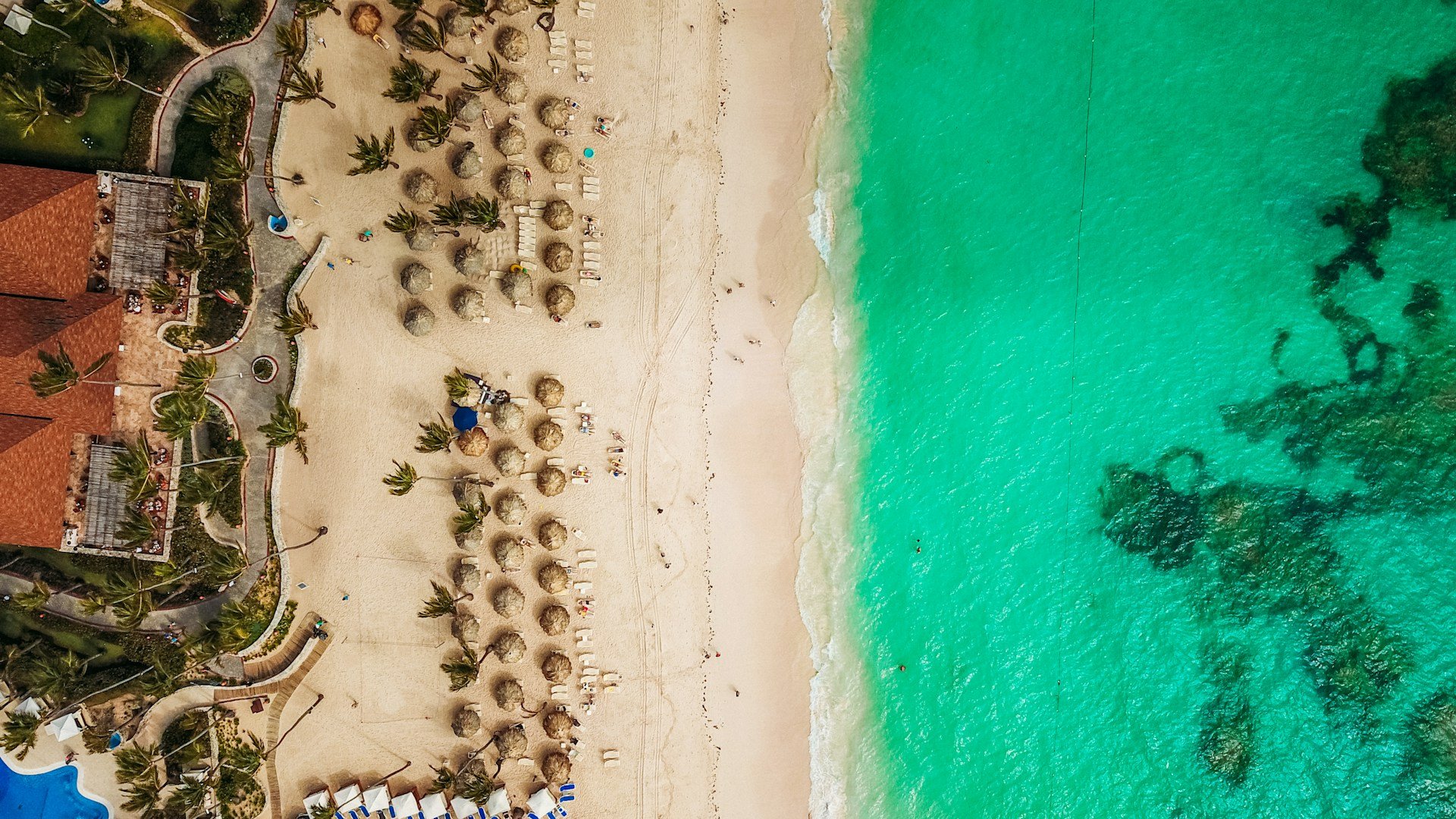
The DR's resort engine — kilometres of all-inclusive compounds behind Bávaro Beach, one of the genuinely beautiful stretches of Caribbean coastline. Comfortable, well-organised, and insulated from the country outside the gate. The Altos de Chavón recreated stone village above the Chavón River is worth a half-day if you have a car and want something that isn't another beach.
- Book airport transfers in advance — the arrivals queue is where most visitors first encounter DR tourist pricing
- Timeshare presenters work the beach and excursion desks; decline immediately if you didn't seek them out
- Beach vendor pressure on public sections is daily; the no-price-before-touch rule applies to everything
- Resort excursion desks charge 20-40% above independent booking — legitimate markup, worth knowing
The oldest European city in the Americas. The Zona Colonial — 16th-century churches, the first cathedral built in the New World, the Alcázar de Colón above the Ozama River — is a UNESCO World Heritage walkable district with good POLITUR coverage. Calle El Conde on weekend evenings is genuinely alive. The Malecón at dusk is beautiful; after dark on its less-lit sections it isn't.
- Fake police stops operate in non-tourist zones and near clubs at night; POLITUR coverage drops sharply outside the Zona Colonial
- Use Uber rather than street taxis — the app shows the price before confirmation and creates an accountability record
- Don't display phones or cameras in non-tourist areas; bag snatching from motoconchos is the most common street crime
- The Zona Colonial is safe for daytime walking; stick to lit busier streets at night
Mountainous, green, and operating at a different pace from the east coast resort strip. Las Terrenas has good restaurants and a long-established French and Italian expat community. Las Galeras at the far end gives access to Playa Rincón, one of the genuinely beautiful beaches in the Caribbean, reachable by boat. January to March, humpback whales breed in Bahía de Samaná in significant numbers — the whale watching boats from Santa Bárbara de Samaná are the reason to be here specifically.
- Very low organised scam presence; the peninsula doesn't attract the aggressive tourist industry of Punta Cana
- Book whale watching and Playa Rincón boats through established operators in Samaná town rather than dock approaches
- Las Terrenas has had motorbike theft incidents; don't leave bags visible on parked bikes
Puerto Plata was the DR's first major resort zone and has a slightly faded character the east coast has long outrun. The Victorian gingerbread architecture district around the central park and the San Felipe Fortress on the headland are worth a morning. Cabarete 20km east is a genuine wind and kite surfing destination with a beach culture entirely outside the all-inclusive system and a consistent Atlantic breeze from November through July.
- Airport taxi overcharging at Gregorio Luperón follows the same playbook as Punta Cana; book transfers in advance
- Cabarete kite operators are generally professional; check equipment condition before committing
- Puerto Plata city has higher petty theft rates than the resort zone; keep phones out of sight after dark
Mountain DR, 530 metres up, 10 degrees cooler than the coast. Dominicans come here to escape the coastal summer heat. White-water rafting on the Río Yaque del Norte, day hikes to the Jimenoa waterfalls, and the 3-day Pico Duarte climb (at 3,098m the highest peak in the Caribbean) are the draws. The town operates for Dominicans rather than international tourists and has essentially no scam infrastructure.
- No meaningful tourist scam presence
- Rancho Baiguate is the longest-established rafting operator and most consistently recommended
- Pico Duarte requires a licensed guide by law; book through the National Parks office in La Ciénaga
The largest lake in the Caribbean, 40 metres below sea level in an arid micro-desert of cactus and baobab trees. American crocodiles and flamingos populate it in numbers; the boat trips to Isla Cabritos in the middle are one of the genuinely extraordinary wildlife experiences in the region. Almost no international tourists reach the southwest and the landscape is completely unlike the rest of the country.
- No tourist scam infrastructure exists here
- Boat trips to Isla Cabritos run from La Descubierta; book at the National Parks desk there
- Having your own car or pre-arranged driver is the only realistic transport option for this region
Before You Go — The Checklist
- ✓ Book your airport transfer in advance — it removes the arrivals queue negotiation entirely. Licensed taxis have yellow plates; unlicensed cars have no accountability.
- ✓ Use bank ATMs only for currency. The peso is around 60 DOP per USD — do the arithmetic before any cash transaction so inflated pricing registers immediately.
- ✓ Save POLITUR at 809-200-3500 before you land. If anyone in uniform demands cash or wallet access, ask for badge number and offer to go to the station.
- ✓ Ask the price before touching anything on the beach — bracelet, coconut, drink, jet ski. This single rule covers every beach vendor situation.
- ✓ Don't sign anything at a timeshare presentation. If you attend for the gift, "We don't make financial decisions on holiday" ends it faster than arguing the merits.
- ✓ Don't leave drinks unattended — including at resort bars. If someone in your group seems disproportionately impaired, treat it as a spiking situation immediately.
- ✓ Use Uber in Santo Domingo. Keep phones and valuables out of sight in non-tourist areas of any city.