
What You're Actually Dealing With
The Scams That Actually Catch People
Cuba's hustles are almost entirely non-violent and many are more nuisance than genuine threat. But they're persistent, creative, and designed to exploit the enthusiasm of first-time visitors who haven't been briefed. Know what to expect and most of them dissolve on contact.
You're walking down Obispo with a map and a look of mild confusion. A friendly Cuban appears. They speak English, they've been to your home country, their cousin lives in your city — what are the odds. They offer to show you around. They know a great restaurant that locals go to, not the tourist traps. They know a cigar factory where you can buy direct. They'll introduce you to their grandmother who rents rooms. Every single recommendation earns them a commission — 10–30% of whatever you spend, added invisibly to your bill or paid separately by the owner. The restaurant they're taking you to is not where locals eat. The cigars are not from a factory. None of this is technically illegal, and the jinetero will be perfectly pleasant company throughout. But you'll overpay for everything, and the places they avoid steering you toward are almost always the better ones.
- Be politely firm from the start. "No gracias, estoy bien" repeated calmly and without eye contact is enough. Don't engage with the opening line — once you answer, you're in a conversation that's harder to leave.
- If you genuinely want a guide, hire a licensed one through your casa particular or a state tourism office. You'll get better information and pay a fair price that you agreed to upfront.
- Book your paladares and casas in advance through Airbnb, TripAdvisor, or direct recommendation. Arriving somewhere without a reservation is an invitation for a jinetero to "help" you find somewhere.
Someone approaches with a cardboard box, a story about working at the Cohíba factory, and offers you a box of premium cigars at a fraction of retail price. The box looks right. The bands look right. The cigars are garbage — loose tobacco rolled in low-grade leaf with a real band glued over it, or cheap Dominicans in fake packaging, or simply cabbage leaves. The cigar industry scam in Cuba is so established that even people who've been warned still fall for it because the presentation is very good. A genuine box of 25 Cohíbas at Cuban retail costs around $400–500 USD. If someone on the street is selling them for $30, that's the only number you need to do the math.
- Buy cigars only from official La Casa del Habano stores, La Casa del Tabaco, or the factories themselves. Yes, they're more expensive. They're also actual Cohibas.
- If you want to try the street market, go in knowing you're buying contraband of unknown quality. Bring a knowledgeable friend, roll one between your fingers to check for air pockets, and never pay more than a few dollars per cigar.
- The "my friend works at the factory" line is used by every cigar tout in Cuba. It has never once been true in the way they mean it.
You book a casa particular that looks great online. You arrive and are told it's unavailable — water problem, family emergency, whatever the excuse is today. But don't worry, the owner's cousin/friend/neighbour has a perfectly good room available. The replacement is either worse, more expensive, or both. Sometimes this happens because the casa you booked took a better-paying walk-in. Sometimes it's a deliberate bait-and-switch where the original listing doesn't exist. A variant: you arrive at a casa without a booking, a jinetero "helps" you find accommodation and the price you're quoted includes their unannounced commission, which the host has baked into the rate.
- Book through a platform with reviews and a cancellation policy — Airbnb works well in Cuba and gives you some recourse. Get written confirmation of the exact address and room before you travel.
- If you're redirected on arrival, you're within your rights to insist on the room you booked, ask for a full refund, and find somewhere else. Have backup options noted offline before you land.
- Arriving without a booking is fine, but walk in independently rather than letting a jinetero walk you somewhere. The price will be lower and the room will be the same.
The bill arrives with items you didn't order. The bread you didn't ask for but they brought anyway is charged at $2–3 each. The "complimentary" mojito the waiter pushed on you while you were reading the menu wasn't complimentary. The lobster was listed as the price per 100 grams and yours weighed more than you expected. A "service charge" appears with no prior mention. In tourist-heavy parts of Old Havana especially, some restaurants operate on the assumption that foreigners won't check the bill line by line and that even if they do, the conversation required to dispute it isn't worth the small amount involved. For the restaurant, those small amounts add up across a hundred covers a day.
- Check your bill line by line, every time, before paying. This is not rude — it's normal. Keep a rough mental tally of what you've ordered as you go.
- If bread, snacks, or amuse-bouches arrive uninvited, clarify immediately whether they're complimentary. A simple "¿Es gratis?" (is it free?) avoids the argument later.
- At fish and lobster restaurants, ask the weight of the portion before ordering if it's priced by the gram. Ask again when it arrives if you want to be thorough.
- Dispute errors calmly and specifically — point to the line, name the item, ask for the corrected total. Don't accuse, just clarify. Most establishments will fix genuine errors without drama.
There's no Uber in Cuba. There's no meter in most taxis. The price for any journey is whatever is agreed before you get in, and the opening bid from any taxi driver outside a hotel will be two to three times what a Cuban would pay. This isn't a scam exactly — it's dual pricing, which is embedded throughout the Cuban economy — but it adds up fast. From José Martí airport to Old Havana in a private taxi should cost around $25–30 CUC equivalent at fair tourist rates. Drivers outside the arrivals hall will open at $50–60. The classic American car taxis parked on tourist streets in Old Havana charge purely on vibes and your apparent enthusiasm for the experience.
- Always agree on a price before getting in. This is standard practice and no driver will be offended by it. If they won't give you a price, walk away.
- For airport transfers, arrange collection through your casa particular in advance. Your host can organise a trusted driver at a fair price and often meet you at arrivals — worth the small logistics of confirming it by email before you land.
- For short Havana journeys, the shared almendrones (collective taxis on fixed routes) cost a fraction of a private car. Ask your host to point you toward the nearest route.
- If you want the classic car experience, it's worth paying for — just agree on an hourly rate upfront rather than accepting a per-photo or per-block charge.
Since Cuba unified its currency in 2021, the official rate and the informal "street rate" at which private money changers (often called cadecas or just "el mercado negro") operate have diverged significantly. The informal rate is almost always better than the bank rate for tourists — sometimes substantially so. The scam occurs when someone quotes you an excellent informal rate, counts out the notes theatrically, and you walk away with either fewer notes than quoted or some counterfeit bills folded inside the stack. The sleight of hand happens in the count. It's fast and practiced.
- Exchange through your casa particular host first — they'll give you a fair informal rate and you can trust the count. This is by far the safest option and what most experienced Cuba travellers do.
- If exchanging with anyone else, count the notes yourself, note by note, before pocketing them. Don't be hurried. Take your time. A legitimate exchanger won't rush you.
- Familiarise yourself with Cuban peso notes before you arrive — know what each denomination looks like. A quick image search before you land takes five minutes and saves real money.
The woman in full Afro-Cuban dress with the cigar and the elaborate head-wrap is charming, photogenic, and positioned there specifically because tourists find her charming and photogenic. A photo will cost you $2–5 USD and she will ask. The musicians playing son cubano outside a bar will expect a tip if you stop to listen. The santería ceremony you're invited to observe by a friendly stranger outside a church will expect a substantial donation at the end. None of this is unreasonable. All of it should be expected, budgeted for, and agreed on before you take the photo or settle in to watch.
- Before photographing anyone in costume or pose — ask first and agree a price. "¿Cuánto por una foto?" is sufficient. If the price seems high, you're allowed to decline.
- Carry small denomination notes for tips and photographs. Handing over a 500 CUP note for a $1 photo and waiting for change that won't materialise is a frustrating and entirely avoidable experience.
- Street musicians genuinely earn their tips — a peso or two after a good song is fair and appreciated. Just don't let anyone usher you into a paid venue under the impression it's a free performance.
The Destinations — Honest Takes
Cuba is 1,200 kilometres of island, and the gap between Havana's crumbling-gorgeous chaos and a quiet beach in the far east is enormous. Here's what you actually need to know, place by place.
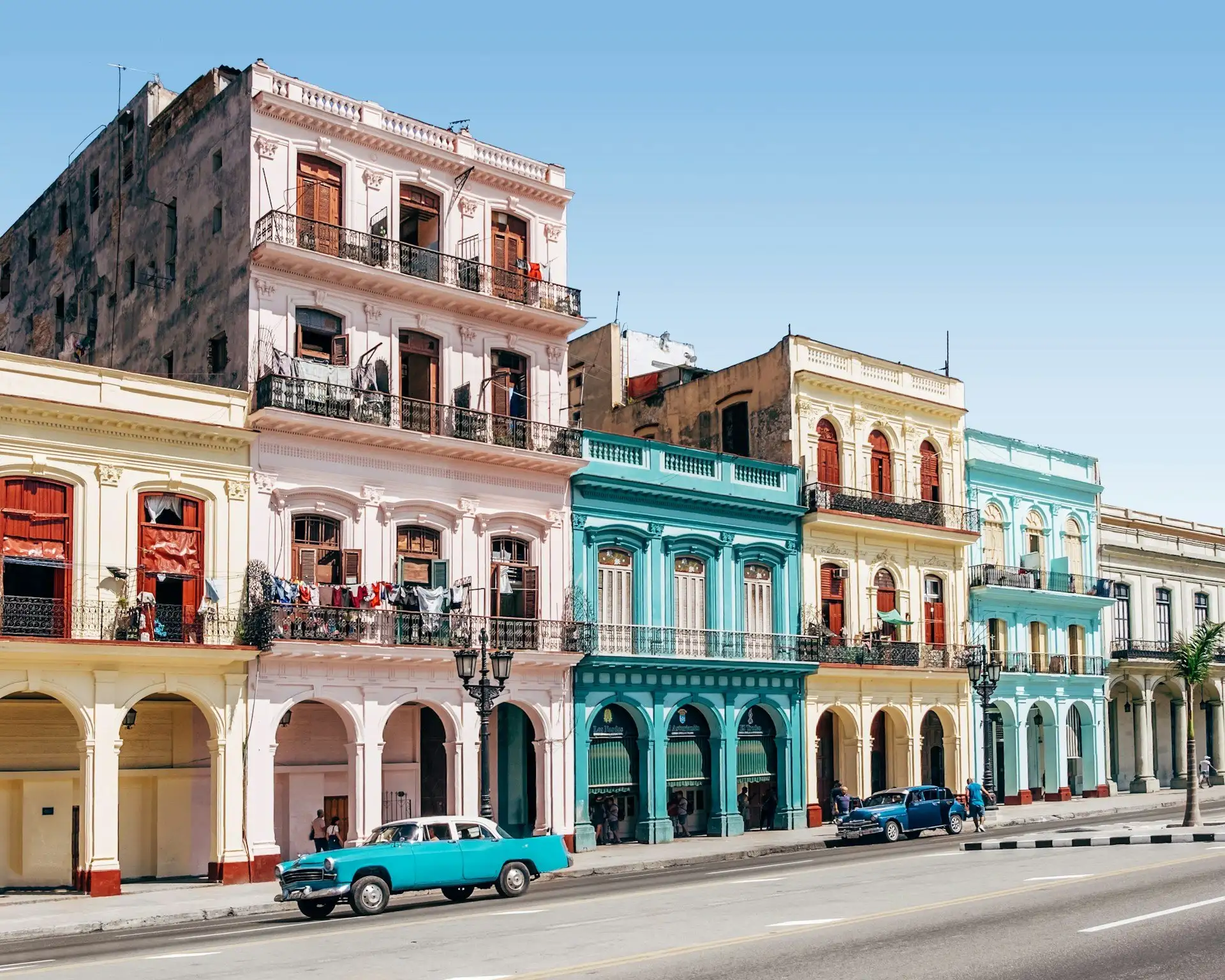
Havana is not a city that makes sense on paper. It's crumbling and beautiful in roughly equal proportions, and the crumbling is as much a part of it as the beauty. Old Havana (La Habana Vieja) is a UNESCO World Heritage Site in various states of restoration — some blocks are beautifully preserved, others look like they lost a bet with a hurricane. Walk Obispo in the morning before the tourists arrive and the street belongs to schoolchildren and old men with newspapers. The view from the rooftop bar at the Hotel Ambos Mundos, where Hemingway kept a room for years, costs the price of a mojito and is worth it. For food, skip the tourist-facing restaurants on the main plazas and walk ten minutes into Central Havana: La Guarida in a crumbling mansion in Calle Concordia is the best restaurant in Cuba and costs around $30–40 for a full meal with wine. Book it before you land.
- Jinetero density is highest in Old Havana and on the Malecón — polite and consistent refusal works; engaging even briefly extends the interaction significantly
- The area around the Capitolio and Parque Central has the highest concentration of cigar touts. Don't accept anything from anyone near the steps
- Central Havana and parts of Vedado are safe to walk during the day; avoid walking alone in unfamiliar streets after midnight
- Classic car tour drivers on Plaza de la Catedral charge by the photo and the whim — agree an hourly rate before getting in, not after
Trinidad is the Cuba that survived — a colonial town of cobblestoned streets and pastel facades that was essentially frozen in the 18th century when the sugar economy collapsed and everyone left. Walking the streets between the Plaza Mayor and the Palacio Cantero at golden hour, with the terracotta rooftops catching the last of the light, is one of the genuinely beautiful experiences this island offers. The Casa de la Música on the steps below the church is where Trinidad dances at night, and on a good night with a good band, it's the most alive you'll feel on the whole trip. The beach at Playa Ancón, 12km south, is quiet, clear, and takes about 20 minutes by taxi or bicycle. Budget two nights minimum; most people wish they'd booked three.
- Trinidad is very compact and very tourist-facing — jinetero activity here is high but manageable; the town is small enough that you quickly learn the street geography and stop getting approached
- Casa particular owners will approach you at the bus station — you're within your rights to ignore them and walk to the accommodation you've already booked
- The horse riding tours to the Valle de los Ingenios can be excellent or miserable depending on the operator — book through your casa, not through someone who approaches you on the cobblestones
- Evening music venues charge a cover — ask before entering what's included and what's not
Viñales is where Cuba remembers it has countryside. The valley sits inside a UNESCO-listed landscape of mogotes — those strange vertical limestone hills that erupt from the flat tobacco fields like something prehistoric. Watching the fog lift off them at 7am from the terrace of any casa on the hill above town is worth the four-hour bus journey from Havana on its own. The town itself is one long main street, thoroughly oriented toward tourism but without Havana's intensity. Rent a bicycle, ride out into the valley before anyone else is up, stop at a small tobacco farm where a farmer will roll you a cigar from his own plants for a couple of dollars (genuinely — this is different from the street sellers), and you'll understand why people keep extending their stays here.
- Lowest scam pressure of the major tourist destinations — most locals here genuinely want to show you the countryside rather than extract from you
- Horse tours vary enormously in quality and animal welfare; ask to see the horses before you agree, and book with operators that your casa recommends with actual enthusiasm rather than obligation
- The famous cave paintings (Mural de la Prehistoria) are tourist-facing and commercial — worth knowing before you drive out; the natural caves like Cueva del Indio are the more interesting excursion
Varadero is the Cuba that Cubans don't go to. A 20km strip of white-sand beach on a narrow peninsula, almost entirely given over to all-inclusive resorts primarily patronised by Canadians and Europeans. The beach is genuinely excellent — calm, clear, 23km of it. If a week at an all-inclusive in the Caribbean sun is what you're after, Varadero delivers it reliably. But it is essentially a parallel Cuba that doesn't intersect much with the one everyone else is talking about: no jineteros, no vintage cars on every corner, no paladares worth the walk. Consider it a recuperation base rather than a destination in itself, or a beach reward after a week of actual Cuba. Two nights here after Trinidad and Havana is perfect. Ten nights here first is a waste of a trip.
- Very low scam risk inside resorts — the main exposure is on day trips to Havana organized by resort tour desks, which are significantly overpriced compared to booking independently
- Beach vendors outside resort perimeters operate with the usual Caribbean persistence — agree prices before accepting anything, same rules as everywhere
- Car hire here can be expensive and the local road quality between Varadero and the rest of Cuba is better than average — renting a car for a day trip to Havana is a reasonable option if split between a group
Santiago is Cuba's second city and its cultural engine — this is where the revolution was born, where son and son montuno music came from, where the Carnival in July is the loudest, most chaotic, most alive thing in the Caribbean. The Castillo de San Pedro de la Roca (El Morro) looming over the bay entrance is genuinely dramatic. The Casa de la Trova on Calle Heredia is one of the best live music venues in Cuba, small and sweaty and perfect. Santiago sits at the far eastern end of the island — flying from Havana is 90 minutes; Viazul is around 14 hours and only worth it if you want to see the countryside between. It's hotter than Havana, rougher around the edges, and less polished for tourists. That's mostly a point in its favour.
- Santiago has a higher petty theft rate than western Cuba — keep your phone pocketed on busy streets around the Parque Céspedes and the central market
- The same jinetero dynamic applies but with less English — your Spanish will be tested more here, which is actually a good thing
- During Carnival week in July: extremely crowded, accommodation prices double, book months in advance or accept significantly reduced options
- Taxis from the airport — same rules as Havana; agree the price before the journey begins, not on arrival
The cayos (keys) off Cuba's northern coast — Cayo Coco, Cayo Guillermo, Cayo Santa María — are accessible only via long causeways from the mainland and are almost entirely composed of all-inclusive resorts in a similar Varadero format. The beaches here, particularly around Cayo Guillermo, are among the genuinely best in the Caribbean: shallow, sheltered, the water an implausible shade of blue. Flamingos wade in the shallows in the morning. The resorts are large, comfortable, and entirely removed from Cuban daily life. Like Varadero, they deliver exactly what they advertise. Like Varadero, they're not where you go to understand Cuba. If you're pairing a cultural trip with a beach week, they work extremely well as bookends.
- Near-zero scam risk inside resort zones — the cays are purpose-built tourist infrastructure with no independent local economy to speak of
- The drive across the causeway from the mainland (particularly to Cayo Coco) takes you through a government checkpoint — have your passport accessible
- Excursions sold by resort tour desks are consistently 40–60% more expensive than the same trips booked independently in the nearest mainland town
Before You Go — The Checklist
- ✓ Bring all the cash you'll need for your entire trip. Every peso of it. Cuba is effectively cash-only for tourists in 2026. ATMs exist but are unreliable. U.S. cards don't work at all. Euros and Canadian dollars exchange well. Running out of cash on the island is a genuine crisis with limited solutions.
- ✓ Book accommodation in advance, especially in Havana, Trinidad, and Viñales. Arriving without a booking is fine in slow season but hands the advantage to every jinetero at the bus station. Your casa host is your best practical resource for everything — taxis, restaurants, exchange rates, local advice.
- ✓ Download offline maps before you land. Maps.me has good Cuba coverage. Save your accommodation addresses, your nearest emergency contacts, and the route from the airport. Internet in Cuba is slow, expensive, and frequently unavailable exactly when you need it.
- ✓ Buy cigars only at official Casa del Habano or Casa del Tabaco stores. The price is real. The street price is not. Anyone with a cardboard box and a story about their factory job is selling you something that isn't what they say it is.
- ✓ Agree taxi prices before you get in. Every time. There are no meters and no apps. The opening bid outside any tourist hotel is at least double what's reasonable. Your casa can arrange trusted drivers at fair prices — use that system.
- ✓ Check your restaurant bill line by line. This takes 90 seconds and saves real money. Bread, snacks, and drinks you didn't ask for have a way of appearing on bills in tourist-facing restaurants in Old Havana.
- ✓ Keep a power bank charged at all times. Power cuts are a daily reality across much of Cuba. A dead phone in an unfamiliar city with no internet is a specific kind of helpless. Buy a high-capacity one and treat it as essential equipment.