
What You're Actually Getting Into
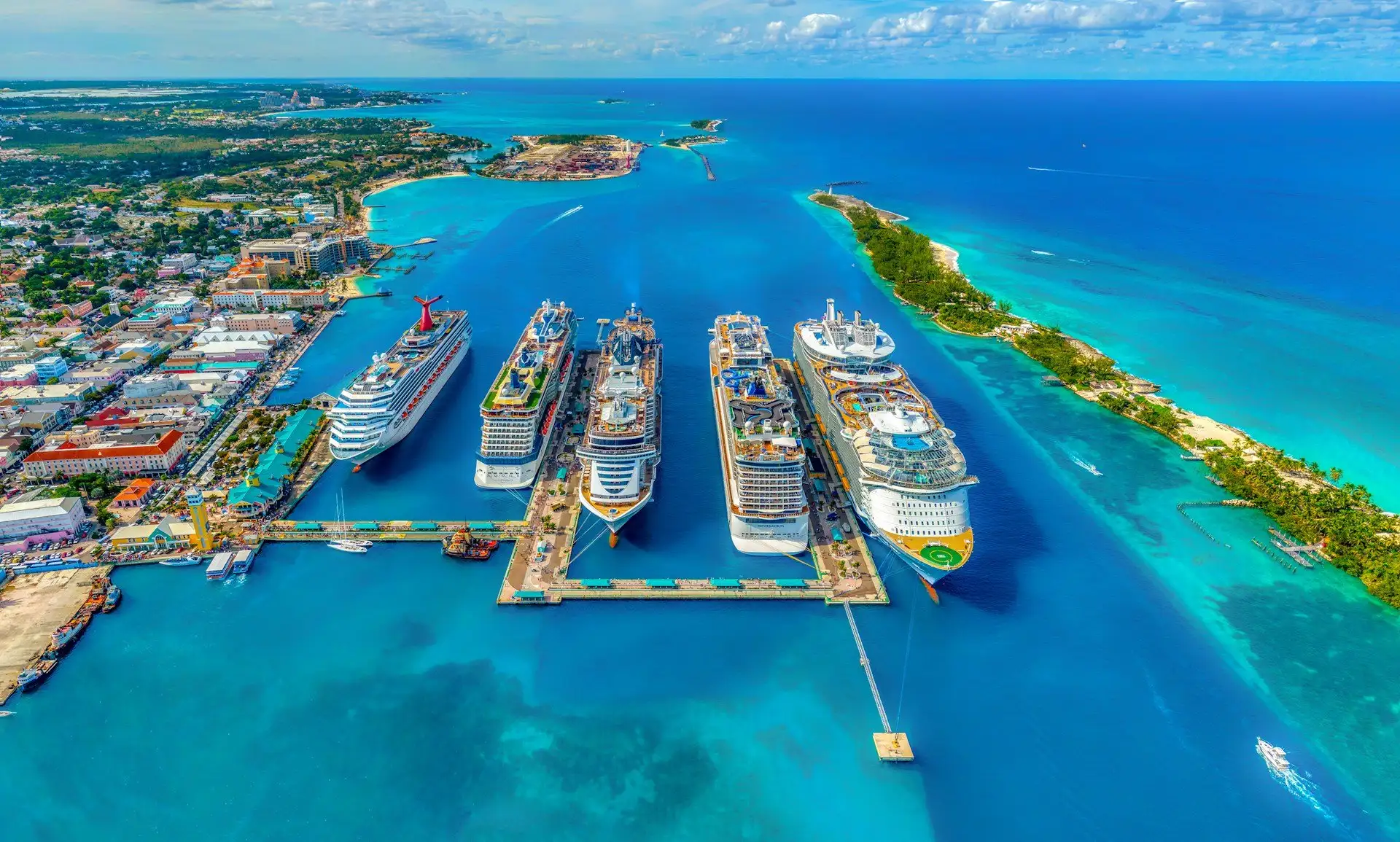
The Bahamas is not one destination, it's a decision tree. Nassau and Paradise Island are the version most first-timers book: mega-resorts, a water park the size of a small town, casinos, cruise ships in the harbor most mornings, and a straw market that has been selling the same handmade goods since long before "influencer trip" was a phrase. Grand Bahama, an hour further, is quieter and still rebuilding parts of its tourism scene after storm damage. And then there are the Out Islands, sometimes called the Family Islands: the Exumas, Eleuthera, Abaco, Andros, dozens more, where the population thins to a few hundred people, the water gets genuinely implausible in color, and a colony of pigs will swim out to your boat because that is, somehow, just a thing that happens here.
What ties it together is that this is a wealthy, English-speaking, US-dollar-friendly country built almost entirely around tourism and offshore finance, 45 minutes by air from Miami. That proximity is the whole pitch: you can be standing in genuinely tropical water on the same day you left a mid-latitude winter, without the long-haul flight the rest of the Caribbean requires from Europe or the US West Coast.
The honest complications
The Bahamas prices like a resort country because it is one: there's no real backpacker circuit, budget guesthouses exist but are scarce outside Nassau, and getting to the Out Islands costs real money in flights or a slow mail boat. Crime is a genuine, specific concern in parts of Nassau and Freeport, covered honestly in the Safety chapter rather than glossed over. Hurricane season, June through November, is not a rounding error: Grand Bahama and Abaco took a direct, devastating hit from Hurricane Dorian in September 2019, and both are still visibly rebuilding in places. And island-hopping takes actual planning, not a spontaneous ferry hop the way it might in Greece: domestic flights, mail boats and the odd water taxi are the connective tissue, and they run on their own schedule.
A History Worth Knowing
The islands were home to the Lucayans, an Arawakan-speaking people, for roughly 600 years before a Spanish expedition led by Christopher Columbus made landfall in 1492 on an island Bahamians still argue over the identity of (San Salvador is the traditional pick). The Lucayans were enslaved and largely wiped out within a generation. Empty islands with excellent hiding places and control of major shipping lanes then made the Bahamas a genuine pirate stronghold for a few decades, followed by a wave of British Loyalist settlers fleeing the American Revolution, and finally independence in 1973 after 325 years of British rule.
- 900-1492
The Lucayans. An Arawakan-speaking people settle the islands from around 900 CE, developing fishing and farming communities across what are now the Out Islands.
- 1492
Columbus arrives. His first landfall in the Americas is on a Bahamian island, traditionally identified as San Salvador. The Lucayan population is enslaved and largely destroyed by forced labor and disease within about 25 years.
- 1690s-1718
The pirate republic. With no effective colonial government, Nassau becomes a base for pirates including Blackbeard and Calico Jack Rackham, ended when Britain appoints Woodes Rogers as royal governor in 1718 with a mandate to clean the port out.
- 1783-1785
The Loyalists arrive. Thousands of British loyalists flee the newly independent United States, many bringing enslaved people with them, roughly tripling the islands' population and founding plantations that mostly failed within a generation.
- 1834
Emancipation. Slavery is abolished across the British Empire; the descendants of enslaved Bahamians make up the majority of the population today.
- 1973
Independence. The Bahamas becomes a fully independent nation within the Commonwealth on 10 July, after 325 years of British colonial rule.
Read more: rum-running, Junkanoo's roots, and Hurricane Dorian
Prohibition and rum-running. When the United States banned alcohol from 1920 to 1933, Nassau became a major smuggling hub, with bootleggers using the islands' proximity to Florida the same way pirates once used it two centuries earlier. The money built parts of modern Nassau and is a genuine, if slightly awkward, chapter of local pride.
Junkanoo's roots. The country's signature festival traces back to the era of slavery, when enslaved people were given a few days off around Christmas and marked it with masked, costumed street parades drawing on West African tradition. It survived abolition and is now a fiercely competitive, professionally organized street parade held before dawn on Boxing Day and New Year's Day.
Hurricane Dorian. A Category 5 storm stalled directly over Grand Bahama and Abaco for nearly two days in September 2019, one of the most powerful Atlantic hurricanes ever to make landfall. Recovery has been steady but visible scars remain in parts of both islands; New Providence and the southern Out Islands were largely unaffected.
Top Destinations
New Providence, Nassau's island, is compact enough to cover as one base (see our full Nassau city guide for the detailed breakdown). Everywhere else in the Bahamas is its own trip: Grand Bahama is the easiest add-on, the Exumas and Eleuthera are the postcard water, and Abaco and Andros reward visitors who want the country with almost nobody else in it.
Nassau, Paradise Island & Cable Beach
The capital and the country's tourism engine, split across three connected zones: downtown Nassau's colonial streets and cruise port, Paradise Island across the bridge with Atlantis and its Aquaventure water park, and Cable Beach a short drive west with the Baha Mar mega-resort complex. Full destination detail, hotel picks and a street-by-street itinerary live in our dedicated Nassau city guide; this chapter is the country-level overview.
Great Exuma & the Exuma Cays
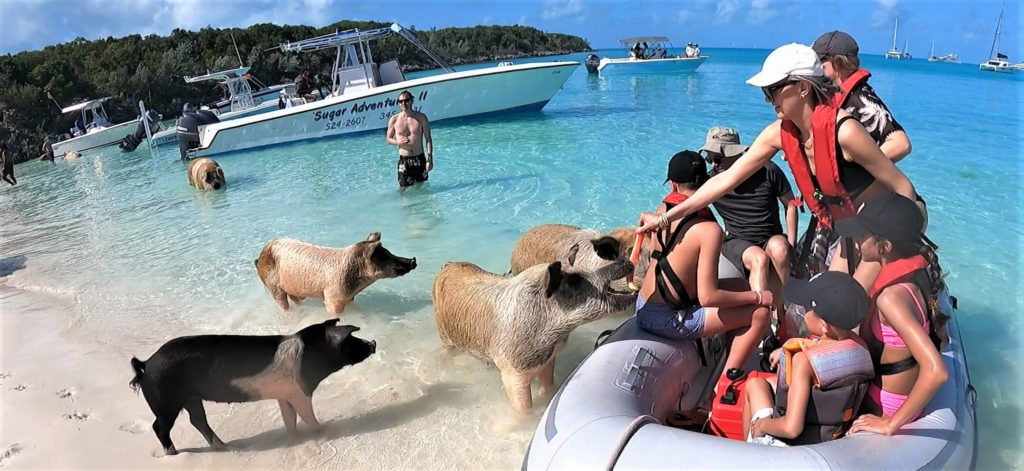
The Exumas run about 130 kilometers of cays southeast of Nassau, and the water here is the shade of blue that makes the rest of the Caribbean look slightly underachieving. Great Exuma, the largest island, holds most of the resorts and the small town of George Town. The Exuma Cays to the north are the real draw: Big Major Cay, better known as Pig Beach, where a colony of feral pigs swims out to greet arriving boats, and the Exuma Cays Land and Sea Park, a protected marine reserve good for snorkeling with nurse sharks and turtles. Most visitors see the cays on a day trip by boat or seaplane from George Town or directly from Nassau; a short flight to Exuma International Airport is faster and more comfortable than the alternative multi-hour powerboat crossing from Nassau.
Eleuthera, the 100-mile island
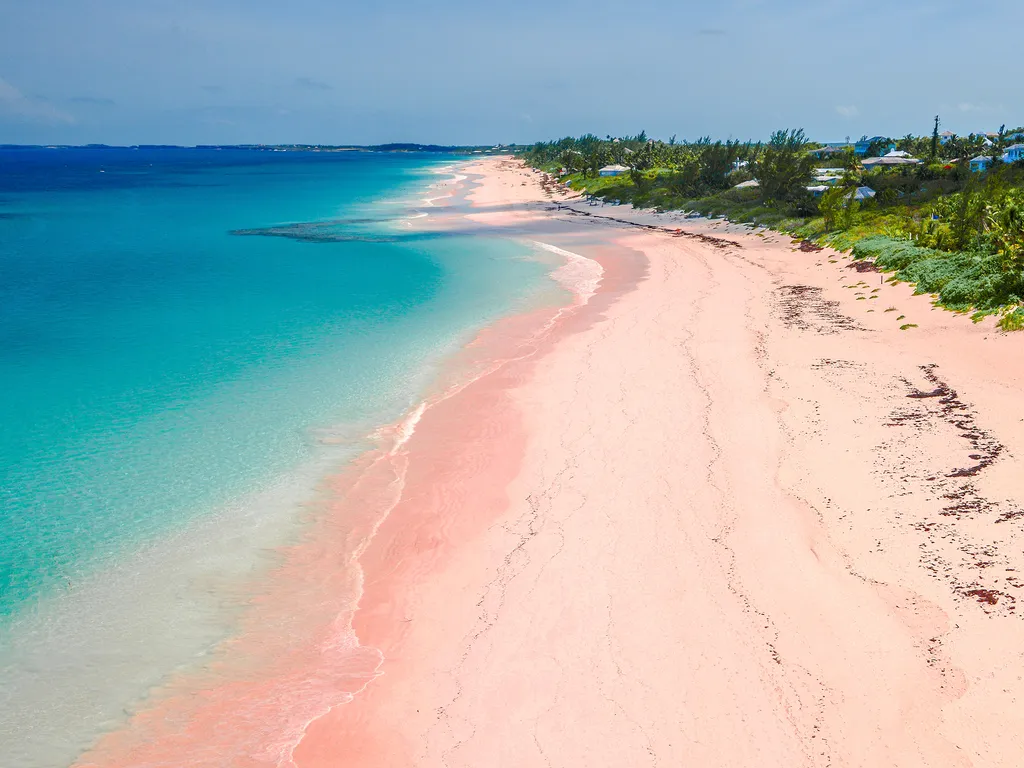
A long, narrow island of pastel-painted settlements, plantation ruins and cliffside coastline, an hour's flight or a short ferry from Nassau. Off its northern tip, tiny Harbour Island is the country's most photographed stretch of sand: Pink Sands Beach, colored by crushed coral and a reddish microorganism called foraminifera, runs almost the full length of the island's Atlantic side. Dunmore Town, Harbour Island's only settlement, is a cluster of pastel colonial cottages and picket fences that has earned the nickname "the Nantucket of the Caribbean," reachable by a 10-minute water taxi from North Eleuthera Airport.
Abaco & Andros, the quieter islands
Abaco, roughly 55 kilometers north of Nassau, is the Bahamas' second-most-developed island chain and a longtime sailing and boating hub, still visibly rebuilding parts of its infrastructure since Hurricane Dorian in 2019 but with its Loyalist-era settlements and cays like Elbow Cay and Green Turtle Cay back open to visitors. Andros, the largest island in the country by far, is the least developed of the group: home to the world's third-largest barrier reef, the mysterious Andros blue holes, and a bonefishing scene serious anglers travel specifically for. Both islands suit travelers who have already done Nassau or the Exumas and want the country with almost no other tourists in sight.
Grand Bahama & Freeport
An hour by air or a few hours by ferry from Nassau, Grand Bahama is quieter and considerably less built up, still working through recovery from Hurricane Dorian in parts of Freeport. What draws visitors back is the Lucayan National Park, with one of the longest explored underwater cave systems on earth, and Gold Rock Beach inside the park, wide and nearly empty at low tide. It's the easiest Out Island to add to a Nassau trip for travelers who want one quieter day without committing to a full separate island stay.
Beyond the main circuit
With extra time or a genuine appetite for remote islands, these reward the detour from the standard Nassau-Exuma circuit.
Long Island
Home to Dean's Blue Hole, one of the deepest known saltwater sinkholes on earth at over 200 meters, a freediving competition site and a striking swim spot in its own right, with far fewer visitors than the Exumas.
Cat Island
The Bahamas' highest point, Mount Alvernia, tops out at just 63 meters but comes with a hand-carved hermitage at the summit. A quiet, deeply religious island with some of the country's best untouched beaches.
Columbus's landfall island
The traditionally accepted site of Columbus's first landing in the Americas, now known mainly for wall diving on a reef that drops almost straight down from the shoreline, with very little else on the island to distract from it.
Culture & Etiquette
Bahamian culture runs on a specific, deliberate slowness that visitors from faster-paced places sometimes mistake for inefficiency; it isn't. Greetings matter, church is a genuine weekly institution for a large share of the population, and Junkanoo, the pre-dawn Boxing Day and New Year's street parade of costumes, cowbells and goatskin drums, is the closest thing the country has to a unifying cultural event, taken as seriously as any professional competition.
Do
- Greet before you ask. Walking straight into a "where's the bathroom" without a "good morning" or "good afternoon" first reads as rude in the Bahamas in a way it might not elsewhere; a greeting is expected before any request, even a quick one.
- Dress modestly off the resort. Swimwear is for the beach and pool; cover up for downtown Nassau, churches and local restaurants.
- Tip in cash where you can. 15% is standard for restaurant service and taxis, and $1 a bag for porters; many restaurants add a service charge automatically, so check the bill before tipping twice.
- Try to catch Junkanoo if your dates line up. The Boxing Day (26 December) and New Year's Day parades in downtown Nassau start before dawn and are genuinely one of the best free cultural events in the Caribbean.
- Expect "island time." Service, ferries and mail boats run on a looser schedule than mainland North America; build slack into any plan that depends on a connection.
Don't
- Take conch shells, coral or sand as souvenirs. It's illegal to export coral and, from some sites, sand; buy a shell from a market stall instead of picking one up on a beach.
- Rent an independent jet ski. Unlicensed operators are a genuine, officially flagged safety and scam risk on New Providence and Paradise Island; book watersports only through your resort or a reputable, licensed operator.
- Assume every island is Nassau. The Out Islands run on a slower, more local rhythm, with fewer services, less English-speaking tourist infrastructure friction (everyone speaks English) but genuinely limited shops, ATMs and medical care.
- Haggle aggressively at the Straw Market. Bargaining a little is normal and expected, but the vendors are largely independent craftspeople selling handmade goods, not a souvenir factory; keep it good-natured.
- Swim alone at unattended beaches. Currents and boat traffic, including unlicensed jet skis operating close to shore, are a real risk the official travel advisory calls out specifically.
Deeper culture: Junkanoo's structure, Bahamian dialect, and religion
Junkanoo. Organized groups spend months building elaborate cardboard-and-crepe-paper costumes, some over three meters tall, then compete on Bay Street in categories judged on music, costume and overall presentation. The result functions somewhere between a carnival parade and a marching band competition, with real prize money and real local pride on the line.
Bahamian dialect. English is the official language, but everyday speech is Bahamian dialect (sometimes called Bahamianese), an English-based creole with West African, British and American influences, distinct rhythm and vocabulary, and grammar that drops some verb conjugations. Visitors will have no trouble being understood in standard English; following rapid dialect between locals is a different matter.
Religion. The Bahamas is one of the most churchgoing countries in the hemisphere by self-reported attendance, with Baptist, Anglican and Catholic congregations especially prominent. Sundays are genuinely quieter across the Out Islands in particular, with some shops and services closed.
Food & Drink
Bahamian food is built around one mollusk: conch, pronounced "konk," is the country's de facto national dish and shows up fried, stewed, cracked, raw and in fritters at everything from beach shacks to fine dining rooms. Beyond conch, expect fresh grilled fish, rich stews, peas and rice as the default starch, and a sweeter, spicier take on Caribbean cooking generally.
Conch, every way $8-18
Conch salad (raw, diced, marinated in citrus like a ceviche), cracked conch (pounded, breaded and fried like a schnitzel), and conch fritters (deep-fried batter with diced conch) are the three essential orders. Try all three before you leave.
Peas & Rice, Johnnycake
Pigeon peas and rice cooked with tomato, thyme and often bacon or salt pork is the default side dish nationwide. Johnnycake, a dense, slightly sweet pan bread, and macaroni and cheese baked into a solid, sliceable block, round out the classic Bahamian plate.
Rum & the Goombay Smash $8-14
Kalik and Sands are the two national beer brands, both light lagers named after Junkanoo cowbells and drunk ice-cold. The Goombay Smash, a coconut-and-rum cocktail invented on Green Turtle Cay in Abaco, is the closest thing to a national drink.
Stewed Fish & Grits $10-16
A tomato-based fish stew served over grits, the classic Bahamian breakfast, especially on weekends. Look for it at local diners rather than resort buffets for the real version.
Guava Duff
A rolled, boiled dough filled with guava pulp and served warm with a rum-butter sauce, the standard Bahamian dessert and worth seeking out at a proper sit-down restaurant rather than a resort buffet line.
Rock Lobster $20-35
Caribbean spiny lobster, in season August through March, grilled or in a garlic butter, is a genuine local specialty rather than a tourist upsell, especially in the Out Islands during season.
When to Go & Itineraries
December through April is peak season for good reason: dry, 24-28°C, and outside the Atlantic hurricane belt's active window. Late April and November thread the needle with good weather, lower prices and thinner crowds, still clear of the worst storm risk. June through November is hurricane season, most dangerous from mid-August to mid-October; storms don't hit every island every year, but the risk is real enough that travel insurance with storm and cancellation coverage is a sensible purchase for a trip booked in this window, not just an upsell.
All seasons compared, with temperatures
| Season | Verdict | Temps | Prices & crowds |
|---|---|---|---|
| Dec-Apr | Best | 24-28°C, dry | Peak prices and crowds, especially around US holidays |
| Late Apr & Nov | Very good | 26-29°C | Lower prices, thinner crowds, still outside peak storm risk |
| May-Jul | Good, humid | 28-32°C | Early hurricane season; moderate prices |
| Aug-Oct | Riskiest | 29-33°C | Peak hurricane risk; lowest prices, real cancellation risk |
Water temperature stays swimmable, roughly 24-29°C, year-round. Rain tends to arrive as short, heavy tropical showers rather than all-day washouts outside storm events.
Itineraries
Five days covers Nassau and one Out Island add-on comfortably. Ten days allows a proper Out Island stay without feeling rushed on either end. Two weeks is enough to genuinely island-hop rather than pass through.
- Days 1-3
Nassau & Paradise Island. Downtown's Queen's Staircase and Straw Market, Aquaventure at Atlantis, dinner at the Arawak Cay Fish Fry.
- Day 4
Exuma day trip. Fly or boat out to swim with the Big Major Cay pigs and snorkel the Exuma Cays.
- Day 5
Blue Lagoon Island or Cable Beach. A slower final day: the dolphin encounter and beach day at Blue Lagoon Island, or simply Cable Beach before the flight home.
- Days 1-3
Nassau & New Providence. The full city circuit: downtown history, Fort Charlotte, John Watling's Distillery, Aquaventure, the Fish Fry.
- Days 4-6
Harbour Island, Eleuthera. Fly to North Eleuthera, water taxi to Dunmore Town, three unhurried days on Pink Sands Beach.
- Days 7-9
Great Exuma. Fly to George Town, a day for the swimming pigs and Exuma Cays, two days to slow down on Great Exuma itself.
- Day 10
Fly home from Nassau or George Town, depending on your carrier's routing.
- Days 1-3
Nassau extended. Full city circuit plus a day trip to Blue Lagoon Island.
- Days 4-6
Harbour Island & Eleuthera. Dunmore Town, Pink Sands Beach, and the Glass Window Bridge on the Eleuthera mainland.
- Days 7-10
The Exumas, unhurried. Four days on Great Exuma with two boat days: swimming pigs and the Exuma Cays Land and Sea Park.
- Days 11-13
Andros or Abaco. Andros for diving the barrier reef and blue holes, or Abaco for sailing and the Loyalist cays, depending on interest.
- Day 14
Fly home via Nassau.
Getting there & around
Lynden Pindling International Airport (NAS) in Nassau is the main gateway, roughly 45 minutes from Miami and 3-3.5 hours from New York on nonstop routes with American, Delta, JetBlue and Bahamasair. Grand Bahama's Freeport airport and several Out Island airstrips take smaller direct or connecting flights. Between islands, domestic carriers (Bahamasair, Western Air, Southern Air) fly Nassau to most Out Islands in 30-50 minutes; the government mail boat network is far cheaper but slow and runs a loose weekly schedule, more an experience than reliable transport.
All transport options with prices: taxis, jitneys, ferries
| Option | Price | Notes |
|---|---|---|
| Nassau airport taxi | $32 flat (2 pax) | Plus $4 per extra passenger; licensed taxis carry a blue "TX" plate. Agree the fare before you get in, meters aren't standard. |
| Jitney bus (Nassau) | ~$1.50/ride | Exact change required, pay as you exit. No jitney stop at the airport itself; a 15-minute walk to the main road connects to Route 10. |
| Water taxi, Nassau-Paradise Island | ~$7 one way | A scenic 10-minute crossing, an alternative to the road bridge. |
| Domestic flight, Nassau-Out Island | $90-250 one way | 30-50 minutes to most Family Islands on Bahamasair or a regional carrier. |
| Government mail boat | $40-60 one way | Cheapest inter-island option; slow, infrequent, and closer to a cargo-ferry experience than a passenger service. |
Driving: traffic keeps to the left despite most cars being left-hand-drive American imports, a genuine adjustment for US visitors renting a car; roundabouts in Nassau catch out a lot of first-timers. A US, Canadian or EU license is valid for up to three months. Car rental is really only worth it on New Providence or Grand Bahama; most Out Islands are small enough to walk, cycle or golf-cart around, and golf cart rental is the standard way to get around Harbour Island specifically, where cars are restricted.
Practical prep: a Bahamian SIM or an eSIM before landing covers New Providence and Grand Bahama well; signal thins out fast on smaller Out Islands. Standard travel insurance works, but confirm hurricane and trip-interruption coverage specifically if traveling June through November.
Where to stay
Nassau & Cable Beach resorts
The widest range in the country, from the Baha Mar complex on Cable Beach to smaller independent hotels downtown. Full property-by-property picks are in our Nassau city guide.
Paradise Island & Harbour Island
Atlantis and The Ocean Club dominate Paradise Island; Harbour Island's pastel-cottage hotels around Dunmore Town, like the Coral Sands and the Dunmore, run smaller and quieter, priced for the setting.
Great Exuma & Out Island lodges
Small, often family-run properties in George Town and along the Exuma Cays; book well ahead in peak winter months, since room counts across the Out Islands are genuinely limited.
Budget guesthouses
Scarce but real, concentrated in Nassau; a hostel-style stay like Viking Hill Oceanfront Hostel keeps a Bahamas trip within reach of a genuinely budget-conscious traveler willing to trade resort amenities for a fraction of the price.
Budget Planning
The Bahamas is a resort-priced country, not a bargain Caribbean stop, and it runs on the US dollar in every practical sense. Budget travel is genuinely possible around Nassau with guesthouses and Fish Fry-style meals, but the Out Islands and any resort stay push costs up quickly.
- Guesthouse or hostel $50-100
- Fish Fry & local diner meals $10-20
- Jitney buses around Nassau
- Free beaches, one paid attraction
- Cable Beach or Nassau resort $150-300
- Restaurant meals $25-50/person
- One Out Island day trip or flight
- Rental car or regular taxis
- Atlantis, Ocean Club or Harbour Island stays
- Fine dining, Dune or Nobu-level
- Private charters and multi-island trips
- Domestic flights between islands
Quick reference prices: food, transport, attractions
| Conch fritters or salad, Fish Fry | $8-15 |
| Kalik or Sands beer | ~$5-6 |
| Restaurant dinner (mid) | $25-40 |
| Airport taxi (Nassau, 2 pax) | $32 flat |
| Jitney bus ride | ~$1.50 |
| Water taxi to Paradise Island | ~$7 one way |
| Domestic flight to an Out Island | $90-250 one way |
| Fort Fincastle entry | ~$5 |
| Blue Lagoon Island beach day | from ~$109 |
Prices reflect August 2026 research and drift over time, especially resort accommodation and inter-island flights in peak winter months. Treat them as a planning baseline, not a quote.
Visa & Entry
The Bahamas has a permissive entry regime for major passport holders: US citizens can stay up to 8 months as a bona fide visitor without a visa, and UK and Canadian citizens are also visa-exempt. Everyone needs a passport, proof of a return or onward ticket, and evidence of accommodation and sufficient funds. The Bahamas Department of Immigration is the authoritative source for current rules by nationality, not third-party paid "e-visa" sites.
✓ Valid passport
Required of all visitors regardless of nationality; check validity covers your full planned stay.
✓ Return/onward ticket
May be checked at immigration on arrival; onward travel to a third country needs its own valid visa if required.
✓ Accommodation address
Have your first night's hotel or address ready; officers set the length of stay stamped in your passport at their discretion.
✓ No work while visiting
Visitors are not permitted any form of paid work in the Bahamas on a standard tourist entry.
| Bahamas | Turks and Caicos | |
|---|---|---|
| Scale | ~700 islands, 30 inhabited, huge variety | ~40 islands and cays, far smaller and more compact |
| Daily budget | Roughly $150-400 | Roughly $500-1,000+, generally pricier |
| Signature draw | Exuma swimming pigs, Harbour Island's pink sand | Grace Bay's calm, reef-protected water |
| Atmosphere | Nightlife, casinos and shopping alongside quiet islands | Quieter, more uniformly upmarket and low-key |
| Getting there | 45 min from Miami, well-connected from the US East Coast | Similar proximity, fewer direct routes overall |
Safety, Solo Women & Family
The US State Department rates the Bahamas Level 2, Exercise Increased Caution, its second-lowest of four tiers, citing armed robbery, burglary and sexual assault risk. The advisory is specific rather than blanket: most crime concentrates in particular parts of Nassau and Freeport, especially away from the main tourist strips, and the advisory does not tell travelers to avoid the country. Resort areas, Paradise Island, Cable Beach and the Out Islands see comparatively little of this. Treat it the way you'd treat a similar advisory for a US city: real, specific, and manageable with normal awareness.
Crime areas
Stick to well-trafficked, tourist-oriented parts of Nassau and Freeport, especially after dark; avoid walking alone late at night outside resort grounds, and use licensed taxis rather than walking unfamiliar streets at night.
Water & boating
Boating is not tightly regulated and accidents happen; never rent a jet ski from an unlicensed independent operator, don't swim alone at unattended beaches, and watch for watercraft operating close to shore.
Vacation rentals
The advisory specifically flags rental properties without private security as a higher-risk category; a hotel or resort with on-site security is the lower-risk choice, especially for a first Bahamas trip.
Two more things worth knowing: hurricane risk and petty crime
Hurricane season (June-November) is a genuine planning consideration, not background noise: monitor forecasts if traveling in this window, know your resort's evacuation plan, and buy travel insurance that explicitly covers storm-related cancellation and interruption.
Petty theft around cruise ports, Bay Street and Junkanoo Beach on busy cruise days follows the pattern of any high-tourist-traffic area: bag snatching, distraction thefts and opportunistic pickpocketing. Keep valuables secured and out of sight rather than displayed on the sand.
The 3 scams to actually know about
The Bahamas isn't an unusually scam-heavy destination, but three patterns catch uninformed visitors specifically, and knowing them going in avoids nearly all of it. The full country list lives on our Bahamas travel alerts page.
Unlicensed jet ski operators
Independent watercraft rentals on New Providence and Paradise Island are specifically called out in the official US advisory for safety and assault risk; book only through your resort or a known, licensed operator with visible business credentials.
Taxi fare disputes & "free" gifts
Unmetered taxis occasionally quote one fare and demand more on arrival; street vendors offering a "free" braiding or gift often follow up with a high-pressure payment demand. Agree the fare before getting in and decline unsolicited "free" offers politely but firmly.
Fake villa & rental listings
Too-good-to-be-true vacation rental listings, especially for Out Island properties, sometimes take a deposit for a place that doesn't exist. Book through a recognized platform or the resort's own verified website rather than a listing found on social media.
Solo women travelers
Nassau, Paradise Island and Cable Beach see solo women travelers regularly and rate reasonably well with normal city awareness: stick to well-lit, populated areas after dark, use licensed transport rather than walking unfamiliar streets alone, and avoid leaving a bar or beach alone late at night. The advisory's specific mentions of sexual assault risk, particularly tied to unlicensed jet ski operators and unsecured vacation rentals, are worth reading as concrete, actionable guidance rather than general caution: booking watersports and lodging through reputable, security-equipped operators addresses most of what the advisory flags directly. Full detail on our Solo Woman Explorer pages.
Emergency numbers
US Embassy Nassau and Out Island emergency limits
The US Embassy in Nassau, on Queen Street, handles consular emergencies for American citizens; other nationalities should contact their own country's nearest mission, several of which maintain honorary consuls in Nassau even without a full embassy. Doctors Hospital and Princess Margaret Hospital in Nassau are the main options for serious medical care on New Providence.
Out Island limits: medical facilities on the Family Islands range from a single clinic to nothing at all; serious emergencies typically require air evacuation to Nassau. Confirm your travel insurance covers medical evacuation specifically if you're spending significant time away from New Providence or Grand Bahama.
Family travel & pets
New Providence is an excellent family destination: Aquaventure's water slides and lazy river at Atlantis, the dolphin and sea lion programs at Blue Lagoon Island, and the calm, shallow water along Cable Beach all work well for kids, and there's no language barrier to navigate. The Out Islands suit families who want a quieter, more self-directed trip over structured kids' programming.
Pet entry rules and age guidance for water activities
Pets: dogs and cats need an import permit from the Bahamas Department of Agriculture arranged in advance, a health certificate issued within 48 hours of travel, and current rabies vaccination; requirements are strict enough that most visiting families leave pets at home rather than navigate the process for a short trip.
Water activities with kids: Aquaventure has designated areas by height and age; the Blue Lagoon Island dolphin encounter typically requires children to be at least 4-6 depending on the specific program. Confirm age minimums when booking rather than assuming.
Bahamas FAQ
Is the Bahamas safe to visit?
Mostly yes, with real caveats. The US State Department rates it Level 2, Exercise Increased Caution, for armed robbery and sexual assault risk, concentrated in Nassau and Freeport. Resort areas, Paradise Island and the Out Islands see very little of this; the advisory is about being street-smart in the two main cities, not avoiding the country.
Do I need a visa for the Bahamas?
US citizens can stay up to 8 months without a visa on a valid passport. UK and Canadian citizens are also visa-exempt. Everyone needs a passport valid for the length of stay, a return or onward ticket, and proof of accommodation.
How much does a Bahamas trip cost?
Budget travelers manage on $150-220 a day using guesthouses and Fish Fry-style food; mid-range runs $250-400. This is a resort-priced country built around the US dollar, not a backpacker destination.
When is the best time to visit the Bahamas?
December through April: dry, 24-28°C, and outside hurricane season. Hurricane season runs June to November with the highest risk mid-August to mid-October; late April and November offer good weather with fewer crowds.
What is the currency in the Bahamas?
The Bahamian dollar (BSD), pegged 1:1 to the US dollar. US dollars are accepted everywhere interchangeably with Bahamian dollars, so there's no real need to exchange money.
How many islands does the Bahamas have?
About 700 islands and cays plus roughly 2,400 smaller rocks, of which around 30 are inhabited. Nassau (New Providence) and Grand Bahama hold most of the population and tourism infrastructure; everything else is called the Out Islands or Family Islands.
How do you get between the Bahamian islands?
Domestic flights from Nassau (30-45 minutes to most Out Islands) are the fastest option; government mail boats are the cheapest but slow and infrequent; a few islands, including Harbour Island, connect by water taxi from a neighboring airport.
Are the swimming pigs real?
Yes. A colony of feral pigs lives on and swims off Big Major Cay in the Exumas and will paddle out to greet boats. They're reachable by day trip from Nassau, either a long boat ride or a short flight to Exuma International Airport.
Is the Bahamas good for families with kids?
Yes, especially New Providence. Aquaventure at Atlantis, the dolphin and sea lion programs at Blue Lagoon Island, and calm Cable Beach water all work well for kids, and English is spoken everywhere.
Is the Bahamas cheaper than Turks and Caicos?
Generally yes. The Bahamas has more islands, more competition and more budget options, with daily costs roughly $150-400 versus $500-1,000-plus for a comparable Turks and Caicos trip, though both can get expensive at the top end.
What language is spoken in the Bahamas?
English is the official language. Day to day, most Bahamians speak Bahamian English or Bahamian dialect, an English-based creole with its own rhythm, vocabulary and grammar; it's easy to follow but distinct from American English.
What Stays With You
Everyone who visits the Bahamas takes the same photo: an impossible, saturated blue over sand so pale it looks bleached, and nobody believes it wasn't edited. What the photo doesn't capture is the range behind it, a capital with a working straw market and a water park the size of a neighborhood, a colony of pigs that will swim out to your boat because that's simply what they do, a beach that is, inexplicably and completely genuinely, pink.
Nassau will show you the postcard version in an afternoon. The Out Islands are where the country stops performing and just is what it is: quiet, slow, and 45 minutes from Miami by air but a world away in pace. Both versions are real. Try to see at least a little of each.