
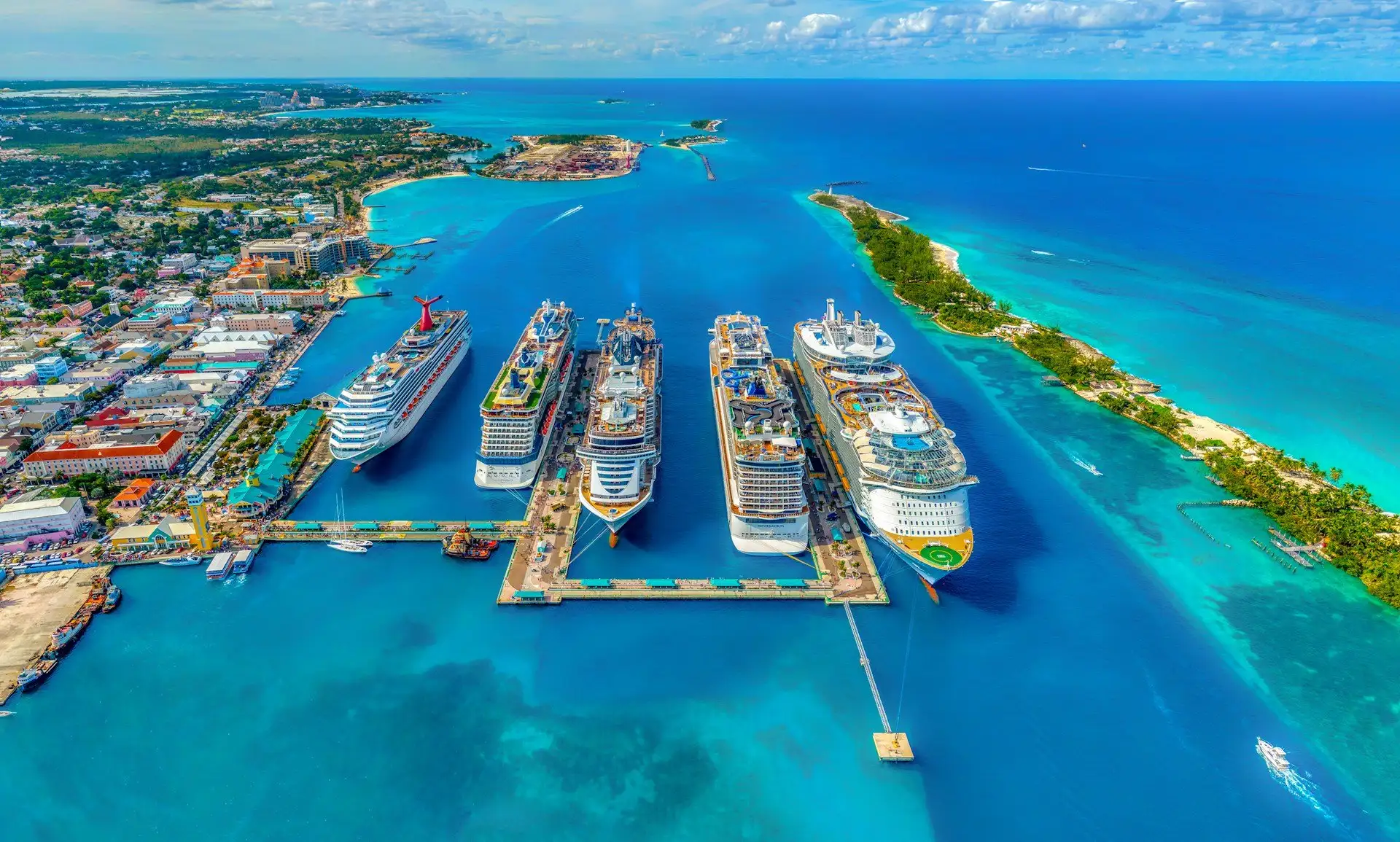
What Travellers Should Know About the Bahamas
The Bahamas presents two very different realities for tourists — Nassau and New Providence (heavily touristed, with associated traps), and the Out Islands (quieter, safer, and far more naturally spectacular).
Common Scams in the Bahamas
The Bahamas' most common tourist traps follow predictable Caribbean patterns — recognising them in advance makes them easy to sidestep.
Nassau's taxis are unmetered. Government-mandated rate cards exist and drivers are supposed to carry them, but are frequently "unavailable" when tourists ask. Common tactics include quoting per-person rather than per-vehicle rates (making a USD 30 ride into USD 90 for three people), claiming a "peak surcharge" for busy cruise days, and quoting inflated rates from cruise berths where passengers have limited options and time pressure. Water taxis between Nassau and Paradise Island are also subject to informal price inflation.
- Ask to see the official government taxi rate card before agreeing to any fare — all licensed drivers are required to carry it.
- Confirm the total fare is per vehicle, not per person, before getting in.
- From the airport, pre-arranged hotel shuttles at confirmed prices are the most reliable option.
- The official fixed-rate water taxi between Nassau and Paradise Island should cost USD 4–6 each way — confirm this before boarding.
Cable Beach has some of the Caribbean's most persistent hair braiding and jewellery vendors. The approach is identical to beaches across the region: a "free sample" braid is started without explicit agreement, or a bracelet is placed on your wrist, and a substantial payment demand — often USD 40–80 or more — follows. Once braiding has started, the social pressure to complete and pay is intense. Some vendors work in groups, making polite refusal more difficult.
- Say "no thank you" clearly before any physical contact is made — once braiding begins, your leverage is gone.
- Do not allow anyone to touch your hair or place anything on your wrist without a prior explicit price agreement.
- Resort beach areas with controlled access have far fewer vendors — this is one of the practical advantages of resort-section beaches.
- If you want hair braiding, agree the full price for the complete style before work starts and confirm no add-ons.
A well-documented Bahamas-specific scam: a tourist rents a jet ski, returns it, and is then presented with a claim for damage allegedly caused during the rental — typically a crack, scratch, or mechanical fault that was pre-existing. The operator demands USD 200–500 cash on the spot, implying that the police will be called if the tourist refuses. The damage is either pre-existing and undocumented, or fabricated. The tourist, on a tight cruise schedule or without local recourse, often pays.
- Photograph and video the entire jet ski — every panel, the hull, the handlebar area — before departing. Send to yourself for a timestamp.
- Ask the operator to sign a written pre-rental inspection form. If they refuse, do not rent from them.
- Use only watersports operators recommended by your hotel or accredited by the Bahamas Tourism Authority.
- Book jet ski and watersports experiences through GetYourGuide — vetted operators with accountability and customer reviews.
The Nassau Straw Market — directly adjacent to the cruise terminal — is Nassau's most-visited attraction for cruise passengers. The vast majority of goods sold as "authentic Bahamian" crafts — straw hats, bags, jewellery, T-shirts, carved items — are manufactured in China or other Asian countries. Genuine Bahamian straw work (plaiting) does exist but is a small fraction of what is sold. Prices quoted to tourists are typically 3–5× what bargaining can achieve, and aggressive haggling tactics are the norm.
- Bargaining is expected and standard — start at 30–40% of the asking price and work up from there.
- Genuine Bahamian straw plaiting is a specific craft — look for the tightly woven palm or silver top palm straw work, not mass-produced items.
- The Bahamas Artisan Craft Market (separate from the Straw Market) has higher-quality locally made goods with more honest pricing.
- Never feel obliged to buy anything after handling an item or engaging with a vendor.
The Bahamas — particularly Paradise Island and Cable Beach — has an active timeshare and vacation club sales industry. Tourists are approached with offers of "free gifts," "complimentary breakfast," or "resort credit" in exchange for attending a "90-minute presentation." These presentations routinely last 3–4 hours, use high-pressure sales tactics, and the promised gifts often come with significant conditions attached. The financial products being sold are frequently poor value.
- Decline all unsolicited timeshare or "vacation club" approaches — the promised gift is never worth the time and pressure.
- If you are interested in a timeshare product, research it independently and never sign anything during a high-pressure presentation.
- Read any "free gift" offer in full — conditions typically include attending presentations lasting several hours with no ability to leave early.
Boat trip operators — snorkel tours, shark dives, swimming with pigs excursions — quote attractive per-person prices then add fuel surcharges, equipment fees, and expected gratuity at the end. Some operators selling "swimming with pigs" experiences in Nassau are actually offering a different location to the famous Pig Beach in the Exumas (Big Major Cay) — a manufactured local version that is a poor substitute. Always verify the exact experience being offered.
- Get the all-inclusive total price confirmed in writing before boarding any vessel.
- For "swimming with pigs" — the authentic Pig Beach (Big Major Cay) is in the Exumas, requiring a flight or boat from Nassau. Nassau-based "pig swim" offerings are not the same experience.
- Book marine tours through GetYourGuide or your hotel's concierge — verified operators with transparent pricing.
- Check TripAdvisor reviews specifically for "bait and switch" or "not as described" mentions before booking any marine operator.
Risk by Island & Area
The Bahamas comprises 700 islands — the experience varies enormously between Nassau and the Out Islands. The scam risk drops significantly once you leave New Providence.
The capital and most-visited island. Nassau combines genuine historic charm with serious tourist-industry pressure. Bay Street, the Straw Market, and the cruise terminal area are the epicentre of commercial tourist traps. Paradise Island (connected by bridge) is resort-heavy and generally safe.
- Airport taxi overcharging from Lynden Pindling International (NAS)
- Cruise terminal taxi and tour operator overcharging
- Cable Beach hair braiding pressure vendors
- Nassau Straw Market imported goods sold as "authentic Bahamian"
- Jet ski damage claim scams on Cable Beach
- Timeshare presentation pressure on Paradise Island
- Southern/eastern residential Nassau — avoid at all times as a tourist
Connected to Nassau by bridge, Paradise Island is dominated by the Atlantis resort complex. It is effectively a self-contained resort enclave. Crime against tourists is very low. The main issues are the captive-market pricing within the resort complex and the timeshare industry that targets guests.
- Atlantis complex captive-market food and activity pricing
- Timeshare and vacation club presentations — aggressive approaches to resort guests
- Water taxi fare inflation between Nassau Harbour and Paradise Island
- Tour operators at the resort offering overpriced excursions vs pre-booked rates
The Exumas — a chain of 365 cays southeast of Nassau — offer some of the most breathtaking water in the world. Big Major Cay (Pig Beach) is one of the Bahamas' most famous attractions. George Town on Great Exuma is the main hub. Crime is essentially non-existent. The main concern is ensuring you book the genuine Exuma experience and not a Nassau substitute.
- Nassau-based operators selling "swimming with pigs" that is not the authentic Pig Beach (Big Major Cay)
- Day trip pricing from Nassau — flight or fast boat — verify exactly what is included
- Limited accommodation means peak-season pricing can be very high — book well in advance
Harbour Island — with its famous pink sand beach — and the long thin island of Eleuthera are among the Bahamas' most beautiful and authentic destinations. Very safe, genuinely local in character, and a complete contrast to Nassau's tourist industry. The main consideration is getting there (ferry or small plane from Nassau).
- Golf cart rental the standard transport — agree rental price and fuel policy in advance
- Pink Sand Beach vendors are fewer than Nassau beaches but present
- Water taxi between North Eleuthera and Harbour Island — confirm current rates before boarding
The Abacos — a cruising sailor's paradise in the northern Bahamas — were heavily damaged by Hurricane Dorian in 2019 and have been substantially rebuilding. Marsh Harbour is recovering, Hope Town on Elbow Cay is largely restored. Crime against tourists is very low. The main concerns are the ongoing recovery infrastructure and boat/marina pricing.
- Check current operating status of marinas, restaurants, and accommodation — Dorian recovery is ongoing
- Marina and charter boat pricing — confirm all-inclusive rates before engaging any charter
- Water taxi between Marsh Harbour and the cays — agree fare before boarding
The more remote Out Islands — Long Island (famous for Dean's Blue Hole and the Stella Maris area), Andros (enormous, unspoiled, a fly-fishing and diving mecca), and the remote southern cays — offer an entirely different Bahamas experience. Crime is negligible. The challenges are logistical — limited flights, limited accommodation, limited facilities.
- Very limited accommodation — book months in advance for peak season
- Bahamasair and charter services serve these islands — book early and verify schedules
- Fuel and supplies extremely limited in remote cays — self-sufficient boaters must plan carefully
Safety Tips for the Bahamas
The Bahamas is a wonderful destination — these habits cover the specific traps that catch visitors off guard.
- ✓ Always confirm taxi fares are per vehicle, not per person, before getting in — ask to see the official rate card. Pre-arrange hotel transfers at confirmed prices wherever possible.
- ✓ Never allow beach vendors to start braiding your hair or place anything on your wrist without a prior explicit price agreement for the complete service.
- ✓ Photograph every panel of any jet ski before departure — send the photos to yourself for a timestamped record. Only rent from operators recommended by your hotel.
- ✓ Get all watersports and boat trip pricing confirmed in full before boarding — fuel charges, equipment, and gratuity should all be included in the agreed price.
- ✓ Decline all timeshare and vacation club presentation offers — the promised free gift is never worth the hours of pressure selling.
- ✓ After dark in Nassau: stay within resort and hotel zones, Cable Beach, and Paradise Island. Avoid residential neighbourhoods south and east of the tourist corridor.
- ✓ Leave valuables (passports, excess cash, expensive jewellery) in your hotel safe — never leave them unattended on beaches.
- ✓ For "swimming with pigs" — the authentic experience is at Big Major Cay in the Exumas. Verify that any Nassau-booked tour actually goes there, not a local substitute.
- ✓ The Bahamian dollar is pegged 1:1 with the US dollar — US dollars are accepted everywhere. No currency exchange issues; no black market rates to worry about.
Book Smart, Enjoy More
Pre-booking through trusted platforms eliminates most of the Bahamas' financial traps before you arrive.
Emergency Numbers & Contacts
Nassau has well-developed emergency services. On the Out Islands, response times are longer and serious medical emergencies may require air evacuation to Nassau or Florida.