
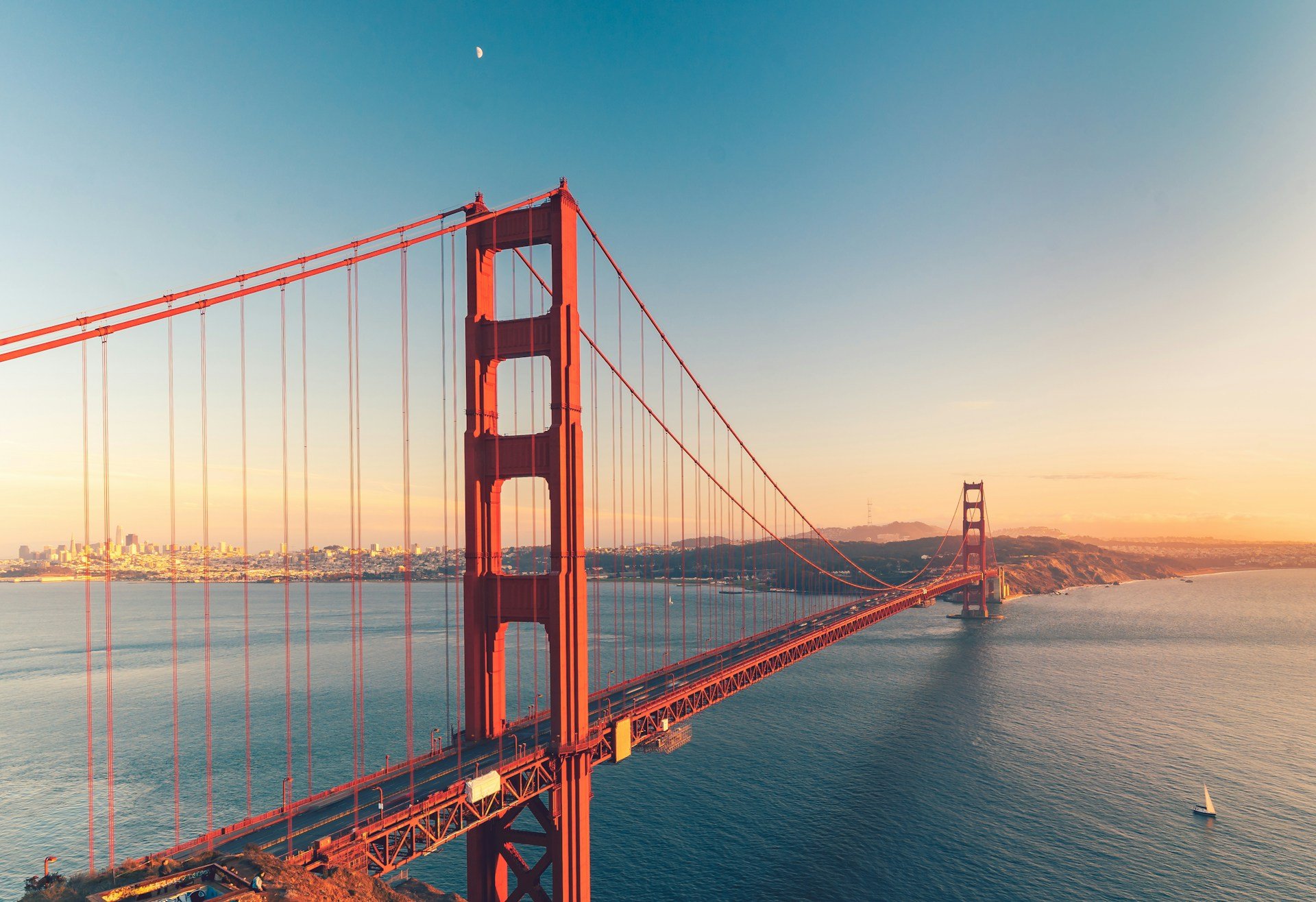
A Country the Size of a Continent
The United States is not one trip, it's several, and the biggest planning mistake visitors make is trying to compress a continent into a single itinerary. New York to Los Angeles is a 6-hour flight and roughly the same distance as London to Tehran. The landscape, food, accents and pace of life change more between Louisiana and Vermont than between many separate European countries. The practical approach almost every experienced traveler settles on: pick one region, do it well, and come back for the rest.
What the US does well is infrastructure and variety within reach of that one region. Flights are frequent and, booked in advance, reasonably priced. English is universal. The national park system protects some of the most dramatic landscapes on earth, and the cities, New York, Chicago, San Francisco, New Orleans, are each genuinely distinct rather than variations on a theme.
The honest complications
Costs have risen sharply since 2020, and the exchange rate does a lot of the work in whether a US trip feels affordable or punishing. Tipping is not optional the way it is almost everywhere else, and it catches first-time visitors off guard at the register. Public transport between cities and towns outside the northeast corridor is limited, so a rental car is often necessary rather than a lifestyle choice. And gun violence, while it essentially never targets tourists specifically, is a genuine feature of American life at a scale that doesn't exist in most origin countries, it's worth being aware of rather than either dismissing it or being alarmed by it.
A History Worth Knowing
The land was home to hundreds of distinct Indigenous nations for thousands of years before European contact. Thirteen British colonies declared independence in 1776, fought a civil war over slavery in the 1860s, and expanded from the Atlantic to the Pacific over the following century through a mix of purchase, treaty and forced displacement of Native peoples. The short version of how the country you're visiting got here: colonization, revolution, civil war, industrialization and global superpower status inside roughly 250 years.
- 1776
Declaration of Independence. Thirteen colonies break from Britain; the Revolutionary War runs until 1783.
- 1861–1865
Civil War. Fought principally over slavery; the Union's victory ends legal slavery via the 13th Amendment.
- 1803–1867
Continental expansion. The Louisiana Purchase, Mexican Cession and Alaska Purchase roughly quadruple US territory, largely at the expense of Indigenous and Mexican land.
- 1929–1939
The Great Depression. Mass unemployment reshapes American economic policy; the New Deal builds much of the era's public infrastructure.
- 1945–1991
Postwar superpower & Cold War. Economic and military dominance following WWII, the Civil Rights Movement of the 1950s-60s, and the Cold War rivalry with the Soviet Union.
- 2001–present
21st century. The September 11 attacks reshape security policy; the country remains the world's largest economy and a dominant cultural export.
Read the full history: Indigenous nations, independence, and civil rights
Before 1492, an estimated several million people belonging to hundreds of distinct nations, from the Haudenosaunee Confederacy in the northeast to the Puebloan peoples of the southwest, lived across the continent with their own languages, governments and trade networks. European colonization, disease and forced removal, including the 1830s Trail of Tears, devastated these populations; today's federally recognized tribes and reservations are the direct continuation of that history, and many national park sites sit on ancestral tribal land.
The revolutionary generation's founding documents proclaimed universal liberty while the economy of the southern colonies depended on enslaved labor, a contradiction that defined the next 90 years of American politics and ended only with the Civil War. Reconstruction (1865-1877) briefly extended rights to formerly enslaved people before a violent backlash imposed nearly a century of legal segregation in the South, dismantled only by the Civil Rights Movement of the 1950s and 1960s, led by figures including Martin Luther King Jr.
Industrialization in the late 19th century, waves of immigration from Europe and later Asia and Latin America, two world wars that left the US the dominant global economy, and the Cold War standoff with the Soviet Union shaped the country into its current form. The 21st century has been defined domestically by growing political polarization and internationally by the country's continued, if contested, role as the leading global military and economic power.
Top Destinations
The US divides naturally into regions that function almost like separate trips: the Northeast cities, the national parks of the Southwest and Rockies, the West Coast, and the South. Each is a full trip on its own; combining two in one visit usually means a domestic flight between them rather than a road trip.
New York, Boston & Washington, DC
The Northeast corridor is the one part of the US where a car is unnecessary and often a liability: Amtrak's Acela and Northeast Regional trains connect Boston, New York, Philadelphia and Washington, DC along a single line. New York is the country's biggest, densest and most internationally minded city (see our full New York City guide for neighborhoods, food and a complete itinerary). Boston layers Revolutionary War history, world-class universities and New England charm into a walkable center. Washington, DC has the Smithsonian museums, all free, and the National Mall's monuments. Philadelphia, an easy day trip from New York, has Independence Hall and the Liberty Bell.
Grand Canyon, Zion & the Southwest
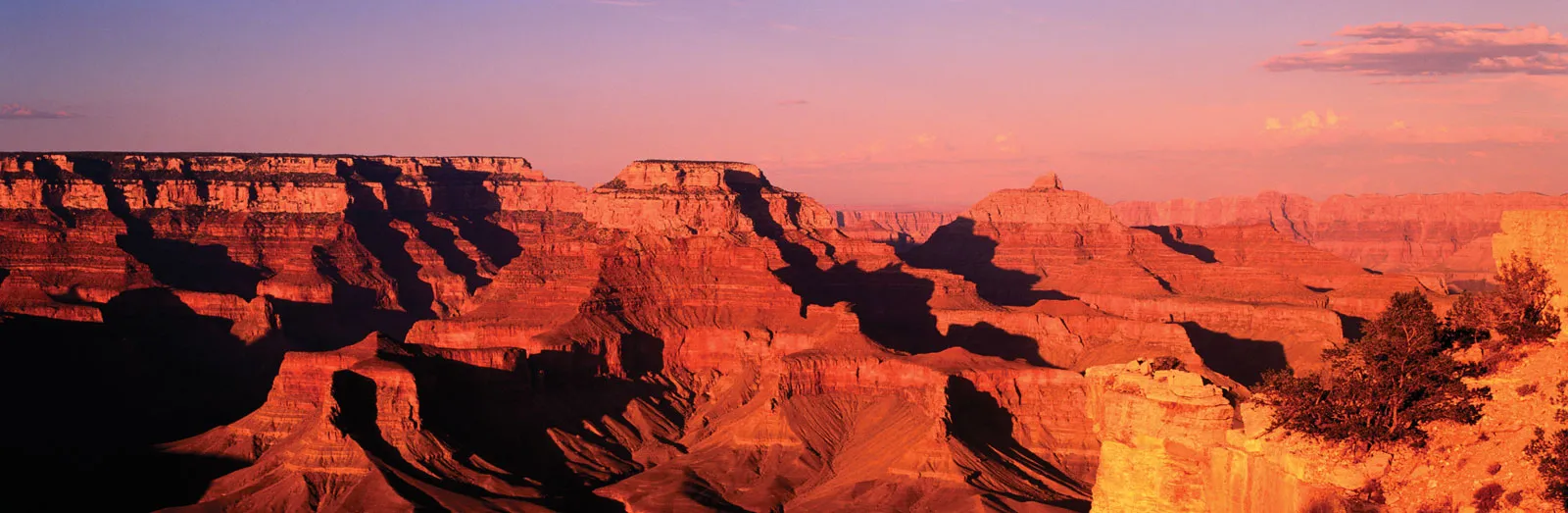
The Southwest's national parks are the country's most dramatic landscapes: the Grand Canyon's South Rim near Flagstaff, Zion's narrow sandstone canyons in Utah, and Bryce Canyon's hoodoo spires. This is a rental-car region: distances between parks are large, public transport is minimal, and the parks themselves are the destination rather than a base city. Grand Canyon, Zion, Bryce Canyon and Great Smoky Mountains are among the 11 parks now charging non-US-resident visitors a $100 surcharge on top of standard entrance fees, effective January 2026, so budget for it if you're not a US resident.
Yellowstone & the Northern Rockies
Yellowstone, America's first national park, has the largest concentration of geysers on earth including Old Faithful, plus wolves and bison in numbers unmatched in the lower 48 states. Grand Teton, just south, adds jagged peaks rising straight from the valley floor. Both are best May to September; winter access is limited to snowcoach and snowmobile tours.
California: San Francisco to Los Angeles
The classic Highway 1 route runs the length of California's coast: San Francisco's hills and bay, Big Sur's cliffs, and Los Angeles's sprawl and beaches. San Francisco is compact and walkable with a real public transit system; Los Angeles is not, and a rental car is close to essential there. Yosemite National Park, a day trip or overnight from either city, has granite cliffs and waterfalls that draw comparisons to nowhere else in the country.
Seattle & the Pacific Northwest
Seattle anchors a greener, wetter, more outdoors-oriented version of the West Coast, with easy access to the Olympic Peninsula's rainforest and Mount Rainier. Coffee culture originated here and it shows.
New Orleans & the Gulf Coast
New Orleans has a culture, cuisine and music scene unlike anywhere else in the country, built from French, Spanish, African and Caribbean influences over three centuries. The French Quarter's live jazz clubs and Creole and Cajun restaurants are the reason to visit; Mardi Gras (February or March, dates vary) is the peak season and the peak crowd.
Nashville, Miami & the wider South
Nashville is the center of American country music, with live honky-tonks on Broadway street running most of the night. Miami combines Art Deco architecture, Cuban-American culture in Little Havana, and beach life. Hurricane season (June to November) affects the whole Gulf and Atlantic coast; September and October carry the highest storm risk.
Culture & Etiquette
American culture varies enormously by region, but a few norms hold nationally: tipping is mandatory in practice rather than optional, small talk with strangers (cashiers, servers, people in line) is normal and expected rather than intrusive, and portion sizes, especially restaurant meals, run larger than in most other countries.
Do
- Tip properly. 18-22% at sit-down restaurants, $1-2 per drink at bars, 15-20% for rideshare and taxis, a few dollars for hotel bellhops and housekeeping. Service workers' base pay is often built around receiving tips.
- Expect and return small talk. "How's it going?" from a cashier is a greeting, not a real question; a brief friendly response is the norm.
- Carry ID. Bars and liquor stores often check ID for anyone who looks under 30-35, regardless of obvious age; a passport works if you don't have a US driver's license.
- Queue and wait your turn. Line-cutting is taken more seriously in the US than in many countries.
- Say please and thank you liberally. Politeness markers are used more frequently in everyday US English than in many other languages' direct translations.
Don't
- Assume the whole country is like one city or region. Politics, accents, food and social norms shift significantly by state and even by neighborhood.
- Skip the tip because service charge wasn't obviously added. Unlike much of the world, a US restaurant bill rarely includes gratuity unless stated for large groups.
- Discuss guns or politics as a conversation opener. Both are more emotionally loaded topics in everyday US conversation than in most countries.
- Expect metric units. Miles, Fahrenheit, pounds and gallons are standard; convert before you drive or check the weather.
- Jaywalk carelessly in unfamiliar cities. It's technically illegal in most US cities and enforced with variable strictness.
Deeper culture: regional identity, sports and the tipping economy
Regional identity is real. A New Yorker, a Texan and someone from rural Montana can have almost entirely different accents, food cultures and social assumptions while holding the same passport. Don't generalize from one region to the whole country.
Sports matter more than visitors expect. American football, basketball, baseball and, increasingly, soccer dominate weekend social life in most cities; attending a game, even without following the sport closely, is a genuine cultural experience.
The tipping economy exists because federal law allows a lower minimum wage for tipped workers in many states. This is a genuine point of controversy within the US itself, but as a visitor the practical takeaway is the same: tip as described above regardless of your feelings about the system.
Food & Drink
American food is really a set of distinct regional cuisines rather than one national cuisine: New York's bagels and pizza, Texas and Carolina barbecue traditions, New Orleans's Creole and Cajun cooking, and Tex-Mex across the Southwest are each their own thing, shaped by the immigrant and regional history of the place.
Barbecue $12-25
Texas brisket, Carolina pulled pork with vinegar-based sauce, and Memphis ribs are three genuinely distinct regional traditions, not variations on the same dish. Worth seeking out the specific regional style rather than a generic "BBQ" chain.
New York Bagels & Pizza $3-15
New York's water is often credited for its distinctive bagels and thin-crust pizza; both are eaten standing up, fast, and cheap by New York standards. See our New York City guide for specific spots.
Tex-Mex & Southwest $8-18
A distinct Texan-Mexican hybrid cuisine, tacos, enchiladas, queso, that predates and differs from food in Mexico itself. Strongest in Texas, Arizona and New Mexico.
New Orleans Creole & Cajun $15-35
Gumbo, jambalaya and po'boys built from French, Spanish, African and Caribbean influences over three centuries in Louisiana. Not found authentically anywhere else in the country.
New England Seafood $15-40
Maine lobster rolls and Boston clam chowder are the two dishes to seek out on the New England coast, ideally at a working harbor rather than a tourist strip.
Craft Beer & Coffee $6-9
Seattle originated the modern American coffee shop culture; the craft beer movement, strongest in the Pacific Northwest and Colorado, has produced thousands of independent breweries nationwide.
When to Go & Itineraries
April to June and September to October work well almost everywhere: milder weather than summer, lighter crowds than peak season, and lower prices. Exactly when depends heavily on region: national parks at altitude are best May to September, ski regions want December to March, and South Florida is best in winter and unbearably humid in summer.
Regional timing compared
| Region | Best months | Notes |
|---|---|---|
| Northeast (NYC, Boston, DC) | Apr-Jun, Sep-Oct | Fall foliage peaks late Sep-Oct; summer is hot and humid |
| Southwest parks | Mar-May, Sep-Nov | Summer heat in canyons can exceed 40°C; winter brings snow at rim elevations |
| Rockies (Yellowstone) | Jun-Sep | Many roads close in winter; wildlife viewing best at dawn/dusk in shoulder months |
| West Coast (CA, Seattle) | Jun-Sep | SF often foggy in summer; wildfire smoke possible Aug-Oct in some years |
| The South (New Orleans, Miami) | Nov-Apr | Hurricane season Jun-Nov; summer is very hot and humid |
Itineraries
Seven days covers one region properly. Two weeks allows a loop through two connected regions. Three weeks starts to feel like a genuine cross-country trip, usually flying between two or three anchor cities rather than driving the whole way.
- Days 1–4
New York City. See our full New York City guide for a neighborhood-by-neighborhood plan.
- Day 5
Philadelphia or the Hudson Valley. A day trip by Amtrak or Metro-North from New York.
- Days 6–7
Washington, DC. Amtrak from New York (about 3 hours); the Smithsonian museums and National Mall.
- Days 1–4
New York City. The full city guide itinerary.
- Days 5–6
Boston. Amtrak Acela from New York (about 3.5 hours); Freedom Trail and the university neighborhoods.
- Day 7
Fly to Las Vegas as the gateway to the Southwest parks.
- Days 8–11
Grand Canyon, Zion & Bryce Canyon. Rental car loop through the Southwest's national parks.
- Days 12–14
Los Angeles. Fly from Las Vegas; beaches, and a day trip to Yosemite if extending.
- Days 1–5
New York & the Northeast. NYC, plus Boston or DC by train.
- Days 6–7
New Orleans. Fly south for Creole food and live jazz in the French Quarter.
- Days 8–9
Nashville. A short flight or drive from New Orleans; live country music on Broadway street.
- Days 10–14
Southwest national parks. Fly into Las Vegas or Phoenix, rental car loop through Grand Canyon, Zion and Bryce Canyon.
- Days 15–21
California. Fly into San Francisco, Highway 1 down the coast to Los Angeles, with Yosemite as a detour if time allows.
Getting there & around
International flights land at major hubs: JFK and Newark for New York, LAX for Los Angeles, O'Hare for Chicago. Since May 2025, domestic flights require a REAL ID-compliant driver's license or another acceptable ID; a valid passport works for any traveler, so international visitors flying domestically are unaffected as long as they carry their passport. Between distant regions, a domestic flight is the only realistic option; within a region, a rental car is close to essential outside the Northeast corridor, where Amtrak connects Boston, New York, Philadelphia and Washington, DC directly.
Domestic transport options and prices
| Option | Price | Notes |
|---|---|---|
| Domestic flights | ~$150-400 | Book 4-8 weeks ahead for the best fares; budget carriers add baggage fees. |
| Amtrak (Northeast corridor) | $19-150+ | NYC-Philadelphia from about $19-40; the high-speed Acela costs more than the Northeast Regional for a similar route. |
| Rental car | $40-90/day | Essential outside major cities and the Northeast corridor; a valid driver's license from home plus, in some states, an International Driving Permit. |
| Intercity buses (Greyhound, FlixBus) | $15-60 | Cheapest option between cities, slower than flying or the train. |
Practical prep: a US SIM or eSIM before landing avoids expensive international roaming; coverage is excellent in cities and variable in remote national parks. Standard travel insurance is strongly recommended given the high cost of US healthcare for anyone without insurance.
Where to stay
Hostels & budget hotels
Concentrated in major cities; hostel dorm beds run $20-55 a night in most cities, more in New York and San Francisco. See our New York City guide for specific picks.
Mid-range city hotels
Chain and boutique hotels in most downtown areas; prices swing heavily with season and city, with New York, San Francisco and Miami running highest.
National park lodges & gateway towns
In-park lodges book out months ahead in summer; gateway towns just outside park boundaries (Flagstaff for the Grand Canyon, West Yellowstone for Yellowstone) offer more availability at similar prices.
Luxury & resort properties
Every major city and most national park gateways have a high-end option; expect a real premium in New York, and in ski towns during winter season.
Budget Planning
The US is not a cheap destination by global standards, and costs vary enormously by city. Accommodation and rental cars are usually the biggest line items; food can be kept cheap with casual spots and grocery stores, or expensive very quickly at sit-down restaurants once tax and tip are added.
- Hostel dorm or budget motel
- Casual food, food trucks, grocery runs
- Public transit or intercity bus
- Free attractions: parks, museums with free days
- Mid-range hotel
- Sit-down restaurant meals
- Rental car or occasional domestic flight
- Paid attractions and a national park visit
- Upscale hotels
- Fine dining
- Flexible domestic flights
- Guided tours and premium experiences
Quick reference prices: transit, national parks, ESTA
| ESTA application (per person) | $40.27 |
| National park entrance (US residents) | $20-35 |
| National park $100 foreign-visitor surcharge (11 parks, from Jan 2026) | +$100/person |
| America the Beautiful annual pass, non-resident | $250 |
| America the Beautiful annual pass, US resident | $80 |
| Domestic flight (booked ahead) | $150-400 |
| Rental car | $40-90/day |
| Casual restaurant meal incl. tip | $15-25 |
Prices reflect 2026 research and drift over time, especially flights and hotels, which move with season and demand more than in most countries. Treat them as a planning baseline, not a quote.
Visa & Entry
Citizens of 42 Visa Waiver Program countries, including the UK, most of the EU, Australia, Japan, South Korea and Singapore, can enter the US visa-free for up to 90 days by applying for ESTA online before travel. The fee is $40.27, and approval is generally fast but should be requested at least 72 hours before departure. Everyone else needs a B1/B2 visitor visa from a US embassy or consulate, a longer process that can take weeks. Apply only at the official esta.cbp.dhs.gov site, not a third-party site charging a markup for the same service.
✓ Valid passport
Generally valid through your planned departure date from the US; check your specific airline and entry point requirements.
✓ Approved ESTA or visa
ESTA ($40.27, valid 2 years) for the 42 waiver countries; a B1/B2 visa for everyone else.
✓ Return/onward ticket
Commonly requested at the border for visa waiver entrants.
✓ REAL ID or passport for domestic flights
International visitors flying within the US just need their passport; it satisfies the REAL ID requirement introduced in 2025.
| USA | Canada | |
|---|---|---|
| Entry for most Western passports | ESTA, $40.27, 90 days | eTA, roughly CA$7, 6 months |
| Cities | New York, Chicago, LA: bigger, denser, more varied | Toronto, Vancouver, Montreal: smaller, notably safer on average |
| Nature | Grand Canyon, Yellowstone, Yosemite: iconic and heavily visited | The Rockies, Banff: similarly dramatic, generally less crowded |
| Cost | Pricier city hotels; national parks now add a $100 foreign-visitor fee at 11 parks | Pricier groceries and alcohol; national park fees stay flat for all visitors |
| Tipping | 18-22% expected everywhere | Similar tipping culture, slightly less rigid |
Safety, Solo Women & Family
The US is rated Level 1, Exercise Normal Precautions, its safest travel advisory category, and the areas most tourists visit, city centers, national parks and tourist zones, are heavily used and generally safe. The honest caveat that doesn't apply to most other Level 1 destinations: gun violence, including periodic mass shootings, is a real feature of American life. It is not targeted at tourists and the statistical risk to any individual visitor is low, but it exists at a scale most visitors' home countries don't share, and it's worth being aware of rather than either dismissing it or being alarmed by it.
Petty theft
The most common issue for tourists: pickpocketing and phone theft concentrated in crowded tourist zones and on public transit in major cities. Keep valuables secured and be extra alert in dense crowds.
Natural hazards
Hurricane season runs June to November on the Gulf and Atlantic coasts; wildfire smoke can affect the West Coast in late summer and fall; tornado season peaks in spring across the central Plains states.
Healthcare costs
US healthcare is extremely expensive without insurance. Comprehensive travel insurance covering medical treatment is close to essential, not a nice-to-have.
Neighborhood awareness and driving safety
Safety varies block by block in big cities more than in most countries. A neighborhood can shift from clearly safe to one where extra caution is warranted within a few streets; checking a specific address or route rather than assuming a whole city is uniformly safe (or unsafe) is the more accurate approach.
Driving is on the right; speed limits and traffic laws vary meaningfully by state. Distances between destinations are often longer than they look on a map; plan realistic driving days rather than optimistic ones.
Solo women travelers
Cities and national parks popular with tourists are generally fine for solo women travelers with standard urban precautions: staying aware in crowds, using licensed rideshare rather than unmarked taxis, and checking a specific neighborhood's reputation before booking accommodation there. Experience varies significantly by region and even by specific area within a city, so research the actual place you're staying rather than treating "the USA" as one uniform experience.
Emergency numbers
Consular help and travel insurance
911 covers all emergency services nationwide with English-speaking dispatchers; most operators can also connect interpreters for other languages. Foreign embassies and consulates are concentrated in Washington, DC and, for many countries, also have consulates in New York, Los Angeles and Chicago; check your home country's foreign ministry site for the nearest location before you travel.
Family travel
The US is a strong family destination: theme parks, national parks and major cities all have well-developed family infrastructure, English-language content removes a common friction point, and casual restaurants are set up for kids as standard rather than as an afterthought.
USA FAQ
Do I need a visa to visit the USA?
Citizens of 42 countries, including the UK, most of the EU, Australia, Japan and South Korea, can enter visa-free for up to 90 days under the Visa Waiver Program by applying for ESTA online, which costs $40.27 and is valid for two years. Everyone else needs a B1/B2 visitor visa from a US embassy or consulate.
Is the USA safe to visit?
Yes. The US State Department rates the country Level 1, its safest rating, and violent crime against tourists is rare in the areas visitors actually go. The main risks are petty theft in crowded tourist zones, and travelers should know that gun violence, while not targeted at tourists, is a real feature of American life that doesn't exist at the same scale elsewhere.
How much does a trip to the USA cost per day?
Budget travelers manage on $120-150 a day with hostels and casual food, mid-range runs $300-400, and comfortable trips with nice hotels and rental cars run $600 or more. Accommodation and rental cars are the biggest costs.
When is the best time to visit the USA?
April to June and September to October work well almost everywhere. Exactly when depends heavily on region: winter is best for skiing and South Florida, summer is best for national parks at altitude and New England.
How many days do you need to see the USA?
You can't see the USA in one trip. Seven days covers one region properly; two weeks allows a loop through two connected regions; three weeks starts to feel like a real cross-country trip if you fly between anchor cities.
What is ESTA and do I need it?
ESTA is the online pre-travel authorization required for the 42 Visa Waiver Program countries. Apply at least 72 hours before departure at the official esta.cbp.dhs.gov site. It costs $40.27, lasts two years, and covers unlimited entries of up to 90 days each.
Is it better to rent a car or fly between destinations?
Both, depending on the trip. Distances between major regions only make sense by domestic flight. Within a region, a rental car is close to essential since public transport between smaller towns is limited.
Do I need to tip in the USA?
Yes, it isn't optional the way it is in most countries. 18-22% at sit-down restaurants, $1-2 per drink at bars, and 15-20% for rideshare and taxis. Hotel bellhops and housekeeping expect a few dollars in cash.
Is the USA good for solo female travelers?
Generally yes in the cities and national parks most tourists visit, with standard urban precautions. Experience varies by specific neighborhood and region, so research the actual place you're staying.
Is the USA good for families with kids?
Yes. Theme parks, national parks and cities like New York and Washington DC all have strong family infrastructure, and English-language content everywhere removes a common travel friction.
Is the USA cheaper than Canada?
Roughly comparable overall, with the US somewhat more expensive for accommodation in major cities and Canada somewhat more expensive for groceries and alcohol. Both charge in their own dollar, which is not the same currency.
Do national parks cost extra for foreign visitors?
At 11 of the most-visited parks, including Grand Canyon, Yosemite, Zion and Great Smoky Mountains, a new $100 per-person surcharge applies to non-US-resident visitors aged 16 and up as of January 2026, on top of the standard entrance fee.
What Stays With You
The United States doesn't reward a checklist approach the way a smaller country can. What it rewards is picking a region and actually spending time there: a week that's entirely New York, entirely the Southwest's canyons, entirely New Orleans, rather than a rushed loop trying to touch all three. The scale that makes the country hard to plan is the same scale that makes it worth returning to, repeatedly, for the rest of it.
Whatever region you pick first, budget honestly for tipping, book national park entries and popular attractions ahead of time, and go in accepting that you're seeing one version of a country that contains dozens of them.