
What You're Actually Getting Into
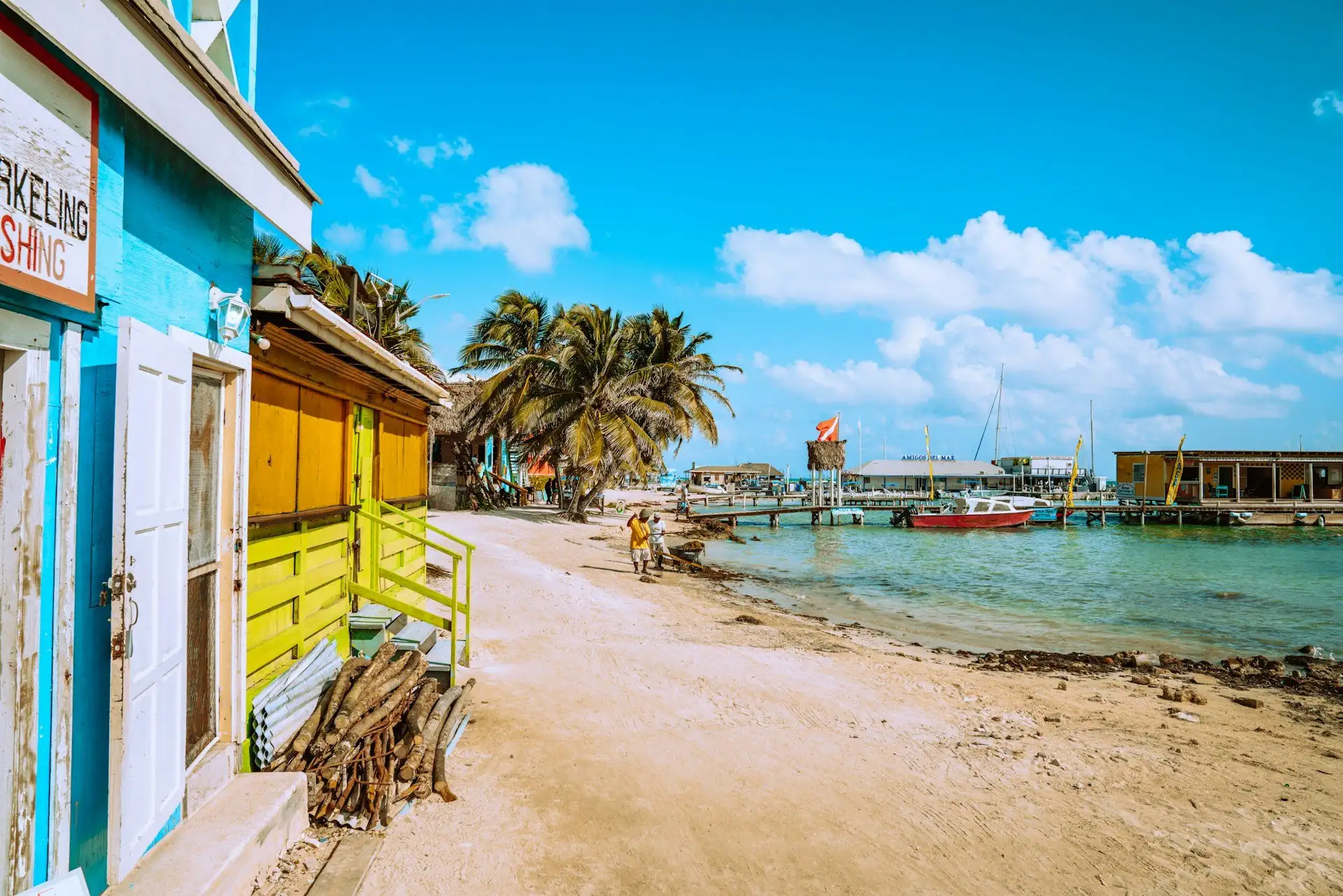
Belize is the odd one out on the Central American map: an English-speaking former British colony wedged between Spanish-speaking Mexico and Guatemala, with a Caribbean coastline instead of a Pacific one and a population under half a million spread across a country roughly the size of Massachusetts. It is also, mile for mile, one of the most biologically stacked places on earth: the Belize Barrier Reef, the second-largest reef system on the planet after Australia's, runs the entire length of the coast, and behind it sits jungle dense enough to still be swallowing Maya cities that archaeologists haven't fully dug out.
What makes Belize unusually approachable for a first tropical trip is the language. English is the official language, taught in every school and spoken in every hotel, dive shop and bus station, on top of Spanish, Belize Kriol, Garifuna and several Maya languages that Belizeans move between depending on who they're talking to. You can ask directions, negotiate a tour price and read a menu without a phrasebook, which removes a layer of friction that other Central American countries don't.
The honest complications
Belize is not cheap by Central American standards: everything on the cayes, including drinking water, arrives by boat or small plane, and prices reflect it. Domestic transport options are limited to puddle-jumper flights, water taxis and a bus network that's fine for the mainland but doesn't reach the islands. Hurricane season runs June through November and can disrupt trips even without a direct landfall. And Belize City, the country's only real urban hub and often an unavoidable transit point, has a genuine gang violence problem concentrated in its Southside neighborhoods, worth understanding rather than ignoring even though it rarely touches the areas visitors actually stay in.
A History Worth Knowing
The Maya were building cities in what is now Belize by around 1000 BCE, and at their peak in the Classic period, more Maya lived in this stretch of jungle than live in the entire country today. British loggers and pirates arrived in the 17th century for the Baymen's timber trade, Spain and Britain fought over the territory for two centuries, and the colony of British Honduras was formally established in 1862. Independence didn't come until 1981, the last British colony on the American mainland to get there, delayed for decades by a Guatemalan claim to the territory that is, remarkably, still unresolved.
- c. 1000 BCE-900 CE
The Maya civilization. Cities including Caracol, Xunantunich and Lamanai flourish; Caracol alone is estimated to have supported more people at its peak than modern Belize's entire population.
- 1638-1670s
The Baymen. English pirates and later logwood cutters settle the coast, harvesting logwood and later mahogany, laying the foundation of British settlement.
- 1798
Battle of St. George's Caye. Spanish forces are repelled in a decisive naval battle, still celebrated as a national holiday on 10 September.
- 1862
British Honduras. The territory is formally declared a British Crown Colony.
- 1973
Renamed Belize. British Honduras officially becomes Belize, six years before independence.
- 1981
Independence. Belize becomes fully independent on 21 September, the last British colony on the American mainland, and joins the Commonwealth.
Read the full history: the Maya collapse, the Baymen and the Guatemala claim
The Maya cities of what's now Belize, Caracol above all, were genuine regional powers during the Classic period, engaging in wars and alliances with Tikal and Calakmul in modern Guatemala and Mexico. Like the rest of the Maya lowlands, the major cities were largely abandoned by around 900 CE, for reasons still debated among archaeologists: drought, warfare, agricultural collapse and political fragmentation are the leading theories, probably acting together rather than any single cause. Maya communities never left the region entirely, and the Q'eqchi', Mopan and Yucatec Maya living in Belize today are their direct cultural descendants.
British involvement began with pirates using the reef's cayes as a base to raid Spanish shipping, then shifted to logwood cutting, valuable for its use in textile dye, and later mahogany. Spain considered the territory its own but never settled it, and the 1798 Battle of St. George's Caye, in which Baymen and enslaved and free Black defenders repelled a Spanish invasion fleet, became the founding myth of British Honduras, still marked every year as a national holiday.
The Guatemala claim. Guatemala inherited Spain's old claim to the entire territory of Belize on independence in 1821 and never fully abandoned it, which is the specific reason Britain delayed granting Belize independence for so long, worried about a Guatemalan invasion the moment British troops left. Belize became independent in 1981 anyway, with a British garrison remaining for years afterward as a deterrent. The dispute is still unresolved in 2026: both countries have referred the case to the International Court of Justice, discussions continue through the Organization of American States, and occasional friction along the western border still makes headlines, though it has never seriously threatened the safety of tourists on the standard circuit.
Top Destinations
Belize splits cleanly into reef and jungle, and most itineraries combine both. The cayes off the coast are the beach-and-diving half of the trip; the Cayo District in the west is the ruins-and-rainforest half; the south coast is quieter and more Garifuna in character; and the north holds Maya sites most visitors skip, unfairly. The whole country is small enough that combining two zones in a single week is entirely realistic.
San Pedro, Ambergris Caye
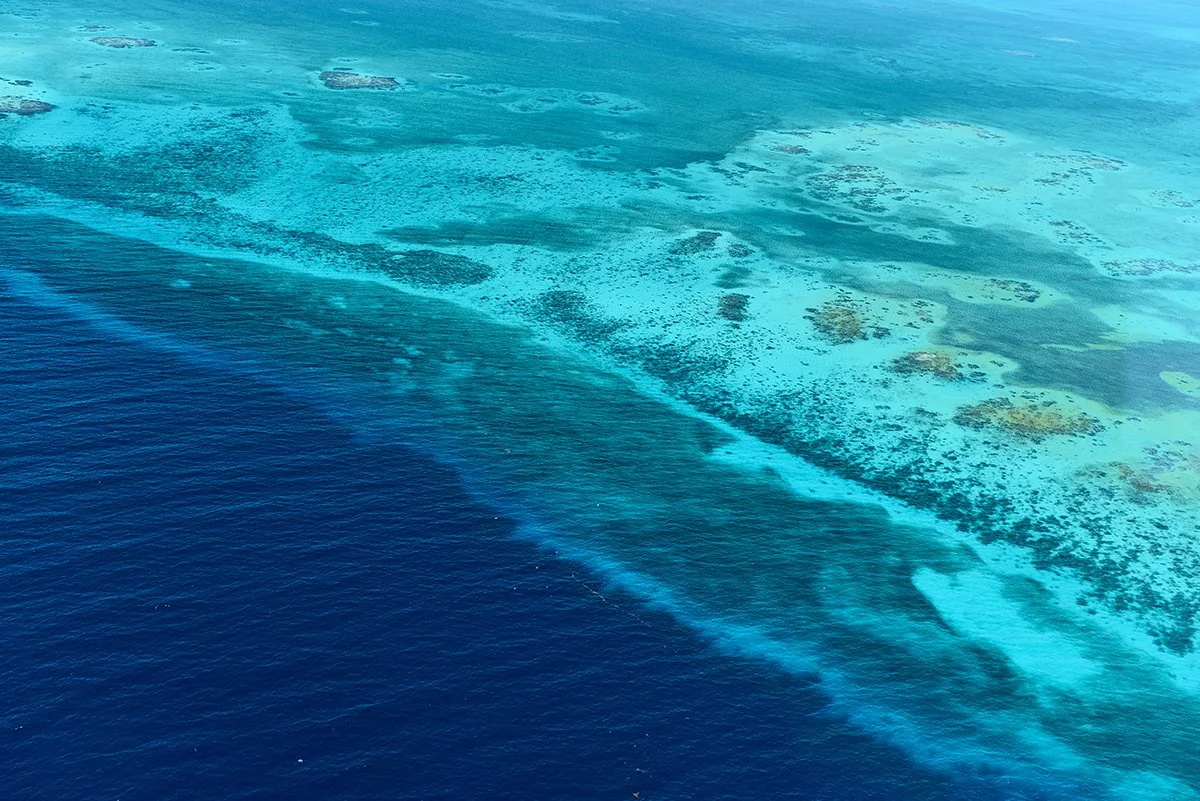
Belize's most-visited destination and the country's largest island: golf-cart streets, the widest range of hotels and restaurants in the country, and the barrier reef close enough that Hol Chan Marine Reserve is a 15-minute boat ride from town. It's the standard first-time base, and our full San Pedro city guide covers neighborhoods, hotels and day trips in detail.
Caye Caulker
Smaller, car-free and cheaper than San Pedro, reached by the same water taxi network, with a lived-in backpacker pace built around "The Split," a channel cut by Hurricane Hattie in 1961 that's now the island's main swimming and sunset-drinking spot. Many visitors do both cayes: San Pedro for a night dive or a day at Secret Beach, Caye Caulker for the slower, cheaper half.
San Ignacio & the Cayo District
Belize's inland adventure base, in the forested hills near the Guatemala border: this is where cave tubing, zip-lining and the country's best Maya ruins converge. Xunantunich, reached by a hand-cranked cable ferry across the Mopan River, has a self-guided entry fee of around $5 and a central pyramid, El Castillo, with a panoramic view into Guatemala. Caracol, two to three hours further by rough road, was the largest Maya city in Belize and, at its height, likely supported more people than modern Belize's entire population; it sits inside the Chiquibul Forest Reserve and is usually visited on a guided day tour given the road and the site's remoteness.
Actun Tunichil Muknal (ATM Cave)
Belize's signature adventure tour: a 45-minute jungle hike followed by wading and swimming into a limestone cave used by the ancient Maya for ceremonial offerings, ending at the calcified skeleton known as the Crystal Maiden. Licensed guides only, no photography inside since a dropped camera damaged an artifact some years ago, and full-day tours from San Ignacio run roughly $100-150 per person.
Placencia
A laid-back peninsula town on the south coast with 27 kilometers of beach, a village vibe still centered on the famous Sidewalk, once the world's narrowest street, and easy boat access to the southern cayes and Silk Cayes Marine Reserve. Quieter and more spread out than the northern cayes, with a slightly more upscale, less backpacker-heavy crowd.
Hopkins
Belize's most accessible Garifuna village, with a beach that rarely gets crowded and drumming lessons, cassava bread demonstrations and Garifuna cultural tours run by the community itself rather than outside operators. A better base than Placencia for travelers who want cultural depth over resort polish.
Toledo District & Punta Gorda
Belize's least-visited region, in the far south near the Guatemala border: rainforest, cacao farms run by Maya and Mestizo families, and Belize's most remote Maya sites. Infrastructure is thinner here than anywhere else in the country, which is exactly the appeal for travelers who've already done the standard circuit.
Belize City
The country's largest city and only real transport hub: nearly every visitor passes through its airport or water taxi terminals, but almost nobody bases themselves here. The historic waterfront and the Museum of Belize are worth a couple of hours if you have a layover; Southside neighborhoods carry a genuine gang violence problem and sit well outside any reason a tourist would have to go there.
Lamanai & Altun Ha
Lamanai, reached by a scenic boat trip up the New River from Orange Walk Town, is one of the most atmospheric Maya sites in the country: a jungle-shrouded temple complex that was occupied for nearly 3,000 years, longer than almost any other Maya city. Altun Ha, closer to Belize City and the source of the jade head depicted on every bottle of Belikin beer, makes an easy half-day trip.
The Great Blue Hole
A near-perfectly circular marine sinkhole about 300 meters across and 124 meters deep, part of Lighthouse Reef atoll roughly 60 kilometers from Ambergris Caye, made famous by Jacques Cousteau. For certified divers it's a genuinely unique dive, with dramatic stalactite formations visible at depth; non-divers can join a snorkel-and-flyover day trip, though the appeal is real but limited to the rim and the view from the plane.
Hol Chan Marine Reserve & Shark Ray Alley
A protected reef channel a short boat ride from San Pedro, with some of the most reliable snorkeling in the country: nurse sharks, southern stingrays, moray eels and dense reef fish in shallow, clear water suitable for beginners. Half-day tours including the park fee run roughly $60-80 per person.
Turneffe Atoll
Belize's largest atoll, further offshore than Lighthouse Reef, known among divers for wall dives and, at the right time of year, for whale shark and spawning fish aggregations. Mostly visited via liveaboard or dedicated dive resorts rather than as a day trip.
Beyond the standard circuit
The zones above cover a first or second trip well. With extra days, these reward the detour.
Bacalar Chico National Park
The undeveloped northern tip of Ambergris Caye, a marine and terrestrial reserve with mangroves, ruins and some of the least-dived reef in the north. Reached by boat, usually as a longer day trip rather than a quick add-on.
Barton Creek Cave
A canoe-only cave with Maya ceremonial remains still visible from the water, a gentler alternative to ATM Cave that doesn't require swimming or climbing, good for families or anyone not up for the more strenuous tour.
Community Baboon Sanctuary
A grassroots conservation project protecting Belize's black howler monkey population (locally called "baboons," despite being howler monkeys), run cooperatively by landowners along the Belize River. An easy half-day from Belize City or Belmopan.
Culture & Etiquette
Belize's defining cultural fact is that no single ethnic group is a majority: Mestizo Belizeans, of mixed Spanish and Maya heritage, are the largest group at roughly half the population, followed by Creole (descendants of enslaved Africans and British settlers), Maya, Garifuna, Mennonite, East Indian, Chinese and Lebanese communities, each with its own language, food and traditions that have stayed distinct rather than blending into one homogenized "Belizean" culture. Belize Kriol, an English-based creole, is the everyday language that crosses ethnic lines in casual conversation, even among people whose first language is Spanish, Garifuna or a Maya language.
Do
- Slow down. "Belize time" is a real cultural pace: buses, boats and tours run on a looser schedule than North American or European visitors expect. Build slack into your itinerary rather than fighting it.
- Try a few Kriol phrases. "Weh di go on" (what's happening) and "Gud maanin" (good morning) land well and are instantly understood since Kriol is English-based.
- Support Garifuna and Maya-run tours directly where you can, in Hopkins, Toledo and the Cayo District villages, rather than exclusively through resort-brokered operators.
- Carry both currencies loosely in mind. US dollars are accepted almost everywhere at the fixed 2:1 rate, so prices in either currency are easy to compare.
- Tip in the US style. Around 10-15% at restaurants and for tour guides is standard and expected in the tourism industry, more than in most of Belize's Spanish-speaking neighbors.
Don't
- Assume Belize is interchangeable with its neighbors. The English language, Commonwealth ties and Caribbean-Creole culture make it culturally distinct from Guatemala and Mexico, not a Spanish-speaking country with a different flag.
- Touch or remove anything at Maya sites. Artifacts and structures are protected; the ATM Cave ban on photography exists because a dropped camera damaged a skull years ago.
- Expect fast wifi or reliable schedules on the cayes. Island life runs on boat and weather timing; build in buffer days, especially near the end of a trip.
- Wander into Southside Belize City without a specific, well-informed reason. It isn't part of any standard itinerary and there's no tourist draw that requires it.
- Underestimate the sun. Belize sits at low latitude with intense reef-reflected glare; reapply reef-safe sunscreen more often than feels necessary.
Deeper culture: Garifuna heritage, the Maya languages and Mennonite communities
Garifuna culture. The Garifuna descend from West and Central African, Carib and Arawak ancestry, originating on the island of St. Vincent before British forces exiled them to Central America's Caribbean coast in 1797. Garifuna Settlement Day on 19 November, marking their arrival in Belize, is a major national holiday, especially in Dangriga and Hopkins, with drumming, traditional dress and reenactments. UNESCO recognized Garifuna language, dance and music as a Masterpiece of the Oral and Intangible Heritage of Humanity in 2001.
The Maya today. Roughly 11% of Belizeans identify as Maya, primarily Q'eqchi', Mopan and Yucatec communities concentrated in Toledo District and the north. Unlike the ruins that draw tourists, Maya culture in Belize is a living, contemporary community, not a historical artifact, with its own villages, cacao farming traditions and, increasingly, community-run tourism.
Mennonite communities. Belize is home to several Mennonite communities, some (like Spanish Lookout) modernized and central to the country's dairy, poultry and produce industries, others (like Barton Creek) more traditional, using horse-drawn transport and avoiding modern technology. They're a visible, distinct presence, especially in Cayo and Orange Walk districts.
Food & Drink
Belizean food reflects the country's ethnic mix directly: Kriol stewed dishes, Mestizo tamales and escabeche, Garifuna coconut-and-seafood cooking, and fresh Caribbean seafood everywhere near the coast. It leans less spicy than Mexican food and less starch-heavy than a lot of Caribbean cooking, built around rice, beans, coconut milk and whatever came off a boat that morning.
Rice & Beans with Stew Chicken $6-10
Belize's national dish: rice and red kidney beans cooked together in coconut milk, served with chicken slow-stewed in a recado rojo (achiote) marinade that gives it a deep red-brown color. Found everywhere, from roadside stands to hotel restaurants, and rarely disappointing.
Fry Jacks $2-5
Belize's breakfast staple: pillowy deep-fried dough, split and filled with refried beans, cheese and eggs, or eaten plain with honey or jam. Every hotel breakfast and roadside cafe serves them; they're the single most-repeated dish of a first Belize trip.
Hudut $10-15
The Garifuna signature dish: fish simmered in a coconut broth called serre, served with mashed plantains. Best eaten in Hopkins, Dangriga or Punta Gorda, where Garifuna families run the kitchens rather than a resort interpretation of it.
Belikin Beer $3-5
Belize's national beer, brewed since 1969 by a family-owned company outside Belize City, its logo featuring the jade head unearthed at Altun Ha. Belikin, Belikin Stout and Lighthouse Lager are the main varieties, sold everywhere from beach bars to gas stations.
Ceviche & ceviche shops $8-15
Fresh conch, shrimp or fish ceviche, citrus-cured with habanero, onion and cilantro, is a caye staple sold from small storefront shops as much as restaurants. Conch is seasonal (closed roughly July to September to protect stocks), so ask before ordering.
Cashew Wine & Panades
Cashew wine, a homemade fermented drink from the fruit of the cashew tree (not the nut), appears seasonally around Cashew Festival time in Cayo District. Panades, fried corn tortilla pockets filled with fish or beans, are a common street snack, usually a dollar or two for a few.
When to Go & Itineraries
December through April is Belize's dry season and the best all-around window: reliable sun, calm seas and the best reef visibility of the year, though also the highest prices and busiest cayes. May and November are reasonable shoulder months. June through November is both the wet and hurricane season; September and October carry the highest storm risk, though direct hits on Belize specifically are historically infrequent, a nearby storm can still cancel water taxis and flights for days even without making landfall.
Dry vs. wet season compared
| Season | Verdict | Conditions | Prices & crowds |
|---|---|---|---|
| Dec-Apr | Best | Dry, best reef visibility, trade-wind breeze | Peak prices, busiest cayes, book ahead |
| May & Nov | Good value | Transitional, generally decent | Lower prices, fewer crowds |
| Jun-Aug | Workable | Hot, humid, afternoon showers common | Moderate prices; lower hurricane risk than Sep-Oct |
| Sep-Oct | Riskiest | Peak hurricane season | Cheapest prices; some resorts close, flexibility essential |
Belize is tropical year-round: expect daytime highs in the low-to-mid 30s°C (high 80s to low 90s°F) most of the year on the coast and cayes, a few degrees cooler and less humid inland in the Cayo District hills, and the mildest, driest stretch typically falling between December and February.
Itineraries
A week covers a caye and the Cayo District's ruins comfortably. Ten days to two weeks adds a second caye, the south coast, or both, without the trip feeling rushed.
- Days 1-4
San Pedro. Fly or water-taxi in, Hol Chan and Shark Ray Alley, a Secret Beach afternoon, and a day trip to Caye Caulker.
- Days 5-7
San Ignacio & Cayo. Domestic flight or transfer to San Ignacio, ATM Cave one day, Xunantunich and cave tubing the next, fly out from Belize City.
- Days 1-4
San Pedro. Reef days, Hol Chan, a Great Blue Hole trip for certified divers, one night out at a beach bar.
- Days 5-7
San Ignacio & Cayo. ATM Cave, Xunantunich, Caracol as a full-day trip, a jungle lodge for at least one night.
- Days 8-10
Placencia or Hopkins. Transfer south, a slower final stretch of beach and, in Hopkins, Garifuna drumming and cooking.
- Days 1-5
San Pedro & Caye Caulker. Split between both cayes, a Great Blue Hole day for divers, and Bacalar Chico for the more adventurous.
- Days 6-9
Cayo District extended. ATM Cave, Xunantunich, Caracol, cave tubing and a jungle lodge stay with night hikes.
- Days 10-12
Placencia & the southern cayes. A boat day to Silk Cayes, Placencia's Sidewalk, and a slower beach pace.
- Days 13-14
Hopkins & the north. Garifuna culture in Hopkins, then Lamanai's New River boat trip on the way back toward Belize City.
Getting there & around
Philip S. W. Goldson International Airport (BZE), just outside Belize City, is the country's only international airport, with direct flights from Miami, Houston, Dallas, Atlanta and several other US hubs plus seasonal Canadian and Central American routes. From BZE, San Pedro and Caye Caulker are reached by a roughly 20-minute domestic hop on Tropic Air or Maya Island Air, or by taxi into Belize City followed by a water taxi. There is no rail network; domestic flights, water taxis and a limited but workable long-distance bus network cover the mainland.
All transport options with prices: domestic flights, water taxis, buses
| Option | Price | Notes |
|---|---|---|
| BZE to San Pedro/Caye Caulker (flight) | ~$99-150 one way | Tropic Air & Maya Island Air, roughly every hour, ~20 minutes. |
| Belize City to San Pedro/Caye Caulker (water taxi) | ~$25-45 | San Pedro Belize Express and other operators; 45-90 minutes depending on stops and sea conditions. |
| San Pedro to Caye Caulker (water taxi) | ~$25-45 round trip | 30-45 minutes, boats roughly every two hours. |
| Airport taxi to Belize City water taxi terminal | ~$25 | Fixed fare; extra passengers typically add a few dollars each. |
| Long-distance buses (mainland) | $2-10 | Cover Belize City, Belmopan, San Ignacio, Orange Walk and the south; frequent on main routes, no service to the cayes. |
Rental cars make sense only for a Cayo District or south coast mainland trip; the cayes are car-free or golf-cart-only, so a rental sitting unused in Belize City is wasted money. Expect $50-90 a day from Belize City, and confirm insurance coverage carefully; Belize's rural roads range from good highway to rough gravel with little warning between the two.
Practical prep: buy a Belize SIM (DigiCell or Smart) at the airport for a few dollars, or an eSIM before landing; coverage is solid on the mainland and main cayes, patchier at jungle lodges and remote sites like Caracol. All arriving visitors must complete Belize's online iDeclare customs and immigration form before landing.
Where to stay
Caye hostels & budget guesthouses
San Pedro and Caye Caulker both have a real hostel scene, dorm beds from around $20-30, private budget rooms a bit more. Caye Caulker generally runs a shade cheaper than San Pedro for equivalent quality.
Cayo District jungle lodges
Family-run and mid-size lodges near San Ignacio, several with their own trails, birdwatching and cave or ruin access included, offering a genuinely different pace than the cayes and often better value.
San Pedro mid-range resorts
Condo-style and boutique resorts, several a golf-cart ride from downtown San Pedro, typically with a pool, on-site dive shop and airport or water taxi transfers arranged directly.
South coast & private island resorts
Placencia and the outer atolls hold Belize's top-end properties: private-island resorts, dedicated dive lodges on Turneffe and Lighthouse Reef, and boutique beach hotels aimed at honeymooners and serious divers alike.
Budget Planning
Belize is not a budget destination by Central American standards: island logistics push prices up, and the country's tourism industry is generally aimed at a mid-range-and-up US and Canadian visitor base. That said, it's still substantially cheaper than the Caribbean islands proper, and a real backpacker circuit exists on the cayes and in Cayo.
- Hostel dorm or budget guesthouse $20-40
- Street food and market meals $5-10
- Local buses on the mainland
- Free beaches, one paid tour every few days
- Mid-range hotel or resort room
- Restaurant meals $15-30/person
- Domestic flights between regions
- Daily snorkel or ruins tour
- Boutique or private-island resort
- Private guided tours and transfers
- Certified diving, including the Blue Hole
- Fine dining and premium lodges
Quick reference prices: food, tours, entry fees
| Fry jacks (breakfast) | $2-5 |
| Rice & beans with stew chicken | $6-10 |
| Belikin beer | $3-5 |
| Hol Chan & Shark Ray Alley snorkel tour | $60-80 incl. park fee |
| Great Blue Hole day trip | $250-350 |
| ATM Cave guided tour | $100-150 |
| Xunantunich entry (self-guided) | ~$5 |
| Golf cart rental (San Pedro) | $35-70/day |
| Water taxi, San Pedro-Caye Caulker | ~$25-45 round trip |
Prices reflect August 2026 research and drift over time, especially caye accommodation and dive-boat fuel surcharges. Treat them as a planning baseline, not a quote.
Visa & Entry
Belize has a straightforward entry regime for most Western visitors: US, Canadian, UK and EU citizens, along with most Caribbean and Central American nationals, enter visa-free for up to 30 days. All visitors must complete Belize's online iDeclare immigration and customs form before arrival, and immigration officers may ask for proof of onward travel and evidence of sufficient funds. The Belize Immigration Department is the authoritative source for current rules; confirm before travel if your nationality isn't listed here.
✓ Valid passport
Valid for at least the duration of your stay; a longer buffer is safer. Keep a photocopy or photo separate from the original.
✓ iDeclare form
A mandatory online immigration and customs declaration, completed before arrival by every visitor regardless of nationality.
✓ Onward ticket & funds
Proof of onward or return travel and evidence of sufficient funds may be requested at the border, though this is applied inconsistently.
✓ Exit fee
An airport departure/PACT fee (around $73.50) applies on leaving by air, usually already built into the airfare; a land-border exit fee (around $20) applies separately.
| Belize | Costa Rica | |
|---|---|---|
| Language | English official; easiest Central American trip for English-only speakers | Spanish; English common in tourist areas but not universal |
| Signature draw | Barrier Reef, Great Blue Hole, Maya ruins | Rainforest biodiversity, volcanoes, established eco-lodges |
| Daily budget | $60-90 gets by, but the cayes push costs up fast | Comparable overall, generally cheaper outside beach towns |
| Size & logistics | Small, but islands mean flights or boats between zones | Larger, mostly connected by road; renting a car covers more ground |
| Crowds | Busy on the main cayes in peak season, quiet elsewhere | More established tourist infrastructure, busier overall |
Safety, Solo Women & Family
Belize is rated Level 2, Exercise Increased Caution, by the US State Department, on the same tier as France, Italy and the UK, with crime cited as the primary concern. The real picture is more specific than that headline suggests: violent crime is heavily concentrated in gang-affected Southside neighborhoods of Belize City, which sit entirely outside the standard tourist circuit. Tourist destinations, San Pedro, Caye Caulker, Placencia, Hopkins and San Ignacio, see low rates of violent crime and benefit from a dedicated Tourism Police unit with a visible presence in each.
Belize City transit
Most visitors pass through Belize City only briefly, airport to water taxi terminal or vice versa. That transit is routine and safe; there's no reason to wander into unfamiliar neighborhoods while doing it.
Petty theft
Bag snatching and opportunistic theft occur on busy caye streets and at beach bars at night, at roughly the level of any tourist destination. Don't leave valuables unattended on the beach or a golf cart.
Water & boat safety
Currents, sun exposure and boat traffic are the real risks on the water. Use reputable, licensed tour operators, wear a life jacket when offered, and never dive beyond your certification level, especially at the Blue Hole.
Two more things worth knowing: hurricane season and the Guatemala border
Hurricane season runs June through November. Belize hasn't taken a frequent string of direct hits historically, but a nearby storm can ground flights and boats for days, and some resorts close entirely during the peak September-October risk window. Travel insurance that covers weather disruption is worth having if you're traveling in this window.
The western border with Guatemala has seen occasional friction tied to the long-running territorial dispute, including reported military incursions in 2026. This has not translated into risk for tourists visiting Xunantunich, Caracol or San Ignacio, all of which remain firmly within the standard, well-visited tourist zone, but it's worth checking current advisories if your itinerary goes further off the beaten path near the border itself.
Solo women travelers
Belize is generally comfortable for solo women, especially in the tourist-oriented cayes and Cayo District, where the small-scale, community-based tourism industry means guides and hotel staff are used to solo travelers of every kind. Street harassment is less pronounced than in some other Latin American destinations, and English removes a communication barrier that can otherwise make solo travel feel riskier. As everywhere, avoid walking alone late at night in Belize City, use licensed taxis or your hotel's arranged transport after dark, and the same caution that applies anywhere applies here: trust your instincts about a specific tour operator or driver before committing.
Emergency numbers
Embassies and medical care
911 is the standard number tourists should use for police, ambulance or fire anywhere in Belize; longtime residents sometimes still use 90 for ambulance and fire specifically, but 911 works nationwide and is simpler to remember. Serious medical cases on the cayes are often evacuated to Belize City by boat or small plane; comprehensive travel insurance with medical evacuation coverage is genuinely worth having given how much of the country is reachable only by water or air.
The US Embassy is in Belmopan; most other diplomatic missions maintain offices in Belize City or Belmopan. Confirm current contact details with your embassy before travel, since Belize's small diplomatic community means hours and staffing can change.
Family travel & pets
Belize works well for families: the shallow, calm water at Hol Chan and Shark Ray Alley suits nervous first-time snorkelers, cave tubing and zip-lining near San Ignacio are genuinely fun for older kids and teens, and English removes the language barrier that complicates family travel elsewhere. Golf carts on the cayes make getting around low-stress compared to negotiating unfamiliar roads.
Age guidance and bringing pets
Age guidance: Hol Chan snorkeling suits confident swimmers from around age 6-7 up with a life jacket; ATM Cave's swimming, climbing and confined spaces make it a better fit for kids 10 and up who are comfortable in water. Xunantunich and Lamanai's boat-and-ruins combination work well for most ages, with plenty of open space for kids to burn energy between temple climbs.
Pets: Belize requires an import permit from the Belize Agricultural Health Authority, a valid rabies vaccination certificate and a health certificate issued shortly before travel. Given the amount of boat and small-plane travel involved in a typical Belize itinerary, traveling with a pet adds real logistical complexity; check requirements well in advance if you're considering it.
Belize FAQ
Is Belize safe to visit?
Yes, for the places tourists actually go. Violent crime is concentrated in gang-affected neighborhoods of Southside Belize City, which sits outside every standard itinerary. San Pedro, Caye Caulker, Placencia, Hopkins and San Ignacio all have low rates of tourist-directed crime and a dedicated Tourism Police unit.
How much does a trip to Belize cost?
Budget travelers manage on $60-90 a day, mid-range on $150-250. The cayes run higher than the mainland since almost everything, including food, arrives by boat or plane.
Do I need a visa for Belize?
Citizens of the US, Canada, the UK and the EU can enter visa-free for up to 30 days, extendable in one-month increments at any Immigration office for BZ$200 a month, for up to six months total.
When is the best time to visit Belize?
December through April, the dry season, when reef visibility is at its best and rain is rare. May and November are decent shoulder months. June through November is hurricane season, with September and October carrying the highest storm risk.
Should I stay in San Pedro or Caye Caulker?
San Pedro on Ambergris Caye has the widest range of hotels, restaurants and reef access and is the standard first-time base. Caye Caulker is smaller, cheaper and car-free, with a slower backpacker pace; many visitors do both, a day trip apart by water taxi.
What language do they speak in Belize?
English is the official language and is used in schools, government and business. Spanish is widely spoken, especially in the north and west, and Belize Kriol is the everyday language of the streets. Garifuna and Maya languages are spoken in their respective communities.
Is the Great Blue Hole worth it?
For certified divers, yes: it's a genuinely unique dive with dramatic stalactite formations at depth. For non-divers, a snorkel-only day trip sees mostly the rim and is a harder sell given the cost and distance; Hol Chan Marine Reserve delivers more marine life for far less money and time.
What currency does Belize use?
The Belize dollar (BZD), fixed at 2 to 1 against the US dollar. US dollars are accepted almost everywhere at that rate, which makes budgeting simple and means you rarely need to think in two currencies.
How many days do you need in Belize?
A week covers a caye and the Cayo District's Maya ruins comfortably. Ten days to two weeks adds a second caye or the south coast around Placencia and Hopkins without feeling rushed.
Is Belize good for families with kids?
Yes. Shallow, calm snorkeling at Hol Chan and Shark Ray Alley, zip-lining and cave tubing near San Ignacio, and English-speaking guides everywhere make it an easier tropical destination for families than many alternatives.
Is Belize part of the Caribbean or Central America?
Both, geographically and culturally. Belize sits on the Central American mainland bordering Mexico and Guatemala, but its Caribbean coastline, English language, Commonwealth membership and Creole and Garifuna culture give it a distinctly Caribbean identity that sets it apart from its Spanish-speaking neighbors.
What Stays With You
The moment most visitors remember is the plane window on the way into San Pedro: turquoise shallows, then a hard line of white surf where the barrier reef breaks the ocean swell, then the open Caribbean blue beyond it, all visible at once from a few thousand feet up. It's a preview of the whole trip: reef on one side, jungle on the other, a small country doing an unreasonable amount with the space it has.
Belize doesn't ask much of a first-time visitor, no language barrier, a currency pegged conveniently to the dollar, guides who grew up telling these stories. What it asks is that you actually get in the water and into the jungle rather than just looking at both from a resort balcony. Do that, and it earns every bit of the reputation.