
What Travellers Should Know About Belize
Belize is a destination of two very different risk profiles — the urban capital versus the cayes, reef, and jungle interior. Understanding this geography is the single most important piece of Belize safety knowledge.
Common Scams in Belize
Belize's tourist traps are concentrated in predictable locations and follow recognisable patterns. Knowing them in advance makes them straightforward to avoid.
The water taxi terminal on North Front Street in Belize City is the main transit point between the mainland and the cayes. Two licensed operators serve the route — Ocean Ferry Belize and San Pedro Belize Express — both with published fares. Touts outside the terminal (and occasionally inside) solicit passengers for unofficial boats at inflated prices, or direct them to the wrong ticket window. Some quote prices in USD that are equivalent to the BZD rate but presented as a better deal. The area around the terminal has documented petty theft — keep bags secured and move efficiently.
- Know the official fares before arriving: Belize City to Caye Caulker approximately USD 15–18 each way; Belize City to San Pedro (Ambergris Caye) approximately USD 20–25 each way.
- Buy tickets only from the official Ocean Ferry Belize or San Pedro Belize Express ticket windows inside the terminal building.
- Do not follow anyone who approaches you outside the terminal claiming to offer faster or cheaper boats.
- Keep bags on your lap or between your feet while waiting in the terminal area.
Belize's Mayan ruins are extraordinary — Caracol is the largest site in the country, Xunantunich has spectacular pyramid views, Lamanai is accessible only by river boat. Unofficial guides at site entrances approach tourists claiming their guided tour includes the entry fee (it never does), offering "insider knowledge" at premium prices, or claiming the site is closed/restricted and they can arrange special access. Entry fees are always paid separately at the official site ticket booth. Licensed guides wear government-issued BTB registration cards.
- Pay entry fees only at the official Belize Institute of Archaeology ticket booth at each site — guide fees are always separate.
- Licensed guides are registered with the Belize Tourism Board (BTB) and carry photo ID badges — ask to see this before engaging.
- Pre-book guided ruin tours through GetYourGuide or your hotel/lodge for verified guides at transparent pricing.
- Never believe a guide who claims the site is "closed today" but they can show you "a special way in" — this is a consistent scam across all Belizean archaeological sites.
Belize's reef is genuinely world-class and diving here is a highlight for many visitors. The price-switching pattern is consistent across multiple operators: a headline per-dive or per-day price is quoted, then at checkout a fuel surcharge (USD 10–20), Hol Chan Marine Reserve or Blue Hole entry fee (USD 10–40 per site), equipment rental, and expected divemaster gratuity are added. The total can be 40–60% above the initially quoted figure. Some operators also misrepresent the experience — promising whale shark sightings that are seasonal and uncertain, or guaranteeing specific encounters that depend on conditions.
- Ask specifically: "What is the total all-inclusive price including all marine park fees, fuel, and equipment?" Get the confirmed figure before boarding.
- Use only PADI or SSI certified operators with current certification documentation visible at their shop.
- Check TripAdvisor reviews specifically for mentions of unexpected charges or price discrepancies.
- Book Blue Hole dive trips through GetYourGuide — vetted operators with transparent all-inclusive pricing.
- Do not accept guarantees of specific wildlife encounters — responsible operators describe what is possible, not what is promised.
Caye Caulker in particular has an embedded culture of drug approaches to tourists, primarily marijuana. What makes this a serious rather than mild risk is the documented practice of sellers acting as police informants — the transaction is made, and minutes later police arrive and the tourist faces arrest and detention. Belize's drug possession laws are strict and police enforcement, while inconsistent, can result in significant fines, detention, and deportation. "Go slow" may be Caye Caulker's motto but the drug scene is a genuine trap.
- Firmly decline all drug approaches — "no thank you" clearly repeated is sufficient. Do not engage further.
- Belize has no decriminalised possession framework — any amount found in your possession by police can result in arrest.
- The police informant dynamic is real and documented — do not assume that a friendly seller on Caye Caulker is operating independently of law enforcement.
Belize is an expensive destination for Central America — accommodation prices reflect the US dollar economy and the logistics of island supply chains. Walk-up rates quoted to foreign tourists at guesthouses and small hotels are frequently higher than the same room booked online, and significantly higher than rates quoted to visitors who arrive with a confirmed reservation. On popular long weekends and holiday periods (US Thanksgiving, Christmas, spring break), accommodation on the cayes can book out completely months in advance.
- Pre-book all accommodation on Booking.com or Agoda before arrival — confirms your rate and eliminates walk-up tourist pricing.
- Book cayes accommodation well in advance for peak periods — Christmas week, US Thanksgiving, and US spring break (March) all see near-complete island occupancy.
- Compare the online rate with any walk-up price quoted — the difference immediately reveals the tourist premium being applied.
Tourist shuttles between Belize City, San Ignacio (Cayo District), Dangriga, and Placencia are convenient but priced at significant tourist premiums over public buses. More problematically, some shuttle operators quote a per-person price that is much lower than the actual charge once the vehicle arrives and the driver claims additional fees for luggage, stops, or route changes. Public Novelo's buses cover the same routes at a fraction of the cost and are a genuine alternative for budget-conscious travellers.
- Get the total all-inclusive fare confirmed before boarding any shuttle — luggage fees, tolls, and route extras should all be included.
- Public Novelo's buses run the Western Highway (Belize City to San Ignacio) and Southern Highway frequently at very low fares — a legitimate and reliable alternative.
- Book shuttle transfers through your hotel or lodge for vetted operators at known prices.
Risk by Region
Belize's risk profile varies enormously by location — understanding each region's specific character is the foundation of a safe and rewarding visit.
The commercial capital and main transit hub — home to the international airport, the water taxi terminal, and not much else that tourists need. The southside has serious gang crime. The Fort George/north side area near the Tourist Village is safer for brief daytime visits. Most experienced Belize travellers recommend spending no more time here than necessary to connect to onward transport.
- Southside residential areas — avoid entirely, serious violent crime
- Water taxi terminal area — bag snatching and overcharging touts
- Drug approaches near the waterfront
- Unofficial taxis near the airport — use licensed taxis from the official rank only
- Stay near Fort George or Tourism Village if an overnight is unavoidable
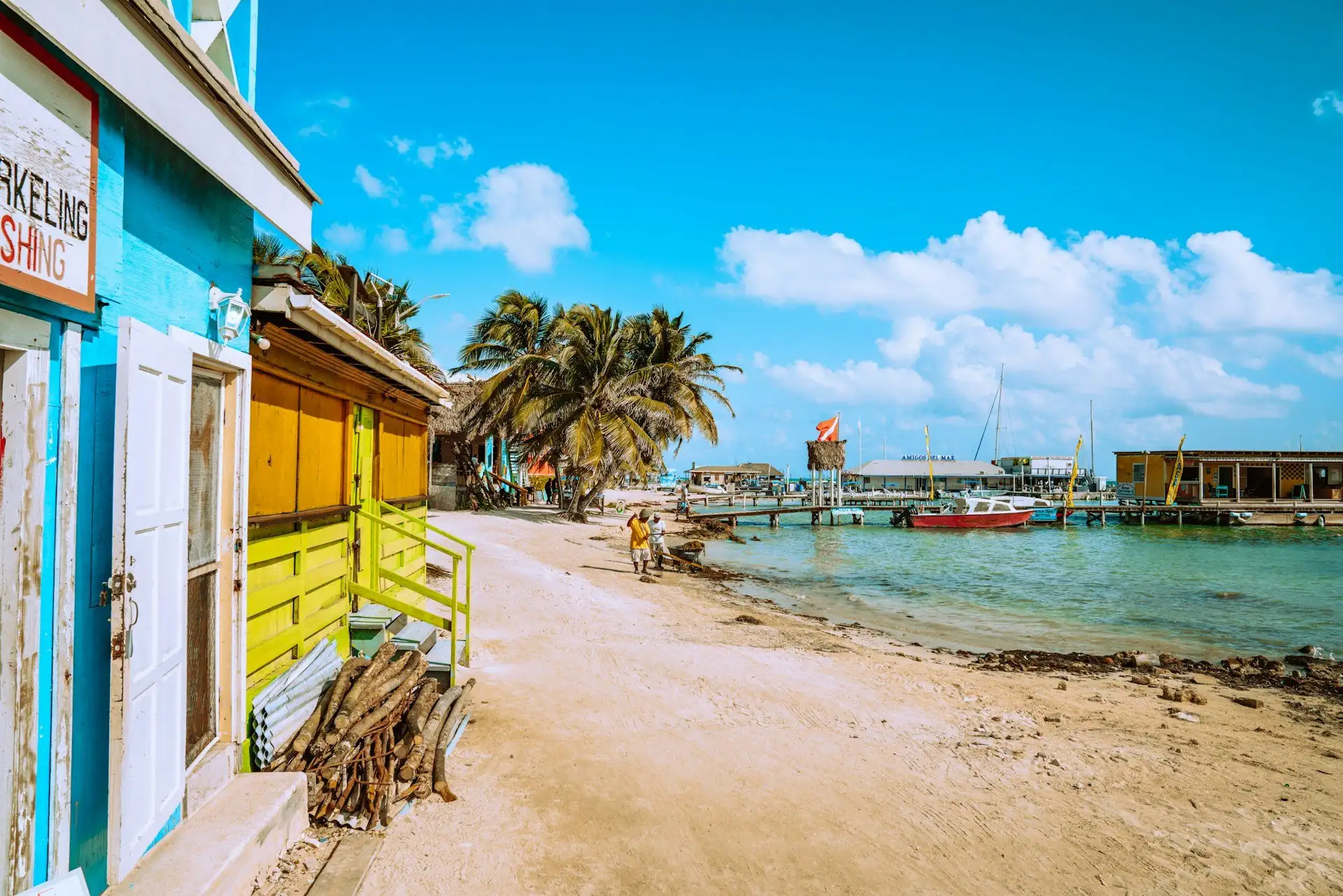
Belize's most developed tourist island — the Hol Chan Marine Reserve, excellent diving, a lively bar scene, and the most tourist infrastructure in the country. Generally safe. Crime exists but is mostly low-level. Golf carts are the primary island transport. The main risks are dive/snorkel price-switching and some nightlife safety awareness after dark.
- Dive and snorkel price-switching — get all-inclusive totals in writing
- Golf cart rental — inspect thoroughly and photograph before departing (damage claim risk)
- Drug approaches in some bar areas — decline firmly
- Restaurant bill verification in tourist-facing establishments
- Water taxi touts at San Pedro terminal — buy tickets from official windows only
The more relaxed, backpacker-oriented alternative to San Pedro — smaller, car-free, and genuinely charming. The "go slow" atmosphere is real. The drug scene is more visible here than anywhere else in Belize, and the informant trap is a documented issue. Otherwise very safe. Snorkelling the Caye Caulker Marine Reserve and watching the sunset from the Split are highlights.
- Drug approaches — sellers as police informants is a documented Caye Caulker-specific risk
- Snorkel tour price-switching — same pattern as San Pedro dive operators
- Accommodation walk-up pricing above online rates
- After dark in the residential north end — exercise standard awareness
The inland heartland of Belize — San Ignacio is a relaxed, friendly town that serves as the base for Caracol, Xunantunich, ATM Cave (Actun Tunichil Muknal), the Mountain Pine Ridge, and the Guatemalan border crossing to Tikal. One of Central America's best adventure travel hubs. Safe by Belizean standards with a well-established tourist infrastructure.
- Unofficial guides at Xunantunich and Caracol entrances
- ATM Cave requires a licensed guide by law — only use BTB-registered tour operators
- Guatemala border crossing at Benque Viejo — use official crossing, avoid unofficial moneychangers
- Shuttle overcharging from Belize City — confirm all-inclusive fare in advance
The long, narrow Placencia Peninsula is the south coast's most appealing destination — excellent beaches (rare in Belize), snorkelling, whale shark season (March–June), and access to the Cockscomb Basin Wildlife Sanctuary (jaguar reserve). Hopkins is a charming Garifuna village nearby. Both are safe and relaxed.
- Whale shark tour pricing — seasonal (March–June), operators should not guarantee sightings
- Limited ATM access — carry sufficient USD cash from larger towns
- Accommodation pre-booking essential for whale shark season
- Southern Highway road conditions — verify before driving, especially in rainy season
The sleepy north — Corozal Bay, the Mexican border crossing at Santa Elena, and access to the Lamanai archaeological site (best reached by river boat from Orange Walk). Very few tourists, extremely safe, and an authentic slice of Belizean life far from the tourist circuit.
- Mexico border crossing at Santa Elena/Chetumal — use official crossing only
- Lamanai unofficial guide approaches at the river dock in Orange Walk
- Very limited tourist infrastructure — plan accommodation and transport carefully
Safety Tips for Belize
Belize rewards prepared travellers. These habits cover the specific risks that most commonly affect visitors.
- ✓ Move through Belize City as quickly as possible — book your water taxi or onward transport in advance and go directly from the airport to the terminal. Do not wander the city with luggage.
- ✓ Buy water taxi tickets only from the official Ocean Ferry Belize or San Pedro Belize Express windows inside the Marine Terminal — not from touts outside.
- ✓ For all diving and snorkelling: ask "What is the total all-inclusive price including marine park fees, fuel, and equipment?" and get it confirmed before boarding. Use only PADI/SSI certified operators.
- ✓ At Mayan sites: pay entry fees at the official ticket booth — guide fees are always separate and guides must show BTB registration ID on request.
- ✓ Firmly decline all drug approaches — especially on Caye Caulker where sellers as police informants is a documented and serious risk.
- ✓ Carry USD cash for travel outside the main cayes and Belize City — ATMs are unreliable or absent in villages, inland areas, and along the Southern Highway.
- ✓ Pre-book all accommodation on Booking.com — especially for peak season (Christmas, US Thanksgiving, spring break) when cayes accommodation books out months in advance.
- ✓ Photograph any rental golf cart or vehicle before departing for a timestamped record — the same damage claim dynamic that affects jet ski rentals applies to golf cart rentals on the cayes.
- ✓ The ATM Cave (Actun Tunichil Muknal) requires a licensed BTB guide by law — book only through registered operators and never with unofficial guides who offer "cheaper" access.
Book Smart, Dive Deep
Pre-booking removes Belize's most consistent tourist traps — accommodation pricing, dive operator disputes, and Mayan ruin guide fees.
Emergency Numbers & Contacts
Emergency services in Belize are limited outside Belize City and San Pedro. Medical evacuation insurance is essential for jungle and inland travel.