
What You're Actually Dealing With
The Scams That Actually Catch People
Honduras risks split into the serious-but-avoidable (city crime) and the financially annoying-but-manageable (tourist trap pricing, dodgy tour operators). Here's both.
Express robbery via taxi is documented in both major cities. You get into what looks like a regular cab, the driver has accomplices, and you get taken to an ATM under duress. This is not rare enough to dismiss. It happens to people who hail taxis from the street, especially near the airport and bus terminals. Uber operates in Tegucigalpa. In San Pedro Sula, your hotel arranges transport. That's the whole rule.
- Use Uber in Tegucigalpa — it's reliable, tracked, and has eliminated this risk for most visitors to the capital.
- In San Pedro Sula, book transport through your hotel or a recommended company. Don't flag down taxis from the street.
- At the airport in both cities, pre-arranged hotel pickups and official airport taxi booths inside the terminal are the safe options. Not the guy who approaches you in arrivals.
Roatán taxis have no meters. The Coxen Hole port to West End is about 20 minutes and should cost around $10-15 USD — drivers quote $25-30 to arriving cruise passengers and fresh-off-the-ferry backpackers who don't know the going rate. Water taxis between West End and West Bay also have flexible pricing; locals pay half what tourists are initially quoted.
- The shared collective taxi from Coxen Hole to West End costs about $2-3 per person and leaves when full — ask anyone at the port for the collectivo stop.
- Agree the fare before getting in any private taxi. Say "Cuánto cuesta hasta West End?" and negotiate from there.
- The water taxi between West End and West Bay Beach (5 minutes) should be around $3-5 each way. If they quote more than that, wait for the next boat — someone will charge less.
Utila is famous for cheap Open Water certification — one of the cheapest places in the world to get your PADI card, which is why backpackers have been coming here since the 1990s. The cheapest operators sometimes cut corners: inadequate equipment maintenance, dive masters who rush certification to turn over more students, overcrowded boats. When you're 18 metres down, cheap matters less than competent.
- Check PADI affiliation and ask to see current certifications. Reputable Utila operators include Alton's Dive Center and Deep Blue Resort — both have been running for decades and have strong safety records.
- Inspect the equipment before you agree to dive. BCDs, regulators, and tanks should look maintained. If the gear is ancient and unchecked, walk away.
- Ask about maximum group size per dive master. More than 8 students per instructor on an Open Water course is a red flag.
Individuals near the entrance to Copán Ruinas archaeological site offer guide services without licensed credentials. They'll attach themselves to your group, walk you around delivering a mix of facts and fiction, and then present a significant bill at the end. Licensed guides wear photo ID badges and are registered with the Instituto Hondureño de Turismo — you can book them at the site entrance for around $25-35 for a two-hour tour.
- Book a licensed guide at the official booth just inside the entrance gate. They're uniformed, credentialed, and will tell you things about the Hieroglyphic Stairway that no unlicensed guide knows.
- If someone approaches you before you reach the entrance, a firm "No gracias, ya tenemos guía" works even if you don't yet.
- The site audio guide is also decent for self-directed visitors — available for rent at the entrance for a few dollars.
Counterfeit 500-lempira notes circulate occasionally — they're the highest denomination and easier to pass. Street changers and some informal sellers also short-count change to visitors who aren't familiar with the colourful stack of small-denomination lempira bills. On the Bay Islands, the USD/lempira confusion occasionally works against visitors paying in dollars and receiving lempira change calculated at an unfavourable rate.
- Check 500-lempira notes: genuine ones have a security strip visible when held to light and a watermark of José Trinidad Cabañas.
- Count your change before putting it away. This is not confrontational — it's expected.
- On the Bay Islands, if paying in USD, confirm what change you'll receive in what currency before handing over cash.
Phone and bag theft from beach towels and from distracted visitors in busy market areas is the most common tourist crime in the safer parts of Honduras. It requires the same awareness you'd apply on any Caribbean beach. Don't leave anything on your towel that you'd be devastated to lose. The riskier part: la Ceiba during Carnival (May) draws large crowds and pickpockets work the festival crowd specifically.
- Leave your good camera and extra cash at the hotel when going to the beach. Bring only what you need for the day.
- At La Ceiba Carnival, use a money belt or a secured bag — the crowd density is high and it's specifically the environment where opportunistic theft happens.
- On Roatán, West Bay Beach has a security presence during daylight hours — it's one of the more actively patrolled beaches in Honduras.
The Destinations — Honest Takes
Skip the parts of the itinerary that just stress you out. Honduras rewards the people who actually go to the good stuff.
Copán is one of the great Maya sites and still dramatically undervisited compared to Chichén Itzá or Tikal. The Hieroglyphic Stairway alone — 63 steps covered in the longest known pre-Columbian text, around 2,200 individual glyphs — is worth the journey from anywhere. The stelae in the Great Plaza are portrait monuments of remarkable quality, the faces still sharp after 1,300 years. The town of Copán Ruinas itself is a pleasant colonial village of cobblestone streets and decent restaurants where you can eat well for $8 and a room goes for $25-40. The Macaw Mountain Bird Park and the Las Sepulturas secondary site are both worth a half-day each. Stay two nights minimum — rushing Copán means missing the detail that makes it special.
- Book licensed guides at the official booth inside the entrance — ask specifically about the Hieroglyphic Stairway's glyphs, they're extraordinary under good interpretation
- One ATM in town at Banco de Occidente on the parque central — bring backup cash from Tegucigalpa or San Pedro Sula
- The 13km road from the Guatemalan border at El Florido is good and shuttle services run from Antigua Guatemala directly — an easy border crossing
- Twisted Tanya's on the main street does the best baleadas in town and costs almost nothing
Roatán sits on the Mesoamerican Barrier Reef — the second largest coral reef system in the world — and the diving here competes with anything in the Caribbean at about half the cost of comparable operations in the Cayman Islands or Bonaire. West End village is the backpacker hub: a narrow road lined with dive shops, restaurants, and guesthouses, most of it on stilts over the water. West Bay Beach, a 10-minute water taxi away, is the white sand postcard. Coxen Hole is the unglamorous functional centre where locals do their shopping. The ferry from La Ceiba takes about an hour and costs around $30 — Roatán Express runs the most reliable service, departs 9:30am and 4:30pm daily.
- West End to West Bay water taxis run all day and cost $3-5 each way — don't pay more than that
- Coxen Hole to West End collective taxi is $2-3 per person; private taxi is $15-20 — the collective is slower but costs a fraction
- Reef Gliders and Coconut Tree Divers in West End both have strong equipment maintenance records and consistent guides — good starting points for dive operator research
- After dark, West End's main strip is fine; stay on it rather than exploring side roads or the quieter beaches further east
Utila is smaller, cheaper, and more laid-back than Roatán. The town is a cluster of wooden houses along two main streets with dive shops every few metres, and the entire economy is essentially organised around getting backpackers certified. Open Water courses run around $250-300 including certification, which is genuinely among the cheapest in the world. The whale sharks are the other thing: Utila sits on a migration corridor and sightings are frequent enough that the Utila Whale Shark Research Station has been tracking individual animals for years. The night life is casual and fun. The diving is legitimately excellent, if occasionally crowded near the popular sites.
- Alton's Dive Center and Deep Blue are the longest-established operators with strong safety records — useful anchors for comparison
- The Utila Whale Shark Research Station on Main Street tracks current sighting locations — check with them or with your dive operator for the most likely spots
- Utila is small enough that word about bad operators spreads fast — ask in the guesthouse common rooms which dive shops to avoid before booking
- The free-spirited atmosphere is real but the town has no real nightlife after 1am — this is a dive island, not Ibiza
La Ceiba is the departure point for Bay Islands ferries and not much more for most tourists — though the Cangrejal River gorge just outside town has some of the best whitewater rafting in Central America, with Class IV rapids and excellent operators running half-day trips for around $40. The Pico Bonito National Park biosphere, which starts just behind La Ceiba, is serious cloud forest with jaguars, pumas, and more than 400 bird species. The Jardín Botánico Lancetilla near Tela, 90km west, is one of the largest tropical botanical gardens in the world — 1,680 hectares planted by United Fruit Company scientists in the 1920s and still largely intact. Tela itself is a beach town with a more local feel than the Bay Islands.
- Omega Tours in La Ceiba runs the most consistently recommended Cangrejal rafting — they also do Pico Bonito lodge accommodation and guided jungle trips
- La Ceiba's Carnival in May is extraordinary — it's the biggest in Central America — but the crowds and alcohol create petty theft conditions; use a money belt in the festival crowd
- The ferry to Roatán leaves from the dock 15 minutes from La Ceiba centre — Roatán Express is more reliable than Galaxy Wave for timing and safety
This is the one most travellers miss. Honduras's only natural lake sits between the mountains of Cerro Azul Meámbar and Santa Bárbara, and D&D Brewery right on the lakeside has been making surprisingly decent craft beer for 20 years in a country where that shouldn't exist. The birding is exceptional — over 470 species have been recorded in the Lago de Yojoa area, including many specialists from the cloud forest above. Los Naranjos archaeological site on the north shore has Lenca ruins that predate the nearby Maya. The brewery has simple rooms, the beer is good, and the boat tours at dawn for birds are genuinely memorable. It's about 90 minutes from San Pedro Sula, right on the main highway.
- No scam presence worth mentioning — this is a local spot that happens to have one excellent expat-run establishment on it
- D&D Brewery rooms run around $20-35 per night; book ahead for weekends when Honduran families come for the lake
- The owner can organise birding guides who know the forest trails above the lake — worth asking about on arrival
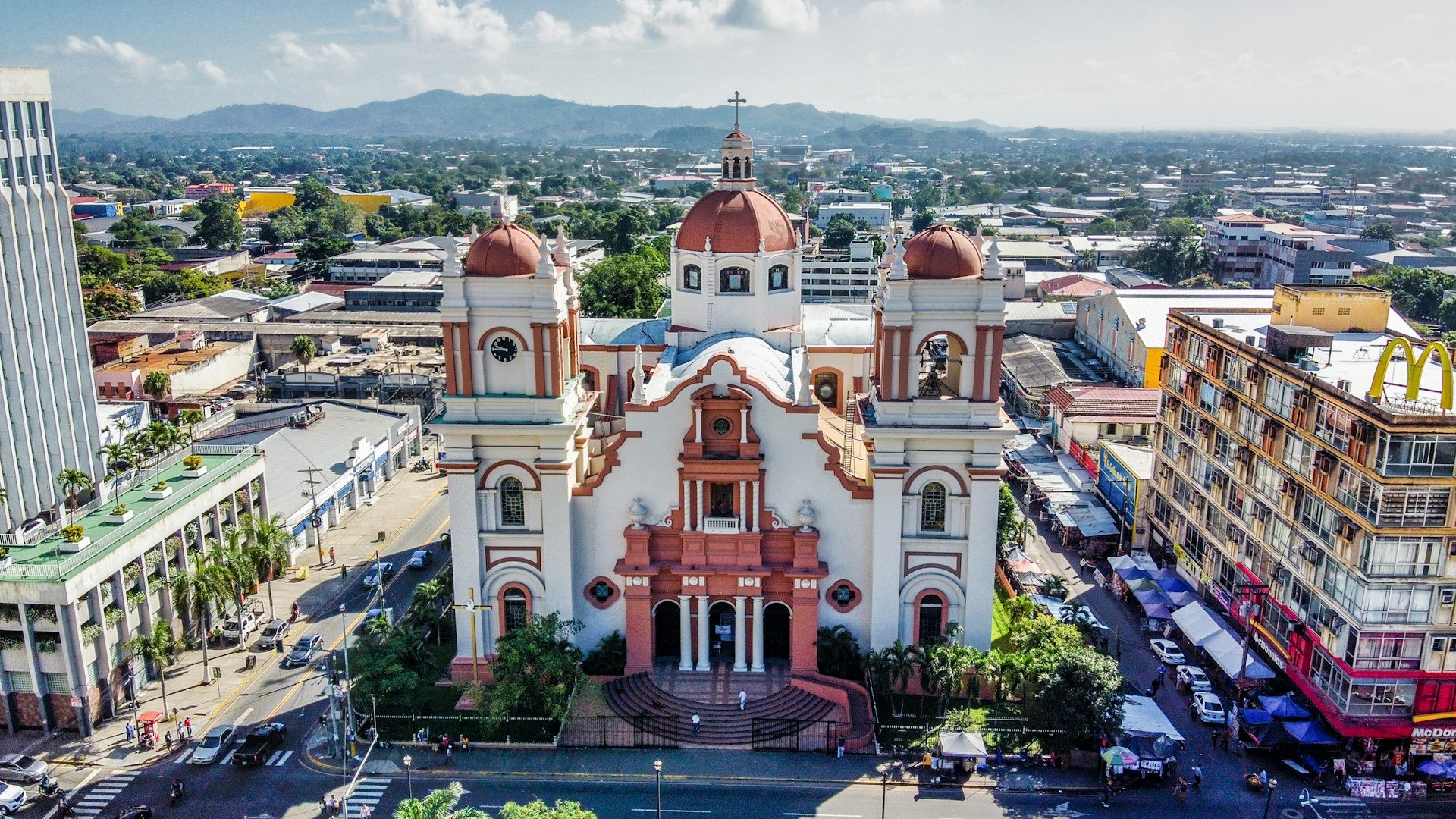
Tegucigalpa is built across dramatic hills and would be a genuinely interesting city if its security situation allowed casual exploration. It doesn't, for most visitors. The Barrio La Leona colonial neighbourhood in the city centre has a cluster of decent restaurants and some genuinely beautiful architecture, and it's walkable during daylight hours. The Parque La Leona viewpoint over the city at sunset is worth the taxi. That's about as far as most tourists should push it. San Pedro Sula has a modern mall culture in the Zona Viva (Zona Metal and the Ring Road area) that feels like anywhere in Latin America — safe enough in its own bubble, not much reason to leave it.
- Uber operates in Tegucigalpa — use it for everything, full stop
- In San Pedro Sula, only travel in the Zona Viva and connected areas; your hotel will tell you the specific streets that are currently fine
- Both cities have good food if you know where to look — but eat at your hotel's recommendation the first night and figure out what's walkable before wandering
- Night movement in either city outside established safe zones is a clear risk — taxis home before 9pm is not paranoid, it's sensible
Before You Go — The Checklist
- ✓ Use Uber in Tegucigalpa and hotel-arranged transport in San Pedro Sula — never flag down street taxis in either city.
- ✓ Move between cities on daytime shuttle buses from established operators — Hedman Alas and Viana Clase Oro are reliable. Night travel on local buses isn't worth it.
- ✓ Book dive operators on Utila and Roatán by reputation, not price — ask at your guesthouse which ones have had recent incidents before you hand over your certification fee.
- ✓ At Copán, hire a licensed guide from the official booth inside the entrance rather than accepting offers from people in the car park.
- ✓ Bring backup cash from the cities — the ATM in Copán Ruinas is the only one in town, and it runs out on busy days.
- ✓ On the Bay Islands, agree taxi fares before getting in. The collective taxi from Coxen Hole to West End is $2-3; private taxi is $15-20.
- ✓ Don't leave valuables unattended on any beach. Leave the good camera and extra cards at the hotel.