
What You're Actually Dealing With
The Scams That Actually Catch People
Costa Rica's scams are overwhelmingly about theft and overcharging, not violence. They're preventable, predictable, and annoying rather than dangerous. Know the patterns and you'll be fine.
This is the number one crime affecting visitors. Thieves watch rental car parking areas at popular beaches, national parks, trailheads, and restaurants. They can identify rental cars instantly. A window is broken and valuables grabbed in seconds. Some criminals use electronic signal blockers to prevent your key fob from locking the car, so you walk away thinking it's locked when it isn't. The November 2025 U.S. Embassy alert specifically mentioned theft from rental cars using signal-blocking technology.
- Never leave anything in your car. Not a bag, not a phone charger, not a water bottle. Nothing that suggests there might be something worth stealing. If it's in the car, it's gone.
- Lock your car manually using the key in addition to the remote fob. Test the door handles before walking away. Signal blockers only defeat the electronic lock.
- At beaches and trailheads, take everything with you. Use a dry bag if you're swimming. It's inconvenient. It's less inconvenient than losing your passport.
You go swimming. Your bag is on the towel. When you come back, it's gone. This happens every single day at every popular beach in Costa Rica. It's opportunistic, fast, and the police have essentially no capacity to help after the fact. Phones, wallets, passports, and cameras are the usual targets.
- Never leave belongings unattended on the beach. Take turns swimming if you're in a group. Use a waterproof pouch for phone and cash if you're solo.
- Leave your passport and most of your cash at the hotel. Carry a photocopy and just enough money for the day.
You get in a red official taxi. The driver doesn't start the meter ("la maria"). When you ask, they say it's broken and quote you a fare three to five times the metered rate. This is the oldest scam in Costa Rica and it still works on first-timers every day. Unofficial taxis (known as "piratas") also operate, particularly near airports and bus stations.
- Only use official red taxis with a yellow triangle on the door. Insist the meter runs before the car moves. If the driver refuses, get out and find another taxi.
- Use DiDi (the ride-hailing app that works in Costa Rica) whenever possible. The price is set in advance and the route is tracked.
- From the airport, use the official taxi counter inside the terminal. The rates are fixed and posted.
Someone on the road waves at you, pointing at your tyres, indicating you have a flat. You pull over to check. While you're distracted looking at the tyre (which is fine), an accomplice steals bags from the other side of the car. A variant involves someone actually puncturing your tyre at a gas station or parking area, then following you until you stop.
- If someone signals you have a flat, do not stop on the roadside. Drive to a well-lit petrol station or busy public area before checking.
- Keep all doors locked and windows up while driving. Don't leave bags on seats visible through windows.
Two issues here. First: fake rental listings on unofficial platforms that take your money for a property that doesn't exist. Second: real vacation rentals being targeted for break-ins and armed robberies, as specifically noted in the November 2025 U.S. Embassy alert. Criminal groups have forced tourists at vacation rentals to withdraw cash from ATMs or make bank transfers.
- Book only through official platforms (Airbnb, Booking.com, VRBO). Verify reviews. If a deal looks too good to be true, it is.
- Choose accommodations with security features: gates, cameras, night guards. Ask about security measures before booking.
- Set bank withdrawal limits before you travel. The Embassy specifically recommends this to limit what criminals can extract.
You book a rental car online for $25 per day. You arrive at the counter and learn that mandatory Costa Rican liability insurance adds $15 to $30 per day. Then the agent pushes optional coverage for another $20 to $40 per day. Your original price doubles or triples. This isn't technically a scam (the insurance is legally required), but the way it's presented feels like one.
- Research the total cost including mandatory insurance before booking. Some agencies include it in their online price; many don't. Vamos Rent-a-Car and Adobe Rent a Car are local companies known for transparent pricing.
- Check if your credit card covers rental car insurance in Costa Rica. Many do, but you still need the mandatory local liability policy.
The Destinations: Honest Takes
Costa Rica packs an absurd amount of variety into a country the size of West Virginia. The classic tourist triangle is Arenal, Monteverde, and Manuel Antonio. Here's what each actually involves.
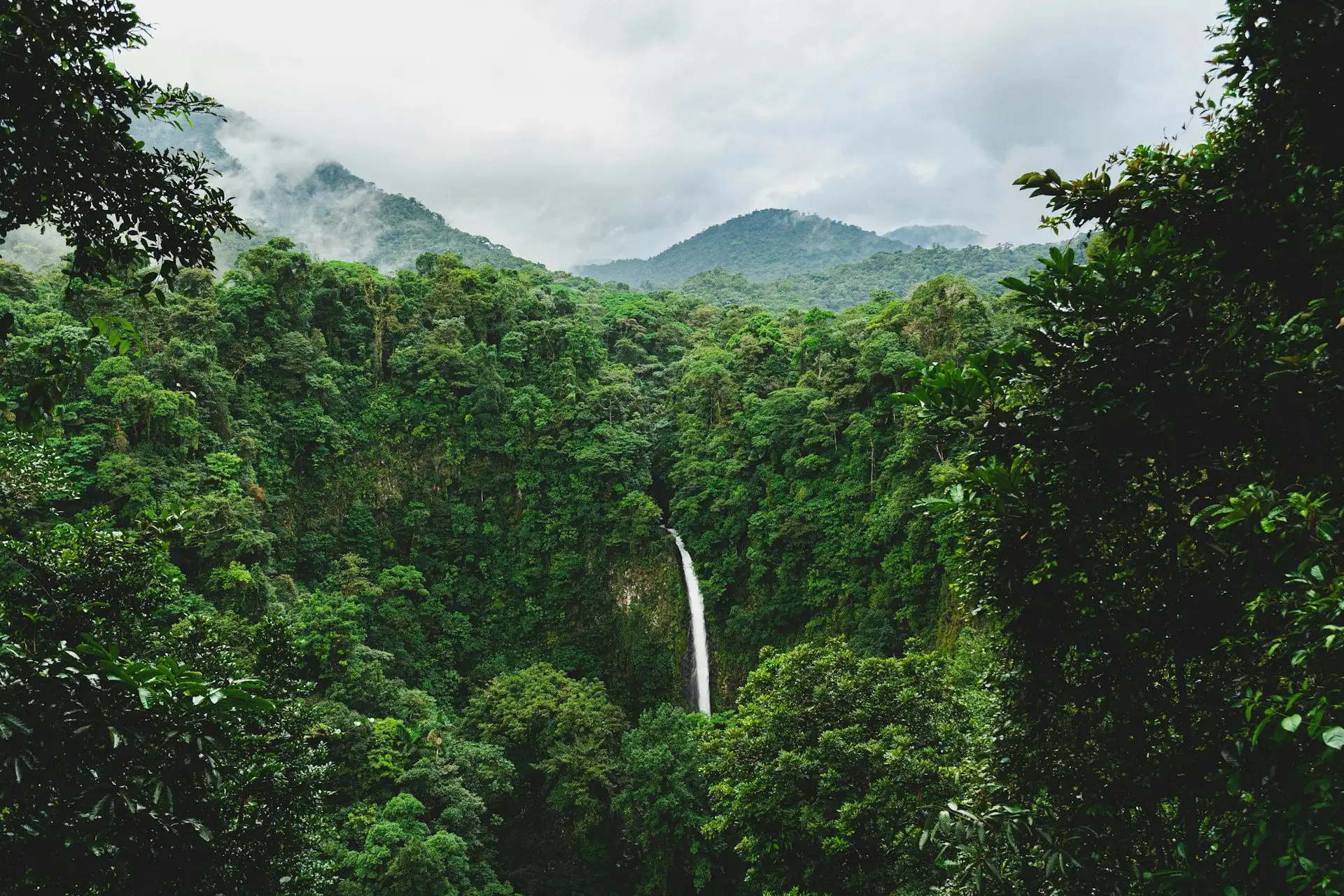
Arenal Volcano is the postcard. The near-perfect cone rises above rainforest and Lake Arenal, steam occasionally drifting from the summit. La Fortuna, the town at its base, is the adventure capital: ziplining, hanging bridges, whitewater rafting, canyoning, mountain biking, and the natural hot springs that range from $5 roadside pools to $80 resort experiences (the Tabacón resort springs are extraordinary and worth it once; Ecotermales is quieter and half the price). The La Fortuna waterfall is a 500-step descent into a gorge with a thundering cascade at the bottom. Arrive before 8am and you'll have it to yourself. The Místico Arenal Hanging Bridges walk through the canopy is the best way to see birds and the occasional sloth without the adrenaline overhead. The drives around Lake Arenal toward Monteverde are gorgeous, if slow.
- Very low scam risk. The main concern is car break-ins at trailhead parking lots. Take everything with you
- The road from San José takes about 3 hours via San Ramón. Fully paved. No 4WD needed for La Fortuna itself
- Hot springs tip: Ecotermales limits visitors and feels intimate. Tabacón is resort-scale. Free hot springs exist along the river near the Tabacón entrance
- The casado (rice, beans, plantain, salad, protein) at any local soda in town costs $5 and is the best value meal in Costa Rica
Monteverde sits at 1,500 metres in tropical cloud forest, cool and misty where Arenal is hot and humid. The Monteverde Cloud Forest Biological Reserve is dense, dripping, and extraordinary for birding. The resplendent quetzal, one of the most striking birds in the Americas, nests here, and a good guide will find one within an hour during nesting season (February to June). The night tours are some of the best wildlife experiences in the country: tarantulas, tree frogs, sleeping toucans, and the occasional kinkajou lit up by your guide's flashlight. The zip lines here are the longest in Latin America. The hanging bridges at Selvatura give you canopy-level access without the screaming. Santa Elena, the main town, has a Quaker heritage, excellent coffee, and a cheese factory that is better than it sounds.
- Very low crime risk. The main hazard is the road from Arenal: unpaved, windy, potholed. Allow 3 to 4 hours. A 4WD is strongly recommended, essential in rainy season
- Book your cloud forest reserve entry in advance during peak season (December to April). Slots fill up
- A guided night walk is worth every dollar. The guides know exactly where to find things you would walk straight past
- Orchid Coffee in Santa Elena. That's the recommendation. Go twice
Manuel Antonio National Park is the most visited park in Costa Rica for a reason: white-sand beaches backed by rainforest where monkeys literally walk across the trail in front of you. White-faced capuchins, howler monkeys, two-toed sloths, iguanas, and raccoons are all essentially guaranteed. The park is small enough to walk in a few hours and beautiful enough that you'll want to stay all day. The beaches inside the park are swimmable and stunning. Outside the park, the town itself is a strip of hotels and restaurants running down a steep hill to the coast. It's more developed and more expensive than anywhere else in Costa Rica. The sunsets from the high-end restaurants on the hill are worth the price of the meal.
- Higher theft risk than Arenal or Monteverde. Car break-ins in the park parking area are common. Don't leave anything in the car. Anything
- Monkeys in the park will steal food from your bag. Zip it closed. They are clever, fast, and have no shame
- Street hawkers and unlicensed tour guides are more aggressive here than elsewhere. Politely decline and keep walking
- Book park entry online the morning of your visit. The park limits daily visitors and sells out in high season
If Manuel Antonio is Costa Rica's greatest hit, Corcovado is the B-side that the serious fans know is better. National Geographic once called it the most biologically intense place on earth. Tapirs, jaguars, all four species of Costa Rican monkeys, scarlet macaws, and an astonishing density of life in every direction. Access is via Drake Bay (by boat from Sierpe or small plane from San José) or Puerto Jiménez. There are no roads through the park. You hike in with a mandatory guide, sleep in ranger stations, and experience rainforest the way it exists when nobody's built a zip line through it. Drake Bay itself has no ATMs, no banks, and limited medical facilities. Bring cash and a sense of adventure.
- Very low crime risk. This is genuinely remote. The biggest dangers are heat, dehydration, river crossings, and bull sharks at river mouths
- Guides are mandatory in Corcovado and must be booked in advance. Entry permits sell out. Plan weeks ahead
- Drake Bay is reached by boat from Sierpe (90 minutes) or small plane. The boat ride through the Sierpe River mangroves is half the experience
Most people pass through San José as fast as possible. That's fair. The city is congested, grey, and doesn't try to be charming. But it has its moments: the Mercado Central is chaotic and excellent for cheap food (the gallo pinto at any counter for $3 is as good as it gets anywhere). The Gold Museum and the Jade Museum are genuinely worth an hour each. The neighbourhood of Barrio Escalante has become a restaurant district with some of the best food in the country. If you have one night in San José, eat at one of the restaurants on Calle 33 in Escalante and you'll leave thinking the city was undersold.
- Highest petty crime risk in the country. Don't walk with your phone out. Avoid downtown parks at night. The neighbourhoods of Los Guido, León III, and parts of Barrio Cristo Rey should be avoided after dark
- Use DiDi or official taxis. Don't hail cabs on the street near the airport. Use the official taxi desk inside
- If you arrive late, stay near the airport (Holiday Inn Express or similar) and start your drive in daylight the next morning
- The route from SJO airport toward Santa Ana has had elevated safety concerns. Keep windows up, doors locked, nothing visible in the car
The Caribbean side is a different Costa Rica. Reggae replaces ranchera. The food is coconut rice, jerk chicken, and rondon (a Caribbean coconut stew slow-cooked with whatever the fisherman brought in). Puerto Viejo de Talamanca is the backpacker capital: surf breaks, rasta vibes, Cahuita National Park (entry by donation, coral reef snorkelling, howler monkeys on the beach trail). Tortuguero, reachable only by boat or small plane, is where sea turtles nest between July and October. Watching a green turtle haul herself up the beach at midnight to lay eggs, guided by nothing but instinct and moonlight, is one of the most humbling things you'll see in Costa Rica. The Caribbean has its own weather: drier in September and October when the Pacific side is soaked.
- Puerto Viejo and Limón have higher petty crime rates than the Pacific tourist towns. Be more cautious at night. Don't walk the beach alone after dark
- Tortuguero is very safe but very remote. There are no roads in. Bring cash, medications, and mosquito repellent
- Cahuita National Park is entry by voluntary donation. The trail along the coast through the rainforest to the coral reef is one of the best free walks in Central America
Before You Go: The Checklist
- ✓ Never leave anything in your rental car. Lock it manually as well as electronically. Thieves use signal blockers. This single rule prevents the majority of tourist crime in Costa Rica.
- ✓ Rent a 4WD or high-clearance vehicle. Many roads are unpaved. Research the total cost including mandatory insurance before booking. Vamos and Adobe are reputable local agencies with transparent pricing.
- ✓ Use DiDi or official red taxis with the meter running. If a driver says the meter is broken, get out. At airports, use the official taxi desk inside the terminal.
- ✓ Set bank withdrawal limits before you travel. The U.S. Embassy specifically recommends this due to reports of tourists being forced to make ATM withdrawals.
- ✓ Respect riptides. They kill more tourists than crime. Swim at beaches with lifeguards when possible. If caught in a rip current, swim parallel to shore, never against it.
- ✓ Use mosquito repellent, especially at dawn and dusk. Dengue is present. Stay on marked trails when hiking. Snakes are common and some are venomous.
- ✓ Book national park entry and tours in advance during December to April (dry season/peak). Manuel Antonio and Corcovado both have daily visitor limits that fill up.