
What You're Actually Getting Into
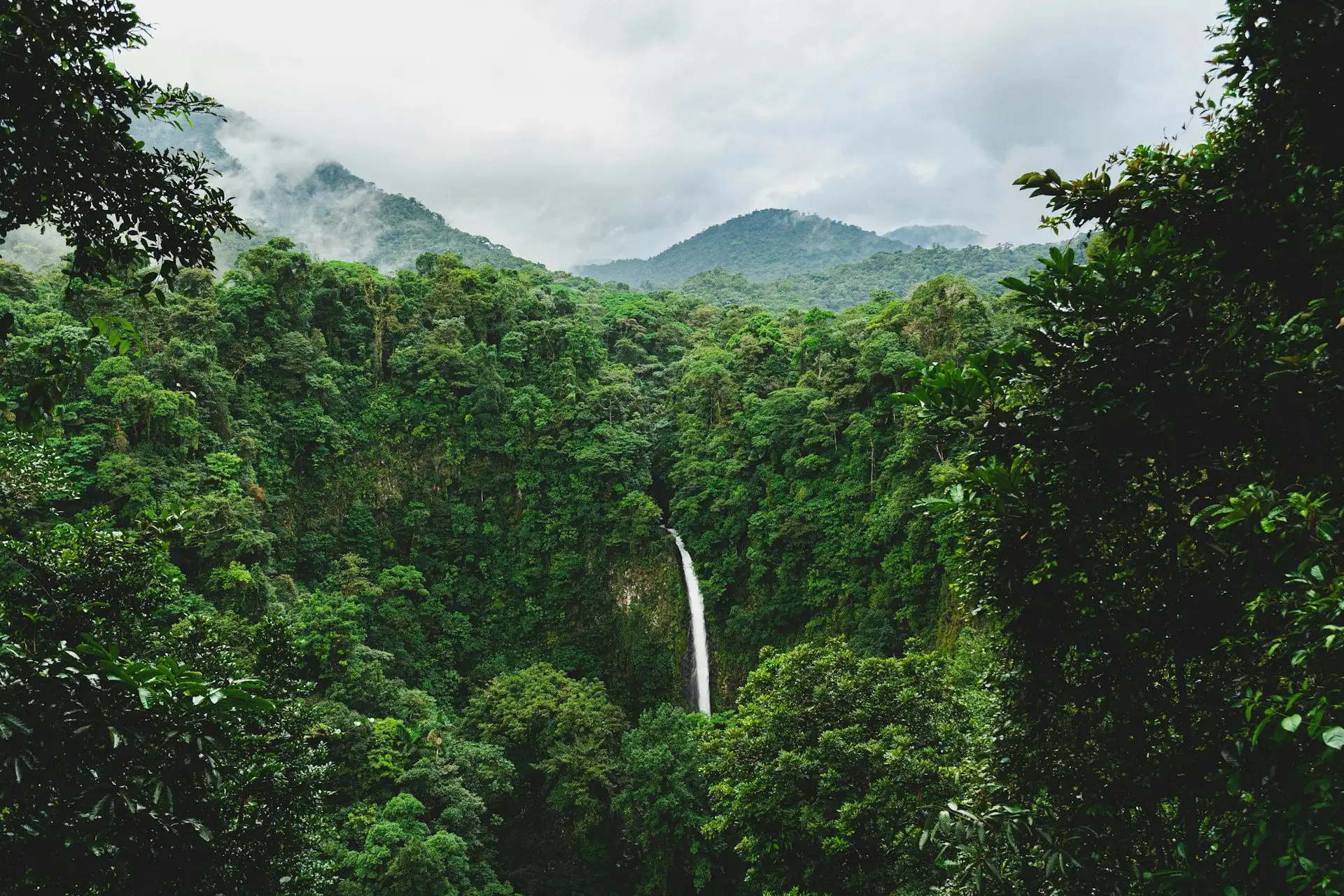
Costa Rica invented modern ecotourism almost by accident. On 1 December 1948, President José Figueres Ferrer abolished the military by decree, symbolically knocking a hole in the wall of an army barracks, and the country redirected that spending into education, healthcare and, starting in the 1970s, one of the world's most ambitious national park systems. The result: a country covering just 0.03% of the planet's land surface that holds an estimated 5% of its known species, with roughly a quarter of the national territory under some form of protection.
None of this reads as a museum piece. Costa Rica has spent forty years building a tourism industry specifically around this landscape, and it shows: trails are marked, guides are trained naturalists, lodges run on hydro or solar power as a matter of course, and the whole apparatus works with a professionalism that is rare in the region. It is also, as a direct result, pricier than its Central American neighbors. This is not the country for a five-dollar hostel bed and a two-dollar dinner; it is the country where the extra money buys genuinely excellent infrastructure and access to landscapes that took decades of deliberate policy to preserve.
The honest complications
Costa Rica sits on an active volcanic and seismic belt: earthquakes are a normal part of life and Arenal, Poás, Irazú, Rincón de la Vieja and Turrialba are all active or recently active volcanoes, with occasional ash advisories closing summit trails without much notice. Rip currents on the Pacific coast are a real and underrated hazard, killing more visitors most years than crime does; swim only at beaches with visible lifeguard presence or a calm, flagged cove. Roads outside the main highways are often unpaved, potholed or river-crossed, distances that look short on a map can take two or three hours, and rental cars come with mandatory insurance that inflates the quoted daily rate significantly. None of this makes Costa Rica a difficult trip by regional standards, but the brochure version undersells how much of the country is still genuinely rustic once you leave the resort belt.
A History Worth Knowing
Costa Rica's indigenous population was always smaller and more dispersed than in the great Mesoamerican civilizations to the north, which meant Spanish colonization here produced a poorer, more self-sufficient colony of small farmers rather than a plantation economy with a large landowning elite. That relatively flat social structure, coffee wealth in the 19th century, and a decisive, if bloody, choice in 1948 shaped the unusually stable and socially invested country that exists today.
- 1502
Columbus arrives. On his fourth voyage, Columbus lands near modern Limón and names the coast "Costa Rica" (rich coast), though the gold he saw on local chiefs turned out to be scarce inland.
- 1821
Independence. Costa Rica gains independence from Spain as part of the wider Central American declaration, with the news reportedly arriving by mule nearly a month after the fact.
- 19th century
Coffee. Coffee exports fund the country's first infrastructure, including the Teatro Nacional in San José, built in part with a tax on coffee sacks after touring opera star Adelina Patti reportedly skipped the country for lack of a proper venue.
- 1948
Civil war and the abolition of the army. A disputed presidential election triggers a six-week civil war; the victorious José Figueres Ferrer abolishes the military that December and redirects its budget to social spending.
- 1970s-1990s
The national park system. Conservationists including Mario Boza and Álvaro Ugalde build the modern protected-areas network from a handful of reserves into the system that underpins tourism today.
- 1990s-present
Ecotourism boom. Monteverde, Manuel Antonio and Arenal go from scientist outposts and fishing villages to global travel destinations, and tourism becomes one of the country's largest industries.
Read the full history: indigenous Costa Rica, coffee barons and Figueres
Pre-Columbian Costa Rica was home to distinct indigenous groups, including the Chorotega in the northwest, the Borúca in the south, and various Caribbean-coast peoples, none of whom built the large stone cities associated with the Maya or Aztec to the north. The mysterious stone spheres of the Diquís Delta, some over two meters across and carved with tools far simpler than the precision they display, remain only partly explained and are a UNESCO World Heritage Site today.
Spanish colonization from the 1560s was slow and unrewarding by imperial standards: no major gold deposits, a difficult climate, and a small, resistant indigenous population meant Costa Rica developed as a backwater of subsistence farmers rather than a plantation colony, a structural difference historians credit with the country's later lack of a powerful landowning oligarchy and its comparatively equal society.
Coffee changed that from the 1830s onward, turning the Central Valley's volcanic soil into some of the most valuable agricultural land in Central America and funding the country's first real state institutions, railways and public buildings, including the ornate Teatro Nacional, completed in 1897.
The 1948 civil war. When incumbent-aligned legislators annulled the presidential election results, José Figueres Ferrer led an armed uprising that won within six weeks. Rather than keep the military that brought him to power, Figueres's Founding Junta abolished it entirely by decree that December, a decision later written into the 1949 constitution. The reasoning was as much about preventing future coups against himself as it was idealism, but the practical effect, decades of military budget redirected into education and health, is why Costa Rica has some of the region's best literacy and life-expectancy statistics.
Building the parks. Costa Rica's national park system, now more than 25 parks plus dozens of reserves and wildlife refuges, was assembled deliberately from the 1970s by conservationist officials working with very little money, buying up land threatened by logging and cattle ranching before it disappeared. The strategy succeeded well enough that it became the country's main export pitch: come see what we saved.
Top Destinations
Costa Rica divides into five practical travel zones: the Central Valley around the capital, the volcano country of the north, the cloud forest, the Central Pacific beaches, and the drier beaches of Guanacaste. The country is small, roughly the size of West Virginia, but road quality and one-lane mountain passes mean travel times run longer than the map distance suggests. Ten days covers two or three zones properly; don't try to do all five in under two weeks.
San José and the Central Valley
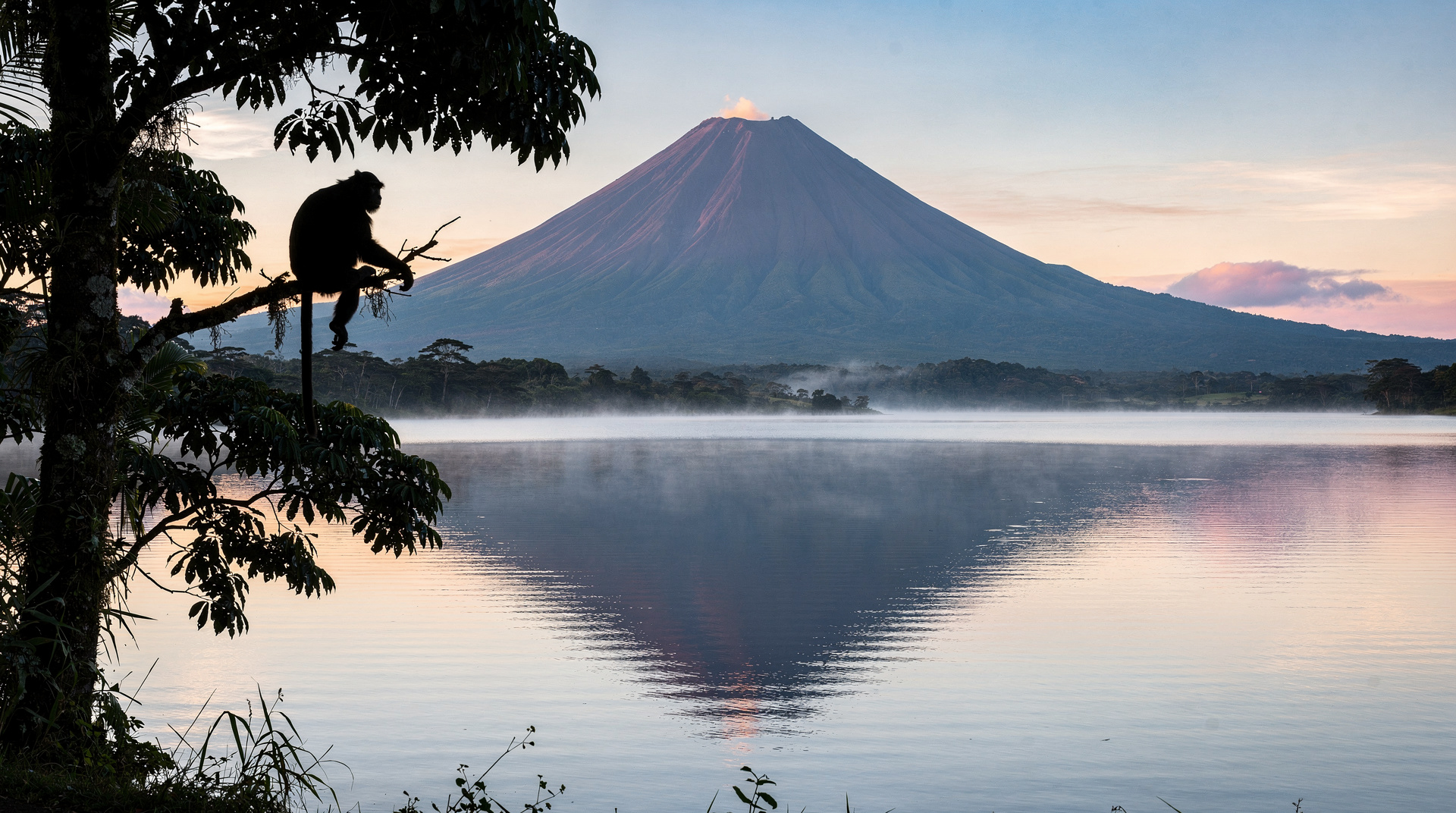
The capital sits in a broad volcanic valley ringed by coffee farms and four active or dormant volcanoes visible on a clear day. San José itself is a working Latin American capital rather than a postcard, most visitors pass through for a night rather than staying the whole trip, but the surrounding valley holds some of the country's best day trips: Poás Volcano's steaming crater, La Paz Waterfall Gardens' five cascades and wildlife rescue center, and the oxcart-painting town of Sarchí. Budget one to two days here before heading further out. See our full San José city guide for neighborhoods, hotels and a complete day-trip breakdown.
La Fortuna and Arenal Volcano
Arenal's near-perfect cone, dormant since a quiet-down in 2010 after a violent 1968 eruption buried three villages, still dominates the skyline above the town of La Fortuna. The volcano itself is the reason to come; the hot springs fed by its geothermal activity are the reason to stay. Tabacón Thermal Resort is the well-known, expensive option with river-fed pools threading through landscaped jungle; Baldi Hot Springs is the larger, livelier and cheaper alternative with 25 pools and a swim-up bar. La Fortuna Waterfall, a 70-meter drop reached by a steep staircase into a canyon, and the Arenal Hanging Bridges canopy walk are both worth a half-day each. Rent a kayak or take a sunset boat tour on Lake Arenal, the reservoir immediately west of town, for volcano views without the crowds.
Monteverde Cloud Forest
Monteverde sits at around 1,400 meters, high enough that clouds settle into the canopy most afternoons, creating a cooler, wetter, epiphyte-draped forest completely different from the lowland jungle elsewhere in the country. The Monteverde Cloud Forest Reserve and the adjacent, less-crowded Santa Elena Cloud Forest Reserve both offer marked trails with a real chance of spotting a resplendent quetzal, one of the most sought-after birds in the Americas, especially between December and April during nesting season. Canopy zip-line tours, born in Monteverde in the 1990s before spreading worldwide, remain one of the better ways to see the forest from above; Selvatura Park and 100% Aventura both run well-regarded courses. A night walk with a local guide, spotting sleeping birds, tarantulas and kinkajous with headlamps, reliably outperforms expectations.
Manuel Antonio & the Central Pacific
Manuel Antonio National Park, Costa Rica's smallest but most-visited park, packs white-sand beaches, sloths, white-faced capuchin monkeys and squirrel monkeys into a compact rainforest peninsula two and a half hours from San José by road. Entry is capped and timed, book ahead in high season, and a licensed naturalist guide (roughly $20 per person) reliably spots wildlife that independent visitors walk straight past. The town of Quepos just outside the park has the area's restaurants and hotels; nearby Manuel Antonio village itself is smaller and closer to the beaches. Further south, the surf town of Dominical and the wilder Osa Peninsula, gateway to Corcovado National Park, reward travelers with extra days and a tolerance for rough roads.
Guanacaste, the dry-forest coast
Guanacaste in the northwest is Costa Rica's driest region and its most developed beach coast, served directly by Liberia's international airport (LIR) so visitors can skip San José entirely. Tamarindo is the surf-and-nightlife hub with the most restaurants and expat infrastructure; Playa Conchal, backed by a crushed-shell beach, and the Papagayo Peninsula's all-inclusive resorts sit at the quieter, pricier end. Rincón de la Vieja National Park, inland, adds volcanic mud pools, hot springs and waterfalls without the coastal crowds. This is the region to pick if beach time matters more than rainforest time.
Hidden gems beyond the main circuit
The five zones above cover a strong first trip. With extra days or a second visit, these reward the detour.
Corcovado National Park
National Geographic once called it "the most biologically intense place on Earth." Remote, humid and only reachable with a licensed guide, but the best chance in the country of seeing a tapir or a scarlet macaw in the wild.
Río Celeste
A river that turns an improbable, milky turquoise-blue where two clear streams mix and cause a chemical reaction with volcanic minerals, not dye or pollution. A 3-hour round-trip hike to the waterfall and back.
Cahuita & Puerto Viejo
Afro-Caribbean culture, reggae and patois English replace the Pacific coast's surf-town feel entirely. Cahuita National Park has a free-entry (donation-based) coastal trail with sloths and howler monkeys right off the path.
Tortuguero National Park
Reachable only by boat or small plane, a network of jungle canals nicknamed "the Costa Rican Amazon." Green sea turtles nest on its beaches from July to October, one of the most significant nesting sites in the Western Hemisphere.
Santa Teresa & Nosara
The surf-and-wellness end of the Pacific coast: yoga retreats, beach bars and some of the country's most consistent breaks, reached by a bumpy final stretch of unpaved road that keeps the crowds down.
Orosi Valley & Irazú Volcano
A quiet loop of coffee farms, a colonial church ruin and hot springs an hour from San José, with Irazú, the country's highest volcano, offering a lunar, ash-grey crater lake on a clear morning.
Culture & Etiquette
Costa Ricans call themselves Ticos (Ticas for women), a nickname from a linguistic habit of adding "-ico" or "-ica" diminutive endings to words. The national phrase, pura vida (pure life), functions as hello, goodbye, thank you, you're welcome, and a general answer to "how's it going," and it is not just tourism-board marketing: an unhurried, socially minded, environmentally conscious outlook really does run through daily life here more than the slogan-heavy version suggests.
Do
- Say pura vida back. It works in almost any context and Ticos appreciate visitors using it naturally rather than performing it.
- Tip appropriately. A 10% service charge is added by law to restaurant bills; an extra 5-10% in cash for good service is appreciated but not obligatory. Round up for taxis and tour guides.
- Dress for the climate zone you're in, not the one you left. Light layers for San José's mild valley climate, quick-dry clothes for the humid lowlands and rain gear for the cloud forest.
- Book national park entry ahead where it applies (Manuel Antonio, Corcovado, some others use timed or capped entry) rather than assuming walk-up access.
- Learn basic Spanish courtesies. Con mucho gusto (with pleasure) is used constantly instead of de nada for "you're welcome," and picking it up lands well.
Don't
- Leave valuables visible in a parked rental car, anywhere, including at trailheads and beaches. Break-ins targeting tourist rentals are the country's most common property crime.
- Swim at an unfamiliar beach without checking for a lifeguard or local advice first. Rip currents are a leading cause of tourist death here, not an abstract warning.
- Expect Arenal to be erupting. It has been dormant since around 2010; older marketing photos of visible lava are out of date.
- Assume "Tico time" is an insult. Things run on a relaxed schedule; build slack into plans rather than treating a late shuttle as a crisis.
- Wander into unmarked rainforest alone. Trails through genuine rainforest can be disorienting fast; stick to marked routes or hire a guide, which also multiplies the wildlife you'll actually see.
Deeper culture: coffee identity, environmentalism as policy and the Diquís spheres
Coffee as identity. Costa Rica banned the cultivation of the lower-quality robusta bean decades ago, growing only arabica, and coffee culture runs deep enough that "cafecito" breaks are a genuine daily ritual. Chorreador-brewed coffee, poured through a cloth sock filter, remains common in rural households alongside the espresso machines of San José cafes.
Environmentalism as state policy, not just branding. Costa Rica has run on close to 98-99% renewable electricity in recent years (hydro, geothermal and wind), has a national payment-for-ecosystem-services program that pays landowners to keep forest standing, and set an early goal of national carbon neutrality that, while not fully met on its original timeline, still shapes policy debate in a way few countries attempt.
The Diquís stone spheres. Carved by a pre-Columbian culture between roughly 600 and 1000 CE, some of these granodiorite spheres exceed two meters in diameter and were shaped to a near-perfect roundness with stone tools, for reasons still debated by archaeologists. Several sit in Palmar Sur's archaeological sites, a UNESCO World Heritage listing since 2014, with others displayed at the National Museum in San José.
Food & Drink
Costa Rican food is homestyle rather than showy: rice, beans, fresh produce and grilled or stewed proteins, eaten mostly at family-run sodas (small, inexpensive local restaurants) rather than restaurants aimed at tourists. It is not a spicy cuisine; Salsa Lizano, a mild, tangy brown condiment sauce found on every table, is the closest thing to a national flavor signature.
Gallo Pinto $4-7
Rice and black beans cooked together with onion, bell pepper, cilantro and Salsa Lizano, served at breakfast with eggs, tortillas and fried plantain. The literal backbone of the national diet and, done well, better than the sum of its parts.
Casado $6-11
The standard lunch plate: rice, beans, a cabbage-and-tomato salad, sweet fried plantain (maduros) and a choice of chicken, fish, pork or beef. Rural sodas charge the low end; tourist-zone versions run higher for the same plate.
Ceviche $6-12
Raw white fish "cooked" in lime juice with onion, cilantro and sweet pepper, served cold with soda crackers. A Pacific-coast staple, best eaten near the water it came from.
Costa Rican Coffee $1.50-4
Arabica-only by law, grown at altitude in the Central Valley and Tarrazú region. Order it "chorreado" for the traditional cloth-filter pour, or as an espresso drink in San José's specialty cafes.
Olla de Carne
A hearty beef-and-vegetable stew with yuca, plantain, corn and chayote squash, the classic Sunday family meal and comfort food of choice on a rainy afternoon.
Tropical Fruit & Fresh Juice $2-4
Mango, papaya, piña and less familiar fruit like cas and mamón chino (rambutan) turn up as batidos (fruit shakes with milk or water). A genuinely different fruit stand experience from home.
When to Go & Itineraries
Costa Rica runs on two seasons rather than four. December through April is verano (dry season): the most reliable weather nationwide and the busiest, priciest travel period, especially around Christmas and Easter week. May through November is green season: lower prices, lusher landscapes, and a predictable pattern of sunny mornings with afternoon rain, except September and October, the wettest stretch on the Pacific side, when some Osa Peninsula and Monteverde roads can become genuinely difficult.
Both seasons compared, with regional variation
| Season | Verdict | Weather | Prices & crowds |
|---|---|---|---|
| Dec-Apr (dry) | Best overall | Sunny, little rain nationwide | Peak prices, book ahead for Manuel Antonio & Christmas/Easter |
| May-Aug (early green) | Good value | Sunny mornings, afternoon rain | Lower prices, thinner crowds, still workable roads |
| Sep-Oct (peak green) | Cheapest, riskiest | Heaviest rain, Pacific side | Lowest prices; some rural roads difficult, a few lodges close |
| Nov | Good, underrated | Transitional, clearing | Shoulder pricing, landscapes at their greenest |
The Caribbean coast (Tortuguero, Puerto Viejo) runs on its own, less predictable pattern with a small drier window around September-October, roughly the opposite of the Pacific side. Check the specific region's forecast rather than applying the national pattern everywhere.
Itineraries
Ten days is the practical minimum for a satisfying multi-region trip. Two weeks lets you add a coast without rushing the volcano-and-cloud-forest core, and three weeks covers a genuinely comprehensive loop including the Caribbean side.
- Day 1
Arrive San José. Land at SJO, one night in the Central Valley, or push straight on to Arenal if arriving early.
- Days 2-3
La Fortuna & Arenal. Hanging bridges, La Fortuna Waterfall, an evening at Baldi or Tabacón hot springs.
- Days 4-5
Monteverde. Cross via the Lake Arenal road (3-4 hrs). Cloud forest reserve, a canopy tour, a guided night walk.
- Days 6-7
Manuel Antonio. Drive or shuttle to the coast (3-4 hrs from Monteverde). One full day in the park, a beach afternoon, fly or drive back to San José for departure.
- Days 1-2
San José & Central Valley. Poás Volcano, La Paz Waterfall Gardens, Sarchí, a night in the capital.
- Days 3-5
La Fortuna & Arenal. Full slate: hanging bridges, waterfall, hot springs, a Lake Arenal boat tour at sunset.
- Days 6-8
Monteverde. Both cloud forest reserves, a zip-line canopy tour, and the night walk.
- Days 9-11
Manuel Antonio. Park day with a guide, beach time, a day trip south to Dominical for surf.
- Days 12-14
Guanacaste. Fly Quepos to Liberia or drive; finish with beach days around Tamarindo or Playa Conchal before flying home from LIR or back through SJO.
- Days 1-3
Central Valley extended. San José city, Poás, La Paz Waterfall Gardens, plus the Orosi Valley and Irazú Volcano loop.
- Days 4-6
Caribbean coast. Boat into Tortuguero for canal wildlife tours (turtle nesting July-October), then Cahuita or Puerto Viejo for Afro-Caribbean culture and beaches.
- Days 7-9
Arenal & La Fortuna. The full volcano-and-hot-springs circuit at an unhurried pace.
- Days 10-12
Monteverde. Cloud forest, canopy tour, coffee farm tour on the way in or out.
- Days 13-16
Osa Peninsula & Corcovado. A multi-day guided trip into the country's wildest, most biodiverse corner.
- Days 17-21
Guanacaste, slow. Five unhurried beach days between Tamarindo, Santa Teresa and Playa Conchal before flying out of Liberia.
Getting there & around
Two international airports serve Costa Rica: Juan Santamaría (SJO) near San José, the main hub, and Daniel Oduber (LIR) in Liberia, which puts Guanacaste's beaches within an hour's drive without touching the capital at all. From SJO, an official orange airport taxi into San José costs roughly $25-30 for the 20-30 minute ride; agree the fare or confirm the meter before departing.
All transport options with prices: shuttles, domestic flights, rental cars
| Option | Price | Notes |
|---|---|---|
| Shared shuttles (Interbus, Easy Ride) | $40-55/leg | Door-to-door between all major tourist towns; book a day or two ahead in high season. |
| Domestic flights (Sansa, Green Airways) | $79-150/leg | Small planes (5-14 seats) linking San José to Arenal, Quepos, Nosara, Tambor and more; cuts a 5-hour drive to 30 minutes. |
| Rental car (4x4 recommended) | $60-130+/day incl. mandatory insurance | Quoted online rates rarely include Costa Rica's mandatory third-party insurance (SLI/LDW), which can roughly double the sticker price. |
| Public buses | $2-15/route | Cheapest option, extensive network, but slower and less flexible than shuttles for a short trip. |
Driving reality check: distances that look like an hour on a map can take two or three on unpaved, single-lane mountain roads, especially around Monteverde and the Nicoya and Osa peninsulas. Fill up whenever you pass a station in rural areas, and download offline maps before losing signal in the mountains.
Practical prep: a Costa Rican SIM or eSIM covers most of the tourist circuit with decent signal; coverage thins out around Corcovado and deep in the Caribbean lowlands. Standard travel insurance is worth having given the volcano and rip-current risks; check that it covers adventure activities like zip-lining and whitewater rafting if you plan to do either.
Where to stay
Eco-lodges
The country's signature accommodation: solar or hydro-powered, set inside or beside rainforest or cloud forest, often with a resident naturalist guide. Common around Monteverde, La Fortuna and the Osa Peninsula.
Boutique hotels & B&Bs
Small, personally run properties in every tourist town, often the best value tier: fewer than 15 rooms, a real breakfast, and owners who double as the best local information source.
Resorts & wellness retreats
Concentrated in Guanacaste's Papagayo Peninsula and around Manuel Antonio: full-service, often all-inclusive, and the segment where Costa Rica's prices most resemble the Caribbean rather than Central America.
Hostels
A well-developed backpacker circuit runs through San José, La Fortuna, Monteverde and the surf towns of the Nicoya Peninsula, with dorms and private rooms both widely available.
Budget Planning
Costa Rica costs noticeably more than Nicaragua or Guatemala and sits close to Panama, a direct consequence of the infrastructure, guiding standards and conservation apparatus that make the trip work in the first place. National park entries, guided tours and adventure activities (zip-lining, white-water rafting, hot springs) add up faster here than in most of the region, so budget for activities specifically rather than assuming food and lodging are the only costs.
- Hostel dorm or basic cabina $15-35
- Soda meals $6-10
- Public buses between towns
- Free beaches, one paid park entry
- Boutique hotel or eco-lodge $70-150
- Restaurant meals $12-25/person
- Shared shuttles or a rental car
- One guided tour or activity per day
- Resort or high-end eco-lodge
- Private guides and transfers
- Fine dining and premium tours
- Domestic flights over long drives
Quick reference prices: coffee, park entries, activities
| Coffee (cafe) | $1.50-3 |
| Soda casado (lunch plate) | $6-11 |
| Manuel Antonio NP entry | ~$18 |
| Naturalist guide (per person, group tour) | ~$20 |
| Canopy zip-line tour | $45-75 |
| Hot springs day pass (Baldi-tier) | $45-65 |
| Shared shuttle, one leg | $40-55 |
| Domestic flight, one leg | $79-150 |
| Rental car incl. mandatory insurance | $60-130+/day |
Prices reflect August 2026 research; the colon-to-dollar rate has moved noticeably over the past year (roughly 495-520 CRC per $1 across recent months), so treat these as a planning baseline rather than a locked quote.
Visa & Entry
Costa Rica has a straightforward, visa-free entry policy for most Western passport holders. US, Canadian, UK, EU and Australian citizens do not need a visa for tourism; an immigration officer stamps the passport on arrival, typically for up to 90 days, though the exact number of days granted is at the officer's discretion, so always check the stamp before leaving the counter.
✓ Valid passport
Valid for the duration of intended stay; carrying at least six months' additional validity is still good practice for onward travel.
✓ Proof of onward travel
A return or onward ticket may be requested at check-in or immigration; a printed booking confirmation usually satisfies this.
✓ Proof of funds (occasionally)
Rarely enforced for typical tourists but technically part of the entry requirement; a hotel booking and a functioning card are normally sufficient.
✓ No Schengen equivalent
Costa Rica's entry stamp is independent of any other regional travel allowance, so combining it with onward Central American travel is straightforward.
| Costa Rica | Panama | |
|---|---|---|
| Daily budget | $50-70 budget, $120-200 mid-range | Slightly cheaper overall for a comparable trip |
| Signature landscape | Volcanoes, cloud forest, two coasts of rainforest | Rainforest plus the Panama Canal and Bocas del Toro's islands |
| Tourism infrastructure | The most developed and guide-trained in the region | Strong but more concentrated around a few hubs |
| Best for | First-time Central America visitors, families, wildlife-focused trips | Combining rainforest with an easier, more compact itinerary |
| Army | Abolished 1948 | Abolished 1990, after the US invasion |
Safety, Solo Women & Family
Costa Rica is rated Level 2 (Exercise Increased Caution) by the US State Department, its second-lowest advisory tier and one of the better ratings in Central America, mainly due to petty crime and, less commonly, armed robbery rather than a systemic risk to visitors. The bigger practical dangers, statistically, are natural rather than criminal: rip currents and driving on unfamiliar roads.
Rip currents
Dozens of visitors die most years to dangerous surf on Pacific beaches. Swim only where a lifeguard is present or locals are swimming, and never fight a current directly, swim parallel to shore until it releases you.
Rental car break-ins
The most common tourist-targeted property crime, concentrated at trailheads, beach parking areas and hotel lots. Never leave anything visible in the car, even briefly.
Petty theft
Pickpocketing and bag-snatching happen in crowded markets, bus terminals and beach areas, at levels comparable to other well-touristed Latin American destinations. Keep bags zipped and in front of you.
Two more things worth knowing: natural hazards and volcano access
Earthquakes and volcanoes are a normal feature of life here. Minor tremors are common and rarely felt as more than a brief shake; follow posted volcano access rules exactly, as Poás, Turrialba and Rincón de la Vieja have all closed summit areas on short notice for ash or gas activity.
Wildlife encounters are almost always benign, but do not approach or feed monkeys (some can bite and steal food aggressively at Manuel Antonio specifically) and give any snake or crocodile sighting a wide, calm berth rather than approaching for a photo.
The 3 scams to actually know about
Costa Rica is not a high-scam destination by regional standards, but three patterns catch enough visitors to be worth knowing before you land. The full country list lives on our Costa Rica travel alerts page.
Rental car insurance surprise
Online quotes routinely exclude Costa Rica's mandatory third-party liability insurance (SLI), which agents then add at the counter, sometimes alongside upsold collision coverage that can roughly double or triple the advertised price. Confirm the total, insurance included, in writing before arriving to collect the car.
"Donation" traffic stops
A small number of reports describe officers requesting an informal cash "fine" for a vague infraction. Ask for a written ticket (boleta) and the officer's badge number; legitimate fines are never paid in cash on the spot.
Card skimming & shoulder-surfing
Use ATMs inside banks or hotels rather than freestanding street machines, cover the keypad when entering your PIN, and check for a card reader that looks tampered with before inserting your card.
Solo women travelers
Costa Rica rates consistently as one of the safer Latin American countries for solo women, with a well-established tourism industry, English widely spoken in tourist areas, and a genuinely developed backpacker and eco-lodge circuit that makes meeting other travelers easy. The standard precautions apply and matter more than usual around San José after dark: avoid walking alone on unlit streets or beaches at night, use registered taxis (red, with a yellow triangle logo) or Uber rather than unmarked cars, and treat isolated trailheads the same way you would an unlit street. Full detail on our Solo Woman Explorer pages.
Emergency numbers
Embassies in San José and the tourist police
911 covers police, fire and medical emergencies nationwide and is staffed around the clock with bilingual operators frequently available. Costa Rica's dedicated Tourist Police (Policía Turística) unit, with several hundred officers, more than half reportedly English-speaking, focuses specifically on San José, Tamarindo, Manuel Antonio, Puerto Viejo and other high-traffic tourist areas.
- USA
- +506-2519-2000
- Canada
- +506-2242-4400
- UK
- +506-2258-2025
- Germany
- +506-2290-9091
- France
- +506-2234-4167
- Netherlands
- +506-2296-1490
- Australia
- via Mexico City, +52-55-9138-2864
- Spain
- +506-2222-1933
Family travel
Costa Rica is a genuinely strong family destination: the entire tourism industry is built around wildlife-watching and gentle outdoor adventure, park guides are used to explaining things to kids, and beach towns on the Central Pacific and Guanacaste coasts have calmer, more family-oriented waters than the surf-focused Nicoya Peninsula further south. Manuel Antonio's short, mostly flat trails and near-guaranteed sloth and monkey sightings make it the easiest national park for younger children, while the cloud forest's canopy tours and hanging bridges suit slightly older kids better.
Costa Rica FAQ
Is Costa Rica safe to visit?
Yes, with normal precautions. The US State Department rates it Level 2 (Exercise Increased Caution), its second-lowest tier, and mainly for petty theft and rental car break-ins rather than violent crime against tourists. The most serious risk is rip currents on Pacific beaches, which kill more visitors most years than crime does.
Do I need a visa for Costa Rica?
Citizens of the US, Canada, the UK, the EU and Australia do not need a visa for tourist stays; immigration officers stamp passports for up to 90 days on arrival. You need a passport valid for the duration of your stay and proof of onward travel.
How much does Costa Rica cost per day?
Budget travelers manage on $50-70 a day with hostels and soda (small local restaurant) meals, mid-range runs $120-200. Costa Rica is noticeably pricier than Nicaragua or Guatemala, closer to Panama, because of its more developed tourism infrastructure.
When is the best time to visit Costa Rica?
December through April is the dry season (verano) with the most reliable weather nationwide. May through November is the green season: cheaper, greener, with afternoon rain but usually clear mornings, and September-October is the wettest stretch on the Pacific side.
How many days do you need in Costa Rica?
Ten days covers a solid circuit of two or three regions, for example Arenal, Monteverde and Manuel Antonio. Two weeks lets you add Guanacaste's beaches or the Caribbean coast without feeling rushed; distances are short but roads are slow.
Is it necessary to rent a car in Costa Rica?
Not necessary but genuinely useful. Shared shuttles (Interbus, Easy Ride) connect all major tourist towns for $40-55 a leg, and domestic flights on Sansa cover longer hops. A 4x4 rental gives the most flexibility for reaching lodges down unpaved roads, but mandatory insurance adds significantly to the quoted price.
Does Costa Rica have an army?
No. Costa Rica abolished its military on 1 December 1948, after a brief civil war, redirecting the budget into education, healthcare and, eventually, the national park system that protects roughly a quarter of the country today.
What does Pura Vida mean?
Literally "pure life." It works as hello, goodbye, thank you, everything's fine, and a general philosophy of unhurried contentment. Ticos, as Costa Ricans call themselves, use it constantly and mean it more sincerely than the tourist-brochure version suggests.
Is Costa Rica good for solo female travelers?
Yes, it is regularly rated among the safest countries in Latin America for solo women. The usual precautions apply: avoid walking alone on beaches or unlit streets at night, and use registered taxis or rideshare after dark in San Jose.
Is Costa Rica good for families with kids?
Yes. Wildlife-spotting in national parks, gentle beaches on the Central Pacific and Guanacaste coasts, and a tourism industry built around exactly this kind of trip all make it one of the easier long-haul family destinations.
Is Costa Rica cheaper than Panama?
They are close, with Panama usually coming out slightly cheaper for comparable trips. Both cost noticeably more than Nicaragua, which runs 40-60% cheaper than Costa Rica for a similar standard of travel.
What Stays With You
Costa Rica's real trick is that it made conservation the tourism product instead of the thing tourism destroys. The volcano you can watch from a hot spring, the sloth a trained guide finds fifteen feet up a cecropia tree that everyone else walked past, the cloud settling into the Monteverde canopy right on schedule: none of it happened by accident. It happened because a small country with no army decided, deliberately and for decades, that this was worth protecting and worth doing properly.
Pura vida is the phrase everyone repeats back home, mostly for the beaches and the volcanoes. The country's more interesting export is the proof that a nation can choose parks over weapons and come out ahead on both counts.