
What You're Actually Getting Into
Barbados sits alone, well east of the main Lesser Antilles chain, which is why it was never fought over and changed hands the way Martinique, St. Lucia or Trinidad were: the British settled it in 1627 and it stayed British, uninterrupted, for 339 years until independence in 1966. That single unbroken colonial history, combined with a small, flat, easily governed island and a tourism industry that began deliberately in the 1960s under independence leader Errol Barrow, is why Barbados today feels more finished than most of its neighbors: better roads, a more developed hotel and restaurant scene, and an economy that has leaned on visitors for longer and more successfully than almost anywhere else in the region.
The island is genuinely two coasts in one. The west, the calm "Platinum Coast," has the glassy Caribbean Sea, the coral reefs and the luxury resorts. The east and south-east face the open Atlantic directly, with real surf, dramatic cliffs and far fewer people. In between sits a limestone interior riddled with caves, a UNESCO-listed capital, and a population that is, per capita, among the most churchgoing and cricket-obsessed in the hemisphere.
The honest complications
Barbados is not a cheap Caribbean island. It built its tourism industry around British and North American visitors decades ago and prices reflect that, especially on the west coast and in St. Lawrence Gap's restaurants. There are genuinely few hostels; budget travel here means guesthouses, not dorm beds. Flying fish, the national dish's main ingredient, has become markedly scarcer and pricier over the past 15 years as warming water pushes the migratory stock south toward Trinidad, so the $6 flying fish cutter of a decade ago is a fading memory in some places. Hurricane season, June to November, is real, though Barbados's position at the eastern edge of the hurricane belt means it takes far fewer direct hits than islands further west and north; most storms that threaten the region pass to the north. And traffic around Bridgetown and the ABC Highway at rush hour can be slow for an island this size.
A History Worth Knowing
Barbados was home to Amerindian settlers, most recently the Kalinago, before European contact; Spanish and Portuguese sailors passed by without settling, and the English arrived to stay in 1627. What followed was one of the Caribbean's most complete sugar-and-slavery economies, unbroken British rule until 1966, and, since 2021, a republic with a Barbadian head of state.
- 1627
English settlement. The first British ship lands at what is now Holetown. Barbados remains British, without interruption or a change of colonial power, for the next 339 years, a rarity in the Caribbean.
- 17th-18th c.
The sugar economy. Barbados becomes one of the wealthiest English colonies through sugar produced by enslaved African labor; the plantation model developed here was exported across the British Caribbean.
- 1816
Bussa's Rebellion. The largest slave uprising in Barbadian history, led by the enslaved man Bussa, is put down but becomes a founding reference point for the island's later independence movement. Bussa is a National Hero today.
- 1966
Independence. Barbados becomes fully independent on 30 November under first Prime Minister Errol Barrow, who steers the new nation toward tourism and away from sugar dependency.
- 2021
Republic. On 30 November, the 55th anniversary of independence, Barbados removes the British monarch as head of state and becomes a republic, staying in the Commonwealth. Sandra Mason becomes the first president; singer Rihanna is named a National Hero the same day, the first honored under the republic.
- 2018-present
Mia Mottley. Barbados's first female Prime Minister, in office since 2018 and a prominent international voice on climate finance for small island states. Jeffrey Bostic became the island's second president in November 2025.
Read the full history: sugar, Bussa, and how tourism replaced cane
Barbados's plantation economy was, for its size, one of the most productive sugar colonies in the Atlantic world during the 17th and 18th centuries, and its slave codes and plantation management practices were widely copied on other British Caribbean islands, an uncomfortable but historically important fact the island's museums address directly rather than skip past. Emancipation came in 1834, with a mandatory "apprenticeship" period that delayed full freedom until 1838.
Bussa's Rebellion in April 1816 involved an estimated 20,000 enslaved people and was suppressed with heavy loss of life, but it forced the beginning of a slow reform process in British Caribbean slave law. Bussa, along with ten other Barbadians including Errol Barrow and, since 2021, Rihanna, holds National Hero status, the country's highest civilian honor.
The 20th-century shift away from sugar accelerated after independence. Errol Barrow's government invested deliberately in tourism infrastructure, hotel development on the west coast, and an international airport, betting correctly that Barbados's stability, English-speaking workforce and colonial-era transport links would make it easier to market to British and North American travelers than most of its neighbors. That bet is why Barbados today has a larger, more mature hospitality sector relative to its size than almost anywhere else in the Eastern Caribbean.
Becoming a republic. The move from constitutional monarchy to republic in November 2021 was framed domestically as completing the work independence started in 1966, not as a rupture: Barbados stayed in the Commonwealth, kept its parliamentary system, and simply replaced Queen Elizabeth II with a Barbadian president as head of state. It was among the more closely watched constitutional transitions in the modern Caribbean, and several other Commonwealth Caribbean nations have discussed following the same path since.
Top Destinations
Barbados is small, 34 kilometers north to south and 23 east to west, and divides naturally into five zones by coastline and terrain. Most first-time visitors base themselves on the south or west coast and see the rest as day trips; the whole island is drivable end to end in under an hour and a half.
St. Lawrence Gap, Dover & Oistins
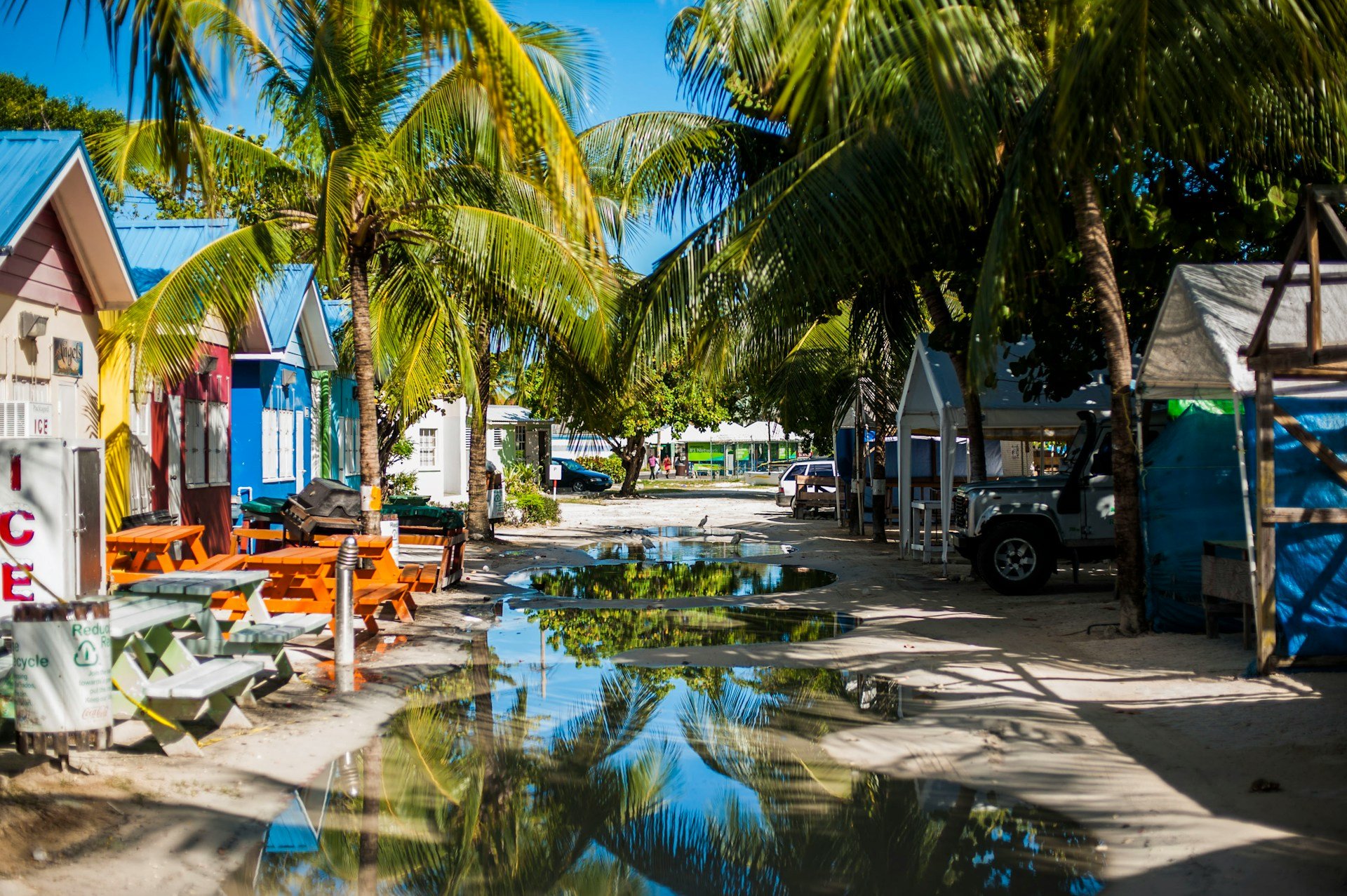
The south coast, in Christ Church parish, is where most first-time visitors base themselves: the highest concentration of mid-range hotels, restaurants and nightlife on the island, centered on the 1.3-kilometer strip of St. Lawrence Gap. Dover Beach next door is calmer and better for swimming than the Gap's own small stretch of sand. A ten-minute drive or ZR van ride away, Oistins holds the Friday-night Fish Fry, a genuine local institution as much as a tourist one: grilled or fried mahi-mahi, tuna and swordfish, macaroni pie, and a street party that runs past midnight. Full detail on the south coast lives in our St. Lawrence Gap city guide.
Holetown, Speightstown & the Platinum Coast
The west coast is Barbados's calm side, glassy Caribbean water, coral reef close to shore, and the island's most expensive real estate. Holetown, roughly 20 minutes north of Bridgetown, marks the site of the original 1627 English landing and today holds a mix of boutiques, restaurants and resorts, anchored by Sandy Lane, the grande-dame five-star that gives the Platinum Coast its name. Ten minutes further north, Speightstown is a quieter fishing town with a slower pace and standout small hotels like Cobblers Cove, a pink-and-white great house set in gardens right on the beach. Swimming with sea turtles just offshore, arranged through most beachfront hotels or independent boat operators, is one of the coast's signature activities.
Historic Bridgetown and its Garrison
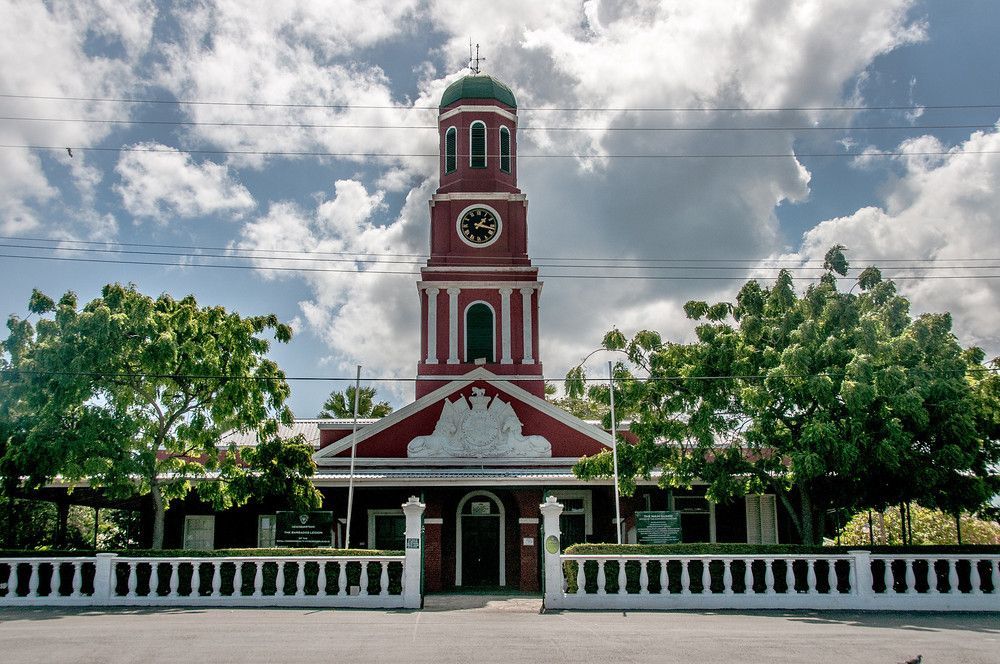
Barbados's capital and only city earned UNESCO World Heritage status in 2011 for its well-preserved 17th-to-19th-century British colonial townscape and the Garrison, once the largest British military garrison in the colonies. The neo-Gothic Parliament Buildings, in continuous use since the 1870s, sit above the Careenage, the old careening harbor now lined with cafes and rum shops. A short walk behind Parliament, the Nidhe Israel Synagogue, first built in 1654 and one of the oldest in the Western Hemisphere, anchors the small Synagogue Historic District, with its museum, mikvah and Jewish cemetery. Bridgetown is a working capital more than a resort town, best visited by day for the history and the Careenage waterfront, not as a place to base a stay.
Bathsheba, the Scotland District & Crane Beach
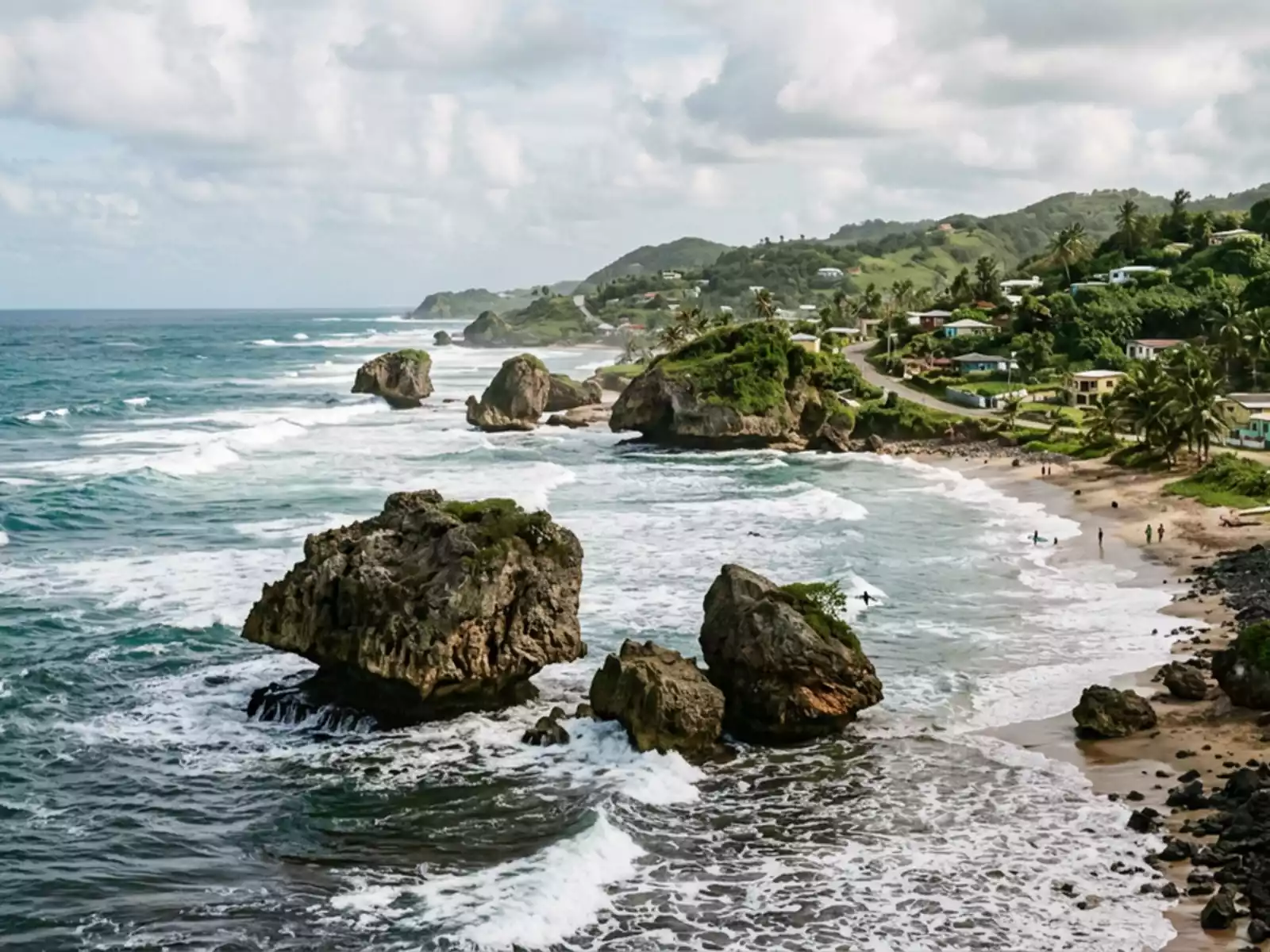
The Atlantic east coast is Barbados's wild side, cliffs, huge volcanic-looking boulders (the island itself is coral limestone, not volcanic; the boulders are eroded reef) and surf that draws competitive surfers to Bathsheba's famous Soup Bowl break. The Scotland District behind it is the island's only genuinely hilly terrain, and the viewpoint at Cherry Tree Hill, lined with mahogany trees, looks out over the whole district to the sea. Further south, Crane Beach, a pink-sand cove protected by reef and reached by a glass-fronted elevator or a long staircase, is consistently ranked among the world's best beaches and sits below the Crane Resort, in continuous operation since 1887 and one of the oldest hotels anywhere in the Caribbean.
Harrison's Cave & the limestone interior
Harrison's Cave, a working limestone cave system in the central parish of St. Thomas, is Barbados's best-known inland attraction: an electric tram descends through chambers of stalactites, flowstone and a crystal-clear underground stream. It is genuinely worth the entry price for the tram tour alone; the more expensive "adventure pass" packages add ziplining and other extras above the cave itself. A few minutes away, Welchman Hall Gully, a forested limestone gorge planted with tropical species since the 19th century, and the Flower Forest botanical garden both make good half-day additions if you're already inland.
Hidden gems beyond the main circuit
The zones above cover a first or second trip well. With extra days, these are the spots that rarely make the standard brochure but reward the detour.
Animal Flower Cave
A sea cave at Barbados's northernmost tip, named for the sea anemones in its tidal pools, some deep enough to swim in on a calm day. Dramatic cliffside setting with an on-site bar looking straight out at the open Atlantic.
Mount Gay Visitor Centre
The world's oldest commercial rum distillery, producing continuously since 1703. The hour-long tour and tasting is more genuinely interesting than most rum-tour cliches, and cheaper than a bottle from the airport.
Foul Bay & Bottom Bay
Two of the least-visited beaches on the island's south-east tip, backed by cliffs and coconut palms, with a fraction of the crowds of the west coast and no real infrastructure, bring your own shade and water.
Green monkeys in the mahogany canopy
A walk-through reserve where Barbados's introduced green monkey population roams freely overhead among tortoises, peacocks and iguanas. A reliable half-day with kids, adjoining the Grenade Hall Forest.
A ruined great house with the island's best view
The burned-out shell of a 19th-century plantation great house sits in mahogany-shaded parkland with a sweeping view over the east coast, popular for a quiet picnic away from the beach crowds.
A Jacobean great house and working rum still
One of only three genuine Jacobean-era mansions left in the Western Hemisphere, still family-run, with its own small-batch rum distillery and a heritage railway running through the surrounding cane fields on selected days.
Culture & Etiquette
Barbadians, almost universally called Bajans, are known even within the Caribbean for a specific blend of warmth and formality: greet people properly before getting to business, and manners matter more here than in most beach destinations. Cricket is closer to a civic religion than a sport, church attendance remains genuinely high by regional standards, and "liming," unhurried socializing with friends, food and drink, is the closest thing the island has to a national pastime.
Do
- Greet before you ask. Open any interaction, a shop, a taxi, a stranger for directions, with "good morning" or "good afternoon." Skipping straight to a question reads as rude, not efficient.
- Dress modestly off the beach. Swimwear belongs on the sand and by the pool, not in town, restaurants or shops; cover up when you leave the beach.
- Try to catch a Test match if the timing works. Kensington Oval in Bridgetown is a genuine cricket pilgrimage site; the atmosphere for an international match is unlike a resort activity.
- Tip on top of any service charge. Many restaurants add 10-15%, but rounding up further for good service is expected and appreciated, not redundant.
- Ask before photographing people, particularly at the Oistins Fish Fry and in local rum shops, which are genuine community spaces, not photo backdrops.
Don't
- Assume "Caribbean" is one culture. Bajans are proud of a specific national identity distinct from Jamaica, Trinidad or the wider region; broad regional comparisons land poorly.
- Wear camouflage-pattern clothing. It's illegal for civilians in Barbados, a law taken seriously; leave camo prints, including kids' clothing, at home.
- Drive aggressively or forget the left side. Barbados drives on the left; roundabouts and narrow rural roads reward a cautious pace, not confidence from a right-hand-drive country.
- Expect the whole island to be beach-resort priced. Step off the west and south coasts and prices, and the pace of life, both drop considerably.
- Underestimate the east coast surf. The Atlantic side is not a swimming beach in most places; respect posted warnings and local advice.
Deeper culture: Crop Over, cricket and the National Heroes
Crop Over. Barbados's largest festival began in the 1780s to celebrate the end of the sugar cane harvest and today runs roughly from early July into early August, building through calypso and soca competitions to the Grand Kadooment, a costumed parade along the Spring Garden Highway that functions as the island's Carnival. It is genuinely one of the best times to be in Barbados if crowds and noise don't bother you, and genuinely one of the worst if they do.
Cricket. The West Indies cricket team, drawing players from across the English-speaking Caribbean, has produced some of the sport's greatest players, several of them Barbadian, including Sir Garfield Sobers, widely regarded as the greatest all-rounder in cricket history and a National Hero. Kensington Oval in Bridgetown hosted the 2007 and 2010 World Cup finals and remains a major venue.
National Heroes. Barbados has named 11 National Heroes, its highest civilian honor, including Errol Barrow, Bussa, Sir Garfield Sobers and, since the 2021 republic transition, Rihanna, the first person honored under the new constitutional arrangement and, at the time, still in her thirties, a notably young addition to the list.
Food & Drink
Bajan food is Caribbean home cooking built around fish, slow-cooked meat and starchy sides, at its best in rum shops and at the Friday Fish Fry rather than at resort buffets. Barbados also claims, with real historical backing, to be the birthplace of rum itself: Mount Gay has distilled here continuously since 1703, making it the world's oldest commercial rum brand, and the island has an estimated 1,500 neighborhood rum shops, roughly one for every 190 residents.
Cou-Cou & Flying Fish $12-20
The national dish: cornmeal and okra cooked into a soft, polenta-like mound, served with flying fish steamed in a tomato-and-onion gravy. Flying fish stocks have dropped sharply since 2011 as warming water pushes the migratory shoals south, so it's pricier and less ubiquitous than older guidebooks suggest, but still findable, especially at Oistins.
The Cutter $4-8
Barbados's answer to the sandwich: fried fish (traditionally flying fish, now often dolphinfish or cod), ham or black pudding, stuffed into salt bread with hot sauce and butter. Cuz's Fish Cutters, a small stand near Pebbles Beach, has been making them for over 20 years and is the classic pilgrimage.
Rum $3-10/drink
Mount Gay is the famous export, but the real rum culture is in the island's roughly 1,500 rum shops, small, plywood-and-tin neighborhood bars selling rum by the shot or the bottle alongside dominoes and conversation. A rum-and-Coke or a neat pour at a real rum shop costs a fraction of a resort bar price.
Macaroni Pie $3-6
Barbados's baked, custardy version of macaroni and cheese, a fixture at the Fish Fry and at every Sunday lunch table, usually served as a side rather than a main.
Black Pudding & Souse $6-10
A Saturday tradition: pickled pork (souse) with cucumber and onion, alongside black pudding made from seasoned sweet potato and blood sausage. An acquired taste for some visitors, a weekly ritual for most Bajans.
Banks Beer $3-5
The local lager, brewed on the island since 1961 and the default order at any rum shop or beach bar. Light, cold and exactly what the climate calls for.
When to Go & Itineraries
December through April is Barbados's dry season and the classic time to visit: warm, relatively low humidity, and outside the Atlantic hurricane belt's active months. Hurricane season runs June through November, though Barbados's position at the far eastern edge of the Caribbean means it takes direct hits far less often than islands further north and west; most tracked storms pass well to the north. Crop Over, roughly early July into early August, is worth timing a trip around or deliberately avoiding depending on your tolerance for crowds and noise.
All seasons compared, with temperatures
| Season | Verdict | Temps | Prices & crowds |
|---|---|---|---|
| Dec-Apr | Best | 24-29°C, low humidity | Peak prices and crowds, especially Christmas-New Year |
| May & Nov | Good | 25-30°C | Shoulder season, lower prices, few storms this early/late |
| Jun-Oct | Fair (hurricane season) | 27-32°C, humid | Lowest prices; monitor storm tracks, most pass north |
| Early Jul-early Aug | Good if you want it | 28-31°C | Crop Over: crowded, loud, and one of the best cultural experiences on the island |
Water temperature stays a swimmable 26-29°C year-round. The west coast is calm in all seasons; the east coast Atlantic swell is present year-round and strongest in winter.
Itineraries
Barbados rewards a slower pace than its size suggests. Four days covers the essentials; a week or more lets you add the interior, the east coast properly, and at least one full lazy beach day.
- Day 1
South coast arrival. Settle into St. Lawrence Gap, Dover Beach in the afternoon, dinner in the Gap.
- Day 2
Bridgetown & the Garrison. Parliament Buildings, the Careenage, Nidhe Israel Synagogue, back for the Oistins Fish Fry if it's a Friday.
- Day 3
West coast day. Holetown, Sandy Lane Beach (public access below the high-water mark), a sea turtle swim, sunset in Speightstown.
- Day 4
East coast & caves. Harrison's Cave in the morning, Bathsheba and Cherry Tree Hill in the afternoon.
- Days 1-2
South coast. St. Lawrence Gap and Dover, the Fish Fry on a Friday, one full beach day.
- Day 3
Bridgetown & the Garrison. The full UNESCO walking route, lunch at the Careenage.
- Days 4-5
West coast. Holetown and Speightstown, Mount Gay Visitor Centre, a sunset catamaran cruise.
- Day 6
East coast & interior. Harrison's Cave, Welchman Hall Gully, Bathsheba, Cherry Tree Hill.
- Day 7
South-east tip. Crane Beach, Foul Bay and Bottom Bay, dinner back in the Gap.
- Days 1-3
South coast base. The 7-day south coast and Bridgetown plan, at a slower pace, adding a rum-shop crawl.
- Days 4-5
West coast, extended. Two nights on the Platinum Coast itself, Sandy Lane and Cobblers Cove areas, more beach time.
- Days 6-7
North & interior. Animal Flower Cave, the Barbados Wildlife Reserve, Farley Hill, St. Nicholas Abbey, Harrison's Cave.
- Days 8-9
East coast, unhurried. Two nights or long days around Bathsheba, surfing lessons for the adventurous, Cherry Tree Hill at sunset.
- Day 10
South-east & departure. Crane Beach in the morning, a last cutter and rum shop stop before the airport.
Getting there & around
Grantley Adams International Airport (BGI), in the south near Oistins, is Barbados's only international gateway, with direct flights from the US East Coast, Toronto, London and several Caribbean hubs (4 hrs from Miami, 8-9 hrs from London). A taxi to St. Lawrence Gap or the south coast runs a government-set fare of roughly BBD 50-70 ($25-35); public buses pass on the main highway near the airport for a fraction of that. ZR vans (small private minibuses) and the public Transport Board buses are the cheapest way to get around, flat BBD 3.50 (about $1.75) cash per ride, covering most of the island via Bridgetown's central terminals. Taxis use government-regulated zone fares rather than meters; agree the fare before you get in if it isn't already posted.
Renting a car and driving in Barbados
As of 15 October 2025, visitors no longer need a separate Barbados Visitor Driving Permit: a valid driver's license from your home country (in English, or with a certified translation) is enough to rent and drive. Most rental companies still require at least two years of driving experience, some ask for five. Barbados drives on the left; roads are generally in good condition on the west and south coasts and narrower and hillier inland and on the east coast. Rental cars run roughly $45-80 a day depending on season and vehicle size.
Practical prep: an eSIM before landing covers most of the island easily since Barbados is small and well covered by mobile networks. Standard travel insurance is sufficient for most itineraries; anyone surfing at Bathsheba or diving should confirm their policy covers it specifically.
Where to stay
South coast, St. Lawrence Gap & Dover
The widest range of mid-range hotels and guesthouses on the island, walking distance to restaurants and nightlife. Full property picks are in our St. Lawrence Gap city guide.
West Coast / Platinum Coast
Sandy Lane in Holetown and Cobblers Cove near Speightstown anchor the island's most exclusive stretch; calm water, coral reef, and prices to match.
South-East, near Crane Beach
The Crane Resort, in continuous operation since 1887 and one of the Caribbean's oldest hotels, sits directly above Crane Beach with five pools and five restaurants spread across 40 acres.
Guesthouses & budget stays
Concentrated around the south coast; a guesthouse like Rio Guesthouse near Dover Beach keeps a Barbados trip within reach of a genuinely budget-conscious traveler willing to trade resort amenities for a fraction of the price.
Budget Planning
Barbados is one of the pricier Caribbean islands, built for resort tourism rather than backpacking, and there are genuinely few hostels. Budget travel is possible around the south coast with guesthouses, ZR vans and rum shops and Fish Fry-style meals, but the west coast and any resort stay push costs up quickly.
- Guesthouse near the south coast $60-120
- Cutters, rum shops & the Fish Fry $15-25
- ZR vans and buses BBD 3.50/ride
- Free beaches, one paid attraction
- South or west coast hotel $150-300
- Restaurant meals $30-60/person
- Rental car $45-80/day
- Harrison's Cave, catamaran tour, rum tour
- Sandy Lane, Cobblers Cove or the Crane
- Fine dining and premium rum tastings
- Private tours and drivers
- Peak-season Platinum Coast rates
Quick reference prices: cutters, rum, transport, entry fees
| Cutter from a stand | $4-8 |
| Rum shop drink | $3-10 |
| Oistins Fish Fry plate | $10-18 |
| ZR van or public bus | BBD 3.50 (~$1.75) |
| Taxi, airport to south coast | $25-35 |
| Harrison's Cave tram tour | ~$57 adult / $40 child |
| Rental car | $45-80/day |
| Mount Gay Visitor Centre tour | ~$25-35 |
Prices reflect August 2026 research and drift over time, especially resort rates in peak winter season. Treat them as a planning baseline, not a quote.
Visa & Entry
Barbados has a permissive visa regime for most Western passports: citizens of the US, UK, Canada, the EU and Australia enter visa-free for tourism. Every visitor, regardless of nationality, must complete the Barbados Immigration ED Card before arrival. Sources disagree on exactly how long an initial visa-free stay runs, some cite 28 days with extensions available, others cite up to 90 or even 180 days depending on nationality, so confirm your specific stamped date with the immigration officer on arrival rather than assuming a figure from an old guidebook.
✓ Valid passport
Valid for the duration of your stay; carrying at least one blank page for the entry stamp is standard practice.
✓ Immigration ED Card
Mandatory for every traveler, completed online before arrival or on the plane; have a printed or digital copy ready at immigration.
✓ Return/onward ticket
May be requested at immigration, along with proof of accommodation for your stay.
✓ CARICOM travelers
Nationals of other CARICOM member states generally receive an extended stay of up to six months, reflecting Barbados's role as a CARICOM founding member.
| Barbados | Antigua and Barbuda | |
|---|---|---|
| Coastline | Two distinct coasts: calm west, wild Atlantic east | Reputedly a beach for every day of the year, more uniformly calm |
| Infrastructure | More developed, more restaurants and nightlife | Quieter, fewer crowds even in peak season |
| Daily budget | $130-190 gets you by; resort-priced overall | Comparable, with a similarly light backpacker scene |
| Signature culture | Rum's birthplace, Crop Over, cricket | Nelson's Dockyard UNESCO site, sailing culture |
| Getting there | Major regional hub, most direct flights | Well connected but fewer direct long-haul routes |
Safety, Solo Women & Family
Barbados is one of the Caribbean's safest destinations, rated Level 1, Exercise Normal Precautions, by the US State Department, the lowest and safest advisory tier. Violent crime against visitors is rare and mostly localized away from tourist areas. The realistic risks are opportunistic petty theft and a handful of well-documented tourist scams, not danger.
Petty theft
Bag snatching and theft from parked cars or unattended beach items happen at the level of any popular tourist destination. Don't leave valuables visible in a rental car or unattended on the sand.
East coast surf
The Atlantic side's currents and swell are genuinely hazardous for casual swimmers. Stick to designated swimming spots and heed local advice at Bathsheba and the south-east beaches.
Night driving
Rural east coast and interior roads are unlit and narrow. Drive cautiously at night, remembering to keep left, and watch for pedestrians and livestock on quieter roads.
The 4 scams to actually know about
Barbados is not a high-scam destination by regional standards, but a handful of specific patterns catch uninformed visitors, mostly around beach vendors and water sports rather than anything more serious.
The "free" bracelet
A vendor offers a "free" bracelet, shell necklace or hair braiding, then demands aggressive payment once it's on. Decline any unsolicited "free" item outright, politely but firmly.
The jet ski overtime charge
Rental time and total price aren't confirmed upfront, and a sudden "overtime" fee appears at the end. Agree the exact duration and total cost in writing or on a printed rate card before you get on.
Unlicensed tour touts
Individuals approaching on the street or at the cruise terminal offering island tours are not always licensed or insured. Book excursions through your hotel or a known operator instead.
ATM skimming
Increasingly sophisticated skimming devices have been reported on standalone machines. Use ATMs inside banks where possible and cover the keypad when entering your PIN.
Solo women travelers
Barbados rates reasonably well for solo women, especially around the tourist-focused south and west coasts, where street harassment is less common than in some Caribbean destinations but not absent, especially around nightlife areas late at night. Use licensed taxis after dark rather than walking between St. Lawrence Gap venues on quiet stretches, avoid isolated beaches once the sun is down, and expect some persistent but generally non-threatening attention from vendors and touts. Full detail on our Solo Woman Explorer pages.
Emergency numbers
Embassies and hospitals
The Queen Elizabeth Hospital in Bridgetown is the main public hospital; several private clinics on the south and west coasts serve visitors with shorter wait times. Most foreign embassies and high commissions relevant to visitors, including the US, UK and Canada, are based in or near Bridgetown; check your government's travel advisory page for current contact details rather than relying on a number printed in an older guide.
Family travel
Barbados works well for families: the calm west coast is the best swimming for young children, Harrison's Cave's tram tour and the walk-through Barbados Wildlife Reserve both hold kids' attention without requiring much stamina, and the island's small size keeps transfer times between activities short. The east coast's rougher surf is better suited to older children and confident swimmers only.
Barbados FAQ
Is Barbados safe to visit?
Yes. The US State Department rates Barbados Level 1, Exercise Normal Precautions, its safest tier. Violent crime against visitors is rare; the real risks are petty theft and a few well-known tourist scams, not danger.
Do I need a visa for Barbados?
Most Western passports, including the US, UK, Canada and the EU, enter visa-free. Every visitor must complete an Immigration ED Card before arrival. Confirm your exact permitted stay at entry, since immigration officers set it individually and sources vary.
How much does a Barbados trip cost?
Budget travelers manage on $130-190 a day using guesthouses and local food; mid-range runs $220-380. Barbados is one of the pricier Caribbean islands, built more for resort travel than backpacking.
When is the best time to visit Barbados?
December through April: dry, warm and outside hurricane season. Hurricane season runs June to November, though Barbados sits at the southeastern edge of the hurricane belt and direct hits are rare. Crop Over runs July into early August.
What is Crop Over?
Barbados's biggest festival, running roughly early July to early August and ending with the Grand Kadooment costumed parade. It began in the 1780s to mark the end of the sugar harvest and is now soca, calypso and street parties island-wide.
Is Barbados expensive?
Yes, relative to most of the Caribbean. Resorts and restaurants on the west and south coasts price toward North American and European visitors. Rum shops, cutters and the Oistins Fish Fry are the honest way to eat well without resort prices.
What language do they speak in Barbados?
English is the official language. Most Barbadians, called Bajans, also speak Bajan dialect, an English-based creole, especially in informal settings; it's easy for English speakers to follow with a little exposure.
Do I need a car in Barbados?
Not necessarily. ZR vans and buses cover the island cheaply, and taxis run government-set zone fares. A rental car helps for the East Coast and interior at your own pace; as of October 2025 visitors no longer need a separate Barbados driving permit, just a valid foreign license.
Is Barbados good for families?
Yes. The calm west coast has the best swimming for young kids, Harrison's Cave and Barbados Wildlife Reserve both work well for children, and the island's small size keeps transfer times short.
Is Barbados safe for solo female travelers?
Generally yes, especially around the tourist-focused south and west coasts. Standard precautions apply: use licensed taxis at night, avoid isolated beaches after dark, and expect some unwanted attention in nightlife areas.
Is Barbados a republic or part of the British monarchy?
Barbados became a republic on 30 November 2021, replacing the British monarch with a Barbadian president as head of state while remaining a Commonwealth member. It is fully independent, self-governing since 1966.
What Stays With You
Barbados does not need to convince anyone of anything, and that quiet confidence is what separates it from islands still building their tourism industry from scratch. The calm turquoise water on the west coast and the pounding Atlantic surf twenty minutes away on the east, the smell of a rum shop at 4pm on a Tuesday, the Oistins Fish Fry on a Friday night with a Banks in hand and a sound system that won't quit: none of it is performed for visitors particularly hard, because Barbados was doing all of this before tourism arrived and will keep doing it after you leave.
Go for the beaches, but go back for a rum shop conversation with a stranger about cricket. That's the Barbados that actually sticks.