
What You're Actually Getting Into
The Democratic Republic of the Congo is the second-largest country in Africa by area, straddling the equator around the Congo River basin and the second-largest rainforest on Earth after the Amazon. It holds roughly 112 to 116 million people, a capital, Kinshasa, that is one of the largest urban centers on the continent, and a musical and cultural legacy, Congolese rumba chief among it, that has shaped popular music across the continent and beyond. It also holds, in its east, an active conflict involving a Rwandan-backed rebel group that has captured two provincial capitals since early 2025, and, since May 2026, a declared international public health emergency over an Ebola outbreak in its northeast.
This guide exists because people do still travel here, mostly for business, diplomatic, NGO or mining-sector reasons routed through Kinshasa, and occasionally for specific, well-prepared trips into the parts of the country that remain more stable. It is not written as an invitation to a casual holiday. Read the safety chapter before anything else on this page.
Why this guide is different from most Atlas Guide country pages
Most of the destinations on this site are places we can recommend without much qualification. The DRC is not one of them right now. The advisory chapter comes second on this page instead of ninth, the destinations chapter is honest about what is currently closed or inaccessible rather than presenting a wish list, and every venue or price named in this guide has been checked against current sources rather than carried over from an older edit. Where we could not verify something, we left it out rather than guess, and we say so where it's relevant.
The Advisory, in Plain Language
The US State Department rates the DRC Level 4, Do Not Travel, the same category as Chad, Afghanistan and Syria, citing crime, terrorism, unrest, kidnapping and health risks. Two current, distinct crises sit behind that rating, and it matters to understand both, because they affect different parts of a very large country in very different ways.
The M23 conflict, in the east
M23, a rebel group the UN and multiple governments say is backed by Rwandan forces, captured Goma in January 2025 and Bukavu, South Kivu's capital, in February 2025, displacing hundreds of thousands of people. A Doha-mediated ceasefire framework was signed in November 2025 and a monitoring mechanism agreed in February 2026, but fighting, drone strikes and civilian casualties have continued despite it, with over 1,500 civilians reportedly killed since December 2025 alone. North and South Kivu remain Do Not Travel zones with no realistic tourism access.
The Ebola outbreak, in the northeast
An outbreak of Ebola disease caused by the Bundibugyo virus was declared on 15 May 2026 in Ituri Province, roughly 1,800km northeast of Kinshasa, with cases also confirmed across the border in Uganda. The World Health Organization declared it a Public Health Emergency of International Concern on 17 May 2026. As of late May 2026, several hundred suspected cases and well over a hundred deaths had been reported.
Crime & unrest, nationwide
Armed robbery, carjacking and kidnapping are documented risks, worst in the east but present in Kinshasa too, especially after dark. Political protests can turn violent with little warning, and medical care outside a handful of Kinshasa facilities is extremely limited.
What this means for Kinshasa specifically
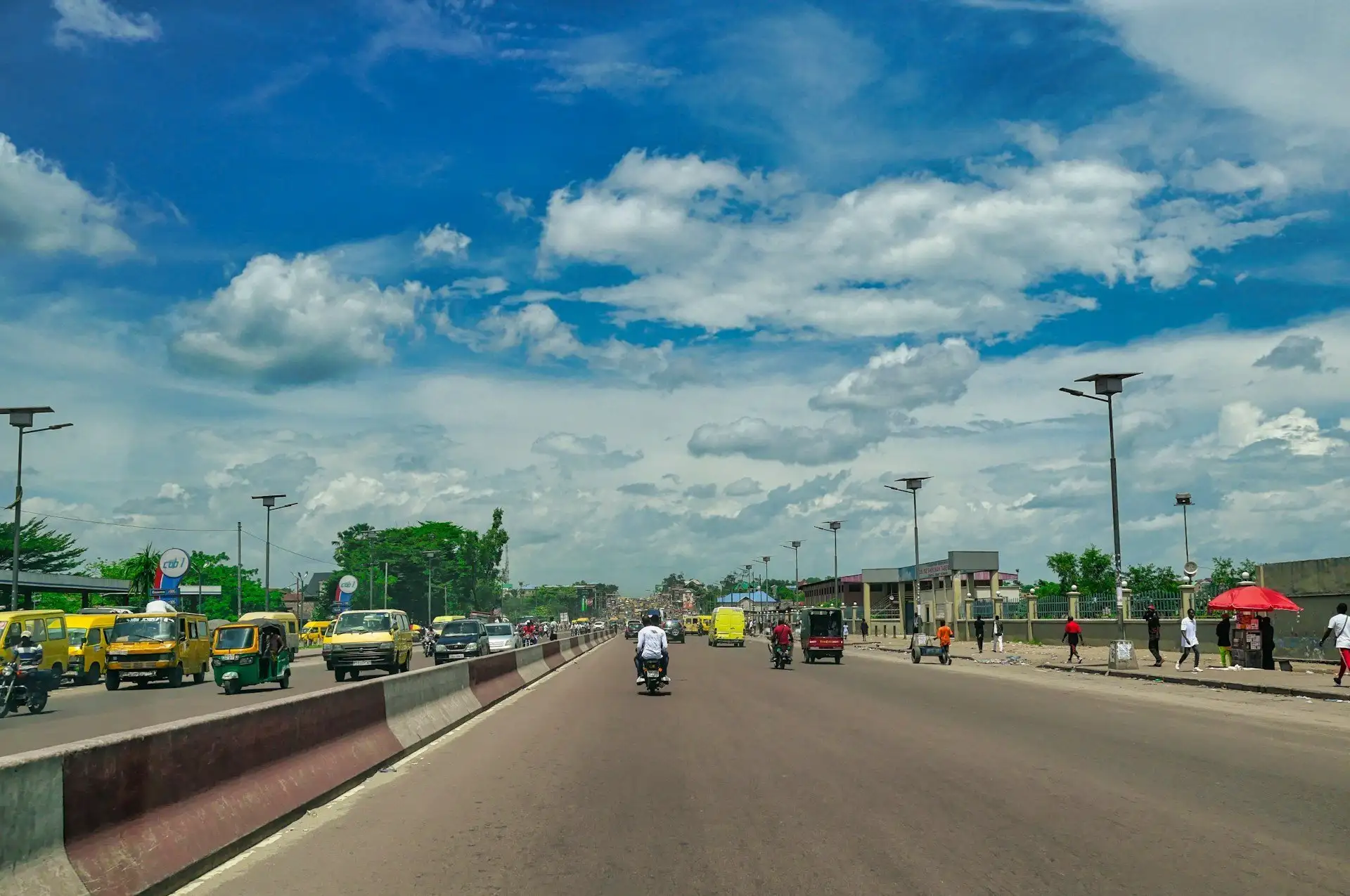
Kinshasa sits roughly 1,600km from Goma and further still from the Ituri outbreak zone, and the advisory itself acknowledges that risk is not evenly distributed across a country the size of Western Europe. In practice, Kinshasa functions as the DRC's most stable and best-resourced single point, the way N'Djamena does in Chad or Bangui does in the Central African Republic: it's where the international airport, the hotels a foreign visitor can actually book and the embassies are. That does not make it "safe" by ordinary travel standards, and it remains inside a Level 4 country, but the day-to-day reality of a short, well-organized Kinshasa stay is meaningfully different from what the M23 and Ebola headlines might suggest.
One detail that matters regardless of which city you visit: under a Department of Homeland Security restriction tied to the Ebola outbreak, anyone who has been anywhere in the DRC within the preceding 21 days currently cannot board a commercial flight into the United States. Confirm the current status of this restriction directly before booking return travel, since it affects trip planning even for visitors who never leave Kinshasa.
Emergency numbers
US Embassy Kinshasa contact information
The US Embassy sits at 310 Avenue des Aviateurs in Gombe. During business hours (Monday-Thursday 7:30am-5:15pm, Friday 7:30am-12:30pm), call +243 97-261-6145. For after-hours, weekend or holiday emergencies, call +243 81-556-0151/152 and ask for the Duty Officer. Register with your embassy before traveling.
Solo travelers & women
This is not a country this guide can recommend for solo or first-time African travel under current conditions, regardless of gender. If your trip is confined to a short, well-organized Kinshasa stay with hotel-arranged transport, the day-to-day risk profile resembles other Level 4 capitals covered on this site more than it resembles the conflict in the east. Anything beyond that, and especially anything involving North or South Kivu, is not something this guide can walk you through responsibly right now.
A History Worth Knowing
Few countries carry a colonial history as brutal, or a post-independence one as turbulent, as the DRC's. Understanding both is close to essential for understanding why the country looks the way it does today, and why parts of it currently sit under the advisory this guide leads with.
- 1885-1908
Congo Free State. King Leopold II of Belgium's personal colony, run for rubber and ivory extraction through forced labor and mass violence; historians estimate the population loss during this period and its immediate aftermath at up to 10 million people.
- 1908-1960
Belgian Congo. International outcry forced Leopold to cede the territory to the Belgian state in 1908, which ran it as a conventional colony for the following half-century.
- 1960
Independence. Declared 30 June, with Patrice Lumumba as the country's first Prime Minister; he was overthrown within months and assassinated in January 1961, an event whose Belgian and US involvement is still debated by historians.
- 1965-1997
Mobutu & Zaire. Joseph-Désiré Mobutu seized power in a 1965 coup, renamed the country Zaire in 1971, and ruled for 32 years through a personality cult and Cold War-era Western backing.
- 1996-2003
The Congo Wars. The First Congo War (1996-97) ousted Mobutu and installed Laurent-Désiré Kabila, who renamed the country the Democratic Republic of the Congo. The Second Congo War (1998-2003), sometimes called Africa's World War, eventually drew in nine countries and is estimated to have caused around 5.4 million deaths from conflict and related causes, the deadliest conflict since World War II.
- 2019
Félix Tshisekedi inaugurated, in the country's first peaceful transfer of power since independence, succeeding Joseph Kabila, who had led since his father's 2001 assassination.
- 2025-2026
The M23 escalation. Rwandan-backed M23 forces capture Goma and Bukavu; a Doha ceasefire framework and monitoring mechanism follow through late 2025 and early 2026, but violence continues.
Read more: Leopold's Congo, the Congo Wars, and the roots of the current conflict
The Congo Free State stands as one of the most extreme examples of colonial exploitation in modern history. Leopold II governed the territory not as a Belgian colony but as his personal property, extracting rubber and ivory through a system of forced labor enforced by mutilation and killing; the scale of the resulting population loss, estimated by later historians at as much as 10 million people, prompted an international humanitarian campaign that eventually forced Leopold to hand the territory to the Belgian state in 1908.
Independence in 1960 arrived with little preparation for self-governance after decades of colonial rule that had deliberately restricted Congolese participation in administration. Patrice Lumumba's assassination just months into his premiership set a pattern of external interference and internal instability that Mobutu's subsequent 32-year rule, propped up by Cold War Western support in exchange for anti-communist alignment, only entrenched. His fall in 1997 to Laurent-Désiré Kabila's rebellion, backed by Rwanda and Uganda, set the stage for the Second Congo War the following year, when former allies turned against Kabila and the conflict drew in Rwanda, Uganda, Zimbabwe, Angola, Namibia and others fighting over territory and the country's vast mineral wealth. The war's estimated 5.4 million deaths, most from disease and displacement rather than direct combat, make it the deadliest conflict anywhere since 1945, and its unresolved drivers, contested borders, armed groups controlling mineral supply chains, and Rwandan security concerns about Hutu militias operating from Congolese territory, are the direct antecedents of the M23 conflict still active in the east today.
The Places Behind the Advisory
The DRC is enormous, roughly the size of Western Europe, and current conditions vary sharply across it. This chapter covers what functions as an actual destination right now and what does not, rather than a wish list of everywhere in the country.
The capital, and everyone's actual gateway
Kinshasa is where nearly every trip to the DRC starts and ends: the country's only reliable international airport, its functioning hotels, and the base for anything else this guide covers. It's also a genuine destination in its own right for a day or two, holding the National Museum of the DRC, the Congo River's Malebo Pool, and Matonge, the neighborhood that gave the world Congolese rumba. The full Kinshasa guide covers it in detail.
Bas-Congo (Kongo Central)
The province southwest of Kinshasa, reached by paved road, is the most realistic overland excursion from the capital right now. Zongo Falls, a 65-meter waterfall roughly 135km from Kinshasa where the Inkisi River meets the Congo, makes a long day trip or overnight, with the final stretch requiring a 4x4 over unpaved road; the nearby Livingstone Falls, a violent series of rapids and cataracts on the Congo River itself, mark the point where the river becomes unnavigable on its final run to the Atlantic. Both are visited with an organized driver rather than independently.
Virunga National Park & Kahuzi-Biega
Under ordinary conditions, Virunga National Park, Africa's oldest national park and one of the last places on Earth to trek mountain gorillas outside Rwanda and Uganda, would anchor this chapter. It has been closed since armed groups took control of Goma and the surrounding North Kivu region in 2025, and this guide is not going to describe it as bookable. Kahuzi-Biega National Park, home to the endangered eastern lowland (Grauer's) gorilla, sits in South Kivu, also currently a Do Not Travel zone. For gorilla trekking right now, Rwanda and Uganda are the realistic, functioning options; this guide's Rwanda and Uganda pages cover them.
Kisangani & the Congo Basin
Kisangani, on a bend of the Congo River deep in the rainforest, is the historic gateway to the Congo Basin's forest interior and its remaining lowland gorilla and bonobo habitat. Infrastructure and regular access for independent visitors are both extremely limited, and this guide mentions it for context rather than as a trip to plan toward under current conditions.
Lubumbashi & Katanga
The southeastern mining hub around Lubumbashi runs on a business and industrial economy rather than tourism, and this guide does not cover it as a leisure destination.
Culture & Etiquette
The DRC's cultural influence outstrips its current travel profile by a wide margin. Congolese rumba, born from the fusion of Cuban son records and local Lingala lyricism in mid-20th-century Kinshasa, was inscribed on UNESCO's Intangible Cultural Heritage list in 2021 and shaped popular music across Africa for generations, from Franco's OK Jazz to Papa Wemba's Viva la Musica and the sapeur fashion movement he helped popularize. French is the official language of government and education, while Lingala, Kikongo (Kituba), Swahili and Tshiluba are the four recognized national languages, Lingala dominant in and around Kinshasa.
Do
- Greet properly before any request. A greeting exchange, however brief your French or Lingala, before asking for anything is expected.
- Dress reasonably smart in Kinshasa, particularly in Gombe's business and diplomatic district; casual dress reads differently here than at a beach resort elsewhere on the continent.
- Ask before photographing people, and never photograph military or police checkpoints, government buildings, bridges or the airport.
- Carry your passport and e-visa confirmation at all times; document checks at checkpoints are routine, including inside Kinshasa.
- Carry both US dollars and Congolese francs. Dollars are widely accepted and often preferred for larger purchases, francs for everyday small transactions.
Don't
- Discuss the M23 conflict or Rwanda-DRC relations casually with strangers. This is a genuinely raw subject, not small talk.
- Travel after dark outside your hotel or arranged transport, anywhere in the country.
- Drink tap water anywhere. Bottled or properly treated water only, including for brushing teeth.
- Consider any travel to North or South Kivu provinces, Ituri, or anywhere else the current advisory specifically flags, regardless of how the trip is framed to you.
- Assume mobile data, ATMs or card payment will work reliably outside a handful of Kinshasa hotels and businesses.
Food & Drink
Congolese cooking runs on cassava and palm, built around a short list of dishes that turn up across the country in regional variations.
Moambe chicken
Widely considered the DRC's national dish: chicken stewed in a rich, nutty sauce made from palm butter (moambe), often with tomato, garlic and chili. Found on nearly every Kinshasa restaurant menu that serves Congolese food at all.
Fufu & saka-saka
Fufu, a starchy pounded dough of cassava, plantain or maize, is the everyday staple, eaten by hand and dipped into sauce. Saka-saka, pounded cassava leaves cooked into a stew, is one of its most common accompaniments.
Chikwangue & liboke
Chikwangue (kwanga) is fermented cassava bread steamed in banana leaves. Liboke is the same leaf-wrapping technique used to steam fish or meat with vegetables over an open flame, a genuinely good way to try river fish.
When to Go & Getting There
The DRC straddles the equator, so its seasons run in opposite directions north and south of it; this guide follows Kinshasa's pattern, in the south, where the dry season runs roughly June to September and the wettest months fall between October and May. Temperatures in Kinshasa stay warm and humid year-round, with the dry season bringing more manageable, less muddy travel for any overland excursion into Bas-Congo.
Getting to and around the DRC
By air: N'Djili International Airport (FIH) in Kinshasa is the country's only airport with reliable international connections, reached via Brussels (Brussels Airlines, the historic and still-dominant route), Paris (Air France), Addis Ababa (Ethiopian Airlines), Nairobi (Kenya Airways) or Istanbul (Turkish Airlines). There are no direct flights from North America.
Overland: land border crossings, and travel to the eastern provinces generally, are not something this guide can recommend given current conditions. A regular ferry connects Kinshasa to Brazzaville, capital of the neighboring Republic of the Congo, across the river.
Within Kinshasa: arranged transport through your hotel, rather than hailed taxis, is the standard, sensible approach, both for security and because there's no reliable metered taxi system to speak of.
Budget Planning
Kinshasa is not a cheap city despite the DRC's overall poverty: a small supply of international-standard hotels, catering mostly to NGOs, diplomats and the mining and oil sectors rather than tourists, keeps prices closer to a major regional capital than the country's per-capita income would suggest.
- Mid-tier hotel (Hotel Memling or comparable)
- Hotel or local restaurant meals, arranged driver
- No overland travel to the east included, and none recommended
- Pullman Kinshasa Grand Hotel or Fleuve Congo Hotel
- Full-service dining, pool, dependable backup power
- Airport transfer typically included or easily arranged
Visa & Entry
The DRC requires nearly all foreign visitors to hold an e-visa arranged in advance online, typically in the region of $90-100 for a one-month single-entry tourist visa, with processing usually taking 5-13 working days (rush options exist for an added fee). A passport valid at least six months beyond your travel dates, a valid yellow fever vaccination certificate obtained at least 10 days before arrival, and proof of onward travel are all standard requirements; border officials treat the yellow fever certificate as non-negotiable, and enforcement around it has reportedly tightened.
✓ Valid passport
At least 6 months validity beyond your travel dates, with blank visa pages.
✓ E-visa, applied for in advance
Apply online well ahead of travel rather than expecting a visa on arrival; budget for 5-13 working days of processing.
✓ Yellow fever certificate
Required for entry regardless of origin, and strictly enforced; get vaccinated at least 10 days before you travel.
✓ Onward travel & accommodation
Proof of a return or onward ticket and confirmed accommodation are typically requested as part of the e-visa application.
| DR Congo (Kinshasa) | Republic of the Congo (Brazzaville) | |
|---|---|---|
| US advisory | Level 4, Do Not Travel, countrywide | Level 2, Exercise Increased Caution, generally |
| Distance apart | The world's closest pair of capital cities: roughly 3.2km apart across the Congo River, with a ferry connecting them | |
| Current conflict | Active M23/Rwanda-linked conflict in the east | No comparable active conflict as of 2026 |
| Scale | ~112-116 million people, 2nd-largest African country by area | ~6 million people, considerably smaller |
| Shared draw | Both sit on the Congo River and share deep cultural and linguistic ties, including Lingala and Congolese rumba | |
DR Congo FAQ
Is it safe to travel to the Democratic Republic of the Congo?
No, not by the standard travel-advisory definition. The US State Department rates the DRC Level 4, Do Not Travel, its highest risk category, citing crime, terrorism, unrest, kidnapping and health, including an active Ebola outbreak. Kinshasa is meaningfully calmer than the conflict zone in the east, but the advisory applies countrywide and this is essential or specialist travel, not a leisure trip.
What is happening with M23 in eastern DRC?
M23, a rebel group backed by Rwandan forces according to UN reporting, captured Goma in January 2025 and Bukavu in February 2025, displacing hundreds of thousands of people. A ceasefire framework was signed in Doha in November 2025 and a monitoring mechanism agreed in February 2026, but fighting and civilian casualties have continued despite it, and the region remains a Do Not Travel zone.
Is the Ebola outbreak a risk for visitors to Kinshasa?
The outbreak, caused by the Bundibugyo ebolavirus strain, was declared on 15 May 2026 in Ituri Province, roughly 1,800km northeast of Kinshasa, and the World Health Organization declared it a Public Health Emergency of International Concern on 17 May 2026. Kinshasa itself has not reported cases, but anyone who has been anywhere in the DRC within 21 days currently cannot board a commercial flight into the United States under a Department of Homeland Security restriction, which matters for trip planning regardless of which city you visit.
Do I need a visa for the DRC?
Yes, an e-visa applied for online in advance, typically costing in the region of $90-100 for a one-month single-entry tourist visa, alongside a valid yellow fever vaccination certificate, which border officials treat as a hard requirement.
What is Kinshasa and do I need to go there?
Kinshasa is the DRC's capital and its only city with reliable international flights, functioning hotels and any real tourism infrastructure. It sits far from both the eastern conflict and the Ituri Ebola outbreak, and nearly every visit to the DRC, for whatever reason, routes through it.
Can I still see mountain gorillas in the DRC?
Not currently in any responsible sense. Virunga National Park, the DRC's mountain gorilla site, has been closed since armed groups took control of Goma and the surrounding area in 2025, and Kahuzi-Biega National Park, home to eastern lowland gorillas, sits inside South Kivu, also a Do Not Travel zone. Rwanda and Uganda are the realistic options for gorilla trekking right now.
What currency does the DRC use?
The Congolese franc (CDF), trading in the region of 2,000-2,300 CDF to the US dollar in 2026 but prone to swings; US dollars are widely accepted and often preferred for hotels, flights and larger purchases in Kinshasa.
What language is spoken in the DRC?
French is the official language of government, education and business. Lingala, Kikongo (Kituba), Swahili and Tshiluba are the four recognized national languages, with Lingala dominant in and around Kinshasa. English is rare outside international hotels.
When is the best time to visit the DRC?
For Kinshasa and the south, the dry season runs roughly June to September, with the wettest months from October to May. The country straddles the equator, so the north runs on the opposite seasonal cycle; this guide focuses on Kinshasa's southern pattern since that's where nearly all current travel is based.
How do you get to the DRC?
By air into N'Djili International Airport (FIH) in Kinshasa, connecting via Brussels, Paris, Addis Ababa, Nairobi or Istanbul. There are no direct flights from North America. Overland travel and travel to the eastern provinces are not something this guide can responsibly walk you through given current conditions.
What Stays With You
The DRC gave the world Congolese rumba, sits on a river deeper than any other on Earth, and holds a rainforest second in size only to the Amazon. None of that changes what the current advisory says about large parts of the country, and this guide is not going to soften it to make a better story. The people traveling here right now, mostly for work, mostly through Kinshasa, are not doing so because the risk has gone away.
If you go, go with a specific reason, go through Kinshasa, and go with your eyes open about what Level 4 actually means, and about the real, ongoing difference between the capital and the country's east. If you don't, that is very likely the right call for most travelers right now.