
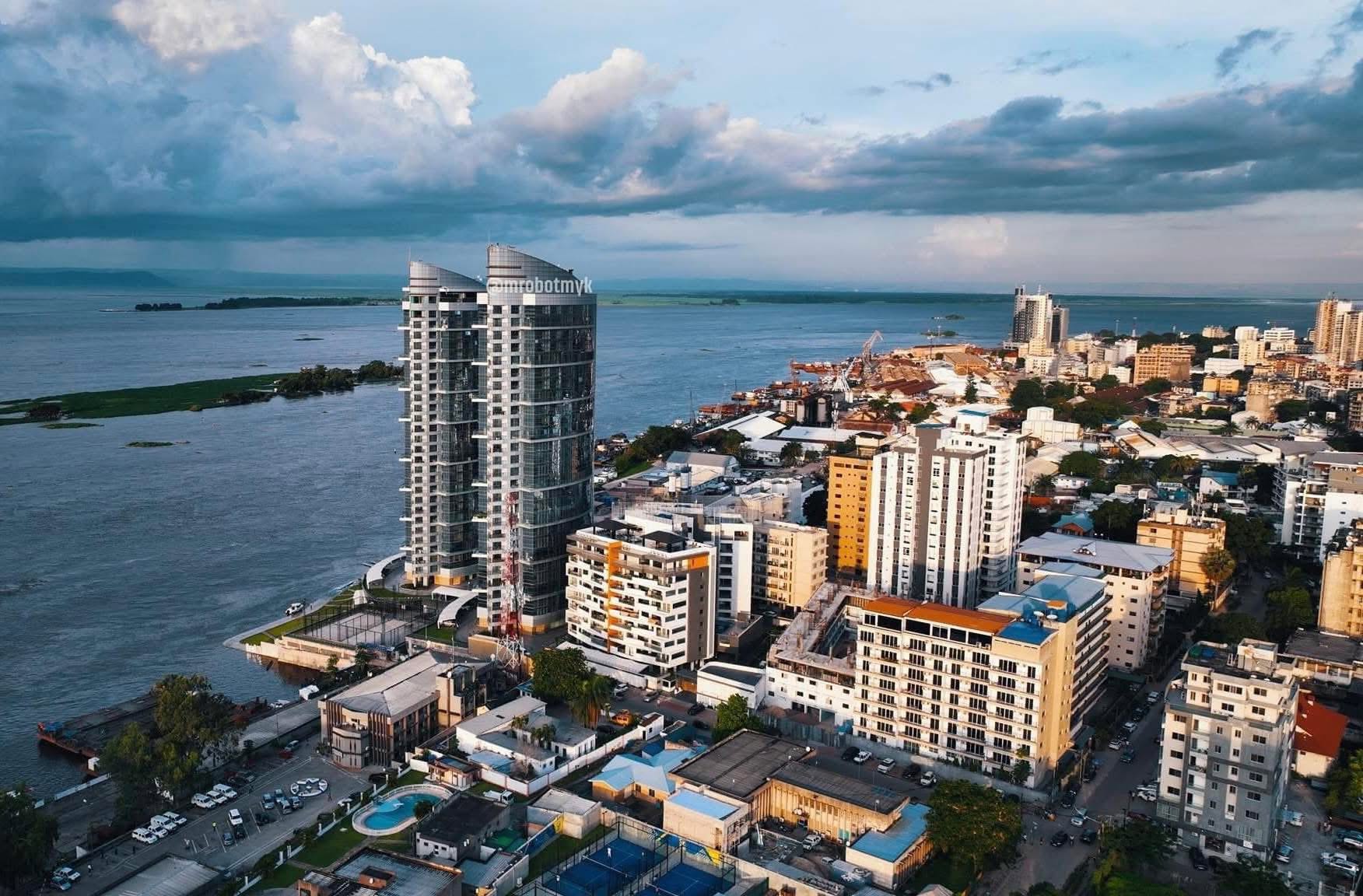
DR Congo's capital, and its cultural engine
Kinshasa sits on the south bank of the Congo River at Malebo Pool, directly across from Brazzaville, the two forming the closest pair of capital cities anywhere in the world. It is home to somewhere around 17 million people, making it one of the largest cities on the continent, and it holds essentially all of the DRC's functioning international infrastructure: the one reliable airport, the hotels a foreign visitor can actually book, the embassies, the better hospitals. It is also, less obviously to outsiders, the birthplace of Congolese rumba, the genre that shaped popular music across Africa for generations and earned UNESCO intangible-heritage status in 2021.
What Kinshasa actually is, for most people reading this guide, is the fixed point every DRC trip passes through, whether that trip is business, diplomatic, NGO-related, or a specific, well-organized cultural visit. It is not currently a casual city-break destination, and this guide isn't going to pretend it is one.
The honest complications
Traffic in Kinshasa is genuinely severe; a trip that should take 20 minutes can take well over an hour depending on the time of day, and this affects planning more than most visitors expect. Power cuts happen even at the better hotels, though backup generators are standard at the international-tier properties. More seriously, Kinshasa sits inside a country under a Level 4, Do Not Travel advisory, and while it is genuinely far from both the eastern conflict and the Ituri Ebola outbreak, that is a relative statement about a very large country, not a claim that Kinshasa itself is safe by ordinary standards. Read the safety chapter below before booking anything.
What the advisory means inside the capital
Kinshasa does not carry a separate, lower advisory rating from the rest of the DRC: the whole country sits at US Level 4, Do Not Travel. In practical terms, Kinshasa is roughly 1,600km from Goma, the center of the M23 conflict, and further still from the Ebola outbreak zone in Ituri Province, which is why nearly all international business, diplomatic and NGO activity bases itself here. That distance is real and matters for trip planning, but "far from the conflict and the outbreak" is not the same as "safe" by ordinary travel standards.
Street crime
Pickpocketing, purse-snatching and occasional armed robbery concentrate around markets and crowded commercial areas; foreigners are visibly targeted for perceived wealth. Carry minimal valuables and keep bags closed and in front.
After dark
Avoid moving around the city after dark on foot. Arrange transport through your hotel for evening plans rather than walking or flagging a taxi on the street.
Checkpoints & unrest
Police and military checkpoints appear on major roads and can become more frequent during periods of political tension. Political protests in Kinshasa have turned violent with little warning in the past; avoid demonstrations and large public gatherings entirely.
A handful of communes, one that matters for visitors
Kinshasa is divided into 24 communes spread across a huge urban area. Almost all international visitors stay in or near Gombe; the others below are useful for orientation and culture rather than as a menu of where to base yourself.
Gombe
Kinshasa's diplomatic and business heart, holding the international hotels, most embassies including the US Embassy, NGO headquarters and the Congo River promenade. This is where every visitor covered by this guide should base themselves; it's the most secure, best-lit and easiest area to navigate.
Matonge
The neighbourhood where Congolese rumba took shape through the mid-20th century, home to the recording studios that launched Papa Wemba's career and the fashion-forward sapeur movement he helped popularize; a monument to Papa Wemba now stands here, and his former home has become a small rumba museum. Visit in daylight with a guide or driver for the music and street life, not as a polished tourist district.
Kintambo
An older commune near Malebo Pool with a slightly lower cost of living than Gombe and a more workaday, authentic feel. Some visitors and long-term expats base themselves here for proximity to Gombe at better value.
Ngaliema
A largely residential and increasingly upscale commune west of the center, home to some diplomatic residences and, further out, Mont Ngaliema and the Kinshasa Botanical Garden.
A short list, and it matters more than usual
Kinshasa has a small number of hotels that meet the security and reliability standard this guide would recommend for a Level 4 destination; this list sticks to those rather than padding it out with unverified budget options.
At the top, the Pullman Kinshasa Grand Hotel is the city's best-known international address, with 369 rooms overlooking the Congo River in the heart of the business district, a garden pool and terrace, tennis courts, four restaurants, a spa and dependable backup power, the practical difference between a hotel that copes with Kinshasa's grid and one that doesn't. The Fleuve Congo Hotel by Blazon Hotels, on Avenue Colonel Tshatshi, is the other upper-tier option, with river views and reliable Wi-Fi. For a step down in price without stepping too far down in reliability, Hotel Memling on Avenue du Tchad in Gombe is a long-standing, more moderately priced choice regularly used by business and NGO travelers, which is itself a reasonable proxy for a hotel that handles the basics consistently.
Moambe first, hotel dining as the fallback
Chez Ntemba is the essential stop for traditional Congolese cooking in a lively, friendly setting, best known for its moambe chicken, the palm-butter stew widely considered the national dish, and fried fish with plantain. For something different, Le Chalet, on the banks of the Congo River, serves Swiss-inspired fondue, raclette and charcuterie alongside genuinely well-regarded pastries, an unexpected but well-executed contrast to the city around it. Caprice, the buffet restaurant attached to the Hotel Arjaan within Kin Plaza, is a dependable option when you want an easy, varied meal without much planning.
Beyond named restaurants, moambe chicken itself is worth seeking out anywhere it's offered, alongside fufu and saka-saka, the pounded cassava staple and its cassava-leaf stew, and liboke, fish or meat steamed in banana leaves. Primus and Skol, the two dominant Congolese lagers, are the default drink with any of it.
A short, real list for a one to three day stay
Kinshasa's sights reward a visitor more than its Level 4 rating might suggest, particularly for anyone interested in music and art. A guided day or two covers the essentials.
National Museum of the Democratic Republic of the Congo
Opened in November 2019 in Kinshasa with funding and construction support from South Korea's KOICA agency, the National Museum is easily the country's best-curated cultural institution, its galleries covering traditional masks, sculpture and textiles from the DRC's many ethnic groups alongside the country's more recent history. It's the single best few hours you can spend in the city for context on everything else you'll see.
Académie des Beaux-Arts
Kinshasa's premier art institution, with galleries of contemporary Congolese painting and sculpture that speak to the country's social and political history as directly as any museum piece. Worth an hour for anyone interested in contemporary African art.
Malebo Pool
The wide, island-dotted stretch of the Congo River just upstream from central Kinshasa, where boat trips run out to the islands and riverside beach clubs get busy on weekends. It's also where Kinshasa and Brazzaville face each other most directly across the water, a good spot to appreciate just how close the two capitals really are.
Matonge & the birthplace of rumba
Matonge is worth a guided evening for anyone who cares about music: this is the neighbourhood that produced Congolese rumba, Papa Wemba and the sapeur fashion movement, and its bars and recording studios still carry that legacy. Go with a driver or local guide who knows where to take you.
One day, or up to three if you have the time
Most visitors to Kinshasa are here for business, NGO or diplomatic reasons rather than leisure, but the sights below fill a genuine one-to-three day stay for anyone with some free time.
- Morning
National Museum. Start with the museum's ethnic-heritage galleries while the day is still cool and before the traffic builds.
- Midday
Lunch at Chez Ntemba, for moambe chicken and a proper introduction to Congolese food.
- Afternoon
Malebo Pool, a boat trip or a riverside walk taking in the view across to Brazzaville.
- Evening
Dinner at Le Chalet or your hotel, arranged transport both ways.
- Day 1
The one-day route above, at an unhurried pace.
- Day 2
Académie des Beaux-Arts in the morning, Marché de la Liberté with a guide at midday, and a guided evening in Matonge for Kinshasa's rumba heritage.
- Day 3
A day trip toward Bas-Congo if time and road conditions allow, or extra time built in for visa, business or logistics needs.
Arranged transport, and real traffic
N'Djili International Airport (FIH) sits roughly 25km southeast of downtown Kinshasa, and the drive can take anywhere from 45 minutes to two hours depending on traffic, which is often severe. There's no official metered taxi rank; unofficial drivers work the arrivals area with negotiated, unmetered fares typically in the $20-50 range. Arranging a hotel transfer or a pre-booked private driver in advance is the safest and least stressful choice, especially on a first visit.
Not a budget city
Kinshasa's international-standard hotels price closer to a major regional capital than the DRC's overall economy would suggest, a function of limited supply and a guest list dominated by NGOs, diplomats and the mining sector rather than tourists.
- Hotel Memling or comparable
- Restaurant meals $15-35
- Arranged driver for a half-day $40-80
- Pullman Kinshasa Grand or Fleuve Congo Hotel
- Full-service dining, pool, dependable backup power
- Airport transfer typically included or easily arranged
One real day trip, and one border crossing that isn't casual
Kinshasa's realistic onward options are more limited than most Atlas Guide capitals, and this guide isn't going to inflate the list.
Zongo Falls
A 65-meter waterfall roughly 135km from Kinshasa, where the Inkisi River meets the Congo, reached by paved road as far as Kisantu and then a rougher, 4x4-only final stretch. The Seli Safari Resort near the falls offers lunch or an overnight stay, and a nearby beach opens up in the dry season (June-September). Arrange this through a driver or local operator rather than attempting it independently.
Brazzaville
Kinshasa and Brazzaville are the closest pair of capital cities anywhere in the world, roughly 3.2km apart across the Congo River, connected by a regular ferry. This is not a casual sightseeing hop: it requires a separate visa for the Republic of the Congo, proper immigration procedures on both sides, and attention to the ferry's limited schedule, which stops running in the late afternoon and doesn't operate on Sundays. Confirm current requirements and book through a reputable operator rather than showing up at the dock unprepared.
Kinshasa FAQ
Is Kinshasa safe for tourists?
The DRC carries a US Level 4, Do Not Travel advisory, and Kinshasa is not formally exempt from that rating even though it sits far from both the eastern conflict and the Ituri Ebola outbreak. Petty crime and occasional unrest are real considerations; stay in secured hotel accommodation, arrange transport rather than hailing it, and keep valuables out of sight, especially around markets.
How many days do I need in Kinshasa?
One to three days covers the city's real sights: the National Museum, Malebo Pool, the Académie des Beaux-Arts and Matonge. Most visitors are here for business, NGO or diplomatic reasons rather than as a standalone leisure destination.
What is the best hotel in Kinshasa?
The Pullman Kinshasa Grand Hotel is the best-known international-standard option, overlooking the Congo River in the business district. The Fleuve Congo Hotel by Blazon Hotels is a comparable upper-tier choice, and Hotel Memling is a solid, more moderately priced alternative in Gombe.
How do I get from N'Djili Airport to the city?
N'Djili International Airport (FIH) sits roughly 25km southeast of downtown Kinshasa, and the drive can take anywhere from 45 minutes to two hours depending on traffic. Arrange a hotel transfer or a pre-booked private driver in advance rather than negotiating with the unofficial taxi drivers who work the arrivals area.
What currency and language do I need in Kinshasa?
The Congolese franc (CDF), though US dollars are widely accepted and often preferred for hotels and larger purchases. French is the language of government and business, Lingala the everyday street language; English is limited to international hotel staff.
Is Matonge worth visiting?
Yes, if music matters to you at all. Matonge is the neighbourhood that gave the world Congolese rumba, home to Papa Wemba's former house and recording studios that shaped Congolese music for generations. Visit with a local guide or driver, and go for the music and atmosphere rather than expecting a polished tourist district.
Can I visit Virunga or eastern DRC from Kinshasa?
No. Kinshasa and the eastern provinces are functionally separate parts of an enormous country, roughly 1,600km apart with no practical overland connection a visitor should attempt. Virunga National Park has been closed since 2025 due to the M23 conflict, and this guide does not recommend travel to North or South Kivu under current conditions.
Do I need a guide in Kinshasa?
Not legally, but practically, yes. A hotel-arranged driver or local guide handles navigation, checkpoints and language, and removes most of the friction and risk of moving around the city independently.
What Stays With You
Kinshasa isn't trying to be a polished capital, and it doesn't need to be: the city that gave the world Congolese rumba, that sits across a strip of river from another country's capital, that moves 17 million people through some of the worst traffic on the continent every day, has its own gravity regardless of how it markets itself. It does the job of arrival, logistics, and, for anyone who takes an evening in Matonge, a genuine cultural payoff, competently enough.
If Kinshasa is the whole trip, that's a reasonable, specific reason to be here. If it's a stopover before something else in the DRC, read the country guide's safety chapter again before you plan any further than this city.