
What You're Actually Dealing With
The Risks That Catch People
The word "scams" undersells what happens in the DRC. The risks range from garden-variety overcharging to armed robbery, express kidnapping, and encounters with people impersonating security forces. The armed conflict in the east is a separate category entirely.
Criminals posing as police or security personnel stop foreigners, demand document checks, and then extort payments for fabricated offences. Real police also do this. The line between legitimate and illegitimate shakedowns is often invisible to visitors. In Kinshasa's Limete area, there have been kidnappings where criminals pretending to be police captured foreign nationals and demanded ransom. Express kidnappings, where victims are taken to ATMs and forced to withdraw cash, have been documented.
- Never travel without a local guide, driver, or fixer who can navigate these encounters in French or Lingala. This is not optional in the DRC.
- Carry a photocopy of your passport and visa. Keep originals secure. Carry your actual passport and visa when crossing provincial borders or flying domestically, as these are legally required at those points.
- If stopped at a checkpoint, remain in your vehicle with doors locked. Open the window slightly. Stay calm. Do not resist. If threatened, comply.
- Do not photograph government buildings, military installations, borders, or official motorcades. This is illegal and will result in detention.
Violent crime is common in Kinshasa and other urban centres. Foreign nationals are targeted near hotels and supermarkets in city centres. In Kinshasa, robberies by gangs of street children are increasingly common and becoming more aggressive. Carjackings occur. Armed home invasions target residences of foreigners in both Brazzaville and Pointe-Noire. Criminals do not typically single out Americans specifically, but foreigners are perceived as wealthy and are targets of opportunity.
- Do not walk in Kinshasa or other cities after dark. Use a trusted driver arranged through your hotel or organisation.
- Keep valuables completely hidden. Do not wear jewellery, expensive watches, or carry visible electronics on the street.
- Stay in well-secured accommodation in recommended neighbourhoods: Gombe and Socimat in Kinshasa. Keep doors locked and windows closed when driving.
- If confronted, do not resist. Hand over what is demanded. Your life is worth more than anything in your pockets.
Taxi drivers quote extreme fares. Street exchangers pass counterfeit notes or shortchange on transactions. Vendors at markets inflate prices dramatically for foreigners. None of this is unusual for Central Africa, but the scale can be aggressive in Kinshasa. The dual-currency system (CDF and USD) creates additional confusion that scammers exploit.
- Bring clean, post-2010 U.S. bills. Older or damaged bills will be refused everywhere, including banks and hotels.
- Exchange money only at banks or your hotel. Never use street exchangers.
- For taxis, agree fares in advance. Have your hotel or guide confirm what a fair price should be. There are no meters.
Photographing government buildings, military installations, borders, and official motorcades is illegal and will result in arrest, detention, and equipment confiscation. Journalists need local permits to film or conduct interviews. When a government motorcade passes with sirens, pull your vehicle to the side, turn off headlights, and do not move or photograph anything until security forces signal you can proceed. This is enforced seriously.
- Do not photograph anything that looks official, military, or governmental. When in doubt, don't.
- If a motorcade approaches, stop your vehicle, extinguish headlights, and wait until the entire convoy passes and security permits movement.
- If detained for photography, ask for the U.S. Embassy (or your embassy) to be notified immediately. Be aware that notification may not happen unless you insist.
Roads outside major cities are poorly maintained and often impassable in the rainy season. In cities, traffic is chaotic. If you're in an accident, mobs can form quickly. The official advice is to remain in your vehicle and wait for police, or if in danger, drive to the nearest police station without stopping. Do not stop at the scene if a crowd is forming. Armed gangs may target vehicles on rural roads. U.S. government employees must use two-vehicle convoys for all overland travel outside Kinshasa.
- Do not self-drive in the DRC. Use a local driver arranged through your hotel or tour operator. This is universal advice from every embassy.
- Fly between cities wherever possible. Domestic flights operate, though safety standards are below international benchmarks.
- If in an accident, do not stop if a crowd is forming. Drive to the nearest police station.
Ferry accidents on the Congo River are common and often fatal. The Brazzaville-Kinshasa ferry can close without notice. It stops running in late afternoon and has no Sunday service. A visa for the destination country is required for each crossing. The ferry terminal areas on both sides are known for aggressive touts, petty theft, and shakedowns by officials looking for documentation issues to exploit.
- If crossing to Brazzaville, have your Republic of Congo visa sorted in advance. Have all documents photocopied and accessible.
- Use the ferry only during daylight hours and be prepared for bureaucratic delays on both sides.
- Keep valuables completely concealed at the terminal. Consider having your hotel arrange a fixer to accompany you through the crossing.
The Destinations: Honest Takes
Most of the DRC is not accessible to tourists in any meaningful sense. The people who visit are going to one of three places: Kinshasa, Virunga/Goma, or Kahuzi-Biega/Bukavu. Each requires different planning and carries different risks.
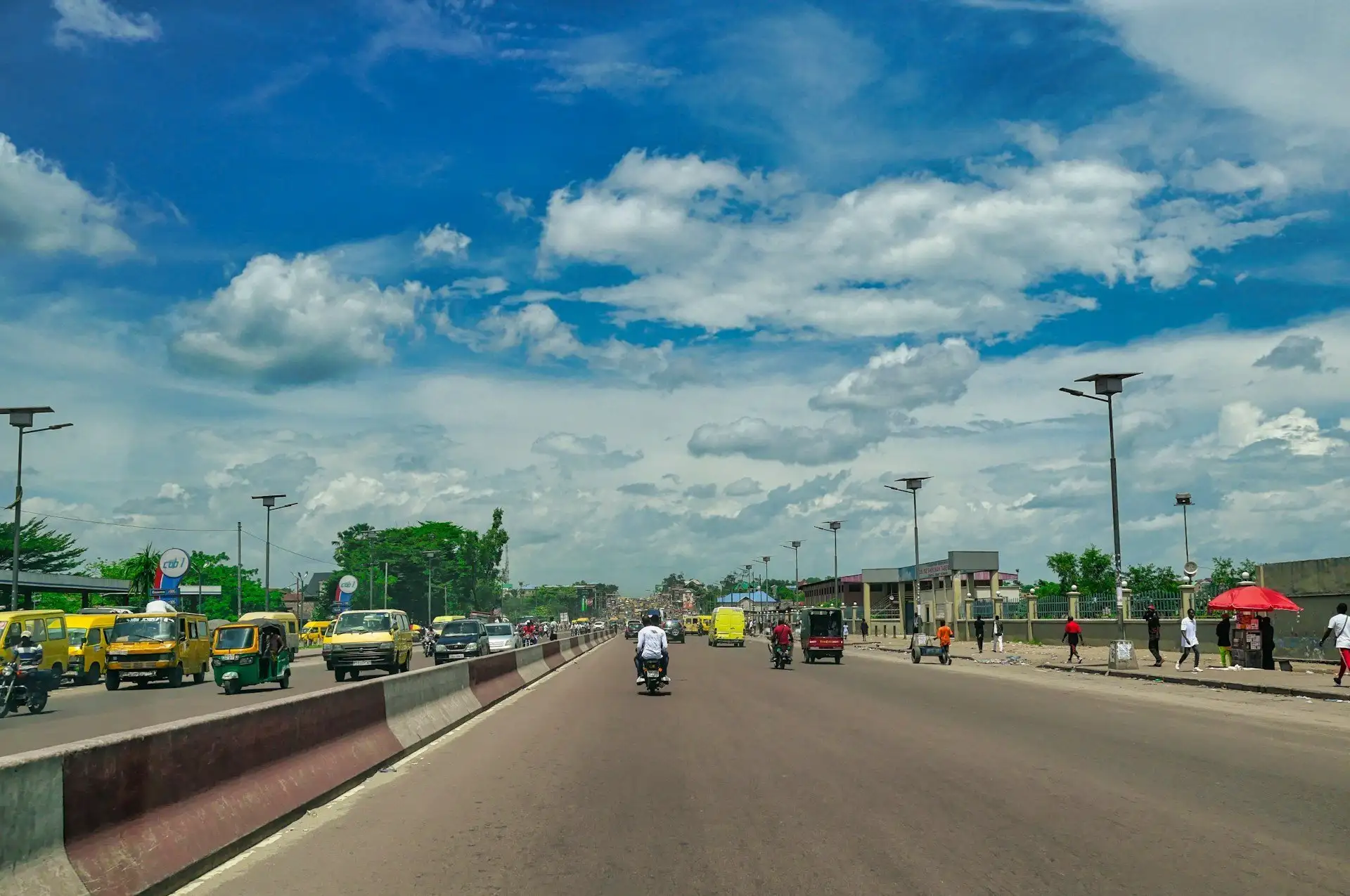
Kinshasa is a city of 17 million people and the third-largest in Africa. It is loud, sprawling, potholed, and alive in a way that few cities can match. The music scene, built on rumba and soukous, pulses through the city after dark. The Académie des Beaux-Arts produces painters and sculptors whose work is collected internationally. The street food scene is enormous. And the Congo River waterfront, where you can sit and watch the second-longest river in Africa slide past while Brazzaville glitters on the far bank, gives you a sense of scale that photographs cannot convey. But Kinshasa is also a city with high crime rates, violent protests that erupt without warning, and a police force that views foreigners as sources of revenue. Stay in Gombe or Socimat. Use trusted drivers. Don't walk at night. And let the city come to you through guides, music venues, and restaurant conversations rather than trying to explore it alone.
- Stay in Gombe or Socimat. Kin Plaza Arjaan by Rotana and the Pullman are reliable. Budget options exist but often lack power, water, or security
- Violent protests have hit embassies and international offices. Monitor local news. Have a shelter-in-place plan. Curfews can be imposed with no notice
- The ferry crossing to Brazzaville requires a Republic of Congo visa. The terminal areas are chaotic. Use a fixer
- International flights arrive at N'Djili Airport (FIH). Airlines include Brussels Airlines, Ethiopian Airlines, and Kenya Airways
Virunga National Park is Africa's oldest national park, a UNESCO World Heritage Site, and one of the only places on earth where you can trek mountain gorillas, hike an active volcano with a lava lake, and see forest elephants in the same week. Mount Nyiragongo's summit at 3,470 metres, where you sleep in basic shelters on the rim while the lava lake glows red below you, is one of the most extraordinary things you can do anywhere. Gorilla families habituated for trekking include Kabirizi, Humba, and others, encountered with armed ranger escorts in mist forest. But Virunga operates in a conflict zone. Rangers have been killed. Tourism operations have been suspended multiple times. At the time of writing, gorilla treks and Nyiragongo hikes have been intermittently closed. Check visitvirunga.org for current status before booking anything. If it's open, it's incredible. If it's not, it's not, and no amount of wanting it to be open changes that.
- Most visitors enter via Kigali (Rwanda), drive to Gisenyi, and cross into Goma. Your operator arranges the DRC visa at the border
- Gorilla permits cost $400 to $600. Mikeno Lodge is the premium option at $200 to $400 per night. Budget camps run $90 to $100
- All treks include armed ranger escorts. Follow instructions absolutely. Maintain the 7-metre distance from gorillas
- Goma airport functionality varies. The Rwanda border can close without warning. Always have a backup plan and flexible dates
Kahuzi-Biega National Park, near the lakeside city of Bukavu, is one of the only places in the world where you can see eastern lowland gorillas (Grauer's gorillas) in the wild. These are distinct from the mountain gorillas in Virunga and significantly rarer. Only two habituated groups are open to visitors, making permits highly competitive in peak season. The park itself is a vast tract of mountain and lowland rainforest. Bukavu, on the southern shore of Lake Kivu, is calmer than Goma and has a more relaxed feel, though the same security considerations apply. A fast boat connects Goma and Bukavu across Lake Kivu during the day. The trek experience here is more intimate and far less crowded than anything in Rwanda or Uganda.
- Access is via Bukavu, reachable from Kigali or by boat from Goma across Lake Kivu
- Only two gorilla groups are habituated. Book permits well in advance, especially June to September and December to February
- Security has been more stable here than in Virunga, but conditions can change. Confirm current status before travel
- Accommodation in Bukavu is limited. Hotel Orchids Safari Club and Hôtel Résidence are the main options
Before You Go: The Checklist
- ✓ Book through a licensed, reputable tour operator who works directly with park authorities and has real-time security intelligence. Do not attempt independent travel in the DRC.
- ✓ Get your visa in advance. Yellow fever vaccination is mandatory. Start the process at least a month out. Bring the certificate with you.
- ✓ Check the current operational status of Virunga (visitvirunga.org) before booking flights or making non-refundable commitments. Operations are suspended intermittently.
- ✓ Bring clean, post-2010 U.S. dollar bills. Older or damaged notes will be refused. ATMs are unreliable. This is a cash economy.
- ✓ Get comprehensive travel insurance with medical evacuation coverage to Kigali, Nairobi, or Johannesburg. Medical facilities in the DRC cannot handle serious injuries or illness.
- ✓ Take antimalarial prophylaxis. Bring a full first-aid kit. Be aware of mpox, Ebola, and cholera outbreaks. Drink only bottled or purified water.
- ✓ Register with your embassy's traveller programme. Tell family your exact itinerary. Share live location. Have contingency plans that do not rely on government evacuation.