
What You're Actually Getting Into
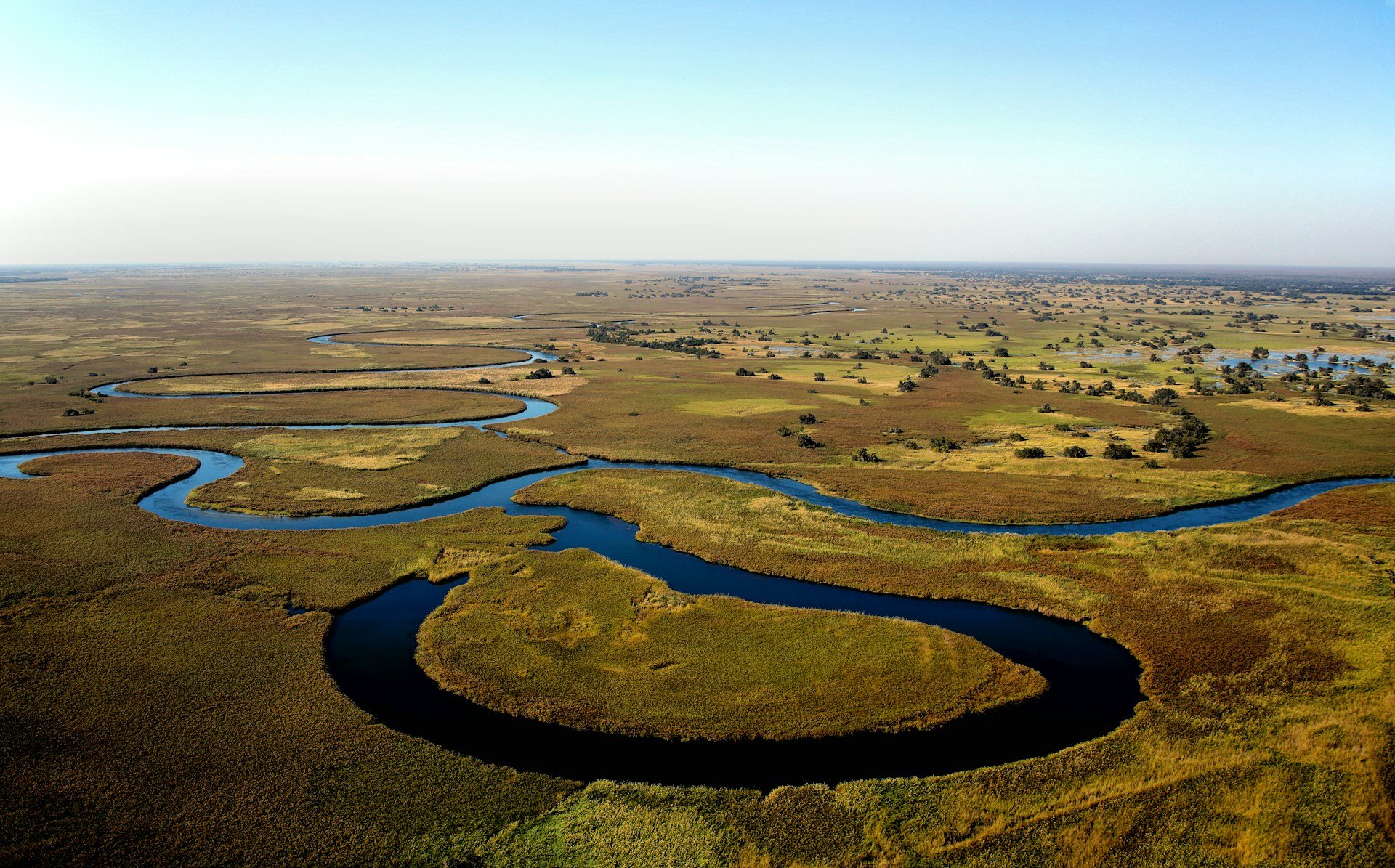
Botswana is landlocked, mostly Kalahari sand, and thinly populated even by African standards, with a population density of under 5 people per square kilometer. That emptiness is the point. Since independence, the country has pursued a deliberate high-value, low-volume tourism strategy: rather than maximizing visitor numbers, it caps them, so a comparatively small number of travelers pay premium prices to see wildlife in places that were never overrun in the first place. The result is the Okavango Delta, an inland river that never reaches the sea and instead floods a slice of desert into permanent wetland, plus Chobe National Park's elephant herds, the Central Kalahari's San heritage, and some of the least-crowded major safari circuits left on the continent.
None of that comes cheap or easy. Botswana runs on diamonds first and tourism second, and its safari industry is built for travelers who can afford lodges and mobile camps rather than backpacker infrastructure, though a genuine self-drive budget route exists for those willing to handle a 4x4 and a tent themselves. English is the official language and works everywhere, which sets Botswana apart from most of its French-speaking or Portuguese-speaking regional neighbors, and the country has never had a coup or a serious civil conflict since independence, a rarity worth noting on a continent where that isn't always true.
The honest complications
Distances are vast and infrastructure between them is thin: Chobe, near Kasane, sits roughly 600km and seven hours by road from Maun, the Okavango Delta gateway, which means most visitors treat Botswana as two or three separate legs rather than one continuous loop. Independent budget travel is possible but genuinely demanding, requiring a proper 4x4, self-sufficiency for fuel and water, and advance-booked campsites inside the parks, since walk-up camping isn't reliable. And the price gap is real: a guided Delta lodge stay and a self-drive Moremi camping trip can differ by a factor of five or more for broadly similar wildlife, so it pays to decide early which kind of trip you're actually planning rather than budgeting for one and hoping for the other.
A History Worth Knowing
Botswana's story runs from the San, the region's earliest inhabitants, through Tswana chiefdoms who successfully lobbied Britain to keep colonial rule light, into one of the poorest countries on Earth at independence, and then into what economists still call the Botswana miracle: diamonds, discovered the year after independence, funding one of the most sustained growth records anywhere in the world. That arc explains a lot about the country a visitor encounters now, a democracy that has never had a coup, alongside a 2024 election that peacefully ended 58 years of one-party rule.
- Pre-19th c.
The San and the Tswana. The San, the region's earliest known inhabitants, are followed by Tswana-speaking groups who form several chiefdoms across what is now eastern and central Botswana.
- 1885
The Bechuanaland Protectorate. Britain declares a protectorate over the territory, partly at the request of Tswana chiefs seeking protection from Boer and German expansion.
- 1895
Three chiefs go to London. Khama III, Sebele I and Bathoen I travel to Britain and successfully persuade the government to keep Bechuanaland under direct crown administration rather than hand it to Cecil Rhodes's British South Africa Company.
- 1966
Independence. Bechuanaland becomes the Republic of Botswana on 30 September, with Seretse Khama as president, at the time one of the poorest countries in the world with almost no paved roads.
- 1967
Diamonds at Orapa. Major diamond deposits are discovered a year after independence, and a partnership between the government and De Beers begins funding decades of infrastructure and growth.
- 1970s-2000s
The Botswana miracle. Sustained diamond revenue and consistently stable, multiparty government turn Botswana from one of the world's poorest nations into an upper-middle-income economy, without a coup or major internal conflict.
- 2024
The vote that changed everything. On 30 October, the Botswana Democratic Party loses power after 58 unbroken years since independence; Duma Boko of the Umbrella for Democratic Change coalition is elected president and sworn in on 8 November, a peaceful, widely praised democratic transition.
Read the full history: Seretse Khama's exile, the diamond economy, and 2024
Seretse Khama's exile. Before becoming Botswana's first president, Seretse Khama, heir to the Bangwato chieftainship, married Ruth Williams, an Englishwoman, in London in 1948. The marriage caused a diplomatic crisis: apartheid South Africa objected fiercely to an interracial royal marriage on its border, and the British government, dependent on South African goodwill and minerals, barred Khama from his chieftainship and exiled the couple for six years. Khama returned in the late 1950s, entered politics rather than reclaiming the chieftainship, founded the Bechuanaland Democratic Party in 1962, and led the country to independence four years later.
The diamond economy. Diamonds, discovered at Orapa in 1967, were managed through Debswana, a 50-50 joint venture between the Botswana government and De Beers, structured deliberately to keep the bulk of mining revenue in state hands rather than flowing offshore. That revenue funded roads, schools and healthcare at a pace few resource-rich nations have matched, and economists commonly cite Botswana alongside a handful of countries that largely avoided the "resource curse" that has hobbled other mineral-rich states. Tourism has since grown into the second-largest source of foreign exchange after diamonds, roughly 12 to 15 percent of GDP, part of a conscious push to diversify beyond a single commodity.
2024 and the end of BDP rule. The Botswana Democratic Party had governed continuously since independence, longer than almost any other ruling party in the world, and the 2024 general election result, the BDP reduced to just 4 of 61 directly elected seats, stunned observers even in a country known for functioning democracy. Analysts pointed to youth unemployment and economic frustration despite decades of diamond wealth as the main drivers. The transition itself went smoothly, with Boko sworn in within days and international observers praising the process, reinforcing Botswana's reputation as one of Africa's most stable democracies even as its politics genuinely turned over for the first time in almost six decades.
Top Destinations
Botswana's major destinations cluster into two separate circuits rather than one continuous route: Maun and the Okavango Delta area, including Moremi, the Central Kalahari and the Makgadikgadi salt pans, all within a few hours of each other, and Chobe National Park near Kasane, roughly 600km away near the Victoria Falls border region. Most visitors pick one circuit, or budget extra days and a flight to properly do both.
Maun, gateway to the Delta
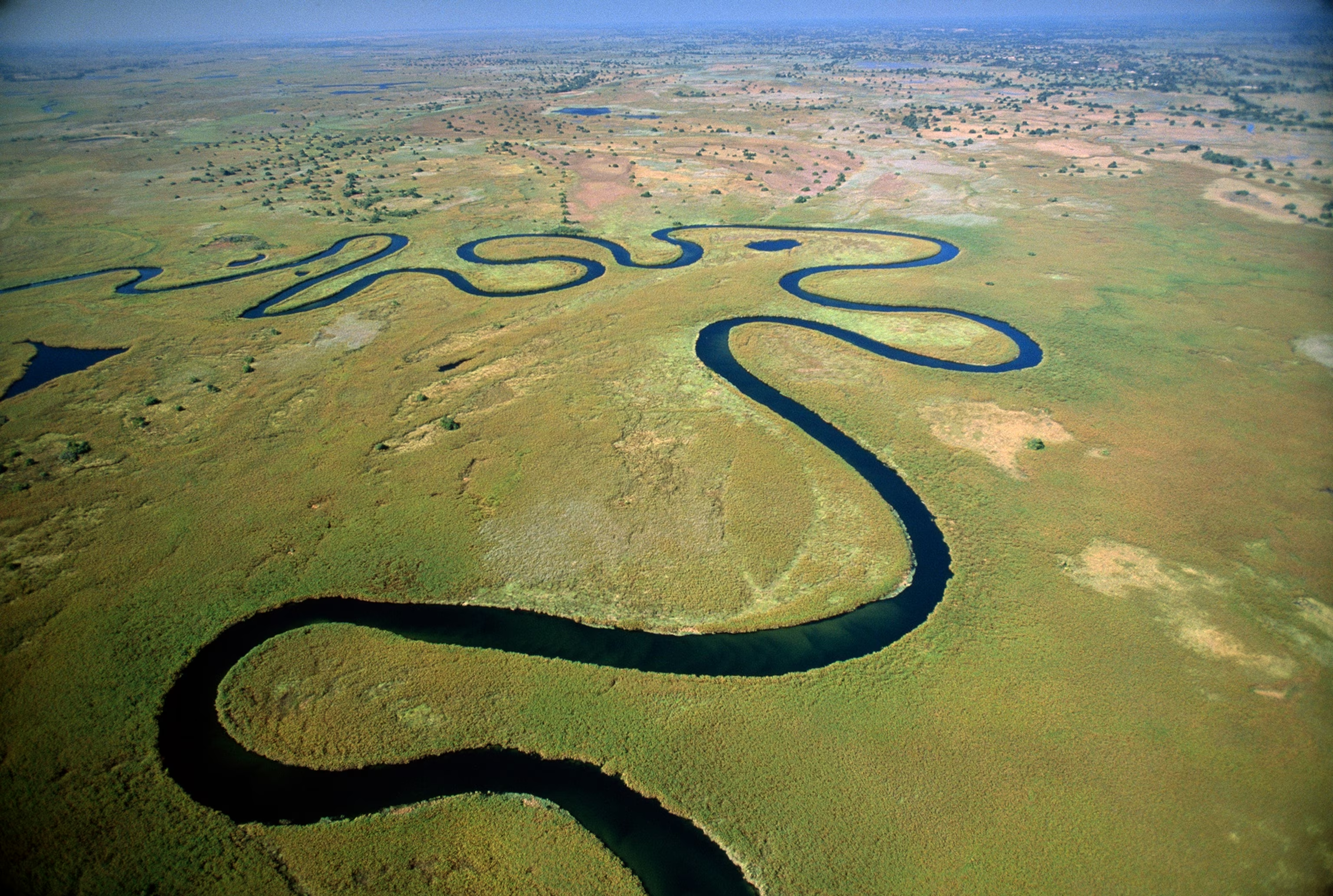
Botswana's tourism capital, though not its official one, that title belongs to Gaborone far to the southeast, Maun exists almost entirely to serve the Okavango Delta trade. It's where nearly every safari begins: light aircraft to fly-in Delta camps, 4x4 rental for self-drive trips into Moremi, and the mokoro dugout canoes that carry visitors through the Delta's flooded channels. The town itself is unglamorous and functional, but it's the only realistic base for the wider region. A full city guide, with neighbourhoods, hotels and a day-by-day plan, covers Maun separately: see our Maun city guide.
Moremi Game Reserve
About 100km, roughly two hours' drive, from Maun to its South Gate, Moremi sits inside the Okavango Delta itself and was Botswana's first reserve established at local initiative: in the 1960s, Batawana residents petitioned to protect the area from uncontrolled hunting and expanding cattle farming rather than waiting for government action. It combines permanent water, islands, reed beds and mopane woodland in a way few reserves anywhere can match, and holds the Big Five along with more than 400 recorded bird species. Both self-drive 4x4 access with public campsites and guided lodge stays are realistic ways in.
Chobe National Park
Chobe holds one of the largest elephant concentrations in Africa, with estimates ranging from roughly 50,000 to well over 100,000 animals, and it's genuinely a different trip from the Delta rather than an easy add-on. The gateway town, Kasane, sits about 600km and seven hours by road from Maun, or a short flight, and is close enough to Victoria Falls that most visitors combine Chobe with Zimbabwe or Zambia rather than folding it into a Delta-based itinerary. Riverboat cruises along the Chobe River, where elephant herds come down to drink and swim, are one of the most reliable wildlife experiences anywhere in the region.
Central Kalahari Game Reserve
The world's second-largest game reserve, the CKGR was established in 1961 specifically to protect the ancestral land and way of life of the San, who still live in and around the reserve today. It's fantastically remote, accessed mainly from Ghanzi to the west or via Maun and Rakops to the north, and tourism here remains genuinely low-key rather than developed. Guided walks led by San guides, who demonstrate tracking, foraging and the region's click languages, are the reserve's signature experience alongside game viewing across its vast grassland and pan landscapes.
Makgadikgadi & Nxai Pan
Southeast of Maun, the Makgadikgadi Pans are the fossil bed of a vast prehistoric lake, now one of the world's largest salt pan systems, famous for a seasonal zebra and wildebeest migration and, when the rains fill them, huge numbers of flamingos. Neighbouring Nxai Pan National Park adds open grassland game viewing and Baines' Baobabs, a cluster of ancient baobab trees first painted by the explorer Thomas Baines in 1862 and still standing on a ridge beside the pan today.
Hidden gems beyond the main circuit
The destinations above cover a first trip well. With extra days or a genuine interest in going further off the circuit, these reward the detour.
Tsodilo Hills
A UNESCO World Heritage Site since 2001, sometimes called the Louvre of the Desert, with around 400 rock art sites and more than 4,000 individual San paintings, some estimated at 10,000 to 20,000 years old, across four hills sacred to the San people.
Tuli Block
Known as the Land of Giants for its towering baobabs and large elephant herds, this private-reserve region where Botswana meets South Africa and Zimbabwe is a genuinely different landscape: sandstone outcrops and riverine forest along the Limpopo and Shashe rivers.
Gaborone
Botswana's capital is a working government and business city rather than a tourist draw, but it has a genuine restaurant scene, the Gaborone Game Reserve within city limits, and works as a practical stopover for travelers arriving via Sir Seretse Khama International Airport before heading north.
Culture & Etiquette
Botswana's social fabric runs on a value Setswana speakers call botho, roughly equivalent to the Southern African concept of ubuntu: a person is a person through other people, expressed in daily life as hospitality, respect for elders and unhurried, deliberate greetings. English fluency is widespread, but greeting someone properly in Setswana, even with a simple "Dumela" (hello), before switching to English is noticed and appreciated.
Do
- Greet before you ask anything, even a shopkeeper or a border official. Skipping straight to a question or request reads as abrupt.
- Use your right hand, or both hands together, for giving and receiving anything, money, food or a handshake, as a mark of respect.
- Ask permission before photographing people, especially in San communities in the Central Kalahari, where cultural encounters should be arranged through a guide rather than approached independently.
- Dress modestly outside lodges and safari settings, particularly in Gaborone and other towns away from the tourist circuit.
- Follow your guide's instructions exactly around wildlife, including staying inside vehicles and maintaining distance; Botswana's parks are genuinely wild, not managed enclosures.
Don't
- Rush a greeting or a transaction. Setswana social interactions move at a deliberate pace; visible impatience reads as rude rather than efficient.
- Treat San communities as a photo opportunity. Cultural visits arranged through reputable operators that involve the community directly are a different thing entirely from an uninvited drive-by stop.
- Walk or leave your vehicle unescorted in wildlife areas, including at unfenced lodges and campsites after dark, when animals move freely through camp.
- Assume the Delta and Chobe are close together. They're roughly 600km apart; treating them as a single easy loop leads to over-ambitious, exhausting itineraries.
- Expect visa-on-arrival flexibility if you're not on the visa-free list. Check your specific nationality's requirement before flying, since not every country qualifies for the 90-day exemption.
Deeper culture: the San, Setswana society, and the diamond-funded state
The San. The San, also called Bushmen, are the region's earliest known inhabitants, with a documented presence going back tens of thousands of years and a distinct family of click languages. Today the largest San populations live in and around the Central Kalahari, where guided walks with San trackers, arranged through camps and operators rather than approached independently, offer a genuine window into hunting, foraging and tracking knowledge developed over an extraordinarily long span of time. The relationship between the Botswana government and San communities around land rights in the CKGR has been a genuinely contested issue over the decades, worth knowing as context even though it has little direct bearing on a respectful guided visit.
Setswana society. The Tswana make up close to 80 percent of the population, organized traditionally around chiefdoms, kgotla community assemblies, and a strong emphasis on consensus-based decision-making that shaped Botswana's unusually stable post-independence politics. Kalanga, Herero, Basarwa and other groups make up the rest of a genuinely multi-ethnic country that nonetheless shares a broadly common set of social norms around hospitality and respect for elders.
A diamond-funded state. Because diamond revenue has funded free or heavily subsidized education and healthcare since the 1970s, Botswana has among the highest literacy rates in the region, and the effects show in everyday interactions: a well-informed, largely English-speaking population that engages with visitors on genuinely equal footing rather than through the tourist-and-host dynamic more common elsewhere on the continent.
Food & Drink
Setswana food centers on maize and sorghum porridge, slow-cooked meat, and wild greens, hearty rather than elaborate, and mostly eaten communally from shared dishes. Outside lodges, which typically serve international menus alongside local dishes, the best places to try it are simple local restaurants in Maun and Gaborone rather than tourist-facing spots.
Seswaa
Botswana's national dish: beef or goat, simmered for hours in a three-legged iron pot with only salt and water until soft enough to pound into shredded meat. Traditionally cooked by men for weddings, funerals and other major occasions, and served at most Setswana restaurants year-round.
Bogobe
A thick porridge made from sorghum or maize meal, ranging from a soft, creamy mash to a firmer version eaten by hand, and the standard starch alongside seswaa or morogo at most meals.
Morogo
Wild leafy greens, often compared to spinach, boiled and seasoned simply. A staple side dish and one of the more nutrient-dense parts of the traditional Setswana plate.
Vetkoek
Deep-fried dough bread, soft and slightly sweet, eaten plain, split and filled with mince, or dipped into a sauce. A common street food and breakfast item.
Samp
Dried, crushed corn kernels, boiled until tender and often mixed with beans (samp and beans) as a hearty side dish, closely related to dishes found across Southern Africa.
Mopane worms
Dried caterpillars, high in protein, typically fried or stewed with onion and tomato. A genuine delicacy in Setswana cuisine, worth trying at a local rather than a tourist restaurant.
When to Go & Itineraries
May through October, Botswana's dry season, is the best window overall, with June to August widely considered peak: cool, clear weather, thin vegetation that makes wildlife easy to spot, the lowest malaria risk of the year, and, by coincidence of geography, the Okavango Delta's flood typically peaking at the same time since it's fed by rain that fell in Angola months earlier. The green season, November to March, brings dramatic skies, newborn animals and excellent birding, but higher malaria risk and, in the Central Kalahari specifically, roads that can become difficult after heavy rain.
Seasons compared, with temperatures
| Season | Verdict | Temps | Notes |
|---|---|---|---|
| Jun-Aug | Peak, best overall | 5-25°C, cold nights | Driest, clearest, lowest malaria risk, Delta flood peaks |
| Apr-May, Sep-Oct | Excellent, fewer crowds | 15-30°C | Shoulder season, good value, still dry |
| Nov-Mar | Green season | 20-35°C, humid | Newborn animals, best birding, higher malaria risk |
Prices and conditions reflect July 2026 research and drift over time. Treat seasonal figures as a planning baseline.
Itineraries
A week covers Maun and the Okavango Delta area properly. Ten days to two weeks allows either an unhurried Delta and Central Kalahari trip, or adds a separate Chobe leg, which deserves its own days given the distance from Maun.
- Days 1-2
Maun. Arrive, settle in, and arrange 4x4 rental or a fly-in transfer depending on your budget and plan.
- Days 3-5
Okavango Delta & Moremi. Mokoro canoe trips, game drives, and a genuine stretch of days inside the wetland or the reserve.
- Days 6-7
Return to Maun. A buffer day for delays or an add-on activity, then departure.
- Days 1-2
Maun. Arrival and logistics.
- Days 3-6
Okavango Delta & Moremi. A fuller Delta stay, mixing mokoro trips with game drives.
- Days 7-8
Central Kalahari or Makgadikgadi. Either San-guided walks in the CKGR or the salt pans and Baines' Baobabs, depending on season and interest.
- Days 9-10
Return to Maun. Wind down and departure.
- Days 1-8
The 10-day Delta circuit above, at a fuller pace, covering Moremi and either the Kalahari or the pans.
- Days 9-10
Travel to Kasane. Domestic flight or the long road transfer to Chobe's gateway town.
- Days 11-13
Chobe National Park. Riverboat cruises and game drives focused on Chobe's elephant herds, with an optional side trip to Victoria Falls.
- Day 14
Departure. Fly out via Kasane or connect back through Maun or Gaborone.
Getting there & around
Most international visitors fly into Johannesburg and connect on to Maun Airport (MUB), Botswana's real safari gateway, rather than routing through Sir Seretse Khama International Airport (GBE) in Gaborone, which mainly serves the capital and business travel. From Maun, fly-in camps use light aircraft on scheduled charter networks, while self-drive travelers rent a proper 4x4 in town, since ordinary sedans can't handle sand tracks or river crossings. Within the parks, a guide-driven vehicle or your own 4x4 is the only way to move, there's no public transport inside the reserves.
Transport specifics and practical prep
| Option | Notes |
|---|---|
| Light-aircraft transfers | The standard way between Maun and fly-in Delta camps; typically arranged as part of a lodge package. |
| 4x4 self-drive rental | From roughly $95-100/day in Maun; essential for Moremi, Kalahari and Makgadikgadi self-drive trips. |
| Guided mobile safaris | A driver-guide handles all navigation and camp logistics; the most common way to see Moremi and Chobe without self-driving. |
| Domestic flights, Maun-Kasane | The practical way to link the Delta and Chobe circuits without a 7-hour drive. |
Practical prep: book a local SIM (Mascom or Orange) on arrival in Maun or Gaborone, carry Pula in cash for fuel and small purchases outside cities since card acceptance thins out fast beyond Maun and Gaborone, and confirm your specific park campsite bookings well in advance through the Department of Wildlife and National Parks if self-driving, since walk-up camping inside the reserves isn't reliable.
Where to stay
The gateway town
Maun has Botswana's widest range of accommodation, from backpacker lodges on the Thamalakane River to established hotels; see our Maun city guide for specific, vetted picks.
Fly-in camps & public campsites
Delta lodges range from classic tented camps to ultra-luxury private concessions, almost all booked as multi-night, all-inclusive stays; self-drivers use Moremi's public campsites, booked in advance through the Department of Wildlife and National Parks.
Kasane lodges
Kasane has a developed lodge scene overlooking the Chobe River, most offering riverboat cruises and game drives as part of the stay, plus easy onward access to Victoria Falls.
Remote camps & wilderness sites
Accommodation is sparse and best arranged through a specialist operator alongside San-guided activities and transport, given how remote and undeveloped the reserve remains.
Budget Planning
Botswana is expensive by deliberate policy, and the gap between its cheapest and most expensive way to travel is unusually wide even by African safari standards. Self-drive camping is genuinely the only route to a moderate daily budget; everything guided, from classic lodges to fly-in luxury camps, runs to several hundred dollars a day and up, usually as an all-inclusive package covering meals, activities and park fees.
- 4x4 rental, roughly $95-100/day
- Public campsites in the parks
- Self-catering, groceries in Maun
- Park entry ~$20-37/day + vehicle fee
- Classic tented camps or lodges
- All-inclusive meals & game drives
- Mobile guided safaris
- Mokoro trips included
- Fly-in private-concession camps
- Light-aircraft transfers included
- Exclusive-use lodges, top-tier guiding
- Some ultra-premium camps exceed $3,000/night
Quick reference prices
| 4x4 rental, Maun | ~$95-100/day |
| Non-resident park entry, Chobe & Moremi (per adult/day) | ~BWP 270 (~$20) |
| Non-resident park entry, CKGR, Makgadikgadi & Nxai Pan (per adult/day) | ~BWP 500 (~$37) |
| Vehicle fee, national parks | BWP 115-1,500+, by vehicle size |
| Public campsite, per person/night | ~$30-50 |
| Budget guesthouse or hostel, Maun | ~$5-30/night |
| Mid-range hotel, Maun | ~$75-150/night |
| Classic tented camp, all-inclusive | ~$600-1,100/person/day |
Prices reflect July 2026 research and drift over time. Treat them as a planning baseline, not a quote.
Visa & Entry
Most nationalities, including the US, UK, EU, Canada, Australia, New Zealand and much of the Southern African Development Community, can enter Botswana visa-free for up to 90 days within a 365-day period, one of the more open entry policies in the region. Roughly 100 countries qualify. Travelers from countries outside that list should confirm their specific requirement with a Botswana embassy or consulate well before flying, since visa issuance can't be assumed on arrival for every nationality.
✓ Valid passport
At least 6 months' validity beyond both your entry and planned departure dates, with a minimum of 3 blank pages.
✓ Yellow fever certificate, if applicable
Required only for travelers arriving from a country where yellow fever is endemic; not required for direct arrivals from most Western countries.
✓ Onward or return ticket
Can be requested at the border as proof you won't overstay the visa-free period.
✓ Proof of sufficient funds
Occasionally requested at entry; a booked itinerary and accommodation confirmation typically suffices.
| Botswana | Namibia | |
|---|---|---|
| Daily budget | $80-150 self-drive minimum; guided from $300+ | Generally cheaper self-drive, from roughly $60-100/day |
| Signature sight | Okavango Delta, a permanent inland wetland | Sossusvlei's red dunes and the Namib Desert |
| Wildlife | Chobe's elephant herds, Moremi's Big Five | Etosha's floodlit waterholes, desert-adapted wildlife |
| Self-drive ease | Sand tracks, river crossings, genuinely demanding | Better-graded gravel roads, easier for first-time self-drivers |
| Tourism model | Deliberately high-value, low-volume | More accessible to independent budget travelers |
Safety, Solo Women & Family
The US State Department rates Botswana Level 2, Exercise Increased Caution, the same tier as much of Western Europe, and Botswana consistently ranks around 43rd globally on the Global Peace Index, safer than most of the region. The concerns here are ordinary opportunistic crime rather than anything targeting tourists specifically or any political instability: theft, break-ins and occasional violent "smash and grab" incidents, concentrated in urban areas like Gaborone rather than the safari circuit itself.
Urban petty & opportunistic crime
Theft, break-ins and smash-and-grabs from vehicles occur in Gaborone and other towns. Keep valuables out of sight, lock vehicles, and stay alert in urban areas after dark.
Wildlife risk in the parks
Unfenced camps and campsites mean animals move through at night. Always follow your guide's or camp's safety briefing, stay inside vehicles during game drives, and never approach wildlife on foot without a guide.
Self-drive risk
Sand tracks, river crossings and long distances between fuel stops make self-driving genuinely demanding. Travel with recovery equipment, more fuel and water than you think you need, and a plan communicated to someone who knows your route.
Two more things worth knowing: malaria and road conditions
Malaria. Risk exists across northern Botswana, including the Okavango Delta, Chobe and Moremi, year-round but especially in the green season, November through March. Antimalarial medication and mosquito precautions are strongly recommended for these areas; risk is lower in Gaborone and the country's south.
Road conditions. Paved roads connect major towns, but tracks inside the parks are sand, sometimes deep enough to strand an underprepared vehicle, and river crossings in the Delta area require real 4x4 capability. Self-drivers without prior sand-driving experience should seriously consider a guided trip instead.
Solo women travelers
Botswana is one of the more comfortable countries in the region for solo women, with English widely spoken and a well-organized, professional safari and lodge industry that handles solo guests routinely. The main practical consideration is logistics rather than safety: independent self-driving alone through remote parks is a genuinely serious undertaking regardless of gender, and joining a guided group safari or mobile camp removes most of that burden. Full detail on our Solo Woman Explorer pages.
Emergency numbers
Emergency response notes and family travel
Emergency response is strongest in Gaborone and Maun; inside the parks, camps and lodges typically handle emergencies through their own radio networks and evacuation arrangements rather than public services, which is one more reason a reputable operator matters for remote travel. Comprehensive travel insurance covering medical evacuation, including from remote camps, is strongly recommended.
Family travel. Botswana works well for families able to afford its lodge-based safaris, most of which welcome children and design activities accordingly, though many camps set minimum ages for game drives and walking safaris, generally around 6 to 12 depending on the property. Self-drive camping with young children is a bigger undertaking, better suited to families with prior bush-camping experience.
Botswana FAQ
Is Botswana safe to visit?
Yes, Botswana is one of the safer countries in the region. The US State Department rates it Level 2, Exercise Increased Caution, the same level as much of Western Europe, mainly for opportunistic crime like smash-and-grabs and home invasions rather than anything targeting tourists specifically. Normal city precautions in Gaborone and Maun, plus common sense around wildlife in the parks, cover most of it.
Do I need a visa for Botswana?
Most nationalities, including the US, UK, EU, Canada, Australia and much of the Southern African Development Community, can enter visa-free for stays of up to 90 days within a 365-day period. You'll need a passport valid at least 6 months beyond your entry date with 3 blank pages, and proof of onward travel and sufficient funds can be requested at the border.
How much does a trip to Botswana cost?
Botswana is one of Africa's most expensive safari destinations by deliberate policy. Self-drive campers manage on roughly $80-150 a day covering 4x4 rental, park fees and campsite fees. Classic lodge and mobile tented safaris run $300-650 a day per person, and fly-in luxury camps in private concessions start around $800 and can exceed $3,000 a day.
When is the best time to visit Botswana?
May to October, the dry season, is best overall, with June to August the peak: cooler temperatures, thin vegetation that makes wildlife easy to spot, and the lowest malaria risk. The green season from November to March brings newborn animals and dramatic skies but higher malaria risk and some roads in the Central Kalahari that become difficult after rain.
What is the Okavango Delta?
The Okavango Delta is the world's largest inland delta: the Okavango River flows down from Angola's highlands and, instead of reaching any ocean, spreads out and evaporates into the sands of the Kalahari Desert every year, creating a seasonal wetland of channels, lagoons and islands. It was declared UNESCO's 1,000th World Heritage Site in 2014 and is generally reached from Maun by light aircraft, boat or mokoro canoe.
Is Chobe National Park worth visiting?
Yes, particularly for elephants: Chobe holds one of the largest concentrations anywhere in Africa, with population estimates ranging from roughly 50,000 to over 100,000. It sits about 600km from Maun near the town of Kasane, close to Victoria Falls, which makes it a natural add-on for travelers combining Botswana with Zimbabwe or Zambia rather than a side trip from the Okavango Delta itself.
What language is spoken in Botswana?
English is the official language and is genuinely widely spoken, used in government, business, signage and by most guides and lodge staff, which makes Botswana easier for English-speaking travelers than many of its neighbors. Setswana is the national language and the first language of the majority Tswana population, alongside Kalanga, Herero and other languages including the click languages of the San.
How many days do you need in Botswana?
A week gives a solid first taste of Maun, the Okavango Delta and Moremi Game Reserve. Ten days to two weeks allows an unhurried Delta stay plus either the Central Kalahari's San culture and Makgadikgadi's salt pans, or a separate extension to Chobe near Kasane, which is far enough from Maun to deserve its own leg of the trip.
Can I do a budget Botswana safari?
Yes, self-driving is the realistic budget route: rent a 4x4 in Maun for roughly $95-100 a day, camp at public campsites inside the parks, and pay non-resident park entry fees of about BWP 270 (roughly $20) a day at Chobe and Moremi or BWP 500 (roughly $37) at Makgadikgadi, Nxai Pan and the Central Kalahari, plus a separate vehicle fee. It takes more planning and a genuine 4x4 than a guided trip, but it's the only way to see Botswana for close to $100 a day rather than several hundred.
What Stays With You
Botswana doesn't try to convince you it's worth the price, it just quietly is. The Okavango Delta floods every year for a reason that has nothing to do with local weather and everything to do with rain that fell hundreds of kilometers away in Angola, and watching that seasonal miracle from a mokoro, poled silently through reed channels by someone who has done it their whole life, is not an experience many other places on Earth can offer at any price. Chobe's elephants, moving in herds that number in the hundreds along the riverbank at dusk, make the same point from a different angle.
Go with the budget honestly planned, whichever end of it you're aiming for, the visa-free entry confirmed for your passport, and the distance between the Delta and Chobe respected rather than rushed. What's left is one of the last places where a genuinely wild landscape was kept wild on purpose, and still is.