

What You're Actually Getting Into
Benin is a sliver of a country, about the size of Pennsylvania, wedged between Togo and Nigeria on the Gulf of Guinea, and it punches far above its size in historical weight. For two centuries the Kingdom of Dahomey ran one of West Africa's most formidable states from its capital at Abomey, then became one of the busiest departure points of the transatlantic slave trade at the port of Ouidah. The Vodun religion practiced across the south of the country, the source of the word voodoo, traveled with the enslaved to Haiti, Louisiana and Brazil and took root there while it kept thriving at home, openly and without embarrassment, as one of the country's officially recognized faiths.
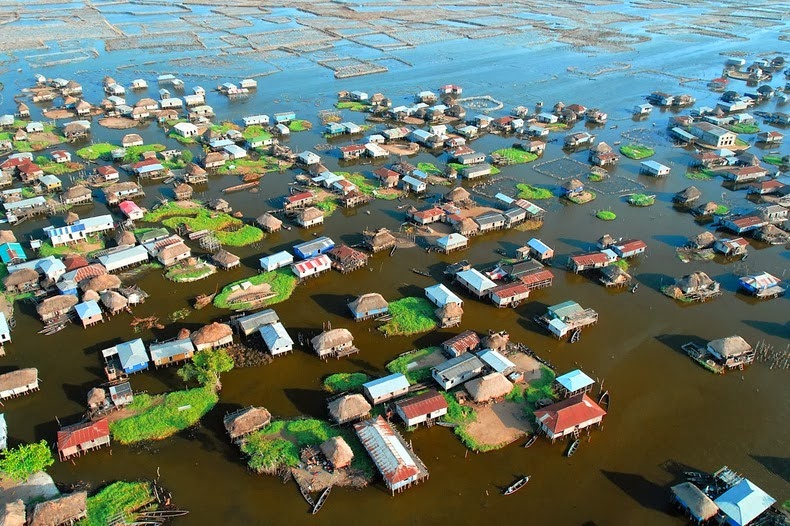
None of this is packaged the way similar history is packaged elsewhere. Ganvié, a village of an estimated 20,000 people built entirely on stilts over Lake Nokoué, still functions as a working town rather than a museum piece: people fish, trade and raise families over the water the same way their Tofinu ancestors did when they first built it as a refuge from slave raiders. Pendjari National Park, part of the UNESCO-listed W-Arly-Pendjari transboundary complex, holds lions, elephants and one of West Africa's last cheetah populations, and remains one of the least-visited major parks on the continent. Benin rewards travelers who come for substance over polish.
The honest complications
Tourist infrastructure is real but thin outside Cotonou: expect variable road quality, limited English away from hotels and guides, and a visa process that has to be sorted before you fly rather than on arrival. The north of the country, including the direct overland approach to Pendjari from Niger or Burkina Faso, sits under a serious security advisory that visitors need to take at face value rather than optimism. And Benin's recent political trajectory, a country once held up as one of Africa's strongest democracies after its peaceful 1990 transition, has drawn documented concern from democracy watchdogs over the consolidation of power since 2016. None of this should scare off a well-planned trip to the south, but it's worth knowing going in.
A History Worth Knowing
Benin's story runs from the powerful Kingdom of Dahomey, through its central role in the Atlantic slave trade, into French colonization, a turbulent post-independence run of military coups, two decades of Marxist rule, and a 1990 transition that once made Benin a model for peaceful democratic change in Africa. That arc, high historical significance followed by a complicated, still-unfolding present, explains a great deal about the country a visitor encounters today.
- 1720s
The Kingdom of Dahomey. King Agaja of Abomey conquers the coastal kingdoms of Allada and Ouidah, creating an expanded Dahomey that dominates the region for two centuries.
- 17th-19th c.
Ouidah and the slave trade. Ouidah becomes one of West Africa's largest slave-trading ports, run in partnership with Dahomey's kings, sending an estimated one million or more enslaved people across the Atlantic.
- 1894-1960
French colonization. France annexes Dahomey after defeating the kingdom militarily; the territory becomes French Dahomey and later part of French West Africa.
- 1960
Independence. Declared on 1 August with Hubert Maga as first president; the following twelve years bring at least six military coups.
- 1972-1990
Kérékou's Marxist era. Major Mathieu Kérékou seizes power in 1972 and pursues Marxist-Leninist policy from 1974, nationalizing the economy for nearly two decades.
- 1990
The democratic transition. Facing mass protests, Kérékou agrees to a National Conference and multiparty elections; Benin becomes one of the first African countries where a sitting leader is peacefully voted out.
- 2016-present
The Talon era. Cotton magnate Patrice Talon wins the presidency in 2016 and 2021; democracy monitors have documented a narrowing of political space since, a shift from Benin's earlier reputation as a regional democratic model.
Read the full history: Dahomey's Amazons, colonization, and the road to 1990
Dahomey's military reputation rested partly on the Agojie, an all-female regiment Europeans nicknamed the Dahomey Amazons, who fought in the kingdom's campaigns and defended it against French colonial forces in the 1890s before Dahomey's final defeat and annexation in 1894. The kingdom's wealth and power had been built substantially on the slave trade through Ouidah and, after Britain pressured West African states to end that trade in the 19th century, on palm oil exports.
French Dahomey was administered as part of French West Africa until independence in 1960. The first twelve post-independence years were exceptionally unstable, a rotating cast of military and civilian governments that gave the country a reputation as the "sick man of Africa," until Mathieu Kérékou's 1972 coup imposed nearly two decades of single-party Marxist-Leninist rule, complete with nationalized banks and industries and a name change to the People's Republic of Benin in 1975.
By the late 1980s the state was effectively bankrupt and public protest, including a near-total 1989 general strike, forced Kérékou to convene a National Conference in February 1990. The conference stripped Kérékou of most of his power, wrote a new constitution, and led to multiparty elections in 1991 that Kérékou lost, and which he conceded, becoming one of the first African leaders of the era to accept an electoral defeat. That peaceful transfer made Benin a widely cited democratic success story for the next quarter century. Patrice Talon's presidency since 2016 has coincided with constitutional changes, restrictions on opposition parties and press freedom concerns that international and domestic democracy monitors have flagged as a reversal of that earlier trajectory, a genuinely contested political question inside Benin itself and a useful piece of context for understanding the country you're visiting, even though it has little bearing on the safety or logistics of a tourist trip to the south.
Top Destinations
Nearly everything a first-time visitor wants sits within a few hours of Cotonou along Benin's southern coast and its immediate interior: the historic slave port of Ouidah, the stilt village of Ganvié, and the former royal capital of Abomey. Pendjari National Park, in the far north, is a different trip entirely, best planned as its own multi-day extension rather than a rushed add-on.
Cotonou, the working capital
Benin's largest city and economic engine is not the official capital, that title belongs to Porto-Novo, but Cotonou is where the airport, the hotels, the embassies and nearly every visitor's trip actually begins. Its centerpiece is Dantokpa Market, reputedly the largest open-air market in West Africa, sprawling across both banks of a lagoon channel with everything from fresh produce to Vodun ritual objects. A full city guide, with neighborhoods, hotels, restaurants and a day-by-day plan, covers Cotonou separately: see our Cotonou city guide.
Ouidah, the spiritual and historical center
About 40 kilometers west of Cotonou, Ouidah was one of West Africa's busiest slave-trading ports for two centuries and is now considered the spiritual capital of Vodun. The Route des Esclaves runs four kilometers from the town center to the beach, tracing the final steps of an estimated one million or more enslaved people, past the Tree of Forgetfulness where captives were once marched in circles, said to erase memory of home, to the Door of No Return, a memorial arch on the sand where the ships departed. Inland, the Ouidah Museum of History occupies the old Portuguese Fort of São João Baptista de Ajudá and traces the region's history from the Kingdom of Xwéda through Dahomey to the slave trade. The Temple of Pythons sits directly across from Ouidah's Catholic basilica, a small sunken pit holding dozens of royal pythons considered sacred and protective; visitors can hold one under the keeper's supervision. Nearby, the Sacred Forest of Kpassè holds statues of Vodun deities among trees said to mark the spot where the city's founder transformed into a tree to escape his enemies.
Ganvié, the village on stilts
Roughly 18 kilometers from Cotonou on Lake Nokoué, Ganvié is often called the Venice of Africa, a settlement of an estimated 20,000 people living in stilt houses connected only by water. The Tofinu people built it in the 17th and 18th centuries specifically because local religious law forbade Dahomey's slave raiders from taking captives from the water, turning the lake itself into a sanctuary. The only way to see it is by dugout canoe; the earliest tours, around 6 to 8am, catch the floating market at its most active and the light at its best for photography. Guided pirogue tours also depart from the lagoon near Dantokpa Market in Cotonou for travelers based there, running through mangrove channels and past smaller fishing communities on the way to Ganvié itself.
Abomey, the royal capital
Around two hours north of Cotonou, Abomey was the seat of the Kingdom of Dahomey from 1625 until French conquest in 1894. The Royal Palaces of Abomey, a UNESCO World Heritage Site since 1985, spread across roughly 47 hectares and hold the remains of twelve successive kings' palaces, each built by its ruler as a statement of the reign, along with bas-relief walls recording historical events in symbolic imagery. The on-site Historical Museum displays royal thrones, ceremonial weapons and other regalia, including some pieces returned by France in recent restitution agreements. The palace complex is the best single window onto the kingdom that shaped so much of Benin's coastal history, and it gets a fraction of the visitors a site of its historical weight would draw elsewhere.
Pendjari National Park
In Benin's far north, Pendjari is part of the UNESCO-listed W-Arly-Pendjari transboundary complex shared with Burkina Faso and Niger, and it holds lions, elephants, hippos, buffalo and one of West Africa's last remaining populations of cheetah across savanna, gallery forest and river habitats. It's one of the least-visited major wildlife parks on the continent, which means genuinely uncrowded game drives, but it is also a serious undertaking: the park sits roughly 600 to 700 kilometers from Cotonou, generally reached via Natitingou after a long drive or domestic flight, and travelers should plan this as a dedicated multi-day trip with a reputable operator rather than a casual detour. Dry season, December through April, is best for wildlife viewing, when animals concentrate around remaining waterholes.
Near Tanguiéta on the edge of the park, the Tanougou Waterfalls drop about 15 meters into a natural pool popular for swimming, an easy add-on for travelers already making the trip north.
Hidden gems beyond the main circuit
The destinations above cover a first trip well. With extra days, these reward the detour.
Porto-Novo
Benin's official capital, quieter and more compact than Cotonou, with the Musée Honmè royal palace, the Da Silva Museum of Afro-Brazilian heritage, and a converted 19th-century Afro-Brazilian church-turned-mosque.
Grand-Popo
A quiet beach town near the Togo border with black-sand Atlantic beaches, the Bouche du Roy river mouth, and boat trips through the mangroves of the Mono River delta. A genuine change of pace from Cotonou.
Lake Ahémé & Possotomè
Benin's second-largest lake, ringed by Vodun temples and sacred forests, with the nearby town of Possotomè known for its therapeutic thermal mineral springs, the only ones in the region.
Culture & Etiquette
Benin is the birthplace of Vodun, an officially recognized religion here rather than the caricature the word "voodoo" often carries abroad. Its pantheon of deities, ancestor veneration and nature worship coexist openly with Christianity and Islam, and it isn't unusual for someone to practice more than one tradition at once. That openness extends to visitors: Vodun sites like the Temple of Pythons and the Sacred Forest of Kpassè in Ouidah welcome respectful tourism rather than treating it as an intrusion.
Do
- Ask before photographing Vodun ceremonies or sacred sites. Some rituals and objects are not meant to be photographed at all; a guide or the officiant can tell you which.
- Greet elders and hosts first, with a handshake and, ideally, a few words of French. Respect for age and hierarchy runs deep in Beninese social life.
- Dress modestly outside the beach towns, covering shoulders and knees, particularly in rural areas and at religious sites of any faith.
- Negotiate zémidjan and taxi fares before you get on, since meters are essentially nonexistent outside a handful of Cotonou taxi apps.
- Carry cash. CFA francs are essential outside international hotels; cards are accepted only at the highest-end establishments in Cotonou.
Don't
- Touch or approach Vodun shrines, statues or roadside offerings without a local guide's confirmation that it's appropriate. Some are actively feared even by locals unfamiliar with the specific site.
- Assume "voodoo" means what Western pop culture suggests. Vodun is a structured, serious religious tradition to millions of Beninese; treating it as a novelty reads as disrespectful.
- Photograph government buildings, military checkpoints or police without permission; this is enforced.
- Drive at night outside major towns if you can avoid it. Poor lighting, unmarked hazards and the security situation in parts of the country all argue against it.
- Expect fast service culture. Meals, transport and transactions run on a slower rhythm than many Western visitors are used to; building in patience avoids needless frustration.
Deeper culture: the Agojie, Fon language, and Vodun's global reach
The Agojie. Dahomey's all-female military regiment, nicknamed the Dahomey Amazons by European observers, served as royal bodyguards and elite infantry from at least the 18th century until the kingdom's defeat by France in 1894. Their history has drawn renewed international attention in recent years through film and popular history, alongside genuine scholarly debate about how the regiment is remembered and represented.
Fon and the country's languages. French is the official language of government, education and most tourism infrastructure, but Fon is the most widely spoken indigenous language, especially across the south, followed by Yoruba in the southeast and Bariba and Fulfulde in the north. Multilingualism is the norm; many Beninese move between three or four languages depending on who they're speaking with.
Vodun's global reach. The word "voodoo" derives from Vodun, and the religion traveled with enslaved Beninese and neighboring peoples to the Americas, where it developed into Haitian Vodou, Louisiana Voodoo and, blended with Yoruba and Central African traditions, Brazilian Candomblé. Benin, Haiti and Brazil maintain active cultural and religious exchange around this shared heritage today, including pilgrimages in both directions.
Food & Drink
Beninese food centers on cornmeal and cassava staples, richly spiced sauces, grilled fish and meat, and palm oil as the dominant cooking fat in the south. It's a cuisine of maquis, informal open-air restaurants that are often the best and cheapest place to eat, rather than of formal dining rooms.
Pâte & sauce ~$2-4
A dense cornmeal or cassava-flour porridge, Benin's everyday staple, served with a spiced tomato, peanut or leaf-based sauce and grilled fish, chicken or bushmeat. The default meal at any maquis.
Amiwo ~$2-5
A savory cornmeal pudding cooked with tomato paste, onion, garlic and palm oil until thick and red, usually served with grilled fish or chicken and a fresh tomato-onion relish.
Akassa
Fermented corn dough steamed into a tangy, slightly sour porridge, especially popular in the south, typically eaten with a pepper sauce and fish.
Wagasi
A soft cow's-milk cheese made by Fulani communities in the north, mild in flavor with a distinctive red rind, often fried and added to sauces or eaten as a snack.
Alloco ~$1-2
Sweet plantains fried until caramelized at the edges, sold from street stalls across Cotonou and eaten as a snack or a side with grilled fish.
Tchoukoutou
A traditional sorghum beer with a sour, slightly thick character, brewed locally and drunk at social gatherings and festivals, especially in the north.
When to Go & Itineraries
December through February, the coolest and driest stretch of Benin's dry season, is the best window for the southern circuit: comfortable temperatures, minimal rain, and, as a bonus, the Ouidah Voodoo Festival on 10 January. For Pendjari National Park specifically, the dry season extends through April, when animals concentrate around remaining water sources and game viewing is at its best. Avoid the heaviest of the rains, typically June through September in the south, when unpaved roads to Ganvié's shoreline access points and rural areas can turn difficult.
Seasons compared, with temperatures
| Season | Verdict | Temps (south) | Notes |
|---|---|---|---|
| Dec-Feb | Best overall | 22-30°C, harmattan haze possible | Driest, coolest; Voodoo Festival 10 Jan |
| Mar-May | Good, hotter | 28-34°C | Building humidity ahead of the rains |
| Jun-Sep | Rainy season | 24-29°C | Heaviest rain; some rural roads difficult |
| Oct-Nov | Shoulder | 24-30°C | Short dry spell between rain peaks |
Prices and conditions reflect July 2026 research and drift over time. Treat seasonal figures as a planning baseline.
Itineraries
A week covers the southern highlights properly. Ten days to two weeks adds Pendjari National Park in the north, which deserves its own multi-day block rather than a rushed detour given the distance involved.
- Days 1-2
Cotonou. Dantokpa Market, Fondation Zinsou, and a first taste of the maquis food scene.
- Day 3
Ganvié. A morning dugout canoe tour of the stilt village, ideally starting by 7 or 8am.
- Days 4-5
Ouidah. The Route des Esclaves and Door of No Return, the Temple of Pythons, the Sacred Forest of Kpassè, and the Ouidah Museum of History.
- Days 6-7
Abomey, then return. The Royal Palaces UNESCO site and Historical Museum, back to Cotonou for a final night.
- Days 1-2
Cotonou & Porto-Novo. The capital's markets and art scene, plus a half-day in the official capital for its museums.
- Day 3
Ganvié. An early canoe tour of the stilt village.
- Days 4-5
Ouidah. The full slave-route and Vodun circuit, with a night in town.
- Day 6
Grand-Popo. A relaxed beach day and Mono River mangrove trip on the way toward or from Ouidah.
- Days 7-8
Abomey. The Royal Palaces, with time for the Historical Museum and the surrounding town.
- Days 9-10
Return to Cotonou. A buffer day for delays, plus any Dantokpa Market shopping left undone.
- Days 1-7
The 7-day southern circuit, at a fuller pace, adding Porto-Novo and Grand-Popo.
- Days 8-9
Travel north. Domestic flight or long drive to Natitingou, the gateway to Pendjari.
- Days 10-12
Pendjari National Park. Multi-day game drives with a reputable operator, plus the Tanougou Waterfalls near Tanguiéta.
- Days 13-14
Return south. Travel back to Cotonou with a buffer day before departure.
Getting there & around
Cardinal Bernardin Gantin International Airport (COO) in Cotonou is Benin's main gateway, with direct flights from Paris on Air France, from Brussels on Brussels Airlines, from Casablanca on Royal Air Maroc, and regional connections via ASKY and others. A long-discussed replacement airport at Glo-Djigbé, northwest of the city, remains a planned project rather than an operating facility as of this writing. Within Benin, zémidjan motorcycle taxis are the default way to get around cities, cheap and everywhere but requiring a fare negotiated before you climb on; a private driver or organized tour is the practical choice for Ganvié, Ouidah, Abomey and especially Pendjari.
Transport specifics and practical prep
| Option | Notes |
|---|---|
| Zémidjan (moto-taxi) | 300-2,000 CFA depending on distance; negotiate before boarding, widely used within Cotonou and other towns. |
| Private driver/guide | The standard way to reach Ganvié, Ouidah, Abomey and Pendjari; arrange through your hotel or a tour operator. |
| Shared taxis & bush taxis | Cover intercity routes cheaply but slowly, with limited English support; fine for the adventurous, less practical on a tight schedule. |
| Domestic flights | The realistic way to reach the far north for a Pendjari trip without dedicating multiple days each way to driving. |
Practical prep: buy a local SIM (MTN or Moov Africa, available at the airport and in Cotonou) on arrival, carry CFA francs since cards work only at upscale hotels, and confirm your yellow fever certificate and printed e-visa approval are both in hand before you fly, since airlines can deny boarding without them.
Where to stay
Capital hotels
Cotonou has Benin's most developed hotel scene by far, from international four- and five-star properties to a growing budget guesthouse scene; see our Cotonou city guide for specific, vetted picks.
Beachfront stays
Hotel Awalé Plage, a beachfront village of bungalows with its own restaurant, is a well-regarded option for a relaxed night or two on the coast west of Cotonou.
Small-town guesthouses
Both towns have a handful of simple hotels and guesthouses suited to an overnight stop; most visitors book these as part of an organized tour or arrange them through a driver rather than independently.
Park lodges
Accommodation near the park is basic and best arranged through a tour operator alongside transport and guiding, since options are limited and not easily booked independently from abroad.
Budget Planning
Benin is inexpensive by international standards and comparable to much of West Africa: local food, transport and guesthouses cost little, while the handful of international-standard hotels and organized tours, especially to Pendjari, drive up a mid-range or luxury budget considerably.
- Basic guesthouse or hostel dorm
- Maquis meals, street food
- Zémidjan & shared taxis
- Ganvié canoe tour, Ouidah walking
- 3-4 star hotel in Cotonou
- Restaurant meals, better service
- Private driver for day trips
- A guided visit to Abomey or Ouidah
- Top hotels in Cotonou
- Multi-day private Pendjari safari
- Domestic flights instead of long drives
- Private guides throughout
Quick reference prices
| Maquis meal (pâte, sauce, fish) | $2-5 |
| Alloco (fried plantain) snack | ~$1-2 |
| Zémidjan ride, in-city | 300-2,000 CFA (<$1-3) |
| Ganvié pirogue tour | $15-30 |
| Abomey Royal Palaces entry | ~$10 |
| Pendjari National Park entry (per day) | $15-25 |
| Budget guesthouse | ~$20-40/night |
| Mid-range Cotonou hotel | ~$120-225/night |
Prices reflect July 2026 research and drift over time. Treat them as a planning baseline, not a quote.
Visa & Entry
Most nationalities, including the US, UK, EU, Canada and Australia, need a visa for Benin; ECOWAS citizens such as Nigerians and Ghanaians enter visa-free. The e-visa, applied for online at the government's evisa.bj portal rather than through third-party sites that charge more for the same service, is the standard route: a 30-day single-entry costs around 50 euros and a 30-day multiple-entry around 75 euros, with processing typically taking 3 to 5 business days. Apply at least a week before departure.
✓ Valid passport
At least 6 months' validity from your entry date, required for the e-visa application and at the border.
✓ Yellow fever certificate
Mandatory for every traveler regardless of origin, checked on arrival; entry can be refused without it.
✓ Printed e-visa approval
Airlines can deny boarding without confirmed approval in hand; apply well ahead rather than assuming a fast turnaround.
✓ Onward/return ticket
Commonly requested as part of the e-visa application and occasionally at the border.
| Benin | Togo | |
|---|---|---|
| Daily budget | $30-50 covers the basics comfortably | Similar range, slightly cheaper on average |
| Signature sight | Ganvié stilt village, Ouidah's slave-route history | Koutammakou's Batammariba mud-tower villages |
| Wildlife | Pendjari NP, part of a UNESCO transboundary park | Fazao-Malfakassa NP, smaller and less developed |
| Visa | E-visa required in advance for most nationalities | Visa on arrival for many nationalities |
| Religion & culture | The historical and spiritual home of Vodun | Strong Vodun presence too, with its own regional variants |
Safety, Solo Women & Family
The US State Department rates Benin Level 2, Exercise Increased Caution, overall, but specifically advises against all travel to areas bordering Burkina Faso and Niger, and to the northern border region generally, along with parts of the border with Nigeria's Kebbi, Niger and Kwara states, because of terrorism, kidnapping and crime risk. That "do not travel" designation is real and specific, not boilerplate caution: it covers the northern approach to Pendjari National Park and the country's far north generally. The coastal south, where Cotonou, Ouidah, Ganvié, Abomey and nearly all standard tourism happens, is a different security picture entirely and is generally safe for well-prepared visitors.
Northern border regions
Do not travel to areas bordering Burkina Faso, Niger, or Nigeria's Kebbi, Niger and Kwara states. Reach Pendjari via established southern approach routes through Natitingou with a reputable operator, never by improvising a northern border route.
Night driving & remote crime
Violent crime including armed robbery and kidnapping can occur at night in remote locations even outside the do-not-travel zone. The US Embassy itself prohibits its staff from traveling outside metropolitan areas after dusk; visitors should follow the same rule.
Petty crime & scams
Pickpocketing and short-changing occur around markets, bus stations and tourist sites in Cotonou. Count change on the spot, use ATMs only inside bank branches, and be skeptical of unsolicited online "opportunities" involving money transfers.
Two more things worth knowing: health precautions and road safety
Malaria and health. Malaria risk exists year-round across Benin; antimalarial medication and mosquito precautions are strongly recommended. Yellow fever vaccination is mandatory for entry, and standard travel vaccines (typhoid, hepatitis A) are commonly advised by travel clinics.
Road conditions. Roads range from good in and around Cotonou to poor in rural and northern areas. Zémidjan motorcycle taxis are convenient but carry real accident risk; a helmet, if offered, is worth using even if it isn't the local norm.
Solo women travelers
Solo travel in the southern circuit is manageable with the same precautions that apply to independent travel across much of West Africa: avoid walking alone after dark, dress modestly outside beach resorts, and arrange transport in advance rather than improvising late at night. Many solo travelers visit Benin's south successfully, often as part of a small guided tour that also solves the practical challenge of reaching Ganvié, Ouidah and Abomey without a private vehicle. Full detail on our Solo Woman Explorer pages.
Emergency numbers
Emergency response notes and family travel
Emergency response is strongest in Cotonou; outside the capital, response times can be long and medical facilities basic. Comprehensive travel insurance covering medical evacuation is strongly recommended given the limited scope of rural healthcare.
Family travel. The southern circuit, Cotonou, Ganvié, Ouidah and Abomey, works reasonably well for families with older children who can handle heat, long car rides and a fair amount of walking; the canoe trip to Ganvié in particular tends to be a highlight for kids. Pendjari is a bigger undertaking, better suited to families with prior experience traveling in less-developed parts of Africa.
Benin FAQ
Is Benin safe to visit?
The coastal south, where nearly all tourism happens, including Cotonou, Ouidah, Ganvié and Abomey, is generally safe with normal precautions. The US State Department specifically advises against travel to Benin's northern border regions with Burkina Faso, Niger and Nigeria's Kebbi, Niger and Kwara states because of terrorism and kidnapping risk, which includes the northern approach to Pendjari National Park.
Do I need a visa for Benin?
Yes, most nationalities including the US, UK, EU, Canada and Australia need a visa. The e-visa, applied for online at evisa.bj, costs around 50 euros for a 30-day single entry and typically takes 3 to 5 business days to process. A yellow fever vaccination certificate is mandatory for every traveler regardless of origin.
How much does a trip to Benin cost?
Budget travelers manage on $30 to $50 a day with local guesthouses and street food, mid-range travelers spend roughly $75 to $110 a day. Benin is inexpensive by regional standards outside a handful of international-standard hotels in Cotonou.
When is the best time to visit Benin?
December to February, the coolest and driest stretch of the dry season, is best for the coast, Ganvié and Abomey. For Pendjari National Park's wildlife viewing, the dry season from December through April is best, when animals cluster around remaining water sources.
What is the Voodoo Festival in Benin?
Every January 10, a national holiday, the town of Ouidah fills with Vodun devotees, egungun masqueraders and Zangbeto spirit dancers for Benin's most important Vodun celebration, drawing tens of thousands of visitors. Smaller ceremonies begin a few days before the main event.
Is Pendjari National Park worth visiting?
Yes, for travelers who want genuine wildlife without the crowds of East or Southern Africa. Part of the UNESCO-listed W-Arly-Pendjari complex, it holds lions, elephants, hippos and one of West Africa's last populations of cheetah, and remains one of the least-visited major parks on the continent.
What language is spoken in Benin?
French is the official language and works in hotels, restaurants and with guides throughout the south. Fon is the most widely spoken indigenous language, alongside Yoruba in the southeast and Bariba and Fulfulde in the north.
Is Benin the birthplace of Voodoo?
Yes. Vodun, from which the word voodoo derives, originated among the Fon and Ewe peoples of the historical Dahomey region and remains an officially recognized religion in Benin, practiced by a substantial share of the population alongside Christianity and Islam.
How many days do you need in Benin?
A week covers the southern circuit well: Cotonou, Ouidah, Ganvié and Abomey. Ten days to two weeks adds Pendjari National Park in the far north, which needs its own multi-day trip given the distance and road conditions.
What Stays With You
Benin doesn't ease you into its history, it puts you directly on the path. The four kilometers from Ouidah's town center to the Door of No Return are walkable in under an hour, and almost nobody who makes that walk describes it the same way twice. Ganvié, a town of thousands still living exactly as their ancestors built it centuries ago for the exact same reason, is not staged for visitors; it simply continues, and you're welcome to watch by canoe. Abomey's twelve palaces, still standing after the kingdom that built them fell to French guns in 1894, remain one of the most significant and least-crowded UNESCO sites on the continent.
Go with the e-visa sorted, the yellow fever certificate in hand, and the northern border zones left firmly off the itinerary. What's left is a small country carrying an outsized share of West Africa's history, told mostly by the people still living inside it.