
What Travellers Should Know About Botswana
Botswana's tourism economy is premium by design. Understanding the pricing structure, verifying operator licensing, and knowing what "all-inclusive" actually covers are the three pillars of a scam-free Botswana visit.
Common Scams & Traps in Botswana
Botswana's tourist risks are almost entirely financial. Criminal targeting of tourists is rare by any African standard.
Maun is the gateway to the Okavango Delta and has a concentration of safari operators ranging from world-class licensed camps to unlicensed operators targeting budget travellers. The fraud pattern: an attractive price for an Okavango mokoro or camping safari is quoted, a deposit (sometimes the full amount) is collected, and the promised experience is either not delivered, significantly downgraded, or — in the most serious cases — non-existent. Online variants involve operators with professional-looking websites and no physical Botswana presence collecting full payments for camps that don't exist or aren't available.
- Verify operator licensing with the Botswana Tourism Organisation (BTO) at tourism.gov.bw before any payment — the licensed operator registry is publicly searchable.
- For budget mokoro access, the Okavango Polers Trust in Seronga is the community-run, officially supported organisation — a reliable alternative to private operators for community mokoro trips (USD 30–60/half day).
- Pay deposits through traceable channels — bank transfer to a named business account or credit card (which allows chargebacks). Never pay cash to an individual without a formal receipt.
- For high-value bookings, use established international safari platforms — Wilderness Safaris, Sanctuary Retreats, and Africa Albida Tourism are major licensed operators with long track records.
At USD 600–1,500+ per person per night, the difference between what is and isn't included in an "all-inclusive" rate is financially material. Common exclusions not clearly communicated at booking: DWNP park fees (USD 30–80/person/day in Chobe, Moremi, and the CKGR), premium alcohol (local spirits included; imported bottles extra), laundry, community levies at some camps, and tips. A 5-night Okavango stay quoted at USD 4,500 can become USD 5,500+ after park fees and tips are added.
- Request a fully itemised quotation: accommodation rate, DWNP park fees, community levies, laundry, alcohol policy, transfers, and tip guidance — all listed separately.
- Ask specifically: "Are DWNP national park fees included or charged separately?"
- Confirm the tipping norm before departure — USD 10–15/day for your guide and USD 5–10/day for camp staff is standard across most Botswana camps, paid in USD cash.
- Well-run operators welcome itemisation questions — evasiveness about inclusions is a warning sign.
Most Okavango Delta and Linyanti camps are only accessible by small charter aircraft. Budget travellers booking charter seats independently face two traps: seat-in-plane fares quoted as "subject to availability" that convert to full charter costs (4–8× the price) if other passengers don't fill the plane, and strict 15kg soft-bag weight limits that result in excess baggage charges for travellers who haven't been clearly informed. Hard-sided suitcases are physically incompatible with small bush planes.
- Book charter flights through your lodge — they have established relationships with licensed operators and guarantee the seat-in-plane rate.
- Bring a soft duffel bag of maximum 15kg total including camera equipment — hard suitcases are not accepted on small bush planes.
- Wilderness Air and Mack Air are the major licensed charter operators for the Okavango — verify current licensing if booking independently.
- Confirm your charter flight 48 hours before departure — seat-in-plane schedules shift based on other passenger bookings.
Self-drive safari is significantly cheaper than lodge-based safari and entirely feasible with proper preparation. The serious risk is under-prepared vehicles and drivers. Botswana's park tracks — particularly the Central Kalahari Game Reserve and deep Moremi — involve deep sand, corrugated tracks, long distances from help, and no mobile signal. A vehicle stuck in sand 60km from the nearest camp, with insufficient water and no emergency communication, is a medical emergency in 40°C heat. Rental companies that don't provide adequate briefing, two spare tyres, recovery gear, and satellite communication are cutting corners with your safety.
- Rent only from established 4WD safari rental companies — Avis, Europcar, and specialists like Kalahari Car Hire who provide full-spec vehicles with roof tents, two spare tyres, recovery boards, and emergency equipment.
- Never enter the CKGR or remote Moremi alone — travel in a convoy of at least two vehicles.
- A SPOT device or Garmin inReach satellite communicator is non-optional for remote CKGR travel — mobile signal is absent throughout the reserve.
- Carry minimum 20 litres of drinking water per person per day in remote areas. Carry sufficient fuel for the full circuit — no fuel stations exist inside reserves.
- Pre-book all DWNP campsites at dwnp.gov.bw — Third Bridge (Moremi) and CKGR sites cannot be entered without a reservation.
Gaborone is primarily a business destination and sees few leisure tourists, but those who transit face the standard African airport taxi dynamic: unlicensed drivers quoting inflated fixed fares for the airport-to-city journey (approximately 15km, should cost BWP 150–250) with no meter use. The Gaborone city taxi market lacks ride apps at the scale of more tourist-heavy destinations.
- Ask your hotel to arrange airport collection — most Gaborone business hotels offer this at reasonable fixed rates.
- Agree the fare before entering any taxi — BWP 150–250 for the airport to central Gaborone is reasonable; above BWP 300 is overcharging.
- Uber is available in Gaborone and provides upfront pricing — check availability on arrival.
Botswana produces extraordinary hand-woven baskets — the Okavango panhandle weaving tradition (Etsha, Shakawe) is internationally recognised as among the finest in Africa. The trap is not fraud but significant overpricing at tourist-facing stalls compared to community cooperatives. Botswana baskets at Gaborone airport shops or Maun souvenir stalls may be 3–4× the price of the same basket bought directly from a weaver in Etsha.
- For Botswana baskets, buy directly from weaving cooperatives in Etsha 6, Etsha 13, or Shakawe in the Okavango panhandle — genuine, fairly priced, and income goes directly to weavers.
- The Botswanacraft Marketing Company near Main Mall in Gaborone is the government-supported fair-trade craft outlet — reliable pricing for authenticated Botswana-made items.
- Reputable lodge curio shops often sell community-produced crafts at honest prices — a convenient option when travelling the circuit.
Botswana's Key Safari Destinations
Botswana's geography divides into the wet north (Okavango, Chobe, Linyanti) and the vast dry south (Kalahari, Makgadikgadi). Each has its own character, pricing, and practical considerations.
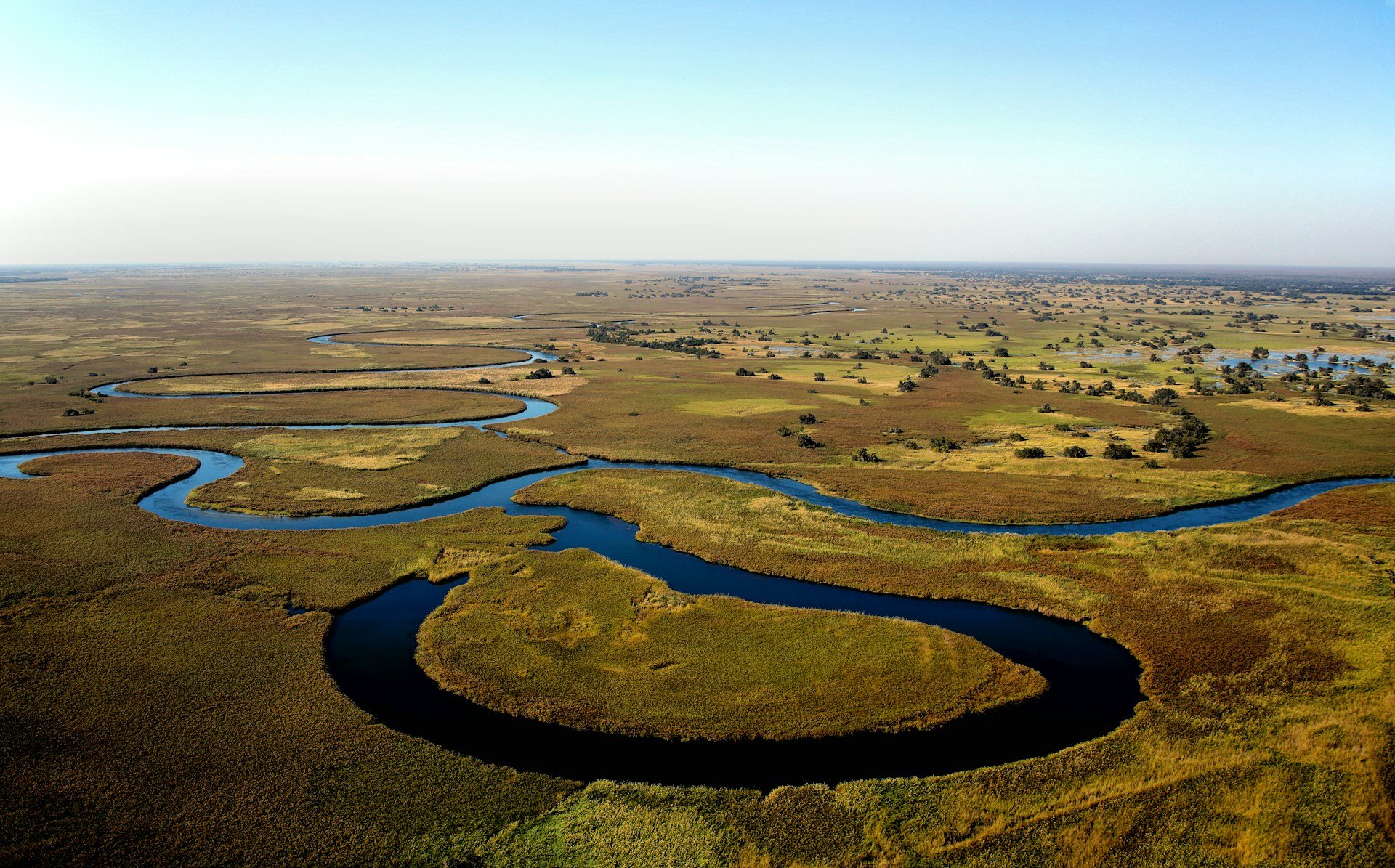
The Okavango Delta — a UNESCO World Heritage Site — is one of the world's great wilderness areas: 15,000 km² of permanent and seasonal wetland in the middle of the Kalahari, formed by a river that dies in the desert rather than reaching the sea. Mokoro trips through papyrus channels, walking safaris on seasonal islands, and night drives from camps surrounded by wildlife are experiences unavailable anywhere else on the continent. Access is by charter flight or 4WD from Maun.
- Unlicensed operator deposit fraud — Maun's biggest tourist risk; verify BTO licensing before any payment
- Park and concession fee exclusions from "all-inclusive" rates — always itemise
- Charter flight 15kg soft-bag weight limit — pack accordingly before leaving home
- Okavango Polers Trust in Seronga — community mokoro operator, reliable budget alternative
- Flood season (June–August) = best mokoro experience; top camps book 6–12 months in advance
Chobe has the highest elephant concentration on earth — herds of 500+ are regularly seen on the Chobe River floodplains in the dry season. The Kasane gateway town has good infrastructure; boat safaris at sunset with elephants swimming across and hippos surfacing alongside are among Africa's most accessible and spectacular experiences. Day trips from Victoria Falls (Zimbabwe) or Livingstone (Zambia) are popular, well-established, and reliable.
- DWNP park fees (USD 30–35/person/day) — confirm whether included in your operator rate
- Kasane airport taxi overcharging — agree fare before boarding or use lodge transfer
- Boat safari operators at Kasane — use BTO-licensed operators; check life jacket provision
- Day trips from Victoria Falls — well-established route; book through reputable Vic Falls tour operators
Moremi is the protected area within the Okavango accessible by 4WD — Third Bridge and Xakanaxa have public DWNP campsites providing an affordable alternative to fly-in camps. Game viewing rivals the private concessions at a fraction of the cost. Lions visiting Third Bridge camp at night is documented; this is self-drive territory requiring full preparation. Wild dog (African painted dog) sightings are more reliable here than almost anywhere else in Africa.
- Deep sand tracks requiring experienced 4WD technique — never enter alone, two-vehicle minimum
- DWNP campsites must be pre-booked at dwnp.gov.bw — no walk-in entry
- Lions and hyenas enter unfenced public campsites — camp protocols mandatory after dark
- No fuel in Moremi — fill completely in Maun before entering; carry spare fuel
The CKGR is one of the world's largest protected areas — 52,800 km² of fossil riverbeds, sparse bush, and extraordinary light. In the green season (December–April) Deception Valley fills with wildlife attracted by new grass; gemsbok, cheetah, and the famous black-maned Kalahari lions are present year-round. The most remote and demanding self-drive destination in Botswana — and, in the green season, one of the most affordable ways to experience genuine Kalahari wilderness.
- No mobile signal throughout — SPOT/Garmin inReach satellite communicator mandatory
- Two-vehicle minimum on all CKGR tracks — no exceptions in remote areas
- Extreme summer heat (November–February, 40°C+) — carry 20+ litres of water per person per day
- Fuel: carry enough for 600+ km round trip from Rakops or Kang — no fuel in the reserve
- DWNP campsite pre-booking mandatory — dwnp.gov.bw fills quickly in peak season
The Makgadikgadi — remnants of an ancient superlake larger than Switzerland — is one of Africa's most surreal landscapes: vast white salt pans extending to every horizon, Africa's largest zebra migration (November–April), and meerkats so habituated to human presence they climb onto you at dawn. Jack's Camp and San Camp are the classic Makgadikgadi bases; self-drive access from the A3 highway via Gweta is feasible in a standard 4WD during the dry season.
- Pan driving outside marked routes risks getting stuck in soft salt crust — stay on tracks
- Zebra migration season (November–April) accommodation books out — reserve well in advance
- Meerkat habituated group near Jack's Camp is a genuine, extraordinary experience — worth the camp premium
Botswana's capital is primarily a business destination — the National Museum, Three Dikgosi Monument, and Mokolodi Nature Reserve outside the city are the main attractions. Most tourists transit briefly. Standard urban awareness applies; violent crime is low by regional standards but vehicle break-ins at malls exist. The central mall areas are safe during daylight hours.
- Airport taxi overcharging — agree metered fare or pre-arrange hotel collection; Uber available
- Vehicle break-ins in mall car parks — do not leave valuables visible in rental cars
- Botswanacraft Marketing Company near Main Mall — genuine crafts at fair prices, worth a visit
- Mokolodi Nature Reserve (15km from city) — genuine wildlife encounter including rhino, reliable day-visit option
Safety Tips for Botswana
- ✓ Verify every safari operator's license with the Botswana Tourism Organisation at tourism.gov.bw before paying any deposit. This is the single most important pre-trip step.
- ✓ Request a fully itemised quotation from your lodge — confirm whether DWNP park fees, community levies, laundry, alcohol, and transfers are included or additional. At these nightly rates, extras add up materially.
- ✓ For self-drive in Moremi or the CKGR: never travel alone, carry two spare tyres and recovery gear, bring 20+ litres of water per person per day, carry a satellite communicator, and file your route before entering.
- ✓ Follow camp wildlife protocols absolutely — never walk unescorted after dark, no food in tents, stay in your vehicle in game areas, do not approach or feed any wildlife. Animals are genuinely wild and potentially fatal.
- ✓ Pack a soft duffel bag of maximum 15kg for charter flights to delta camps — hard suitcases cannot be loaded onto small bush planes. Camera equipment counts toward the limit.
- ✓ Pre-book all DWNP campsites at dwnp.gov.bw — Moremi's Third Bridge and CKGR sites fill quickly in peak season and cannot be entered without a reservation.
- ✓ For Botswana baskets, buy from Etsha or Shakawe cooperatives in the Okavango panhandle or from the Botswanacraft Marketing Company in Gaborone — far better prices and quality than airport shops.
- ✓ Malaria prophylaxis is strongly recommended for northern Botswana (Okavango, Chobe, Linyanti, Moremi) year-round. The Kalahari and Gaborone are considered low risk. Consult a travel health clinic before departure.
- ✓ The tipping norm is USD 10–15/day for your guide and USD 5–10/day for camp staff — plan this USD cash before arriving, as ATMs don't exist inside reserves.
Book Right, Go Wild
In Botswana, operator quality and transparent all-inclusive terms are everything. Booking through verified platforms protects a significant investment.
Emergency Numbers & Contacts
In remote safari areas, your camp and guide are your first emergency resource. Medical evacuation insurance is non-optional for all Botswana visits — remote park areas require flight to reach hospital care.