
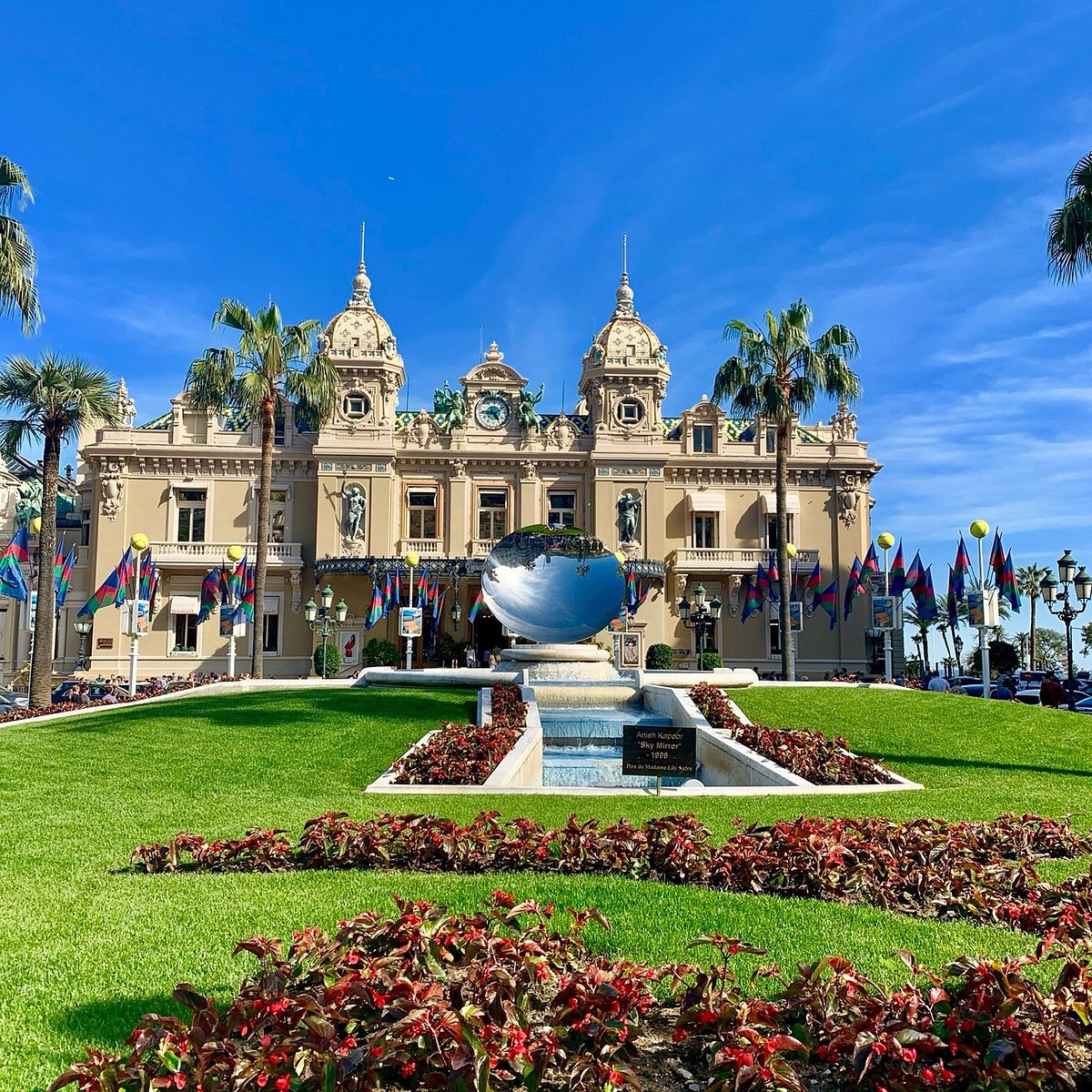
A casino district that doubles as a base for an entire country
Monte-Carlo is easy to mistake for all of Monaco, and the confusion is understandable: it's the ward with the casino, the Belle Epoque hotels, the Michelin stars and the postcard image most people already have in their heads before they arrive. In reality it's one of five wards packed into a country of 2.02 square kilometers, and because nothing in Monaco is more than a 25-minute walk from anything else, Monte-Carlo works perfectly as a base for seeing the whole principality, not just its own streets.
What extends a visit beyond an afternoon is what Monte-Carlo gives you access to. The Prince's Palace and the old town on the Rock are a short walk along the harbor. The Oceanographic Museum sits on the cliff edge a few minutes further. Larvotto Beach, Monaco's only real public beach, is a flat walk east. And once a year in early June, the streets around Casino Square become part of the Formula 1 circuit itself, the pit straight running along the harbor just below.
The honest complications
Casino Square and Boulevard des Moulins are genuinely spectacular but also the most expensive square meters in the district: a casual coffee here costs noticeably more than the same coffee a few hundred meters over the French border. Hotel de Paris and Hotel Hermitage occasionally run promotional rates from around €480 a night booked well ahead, but standard and Grand Prix-week pricing runs into the thousands. And the Monte-Carlo name gets applied loosely: the Monte-Carlo Country Club (site of the Rolex Masters tennis) and the Monte-Carlo Beach Club both sit just over the border in Roquebrune-Cap-Martin, France, despite the branding.
Five wards, all within a 25-minute walk
Monaco's wards blend into each other on foot, helped by a free network of public elevators and escalators built into the cliffs, so where you stay barely changes how far you actually walk.
Monte-Carlo
The ward this guide is centered on: the Casino de Monte-Carlo, Casino Square's Belle Epoque hotels, and Boulevard des Moulins' designer shopping. The highest concentration of Michelin stars in the country sits here, inside the Societe des Bains de Mer's own hotels.
Monaco-Ville (The Rock)
The historic seat of the Grimaldi dynasty on a cliffside promontory: the Prince's Palace, the Cathedral, and the Oceanographic Museum on the cliff edge. Narrow, pedestrian, and the only part of Monaco that reads as genuinely old rather than 20th-century glamour.
La Condamine
Built around Port Hercule, with the daily Place d'Armes market and more everyday restaurants than the glossier wards. The best vantage point for watching superyachts during the Monaco Yacht Show each September, and home to several of the Grand Prix circuit's signature corners.
Fontvieille & Larvotto
Fontvieille, built entirely on reclaimed land, holds the marina, the football stadium and the Princess Grace Rose Garden. Larvotto, on the opposite edge, has Monaco's only real public beach, free and sandy, a short walk from Monte-Carlo's hotels.
From border-town budget to Casino Square legends
Monte-Carlo's hotel stock splits sharply by budget: genuinely affordable rooms simply don't exist inside the principality, so the honest advice is to decide upfront whether you're sleeping in Monaco itself or a short walk over the French border.
For the Casino Square experience, Hotel de Paris and Hotel Hermitage, both run by the Societe des Bains de Mer group, are the two defining addresses: Belle Epoque architecture, direct access to the group's Michelin-starred restaurants, and rooms that occasionally drop to around €480 a night on promotional rates booked 45 or more days ahead, though standard and event-week pricing runs far higher. Monte-Carlo Bay Hotel & Resort, a short walk toward Larvotto, offers a quieter, more contemporary alternative with its own lagoon pool and the Michelin-starred Blue Bay restaurant.
For a genuine budget play, Beausoleil, the French commune that borders Monte-Carlo directly, has three-star hotels and aparthotels at a fraction of in-principality prices, walkable into Monaco in minutes. A little further along the coast, Roquebrune-Cap-Martin adds sea-view options and easy access to the Monte-Carlo Beach Club and Monte-Carlo Country Club, both of which, despite the name, sit on the French side of the line.
The most Michelin-starred square kilometer on earth
Monte-Carlo and its immediate surroundings hold the densest concentration of Michelin stars relative to area anywhere in the world: 14 stars across 9 restaurants inside a country of just over 2 square kilometers, with the Societe des Bains de Mer group alone running six starred restaurants and ten stars across its own hotels. The everyday food scene, socca, barbagiuan, market lunches, survives alongside it in La Condamine, a short walk from the grand hotels.
Le Louis XV - Alain Ducasse
At the Hotel de Paris on Casino Square, Monaco's only three-star restaurant and one of the most celebrated dining rooms in the world, built around Mediterranean seafood, seasonal vegetables and precise sauces.
Elsa & Blue Bay
Chef Marcel Ravin's two Monaco restaurants: Elsa, at the Monte-Carlo Beach, is the world's first fully organic restaurant to earn a Michelin star; Blue Bay, at the Monte-Carlo Bay Hotel, folds Caribbean influences from the chef's native Martinique into French technique.
Cafe de Paris
The historic brasserie on Casino Square, credited as the birthplace of crepes Suzette. The classic, unfussy way to sit on the square without booking a table months in advance.
Barbagiuan & socca
Monaco's own street food: barbagiuan, a fried turnover of chard, rice and cheese, and socca, a chickpea-flour pancake shared with neighboring Nice. Found around the Place d'Armes market at prices that feel almost normal by Monaco standards.
The casino, the palace, and a beach in between
Monte-Carlo's own sights fit into an afternoon; a full day or two lets you add the rest of Monaco, all within easy walking distance. This chapter moves roughly the way a good visit would, from Casino Square outward.
Casino de Monte-Carlo
Opened in 1863 and still operated by the Societe des Bains de Mer, the Casino de Monte-Carlo is the building that funded Monaco's abolition of income tax in 1869. Entry to the public gaming rooms costs around €20, including a small betting voucher, and there's no obligation to play; you're free to simply walk through the Belle Epoque rooms. Dress code tightens after 2pm (no shorts, sportswear or beachwear) and the private salons require a jacket for men; you must be 18 or older with a passport or national ID card.
Casino Square & Cafe de Paris
The square itself, ringed by the Hotel de Paris, the Hotel Hermitage and the historic Cafe de Paris brasserie, is worth simply sitting in for half an hour with a coffee, watching the classic cars and occasional supercar traffic that circles it even outside Grand Prix week.
Prince's Palace & the Rock
A 15-minute walk from Casino Square, the Prince's Palace hosts the free Changing of the Guard in the Place du Palais every day at 11:55am. The State Apartments open to the public from 30 March to 15 October (adult €13), and the nearby Cathedral of Monaco (free entry) holds the tombs of Prince Rainier III and Princess Grace. The Oceanographic Museum, founded in 1910 and later directed by Jacques Cousteau, sits dramatically on the cliff edge (adult €22.50).
Jardin Exotique
A cliffside cactus and succulent garden with prehistoric caves and the best panoramic view in the country over the Rock and the harbor (adult €12, combo tickets to €18). It closes during the Grand Prix weekend, on 19 November and on Christmas Day, so check current hours if timing is tight.
Larvotto Beach
Monaco's only real public beach, free, sandy and a flat walk from Monte-Carlo's hotels. The Grimaldi Forum convention center sits alongside it, and the Monte-Carlo Beach Club, technically over the French border in Roquebrune-Cap-Martin but run as part of Monaco's resort scene, is a short walk further.
Evenings
Monte-Carlo's evenings center on the casino, a Michelin-starred dinner, or a drink at one of the grand hotel bars around Casino Square. It's a district built for dressing up rather than a bar-crawl nightlife scene; La Condamine's port area has more casual evening options.
One day covers Monte-Carlo, two covers the country
Monte-Carlo itself doesn't need more than half a day; the case for staying longer is using it as a base for the rest of Monaco. These routes cover the district properly and, at two days, take in the whole principality.
- Morning
Casino Square. A coffee at Cafe de Paris, then a walk through the Casino de Monte-Carlo's gaming rooms.
- Midday
Walk to Monaco-Ville. The Changing of the Guard at 11:55am, the Cathedral, and lunch near Place d'Armes.
- Afternoon
Oceanographic Museum, then a walk along the port back toward Monte-Carlo.
- Evening
Dinner in Monte-Carlo or La Condamine, depending on budget, before the train back to Nice.
- Day 1
The one-day route above, at a gentler pace, with dinner reserved ahead if a Michelin-starred table is the plan.
- Day 2 morning
Jardin Exotique for the caves and the best view in the country, then the Princess Grace Rose Garden in Fontvieille.
- Day 2 afternoon
Larvotto Beach, or a half-day trip to Eze village, 15 minutes away by bus.
Walkable at the center, elevator-assisted everywhere else
Monaco has no airport: every trip starts with a flight into Nice Cote d'Azur Airport (NCE), about 30 kilometers away, then a train (fastest, roughly 20-25 minutes via Nice, a few euros), the direct Bus 80 express (45-50 minutes, €20.50), the cheaper but slower Bus 600 (about an hour, €2.50), or a helicopter transfer (about 7 minutes, premium fare). A fixed-price Monaco taxi from the airport runs about €100; Uber typically €45-60.
Inside Monte-Carlo and the rest of Monaco, walking covers almost everything, helped by 79 free public elevators, 35 escalators and 8 travelators built directly into the cliffs, look for unmarked glass doors signed "ascenseur public" near car parks. The local CAM bus network's six lines cover the rest for €1.50-2 a ride, with a day pass at €5.50, and buses run free during the Grand Prix, the Yacht Show and other major events.
Best time to visit and event calendar
Monte-Carlo runs best April through June and in September, with good weather and prices well short of the Formula 1 Grand Prix's early-June peak. The Grand Prix, the Rolex Monte-Carlo Masters tennis (early April) and the Monaco Yacht Show (late September) are the three events that reshape the district's prices and street layout most; book far ahead if attending, or plan around them if not.
Monaco's National Day, 19 November, honors the reigning Prince with a religious ceremony, a military parade and fireworks over Port Hercule the evening before, the closest thing the principality has to a citywide festival.
No genuine budget tier inside the principality
Monte-Carlo runs among the highest prices in Europe, especially for accommodation. The one real lever is where you sleep: just over the French border in Beausoleil or Roquebrune-Cap-Martin, everything else, food, transport, sights, runs closer to normal French Riviera pricing.
- Beausoleil or Roquebrune-Cap-Martin room €150-200
- Socca, barbagiuan & market meals €10-18
- Walking, free elevators & local buses
- Free: Changing of the Guard, Cathedral, ramparts
- 4-star hotel in La Condamine or Fontvieille
- Restaurant meals €50-100/person
- Casino entry, Oceanographic Museum, Jardin Exotique
- Occasional taxi
- Hotel de Paris or Hermitage on Casino Square
- A table at Le Louis XV or another starred room
- Private salon access at the casino
- Grand Prix or Yacht Show week pricing
One of the most heavily secured districts in Europe
Monte-Carlo, like the rest of Monaco, is exceptionally safe. The country maintains roughly one police officer for every 62 residents and over 1,300 CCTV and facial-recognition cameras across its entire 2.02 square kilometers, and the US State Department groups Monaco with France for a Level 2, "Exercise Increased Caution" advisory that reflects general European baseline risk rather than anything specific here. It's a strong choice for solo women too: the district is well-lit, heavily monitored, and comfortable to walk at night, including between Casino Square and the port.
The two things that actually catch visitors: pickpocketing, concentrated in the busiest crowds around the casino and during the Changing of the Guard, so keep bags zipped and in front of you; and Grand Prix week logistics, since street closures and grandstand construction around early June make normal getting-around timing unreliable for days either side of the race. Emergency number is 112 from any phone, and Princess Grace Hospital, Monaco's main hospital, is at +377 97 98 99 00.
The rest of Monaco, then the French Riviera
Monte-Carlo's position at the center of a 2.02 square kilometer country makes internal "day trips" mostly a formality, everything in Monaco is a short walk away. The genuine day trips from here run along the French Riviera on either side.
Eze village
A fortified medieval village perched on a rock above the coast, with its own exotic garden and panoramic Riviera views. The 602 bus goes directly to the village; the train only reaches the coastal station below, leaving a steep climb.
Nice
The French Riviera's largest city, with the Promenade des Anglais, the old town's markets, and the region's main airport. An easy add-on before or after a Monaco visit given the short, frequent train connection.
Roquebrune-Cap-Martin & Menton
Roquebrune's medieval village and Cap-Martin's coastal path sit just past the Monaco border; Menton, a little further, has Italianate old streets and the lemon festival each February. Both are notably quieter and cheaper than Monaco itself.
Cap-Ferrat
A wooded peninsula between Nice and Monaco, home to the Villa Ephrussi de Rothschild and its gardens, plus coastal walking paths with some of the Riviera's most exclusive real estate as scenery.
Monte Carlo FAQ
Is Monte Carlo safe for tourists?
Yes, extremely. Monaco maintains roughly one police officer for every 62 residents and over 1,300 CCTV cameras across the whole country, and violent crime against visitors is essentially unheard of. The main concern is pickpocketing in the busiest tourist crowds, not personal safety.
How many days do I need in Monte Carlo?
One full day covers the essentials: the casino, the palace and the old town. Two days lets you add the Oceanographic Museum, the Jardin Exotique and Larvotto Beach at a slower pace, or a half-day trip to a nearby French Riviera village.
How much does Monte Carlo cost per day?
Budget travellers who sleep just over the French border in Beausoleil manage on roughly €120-180 a day; mid-range runs €350-550. Monaco has no genuine budget tier for accommodation inside the principality itself.
Can I visit the Casino de Monte-Carlo without gambling?
Yes. A ticket to walk through the public gaming rooms costs around 20 euros and includes a small betting voucher, but there's no obligation to play. You must be 18 or older and bring a passport or national ID card.
When is the best time to visit Monte Carlo?
April through June and September for warm weather without August's heat and crowds. Avoid or embrace early June deliberately, since the Formula 1 Grand Prix multiplies hotel prices several times over and closes streets across the district.
Do I need a car in Monte Carlo?
No. The whole of Monaco is walkable in about 25 minutes end to end, helped by a free network of public elevators and escalators built into the cliffs, and the local CAM bus covers the rest for €1.50-2 a ride.
How do I get from Nice to Monte Carlo?
The train from Nice is fastest at roughly 20-25 minutes for a few euros. The direct Bus 80 from Nice Airport takes 45-50 minutes for about 20.50 euros, and a helicopter transfer covers the same distance in about 7 minutes.
What is the best area to stay near Monte Carlo?
Beausoleil, the French commune bordering Monte-Carlo directly, is the honest budget choice and still just a short walk in. Inside Monaco, La Condamine and Fontvieille have more moderate four-star options than Casino Square itself.
Is the Casino de Monte-Carlo the same as the Monte-Carlo Casino Resort?
The Casino de Monte-Carlo building, opened in 1863, is the historic gaming hall on Casino Square. It's operated by the Societe des Bains de Mer group, which also runs the Hotel de Paris, the Hermitage and several Michelin-starred restaurants clustered around the same square.
Do I need to speak French in Monte Carlo?
No. French is Monaco's official language, but English is widely and easily spoken in hotels, restaurants, the casino and shops given the international population and heavy tourism.
What Stays With You
Monte-Carlo gets treated as shorthand for Monaco itself, and for the casino, the grand hotels and the Grand Prix streets, that's a fair description. What it undersells is how close everything else sits: a 700-year-old palace and its daily changing of the guard fifteen minutes' walk one way, a free public beach fifteen minutes the other, all connected by elevators built into the cliffs that most visitors never notice until they need one.
Spend an evening on Casino Square once the day-trip crowds have thinned, when the Belle Epoque facades light up and the square feels, briefly, like the small town it technically still is, and Monte-Carlo starts to make more sense than any single sight inside it.