
What You're Actually Getting Into
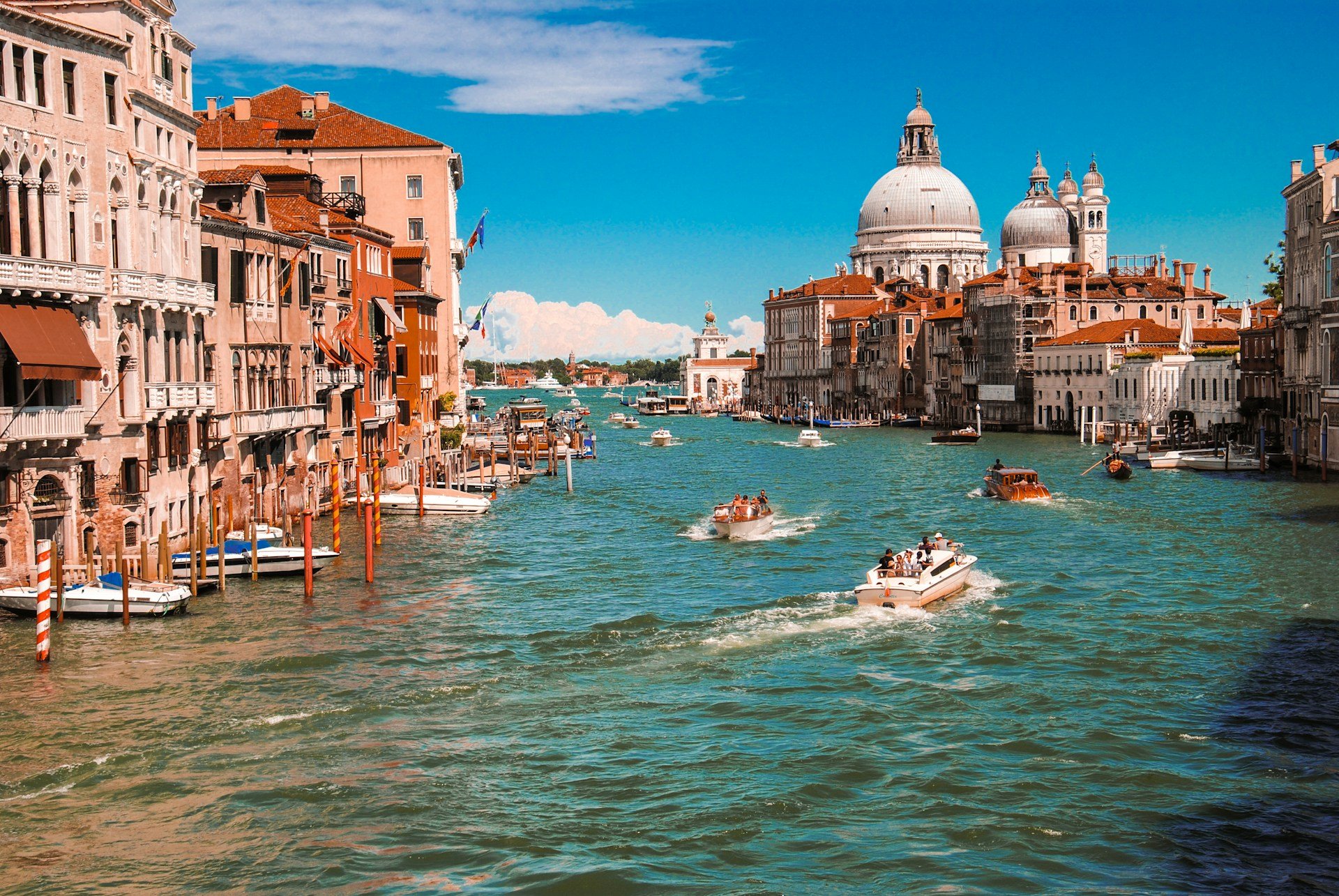
Italy is the most visited country in the European Union, and the reason is not marketing. It is the concentration of things worth seeing per square kilometer: a capital with two thousand years of continuously inhabited history stacked in layers, a Renaissance that happened mostly in one region, a coastline with three or four distinct personalities, and a food culture so regionally specific that the same dish changes name and recipe every hundred kilometers. Unlike destinations that reward a single trip, Italy rewards return visits, because no single itinerary covers Rome, Florence, Venice, the Amalfi Coast, Cinque Terre, Sicily and the Dolomites without turning into a sprint.
The country's tourism industry is also its biggest honesty test. Millions of visitors concentrate on a handful of cities and coastlines for about sixteen weeks a year, and it shows: Venice now charges day-trippers an entry fee on its busiest dates, the Cinque Terre limits trail access with a paid card system, and the Amalfi Coast's single coastal road gridlocks by mid-morning in August. None of this makes Italy not worth visiting. It makes timing and pacing the actual skill of a good Italy trip, more than any single site or itinerary.
The honest complications
Peak season (July-August) means Venice, the Amalfi Coast and Cinque Terre operating at genuine capacity, with prices 50-100% above shoulder season and queues that eat entire mornings at the Colosseum, the Uffizi and the Vatican Museums without a pre-booked, timed ticket. Historic centers in Rome, Florence, Milan and most other major cities are ZTL (limited traffic zones) where driving without a permit risks an automatic camera fine, so renting a car for a city-only trip is usually a mistake. Trains are excellent between major cities but strikes, while announced in advance, do happen. And Italian bureaucracy and customer service outside the tourist-facing hospitality industry can be slower and less linear than visitors from more process-driven countries expect. None of this changes the fundamental fact that most trips here still end with people asking why they didn't come sooner.
A History Worth Knowing
Italy's history is less a single narrative than several overlapping empires and city-states that happened to occupy the same peninsula: the Roman Republic and Empire, the medieval maritime republics, the Renaissance city-states, a unification that only happened in 1861, and a 20th century that included fascism, world war and one of postwar Europe's fastest economic transformations. Most of what travelers come to see, the ruins, the churches, the piazzas, dates from one of these distinct, competing eras rather than a single continuous Italian civilization.
- 753 BCE-476 CE
Rome, Republic to Empire. From a city-state to an empire spanning three continents at its height under Trajan, then a slow fracture and collapse in the west by 476 CE.
- 14th-16th century
The Renaissance. Florence under the Medici, Venice as a maritime and trading superpower, and Rome as papal capital each drive an explosion in art, architecture and humanist thought that defines Italy's cultural image today.
- 1861
Unification. The Kingdom of Italy forms under Victor Emmanuel II after decades of the Risorgimento movement, unifying a peninsula of separate kingdoms, republics and papal states for the first time since Rome.
- 1922-1943
Fascism & WWII. Mussolini's fascist regime, alliance with Nazi Germany, and Italy's own brutal WWII campaign end in occupation, civil war and the regime's collapse.
- 1946-1960s
Republic & the economic miracle. Italy becomes a republic in 1946, co-founds the EU's precursor in 1957, and undergoes rapid postwar industrialization known as the "economic miracle."
- 1990s-present
Modern Italy. Political volatility, the euro's 2002 adoption, and a tourism economy that has grown into one of the country's largest industries, with the honest strains of overtourism now a live policy issue.
Read the full history: Rome, the city-states, unification and fascism
Rome's rise from a small city-state to a Mediterranean empire took centuries, but its cultural legacy, law, engineering, language, urban planning, still structures how the West organizes itself. The empire's fall in the west in 476 CE did not end Roman influence; it scattered it into the successor kingdoms, the Byzantine east and eventually the Catholic Church, which inherited much of Rome's administrative reach and made the city a capital again, this time spiritual rather than military.
The centuries between Rome's fall and the Renaissance were not a single "dark age" but a patchwork of city-states, maritime republics like Venice and Genoa, the Papal States, and repeated foreign rule in the south by Normans, Spanish and others. This fragmentation is precisely what let Florence, Venice, Milan and Rome develop such distinct artistic and civic identities: they were, for most of history, separate countries competing with each other, not provinces of one Italy.
Unification in 1861, led by figures like Garibaldi, Cavour and King Victor Emmanuel II, created a single Kingdom of Italy but did not erase these regional identities; Italians today often identify as strongly with their region and dialect as with the national identity, and the food, architecture and even the pace of daily life still shift noticeably crossing from Tuscany into Emilia-Romagna or from Lombardy into Veneto.
The 20th century's harder chapters. Mussolini's fascist government, in power from 1922, allied with Nazi Germany and led Italy into a brutal and ultimately disastrous WWII campaign; the country was subsequently occupied, fought a civil war between fascist and partisan forces, and emerged in 1946 to abolish the monarchy and become a republic. The postwar "economic miracle" of the 1950s-60s transformed Italy from a largely agricultural society into an industrial power, laying the groundwork for the modern tourism economy that now anchors much of the country's income, particularly in regions with fewer other major industries.
Top Destinations
Italy divides into five zones most first and second trips draw from: Rome and Lazio, Tuscany and Florence, Venice and the Veneto, the Amalfi Coast and Naples, and Cinque Terre with the wider north. Each is a genuinely different trip; trying to cover all five in under two weeks means seeing very little of any of them properly.
Rome, the layered capital
Rome is where ancient, papal and modern Italy sit on top of each other, sometimes in the same block: the Colosseum and Roman Forum, the Vatican's Sistine Chapel, and a Trastevere trattoria that has served the same three pasta dishes since the 1950s. It rewards at least three full days and genuinely justifies more; see our full Rome city guide for neighborhoods, hotels, food and a day-by-day plan.
Florence, the Renaissance capital
Florence concentrates more Renaissance art and architecture into one walkable center than anywhere else on earth: the Duomo's dome, the Uffizi Gallery (€25-29 booked ahead), and Michelangelo's David at the Accademia. Two full days covers the headline sights; three lets you add the Boboli Gardens and a proper aperitivo evening in the Oltrarno district.
The Tuscan countryside
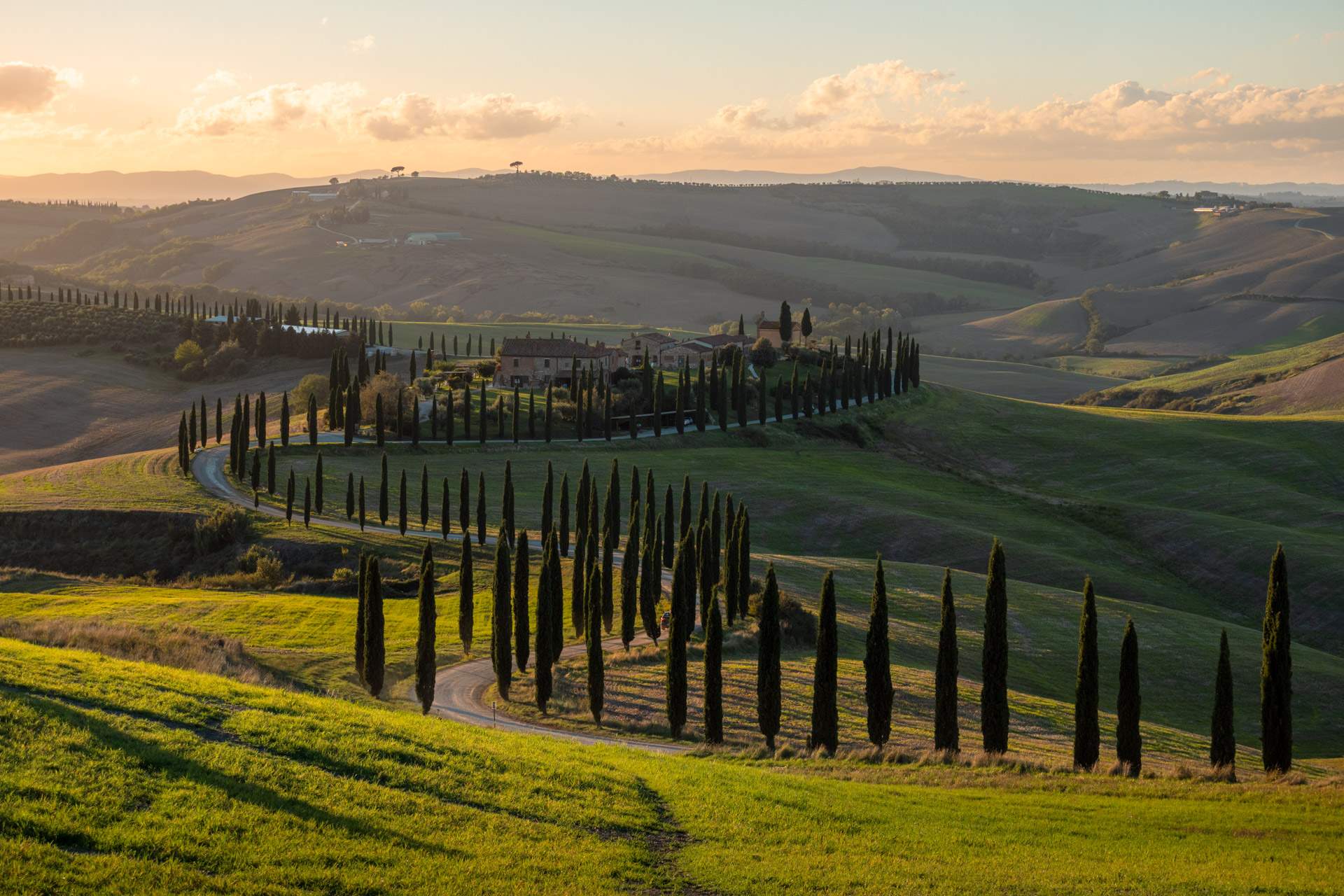
Beyond Florence, Tuscany is hill towns and vineyards: Siena's shell-shaped Piazza del Campo, San Gimignano's medieval towers, and the Val d'Orcia's cypress-lined roads around Pienza and Montalcino. A rental car is genuinely the right call here, unlike in the cities; base yourself in a smaller town for two or three nights rather than day-tripping from Florence the whole time.
Venice, the city on water
Venice is genuinely unlike anywhere else, a city with no cars, built on wooden piles in a lagoon, and it is also the clearest example of Italy's overtourism strain: on 60 dates between April and July 2026, Fridays through Sundays, day-trippers without a hotel booking pay a €5 entry fee if reserved four or more days ahead, €10 if not; overnight guests are exempt. St Mark's Basilica and the Doge's Palace anchor the main circuit, but the real Venice is in Cannaregio and Dorsoduro, a ten-minute walk from St Mark's Square and a different city entirely.
Beyond the main island
Murano (glassblowing) and Burano (brightly painted houses and lace) are easy vaporetto trips and worth a half-day each. On the mainland, Verona (Romeo and Juliet's setting, a genuine Roman arena still hosting opera) and Padua make good rail day trips or overnight add-ons.
The Amalfi Coast
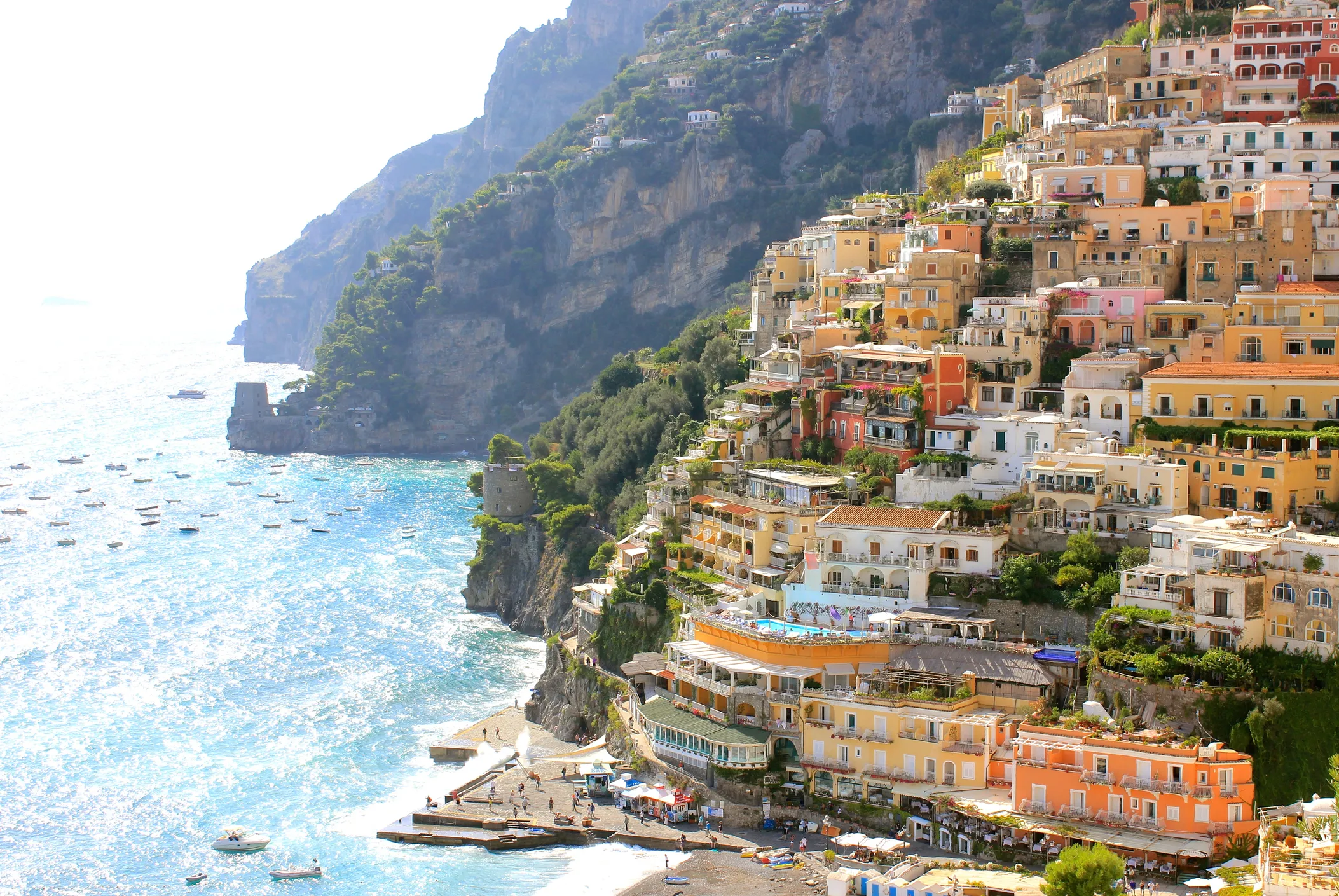
Positano, Amalfi town and Ravello cling to cliffs above a sea that earns the postcards, connected by a single, spectacular, single-lane-in-places coastal road that gridlocks by mid-morning in peak summer. May, June and September give the best balance of warm water and manageable traffic. Ferries between towns are often faster and less stressful than the coastal bus or driving yourself.
Naples & Pompeii
Naples is the gateway to the Amalfi Coast and Pompeii, and increasingly a destination in its own right: the birthplace of pizza, a chaotic, atmospheric historic center, and one of Italy's most underrated food cities. Pompeii itself (€20 plus booking fee) is a full half-day and the single most complete window into daily Roman life anywhere in the country.
Cinque Terre
Five cliffside fishing villages, Monterosso, Vernazza, Corniglia, Manarola and Riomaggiore, linked by coastal trails and a short local train line. Access to the trails and the local train between the villages requires a paid Cinque Terre Card (from €7.50/day for trekking-only, more for a card that includes the train), a direct response to trail overcrowding. Stay in La Spezia or Levanto rather than in the villages themselves for better value and easier logistics.
Milan, the Lakes & the Dolomites
Milan is Italy's fashion and business capital, worth a day for the Duomo and Leonardo's Last Supper (book weeks ahead). Lake Como and Lake Garda are easy add-ons by train, and the Dolomites in the far north offer some of the best hiking in Europe, an entirely different, alpine side of Italy most first-time visitors never see.
Hidden gems beyond the main circuit
The five zones above cover a first or second trip well. With extra days, these are the regions that rarely make a first Italy itinerary and reward the detour.
Sicily
Greek temples at Agrigento, Mount Etna, Palermo's chaotic markets and a coastline with a fraction of the Amalfi Coast's crowds and prices, at roughly 40-50% lower cost than Tuscany or Liguria.
Puglia
Whitewashed hill towns, the conical trulli houses of Alberobello, and a coastline still largely discovered by Italians rather than international tourists.
Bologna & Emilia-Romagna
Italy's food capital: ragù, tortellini, real balsamic vinegar and parmesan production, in a walkable university city most Grand Tour itineraries skip entirely.
Culture & Etiquette
Italian daily life runs on rules that are informal but genuinely felt: coffee has a correct time of day, dinner does not start before 7:30pm, and dress in churches is enforced, not suggested. None of it is designed to trip up visitors, but arriving with the basics avoids the small frictions that otherwise color a whole trip.
Do
- Drink cappuccino before noon, espresso after. Ordering a milky coffee after a meal marks you as a tourist more than anything else you'll do; Italians drink espresso or macchiato post-meal.
- Dress for churches. Shoulders and knees covered for both men and women; St Peter's Basilica and many major churches enforce this at the door.
- Validate train tickets on regional (non-reserved) trains at the small yellow or green machines on the platform before boarding; failing to do so risks a fine even with a valid ticket.
- Learn a few Italian phrases. Buongiorno, grazie, per favore. Fluency is not expected; the effort is noticed and returned warmly.
- Book major sights ahead. The Colosseum, Vatican Museums, Uffizi and Accademia all sell timed slots that fill days or weeks in advance in peak season.
Don't
- Ask for substitutions or extra sauce. Italian menus are built around specific, tested combinations; asking a kitchen to alter a classic dish is a mild but real faux pas.
- Rush the meal. Dinner in Italy is a two-hour-plus social event; the bill won't come until you ask for it (il conto, per favore).
- Expect shops open all afternoon everywhere. Many smaller-town shops still close for a midday riposo, roughly 1-4pm, especially outside major cities.
- Drive into a ZTL zone unknowingly. Limited traffic zones in historic centers are camera-enforced; a rental car crossing the line without a permit means an automatic fine mailed to your home address.
- Assume "Italy" is one culture. Regional identity runs deep; a Milanese and a Sicilian will each tell you, cheerfully, that the other doesn't represent "real" Italy.
Deeper culture: aperitivo, the passeggiata, tipping and dress codes
Aperitivo. The early-evening ritual, roughly 6-8pm, of a drink (Aperol Spritz, Negroni) accompanied by small snacks, sometimes a full buffet included in the drink price. Distinct from happy hour: it's social pacing before a late dinner, not pre-drinking.
The passeggiata. The early-evening stroll through the town center, dressed well, that remains a genuine daily social ritual in smaller towns and cities across Italy, especially in the south.
Tipping. Not obligatory the way it is in the US. A service charge (coperto or servizio) is often already included; rounding up or leaving a few euros for good service is appreciated but not expected the way a 15-20% tip would be.
Dress codes. Beyond churches, Italians generally dress more put-together in public than casual American or Northern European norms; athletic wear and flip-flops outside the beach read as distinctly foreign.
Food & Drink
Italian food is fiercely regional: the pasta, the sauce, even the bread changes crossing a regional border, and "Italian food" as a single cuisine is largely a foreign invention. Eating well here mostly means ordering the specific dish the region you're in is actually known for, rather than the pan-Italian menu items available everywhere.
Pizza €6-12
Naples invented it and still does it best: Margherita and Marinara at a proper pizzeria, cooked in a wood-fired oven for under 90 seconds. Roman pizza is thinner and crispier, a different, also excellent style.
Roman pasta: cacio e pepe, carbonara
Rome's four classic pastas, cacio e pepe, carbonara, amatriciana and gricia, share a base of guanciale, pecorino and black pepper in varying combinations. None traditionally use cream; a carbonara with cream is not Roman carbonara.
Gelato €2.50-4
Look for gelato kept in covered metal tins rather than piled into bright, fluffy mounds; the mounded, neon-colored versions near major sights are usually a tourist-trap tell, not a quality signal.
Regional pasta beyond Rome
Bolognese ragù with tagliatelle in Emilia-Romagna, pesto with trofie in Liguria, and orecchiette with turnip greens in Puglia: each region's signature shape and sauce pairing is specific and worth seeking out.
Wine €4-10/glass
Chianti in Tuscany, Amarone and Prosecco in the Veneto, Barolo in Piedmont. House wine (vino della casa) at a trattoria is usually good and inexpensive; ask before assuming you need the bottled list.
Espresso & the bar culture ~€1.20
Standing at the counter (al banco) is cheaper than sitting at a table, sometimes by two or three times the price, especially near major sights. Order, pay first at the register, then hand the receipt to the barista.
When to Go & Itineraries
April to June and September to October give the best balance of warm weather, thinner crowds and reasonable prices across nearly all of Italy. May stands out as arguably the single best all-around month. July and August are hot, crowded and priced 50-100% above shoulder season on the coast, though they're also when Italian festival and outdoor-dining culture is at its liveliest.
All four seasons compared, with temperatures
| Season | Verdict | Temps | Prices & crowds |
|---|---|---|---|
| Apr-Jun & Sep-Oct | Best | 16-27°C most regions | Mid prices, manageable crowds |
| Jul-Aug | Good (hot, busy) | 28-36°C south/coast | Peak prices; Venice fee dates concentrate here and into spring |
| Mar | Good, cool | 12-18°C | Low prices; Easter week is an exception, book ahead |
| Nov-Feb | Quiet | 5-14°C north, 10-16°C south | Lowest prices; some coastal towns partly close, Rome and Florence stay open |
Year-round city averages: Rome 17°C, Florence 15°C, Venice 14°C, Naples 17°C, Milan 13°C. Sicily and the deep south run several degrees warmer than the national averages above.
Itineraries
Seven days covers Rome plus one other region well. Two weeks adds Tuscany and the Amalfi Coast or Cinque Terre without rushing. Three weeks fits the north and south both, at a pace that still leaves room to sit still.
- Days 1-3
Rome. Colosseum, Forum and Palatine, the Vatican Museums, and at least one unhurried evening in Trastevere.
- Days 4-5
Florence. High-speed train from Rome (1.5 hrs). The Uffizi, the Duomo, and the Accademia's David.
- Days 6-7
Cinque Terre or the Amalfi Coast. Train onward to La Spezia for the villages, or south via Naples for a shorter Amalfi taste.
- Days 1-3
Rome. As above, with an added half-day at Ostia Antica.
- Days 4-6
Florence & Tuscany. Two nights Florence, one night in a Val d'Orcia hill town (rent a car for this leg).
- Days 7-10
Amalfi Coast & Naples. Train to Naples, half-day Pompeii, three nights across Positano, Amalfi or Ravello using ferries between towns.
- Days 11-14
Cinque Terre. Return north via Rome or Florence, base in La Spezia, four days across the five villages and a day in Portovenere.
- Days 1-4
Rome extended. Add Tivoli's Villa d'Este and Hadrian's Villa as a day trip.
- Days 5-8
Florence & Tuscany extended. Add Siena and San Gimignano to the countryside leg.
- Days 9-12
Amalfi Coast & Naples. As the 14-day version, with an added day in Naples' historic center.
- Days 13-16
Cinque Terre & Liguria. Full five-village exploration plus a day in Portofino.
- Days 17-21
Venice & the Veneto. Train north, three nights in Venice (book accommodation to skip the day-tripper fee), a day trip to Verona.
Getting there & around
Rome (FCO/Fiumicino), Milan (MXP/Malpensa) and Venice (VCE) are the main international gateways, with dozens of European and long-haul connections. High-speed trains (Frecciarossa and the private Italo operator) link Rome, Florence, Venice, Milan and Naples in 1.5-4 hours, are usually faster city-center-to-city-center than flying, and are the backbone of any multi-city trip. Do not rent a car for city-only travel: historic centers run ZTL (limited traffic zone) restrictions enforced by camera, and parking is both scarce and expensive.
All transport options with prices: trains, ZTL zones, regional buses
| Option | Price | Notes |
|---|---|---|
| High-speed train (Frecciarossa/Italo) | €30-90 | Rome-Florence 1.5hrs, Rome-Venice 3.5hrs, Rome-Naples 1hr. Book ahead for the best fares. |
| Regional trains | €2-15 | Slower, unreserved, cheaper. Validate paper tickets at platform machines before boarding. |
| Rental car | €35-60/day | Worth it for Tuscany's countryside, Puglia or Sicily; avoid for Rome, Florence, Venice or Cinque Terre. |
| Domestic flights | €40-120 | Only worth it for Sicily or Sardinia from the north; trains beat flying for most mainland routes once airport time is factored in. |
ZTL zones: Rome, Florence, Milan, Bologna and most other historic centers restrict daytime vehicle access to residents and permit holders, camera-enforced with fines mailed later, including to rental car companies who then bill the renter. If your hotel is inside a ZTL, ask them to register your plate in advance.
Practical prep: an eSIM before landing avoids airport SIM queues; Trenitalia and Italo both have apps worth installing before the trip for ticket purchase and platform info. GetTransfer offers fixed-price airport pickups if you'd rather not deal with taxi ranks on arrival.
Where to stay
Hostels & budget stays
Rome, Florence and Venice all have well-reviewed hostel scenes concentrated near the main train stations, generally the most practical, if not the most atmospheric, base for a budget trip.
Historic-center boutique hotels
Converted palazzos and townhouses in Rome's Trastevere or Monti, Florence's Oltrarno, or the Cinque Terre's Levanto: character over chain-hotel consistency, and usually the sweet spot for a first Italy trip.
Amalfi Coast & Tuscan agriturismi
Cliffside rooms with sea views on the Amalfi Coast, or working farm stays (agriturismi) in the Tuscan countryside; both roughly double in price from shoulder-season rates across July-August.
Venice & Rome luxury
Venice's grand canal-side hotels and Rome's historic five-stars near the Spanish Steps sit at the top of the market and book out months ahead for peak season and major festivals.
Budget Planning
Italy's cost varies more by region than almost anywhere else in Western Europe: Tuscany, Cinque Terre and the Amalfi Coast run roughly double what Sicily, Puglia or Basilicata cost for comparable quality. A trip mixing north and south will average out; a trip confined to Venice, Florence and the Amalfi Coast will run toward the higher end throughout.
- Hostel dorm €20-35
- Trattoria lunch menu & pizza €10-18
- Regional trains & city transit
- Free churches, piazzas & one paid sight
- Boutique hotel or B&B €80-150
- Restaurant dinners with wine €30-50
- High-speed trains between cities
- Museum passes & a guided tour or two
- Historic-center or coastal luxury hotels
- Michelin-listed dining
- Private drivers & guides
- Peak-season Venice & Amalfi Coast stays
Quick reference prices: coffee, tickets, trains
| Espresso at the bar (standing) | ~€1.20 |
| Pizza (Naples/Rome style) | €6-12 |
| Trattoria lunch menu | €12-18 |
| Colosseum + Forum + Palatine | €18 |
| Vatican Museums (booked ahead) | €25 |
| Uffizi Gallery (booked ahead) | €29 |
| Rome-Florence high-speed train | €30-60 |
| Cinque Terre trekking card, 1 day | from €7.50 |
| Venice day-tripper fee | €5-10 |
Prices reflect August 2026 research and drift over time, especially peak-season accommodation. Treat them as a planning baseline, not a quote.
Visa & Entry
Italy follows standard Schengen rules: US, UK, Canadian, Australian and New Zealand citizens enter visa-free for up to 90 days in any rolling 180-day period. The one live change to know about is ETIAS, an online pre-travel authorization (not a visa) that visa-exempt travelers to the Schengen Area will need starting in the last quarter of 2026; it costs €20, lasts three years, and as of this guide's publication the application portal had not yet opened, so no action is required yet. The Italian Ministry of Foreign Affairs is the authoritative source as rules finalize, not third-party sites that charge for guidance that will be free through the official portal.
✓ Valid passport
At least 3 months validity beyond your planned departure from the Schengen Area, per standard Schengen rules.
✓ Return/onward ticket
May be requested at immigration, particularly for one-way or long-stay itineraries.
✓ Proof of accommodation
Hotel bookings or an itinerary; hosts in Italy are legally required to register guests, which happens automatically at check-in.
✓ ETIAS from late 2026
Not yet required at time of writing; the portal was not open as of this guide's publication. Check official EU sources before booking travel for Q4 2026 onward.
| Italy | France | |
|---|---|---|
| Daily budget | €50-90 covers most of the country; south is notably cheaper than the north | Comparable overall, though Paris itself runs pricier than most Italian cities |
| Icon cities | Rome's layered ancient-to-modern history, Venice's canals | Paris's single dominant capital, plus Lyon and Marseille as distinct seconds |
| Coastline | Amalfi Coast, Cinque Terre, Sicily: dramatic and varied | The French Riviera and Brittany's Atlantic coast, more understated |
| Food identity | Fiercely regional, pasta and pizza's home | Also regional, built more around technique and wine pairing |
| Overtourism flashpoints | Venice's day-tripper fee, Cinque Terre's trail card | Mont Saint-Michel and the Louvre's own timed-entry pressure |
Safety, Solo Women & Family
Italy is safe for tourists. The US State Department rates it Level 2 (Exercise Increased Caution), the same tier as France, Germany and the UK, reflecting a general European terrorism baseline rather than any Italy-specific threat. Violent crime against visitors is rare; the real, everyday risk is pickpocketing and tourist-targeted scams concentrated in the most crowded sights, not personal safety in the way travelers sometimes assume from crime headlines about specific neighborhoods.
Pickpocketing
Concentrated on crowded tourist buses and metro lines, at major sights like the Colosseum, Trevi Fountain and Spanish Steps, and on regional trains to and from airports. Keep bags zipped and in front of you in crowds.
Fake ticket & guide touts
People near major sights sell fake or overpriced "skip the line" tickets and unofficial tours. Book official tickets directly through the site's own website or a recognized platform.
Unofficial taxis
Only use official white taxis with a visible city shield/license, or a licensed pickup, especially from airports and major stations; agree or confirm the fare before getting in.
Two more things worth knowing: friendship bracelet scams and ZTL fines
The bracelet/rose scam. Someone ties a "free" bracelet on your wrist or hands you a rose near the Pantheon, Trevi Fountain or Spanish Steps, then aggressively demands payment. Decline firmly and keep walking; don't accept anything handed to you unprompted in these zones.
ZTL camera fines. If you drive a rental car into a limited traffic zone without a permit, the fine arrives by mail, sometimes months later, billed through the rental company with an added admin fee. Confirm with your hotel whether your route or parking crosses a ZTL boundary before you drive.
The 3 scams to actually know about
Italy is not a high-danger destination, but it is a high-tourist-density one, and a handful of scams repeat constantly across its busiest sights. Knowing them going in avoids nearly all of it.
Crowded transit pickpocketing
Buses and metro lines serving major sights and airports are the highest-risk spots. Keep valuables in a front pocket or zipped crossbody bag, and be extra alert during the crush of boarding and exiting.
Fake skip-the-line tickets
Unofficial sellers near the Colosseum, Vatican and Uffizi push overpriced or fake tickets and tours. Book directly through the official site or a well-reviewed platform, and never buy from a street tout.
Unmetered taxis
Unofficial drivers approach at Termini and other stations with inflated flat fares. Use official white taxis with the city shield, or confirm the fixed airport rate before the ride starts.
Solo women travelers
Italy rates well for solo women overall, especially in Rome, Florence, Venice and other major tourist centers where street harassment toward visitors is uncommon and cities are well-lit and busy well into the evening. Some catcalling or unwanted attention is more commonly reported in the south and in less touristy areas; standard city awareness, avoiding poorly lit side streets late at night, and dressing to blend in around religious sites, cover most of it. Full detail on our Solo Woman Explorer pages.
Emergency numbers
Embassies in Rome and tourist police
112 works from any phone with English-speaking operators in major cities. Rome's Tourist Police (Polizia Turistica) has a dedicated office for lost documents and theft reports near Via del Corso. Most Western embassies are clustered in central Rome.
- USA
- +39-06-46741
- UK
- +39-06-4220-0001
- Germany
- +39-06-492-131
- France
- +39-06-686-011
- Australia
- +39-06-852-721
- Canada
- +39-06-854-442-911
Verify before you rely on it: embassy phone numbers change; confirm on your government's official travel site before departure rather than relying solely on a guide.
Family travel & pets
Italy is a strong family destination: Italians are openly warm toward children, pizza and gelato are easy wins at every meal, and sites like the Colosseum, Pompeii and hands-on science museums bring history to life in a way that lands well with kids. Pack comfortable shoes for cobblestones in every historic center, and book skip-the-line tickets in advance since standing in a hot queue with young children is the fastest way to sour a day.
Kids at major sights, and bringing pets
Major sights with kids: the Colosseum's underground and upper-tier tours suit older children who can handle stairs and heat; Pompeii's open-air layout works well for most ages with sun protection and water. Venice's car-free streets and canals are genuinely novel for younger kids in a way few other cities are.
Pets: EU pet passport holders can enter with dogs, cats and ferrets given valid rabies vaccination and microchip. Non-EU visitors need an EU health certificate issued by an accredited vet within 10 days of travel, plus current rabies vaccination. Dogs are commonly allowed in outdoor café seating and on regional trains with a ticket or muzzle depending on size; check individual venue policy for indoor dining.
Italy FAQ
Is Italy safe to visit?
Yes. Italy is rated Level 2 (Exercise Increased Caution) by the US State Department, the same tier as France, Germany and the UK, mainly for a general European terrorism baseline. Violent crime against tourists is rare; pickpocketing in crowded tourist areas is the real, everyday risk.
How much does a trip to Italy cost?
Budget travelers manage on €50-70 a day with hostels and regional trains. Mid-range runs €130-200 a day. Tuscany, Cinque Terre and the Amalfi Coast cost roughly double southern regions like Puglia and Sicily.
Do I need a visa for Italy?
US, UK, Canadian, Australian and New Zealand citizens can enter visa-free for up to 90 days in any 180-day period under Schengen rules. Starting in late 2026, these travelers will also need a low-cost ETIAS travel authorization before flying.
What is ETIAS and do I need it for Italy?
ETIAS is an online pre-travel authorization, not a visa, required for visa-exempt travelers entering the Schengen Area including Italy, expected to roll out in the last quarter of 2026. It costs €20, lasts three years, and the application portal was not yet open at the time of this guide.
When is the best time to visit Italy?
April to June and September to October: warm weather, thinner crowds and lower prices than peak summer. May is arguably the single best month. July and August are hot, crowded and the most expensive time to visit the coast.
How many days do you need in Italy?
Seven days covers Rome and one other region well. Two weeks fits Rome, Florence, Tuscany and the Amalfi Coast or Cinque Terre without rushing. Three weeks adds Venice and the north or Sicily in the south.
Is Venice charging tourists an entry fee in 2026?
Yes, on 60 dates from April through July 2026, Fridays through Sundays. Day-trippers who have not booked accommodation in Venice pay €5 if reserved at least four days ahead, or €10 without advance booking. Overnight guests are exempt.
Should I rent a car in Italy?
Not for Rome, Florence, Venice or the Cinque Terre, where historic centers have restricted ZTL zones and parking is difficult. A car is genuinely useful for rural Tuscany, the Amalfi Coast's own driving experience, or touring Puglia and Sicily at your own pace.
Is Italy part of the Schengen Area?
Yes, Italy has been a Schengen member since 1997 and an EU founding member since 1958. Time spent in Italy counts toward the shared Schengen 90-day allowance across all member countries.
What language is spoken in Italy?
Italian. English is widely spoken in Rome, Florence, Venice and other major tourist centers, and much less so in small towns and rural areas, where a few Italian phrases go a long way.
Is Italy good for families with kids?
Yes. Italians are openly warm toward children, gelato and pizza are easy wins at every meal, and sites like the Colosseum and Pompeii bring history to life for kids in a way a textbook cannot.
What Stays With You
Italy is rare among heavily marketed destinations in that it survives contact with the hype almost entirely intact. The Colosseum is still genuinely awe-inducing on the thousandth photograph. The pasta really is better here than the version you've been eating at home. And the specific, ordinary things, an espresso standing at a marble counter, a passeggiata through a piazza at dusk, a trattoria where the owner still remembers regulars from thirty years ago, land with a weight that no single famous site quite matches.
The skill of a good Italy trip is not finding the sights; every guidebook and algorithm already knows where they are. It's timing your visit, pacing your days, and leaving room for the parts of the country that never made it onto a postcard. Go in May if you can, and don't try to see all of it at once.