
Two thousand years, still under construction
Rome is not one city but several stacked on top of each other: imperial Rome below street level, papal Rome in its churches and piazzas, and a modern working capital going about its business around all of it. Nowhere else can you walk from a 2,000-year-old amphitheater to a Renaissance basilica to a espresso bar that hasn't changed its counter since the 1960s, all inside twenty minutes on foot. The city rewards slow mornings and unhurried wandering as much as it rewards ticking off the headline sights.
What surprises most first-time visitors is how lived-in it all is. The Pantheon isn't roped off behind glass; it's a working church you walk straight into. The Roman Forum sits below street level in the middle of a functioning city, with buses and mopeds circling its edge. Rome doesn't perform its history for tourists so much as it simply continues to exist inside it, and visitors are welcome to come look.
The honest complications
Peak summer (July-August) means genuine heat, thin shade at outdoor sites like the Forum and Palatine, and queues that eat entire mornings without a pre-booked, timed ticket. Public transport is more limited than in many European capitals: the metro has only three lines, kept shallow and short by the archaeology underneath, so buses and walking do a lot of the work. Restaurants immediately around the Colosseum, Trevi Fountain and Spanish Steps overcharge for mediocre food; walk two or three streets back for better value and quality almost every time. And pickpocketing on crowded transit and around major sights is a real, everyday risk, not a rare exception.
Five neighbourhoods that matter
Rome's historic center is compact enough to walk between most neighbourhoods in twenty to thirty minutes. Where you base yourself comes down to how central you want to be, how much noise you can sleep through, and whether you're prioritizing ancient Rome, the Vatican, or the food scene.
Centro Storico
The area around the Pantheon, Piazza Navona and the Trevi Fountain: dense, walkable, and puts most of Rome's headline sights within a fifteen-minute walk. Prices run higher here than elsewhere, but for a first visit the convenience is hard to beat.
Monti
Rome's oldest rione, just north of the Colosseum, has reinvented itself as a low-key, artsy neighbourhood of vintage shops, wine bars and independent restaurants without losing its lived-in feel. A short walk to ancient Rome and Termini station, and generally better value than Centro Storico.
Trastevere
Across the Tiber, Trastevere's cobbled lanes and ivy-covered facades are Rome at its most photogenic, with the city's liveliest restaurant and bar scene after dark. It's also the most tourist-saturated neighbourhood after Centro Storico; staying here means embracing the noise or packing earplugs.
Testaccio
South of the center, Testaccio built its identity around Rome's old slaughterhouse district and turned it into the city's most serious food neighbourhood: the covered market, working-class trattorias, and a concentration of independent restaurants most guidebooks still haven't caught up with.
Prati
North of the Vatican, Prati is an elegant, residential district with wide boulevards, good shopping on Via Cola di Rienzo, and a quieter pace twenty minutes' walk from St Peter's. Best for travellers prioritizing the Vatican and wanting to skip Centro Storico's noise.
From converted convents to Termini hostels
Rome's hotel scene runs from grand historic five-stars near the Spanish Steps to well-reviewed hostels clustered around Termini station, with a strong mid-range of boutique conversions in Trastevere and Monti in between. These picks span every budget.
At the top end, Hotel de Russie, tucked between the Spanish Steps and Piazza del Popolo, is consistently ranked among Rome's best hotels: a secret garden courtyard, a history that includes guests like Jean Cocteau, and a location that puts the whole historic center within walking distance, from around €500 a night. Hotel Eden, part of the Dorchester Collection on the Pincian Hill, is the other classic five-star choice, known for palatial marble bathrooms and a rooftop restaurant with sweeping city views.
In Trastevere, Domus Rome by Donna Camilla Savelli occupies a converted 17th-century convent designed by Borromini, with a rooftop pool and a location right in the neighbourhood's atmospheric core, from around €150 a night. For value near the historic center, look to boutique guesthouses in Monti in the €90-130 range, walking distance from the Colosseum and Termini alike.
At the budget end, The Beehive, an independent hostel near Termini, is a long-standing favourite for its garden courtyard and social atmosphere, while Ostello Bello Roma, also near Termini, brings the reliable Ostello Bello brand's communal dinners and rooftop terrace to the capital. Both run roughly €30-45 for a dorm bed.
Cacio e pepe, carbonara, and the four Roman pastas
Roman cooking is built on four related pastas, guanciale, pecorino and black pepper in shifting combinations, and a Jewish-Roman fried artichoke tradition in the old Ghetto that predates most of what tourists think of as "Italian food." The best of it is in Testaccio and Trastevere's back streets, not the menu-touted restaurants directly facing the major sights.
Cacio e pepe
Da Enzo al 29 in Trastevere is one of the most consistently praised addresses for cacio e pepe in the city, a small dining room where reservations open a few days ahead and go fast, especially for weekend dinners. In Testaccio, Da Felice takes the dish further, tossing it tableside in a hollowed wheel of pecorino for extra theater, and Flavio al Velavevodetto nearby does an excellent, less performative version alongside a silky carbonara.
Carbonara & Amatriciana
Carbonara uses guanciale, egg, pecorino and black pepper, no cream, ever, despite what menus outside Italy suggest. Amatriciana swaps in tomato and gets its name from Amatrice, a town northeast of Rome. Both are on the menu at nearly every traditional trattoria; Testaccio's Flavio al Velavevodetto and Trastevere's Roma Sparita, known for serving cacio e pepe in an edible bowl made of baked cheese, both do reliable versions.
Roman-Jewish cuisine
Carciofi alla giudia, whole artichokes flattened and deep-fried until the leaves crisp like chips, is the signature dish of Rome's old Jewish Ghetto, one of the oldest continuously inhabited Jewish quarters in Europe. The restaurants lining Via del Portico d'Ottavia serve it alongside fried salt cod and other dishes with roots going back centuries.
Espresso & gelato
Standing at the counter (al banco) for espresso costs a fraction of sitting at a table; order and pay at the register first, then hand the receipt to the barista. For gelato, look for pale, natural colors kept in covered metal tins rather than bright mounded piles, a reliable tell for quality over tourist-trap sugar and air.
Ancient Rome, the Vatican, and the free wandering in between
Rome's headline sights need advance booking and a plan; its second tier of experiences, a piazza at golden hour, a quiet church interior, a viewpoint locals actually use, reward simply getting lost for an afternoon. This chapter covers both.
Ancient Rome
The Colosseum, Roman Forum and Palatine Hill are sold as a single 24-hour combo ticket (€18 for adults, timed entry to the Colosseum required, book on the official site well ahead in peak season). Walk the Forum in the morning before the heat and crowds build, then climb the Palatine for the best overview of the whole complex. The Colosseum's underground and upper-tier guided tours are worth the upgrade if archaeology genuinely interests you, showing areas closed to standard tickets.
The Vatican
The Vatican Museums and Sistine Chapel (€25 booked online, €20 at the door if you're willing to queue) hold one of the largest art collections on earth, culminating in Michelangelo's ceiling. Book the first morning slot to beat the worst of the 6.7 million annual visitors, and pair it with St Peter's Basilica next door, free to enter but with its own security queue and a strict dress code, shoulders and knees covered, enforced at the door.
Centro Storico's free landmarks
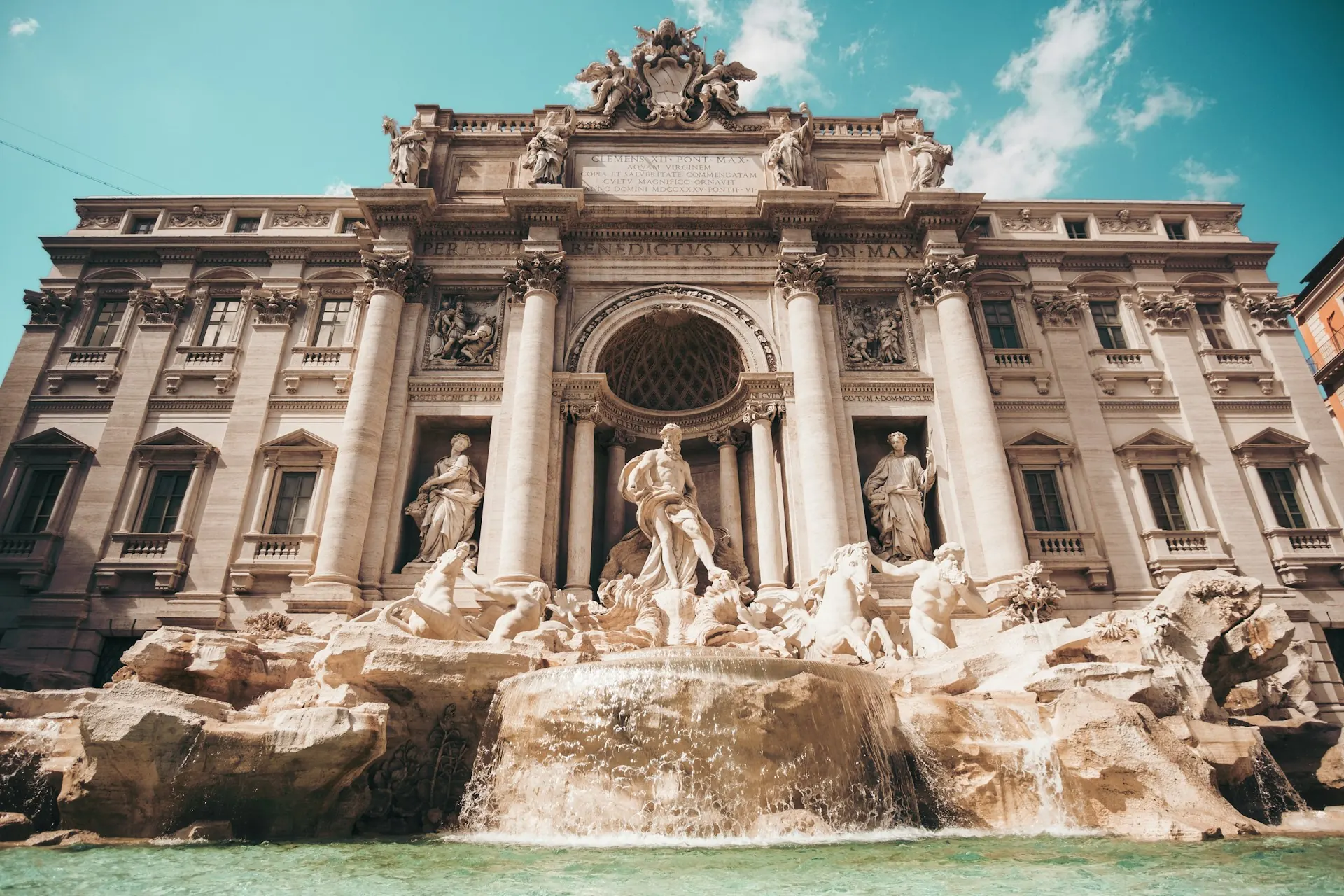
The Pantheon, a working church since the 7th century with the world's largest unreinforced concrete dome, now charges €7 general admission as of July 2026 (free the first Sunday of each month, and for EU visitors under 18). The Trevi Fountain and Piazza Navona are free and best visited early morning or late evening to avoid the worst of the day-tripper crowds; throwing a coin over your shoulder into the Trevi is the classic, harmless ritual, but keep a hand on your bag while you do it.
Trastevere & Testaccio after dark
Trastevere's tangle of lanes around Piazza di Santa Maria in Trastevere is Rome's best evening wandering: wine bars, live music spilling from open doors, and one of the city's oldest churches lit up at the piazza's edge. Testaccio's converted slaughterhouse complex, now a nightlife and arts hub, has a rougher, more local energy and is where many Romans go out rather than where tourists are steered.
One, two or three days, planned street by street
Three full days covers Rome's essentials properly; even one well-planned day hits the highlights. These routes are sequenced to dodge the worst queues and end each day somewhere worth lingering.
- Morning
Colosseum, Forum and Palatine. Book the first timed slot; walk the Forum before the heat and crowds build.
- Midday
Centro Storico on foot. The Pantheon, Piazza Navona, and a trattoria lunch two streets back from Trevi Fountain.
- Afternoon
Trevi Fountain and the Spanish Steps. Best in late afternoon light, before the evening dinner rush.
- Evening
Trastevere for dinner. Cacio e pepe, then a wander through the lit-up lanes around Santa Maria in Trastevere.
- Day 1
The one-day route: Colosseum, Forum, Pantheon, Trevi, Trastevere dinner.
- Day 2 morning
Vatican Museums at opening. Book the first slot, then the Sistine Chapel and St Peter's Basilica next door.
- Day 2 afternoon
Prati and Castel Sant'Angelo. A quieter lunch in Prati, then the fortress's river-view terrace.
- Day 2 evening
Testaccio for dinner. A trattoria with a chalked daily menu, the Rome evening locals actually have.
- Days 1-2
The two-day route above, at a gentler pace, adding the Roman-Jewish Ghetto and Campo de' Fiori's morning market.
- Day 3, option A
Ostia Antica. Rome's ancient port city, a 25-minute train from Piramide, a fraction of Pompeii's crowds for a comparably complete ruin.
- Day 3, option B
Tivoli's two villas. Villa d'Este's Renaissance fountains and Hadrian's Villa's sprawling imperial ruins, both reachable by regional train plus a short local bus.
Compact center, limited metro, plenty of walking
Rome's historic center is dense enough that walking covers most of a typical day, but the city's metro is unusually limited for a capital of its size, only three lines, kept shallow and short because tunneling anywhere tends to hit archaeology. From Fiumicino Airport (FCO), the Leonardo Express train runs non-stop to Roma Termini in about 32 minutes for €14; official white taxis with the Roma Capitale shield charge a fixed rate of roughly €50 to the city center, agree the fare or confirm the meter before you get in.
Within the city, a single BIT ticket costs €1.50 and covers one metro ride plus unlimited bus and tram transfers within 100 minutes; the tap-and-go contactless system now charges this automatically with a daily cap of €8.50. Multi-day Roma passes cost €8.50 (24h), €15 (48h) and €22 (72h) for unlimited transport, and the Roma Pass adds free entry to some museums on top, worth it only if you're combining transport with two or more paid sights inside the validity window.
Best time to visit and Rome's specific crowd patterns
Rome has a Mediterranean climate with hot, dry summers. April to June and September to October are the sweet spots: warm days, manageable crowds, lower prices than peak summer. Easter week is a notable exception regardless of season, drawing some of the year's heaviest crowds to the Vatican specifically. Winter is quiet and mild by northern European standards, with the city largely to yourself outside the Christmas and New Year period.
Pricier than southern Italy, cheaper than Venice or Milan
Rome sits in the middle of Italy's cost spectrum: more expensive than Naples or Sicily, noticeably cheaper than Venice or Milan. The main cost trap is eating directly facing the Colosseum, Trevi Fountain or Spanish Steps, where menus charge tourist prices for mediocre food.
- Hostel dorm €30-45
- Trattoria lunch menus & pizza €15-25
- Roma 24h transport pass €8.50
- Free sights plus one paid ticket
- Boutique hotel or B&B €90-160
- Restaurant meals with wine €35-55
- Roma Pass or individual timed tickets
- Colosseum and Vatican, both booked ahead
- Hotel de Russie or equivalent €400+
- Fine dining across Centro Storico
- Private guided tours of the Vatican & Forum
- Driver for Tivoli or the coast
Safe city, real pickpockets, three things to know
Rome is safe for tourists; violent crime against visitors is rare, and the historic center is fine to walk at night with normal urban awareness. Pickpocketing is the genuine, everyday risk, concentrated on crowded buses and metro lines serving major sights and the airport, and in the crush around the Colosseum, Trevi Fountain and Spanish Steps.
The three things that actually catch visitors: pickpocketing on transit, worst on buses and metro cars packed with tourists heading to or from major sights, so keep bags zipped and in front of you; fake ticket and guide touts near the Colosseum and Vatican, avoided entirely by booking official tickets online in advance; and the bracelet or rose scam near the Pantheon, Trevi and Spanish Steps, where accepting a "free" item triggers an aggressive demand for payment, decline firmly and keep walking. Emergency number is the EU-standard 112 from any phone, and Rome's Tourist Police maintain a dedicated office near Via del Corso for lost documents and theft reports.
Ancient ruins and Renaissance gardens, both under an hour away
Rome's position in Lazio makes it a strong base for day trips into ancient and Renaissance history without the crowds of the city center. Two trips are worth a half or full day each, both reachable by regional train.
Ostia Antica
Rome's ancient port city, remarkably intact and comparably complete to Pompeii at a fraction of the crowds and travel time. Take metro line B to Piramide, then any train from the adjacent Roma Porta San Paolo station to the Ostia Antica stop. Bring water and sun protection; there's little shade across the site.
Tivoli: Villa d'Este & Hadrian's Villa
Two UNESCO sites in one town: Villa d'Este, a Renaissance cardinal's palace famous for its terraced gardens and hundreds of fountains, and Villa Adriana (Hadrian's Villa), the sprawling, partly excavated country retreat of the emperor Hadrian. Trains run from Termini or Tiburtina to Tivoli, followed by a short local CAT bus to each site; visiting both in one day is possible but unhurried, so budget a full day rather than a half.
Rome FAQ
Is Rome safe for tourists?
Rome is safe for tourists. Violent crime is rare; the main concerns are pickpocketing on crowded buses and metro lines and ticket touts near major sights. Standard city awareness is all you need.
How many days do I need in Rome?
Three full days covers the essentials: one for ancient Rome (Colosseum, Forum, Palatine), one for the Vatican and Centro Storico, one for Trastevere and Testaccio at a slower pace. A fourth day fits Ostia Antica or Tivoli and is worth adding.
How much does Rome cost per day?
Budget travellers manage on €50-70 a day with hostels and trattoria lunch menus; mid-range runs €120-180. Rome is cheaper than Venice or Milan but pricier than southern Italian cities like Naples.
When is the best time to visit Rome?
April-June and September-October: warm weather, manageable crowds, lower prices than peak summer. July and August are hot and busy, and Easter week draws its own heavy crowds regardless of season.
Do I need to book the Colosseum and Vatican in advance?
Yes, strongly recommended year-round and essential in peak season. Both sell timed-entry slots online that fill up days or weeks ahead; walk-up tickets mean long queues or sold-out days.
How do I get from Fiumicino Airport to central Rome?
The Leonardo Express train runs non-stop to Roma Termini in about 32 minutes for €14. Official white taxis charge a fixed rate of about €50 to central Rome; avoid unofficial drivers who approach you before the taxi rank.
What is the best area to stay in Rome?
Centro Storico or Monti for first-timers: central, walkable, close to the major sights. Trastevere for atmosphere and nightlife but expect noise. Prati for a quieter base near the Vatican.
Do I need to speak Italian in Rome?
No. English is widely spoken in hotels, restaurants and around major sights. A few words, grazie (thank you), per favore (please), go a long way and are genuinely appreciated.
Is Rome walkable?
Yes, the historic center is compact and mostly flat, but cobblestones are uneven in places. Wear comfortable, grippy shoes; the metro and buses cover longer hops like the Vatican or Trastevere from Termini.
What Stays With You
Rome does not stage itself for visitors, and that is exactly why it works. The city keeps living its ordinary life around its extraordinary history: a moped weaving past a 2,000-year-old column, laundry strung between Renaissance windows, the same bar pulling the same espresso for three generations of the same family. None of it was arranged for the camera, which is why so much of it ends up in the photos anyway.
Go stand in the Pantheon on an ordinary weekday morning, look up through the oculus at the open sky, and understand why an empire that fell 1,500 years ago still shapes how this city feels to walk through.