
What You're Actually Getting Into
Andorra is a strange, small thing to explain until you're standing in it. It is a country, with its own government, flag and seat at the UN, but it has never minted its own money, never built an airport, and is legally the joint property of two co-princes, one of them the President of France and the other the Bishop of a Catalan diocese, an arrangement dating to 1278 that nobody has gotten around to changing. It is also, per capita, one of the most visited places on earth: roughly 10.2 million tourists a year pass through a country of about 89,000 residents, most of them day-trippers from Barcelona or Toulouse coming for duty-free shopping or a day on the slopes.
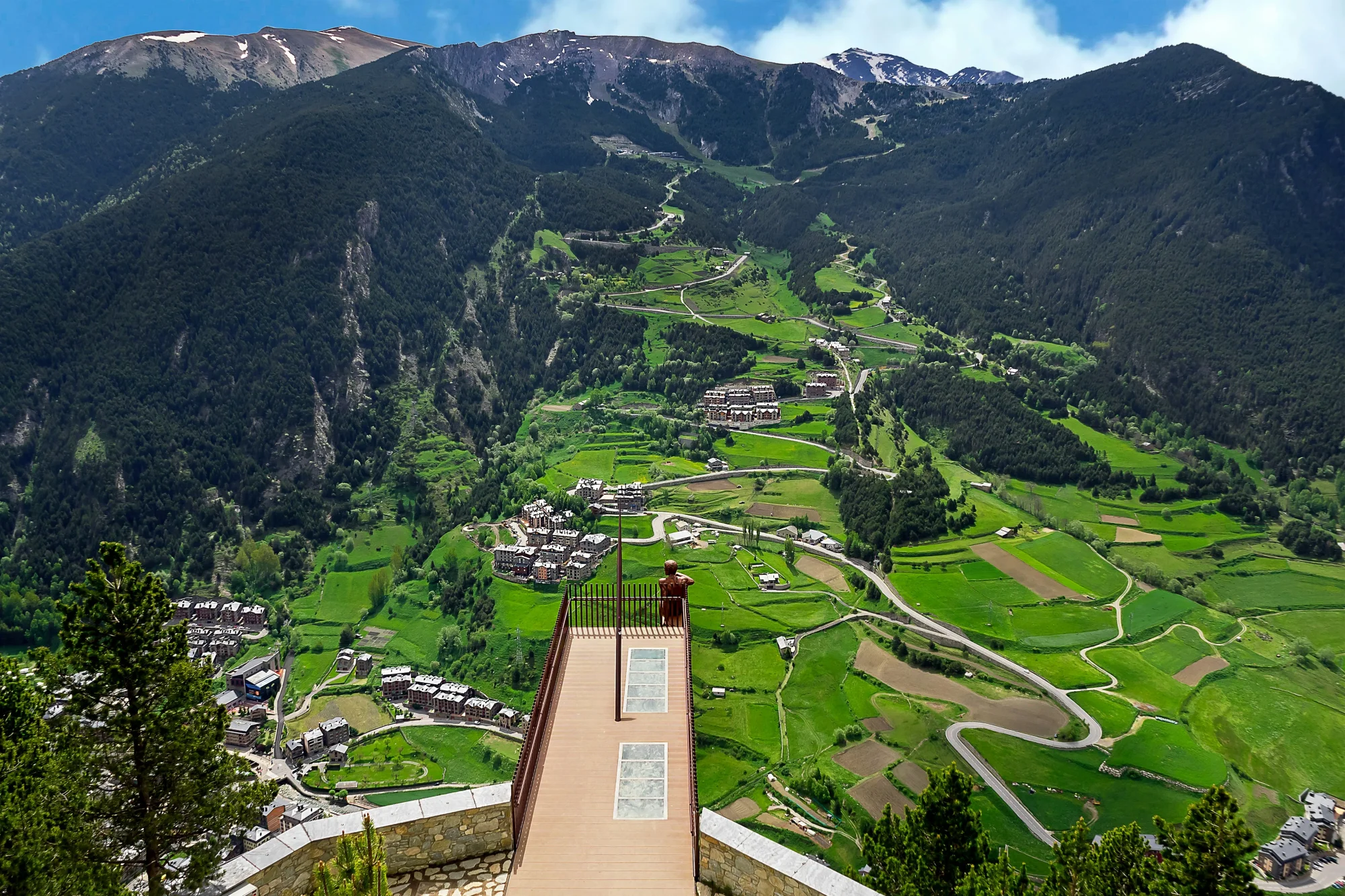
What the shopping-trip reputation undersells is the terrain. Andorra la Vella, the capital, is the highest capital city in Europe at 1,023 meters, and the country climbs from there to Coma Pedrosa at 2,942 meters. Grandvalira Resorts Andorra, the merged ski system that now runs every piste in the country as one network, spans over 300 kilometers of terrain, the largest ski area in the Pyrenees. And the Madriu-Perafita-Claror valley, a UNESCO World Heritage site covering nearly a tenth of the country's land, is reachable only on foot: no road goes in.
The honest complications
Andorra has no airport and no train station, so getting there always means a bus or a drive from Barcelona or Toulouse, both roughly 2.5 to 3 hours away. The country is genuinely tiny, you can cross it end to end by car in under an hour, which means a week here without skiing or serious hiking will feel long. Winter driving requires winter tires or chains by law from 1 November to 15 May, and mountain weather changes fast. And the duty-free shopping strip along Avinguda Meritxell, while real, is also the most generic part of the country: the interesting Andorra is in the valleys, not the shopping centers.
A History Worth Knowing
Andorra is the last surviving state of the Marca Hispanica, the buffer states Charlemagne set up along the Pyrenees in the late 8th century to hold the line against Muslim Iberia. He put the count of Urgell in charge of the valleys in 798, and by the 11th century that arrangement had curdled into a dispute between the Bishop of Urgell and the Count of Foix over who actually owned Andorra. Aragon mediated in 1278, and the resulting paréage split sovereignty between the two claimants rather than picking one. It is, remarkably, still in force.
- 798
The Marca Hispanica. Charlemagne names the count of Urgell overlord of the Andorran valleys as a buffer against Muslim Iberia.
- 1278
The first paréage. Aragon mediates a dispute between the Bishop of Urgell and the Count of Foix, splitting sovereignty over Andorra between them.
- 1607
The co-principality formalized. Henri IV of France, formerly Count of Foix, issues an edict fixing the French head of state and the Bishop of Urgell as permanent co-princes.
- 1993
The modern constitution. Andorra adopts its first written constitution, becomes a parliamentary co-principality and joins the United Nations the same year.
- 2002
The euro. Andorra adopts the euro without a formal agreement, having never had its own currency; a 2011 monetary agreement with the EU later formalizes it.
- 2004
UNESCO listing. The Madriu-Perafita-Claror valley is inscribed as Andorra's only World Heritage site, for its agropastoral landscape.
Read the full history: the paréage, the co-princes and the modern state
The 1278 paréage is one of the odder documents in European constitutional history: rather than resolve the ownership dispute between the Bishop of Urgell and the Count of Foix, it split Andorra's sovereignty between them permanently, with both claimants entitled to tribute and neither able to govern alone. When Henri de Foix-Béarn became King Henri IV of France in 1589, his county's claim passed to the French crown, and his 1607 edict fixed the arrangement: the French head of state and the Bishop of Urgell would be co-princes of Andorra in perpetuity, a title that has passed through the French monarchy, the Republic, and now sits with the sitting President of France, currently Emmanuel Macron, alongside the Bishop of Urgell, Joan Enric Vives i Sicília.
For most of its history, this made Andorra a curiosity rather than a functioning modern state: an isolated, mostly self-governing valley society with an economy built on smuggling, subsistence farming and, from the mid-20th century, tourism drawn by tax-free prices. That changed decisively in 1993, when Andorrans voted for their first written constitution, converting the country into a parliamentary co-principality with an elected head of government, a General Council (parliament), and full sovereignty in international affairs, while keeping the co-princes as largely ceremonial heads of state. Andorra joined the United Nations that same year.
Casa de la Vall, the fortified manor in Andorra la Vella's old town, was the seat of that General Council from 1701 until 2011, when parliament moved to a new building. Built in 1580, it reopened to the public in December 2025 after a multi-phase renovation; the ground and first floors are open, with the second floor's historical exhibits and exterior restoration targeted for completion later in 2026, so check current opening hours before planning a visit around it.
The economy since 1993 has diversified beyond duty-free retail and skiing into international finance, though Andorra spent years on grey lists for banking secrecy before signing tax transparency agreements with the EU and OECD in the 2010s. Tourism still accounts for roughly 80% of GDP, an extraordinary dependency for a country of under 90,000 residents that receives well over 10 million visitors a year.
Top Destinations
Andorra divides into four practical zones: the capital and its shopping streets, the eastern Grandvalira ski valleys, the western Vallnord side around Ordino and La Massana, and the Madriu-Perafita-Claror valley to the south. Because the whole country is smaller than most cities' metro areas, you can base yourself in the capital and reach any of the other three inside an hour.
Andorra la Vella, the highest capital in Europe
The capital is small enough to walk end to end, split between the Barri Antic old town and the newer commercial strip along Avinguda Meritxell. In the Barri Antic, Casa de la Vall, the 1580 manor that housed Andorra's parliament for three centuries, reopened in December 2025 after renovation, with ground and first floors open to visitors; and the 12th-century Església de Sant Esteve, a working Romanesque church with the largest semicircular apse in the country, sits a short walk away. Avinguda Meritxell and the Illa Carlemany shopping center in adjoining Escaldes-Engordany are where the duty-free reputation comes from: electronics, perfume, spirits and jewelry at 20 to 40 percent below prices across the border, more during the winter and summer sales seasons.
Soldeu, Pas de la Casa & the eastern slopes
Grandvalira is the eastern half of the country's ski terrain, formed in 2003 from the merger of the Pas de la Casa-Grau Roig and Soldeu-El Tarter resorts and now folded into the single Grandvalira Resorts Andorra system. Soldeu and El Tarter have the best-regarded ski-in villages and the widest range of blue and red runs; Pas de la Casa, right on the French border, has the liveliest après-ski and the easiest access from Toulouse. Canillo, lower down the valley, is quieter and holds the Roc del Quer viewpoint, a steel walkway jutting out at 1,913 meters with a 500-meter drop below it, one of the most photographed spots in the country. Encamp, further toward the capital, has the National Automobile Museum and the Funicamp cable car up to the slopes.
Ordino & La Massana, the quieter side
West of the capital, Ordino is Andorra's best-preserved traditional parish: the Areny-Plandolit Museum, a 17th-century noble family manor, is the country's best window into pre-tourism Andorran life, and the Sorteny Nature Park above the village has some of the least crowded hiking trails in the country. La Massana and the village of Pal are the base for Pal Arinsal, the smaller of Andorra's ski zones and the better choice for families or beginners than the bigger Grandvalira runs. Naturlandia, an adventure park near Sant Julià de Lòria at the country's southern end, runs the Tobotronc, billed as the longest alpine coaster in the world, alongside archery and animal-viewing areas that work well with kids.
The valley you can only walk into
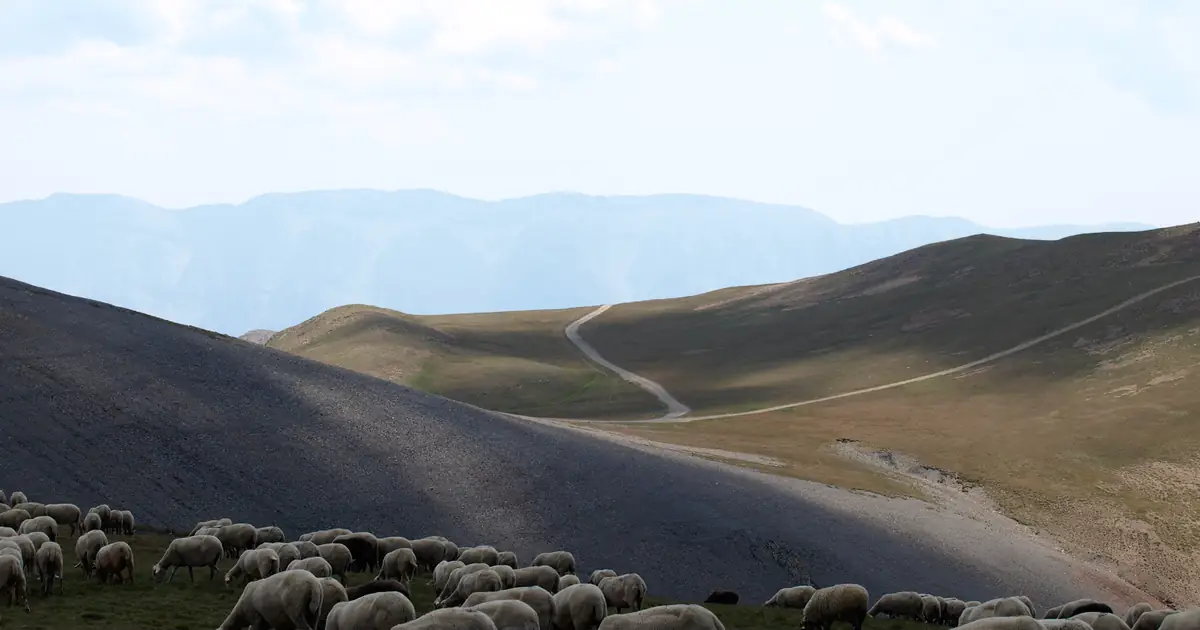
The Madriu-Perafita-Claror valley, Andorra's only UNESCO World Heritage site, spans parts of four parishes and roughly 10% of the country's total land area, a glacial landscape of high pastures, granite cliffs and terraced stone huts left by generations of shepherds. No road enters it: trailheads reachable by taxi or bus sit on the periphery, and the approach itself is always on foot, typically 1.5 to 4 hours depending on the route and destination. Chamois, marmots and golden eagles are resident; the reward for the climb is a highland landscape that looks essentially untouched since it was last farmed by hand.
Beyond the main circuit
The zones above cover a first visit well. With an extra day, these reward a look.
Sorteny Nature Park
A protected valley above Ordino with alpine wildflower meadows in early summer and a small botanical trail. Almost nobody makes the detour, which is exactly the point.
Roc del Quer at sunrise
The steel walkway is a tour-bus stop by midday. Arrive early and the same 500-meter drop below your feet comes with nobody else in the photo.
The southern parish
The least-visited of Andorra's parishes, with quieter villages and the country's southern gateway toward Spain, a useful base if the capital's shopping crowds aren't your trip.
Culture & Etiquette
Catalan is Andorra's sole official language, though the country's population is genuinely mixed: roughly half the residents are Andorran nationals, and the rest are mostly Spanish, Portuguese and French. Spanish and French are both widely spoken as a result, and English is standard in hotels, ski resorts and shops. Andorran identity leans on the co-principality itself, the mountain landscape, and a slower Pyrenean rhythm of life than either neighbor, even with millions of day-trippers passing through.
Do
- Learn a few Catalan phrases. Bon dia (good day) and Gràcies (thank you) go further than defaulting to Spanish, even though Spanish works fine almost everywhere.
- Carry your passport. Spot customs checks happen at the Spain and France borders, especially if you're carrying duty-free goods above the personal allowance.
- Check winter driving rules before renting a car. Winter tires or chains are legally required from 1 November to 15 May; fines for non-compliant vehicles run to €180.
- Book Casa de la Vall and peak-season ski accommodation ahead. The museum has limited renovation-era capacity, and Soldeu and Pas de la Casa sell out around Christmas and February half-term.
- Layer for altitude swings. The capital sits at 1,023 meters and the ski valleys go well above 2,000; temperatures drop fast once the sun goes.
Don't
- Expect the shopping strip to be the whole country. Avinguda Meritxell is genuinely useful for duty-free but it's the least distinctive part of Andorra; the valleys are why people who love it come back.
- Underestimate the drive time. Barcelona and Toulouse are both roughly 2.5-3 hours by road; there is no faster way in or out.
- Leave the marked trails in the Madriu-Perafita-Claror valley. It's a protected UNESCO landscape with fragile agropastoral remains, not open backcountry.
- Assume every currency machine takes cards. Small mountain guesthouses and market stalls in the valleys often prefer cash even though the country is thoroughly euro-ized.
- Confuse Andorra with being in the EU. It isn't, and isn't in Schengen either, even though the euro and the lack of formal border posts make it feel that way.
Deeper culture: the co-princes, sardana and the Andorran house
The co-princes today. Andorra's head of state is shared by the sitting President of France and the Bishop of Urgell, a Catalan diocese across the Spanish border. Both roles are largely ceremonial since the 1993 constitution created an elected head of government and parliament, but the co-princes retain the right to be consulted on major legislation, a genuinely unusual arrangement for a modern European democracy.
Traditional houses. The Areny-Plandolit Museum in Ordino, a 17th-century noble manor, preserves the layout of a pre-tourism Andorran household: a working farm with the family's living quarters above and livestock below, heated by a single central hearth, typical of Pyrenean mountain architecture on both sides of the border.
Catalan cultural ties. Andorra's cultural calendar leans heavily Catalan: sardana circle dancing appears at local festivals, and the Diada de Meritxell on 8 September, honoring the country's patron saint at the Meritxell sanctuary, is Andorra's National Day.
Food & Drink
Andorran cooking is Pyrenean mountain food shared with the Catalan and French sides of the range: hearty, built for cold weather, and heavier on pork, cabbage and potato than on the Mediterranean cuisine of the Spanish coast an hour and a half south. The best of it is in the Barri Antic and in mountain restaurants converted from old stone barns, not the shopping-strip cafes.
Escudella €12-20
The winter dish of the Pyrenees: a rich broth with pasta and a pilota, a large herbed meatball, simmered for hours. Can Manel in the capital and Borda Estevet just outside it both do traditional versions.
Trinxat
Crushed cabbage and potato pan-fried with cured pork until the outside crisps, a Cerdanya-Pyrenean dish shared across the Andorran, Catalan and French sides of the mountains.
Cargols a la llauna €10-15
Snails roasted in a metal tray over coals, served with allioli or a sharp paprika vinaigrette for dipping. A genuine local specialty, not a tourist gimmick.
Xai (roast lamb)
Slow-roasted with garlic and mountain herbs, showcasing the quality of Pyrenean lamb; a fixture on winter menus across the valleys.
Formatge de tupí
Leftover cheese packed into a clay pot (the tupí) with olive oil, garlic and a splash of ratafia or brandy, left to ferment into something pungent and powerfully strong. Not for the faint-hearted.
Coca
A flat cake, savory with roasted vegetables (coca de recapte) or sweet as dessert, found in bakeries throughout the Barri Antic.
When to Go & Itineraries
Andorra runs on two separate calendars, not one. December through March is ski season, with the resort valleys full and the capital busiest on weekends. June through September is hiking season, when the Madriu-Perafita-Claror valley and the high trails around Ordino and Canillo are clear of snow and the shopping streets are quieter. April, May, October and November are the shoulder months: cheaper, calmer, and with limited access to both the slopes and the higher trails.
All four seasons compared, with temperatures
| Season | Verdict | Temps (Andorra la Vella) | What's open |
|---|---|---|---|
| Dec-Mar | Best for skiing | -2 to 8°C | Full ski season; high trails snowed in |
| Jun-Sep | Best for hiking | 15-27°C | Madriu-Perafita-Claror and high routes clear |
| Apr-May | Quiet | 6-16°C | Ski season winding down, high trails still snowed |
| Oct-Nov | Quiet | 4-14°C | Between seasons; shopping and spa still fully open |
Andorra la Vella's altitude (1,023m) keeps it noticeably cooler than nearby Barcelona year-round; ski-valley villages like Soldeu and Pas de la Casa run several degrees colder again.
Itineraries
Andorra rewards short, focused trips more than long ones: the whole country is smaller than most metro areas, and a week without skiing or serious hiking will feel padded. These three lengths cover the realistic range of how people actually visit.
- Day 1
Andorra la Vella & Escaldes. Barri Antic, Casa de la Vall, Sant Esteve, an afternoon soak at Caldea, dinner in the old town.
- Day 2
One valley, your call. A half-day on the slopes at Soldeu or Pal Arinsal in winter, or the shorter routes into Madriu-Perafita-Claror or the Sorteny Nature Park in summer, then back to Barcelona or Toulouse.
- Day 1
Andorra la Vella. Barri Antic, Casa de la Vall, duty-free shopping on Avinguda Meritxell.
- Day 2
Grandvalira. A full ski day at Soldeu or El Tarter, or in summer the Roc del Quer viewpoint and Canillo's Ice Palace area.
- Day 3
Ordino & the west. The Areny-Plandolit Museum, Sorteny Nature Park, and Pal Arinsal for a second, quieter ski or hiking session.
- Day 4
Caldea & departure. A morning at the thermal spa before the drive or bus back to Barcelona or Toulouse.
- Days 1-2
Andorra la Vella base. Old town, Casa de la Vall, Caldea, duty-free shopping.
- Days 3-5
Full ski block. Three days across Grandvalira's sectors on the combined Andorra Pass, moving between Soldeu, El Tarter and Pas de la Casa.
- Day 6
Ordino & the west. Areny-Plandolit Museum, Sorteny Nature Park, Naturlandia if traveling with kids.
- Day 7
Madriu-Perafita-Claror (summer) or a final ski day (winter), then departure via Barcelona or Toulouse.
Getting there & around
Andorra has no airport and no train station: every trip starts with a flight into Barcelona-El Prat (BCN) or Toulouse-Blagnac (TLS), then a scheduled bus, roughly 3 hours from Barcelona and 2.5-3 hours from Toulouse, run by several private operators with routes and fares listed at busandorra.com. Driving yourself is straightforward on well-maintained roads but requires a rental with winter tires or chains fitted between 1 November and 15 May, a legal requirement, not a suggestion. Inside the country, local buses (routes L1-L6) connect Andorra la Vella, Escaldes-Engordany, La Massana, Ordino and the ski valleys, and the capital and Escaldes are compact enough to walk between.
Bus, parking and driving details
| Option | Price | Notes |
|---|---|---|
| Barcelona-El Prat to Andorra | ~€25-40 | Scheduled buses run roughly 0830 to 2230 daily, about 3 hours. |
| Toulouse-Blagnac to Andorra | ~€25-35 | Several daily departures, about 2.5-3 hours. |
| Local buses (L1-L6) | ~€2/ride | Connect the capital, Escaldes-Engordany, La Massana, Ordino and the ski resorts. |
| Taxis | From ~€3.50 | Widely available in the capital; needed for the final approach to Madriu-Perafita-Claror trailheads. |
| City parking | ~€2.80-3.10/hr | Andorra la Vella has over 4,500 spaces across 21 public and private car parks, all paid. |
Winter tires and chains: mandatory from 1 November to 15 May for all vehicles, either winter (3PMSF-rated) tires or chains/textile covers ready to fit. Fines run to €180 for passenger cars without compliant equipment, and police can stop non-compliant vehicles from continuing in bad weather. Studded tires are prohibited.
Practical prep: pick up an eSIM before landing in Barcelona or Toulouse, since Andorra has no dedicated carrier and roaming from a Spanish or French SIM generally works well. A fixed-price transfer from either airport avoids negotiating a fare on arrival.
Where to stay
Budget: Barri Antic & hostels
Pensions and small hostels in the old town put you within walking distance of Casa de la Vall and the historic streets, the most character-filled budget option in the capital.
Mid-range: Avinguda Meritxell
Three- and four-star business hotels line the main shopping avenue; Hotel Plaza and Hotel Rutllan are two well-regarded options with wellness centers and pools respectively.
Near Caldea, Escaldes-Engordany
Roc Blanc Hotel & Spa and Hotel Panorama both sit under 300 meters from Caldea's entrance, the practical choice if the thermal spa is the main draw.
Ski-in valleys: Soldeu & Pas de la Casa
Purpose-built ski hotels cluster around the Grandvalira lift bases; prices climb sharply over Christmas and February school holidays, and drop just as sharply outside them.
Budget Planning
Andorra is not a cheap destination the way Albania or much of the Balkans are: it sits closer to mainstream Western European pricing for accommodation and restaurants. The exception is duty-free retail, where electronics, spirits, perfume and jewelry genuinely undercut Spanish and French prices by 20 to 40 percent, more during the winter and summer sales seasons.
- Barri Antic pension or hostel €40-60
- Bakery & market meals €12-15
- Local buses between towns
- Free hiking, Barri Antic, Sant Esteve
- 3-star hotel on Avinguda Meritxell
- Restaurant meals €30-50/person
- Caldea entry & a half-day ski pass
- Rental car for valley day trips
- Ski-in hotel in Soldeu or Pas de la Casa
- Full-day Andorra Pass lift ticket
- Fine dining & the Caldea premium wing
- Peak Christmas or February pricing
Quick reference prices: transport, food, lift passes
| Coffee | ~€1.50-2 |
| Inexpensive cafe meal | €12-15 |
| Mid-range restaurant meal | €30-50 |
| Local bus ride | ~€2 |
| Taxi flag fall | from ~€3.50 |
| Bus from Barcelona or Toulouse | €25-40 one way |
| Caldea day entry | ~€40-75 depending on package |
| Andorra Pass, full day | ~€55-70 in high season |
Prices reflect August 2026 research and shift seasonally, especially ski-valley accommodation over Christmas and February holidays and Caldea/lift pricing between low and high season. Treat them as a planning baseline, not a quote.
Visa & Entry
Andorra issues no visas of its own: it can only be reached by land through Spain or France, so entry is governed entirely by whichever country's border you cross. In practice that means the same rules as visiting Spain or France, up to 90 days visa-free for most Western passport holders under the Schengen framework, even though Andorra itself is not a Schengen member. There are no passport checks at the Andorran border in either direction in most circumstances, though French and Spanish border police occasionally carry out spot checks, particularly on the way out if you're carrying duty-free goods.
✓ Valid passport
At least 3 months validity from your planned exit date from Spain or France, per standard Schengen rules.
✓ Meet Spain or France's entry rules
Since Andorra has no independent border control, you must satisfy whichever country's checkpoint you actually cross first.
✓ Double or multi-entry Schengen visa
If you need a Schengen visa at all, a single-entry visa will strand you: crossing into Andorra and back counts as leaving and re-entering Schengen.
✓ ETIAS from late 2026
Visa-exempt travelers transiting France or Spain to reach Andorra will need ETIAS authorization once it comes into force later in 2026; check current status before booking.
| Andorra | Liechtenstein | |
|---|---|---|
| Schengen | Not a member; open borders with Spain/France but must meet their entry rules | Full Schengen member since 2011, seamless with Switzerland and Austria |
| Currency | Euro, adopted unilaterally in 2002 | Swiss franc, in customs union with Switzerland |
| Skiing | Grandvalira Resorts, 300+ km, the Pyrenees' largest | Malbun, one small family-friendly resort |
| Shopping | Genuine duty-free zone, prices 20-40% below the EU | Standard Swiss-linked pricing; known more for banking than shopping |
| Getting there | Bus/car only from Barcelona or Toulouse, no airport | Train or bus via Switzerland or Austria, no airport either |
Safety, Solo Women & Family
Andorra is safe to visit. Violent crime against tourists is essentially unheard of, the US State Department rates it Level 1, "Exercise Normal Precautions," and the main practical risks are icy mountain roads in winter and pickpocketing in the busiest shopping crowds, not crime of any serious kind.
Winter roads
Mountain roads ice over fast between November and May. Winter tires or chains are legally required in that window; drive to conditions, not the speed limit.
Ski safety
Standard alpine risks apply: stay on marked runs, carry travel insurance that explicitly covers mountain rescue, and check avalanche and piste conditions before heading off-piste.
Pickpocketing
Concentrated in the busiest stretches of Avinguda Meritxell and Illa Carlemany during sales periods. Keep bags zipped and in front of you in crowds.
Solo women travelers
Andorra rates well for solo women: it's a small, low-crime, heavily touristed country where street harassment is uncommon and the capital and ski villages feel comfortable to walk at night. The main practical consideration is logistical rather than a safety one, buses between towns run less frequently late at night, so plan return transport in advance rather than counting on a late bus from a ski valley back to the capital.
Emergency numbers
Hospital, embassies and mountain rescue
112 is the number to remember, it works from any phone in Andorra and connects to emergency dispatch regardless of which service you need. Nostra Senyora de Meritxell Hospital, Andorra's main public hospital, is reachable at +376 871 000, and the Traveller Assistance Service is at +376 871 005.
Embassies: Andorra's own diplomatic presence is limited given its size. The Embassy of Spain (+376 800 030) and Embassy of France (+376 736 700) are the only major resident embassies, reflecting the co-principality relationship. US citizens are served by the US Consulate General in Barcelona or the US Embassy in Madrid; UK citizens by the British Embassy in Madrid, with an honorary consulate in Andorra la Vella. Most other nationalities are covered from Madrid, Barcelona or Paris; check your government's travel advisory page for the current nearest post before you go.
Mountain rescue: for hiking or skiing emergencies, call 112. Response in the Madriu-Perafita-Claror valley and other roadless areas takes longer given the foot-only access, so tell your accommodation your route and expected return time before setting out.
Family travel
Andorra works well for families, particularly for skiing: Pal Arinsal's gentler terrain and ski schools suit beginners better than Grandvalira's bigger runs, Naturlandia's Tobotronc alpine coaster and animal areas are built for kids, and Caldea has dedicated family and children's pools alongside the adults-only wing. The compact size cuts both ways for families: transfers between attractions are short, but there's less to fill a week without a ski or hiking focus.
Andorra FAQ
Is Andorra safe to visit?
Yes, Andorra is one of the safest countries in Europe. Violent crime against visitors is essentially unheard of, and the main risks are icy mountain roads in winter and pickpocketing in the busiest shopping streets, not crime.
Do I need a visa for Andorra?
No. Andorra issues no visas of its own and every nationality can enter for up to 90 days under the same rules that govern entry to Spain or France, since Andorra can only be reached by land through one of those two countries.
Is Andorra in the Schengen Area?
No. Andorra is not an EU or Schengen member, but it has no formal border posts with France or Spain, so in practice crossing feels seamless. You must still meet French or Spanish entry rules to get there, and time in Andorra doesn't officially count on a Schengen 90-day clock.
What currency does Andorra use?
The euro, despite Andorra not being an EU member. It adopted the euro unilaterally in 2002 and formalized the arrangement with a monetary agreement with the EU in 2011, which also allows it to mint its own euro coins.
How do you get to Andorra?
By road only: Andorra has no airport. Scheduled buses run from Barcelona-El Prat Airport (about 3 hours) and Toulouse-Blagnac Airport (about 2.5-3 hours), and driving is straightforward from either city.
Is Andorra expensive?
It's not a budget destination the way Albania or Portugal are, but it's not extravagant either. Budget travelers manage on about €55-80 a day, and duty-free shopping on electronics, perfume and spirits genuinely undercuts prices across the border.
When is the best time to visit Andorra?
December to March for skiing, June to September for hiking the high valleys. They are different trips: come for snow in winter or trails in summer, not really both in the same visit.
How many days do you need in Andorra?
Two to four days covers the country well since it's only 468 square kilometers. A week works if you're skiing multiple resorts or combining it with a Barcelona or Toulouse trip.
Is Andorra good for skiing?
Yes, it's the largest ski area in the Pyrenees. Grandvalira Resorts Andorra now runs every piste in the country as one combined system: over 300 kilometers of skiable terrain across Grandvalira, Ordino Arcalís and Pal Arinsal on a single pass.
What language is spoken in Andorra?
Catalan is the sole official language, but Spanish, French and Portuguese are all widely spoken given the country's mixed workforce, and English is common in hotels, ski resorts and shops.
Is Andorra part of the European Union?
No. Andorra is a European microstate but not an EU member, though it uses the euro and has close economic ties to the EU through agreements covering trade and, since 2011, currency.
Is Andorra good for a day trip from Barcelona?
It's possible but tight: the bus from Barcelona-El Prat takes about 3 hours each way, so a single day leaves only a few hours in the country. An overnight or two-day trip is far more comfortable and lets you actually see something beyond the shopping streets.
What Stays With You
Andorra gets dismissed as a shopping errand, a duty-free stop on the way to somewhere else, and that reputation is earned but incomplete. What it undersells is the sensation of standing at 2,942 meters in a country you can drive across in under an hour, or hiking two hours up a trail that a road has never reached, into a valley UNESCO decided was worth protecting exactly as shepherds left it. It is a strange, small, functioning anachronism, jointly ruled by a French president and a Spanish bishop under a 700-year-old agreement nobody has bothered to rewrite, and it works.
Go for the skiing, the hiking or the duty-free electronics if that's what brought you. Stay long enough to notice that the highest capital in Europe is also one of the calmest, once you're a street back from Avinguda Meritxell.