
What You're Actually Getting Into
Turkmenistan is, by most measures, the hardest country in the world to visit as a tourist that is not actively at war or formally closed. It is not dangerous: the US State Department rates it Level 1, its lowest advisory tier, the same as it gives Japan or New Zealand. What makes it hard is bureaucratic. Every tourist visa requires a Letter of Invitation from a licensed Turkmen tour operator before you can even apply, your itinerary is fixed and approved in advance, and a guide accompanies you everywhere for the duration of the trip. There is no version of Turkmenistan where you rent a car and improvise.
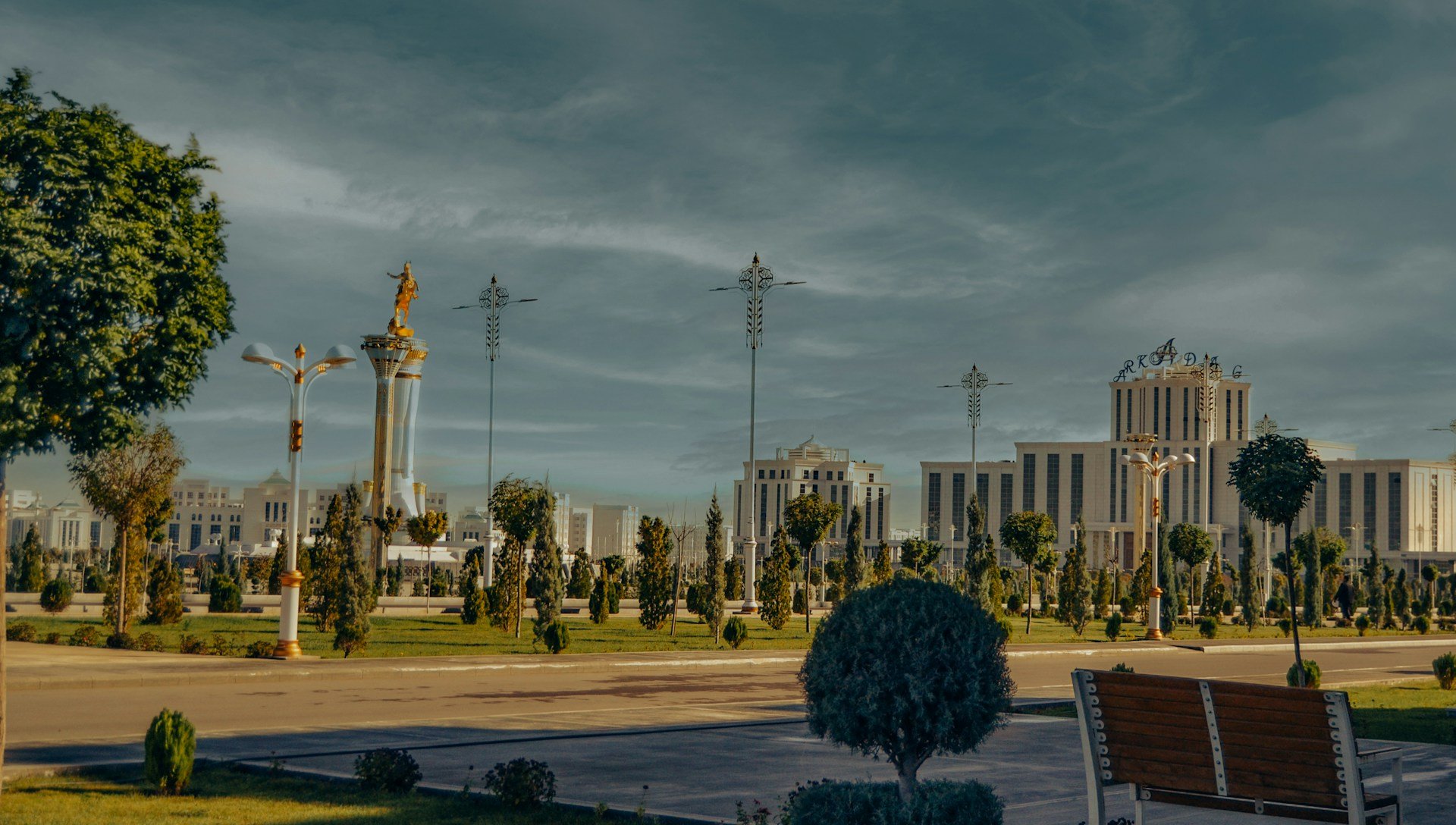
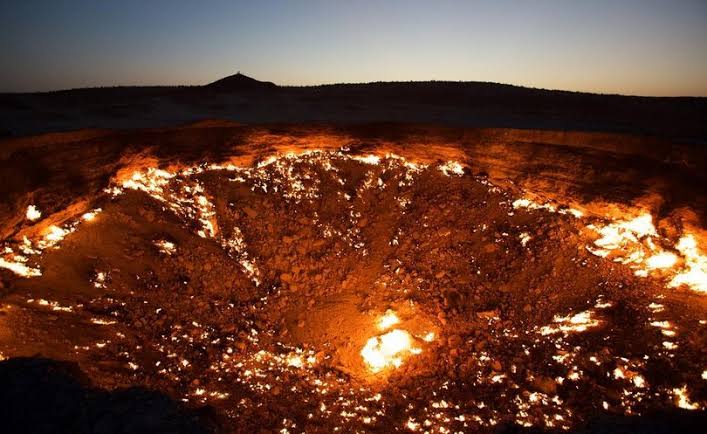
What that system protects is genuinely strange and worth the friction. Ashgabat, the capital, holds a Guinness World Record for the highest concentration of white marble buildings on earth, over 500 of them, built in a single ambitious, faintly surreal wave since the 1990s. Two hours north by road, the Darvaza gas crater has been burning in the middle of the Karakum Desert since 1971, an accident nobody bothered to fix because putting it out was harder than living with it. And scattered across the desert are Silk Road cities, Merv and Konye-Urgench among them, that rivaled anything in the medieval world and that almost no Western traveler has ever heard of, let alone visited.
The honest complications
This is not a budget or spontaneous destination. There is no backpacker circuit, no hostel scene, and no way to see the country for less than a guided tour costs, which starts in the low hundreds of dollars a day. The currency system is dysfunctional: the official exchange rate is roughly a fifth of the real black-market value, ATMs charge the bad official rate, and changing money informally is illegal and enforced, so you need to bring your spending cash in dollars. The internet is among the most restricted on earth: WhatsApp, Instagram, YouTube and most Western apps are blocked, VPN use is actively detected and punished, and connectivity outside your hotel can be close to nonexistent. Photographing government buildings, military sites, airports or the uniformed guards outside them is illegal and taken seriously. None of this makes Turkmenistan unsafe. It makes it a country you visit on its terms, not yours, and the honest advice is to go in expecting a managed, curated trip rather than an independent adventure, and to enjoy it for what it actually is.
A History Worth Knowing
Turkmen tribes descend from Oghuz Turkic nomads who dominated the desert oases between the Caspian Sea and the Amu Darya for a thousand years, but the land itself has an older story: Merv and Konye-Urgench were among the great cities of the medieval Islamic world, sacked by the Mongols, rebuilt, and eventually swallowed by the desert. Russia annexed the region in the 1880s, the Soviets folded it into the Turkmen SSR, and independence arrived in 1991 followed by one of the most idiosyncratic personality cults of the post-Soviet world under Saparmurat Niyazov, whose legacy still shapes the country a traveler sees today.
- 11th-12th century
Merv's golden age. Under the Seljuk Turkmens, Merv becomes one of the largest cities on earth and a center of Islamic scholarship, known as the "Mother of Cities."
- 1221
The Mongol sack of Merv. Genghis Khan's forces destroy the city; medieval chroniclers describe it as one of the deadliest massacres in history. Merv never fully recovers.
- 1881-1885
Russian conquest. The Battle of Geok Tepe and the fall of Merv bring Turkmen territory under the Russian Empire, later the Turkmen Soviet Socialist Republic.
- 1991
Independence. Turkmenistan declares independence from the USSR on 27 October, later adopting permanent, UN-recognized neutrality as a cornerstone of its foreign policy.
- 1991-2006
The Niyazov era. President Saparmurat Niyazov, "Turkmenbashi," builds an extreme personality cult, including the Ruhnama spiritual guide book and renaming months of the calendar after his family.
- 2007-present
The Berdimuhamedow era. Gurbanguly Berdimuhamedow succeeds Niyazov and builds much of marble-era Ashgabat; his son Serdar Berdimuhamedow becomes president in 2022, with father and son continuing to hold power jointly.
Read the full history: the Silk Road, the Mongols, and the personality cults
Long before Turkmen identity coalesced, the oases along the Karakum's edges hosted some of Central Asia's most important cities. Merv, near the modern city of Mary, existed in some form for roughly 4,000 years and reached its peak under the Great Seljuk Empire in the 11th and 12th centuries, when it may have briefly been the largest city on earth, a center of trade, science and Islamic learning that produced astronomers and scholars whose work traveled the length of the Silk Road. Konye-Urgench, in the north near today's Uzbek border, was the capital of the Khwarezm empire and a rival center of scholarship and architecture, famous for its minarets and mausoleums.
Both cities were devastated by the Mongol invasions of the 13th century. Merv's destruction in 1221 is remembered as one of the deadliest single events in pre-modern warfare, with medieval sources describing death tolls in the hundreds of thousands, figures historians treat cautiously but that reflect a genuine catastrophe. Konye-Urgench was destroyed and rebuilt multiple times before it, too, was gradually abandoned as trade routes shifted and the Amu Darya changed course.
Turkmen tribal confederations controlled the desert oases for centuries afterward, largely outside direct imperial control, until the Russian Empire's conquest in the 1880s, cemented by the brutal Battle of Geok Tepe in 1881. Soviet rule brought the Turkmen SSR, collectivization, and the borders of the modern state, but also decades of relative obscurity: Turkmenistan was among the least-known Soviet republics to the outside world, a reputation that has, if anything, deepened since independence.
The Niyazov cult. Saparmurat Niyazov, president from 1985 (as Communist Party first secretary) until his death in 2006, built one of the most extensive personality cults of any post-Soviet leader. He took the title Turkmenbashi ("leader of the Turkmen"), wrote the Ruhnama, a spiritual and historical guide that became required study in schools and universities, renamed the months of the year after himself, his mother and the Ruhnama itself, and commissioned a gold-plated statue of himself that originally rotated to always face the sun. The statue was relocated after his death and no longer rotates, but much of the marble city-building he began, and that his successor dramatically expanded, still defines how Ashgabat looks today.
Neutrality. Turkmenistan's permanent neutrality, recognized by a UN General Assembly resolution in 1995, is a genuine organizing principle of its foreign policy: the country avoids military alliances, hosts no foreign bases, and frames itself internationally around this status. It is a rare point of continuity across an otherwise turbulent post-Soviet transition.
Top Destinations
Turkmenistan's tourist circuit is compact by necessity: the tour system, the desert distances and the limited road network mean most itineraries cover the same core sites, expanding outward the longer the trip. Ashgabat and the Darvaza crater form the essential two or three days; Merv and Konye-Urgench extend a trip to a week; the Caspian coast at Avaza and the deeper desert are add-ons for ten days or more.
Ashgabat, the marble capital
Ashgabat holds the Guinness World Record for the highest concentration of white marble buildings anywhere on earth, over 500 structures built largely since the 1990s along wide, near-empty boulevards. The Independence Monument, the relocated gold Neutrality Monument, and the glass-domed Alem Cultural and Entertainment Center, home to the Guinness-listed world's largest enclosed Ferris wheel, are the essential sights, alongside the Turkmen Carpet Museum, whose collection includes carpets recognized as some of the largest hand-woven pieces on record. Just outside the city, Old Nisa, a UNESCO World Heritage Site, holds the earthen ruins of an early Parthian Empire capital on a hilltop with views over the Kopet Dag mountains toward Iran. Budget two full days.
The Darvaza gas crater, the "Door to Hell"
In 1971, Soviet engineers drilling for gas in the Karakum Desert struck an underground cavern that collapsed into a crater roughly 70 meters wide. To stop the escaping methane from poisoning the area, they set it alight, expecting it to burn out within days. It has been burning ever since. Most visitors reach it on an organized overnight trip from Ashgabat, about a three-hour drive north into the desert, camping in yurts near the rim and walking out to the crater at dusk as the flames become visible against the darkening sky, then again after dark when the effect is at its most striking. It is genuinely one of the strangest sights in Central Asia, and one of the very few Turkmenistan images most travelers will already have seen before they arrive.
Ancient Merv, the Mother of Cities
Near the modern city of Mary in the southeast, the ruins of ancient Merv sprawl across roughly 1,200 hectares and 4,500 years of settlement, a UNESCO World Heritage Site that was, in the 11th and 12th centuries under Seljuk rule, among the largest cities on earth and a major center of Islamic scholarship before the Mongols destroyed it in 1221. The scale is the point: walking between the Great Kyz Kala fortress, the mausoleum of Sultan Sanjar, and the Buddhist stupa remains from an even earlier era, you cover kilometers of desert with almost nobody else around, a striking contrast to the crowds at comparable sites in Uzbekistan.
Konye-Urgench, capital of Khwarezm
In the far north near the Uzbek border, Konye-Urgench holds the UNESCO-listed ruins of Gurganj, capital of the medieval Khwarezm empire and, before the Mongols leveled it in the 13th century, one of the great cities of the Islamic world. The Kutlug Timur Minaret, at around 60 meters one of the tallest of its era anywhere, and the mausoleums of Turabek Khanum and Il-Arslan, with intact turquoise-tiled interiors, are the highlights of a site that most operators visit as a long day trip from Konye-Urgench town, often combined with the drive north from Darvaza or south from Dashoguz.
Avaza, the Caspian resort zone
Outside Turkmenbashi on the Caspian Sea coast, Avaza is a purpose-built resort zone in the same white-marble, gold-accented style as Ashgabat: modern hotel towers, wide beach promenades and a yacht marina, largely used by domestic and regional visitors rather than international tourists. It is a genuine change of pace from the desert, and the beaches themselves are unremarkable by international standards, but the sheer strangeness of finding this architecture on the Caspian shoreline makes it worth a night for travelers with time beyond the core circuit.
Beyond the standard circuit
Everything above covers what a well-run first trip includes. These sit further out and need extra time, a specific interest, or both.
Gonur Depe
A Bronze Age site far older than Merv, believed to be a major center of the Oxus civilization. Remote, minimally developed, and of real interest mainly to travelers with an archaeology bent and a guide who can arrange the detour.
Akhal-Teke horse farms
Turkmenistan's national horse breed, prized for its metallic sheen and endurance, appears on the national emblem. Several stud farms near Ashgabat allow visits, best arranged in advance through your guide.
Yangykala Canyon
A multicolored sandstone canyon system that few standard itineraries reach because of the extra day and 4x4 vehicle it requires. Worth requesting if your trip has flexibility.
Culture & Etiquette
Turkmenistan is officially secular and around 89% Muslim by background, but religious practice is generally moderate and folded into a strong pre-Islamic tribal culture built around hospitality, respect for elders, and symbols like the Akhal-Teke horse and the five carpet guls on the national flag, each representing one of the country's major tribal confederations. Guests are treated generously, and your guide is both a practical necessity and, for most visitors, the single best window into how Turkmen people actually live day to day.
Do
- Dress conservatively. Shoulders and knees covered for women, long trousers for men; shorts are for private spaces, not the street.
- Accept tea. Green tea (chai) offered on arrival anywhere is a genuine hospitality gesture; accepting it, even briefly, is the polite response.
- Ask before photographing people, particularly in markets and villages outside the main tourist sites.
- Carry your passport and visa documents at all times; checkpoints exist on some inter-regional roads.
- Defer photography questions to your guide. They know current restrictions better than any guidebook and can prevent an accidental problem.
Don't
- Photograph government buildings, military or police installations, airports, or their guards. This is illegal and enforced; when in doubt, don't raise the camera.
- Try to use a VPN casually. VPN use is actively detected on the state network and can get your connection cut, or worse, draw official attention.
- Change money with unofficial street changers. It's illegal, changers are arrested, and travelers caught doing it face fines or worse.
- Discuss politics, the president, or the Berdimuhamedow family openly, including with people who seem to want to. Let your guide set the tone.
- Expect to deviate from your approved itinerary without checking with your guide and operator first; unapproved detours can create real problems at checkpoints.
Deeper culture: the Ruhnama, carpets, and the Akhal-Teke
The Ruhnama. Saparmurat Niyazov's two-volume "Book of the Soul," part history, part moral guide, part autobiography, was mandatory study in schools and even a component of the driving test during his rule. Its formal role has faded since his death, but copies are still visible in some public buildings and it remains essential context for understanding the personality cults that shaped modern Turkmenistan.
Turkmen carpets. Hand-woven wool carpets with tribal-specific gul (medallion) patterns are a defining craft, five of which appear on the national flag representing the country's major tribes. The Turkmen Carpet Museum in Ashgabat and the Sunday carpet section of Altyn Asyr Bazaar are the best places to see the range and scale of the tradition, including some of the largest hand-woven carpets ever recorded.
The Akhal-Teke horse. A desert-adapted breed prized for speed, endurance and a distinctive metallic sheen to its coat, the Akhal-Teke appears on the national emblem and is a genuine source of national pride, with a dedicated holiday, Turkmen Horse Day, celebrated annually.
National holidays worth knowing: Independence Day (27 October) marks the 1991 break from the USSR; Turkmen Carpet Day falls on the last Sunday of May; Melon Day, celebrating the country's prized desert melons, falls on the second Sunday of August. None require special planning, but they add color if your trip lines up with one.
Food & Drink
Turkmen food shares its core dishes with the rest of Central Asia, plov, shashlik, and hand-pulled noodle soups, but with its own desert-oasis inflections: bread treated with particular reverence, tea offered constantly, and a genuinely unique fermented camel milk drink that most visitors will only ever encounter here. Meals on a guided tour are typically arranged by your operator, at hotel restaurants in Ashgabat and at simple roadside or yurt-camp kitchens elsewhere.
Plov
The Central Asian rice pilaf, cooked with lamb or beef, carrots and onions in a large communal kazan, is Turkmenistan's de facto national dish, served everywhere from home kitchens to formal restaurant occasions.
Shashlik & Lagman
Skewered grilled meat (shashlik) and hand-pulled noodle soup with meat and vegetables (lagman) are the two most common everyday dishes, found at roadside stops throughout the country.
Chal
Fermented camel milk, slightly sour and faintly effervescent, is a genuinely distinctive desert-tradition drink rarely found outside Turkmenistan and neighboring Turkmen communities. Worth trying at least once if it's offered.
When to Go & Itineraries
April-May and late September-October are the only genuinely comfortable windows for desert travel. Summer in the Karakum regularly passes 40°C in the day, brutal even at the Darvaza crater's overnight yurt camps, and winter nights can drop below freezing with cold winds across the open desert. Because the itinerary is fixed by your tour operator rather than assembled on the fly, plan around trip length rather than a day-by-day route you build yourself.
All four seasons compared, with temperatures
| Season | Verdict | Temps | Notes |
|---|---|---|---|
| Apr-May & late Sep-Oct | Best | 18-30°C | Comfortable desert days, cool nights at Darvaza |
| Jun-early Sep | Avoid if possible | 35-45°C+ desert | Genuinely dangerous heat away from AC; punishing at Merv and Darvaza |
| Mar | Good | 12-22°C | Occasional rain; Nowruz (21 March) brings festivities |
| Nov-Feb | Cold but workable | -5 to 12°C | Clear desert skies; cold nights at yurt camps |
Ashgabat sits in a rain shadow and is drier than the figures above suggest; the Karakum interior swings even more extremely between day and night temperatures than the city does.
Trip lengths
Because independent movement isn't possible, think in terms of tour length rather than a self-built itinerary. These are the standard shapes operators build trips around.
- Days 1-2
Ashgabat. Independence Park and the marble monuments, the Turkmen Carpet Museum, Old Nisa, and the Alem Ferris wheel.
- Days 3-4
Darvaza gas crater. Drive north into the Karakum, overnight in a yurt camp near the crater, return to Ashgabat the following day.
- Days 1-2
Ashgabat as above, plus Kow Ata underground lake as a half-day add-on.
- Days 3-4
Darvaza and the Karakum, overnight at the crater.
- Days 5-7
Mary and ancient Merv, flying or driving southeast, a full day walking the ruins, with a possible extension north to Konye-Urgench for travelers continuing toward the Uzbek border.
- Days 1-3
Ashgabat extended, with Old Nisa, Kow Ata, and time built in for an Akhal-Teke horse farm visit.
- Days 4-5
Darvaza and the deeper Karakum, with a possible detour toward Yangykala Canyon for travelers with a 4x4-equipped operator.
- Days 6-8
Mary, Merv and Konye-Urgench, the full Silk Road route north toward the Uzbek border.
- Days 9-10
Avaza on the Caspian coast, a change of pace before flying out of Ashgabat or continuing overland.
Getting there & around
Ashgabat International Airport (ASB) is the practical gateway for almost every visitor. Turkmenistan Airlines, the national carrier, and Turkish Airlines via Istanbul are the most reliable routes; Istanbul is the standard transit hub for travelers coming from Europe or North America. Land borders exist with Uzbekistan, Iran and Kazakhstan and are used by some overland travelers, but the same visa and guide requirements apply regardless of how you enter, and the border with Afghanistan is not a route tourists use. Once inside the country, your tour operator arranges all transport, typically a private vehicle and driver for smaller groups, coach transport for larger ones.
Practical prep: SIM cards, cash, and what actually works
Cash is essential. Bring your full trip budget in clean, undamaged US dollars. ATMs, where they exist, apply the poor official exchange rate and cannot be relied on as a backup; card acceptance outside a handful of Ashgabat hotels is minimal.
SIM cards: TM Cell is the sole mobile operator, and tourists can buy a SIM at Ashgabat airport on arrival with their visa documentation, though data speeds are slow and most Western apps and social media are blocked at the network level regardless of the SIM.
Connectivity: assume you will be largely offline outside your hotel. Download offline maps, entertainment and anything work-related before you arrive, and tell people at home not to expect regular contact.
Budget Planning
There is no independent-travel budget tier in Turkmenistan, because independent travel on a tourist visa isn't permitted. What you're really pricing is the tour itself: your operator's daily rate typically bundles transport, a guide, most meals, and mid-range accommodation, and shorter trips cost noticeably more per day than longer ones because fixed costs like the Letter of Invitation and vehicle mobilization spread across fewer days.
- Joins a small scheduled group
- Shared vehicle and guide
- Fixed departure dates, less flexibility
- Best value per day for longer trips
- Private vehicle, driver and guide
- Flexible dates within reason
- Itinerary tailored to your interests
- Standard choice for most first-time visitors
- Top-tier Ashgabat hotels
- Private guide with specialist knowledge
- Off-circuit add-ons like Yangykala Canyon
- Priority handling of visa and border logistics
What's typically included, and what isn't
| Letter of Invitation fee | $30-80 (via operator) |
| Visa fee (embassy/airport/border) | $50-150 cash USD |
| Darvaza yurt camp overnight | Usually bundled into tour price |
| Domestic flight, Ashgabat-Mary | ~$40-70 one way where flown rather than driven |
| SIM card at Ashgabat airport | ~$5-15 |
| Tips for guide and driver | $10-20/day combined, appreciated though not obligatory |
Tour prices reflect August 2026 research and vary by operator, group size and season. Treat them as a planning baseline and confirm exactly what's included before booking.
Visa & Entry
Every nationality needs a visa to enter Turkmenistan, and a standard tourist visa cannot be obtained without first securing a Letter of Invitation (LOI) from a licensed Turkmen tour operator. Start the process at least a month before you plan to travel: the operator applies for the LOI on your behalf, and once it's approved you take it to a Turkmenistan embassy, or in some cases Ashgabat airport or a land border, to get the actual visa stamped, paid in cash US dollars. An e-visa system was signed into law in April 2025, but as of this writing the details of how it will work and what it will cover haven't been finalized, so booking through a licensed operator remains the reliable route.
✓ Letter of Invitation
Arranged by your licensed tour operator before you can apply for the visa itself. Apply at least a month ahead.
✓ Valid passport
At least 6 months validity from your intended entry date is the safest standard to plan around.
✓ Visa fee in cash USD
Typically $50-150 depending on nationality and processing speed, paid at the embassy, airport, or land border.
✓ A guide for the whole trip
Not optional on a tourist visa. Your approved itinerary and licensed guide are part of the entry conditions, not an add-on service.
| Turkmenistan | Uzbekistan | |
|---|---|---|
| Visa | LOI required, guide mandatory throughout | Far simpler; e-visa or visa-free for many nationalities |
| Independent travel | Not permitted on a tourist visa | Fully independent travel is normal and easy |
| Daily cost | $150-450+, tour-priced, no budget tier | Genuine backpacker budgets from $30-40/day are possible |
| Silk Road sites | Merv and Konye-Urgench, remote and nearly empty | Samarkand, Bukhara and Khiva, more restored, more visited |
| The experience | Curated, controlled, genuinely strange in a good way | Open, flexible, more conventional trip planning |
Safety, Solo Women & Family
Turkmenistan is safe by the numbers that matter most to travelers: the US State Department rates it Level 1, Exercise Normal Precautions, its lowest risk category, and violent crime against visitors is rare. The friction points are almost entirely bureaucratic and financial rather than physical: navigating the visa and guide system, handling cash and the currency's dual exchange rate correctly, and respecting photography restrictions that are enforced more seriously than in most countries with an otherwise identical safety profile.
Currency & fraud
The official manat exchange rate is roughly a fifth of the real black-market value; don't attempt informal currency exchange, it's illegal and enforced. Bribery and institutional corruption are flagged by security researchers as a bigger practical concern than street crime.
Photography
Photographing government buildings, military and police sites, airports, or their uniformed guards is illegal. Ask your guide before photographing anything that looks official, and err toward not raising the camera at all near checkpoints.
Petty theft
Crimes of opportunity against foreigners are uncommon but do happen on crowded buses and in busy bazaars, at the level of ordinary big-city caution rather than a specific warning.
Two more things worth knowing: the internet, and Caspian ferries
Internet censorship is among the most extensive in the world: WhatsApp, Instagram, YouTube, Facebook and most Western platforms are blocked at the network level, VPN use is actively detected and can get a connection cut off, and the state provider heavily monitors and throttles traffic. Plan for very limited outside contact and don't count on VPNs to bypass this reliably.
Caspian Sea ferry services connecting Turkmenbashi to Azerbaijan are considered unreliable by security researchers and generally not advisable for tourists; fly if you're moving on from the Caspian coast.
Solo women travelers
Turkmenistan works better for solo women than the "closed country" reputation might suggest, largely because the mandatory guide system means you are genuinely never navigating unfamiliar situations alone. Dress conservatively (shoulders and knees covered), and let your guide handle interactions with officials, hotel staff and checkpoints, which they're doing for every traveler regardless of gender. The structure that makes independent travel impossible is, in this one specific respect, protective rather than restrictive.
Emergency numbers
Embassy contact and what your guide handles
The US Embassy in Ashgabat is at 9 1984 Street (formerly Pushkin Street); the consular line is +993-12-94-00-49, with an after-hours emergency line at +993-65-692-688. In practice, your licensed guide is your first point of contact for almost anything that goes wrong on a Turkmenistan trip, from a medical issue to a document question, and is typically far faster than an embassy for on-the-ground problems.
Family travel
Turkmenistan is not a typical family destination. The combination of high daily costs, long desert drives between sights, a fixed and fairly demanding itinerary, and minimal casual flexibility makes it a harder fit for younger children than for teenagers who can engage with the history and the sheer oddity of the marble city and the burning crater. Families who do bring older kids report the Darvaza overnight and Merv's scale as genuine highlights; younger children may find the desert heat and long transfers wearing.
Turkmenistan FAQ
Is Turkmenistan safe to visit?
Yes. The US State Department rates Turkmenistan Level 1, Exercise Normal Precautions, its lowest risk category. Violent crime against visitors is rare. The real friction points are bureaucratic and financial (visas, currency, photography rules), not personal safety.
Do I need a visa for Turkmenistan?
Yes, every nationality needs a visa. Tourist visas require a Letter of Invitation from a licensed Turkmen tour operator first, then a visa application at an embassy, at Ashgabat airport, or at a land border, paid in cash US dollars. Start the process at least a month before you travel.
Can I travel independently in Turkmenistan?
No, not on a standard tourist visa. Your itinerary is submitted and approved in advance and a licensed guide accompanies you for the whole trip. A small number of transit visas allow brief unguided passage, but they are not a way to see the country.
How much does a Turkmenistan trip cost?
There is no backpacker rate. Group tours run roughly $150-250 a day per person, private tours $250-450 a day, and fully custom or luxury itineraries $450 and up, with shorter trips costing more per day than longer ones.
When is the best time to visit Turkmenistan?
April-May and late September-October. Summer in the Karakum Desert regularly passes 40°C, and winter nights drop below freezing, so the shoulder seasons are the only genuinely comfortable window for desert travel.
How many days do you need in Turkmenistan?
Four days covers Ashgabat and the Darvaza gas crater. A week adds ancient Merv and Konye-Urgench. Ten days or more works in the Caspian coast at Avaza and the deeper desert at a comfortable pace.
What is the Darvaza Gas Crater?
A roughly 70-metre-wide crater in the Karakum Desert that has been burning continuously since Soviet geologists ignited an escaping gas pocket in 1971. Most visitors reach it by overnight yurt camp, timed to see the flames after dark.
Will my phone work or can I use social media in Turkmenistan?
Expect very limited connectivity. The state provider heavily throttles and monitors internet traffic, most Western social media and messaging apps are blocked, and VPN use is actively detected and can get your connection cut off. Tourists can buy a local SIM at the airport with visa documents.
Is Turkmenistan safe for solo female travelers?
In practical terms yes, largely because a licensed guide is with you throughout the trip by law. Dress conservatively, shoulders and knees covered, and the guide system removes most of the situations that create risk for solo women elsewhere.
Is Turkmenistan good for families with kids?
It can work for older children and teenagers who can handle long desert drives and a structured itinerary, but the cost, pace and lack of casual flexibility make it a harder sell for younger kids than a typical family destination.
What language is spoken in Turkmenistan?
Turkmen is the official language. Russian is widely spoken as a second language, especially in Ashgabat and among older generations. English is limited outside your guide and top hotels, which is one more reason the guide matters.
What Stays With You
Most travelers who make it to Turkmenistan describe the same feeling: they have never been anywhere that felt less like it was performing for tourists, mostly because so few tourists ever come. The empty marble boulevards of Ashgabat at night, the flames of Darvaza reflected in a dozen other travelers' faces around the same fire pit, the total silence walking between the ruins at Merv where a medieval city once held hundreds of thousands of people: none of it is built for an Instagram feed, and all of it is more affecting for that.
Go with the guide, go with the bureaucracy, go with cash in your pocket and low expectations for your phone. What's on the other side of the paperwork is one of the strangest, most genuinely unforgettable countries left to visit.