
What You're Actually Getting Into
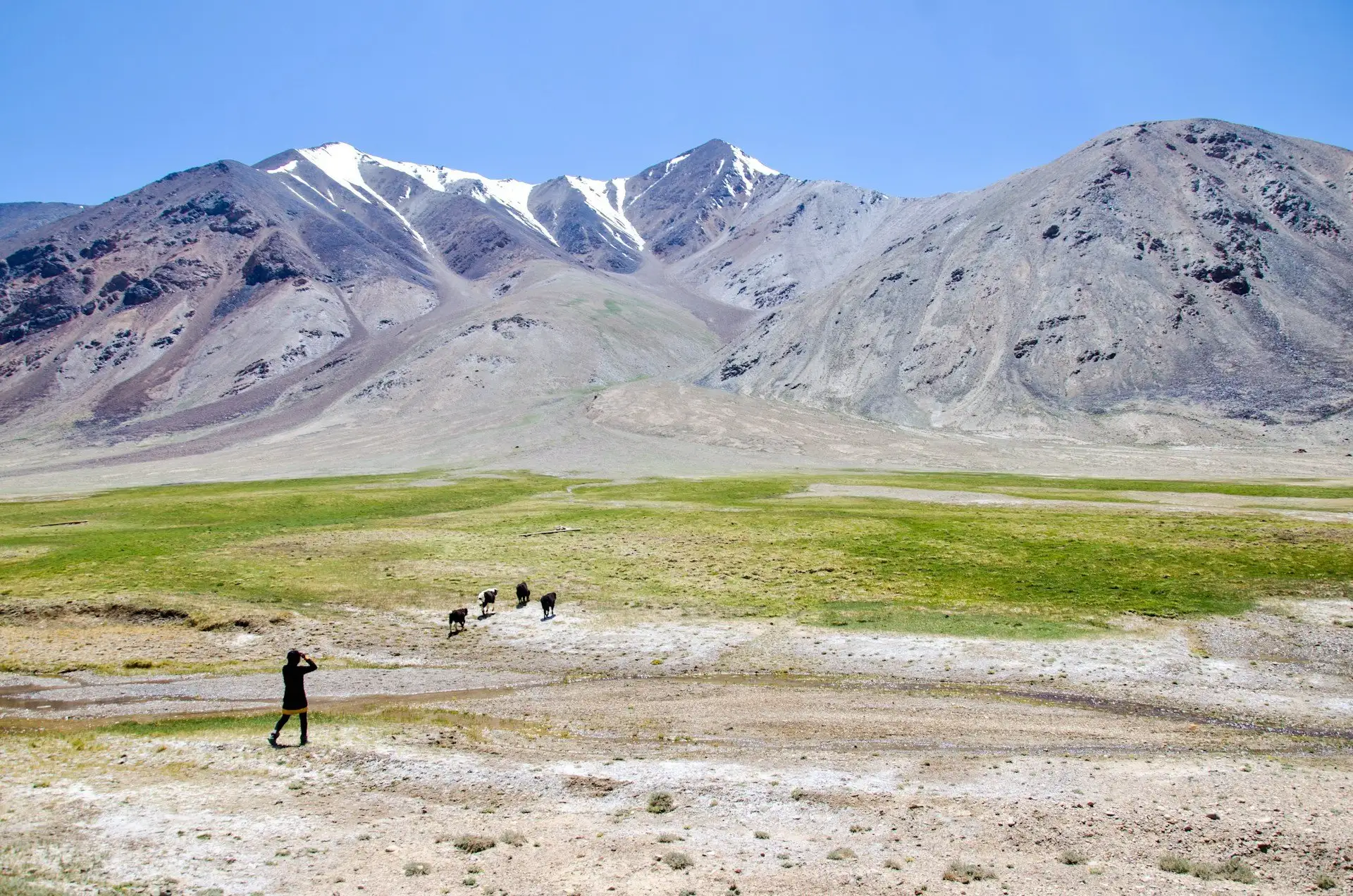
Tajikistan is the mountain country of Central Asia, and unlike its Turkic-speaking neighbors, it is Persian: the language, the poetry, the architecture and the sense of history all trace back to the Samanid Empire, the ninth and tenth century dynasty that made Bukhara the intellectual capital of the Persian-speaking world. The currency, the somoni, is named for the dynasty's founder, and his gilded statue dominates the main square in Dushanbe. Almost none of that history is why most people come, though. They come for the Pamir Highway, the second-highest international road on earth, and for a country that was essentially closed to independent travelers until a functioning eVisa system launched in 2018.
The tourism infrastructure that exists is real but young. A community-based homestay network covers the Pamirs and the Fann Mountains well, Dushanbe has genuinely good international hotels, and the roads, while frequently rough, are being steadily upgraded with Chinese and World Bank financing. What Tajikistan does not have is the polish of Uzbekistan's restored Silk Road cities or the visa-free ease of Kyrgyzstan. What it has instead is scale: entire valleys with no other foreign travelers in them, and mountains that make the Alps look modest.
The honest complications
Tajikistan is poor, still recovering economically from a civil war that ended in 1997, and that shows in patchy infrastructure outside Dushanbe: unpaved stretches on the Pamir Highway, unreliable domestic flights to Khorog, and ATMs that thin out fast once you leave the capital. The Gorno-Badakhshan region, which is to say the Pamir Highway itself, carries a higher official safety advisory than the rest of the country and requires a separate travel permit that authorities can suspend on short notice. English is limited outside tourism businesses; Russian is the more useful second language to lean on. None of this makes the trip not worth it, but it does mean planning here takes more legwork than a first Central Asian trip to Uzbekistan or Kyrgyzstan.
A History Worth Knowing
Tajiks are the Persian-speaking people of Central Asia, descended from Sogdian and Bactrian populations that predate the Turkic migrations that shaped the region's other modern nations. Their golden age was the Samanid Empire (819-999 CE), based in Bukhara, whose court patronized Rudaki, considered the father of Persian poetry, and whose intellectual circle overlapped with a young physician named Ibn Sina, known in the West as Avicenna. Centuries of Mongol conquest, Timurid rule and the Emirate of Bukhara followed, then Russian imperial expansion, Soviet nation-building that drew today's borders in 1929, independence in 1991, and a brutal five-year civil war that shaped the country's politics for a generation.
- 819-999 CE
The Samanid Empire. Centered on Bukhara and Samarkand, the era Tajiks regard as their cultural golden age: Persian poetry, science and the roots of the modern Tajik language, all patronized from a court that also nurtured the young Avicenna.
- 1929
The Tajik SSR. Soviet border-drawing separates Tajikistan from the historically Tajik-Persian cities of Bukhara and Samarkand, which go to the Uzbek SSR, a decision still felt as a loss by many Tajiks today.
- 1991
Independence. Declared 9 September as the Soviet Union dissolves, reluctantly and with little preparation for self-government.
- 1992-1997
Civil war. Government forces under Emomali Rahmon fight the United Tajik Opposition; tens of thousands die before a UN-brokered peace agreement ends the conflict in June 1997.
- 1992-present
The Rahmon era. Emomali Rahmon has led Tajikistan continuously since November 1992, one of the longest tenures of any current head of state.
- 2018-present
The eVisa opens the country. A functioning online visa system replaces a notoriously difficult paper process, and independent tourism to the Pamir Highway grows from a niche pursuit into a recognizable travel circuit.
Read the full history: the Samanids, the Great Game, and the road to today
Before the Samanids, the region was home to Sogdian city-states, Silk Road merchant cultures whose language and art influenced Central Asia for centuries; the ancient Sogdian city near modern Penjikent, now in ruins, was one of their major centers. Islam arrived with the Arab conquests of the seventh and eighth centuries, and the Samanid dynasty that followed built a Persian-speaking Islamic civilization distinct from the Arab caliphate to its west, a distinction Tajiks still draw today against their Turkic-speaking neighbors.
Mongol invasions in the 13th century, Timurid rule from Samarkand in the 14th and 15th, and eventual absorption into the Emirate of Bukhara and the Khanate of Kokand followed. Russian imperial expansion in the 19th century, the so-called Great Game contest with British India, brought the territory under Russian control by the 1890s. The Soviets carved the Tajik Autonomous Soviet Socialist Republic out of Uzbekistan in 1924 and upgraded it to a full union republic in 1929, but drew the border to keep Bukhara and Samarkand, both historically Persian-Tajik cities, inside Uzbekistan: a decision with lasting resentment attached.
The civil war. Independence in 1991 triggered a power struggle between the old Soviet-era communist establishment and a coalition of Islamist and democratic opposition groups. Fighting broke out in 1992 and continued for five years, killing an estimated 50,000 to 100,000 people and displacing hundreds of thousands more before the government of Emomali Rahmon and the United Tajik Opposition signed a UN-brokered peace agreement in Moscow in June 1997. Rahmon has governed continuously since, and the post-war decades have brought slow but real stabilization, Chinese-financed road and tunnel construction, and, since 2018, a workable tourist visa system that finally opened the Pamir Highway to independent travelers rather than only organized expeditions.
Top Destinations
Tajikistan divides into the capital and its accessible mountain day trips, the high Pamir Highway and GBAO region, the Fann Mountains between Dushanbe and the north, and the ancient Sogdian sites around Penjikent and Khujand. Distance is deceptive: the country is smaller than Wisconsin, but mountain roads mean a map inch can be a full day's drive.
Dushanbe, the green capital
Dushanbe is a low-rise, tree-lined capital built largely in the Soviet era and remade since with a run of outsized monuments: the gilded Ismoili Somoni monument on Dusti Square, a flagpole that briefly held the world record at 165 meters, and the National Museum of Tajikistan sitting in the same park. The National Museum of Antiquities across town holds the country's single best artifact, a 13-meter reclining Buddha excavated from the Ajina Tepa Buddhist monastery. Give the capital two days; it is a calm, walkable introduction to the country before the mountains take over.
The Pamir Highway, Dushanbe to Osh
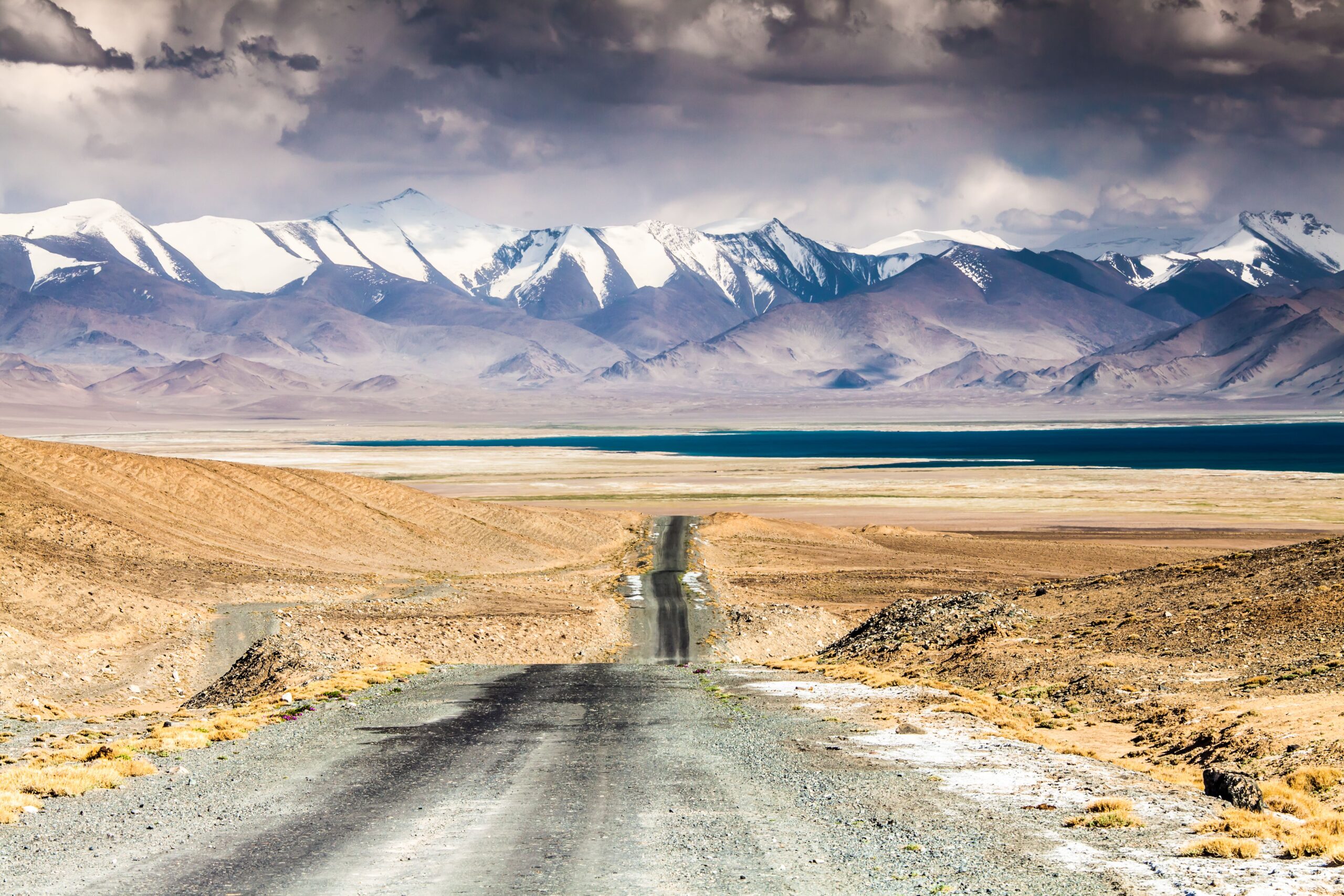
The M41 runs from Dushanbe through the Gorno-Badakhshan Autonomous Oblast to Osh in Kyrgyzstan, crossing the Ak-Baital Pass at 4,655 meters, the second-highest point of any international highway after the Karakoram in Pakistan and China. Most travelers hire a driver and 4x4 for 7 to 10 days rather than self-drive. Khorog, the GBAO capital, sits in a green river valley and feels like a different country from Dushanbe: a strong Ismaili Muslim culture, an Aga Khan-funded university campus, and a relaxed, leafy town square. From Khorog the Wakhan Valley runs along the Afghan border, its Silk Road-era fortresses at Yamchun and Kah Kaha looking directly across the river into Afghan villages. Murghab, the highest town on the route, and Karakul, a startling turquoise lake filling a meteorite crater near the Kyrgyz border, are the classic final stops.
The Fann Mountains
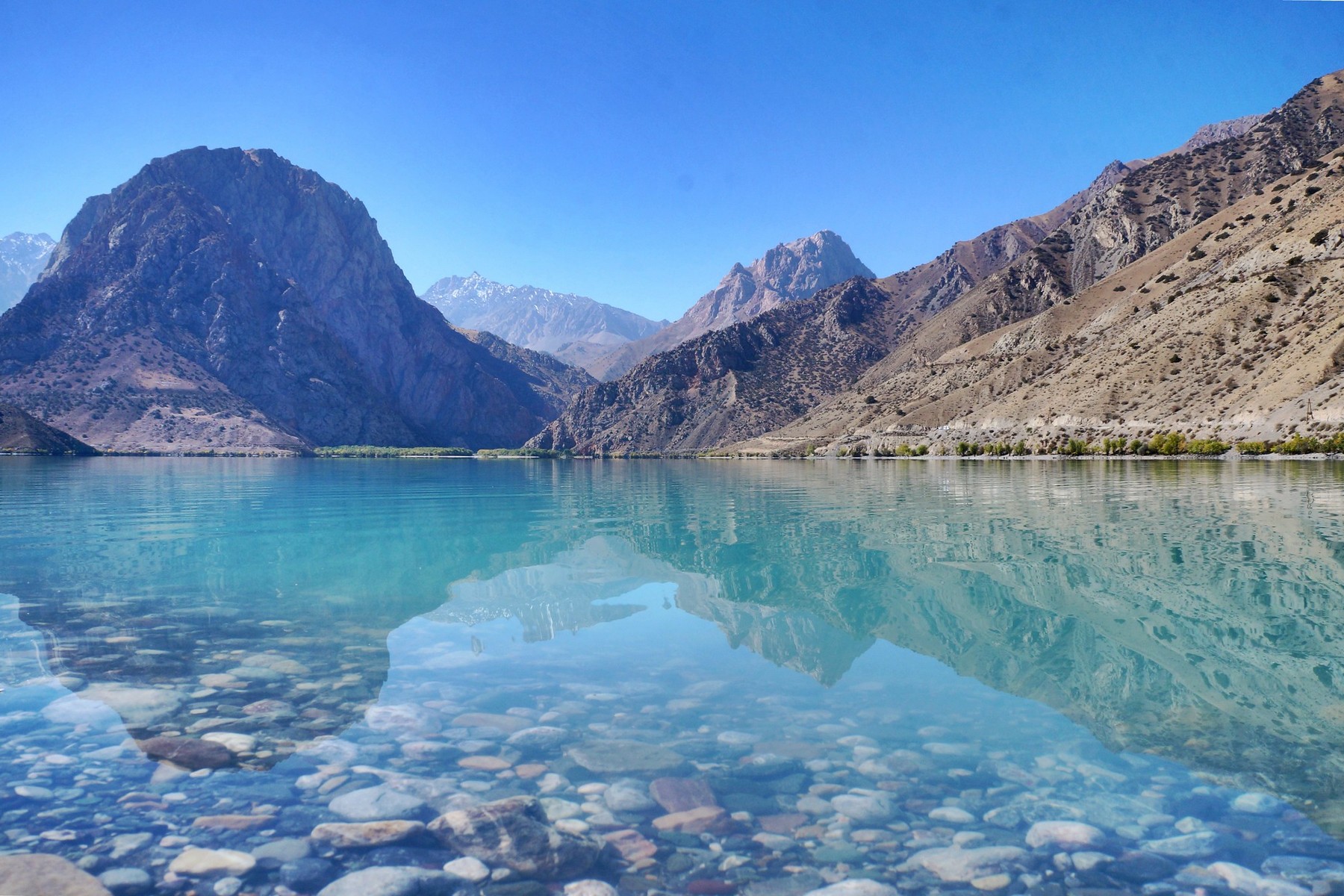
Wedged between Dushanbe and the northern city of Khujand, the Fann Mountains pack more than 30 peaks over 5,000 meters into a compact, accessible range, with Chimtarga at 5,489 meters the highest. Iskanderkul, a glacial lake named for Alexander the Great, whom local legend credits with founding it, sits about five hours from Dushanbe and combines easy access with a genuinely dramatic setting, waterfalls, emerald water and snow peaks in view from the shore. The Seven Lakes, Haft Kul, chain runs up a valley near Penjikent and can be visited lake by lake in a day or turned into a multi-day trek through the villages that farm the terraces between them.
Khujand, the second city
Khujand sits in the fertile Fergana Valley in Tajikistan's northern panhandle, connected to Dushanbe by the Chinese-built Shahristan and Anzob tunnels or, more scenically, by a longer drive over the Fann foothills. The old fortress and the Sheikh Muslihiddin religious complex anchor the historic core, and the Panjshanbe Bazaar, a grand Soviet-era covered market, is one of the most active traditional markets in the country. Khujand is a lower-key, more workaday counterpoint to Dushanbe, and the natural jumping-off point for Penjikent and the Seven Lakes if you are arriving from Uzbekistan.
Penjikent & Sarazm
Penjikent is one of Tajikistan's oldest cities and the base for visiting Sarazm, a Bronze Age proto-urban settlement and the country's only UNESCO World Heritage Site, inhabited from roughly 4000 BCE. Just outside modern Penjikent, the ruins of ancient Sogdian Penjikent, abandoned after the Arab conquest in the eighth century, preserve the street plan of a major Silk Road trading city; most of the wall paintings excavated here now sit in the Hermitage in St. Petersburg, but the site itself, largely unrestored and often empty of other visitors, is worth the detour on its own.
Hidden gems beyond the main circuit
The zones above are already off the beaten path by most standards. These reward an extra day or a second trip.
Bibi Fatima hot springs
A natural thermal spring above the Wakhan Valley near Vrang, believed locally to boost fertility, with simple changing rooms and a view down the valley toward Afghanistan. A welcome stop after days of rough Pamir roads.
Ajina Tepa site
The excavated Buddhist monastery where the sleeping Buddha now in Dushanbe's National Museum of Antiquities was found. The original mudbrick site is modest today, but standing where a Buddhist community once thrived in Muslim Central Asia is its own kind of striking.
Karakul Lake
A high-altitude lake filling a meteorite impact crater at nearly 4,000 meters, ringed by the Pamir peaks. Basic homestays in Karakul village let you watch the light change over the water at dawn, one of the highway's quiet highlights.
Culture & Etiquette
Tajik hospitality runs deep and is genuinely felt rather than performed: being invited to tea, or to a full meal, by people who have very little to spare is a common experience for visitors, and accepting graciously matters. Most of the country is Sunni Muslim, but the Pamir region is predominantly Ismaili Shia, followers of the Aga Khan, whose community-development network funds much of the region's schools, roads and the university in Khorog: a genuinely different religious culture from the rest of the country, worth understanding before you arrive.
Do
- Accept tea and food when offered. Refusing outright can read as an insult; a small taste before politely declining more is the graceful way to pace yourself through a long visit.
- Treat bread with respect. Non, the round tandoor bread, is treated as close to sacred: never placed upside down, never thrown away, never stepped over.
- Dress modestly, especially outside Dushanbe: shoulders and knees covered for both men and women in rural areas and the Pamirs.
- Carry cash. ATMs are reliable in Dushanbe and Khorog, sparse to nonexistent elsewhere. Bring US dollars to exchange and small somoni notes for rural homestays and markets.
- Greet elders first and with your right hand; a light handshake or hand-on-heart nod both work.
Don't
- Photograph government buildings, military checkpoints or border installations. Enforcement is inconsistent but the risk isn't worth it, particularly near the Afghan border and around Pamir checkpoints.
- Bring up politics unprompted, especially the Rahmon government. Locals may speak candidly once trust is established; visitors volunteering opinions first is a different matter.
- Leave marked roads or trails near the Afghan, Uzbek or Kyrgyz border valleys. Unexploded landmines remain a documented hazard in the Vakhsh and Rasht valleys and along parts of the border.
- Assume Turkic customs apply. Tajik culture is Persian, not Turkic, and distinct from the Uzbek, Kyrgyz and Kazakh cultures around it, a distinction that matters to Tajiks.
- Skip GBAO permit paperwork to save time. Checkpoints on the Pamir Highway do check, and being turned back mid-trip is a far bigger loss of time.
Deeper culture: the Ismailis of the Pamirs, Nowruz and the Tajik language
The Ismailis of the Pamirs. Unlike the Sunni majority elsewhere in Tajikistan, most Pamiris follow Ismaili Shia Islam under the spiritual leadership of the Aga Khan. Ismaili homes in the region often follow a distinctive traditional layout with a central skylight and pillars symbolizing family members; guests are frequently invited in, and the openness of Pamiri hospitality is one of the most consistently remarked-on parts of the trip.
Nowruz. The Persian new year, around 21 March, is the biggest holiday of the year, marking the spring equinox with family gatherings, special foods and, in Dushanbe, large public celebrations. It predates Islam and is shared with Iran, Afghanistan and other Persian-influenced cultures.
The Tajik language. A Persian language closely related to Dari (Afghanistan) and Farsi (Iran), written in a Cyrillic-based alphabet rather than the Arabic script used by its linguistic cousins, a Soviet-era legacy. Rudaki, the 10th-century Samanid court poet regarded as the founding figure of Persian poetry, is a genuine source of national pride, and his name is everywhere: the main avenue in Dushanbe, the central park, schools.
Food & Drink
Tajik food shares plenty with its Central Asian neighbors, rice pilafs, grilled meat, flatbread, but has its own defining dish and its own tea culture, built around the chaikhana, the traditional teahouse, rather than the coffee house. Meals in Dushanbe are inexpensive by international standards; outside the capital, homestay dinners are usually included in the room price and are the best food you'll eat in the country.
Qurutob ~$3-5
The national dish: fatir, a layered flatbread, torn into pieces and mixed at the table with a tangy sauce made from qurut, dried fermented yogurt, then topped with onions, tomatoes and herbs. Eaten by hand from a shared plate; the centerpiece of any proper Tajik meal.
Osh (Palov) ~$3-6
Rice pilaf cooked with carrots, onions and meat, usually lamb or beef, in a large communal kazan pot, the Tajik version of the plov found across Central Asia. Fridays are the traditional day for a big family osh.
Green Tea (Choi) ~$0.50-1
The default drink everywhere, poured from a small teapot and topped up constantly. Chaikhana teahouse culture is a genuine social institution, not a tourist prop, and worth sitting in for an hour rather than rushing through.
Non (Bread)
Round tandoor-baked bread present at every meal, often stamped with a decorative pattern before baking. Treated with something close to reverence: never placed upside down or wasted.
Shashlik $3-6
Skewered, charcoal-grilled meat, usually lamb, sold at roadside stalls and restaurant terraces everywhere. A reliable, fast option on long Pamir Highway driving days.
Sambusa ~$0.50 each
Baked, tandoor-cooked pastries filled with spiced meat, onion or pumpkin, sold hot at markets and bus stations. A dependable snack for a full day of driving.
When to Go & Itineraries
Tajikistan effectively runs on two calendars. Dushanbe and the lowlands are pleasant from April through October, with May-June and September-October the sweet spots that avoid both spring mud and summer heat. The high Pamir Highway is a different matter: passes above 4,000 meters are reliably open only from June to September, and snow can close the route entirely outside that window, so if the Pamirs are the point of your trip, build it around summer.
All four seasons compared, with temperatures
| Season | Verdict | Temps | Notes |
|---|---|---|---|
| Jun-Sep | Best for Pamir Highway | 19-30°C Dushanbe, cooler at altitude | Only reliable window for the high passes |
| May & Oct | Best for lowlands | 15-25°C Dushanbe | Fann Mountains and Dushanbe excellent; Pamir passes marginal |
| Jul-Aug | Good but hot | Up to 40°C Dushanbe | Peak season for Pamir Highway bookings; lowlands can be uncomfortably hot |
| Nov-Mar | Avoid the Pamirs | 0-10°C Dushanbe, well below freezing at altitude | High passes closed by snow; Dushanbe itself is manageable and quiet |
Dushanbe averages: 16°C annual, up to 40°C in July. Khorog and the Pamirs run noticeably cooler year-round; Murghab, at nearly 3,600 meters, sees sub-zero nights even in summer.
Itineraries
Seven days covers Dushanbe and the Fann Mountains comfortably. Two weeks is the practical minimum to add a real Pamir Highway run rather than a rushed preview of it.
- Days 1-2
Dushanbe. Ismoili Somoni monument, National Museum of Antiquities, Rudaki Park, a day trip to Hisor Fortress or Varzob Gorge.
- Days 3-4
Fann Mountains. Drive to Iskanderkul (5 hours), a night by the lake, then on toward Penjikent through Fann foothill villages.
- Days 5-7
Penjikent & Sarazm. The Sarazm UNESCO site, ancient Sogdian Penjikent ruins, and, time permitting, a day or two on the lower Seven Lakes before returning to Dushanbe.
- Days 1-2
Dushanbe, as above, plus applying for the eVisa and GBAO permit if not already done.
- Days 3-5
Fann Mountains & Penjikent. Iskanderkul, the Seven Lakes, and Sarazm, at a fuller pace than the one-week version.
- Days 6-10
Pamir Highway, Dushanbe to Khorog. Overnight stops in the Wakhan Valley, the Yamchun and Kah Kaha fortresses, and the Bibi Fatima hot springs.
- Days 11-14
Khorog to Murghab & Karakul. The high plateau, the Ak-Baital Pass, Karakul Lake, and either a return to Dushanbe by air or an onward crossing to Osh, Kyrgyzstan.
- Days 1-3
Dushanbe extended, with a full day at Varzob Gorge and a slower pace through the museums.
- Days 4-8
Fann Mountains trekking. A multi-day trek through the Seven Lakes valley rather than a drive-by visit, based out of Artuch.
- Days 9-10
Khujand & the north. The Panjshanbe Bazaar and the Fergana Valley side of the country, reached via the Shahristan or Anzob tunnels.
- Days 11-17
Full Pamir Highway. Dushanbe to Khorog to the Wakhan Valley to Murghab to Karakul, at an unhurried pace with rest days built in for altitude.
- Days 18-21
Onward to Kyrgyzstan or back to Dushanbe. Cross to Osh via the Kyzyl-Art Pass, or fly back from Khorog when weather allows, with a buffer day for the flight's frequent cancellations.
Getting there & around
Dushanbe International Airport (DYU) is the main gateway, served by Somon Air, the national carrier, along with Turkish Airlines, flydubai, Air Astana, S7 and others from regional hubs; Istanbul is the most common long-haul connection, at roughly 4.5 hours nonstop. Overland entry from Uzbekistan or Kyrgyzstan is straightforward at the main border crossings. Inside the country, shared taxis link the main cities cheaply, but the Pamir Highway itself is almost always done with a hired driver and 4x4, arranged in Dushanbe or Khorog; self-drive rentals exist but are uncommon and the road conditions reward local experience.
Domestic flights, shared taxis and practical prep
| Option | Price | Notes |
|---|---|---|
| Dushanbe-Khorog flight | ~$50-70 | Spectacular when it flies, but weather-dependent and frequently cancelled or delayed; never book a tight connection around it. |
| Shared taxis | Varies by route | Leave when full from designated stands; the standard way locals travel between cities. |
| Hired 4x4 with driver | ~$80-150/day | The standard way to do the Pamir Highway; usually arranged through a Dushanbe or Khorog agency, split among a group. |
| Overland border crossings | Free (visa fees apply) | Main crossings from Uzbekistan (near Khujand) and Kyrgyzstan (Kyzyl-Art Pass) are used regularly by independent travelers. |
Practical prep: bring more cash than you think you need in US dollars, since ATMs thin out fast outside Dushanbe and Khorog, and download offline maps before heading into the Pamirs, where signal is patchy to nonexistent. An eSIM covers Dushanbe well but won't help much past Khorog. Altitude matters on the Pamir Highway: build in acclimatization time rather than racing straight to Murghab, and know the symptoms of altitude sickness before you go.
Where to stay
Pamir & Fann homestays
A community-based tourism network covers the Pamir Highway and Fann Mountains with family homestays, dinner and breakfast typically included and made from the household's own supplies. The single best way to experience both regions, and often the only accommodation option outside the main towns.
Dushanbe hostels
Green House Hostel and Topchan Hostel both specialize in helping travelers plan Pamir Highway logistics, drivers and permits alongside dorm beds and private rooms; Hello Dushanbe Hostel is a well-reviewed alternative closer to the center.
Dushanbe international hotels
Hyatt Regency Dushanbe, next to City Park and Komsomol Lake, Dushanbe Serena Hotel, and Hilton Dushanbe cover the top end of the capital's hotel scene, all with the reliability international chains bring to a country where that isn't a given everywhere.
Khorog & GBAO guesthouses
Khorog has a small but growing set of family-run guesthouses aimed at Pamir Highway travelers, usually arranged the same way as onward homestays, through a local agency or word of mouth once you arrive.
Budget Planning
Tajikistan is one of the more affordable countries in Asia for day-to-day costs, food, homestays and city transport are all cheap, but a Pamir Highway trip has one unavoidable line item: a hired driver and vehicle, which most travelers split among a small group to keep it reasonable.
- Homestay or hostel incl. some meals $10-20
- Market meals and street food $3-6
- Shared taxis between towns
- Driver cost split across a group of 4
- Dushanbe business hotel or private guesthouse
- Restaurant meals $8-15
- Smaller-group hired 4x4
- Domestic flight where schedules allow
- Hyatt Regency or Serena in Dushanbe
- Private driver and dedicated guide
- Best available Khorog and Pamir lodging
- Domestic flights over long overland legs
Quick reference prices: tea, meals, permits
| Qurutob at a local restaurant | ~$3-5 |
| Pot of green tea | ~$0.50-1 |
| Hostel dorm bed, Dushanbe | ~$4-10 |
| Pamir or Fann homestay incl. dinner | $10-20 |
| eVisa, single entry | $30 |
| GBAO permit add-on | ~$20 |
| Hired 4x4 with driver | $80-150/day |
| Dushanbe-Khorog flight | ~$50-70 |
Prices reflect August 2026 research and drift over time, especially fuel-linked driver and vehicle costs on the Pamir Highway. Treat them as a planning baseline, not a quote.
Visa & Entry
Nearly every nationality needs a visa for Tajikistan, and the eVisa system at the official portal, evisa.tj, is the standard route: apply online, pay $30 for a single-entry visa valid for a 45-day stay or $50 for multiple entry, and approval typically arrives within about 72 hours. If the Pamir Highway or anywhere in the Gorno-Badakhshan Autonomous Oblast is on your itinerary, add the GBAO permit, roughly $20, to the same application; it is an endorsement on the eVisa, not a separate document.
✓ Valid passport
At least 6 months validity from date of entry is the safe standard to work to, even where the formal requirement is shorter.
✓ eVisa printout
Print or save the approved eVisa; border officials at land crossings in particular sometimes expect a physical copy alongside the digital one.
✓ GBAO permit, if applicable
Required for the Pamir Highway and anywhere in GBAO. Apply for it alongside your eVisa at evisa.tj; checkpoints on the highway do check.
✓ Travel insurance
Not formally required but genuinely important given how remote the Pamir Highway is; confirm your policy covers high-altitude travel and emergency evacuation.
| Tajikistan | Kyrgyzstan | |
|---|---|---|
| Visa | eVisa required for nearly everyone, plus GBAO permit for the Pamirs | Visa-free for 60+ nationalities, generally simpler entry |
| Mountains | The Pamirs: higher, harder to reach, fewer other travelers | The Tien Shan: more developed trekking infrastructure, easier logistics |
| Daily budget | $45-60 covers a comfortable budget trip | Broadly comparable, sometimes marginally cheaper |
| First-timer friendliness | Rewards a second or third Central Asia trip | The easier, more common first stop in the region |
| Safety advisory | Level 2 overall, Level 3 for GBAO and the Afghan border strip | Level 2 overall, no equivalent regional hold |
Safety, Solo Women & Family
The US State Department rates Tajikistan Level 2, Exercise Increased Caution, overall, citing terrorism risk, unexploded landmines, occasional border violence with Kyrgyzstan and the country's limited ability to assist dual US-Tajik nationals. Two specific areas carry a higher Level 3, Reconsider Travel, rating: the immediate strip along the Afghan border, and the entire Gorno-Badakhshan Autonomous Oblast, which is to say the Pamir Highway. That second point matters because GBAO is exactly where most independent travelers are headed; read the official advisory yourself before booking dates, since conditions and permit availability can change.
GBAO & Afghan border
Reconsider-travel advisory level due to the potential for armed conflict and the unpredictable security situation across the border in Afghanistan. Check the current US State Department advisory and local news before finalizing a Pamir Highway trip.
Unexploded landmines
A documented hazard in the Vakhsh and Rasht valleys and along the Afghan and Uzbek borders. Stay on roads, tracks and marked paths, and never touch anything resembling old munitions.
Altitude
The Pamir Highway spends days above 3,500 meters. Build in acclimatization time, drink more water than feels necessary, and know the symptoms of altitude sickness before you go.
Two more things worth knowing: dual nationals and the Kyrgyz border
Dual US-Tajik nationals. Tajikistan does not recognize dual nationality with the United States. Dual nationals and those of Tajik descent may face additional scrutiny at the border and can be denied access to consular assistance if detained; this is a real consideration specifically for that group, not for tourists generally.
The Kyrgyz border. There have been periodic armed skirmishes between Tajik and Kyrgyz border guards in recent years, particularly around the Isfara area and the Vorukh enclave. Crossing points have reopened following 2025 bilateral agreements, but it's worth checking current status before relying on a specific crossing.
The 3 scams to actually know about
Tajikistan is not a high-scam destination, and most travelers report the opposite problem, being given too much rather than being cheated. Three patterns still catch the unprepared, concentrated in Dushanbe, Khujand and the tourist stops along the Pamir Highway.
Taxi overcharging
Unmetered taxis, especially at the airport and bus stations, quote inflated fares to visitors who don't know the going rate. Agree a price before getting in, or ask your hotel or hostel for the fair local rate first.
Unofficial "guides"
Individuals claiming official guide status approach travelers around Dushanbe's tourist hotels and hostels offering Pamir Highway trips at inflated prices. Book drivers and permits through an established hostel or agency with a verifiable track record instead.
Bad rates & counterfeit notes
Informal street exchangers occasionally shortchange or pass worn or fake bills. Use bank branches or authorized exchange offices in Dushanbe rather than street changers.
Solo women travelers
Solo female travel in Tajikistan is increasingly common and generally goes well, particularly in Dushanbe and on the well-used Pamir homestay circuit, where hosts are used to travelers of every kind arriving alone. Expect more staring and curiosity than outright harassment, especially outside the capital, and dress modestly to reduce unwanted attention. Use licensed taxis rather than hailing unmarked cars, particularly at night in Dushanbe, and lean on hostel and homestay networks, which are well set up to connect solo travelers heading the same direction on the Pamir Highway, an easy way to share driver costs and company at once.
Emergency numbers
US Embassy Dushanbe and mountain emergency protocol
The US Embassy in Dushanbe is at 109A Ismoili Somoni Avenue; the consular line is +992-37-229-2300 and the after-hours emergency line is +992-37-229-2000. Enrolling in the State Department's STEP program before you travel is worth doing given how remote parts of the Pamir Highway are.
Pamir Highway emergencies: cell signal is patchy to absent past Khorog. Your driver and homestay hosts are the fastest source of local help in a genuine emergency, and it's worth confirming your travel insurance covers high-altitude evacuation before you set out, since formal emergency response in this part of the country is thin.
Family travel
Dushanbe and the Fann Mountains work reasonably well for families with older children who can handle long car days; the museums, parks and the Iskanderkul lake trip all land well with kids. The Pamir Highway is a harder case: multi-day drives at altitude, basic homestay facilities and limited medical access make it a better fit for teenagers than younger children, and altitude sickness risk applies to kids the same as adults.
Tajikistan FAQ
Is Tajikistan safe to visit?
For most of the country, yes, with normal precautions. The US State Department rates Tajikistan Level 2, Exercise Increased Caution, but raises that to Level 3, Reconsider Travel, for the immediate Afghan border strip and for the Gorno-Badakhshan Autonomous Oblast, the Pamir region most trekkers come for. Read the safety chapter before planning a Pamir Highway trip.
Do I need a visa for Tajikistan?
Yes. Almost all nationalities need an eVisa, applied for online at the official portal evisa.tj: $30 for a single-entry 45-day visa or $50 for multiple entry. Approval typically takes about 72 hours.
What is the GBAO permit and do I need one?
The GBAO permit is a mandatory add-on to your eVisa, about $20, required to enter the Gorno-Badakhshan Autonomous Oblast, which covers the Pamir Highway, Khorog and the Wakhan Valley. Add it during your eVisa application at evisa.tj; it isn't a separate visa.
How much does Tajikistan cost per day?
Budget travelers manage on $45-60 a day using homestays and hostels, mid-range runs $70-120. It's one of the cheaper countries in Asia to travel in, though hiring a driver for the Pamir Highway adds a meaningful cost most visitors should budget for.
When is the best time to visit Tajikistan?
May-June and September-October for Dushanbe and the lowlands. For the high Pamir Highway, the passes are reliably open only from June to September; outside that window snow can close them entirely.
How many days do you need in Tajikistan?
Seven days covers Dushanbe, the Fann Mountains and Penjikent's Sarazm ruins well. Two weeks is the minimum to add a proper Pamir Highway run to Khorog and the Wakhan Valley.
What is the Pamir Highway?
The M41, running from Dushanbe through the Gorno-Badakhshan region to Osh in Kyrgyzstan, is the world's second-highest international highway, crossing the Ak-Baital Pass at 4,655 meters. It's one of the great overland road trips, usually done by hired 4x4 over 7 to 10 days.
What language is spoken in Tajikistan?
Tajik, a Persian language close to Dari and Farsi, is the official language. Russian remains widely spoken as a second language, especially in Dushanbe and among older generations; English is limited outside tourism-focused businesses.
Is Tajikistan safe for solo female travelers?
Generally yes, and increasingly popular for it, though solo women should expect more staring and attention than in Western countries, dress modestly, and use licensed taxis rather than hailing cars on the street. The Pamir homestay network is well used to solo travelers of all kinds.
Is Tajikistan good for families with kids?
Dushanbe and the Fann Mountains work fine for families with older, active children. The Pamir Highway's altitude, long driving days and basic homestay facilities make it a harder sell for younger kids.
Is Tajikistan cheaper than Kyrgyzstan?
Roughly comparable, with Tajikistan sometimes edging cheaper on homestays and food. Kyrgyzstan is visa-free for far more nationalities and has more developed trekking infrastructure, so it's often the easier first Central Asian trip, with Tajikistan the deeper follow-up.
What Stays With You
Tajikistan is not an easy country to visit and it does not pretend otherwise: the roads are rough, the permits take planning, and the safety advisory for the region most people come to see is genuinely something to read carefully rather than skim. What it gives back for that effort is scale most of the world has stopped offering, whole valleys with no other travelers in them, a mountain highway that outranks almost every other road on earth, and a Persian culture that has held its own identity through Mongol conquest, Soviet border-drawing and a civil war without losing the thread back to Rudaki and the Samanids.
Go for the Pamir Highway if that's what draws you, but don't rush past Dushanbe's museums or the Fann Mountains to get there. Tajikistan rewards the slower read as much as the big one.