
What You're Actually Getting Into
Pakistan holds five of the world's fourteen 8,000-metre peaks, the highest concentration of high mountains anywhere on Earth, a Mughal architectural legacy in Lahore that rivals anything in India, and a hospitality culture that returning travelers consistently rank among the strongest they've encountered anywhere. It is also, by most Western measures, under-visited relative to what it offers: decades of security concerns, a historically difficult visa process, and geopolitical noise have kept tourist numbers a fraction of comparable countries, which means the Mughal forts, the glacier valleys and the Karakoram Highway are still experienced without the crowds that define Rajasthan or Nepal's main trekking routes.
That absence of crowds is directly connected to the reason this guide's second chapter, not its ninth, is about safety. Pakistan carries a Level 3 "Reconsider Travel" advisory from the US State Department, and two of its provinces, Balochistan and Khyber Pakhtunkhwa, are under a stronger "do not travel" advisory that this guide takes seriously by excluding them entirely. Read that chapter before you plan anything. Everything else in this guide, Islamabad, Lahore, Hunza Valley, Skardu, sits outside those two provinces and sees regular, standard tourism.
The honest complications
Tourist infrastructure outside the main cities and the established northern circuit is genuinely thin: English signage thins out fast, card payments are unreliable outside hotels, and mountain roads can close without warning after landslides or heavy snow. Solo female travelers face more active street attention than in most of Asia and need to plan around it rather than ignore it. And the visa process, now a mandatory paid e-visa for essentially every nationality since Pakistan suspended its free arrival program on 1 January 2026, takes real advance planning; this is not a spontaneous, buy-a-flight-next-week destination the way Southeast Asia often is. None of this cancels out what the country offers. It does mean Pakistan rewards travelers who prepare rather than wing it.
The Advisory, in Plain Language
The US State Department rates Pakistan Level 3, "Reconsider Travel," citing terrorism, crime and kidnapping, most recently reaffirmed in June 2026. That single national rating hides a lot of internal variation: Islamabad, Lahore and the northern tourist circuit (Hunza, Skardu, Gilgit-Baltistan) see steady, unremarkable tourism day to day, while Balochistan province and Khyber Pakhtunkhwa province, including the former tribal districts and areas bordering Afghanistan, sit under a stronger "do not travel for any reason" advisory tied to an active insurgency and routine terrorist attacks. This guide does not cover either province as a tourism destination, and neither should your itinerary.
Balochistan & Khyber Pakhtunkhwa
Both provinces carry "do not travel for any reason" advisories from the US and UK governments, citing terrorism, kidnapping and an active insurgency. Foreigners need a No Objection Certificate (NOC) to enter parts of either and are unlikely to receive one for general tourism. Not covered in this guide.
India-Pakistan border tension
Relations with India remain tense following a serious escalation in spring 2026; the border itself and areas near it are not tourist zones under normal circumstances regardless. It has no bearing on travel in Islamabad, Lahore or the north, but check current news before any trip near the Punjab-India border.
Standard-circuit crime
Petty theft, scams and overcharging occur in tourist areas at levels comparable to other South Asian capitals. Violent crime against foreign tourists on the standard circuit is rare; use normal city awareness, agree taxi and rickshaw fares upfront, and avoid political demonstrations.
What this means in practice for the trip this guide covers
Every destination in this guide, Islamabad, Rawalpindi, Lahore, Taxila, Murree, Hunza Valley, and Skardu, is outside Balochistan and Khyber Pakhtunkhwa. Travelers who stick to this circuit are following the same route the large majority of Pakistan's growing international tourism already takes, and the safety picture there is closer to a normal, if unusually hospitable, South Asian trip than to the advisory headline. Swat Valley, technically inside Khyber Pakhtunkhwa but a separately rebuilt tourism zone with a strong recent safety record, is a real exception some travelers add; if you're considering it, verify the current NOC and security situation directly before going, since local access rules can change with little notice, and this guide does not include it in its main itineraries out of caution.
Register with your embassy before traveling, keep a scan of your passport and visa separate from the originals, and confirm your operator's current guidance before any trip into Gilgit-Baltistan, since mountain-road conditions and permit rules shift faster than an annually updated page can track.
Emergency numbers
US Embassy Islamabad contact information
The US Embassy in Islamabad's main line is +92-51-201-4000 (also reachable toll-free from the US at 1-888-407-4747), Monday-Friday 8am-4:30pm; after hours, ask to be connected to the Duty Officer for genuine emergencies. The 1122 Rescue service, launched in Punjab and now covering much of the country, is a well-regarded free ambulance and emergency response line separate from the police.
Solo travelers & women
Pakistan is more actively hospitable toward guests, including solo female travelers, than almost anywhere else in Asia, and it also requires more active navigation of street attention (staring, occasional catcalling, casual "accidental" contact in crowds) than most of the region. Dressing conservatively, a shalwar kameez or loose clothing covering shoulders, arms and legs, measurably changes how you're treated, especially outside Islamabad's more cosmopolitan Blue Area. Most solo women who make the trip report the hospitality far outweighs the friction once they've adjusted, and traveling with a local guide or fixer for the northern mountain routes is common practice for everyone, not just women, given the road conditions rather than any specific threat.
A History Worth Knowing
Pakistan sits on some of the oldest continuously inhabited land in the world: the Indus Valley Civilization, one of humanity's first great urban cultures, flourished here from around 2500 BCE at sites like Mohenjo-daro and Harappa. Centuries of Persian, Greek, Buddhist and Hindu rule followed before Islam arrived with traders in the 8th century, culminating in the Mughal Empire's golden age, whose mosques and forts in Lahore remain the country's architectural centerpiece. British colonial rule ended in the 1947 Partition of India, when Pakistan was created as a homeland for South Asia's Muslims amid the largest and most violent mass migration in modern history.
- c. 2500 BCE
Indus Valley Civilization. Mohenjo-daro and Harappa, among the world's first planned cities, flourish in what is now Sindh and Punjab.
- 8th century
Islam arrives. Muslim traders and, later, conquerors establish Islam in the Sindh region, beginning centuries of Islamic rule and culture.
- 1526-1857
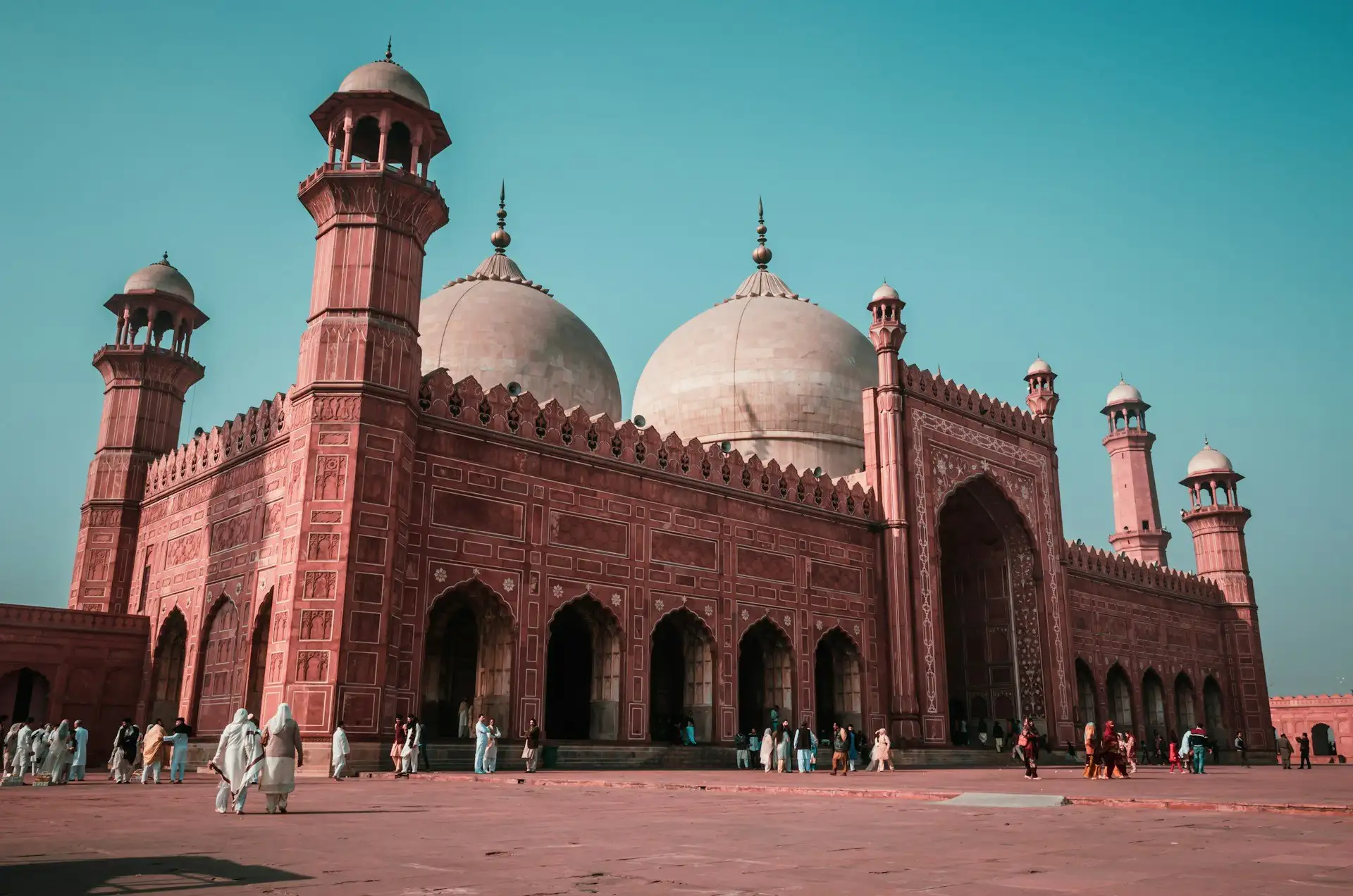
The Mughal Empire. Lahore becomes a major Mughal capital; Badshahi Mosque and Lahore Fort date from this era's architectural peak.
- 1858-1947
British Raj. Direct British colonial rule follows the end of Mughal authority; the independence movement builds through the early 20th century.
- 14 August 1947
Independence & Partition. Pakistan is created under founder Muhammad Ali Jinnah as a homeland for South Asia's Muslims, amid mass displacement and communal violence that killed hundreds of thousands.
- 1971
Separation of Bangladesh. East Pakistan becomes independent Bangladesh after a war, reshaping the country to its current borders.
- 2000s-present
Security, recovery and reopening. Decades of instability in the northwest give way to a rebuilt tourism sector, especially in the north, alongside the ongoing security challenges this guide addresses directly in Chapter 2.
Read more: Jinnah, the Indus cities and the Silk Road at Taxila
Muhammad Ali Jinnah, Pakistan's founding father, led the All-India Muslim League's campaign for a separate Muslim state through the 1930s and 1940s, and is honored across the country as Quaid-e-Azam, "Great Leader." His mausoleum in Karachi remains a major national monument.
Mohenjo-daro, in Sindh province, is one of the best-preserved Bronze Age cities anywhere, with a level of urban planning, grid streets, covered drainage, standardized brick sizes, that startled the archaeologists who excavated it in the 1920s. It sits outside this guide's main circuit but is a legitimate specialist destination for ancient history travelers.
Taxila, an easy day trip from Islamabad, tells a different chapter: a major Silk Road center of Buddhist learning and trade from the 1st to 5th centuries CE, with monastery ruins that earned it UNESCO World Heritage status in 1980, and one of the more accessible ancient sites in South Asia for a casual visitor.
Top Destinations
This guide covers four zones, all outside Balochistan and Khyber Pakhtunkhwa: the capital region, Lahore's Mughal old city, the northern mountains of Gilgit-Baltistan, and the easy day-trip country around Islamabad. A week covers the capital and Lahore well; two to three weeks adds a proper Hunza Valley and Karakoram loop.
Islamabad, the planned capital
Islamabad was purpose-built in the 1960s as Pakistan's capital, and it reads that way: wide tree-lined avenues, sectors labeled by letter and number, and a genuinely relaxed, orderly pace compared to almost anywhere else in the country. The Faisal Mosque, the country's largest and one of the world's biggest, is shaped like a Bedouin tent rather than the traditional dome, free to enter, and open to visitors outside prayer times. The Margalla Hills rise directly behind the city, with Daman-e-Koh the classic viewpoint over Islamabad, Faisal Mosque and Rawal Lake. Twin city Rawalpindi, older and denser, has the region's more traditional bazaar atmosphere, including Raja Bazaar's dense lanes of spice and cloth traders. Budget two to three days, one for Islamabad's sights, one for a Margalla Hills trail, and a half-day in Rawalpindi's old city.
Lahore, the Mughal capital that still feels like one
Lahore is Pakistan's cultural heart and, by most accounts, its most rewarding city for a visitor: the Badshahi Mosque and Lahore Fort sit side by side in the old walled city, both from the Mughal Empire's architectural peak, joined by Wazir Khan Mosque's tiled interior a short walk away. Fort Road Food Street, a five-minute walk from the mosque, is Lahore's famous rooftop dining strip, where restaurants like Cooco's Den and Andaaz serve dinner with Badshahi Mosque lit up directly in front of you. Anarkali Bazaar, one of Pakistan's oldest markets, splits into New Anarkali's boutiques and Old Anarkali's food stalls, both worth an afternoon. An hour and a half from Islamabad by the M-2 motorway, Lahore is easily reachable as a multi-day add-on to the capital.
Hunza Valley, the Karakoram's showpiece
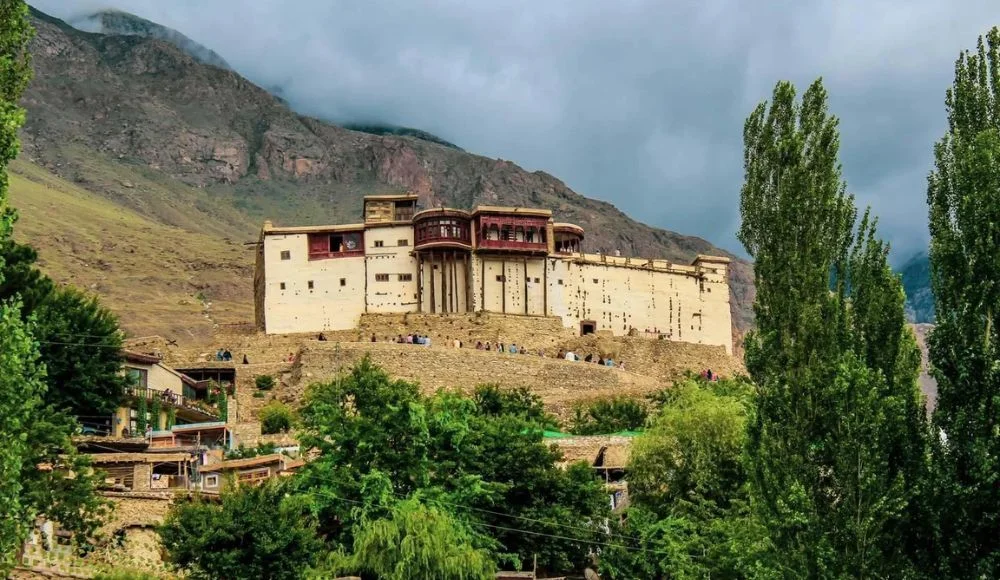
Hunza Valley, reached by the Karakoram Highway from Gilgit or by domestic flight into Gilgit or Skardu, is the single most photographed landscape in Pakistan for good reason: Karimabad, the valley's main town, sits below Baltit Fort, a centuries-old seat of Hunza's former royal family with views straight down the valley to Rakaposhi. Attabad Lake, an improbably turquoise lake formed by a 2010 landslide that dammed the Hunza River, is a short drive further north, with boat rides across its still, cold water. Further up-valley, Passu's cone-shaped peaks and the Passu suspension bridge are a quieter, less-visited stop than Karimabad. May to October is the season: mountain roads are clear, apricot and cherry blossoms peak in late March to mid-April for those visiting slightly earlier, and the passes north toward the Chinese border at Khunjerab stay open.
Skardu, gateway to K2
Skardu, reached by a spectacular but weather-dependent flight from Islamabad or a long drive, is the staging point for expeditions into the Karakoram, including K2, the world's second-highest and most technically demanding major peak. Most visitors don't attempt K2 base camp itself, a serious multi-day trek for experienced trekkers with a registered operator, but use Skardu as a base for shorter treks and for Shangrila and Upper Kachura lakes nearby.
Taxila
An hour from Islamabad, Taxila's UNESCO-listed ruins, Buddhist monasteries, stupas and an on-site museum, date from a 1,000-year run as a Silk Road center of trade and learning. Easily done as a half-day trip by taxi or rented car.
Murree
An hour and a half from Islamabad, Murree is a British-era hill station at around 2,300 meters, cool in summer and snow-covered in winter, with pine forests and Mall Road's shops and viewpoints. A popular weekend escape for Islamabad residents rather than an undiscovered secret, but a pleasant half-day or overnight regardless.
Culture & Etiquette
Hospitality toward guests is close to a cultural obligation in Pakistan, and travelers consistently rank it among the strongest they encounter anywhere: being invited for chai, or for a full meal, by someone you've just met is common and genuinely meant, not a sales pitch. Pakistan is an Islamic Republic and a conservative society by Western standards outside a handful of cosmopolitan neighborhoods in Islamabad, Lahore and Karachi; dress and behavior that would be unremarkable in Southeast Asia will draw attention here.
Do
- Accept chai when offered. Declining repeatedly reads as a genuine social slight; even a token sip is appreciated if you can't finish a full cup.
- Dress modestly. Shoulders, arms and legs covered for everyone; women may find a shalwar kameez noticeably changes how they're treated in more traditional areas.
- Use your right hand for eating, giving and receiving; the left is considered unclean in traditional etiquette.
- Ask before photographing people, particularly women, and always ask before photographing anything that looks military, government or security-related.
- Learn a few Urdu phrases. Shukriya (thank you), assalamu alaikum (hello, literally "peace be upon you"), the standard greeting response is wa alaikum assalam.
Don't
- Show public affection between couples, even married ones; it draws real disapproval outside private spaces.
- Expect to drink alcohol casually. Pakistan is officially dry for Muslims; alcohol is restricted, available only in limited licensed settings for non-Muslim foreigners at select hotels, and not something to rely on finding.
- Discuss the India border conflict or domestic politics casually with strangers; opinions run strong and the topic is more sensitive than it may appear from outside.
- Eat, drink or smoke in public during Ramadan daylight hours. Out of respect even where not strictly enforced for foreigners.
- Wander into unmarked military, government or border-adjacent areas. Security personnel take photography and movement restrictions around these seriously.
Deeper culture: Urdu poetry, Sufi shrines and regional identity
Urdu poetry and language. Urdu, the national language, carries a rich poetic tradition, ghazal and nazm forms, that remains genuinely popular; poets like Allama Iqbal, Pakistan's national poet, and Faiz Ahmed Faiz are quoted in daily conversation far more than Western equivalents typically are.
Sufi shrines. Sufism runs deep through Pakistani Islam, and shrines to Sufi saints, most famously Data Darbar in Lahore, draw devotees for weekly Thursday evening qawwali (devotional music) sessions that are open to respectful visitors.
Regional identity. Pakistan's four provinces, Punjab, Sindh, Khyber Pakhtunkhwa and Balochistan, plus Gilgit-Baltistan and Azad Kashmir, each carry distinct languages, cuisines and cultural identities beneath the shared national and Islamic framework; a Punjabi from Lahore and a Balti from Skardu experience "Pakistani culture" quite differently.
Food & Drink
Pakistani food shares roots with North Indian and Central Asian cuisine but has its own clear identity: heavier on meat, rich curries and slow-cooked stews, lighter on the vegetarian range that defines much of Indian cooking. Lahore, universally regarded as the country's food capital, is worth visiting for the food street scene alone.
Nihari ~$1-3
A rich, slow-cooked beef or mutton stew traditionally eaten for breakfast, simmered overnight until the meat falls apart. Lahore's most iconic dish; served with naan and a squeeze of lime.
Karahi
Chicken or mutton cooked fast in a wok-like karahi pan with tomatoes, ginger, garlic and green chilies. Ordered by weight at most restaurants and meant to be shared with naan straight from the pan.
Biryani $2-5
Layered spiced rice with meat, distinct from Indian versions in spicing; Karachi's version is especially famous, but every region has its own take.
Chai
Sweet, milky tea, offered constantly as a gesture of hospitality and drunk throughout the day. Accepting it is close to a social requirement, not just a beverage choice.
Kebabs & Tikka
Seekh kebabs, chicken tikka and grilled meats from street stalls and dhabas, usually served with naan, raw onion and a green chutney. A reliable, cheap meal almost anywhere.
Lassi
A thick yogurt drink, sweet or salty, especially popular in Punjab. A good counter to Lahore's heat and spice.
When to Go & Itineraries
April-May and September-October are best for Islamabad, Lahore and the lowlands: warm without the brutal summer heat, and clear of monsoon rain. Hunza Valley and the north run on their own calendar, May through October, when mountain roads are clear and the high passes are open; the same summer months are punishingly hot in Lahore and Karachi. Winter closes parts of the Karakoram Highway and brings snow to Murree and the north, while Islamabad and Lahore stay mild and pleasant.
Season-by-season breakdown, with temperatures
| Season | Verdict | Temps | Notes |
|---|---|---|---|
| Apr-May | Best (lowlands) | 20-32°C Lahore/Islamabad | Warm and dry before summer heat; north still snowy at altitude |
| Jun-Aug | Best (north) | 10-25°C Hunza; 35-42°C Lahore | Ideal for Hunza and Gilgit-Baltistan; punishing heat in the lowlands |
| Sep-Oct | Best (lowlands) | 18-30°C Lahore/Islamabad | Post-monsoon clarity, comfortable temperatures, harvest season in the north |
| Nov-Mar | Mixed | 2-18°C Islamabad; snow in the north | Mild in the capital and Lahore; Karakoram Highway partly closes at altitude |
Itineraries
A week covers Islamabad and Lahore comfortably. Two weeks adds a real Hunza Valley loop. Three weeks fits Hunza plus Skardu without rushing the mountain roads, which take longer than the map distance suggests.
- Days 1-3
Islamabad. Faisal Mosque, Daman-e-Koh, Pakistan Monument, a Margalla Hills trail, a half-day in Rawalpindi's Raja Bazaar.
- Day 4
Taxila. A half-day trip to the UNESCO Buddhist ruins, back to Islamabad by evening.
- Days 5-7
Lahore. Drive or bus via the M-2 motorway (about 4 hours). Badshahi Mosque and Lahore Fort, Wazir Khan Mosque, Anarkali Bazaar, and a night at Fort Road Food Street.
- Days 1-4
Islamabad, Taxila & Murree. The capital's sights, Taxila as a half-day trip, and an overnight in Murree.
- Days 5-7
Lahore. The full old-city circuit and Fort Road Food Street.
- Days 8-11
Fly or drive to Hunza Valley. Karimabad, Baltit Fort, Attabad Lake, and a day further up-valley to Passu.
- Days 12-14
Return via Gilgit. Fly back to Islamabad (weather-dependent; keep buffer days) or retrace the Karakoram Highway.
- Days 1-6
Islamabad, Taxila, Murree & Lahore. The 14-day itinerary's first week, unhurried.
- Days 7-14
Hunza Valley in depth. Karimabad, Attabad Lake, Passu, and time built in for weather delays on mountain roads.
- Days 15-19
Skardu. Fly or drive from Gilgit; Shangrila and Upper Kachura lakes, and a short trek toward the Karakoram foothills with a registered local operator.
- Days 20-21
Return to Islamabad. Build in a buffer day for weather-dependent mountain flights before any international connection.
Getting there & around
Islamabad International Airport (ISB), about 35km southwest of the city, is the main international gateway, with connections from the Gulf, Europe and East Asia; Lahore (LHE) and Karachi (KHI) also handle international flights. A taxi from ISB to central Islamabad runs roughly PKR 1,800-2,500 ($6-9), and the Islamabad Metro Bus Orange Line connects the airport to the city for about PKR 100. Careem, the dominant ride-hailing app in Pakistan, is the most reliable option for city trips and airport transfers. Domestic flights (PIA and private carriers) connect Islamabad to Gilgit and Skardu but are weather-dependent and cancel often in bad conditions; the alternative is the spectacular but long Karakoram Highway drive.
Practical prep: SIM cards, driving and mountain-road realities
Buy a local SIM (Jazz, Zong or Telenor) at the airport with your passport; expect a short registration process. Self-driving is uncommon for foreign tourists and not recommended for the northern mountain roads; hire a driver or join an organized trip for Hunza and Skardu, where road conditions, landslides and altitude add real complexity that local drivers navigate routinely. An eSIM before landing is a reasonable option for the first day before you sort a local SIM.
Where to stay
Islamabad luxury
Islamabad Serena Hotel, at the foot of the Margalla Hills next to the Diplomatic Enclave, is the city's best-known 5-star property, with gardens, a spa and a pool. Islamabad Marriott Hotel offers a more central, modern alternative in the same bracket.
Islamabad budget
The F-7 and F-8 sectors, near the university district, hold Islamabad's best budget guesthouses, including Glade House and Capetown Guest House, both a short drive from the Blue Area and Safa Gold Mall.
Karimabad, Hunza Valley
Guesthouses and small hotels line the hillside below Baltit Fort, most with valley and Rakaposhi views included in the price; book ahead in peak May-October season, as the best-positioned rooms fill up.
Lahore
Hotels near the Mall Road and Gulberg areas put you within reach of both the old walled city and Lahore's newer restaurant scene; expect noticeably lower prices than equivalent Islamabad properties.
Budget Planning
Pakistan is one of the cheapest countries in Asia for food and guesthouses; the real cost driver is reaching the north, where domestic flights or private jeep hire add up faster than anything you'll spend on meals.
- Guesthouse or budget hotel $15-25
- Street food and dhaba meals $2-5
- Local buses and shared vans
- Free mosques and viewpoints
- 3-star hotel or well-rated guesthouse
- Restaurant meals $8-15
- Careem rides and private driver days
- Domestic flight to Gilgit or Skardu
- Islamabad Serena or equivalent
- Private car and driver throughout
- Guided northern circuit with a registered operator
- Fine dining in Islamabad and Lahore
Quick reference prices
| Chai at a dhaba | ~$0.20 |
| Nihari with naan | $1-3 |
| Restaurant karahi (shared) | $6-12 |
| Islamabad Metro Bus fare | ~$0.35 |
| Airport taxi, ISB to Blue Area | $6-9 |
| Budget guesthouse, F-7 Islamabad | $15-25/night |
| Domestic flight, Islamabad-Gilgit | $60-100 |
| e-Visa fee | $25-50 |
Prices reflect August 2026 research and drift over time, especially domestic flights, which fluctuate with fuel costs and demand. Treat them as a planning baseline, not a quote.
Visa & Entry
Pakistan suspended its free Visa Prior to Arrival program for all 126 previously eligible nationalities on 1 January 2026. Essentially every foreign visitor now needs a paid e-visa, applied for online through the official Pakistan Online Visa System (POVS) at visa.nadra.gov.pk, no embassy visit required. The fee varies by nationality, roughly $25-50, and standard processing takes 7-10 working days, so apply at least three weeks before travel.
✓ Valid passport
At least 6 months validity from date of entry, with blank pages for stamps.
✓ Hotel or tour confirmation
A confirmed hotel reservation or tour operator letter is required as part of the e-visa application.
✓ Digital photo & documents
Passport scan, digital photograph and a valid credit or debit card for the online fee payment.
✓ Single entry, up to 3 months
The standard tourist e-visa is single-entry, valid for a stay of up to three months from the date of entry.
| Pakistan | India | |
|---|---|---|
| Crowds | Genuinely under-visited; forts and valleys often to yourself | Far more built-out tourist trail, especially the Golden Triangle |
| Mountains | Hunza Valley and the Karakoram, arguably more dramatic and less crowded | The Himalaya, with a longer-established trekking industry |
| Visa | Mandatory paid e-visa, 7-10 day processing, apply well ahead | e-Visa widely available, generally faster processing |
| Daily budget | $25-35 gets you far | Comparable or slightly higher in tourist hubs |
| Advisory picture | Level 3 nationally; two provinces excluded from tourism entirely | Generally Level 2, with regional exceptions (Kashmir, border areas) |
Pakistan FAQ
Is Pakistan safe to visit right now?
Islamabad, Lahore, Karachi and the northern mountains (Hunza, Skardu, Gilgit-Baltistan) see regular tourism and standard city precautions apply. The US State Department rates Pakistan Level 3, Reconsider Travel, and specifically advises against any travel to Balochistan and Khyber Pakhtunkhwa province, including the former tribal areas near the Afghan border. Stick to the standard tourist circuit and this is a very different risk picture than those two provinces.
Do I need a visa for Pakistan?
Yes, almost everyone needs an e-visa now. Pakistan suspended its free Visa Prior to Arrival program on 1 January 2026, so travelers from all previously eligible countries must apply online through the Pakistan Online Visa System (POVS) at visa.nadra.gov.pk, paying a fee that varies by nationality (roughly $25-50) and allowing 7-10 working days for processing.
How much does Pakistan cost per day?
Budget travelers manage on roughly $25-35 a day, mid-range on $60-90. Pakistan is one of the cheapest countries in Asia for food and guesthouses; the main costs are domestic flights or jeep hire to reach the north.
When is the best time to visit Pakistan?
April-May and September-October for Islamabad, Lahore and most of the country. May-October for Hunza Valley and Gilgit-Baltistan, when mountain roads are clear and the passes are open. Winter closes the Karakoram Highway at points and brings snow to the north.
How many days do you need in Pakistan?
A week covers Islamabad and Lahore comfortably. Two weeks adds a proper Hunza Valley loop. Three weeks fits Hunza plus Skardu and the Karakoram foothills without rushing the mountain roads.
Can foreigners visit Balochistan or the tribal areas?
Officially only with a No Objection Certificate (NOC) from Pakistani authorities, and both the US and UK governments advise against all travel to Balochistan and most of Khyber Pakhtunkhwa regardless. This guide does not cover either as a tourism destination.
Is Islamabad safe?
Yes. Islamabad is a planned, well-policed capital and one of the calmer cities in the region day to day; normal urban precautions (aware at night, agree taxi fares, avoid demonstrations) are the main advice, not anything specific to terrorism risk.
Is Pakistan safe for solo female travelers?
It's manageable but requires more active navigation than most Asian destinations: street harassment (staring, occasional catcalling) is common, dressing conservatively noticeably changes how you're treated, and hospitality toward guests, including female guests, is genuinely strong. Most solo women who visit report positive experiences once past the initial adjustment.
What language is spoken in Pakistan?
Urdu is the national language and Punjabi, Pashto, Sindhi, Balochi and Balti are widely spoken regionally. English is an official language and common in cities, hotels and among educated Pakistanis; less so in rural areas and the far north.
Is Pakistan good for families with kids?
Islamabad and Lahore work well for families with older children interested in history and culture; Hunza Valley suits families comfortable with mountain roads and basic infrastructure. Hospitality toward children is strong throughout the country.
Pakistan vs India, which should I visit?
India has vastly more built-out tourism infrastructure and a wider range of well-trodden circuits. Pakistan is cheaper, far less visited, and arguably has more dramatic mountain scenery in Hunza and the Karakoram. The visa and advisory picture is more involved for Pakistan, which is exactly why it's less crowded.
What's the best way to see northern Pakistan (Hunza and K2)?
Fly Islamabad to Gilgit or Skardu (weather-dependent, book flexible dates) or drive the Karakoram Highway, then base in Karimabad for Hunza Valley's forts and Attabad Lake. Reaching K2 base camp itself is a serious multi-day trek for experienced trekkers with a registered operator, not a casual add-on.
What Stays With You
Every traveler who makes it to Pakistan comes back with the same story: the hospitality was more than they were prepared for, the mountains were more dramatic than the photos suggested, and they cannot understand why more people don't come. Some of that is the advisory headline doing its work, keeping a country with genuinely world-class scenery and culture off the standard circuit. Read the safety chapter, stay on the routes this guide covers, and go see Baltit Fort at sunset with almost nobody else there.
The Urdu word most worth carrying home is mehman-nawazi, hospitality, specifically the kind extended to guests. It's not a marketing phrase here. It's how the country actually receives you.