
What You're Actually Getting Into
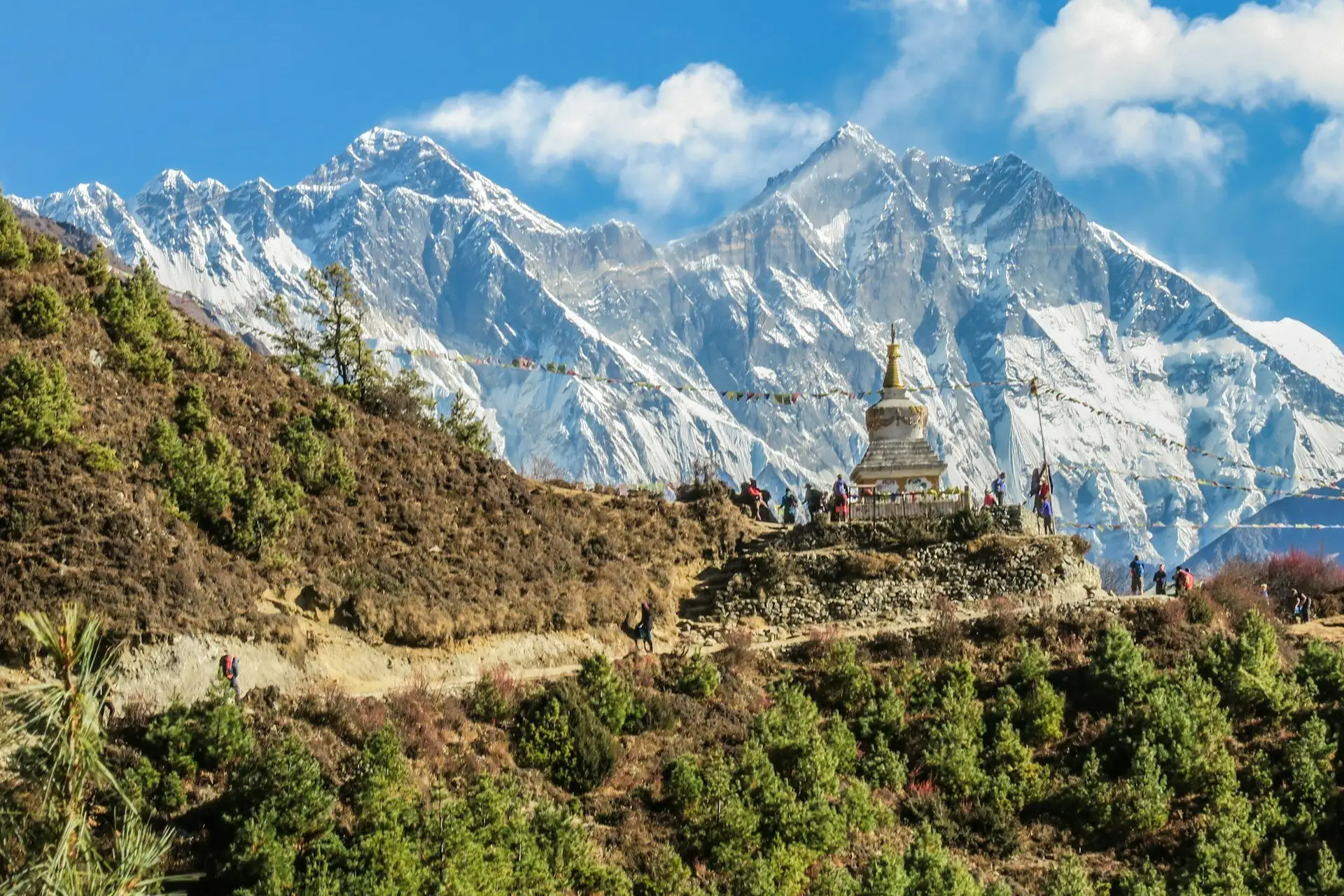
Nepal is a country roughly the size of Arkansas that happens to contain eight of the world's fourteen mountains over 8,000 meters, including the highest, Sagarmatha, known internationally as Everest. That geography shapes everything: the elevation drops from Himalayan ice down to steamy Terai jungle bordering India in under 200 kilometers, and the country's identity runs through both the mountains and the ancient Newar cities of the Kathmandu Valley, where Hindu and Buddhist traditions have shared temples, festivals and daily life for over a thousand years.
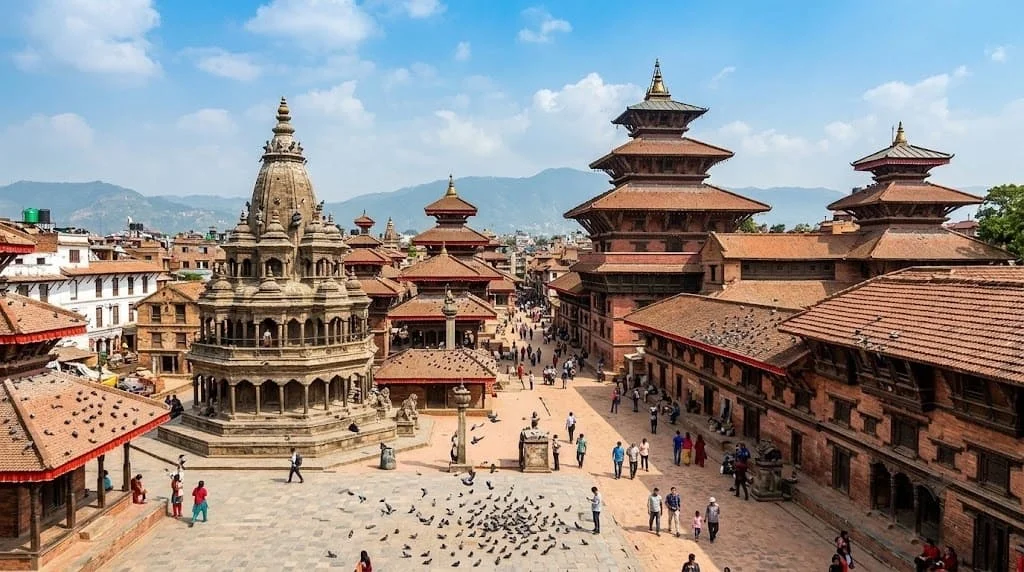
Kathmandu itself is chaotic, congested and utterly unpretentious: motorbikes weave between cows, incense drifts out of doorway shrines, and a UNESCO World Heritage Durbar Square sits a few hundred meters from budget guesthouses charging eight dollars a night. Outside the valley, Pokhara offers a mellower base by a lake with Annapurna reflected in it, and the trekking trails, whether a two-day taste or a three-week circuit, remain some of the best-supported wilderness travel anywhere: teahouses with hot meals and warm blankets exist at altitudes that would require full expedition gear elsewhere in the world.
The honest complications
Nepal had a genuinely disruptive year in 2025: nationwide Gen Z-led protests in September, triggered by a since-reversed social media ban, escalated quickly and led to the prime minister's resignation and a change of government. The situation has been calm and stable since, a peaceful election in March 2026 brought in a new government, and trekking regions were never directly affected, but it's the kind of recent history worth knowing before you go, not because it should stop you, but because "everything is fine now" deserves the context of what "now" followed. Separately, Kathmandu's air quality is poor, especially in the dry pre-monsoon months, infrastructure outside the main tourist circuits is basic, and reconstruction from the devastating 2015 earthquake is still visibly incomplete at a handful of heritage sites more than a decade on. None of this should be a deterrent for a well-prepared trip; all of it is worth going in eyes open.
A History Worth Knowing
The Kathmandu Valley's Newar civilization built the three Durbar Squares you'll visit today over centuries of Licchavi and Malla dynasty rule. Prithvi Narayan Shah unified the country in 1768, a hereditary Rana prime ministership sidelined the monarchy for a century after 1846, and a decade-long Maoist civil war ended with the monarchy's abolition in 2008. A catastrophic 2015 earthquake and a disruptive but ultimately peaceful 2025-2026 political transition are the two events shaping the Nepal you're visiting right now.
- 4th-18th c.
Licchavi & Malla dynasties. Newar civilization in the Kathmandu Valley builds the palace complexes and temple squares of Kathmandu, Patan and Bhaktapur.
- 1768
Unification. Prithvi Narayan Shah, king of the small hill state of Gorkha, conquers the Kathmandu Valley and founds the unified Kingdom of Nepal.
- 1846-1951
Rana oligarchy. A hereditary line of prime ministers rules in the king's name, isolating Nepal from the outside world for over a century.
- 1996-2006
Maoist civil war. A decade-long insurgency ends with a peace accord; roughly 17,000 people die over the conflict's course.
- 2008
Monarchy abolished. A newly elected Constituent Assembly declares Nepal a Federal Democratic Republic, ending 240 years of Shah dynasty rule.
- 2015
The earthquake. A 7.8-magnitude quake kills roughly 9,000 people and damages or destroys hundreds of heritage monuments, including landmark temples in Kathmandu Durbar Square.
- 2025-2026
Gen Z protests & transition. September 2025 unrest forces a change of government; a peaceful March 2026 election brings in 35-year-old Balendra Shah as prime minister.
Read the full history: the Ranas, the civil war, and the road to 2026
The Kathmandu Valley's Newar people developed one of South Asia's most sophisticated urban cultures well before Nepal existed as a unified state, and the three former royal cities of Kathmandu, Patan and Bhaktapur, each with its own Durbar (palace) Square, are the physical record of that history, built and rebuilt across the Licchavi period (roughly 4th to 9th century CE) and the Malla period that followed, when the valley was divided into competing city-kingdoms whose rivalry produced an extraordinary concentration of temple architecture.
Prithvi Narayan Shah's conquest of the valley in 1768 created the Kingdom of Nepal in something like its modern borders. His descendants ruled as kings, but for over a century, from 1846 to 1951, real power sat with a hereditary line of Rana prime ministers who kept the monarchy as a figurehead and the country deliberately closed to outsiders. A 1951 revolution restored royal authority and cracked the country open to the modern world for the first time.
What followed was decades of experimentation between multi-party democracy and direct royal rule, culminating in a Maoist insurgency that began in 1996 and killed roughly 17,000 people over ten years before a 2006 peace accord brought the rebels into mainstream politics. Two years later, in 2008, a newly elected Constituent Assembly voted to abolish the 240-year-old monarchy and declare Nepal a federal democratic republic, a transition made only stranger by the 2001 royal massacre in which Crown Prince Dipendra killed King Birendra and much of the royal family before turning the gun on himself, an event that still shadows how many Nepalis talk about the monarchy's final years.
The 2015 earthquake. The 7.8-magnitude quake of 25 April 2015 killed close to 9,000 people and damaged or destroyed over 600 heritage monuments across the country, including the total collapse of landmark pagoda temples in Kathmandu Durbar Square. Billions of dollars in international reconstruction aid followed; Bhaktapur and Patan have been largely restored, Kathmandu Durbar Square's major temples have been rebuilt, and a handful of smaller sites and outlying villages are still visibly incomplete more than a decade later.
2025-2026. A government social media ban in early September 2025, widely read as an attempt to suppress political dissent, triggered youth-led "Gen Z" protests that escalated within days into the storming of the parliament building and the prime minister's resignation, with a nationwide death toll that reached into the seventies before an army-enforced curfew restored order. A peaceful general election in March 2026 delivered a decisive win to the Rastriya Swatantra Party and made 35-year-old Balendra Shah the youngest prime minister in Nepal's history. The US State Department lowered its Nepal advisory back to Level 2 the following month, and by mid-2026 the country was functioning normally, tourism included.
Top Destinations
Nepal divides naturally into the Kathmandu Valley, the Pokhara and Annapurna region, the Everest/Khumbu region, and the low-elevation Terai along the Indian border. Distance on a map is deceptive: mountain roads and trekking days set the real pace, so a two-week trip realistically covers two of these zones well rather than all four.
Kathmandu, the chaotic capital
Kathmandu's own Durbar Square, its royal palace complex now a museum, sits at the heart of the old city, entry NPR 1,000 for foreigners. A short walk away, the Kumari Ghar houses Nepal's living goddess tradition: a young girl selected through ancient ritual who occasionally appears at a window overlooking the courtyard. Thamel, the tourist and trekking-outfitter quarter since the 1970s, is where most visitors base themselves, a dense grid of gear shops, bars and guesthouses. For quiet, the walled Garden of Dreams, a restored 1920s pleasure garden two minutes from Thamel's chaos, is worth the small entry fee just to sit down.
Pokhara, the lake town under Annapurna
Pokhara sits on Phewa Lake with the Annapurna range, including the sacred, unclimbed Machapuchare (Fishtail), reflected in the water on a clear morning. The Lakeside strip has the country's best concentration of cafes and gear shops outside Kathmandu, and it's the launch point for the Annapurna treks. Boat across to the Tal Barahi temple on its lake island, climb to the World Peace Pagoda for the valley's best panorama, and budget a half-day for Davis Falls and the Gupteshwor cave beside it. Pokhara has also become Nepal's adventure sports hub: paragliding launches from Sarangkot with Annapurna as a backdrop, and the tandem flights are genuinely spectacular rather than a tourist-trap add-on.
The Annapurna treks
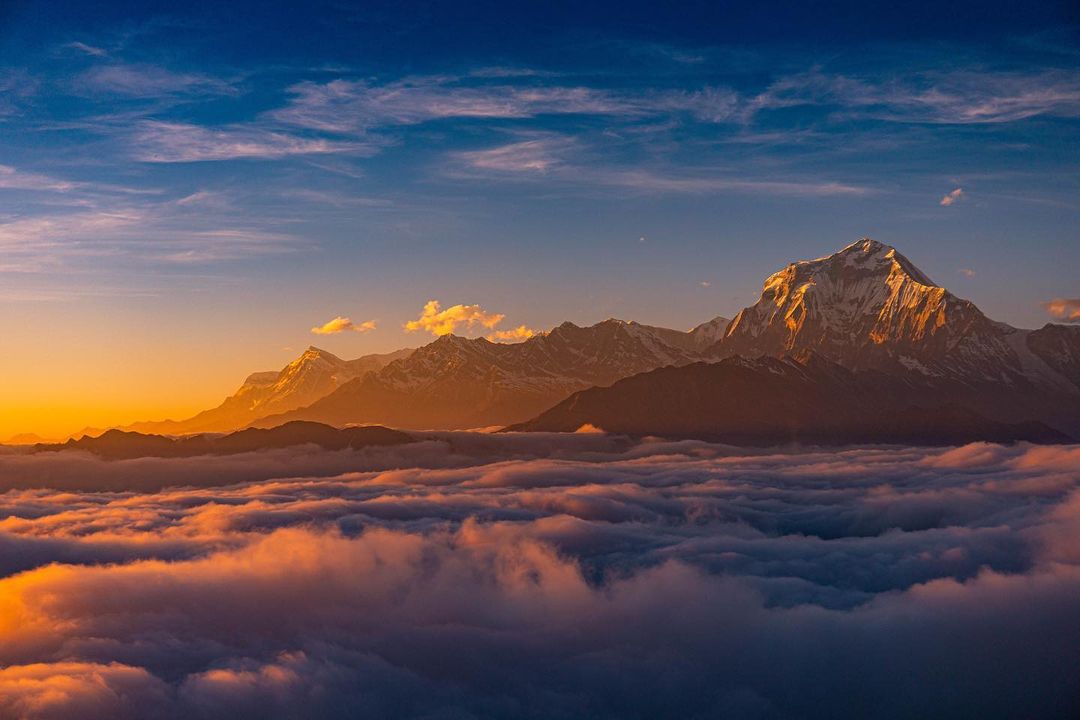
The Annapurna Circuit and the shorter Annapurna Base Camp (ABC) trek are Nepal's most complete trekking experiences short of Everest, passing through Gurung and Manang villages, rhododendron forest and high alpine terrain, with teahouses at every stage. The Poon Hill trek, three to five days from Nayapul, is the accessible version: a sunrise viewpoint over the entire Annapurna and Dhaulagiri range without technical difficulty. All three require the ACAP conservation area permit and a TIMS card.
Everest Base Camp & the Khumbu
The classic Everest Base Camp trek starts with a short, notoriously weather-dependent flight from Kathmandu to Lukla (2,860m), then climbs through Sherpa villages including Namche Bazaar, the Khumbu's trading hub and the trek's main acclimatization stop. Base camp itself, at 5,364m, has no view of Everest's summit; the payoff view is from Kala Patthar above it. Budget 12 to 14 days round-trip to allow for acclimatization and at least one weather buffer day at Lukla, and know that flight cancellations are common, especially outside the clearest autumn window.
Chitwan National Park
Chitwan, in the lowland Terai bordering India, is Nepal's answer to the mountains: a UNESCO-listed jungle and grassland park with one-horned rhinos, wild elephants and, rarely but genuinely, Bengal tigers. Jeep safaris and guided canoe trips on the Rapti River are the standard way in, and Sauraha is the main tourist base with lodges ranging from basic to high-end. A worthwhile add-on to a Kathmandu or Pokhara trip, roughly five to six hours by road from either.
Lumbini
Lumbini, near the Indian border, is the UNESCO-listed birthplace of Siddhartha Gautama, the Buddha. The Maya Devi Temple marks the exact spot, and the surrounding monastic zone holds dozens of temples and monasteries built by Buddhist nations from Thailand to Germany, each in its own national architectural style. More a pilgrimage site than a scenic one, but significant for Buddhist and history-minded travelers.
Hidden gems beyond the main circuit
The zones above cover a first or second trip well. With extra days, these are the spots that rarely make the standard itineraries but reward the detour.
Bandipur
A preserved Newar hilltop trading town on the old India-Tibet trade route, largely bypassed once the highway moved downhill. Cobbled streets, mountain views, and almost none of Kathmandu's traffic.
Nagarkot
A ridge-top village 32km from Kathmandu with a genuine sunrise Himalayan panorama, including Everest on a clear day, without a trek. A popular overnight add-on rather than a destination in itself.
Ilam tea gardens
Rolling tea estates near the Darjeeling border, produce genuinely excellent Nepali orthodox tea and see a fraction of the tourist traffic of the rest of the country.
Culture & Etiquette
Nepal is majority Hindu with a deeply intertwined Buddhist minority, and in the Kathmandu Valley the two traditions share temples, festivals and daily ritual so thoroughly that the line between them can be hard for a visitor to draw, which is rather the point. Namaste, said with palms pressed together, works as hello, goodbye and thank you. Family and community obligation run deep, and hospitality toward guests, even uninvited ones, is a genuine cultural value rather than a tourist-industry performance.
Do
- Use your right hand. Eat, give and receive with the right hand only; the left is considered unclean. Using both hands to receive something, or a slight bow, shows extra respect.
- Remove your shoes before entering homes and most temple interiors, and dress modestly (shoulders and knees covered) at religious sites.
- Walk clockwise around Buddhist stupas and mani walls, keeping them on your right, as local practice does.
- Learn a few words. Namaste (hello), Dhanyabad (thank you), Malai thaha chaina (I don't know, useful for firmly declining touts). Effort is noticed and appreciated.
- Ask before photographing people, particularly at cremation ghats and religious ceremonies, some of which are not spectacle for tourists.
Don't
- Step over people, food or religious objects sitting or placed on the ground; walk around instead.
- Point your feet at people, shrines or the Buddha. Feet are the lowest, least respectful part of the body in Hindu and Buddhist etiquette; tuck them under or to the side when sitting.
- Touch anyone's head, including children's, without invitation; it's considered the body's most sacred point.
- Enter the inner sanctum at Pashupatinath or other Hindu-only shrines if you're not Hindu; respect the boundary rather than pushing it.
- Show public affection beyond hand-holding; Nepal remains socially conservative outside the most touristed pockets of Thamel and Lakeside.
Deeper culture: the Kumari, caste, and Nepal's festival calendar
The Kumari. A young pre-pubescent girl, selected through a rigorous traditional process and believed to be the living incarnation of the goddess Taleju, resides in the Kumari Ghar beside Kathmandu Durbar Square. She appears briefly at her window several times daily and in person during major festivals; direct photography of her face is generally discouraged.
Caste. Nepal's traditional Hindu caste system is legally abolished and far less rigid in daily tourist-facing interaction than in some parts of South Asia, but it remains a real social structure, especially in rural areas and around marriage and land inheritance. Not something a visitor needs to navigate directly, but worth understanding as background to conversations about Nepali society.
Festivals. Dashain (September-October), Nepal's biggest festival, involves family gatherings, kite flying and animal sacrifice at temples; Tihar (October-November), the festival of lights, includes a day honoring dogs and one honoring the sibling bond. Indra Jatra in Kathmandu features the Kumari's main annual public procession. Holi, the color festival, falls in March. Landing a trip during one of these is a genuine highlight, though it also means fewer services running and packed transport.
Food & Drink
Nepali food centers on dal bhat, the twice-daily rice-and-lentil plate that powers most of the country, alongside distinct Newar cuisine from the Kathmandu Valley and Tibetan-influenced dishes in the mountains. It is not a spice-heavy cuisine by South Asian standards, and it is very, very cheap outside tourist restaurants.
Dal Bhat $2-4
Lentil soup, rice, vegetable curry and pickled achar, traditionally refillable at no extra charge. The genuine national dish and, on trekking routes, the meal guides recommend for its slow-burning calories.
Momo $1.50-3
Steamed or fried dumplings filled with buffalo, chicken or vegetables, served with a spiced tomato-sesame achar. The closest thing Nepal has to a national street snack, sold everywhere from market stalls to sit-down restaurants.
Newari Feast $15-40
Samay baji (beaten rice with an array of small dishes), choila (spiced grilled buffalo) and yomari (rice-flour dumplings) at a dedicated Newari restaurant like Bhojan Griha in Dillibazar, in a restored Rana-era mansion with live traditional music.
Thukpa & Tibetan food $3-6
Hearty noodle soup and other Tibetan dishes, common in Thamel and in the higher trekking regions where the Sherpa and Tibetan influence is strongest.
Sel Roti ~$0.50
A ring-shaped, slightly sweet rice-flour doughnut, sold from street carts and a festival staple, especially around Tihar.
Chiya, Raksi & Tongba
Milky spiced tea (chiya) is the all-day default; raksi, a clear distilled rice spirit, and tongba, hot fermented millet beer sipped through a bamboo straw, are the mountain-village drinks worth trying once.
When to Go & Itineraries
October and November are Nepal's best months: clear post-monsoon skies, comfortable temperatures, and the country's two biggest festivals. March and April are the second-best window, warmer with rhododendrons blooming across the mid-hills. Avoid the June-to-September monsoon for trekking (poor visibility, landslide risk on mountain roads) unless you're specifically after the rain-shadow trek to Upper Mustang, and expect cold, clear winters at altitude from December to February.
All four seasons compared, with temperatures
| Season | Verdict | Temps (Kathmandu) | Notes |
|---|---|---|---|
| Oct-Nov | Best | 10-24°C | Clearest views, Dashain & Tihar festivals, peak trekking season and prices |
| Mar-Apr | Very good | 12-27°C | Warmer, rhododendrons blooming, hazier air than autumn |
| Dec-Feb | Good (cold) | 2-18°C | Clear skies, cold nights at altitude, fewer trekkers, lower prices |
| Jun-Sep | Avoid trekking | 20-30°C | Monsoon: rain, leeches, landslide risk on mountain roads and trails |
Mountain temperatures drop fast with altitude: Everest Base Camp can see nighttime lows well below freezing even in the trekking high season.
Itineraries
A week covers Kathmandu Valley and Pokhara comfortably without a major trek. Two weeks fits a shorter trek like Poon Hill or Annapurna Base Camp alongside the valley. Everest Base Camp needs its own dedicated 12-to-14-day block once flights and acclimatization are accounted for.
- Days 1-3
Kathmandu Valley. Kathmandu Durbar Square, Swayambhunath, Boudhanath, Pashupatinath, then a day trip to Bhaktapur and Patan Durbar Squares.
- Days 4-5
Fly or drive to Pokhara. Phewa Lake, Sarangkot sunrise or paragliding, the World Peace Pagoda.
- Days 6-7
Poon Hill trek (short version) or a relaxed day in Pokhara before flying back to Kathmandu.
- Days 1-3
Kathmandu Valley, all three Durbar Squares plus the major religious sites.
- Days 4-5
Chitwan National Park. Jeep safari, canoe trip, one night in Sauraha.
- Days 6-12
Annapurna Base Camp trek from Pokhara: roughly seven days round-trip through Gurung villages and rhododendron forest.
- Days 13-14
Pokhara recovery and the flight back to Kathmandu.
- Days 1-3
Kathmandu Valley extended, adding Nagarkot for a sunrise Himalayan view and Bandipur en route to Pokhara.
- Days 4-17
Everest Base Camp trek, including the Lukla flight, acclimatization days at Namche Bazaar and Dingboche, and a buffer day for weather.
- Days 18-19
Kathmandu recovery and a Chitwan add-on if energy allows.
- Days 20-21
Lumbini or Pokhara, a slower close to the trip before flying home.
Getting there & around
Tribhuvan International Airport (KTM) in Kathmandu is the country's main international gateway, with direct flights from Delhi, Doha, Bangkok, Istanbul and several other regional hubs; there is no direct service from North America. A prepaid taxi from the airport to Thamel costs around NPR 900 to 1,000 ($6-7) and takes 20 to 40 minutes depending on traffic. Domestic flights, mainly out of Kathmandu, connect to Pokhara, Lukla and other trekking gateway towns; tourist buses cover the main road routes (Kathmandu to Pokhara is 6 to 9 hours, from about $15) more comfortably and cheaply than flying, if you have the time.
All transport options with prices: domestic flights, buses, taxis
| Option | Price | Notes |
|---|---|---|
| Kathmandu-Pokhara tourist bus | $15-27 | 6-9 hrs depending on bus class; deluxe and "sofa" options cost more. |
| Kathmandu-Pokhara flight | ~$110-120 | 25 minutes; the practical choice with limited time. |
| Kathmandu-Lukla flight | ~$180-220 | Only realistic way in for Everest region treks bar the multi-day walk-in route; frequently weather-delayed. |
| Airport taxi (Thamel) | NPR 900-1,000 | Prepaid counter at the airport avoids haggling; agree the fare upfront for street taxis. |
| City taxis (Kathmandu) | NPR 150-400 | Meters are inconsistently used; agree a price before getting in, or use a ride-hailing app like Pathao. |
Trekking permits: TIMS cards and area permits (ACAP for Annapurna, Sagarmatha National Park entry for Everest) are mandatory, checked at multiple points, and obtained through the Nepal Tourism Board, the TAAN office in Kathmandu, or your trekking agency. Independent trekking without a licensed guide is now restricted on the major routes; book through an agency registered with TAAN rather than an unaffiliated street tout.
Practical prep: buy a Nepali SIM (Ncell or NTC) at the airport for 5-10 dollars, or an eSIM before landing; signal thins out fast above Namche Bazaar. Travel insurance with high-altitude trekking and helicopter evacuation coverage is essential, not optional, for anything above Poon Hill altitude.
Where to stay
Trekking teahouses
Family-run lodges along every major trekking route, basic rooms and hearty dal bhat included or cheap. The core of Nepal's trekking infrastructure and the reason independent multi-day hiking here is so accessible compared to most of the world's high mountains.
Thamel & Lakeside guesthouses
Kathmandu's Thamel and Pokhara's Lakeside both have dense, competitive guesthouse markets from backpacker dorms to comfortable mid-range doubles, most within a short walk of restaurants and gear shops.
Boutique & heritage hotels
Kathmandu's Dwarika's Hotel rebuilds traditional Newari brick and woodcarving into a genuine architectural landmark; rooms from around $210-350.
International chains
The Hyatt, Marriott and similar international brands operate in Kathmandu with reliable standards for travelers who want a predictable stay between or before trekking legs.
Budget Planning
Nepal is one of the most affordable countries in Asia to travel independently, and trekking is genuinely cheaper here than almost anywhere comparable, thanks to the teahouse network. The main costs that catch first-timers off guard are permits and guide fees for trekking, which are separate from daily food and lodging.
- Guesthouse dorm or basic double $5-15
- Dal bhat & momo meals $5-10
- Local buses & walking
- Free temples plus one paid site
- Comfortable guesthouse or 3-star hotel
- Restaurant meals $10-20
- Domestic flight or private driver occasionally
- Guided day tours, one activity like paragliding
- Heritage or international-standard hotels
- Private guide and driver throughout
- Fine dining and premium trekking support
- Helicopter tours or Everest scenic flight
Quick reference prices: food, transport, trekking permits
| Dal bhat (local eatery) | $2-4 |
| Momo (10 pieces) | $1.50-3 |
| Coffee | $1.50-2.50 |
| Teahouse room + dal bhat dinner | $25-40 |
| Annapurna permits (ACAP + TIMS) | ~$38 |
| Kathmandu Durbar Square entry | NPR 1,000 (~$6.50) |
| Guided trek, per day (guide + porter) | $35-60 |
| Kathmandu-Pokhara tourist bus | $15-27 |
Prices reflect August 2026 research at roughly NPR 152 to the US dollar; the rupee floats and drifts, so treat these as a planning baseline rather than a quote.
Visa & Entry
Most nationalities get a visa on arrival at Tribhuvan International Airport or at land border crossings: $30 for 15 days, $50 for 30 days, or $125 for 90 days, paid in cash. A short list of nationalities, including Afghanistan, Cameroon, Ethiopia, Ghana, Iraq, Liberia, Nigeria, Palestine, Somalia, Syria and Zimbabwe, cannot get a visa on arrival and must apply in advance at a Nepali embassy or consulate. Rules do change; the Department of Immigration is the authoritative source, not third-party paid "e-visa" sites.
✓ Valid passport
At least 6 months validity from date of entry, with a blank page for the visa stamp.
✓ Passport photo & cash
One passport-sized photo and exact-change USD (or another convertible currency) for the visa fee; card payment is not reliably available at all entry points.
✓ Completed arrival form
Available at the airport or via the online pre-arrival registration, which speeds up the counter significantly during peak arrival hours.
✓ Accommodation & onward plans
Occasionally requested at immigration; have your first night's booking and a rough itinerary ready.
| Nepal | Bhutan | |
|---|---|---|
| Daily budget | $20-90 covers most trip styles independently | Fixed daily government fee plus guide, no true budget option |
| Trekking style | Independent teahouse trekking, decades of infrastructure | Guided only, camping-based on most routes |
| Crowds | Busy on the main circuits in peak season | Deliberately limited visitor numbers, quieter trails |
| Mountains | Everest, Annapurna: the world's highest, most storied peaks | Lower, less climbed, arguably wilder in feel |
| Visa | On arrival for most nationalities | Pre-arranged through a licensed tour operator |
Safety, Solo Women & Family
Nepal is safe for tourists as of mid-2026. The September 2025 Gen Z protests, triggered by a government social media ban, escalated into serious nationwide unrest and a change of government, but the situation stabilized quickly, a peaceful election followed in March 2026, and the US State Department lowered its advisory to Level 2 (Exercise Increased Caution) that April. Trekking regions were unaffected throughout. The realistic risks for most visitors are altitude sickness, road conditions and petty scams, not political unrest or violent crime.
Altitude sickness
The single biggest real risk for trekkers. Ascend gradually above 2,500m, build in acclimatization days, and descend immediately if symptoms (headache, nausea, dizziness) appear. The Lukla flight's rapid 1,400m jump is a known risk point.
Road & mountain travel
Mountain roads are narrow, poorly lit and prone to landslides in monsoon season. Domestic flights, especially to Lukla, are frequently weather-delayed; always build buffer days into a trekking schedule.
Petty crime & overcharging
Pickpocketing and taxi fare inflation happen in Thamel and Lakeside at typical South Asian tourist-zone levels. Agree taxi fares before getting in and keep valuables secured in crowded markets.
Two more things worth knowing: air quality and demonstrations
Air quality. Kathmandu's air pollution is a genuine health consideration, especially in the dry pre-monsoon months (March-May), and worse for anyone with respiratory conditions. Not typically a trip-cancelling issue, but a well-fitted mask on bad days is a reasonable precaution.
Demonstrations. Political demonstrations do still occur periodically in Kathmandu following 2025's unrest; they are almost always localized and announced in advance. Avoid areas with active protests, follow local news, and register with your embassy for updates if you're staying more than a few days.
The 3 scams to actually know about
Nepal is not a high-scam destination for most travel, but trekking specifically attracts a few well-documented patterns, and knowing them going in avoids nearly all of it. The full country list lives on our Nepal travel alerts page.
The helicopter rescue scam
Unregistered guides have been documented encouraging unnecessary helicopter evacuations, then billing inflated costs to the trekker's travel insurance. Book only through TAAN-registered agencies, and insist any evacuation decision involves a real medical assessment, not just a guide's suggestion.
Unlicensed trekking guides
Individuals in Thamel and Lakeside offer guiding or permit services with no formal registration or training. Book through an agency registered with the Trekking Agencies' Association of Nepal (TAAN), and verify permits are genuine before setting out.
Taxi fare inflation
Meters are inconsistently used and airport-arrival taxis in particular quote inflated fares. Use the prepaid taxi counter at Tribhuvan International Airport, or agree a fare before getting in anywhere else.
Solo women travelers
Nepal is a well-established and generally welcoming destination for solo women, particularly on the main trekking routes, which see heavy independent female traffic, both solo and in guide-led groups. Kathmandu's Thamel and Pokhara's Lakeside are comfortable to walk in during the day and reasonably so at night in the main tourist strips; unlit backstreets after dark are the same sensible no as anywhere. Dress modestly at temples and in rural villages, and book treks through registered agencies with vetted guides, both for the general safety benefit and because it materially reduces exposure to the guide-related scams above. Full detail on our Solo Woman Explorer pages.
Emergency numbers
Hospitals in Kathmandu and mountain emergency protocol
CIWEC Hospital (+977-1-442-4111) in Kapurdhara Marg is the clinic most foreign travelers and embassies use for tourist medical care and travel medicine, including altitude-related issues. Norvic International Hospital (+977-1-425-8554) in Thapathali is a well-regarded private general hospital. For US citizens, the embassy's emergency line is +977-1-423-4000.
Mountain emergency: for altitude sickness or trekking injuries, descend immediately if possible; helicopter evacuation is available but expensive without insurance, and coordinated through your guide, teahouse or trekking agency, all of whom have established emergency contacts. Confirm your insurance covers high-altitude evacuation before you leave, not after you need it.
Family travel & pets
Nepal works well for families with a mix of ages: Kathmandu Valley sightseeing, Pokhara's lakeside activities and boat rides, and a Chitwan jungle safari all suit younger kids, while high-altitude trekking is realistically better suited to children old enough to manage multi-day hiking and to communicate altitude symptoms clearly, generally 10 and up for shorter treks like Poon Hill.
Kids on the trekking trails, and bringing pets
Trekking with children: shorter, lower-altitude routes like Poon Hill or the lower Annapurna foothills work well for families; teahouses are used to children and can usually accommodate simpler food requests. Everest Base Camp and other high-altitude routes carry real acute mountain sickness risk for children as for adults, and are a considered decision, not a default.
Pets: importing pets into Nepal involves veterinary health certification, current rabies vaccination and advance approval, and is a genuinely involved process better suited to relocation than a short trip. Most trekking teahouses and hotels do not accommodate travelers' pets.
Nepal FAQ
Is Nepal safe to visit?
Yes, as of mid-2026. Nationwide protests in September 2025 led to a change of government, but the situation has been stable since and the US State Department lowered Nepal to Level 2 (Exercise Increased Caution) in April 2026. Trekking regions were unaffected throughout and continue to operate normally.
Do I need a visa for Nepal?
Most nationalities get a visa on arrival at Tribhuvan International Airport or land borders: $30 for 15 days, $50 for 30 days, $125 for 90 days, paid in cash. A short list of countries, including Afghanistan, Ghana, Iraq, Nigeria and Syria, cannot get a visa on arrival and must apply in advance.
How much does Nepal cost per day?
Budget travelers manage on $20-35 a day in Kathmandu and Pokhara, mid-range on $50-90. Teahouse trekking runs $25-40 a day for lodging and food, before permits and a guide or porter.
When is the best time to visit Nepal?
October-November for the clearest mountain views and major festivals, March-April for warmer weather and blooming rhododendrons. June-September is the monsoon, with poor visibility and landslide risk on mountain roads.
How many days do you need in Nepal?
A week covers Kathmandu Valley and Pokhara without a major trek. Two weeks fits a shorter trek like Poon Hill or the Annapurna Base Camp trail. Everest Base Camp alone needs 12-14 days including acclimatization.
Do I need a guide or permit to trek in Nepal?
Yes for most routes. Independent trekking without a licensed guide is now restricted in major regions including Everest and Annapurna, and TIMS cards plus area-specific permits (ACAP, Sagarmatha entry) are mandatory and checked at multiple checkpoints.
What is altitude sickness and how serious is it?
Acute Mountain Sickness affects trekkers who ascend too fast above roughly 2,500m, including on the Lukla flight route, which jumps 1,400m in 35 minutes. Symptoms include headache, nausea and dizziness; the only real treatment is descent. Build in acclimatization days and never ignore symptoms.
Is Kathmandu safe right now after the 2025 protests?
Yes. The September 2025 unrest, triggered by a social media ban, led to the prime minister's resignation and a peaceful election in March 2026. Kathmandu has been calm and functioning normally since, though it's worth checking current advisories before any trip, as with any recently unsettled destination.
What language is spoken in Nepal?
Nepali is the official language, though well over 100 languages and dialects are spoken across the country's ethnic groups. English is common in Kathmandu, Pokhara and trekking regions; less so in rural areas.
Is Nepal good for families with kids?
Yes, particularly Kathmandu Valley sightseeing, Pokhara's lakeside activities and a Chitwan jungle safari. High-altitude trekking is better suited to older children who can handle multi-day hiking and altitude.
Is Nepal safe for solo female travelers?
Generally yes, especially in Kathmandu, Pokhara and on the main trekking routes, which see heavy female solo and group traffic. Standard precautions apply: agree taxi fares upfront, avoid unlit streets late at night, and book treks through registered agencies.
Nepal vs Bhutan, which should I visit?
Nepal is far cheaper and more flexible, with independent trekking infrastructure built over decades. Bhutan requires a guide and a daily government fee for the entire trip but delivers a more controlled, less crowded experience. Serious trekkers and budget travelers lean Nepal; those wanting an all-inclusive cultural trip lean Bhutan.
What Stays With You
Nepal has a way of resetting scale. You stand in a medieval square built by rival kings competing for prestige through architecture, and a few days later you stand on a ridge looking at a wall of ice and rock so large your brain briefly refuses to process the distance correctly. Between those two points is a country that has survived a civil war, a devastating earthquake, and a political upheaval within the last year alone, and kept its teahouses open, its temples standing, and its hospitality toward strangers fundamentally intact through all of it.
Go for the mountains if that's what brought you. Stay curious about the valley below them: the momo stall in Ason Bazaar and the Kumari at her window are just as much the point.