
What You Need to Know Before Anything Else
The US, UK, Australia, Canada and virtually every Western government currently issue Do Not Travel advisories for Afghanistan, the highest-level warning issued, reflecting genuine ongoing risk of kidnapping, terrorist attack and arbitrary detention. Afghanistan is also one of the most beautiful countries in Asia. Both facts are true simultaneously, and holding both without letting one cancel the other is the honest starting point for this guide.
The Hindu Kush mountains rise to 7,400 meters, and their foothills have produced some of the world's finest pomegranates, grapes and melons for three thousand years. Band-e Amir, a series of mineral-blue lakes in the central highlands, looks like something that shouldn't exist in this landscape and somehow does. Herat's Friday Mosque, tiled entirely in turquoise, cobalt and white, is one of the great Islamic architectural sites in Asia. The hospitality of Afghan people, rooted in the Pashtunwali code's concept of melmastia, the obligation to host any guest regardless of personal cost, is not a travel cliché; visitors who traveled here both before 2001 and since the Taliban's 2021 return consistently describe it as among the most generous they've encountered anywhere.
The honest complications
The Taliban government controlling most of Afghanistan since August 2021 is not internationally recognized, operates by laws that are unpredictable for foreigners, and has detained foreign nationals for reasons not transparently communicated. ISIS-K, operating independently of the Taliban, has carried out multiple mass-casualty attacks in Kabul, Mazar-i-Sharif and other cities since 2021. A small number of tourists do visit, mainly through Kabul-based tour operators running trips to Bamiyan and Band-e Amir, and their experiences are often extraordinary. But their accounts are a selected sample: people who went, came back, and chose to write about it. Whether the current risk is manageable for you specifically, with your specific passport, background and risk tolerance, is the real question this guide tries to help answer honestly.
🏔️ The Hindu Kush
One of the great mountain ranges of Asia. The Wakhan Corridor, a sliver of Afghan territory reaching China, contains landscapes of almost impossible beauty.
🏞️ Band-e Amir
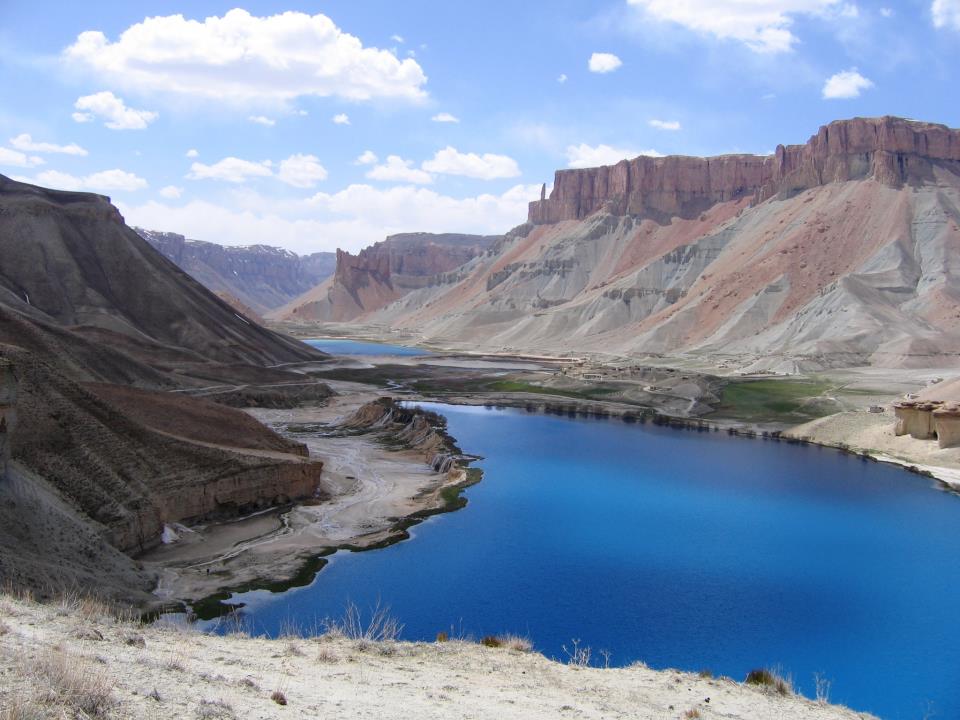
Six deep-blue lakes held in by natural travertine dams at 2,900 meters, Afghanistan's first national park and one of Asia's most extraordinary natural sites.
🕌 Herat's architecture
The Friday Mosque and the Musallah Complex minarets are among the finest surviving examples of Timurid Islamic architecture anywhere in the world.
🤝 Afghan hospitality
Melmastia, the cultural obligation to honor guests, is one of the most genuine and deeply held values in Afghan society, and visitors consistently describe it as transformative.
Afghanistan at a Glance
- Capital
- Kabul
- Currency
- AFN (Afghani)
- Languages
- Dari, Pashto
- Time zone
- AFT (UTC+4:30)
- Power
- 220V, Type C/F
- Dialing code
- +93
- Entry
- Visa, complex process
- Population
- ~42 million
Safety in Afghanistan
The safety situation in Afghanistan is materially different from every other destination in this guide. The risks here aren't the manageable ones of petty theft, scams and traffic that characterize most travel advice; they include death, serious injury, kidnapping and arbitrary detention by both state and non-state actors. This section isn't written to discourage curiosity about Afghanistan. It's written because honest information serves travelers better than sanitized reassurance.
Afghanistan has been the subject of Do Not Travel advisories from the US, UK, Australia, Canada and most European governments continuously since at least 2001, and the advisories haven't been lifted following the Taliban's return to power in 2021. These reflect genuine, ongoing, assessed risk, not bureaucratic caution: terrorist attacks by ISIS-K, kidnapping by criminal and political actors, arbitrary detention by Taliban security forces, and the general absence of consular support infrastructure for Western nationals who get into trouble.
Terrorist attacks
ISIS-K has carried out multiple mass-casualty attacks in Kabul, Mazar-i-Sharif and other cities since 2021, targeting mosques, educational institutions, airports and locations associated with foreigners, including hotels and the Kabul airport arrivals area.
Kidnapping
Kidnapping of foreign nationals for ransom or political leverage has occurred throughout Afghanistan's recent history and hasn't ceased under Taliban governance. The risk is highest for visibly foreign visitors without adequate security arrangements.
Arbitrary detention
Foreign nationals have been detained for reasons including photography, unclear documentation, and activities perceived as intelligence-gathering. The legal framework is opaque, and several foreigners have been held for extended periods without clear communication to their embassies.
Landmines, relatively stable areas, and where the risk concentrates
Landmines: Afghanistan remains one of the most heavily landmine-contaminated countries in the world from decades of conflict. Do not walk off established paths anywhere outside cities, and do not pick up unfamiliar objects from the ground. Demining organizations have cleared significant areas, but contamination is not fully mapped or cleared.
Relatively stable areas: Bamiyan Province and Band-e Amir have been among the more stable areas for visitors under Taliban governance, largely because the population is predominantly Hazara and the area receives enough domestic Afghan tourism to have functioning informal hospitality structures. This relative stability isn't guaranteed and can change; it isn't a reason to relax security practices.
No consular support: most Western embassies have no physical presence in Afghanistan. If serious trouble occurs, a home country's ability to help is extremely limited, and emergency assistance may have to be coordinated from a neighboring country, taking time that medical or security emergencies may not allow. This is the most practically significant risk factor for Western visitors.
Current advisory levels
🇺🇸 USA
Level 4: Do Not Travel
🇬🇧 UK
Advise Against All Travel
🇨🇦 Canada
Avoid All Travel
🇦🇺 Australia
Do Not Travel
Emergency contacts
Remote embassy contacts and medical evacuation
Most Western embassies have no physical presence in Afghanistan and operate remotely from neighboring countries. Save these numbers before departure and verify current procedures with your embassy before leaving home.
- USA (remote)
- +1-888-407-4747
- UK (remote)
- +44-20-7008-5000
- Australia (remote)
- +61-2-6261-3305
- Canada (remote)
- +1-613-996-8885
- Germany (remote)
- +49-30-5000-2000
- France (remote)
- +33-1-4317-6767
Medical evacuation: providers like MEDEX or SOS International can arrange evacuation from Afghanistan to a functioning facility in a neighboring country, but only with pre-arranged coverage and a working satellite communication link. The uninsured cost runs to $50,000 or more, and this is the realistic scenario for a serious medical emergency in rural Afghanistan, not a hypothetical.
A History Worth Knowing
Afghanistan's location at the junction of Central Asia, South Asia and the Middle East has made it the meeting point of nearly every major civilization and military force in recorded history. The phrase "Graveyard of Empires," applied by everyone from Victorian journalists to American generals, reflects a genuine pattern: the country has absorbed and outlasted Alexander the Great, the Mongols, the British Empire, the Soviet Union and the United States, through a combination of geographic intractability, fierce local resistance, and a political complexity outside powers consistently underestimate.
- ~3000 BCE
Bactrian civilization. One of the ancient world's most sophisticated urban cultures flourishes in northern Afghanistan; Zoroastrianism emerges in the region.
- 330 BCE
Alexander the Great. Conquers the region en route to India; Gandharan art blending Greek and Buddhist styles develops in his wake.
- 5th-6th c. CE
Buddhas of Bamiyan built. Two enormous Buddhas carved into sandstone cliffs stand for 1,400 years before the Taliban destroys them in 2001.
- 1842
British retreat from Kabul. An army of 16,500 is almost entirely destroyed retreating from Kabul; surgeon William Brydon arrives alone at Jalalabad on a dying horse.
- 1979-89
Soviet invasion. CIA-backed mujahideen resistance kills one to two million Afghans; the Soviet withdrawal leaves a failed state and civil war.
- 1996-2001
First Taliban government. Kabul falls in 1996; the Buddhas of Bamiyan are destroyed in March 2001; the US invasion follows September 11.
- 2021
Taliban returns. US and NATO forces withdraw; the Afghan government collapses in eleven days, and the Taliban takes Kabul on 15 August.
Read the full history: the Great Game, the Bamiyan Buddhas, and the road to 2021
The Buddha passed through the Gandhara region in what is now eastern Afghanistan, and the Gandharan art tradition that developed here, blending Greek Hellenistic and Indian Buddhist styles after Alexander's campaigns, produced some of the most striking Buddhist sculpture in existence, much of it now held in the Kabul Museum and the British Museum. The Buddhas of Bamiyan, carved into sandstone cliffs in the 5th and 6th centuries CE, were the world's tallest standing Buddhas for 1,400 years until the Taliban destroyed them with artillery and explosives in March 2001, an act their own information minister later called a mistake. The empty niches still stand, and archaeologists have found the remains of a third, possibly larger, reclining Buddha since.
The 19th century brought the Great Game between Britain and Russia, two empires using Afghanistan as their arena for competition over Central Asia. Britain fought three Anglo-Afghan Wars, winning none decisively; the 1842 retreat from Kabul, in which a British-Indian army of 16,500 was nearly entirely destroyed, became a byword for imperial overreach. The Soviet invasion of 1979 and the decade-long war that followed killed between one and two million Afghans and produced five million refugees; the 1989 withdrawal was followed by a civil war between mujahideen factions that destroyed much of Kabul. The Taliban emerged from this chaos in 1994, captured Kabul in 1996, and governed until the American invasion following September 11, 2001.
Twenty years of US presence and billions spent on reconstruction produced a government that collapsed in eleven days when American troops withdrew in August 2021, a speed that surprised almost everyone including, reportedly, the Taliban. The humanitarian crisis that followed, with the economy in freefall, international aid suspended, and women excluded from most education and public life, remains ongoing. Understanding this history doesn't make visiting Afghanistan straightforward, but it makes the country's people, their resilience and their continued hospitality toward strangers, comprehensible in a way geopolitical shorthand doesn't capture.
Top Destinations
Afghanistan's tourist infrastructure is minimal, and what existed before 2021 has largely collapsed since. The destinations below are ones that travelers have visited in recent years with a guide and appropriate security planning. Accessibility changes frequently, and verifying current conditions with a Kabul-based tour operator before committing to any itinerary is essential, not optional.
Band-e Amir
Six mineral lakes held in place by natural travertine dams at 2,900 meters in the central Hazarajat highlands. The water is a blue so saturated that photographs are routinely assumed to be edited; they aren't. Designated Afghanistan's first national park in 2009, it's roughly three to four hours by road from Bamiyan on scenic and sometimes difficult routes. The area has been relatively stable under Taliban governance, though this doesn't make the journey risk-free.
Bamiyan Valley
A wide green bowl of farmland surrounded by red-brown cliffs, once the center of a Buddhist civilization lasting from the 2nd to 9th centuries CE. The cliff face that held the great Buddhas still stands, its niches empty since 2001, giving a real sense of the scale that once existed there. Around the valley: the Shahr-e Gholghola citadel destroyed by Genghis Khan in 1221, and cave complexes carved by Silk Road travelers and monks over centuries.
Kabul
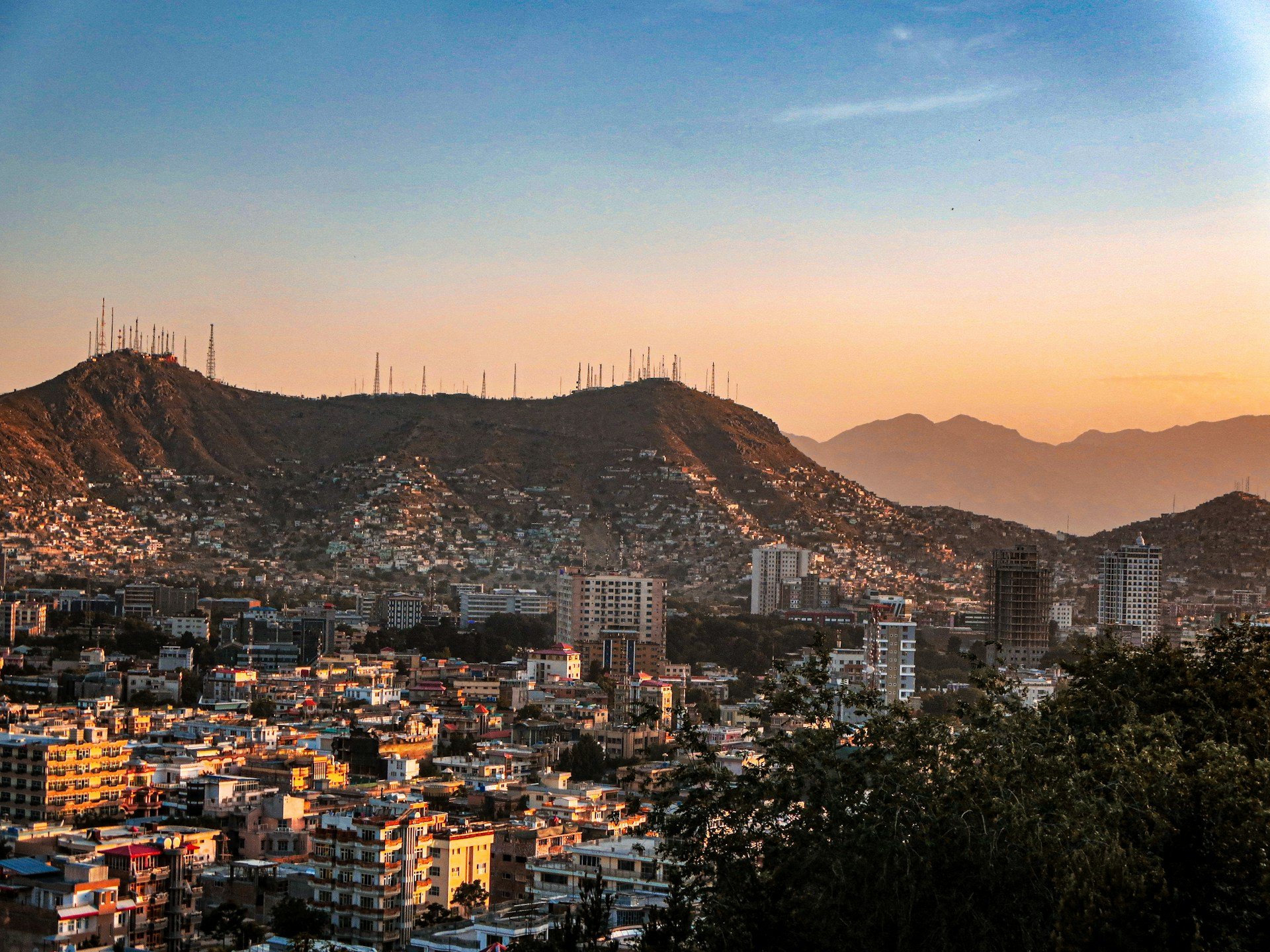
Kabul sits at 1,800 meters in a bowl of mountains and has been inhabited for at least 3,500 years. Bagh-e Babur, the garden where the Mughal founder is buried, is restored and genuinely peaceful in the mornings. The National Museum holds remarkable Gandharan Buddhist art and Bactrian gold jewelry despite the losses of the civil war years, and the old Mandawi Market bazaar still operates as it has through every government and war.
Herat
Afghanistan's third-largest city and its most architecturally significant. The Friday Mosque (Masjid-i-Jami) is one of the great Islamic buildings of Central Asia, its interior entirely tiled in geometric turquoise, cobalt and white patterns maintained and repaired for seven centuries. The Musallah Complex's surviving minarets, five of the original nine still standing, are some of the finest surviving Timurid brickwork anywhere.
Balkh & Mazar-i-Sharif
Balkh, called the Mother of Cities in the ancient world, was one of the great urban centers of the Silk Road and possibly the birthplace of Zoroastrianism, destroyed by Genghis Khan in 1220. The Blue Mosque of Mazar-i-Sharif, its domes visible for kilometers across the northern plains, is one of the most beautiful buildings in the country. The city saw significant violence during the Taliban's 2021 return; current conditions require verification before any visit.
Minaret of Jam
A UNESCO World Heritage Site in the remote Hari Rud valley of Ghor province, accessible only by a serious four-wheel-drive journey. The 65-meter 12th-century minaret, in a valley so remote it wasn't documented by Western scholars until 1957, requires a guide and a full day's drive each way from Herat.
The Wakhan Corridor
A narrow strip of Afghan territory extending northeast between Tajikistan and Pakistan to reach the Chinese border, one of the most geographically remote inhabited places on earth. The Wakhi and Kyrgyz peoples here have lived through every government and conflict with minimal outside contact. Access requires extremely remote roads, significant logistics, and a guide with specific experience in the area; it was already one of Asia's most difficult journeys before 2021, and remains so.
Culture & Etiquette
Afghan culture is shaped by Islam, by the Pashtunwali code among the Pashtun majority, and by a long history of self-reliance under external pressure. Under current Taliban governance, behavioral expectations for visitors have shifted significantly from the 2001-2021 period, affecting dress codes, gender interaction and photography restrictions in ways that require active awareness.
Do
- Dress conservatively. Men in long trousers and long-sleeved shirts; women must cover hair and body fully, a headscarf at minimum. This is not optional under current governance, and non-compliance draws attention that creates risk.
- Accept hospitality. Tea and food offered by a host is a serious expression of welcome; declining without a specific reason is disrespectful.
- Greet with As-salamu alaykum. The Islamic greeting and its response are the appropriate opening for any interaction, and using it genuinely opens doors.
- Use a guide for all travel. A local guide provides logistical support and social context; being introduced by a known community member changes every interaction.
- Ask before photographing. Photography of people requires explicit permission in every case, and photography of women is not permitted under Taliban governance.
Don't
- Photograph military or official sites. This is a security risk that can result in detention, not a cultural preference. Checkpoints, military vehicles and government buildings should never be photographed.
- Discuss politics or criticize the government. Expressing political opinions or criticizing the Taliban in any public context creates risk for you and for any Afghan who hears you.
- Travel alone as a woman. Solo female travel isn't safely possible under current governance; women should travel with a male companion and as part of an organized tour.
- Carry alcohol. Alcohol is prohibited in Afghanistan without exception, and carrying it has serious consequences if discovered at a checkpoint.
- Display non-Islamic religious symbols. Wearing crosses or displaying other non-Islamic symbolism openly creates risk in the current environment.
Deeper culture: tea, guest rooms, and music under the Taliban
Tea culture. Green tea (sabz chai) and black tea (sia chai) are the beverages of Afghan social life, offered immediately upon any meeting; refusing signals either illness or serious social displeasure. The ritual of preparing and sharing it is the social framework within which conversation actually happens.
Guest rooms. Traditional Afghan homes have a hujra or mehman khana, a guest room maintained specifically for visitors, typically the best-furnished room in the house. Being offered it means sleeping better than the family hosting you, and it's intentional, meant to be received as the honor it is.
Music under the Taliban. The Taliban banned most music in public after 2021, with inconsistent but real enforcement. Traditional instruments like the rubab lute and tabla drum continue in private, and this is part of the current cultural reality worth understanding when interacting with Afghan musicians.
Food & Drink
Afghan food is Central Asian in its bones and South Asian in its spicing, sharing the rice-and-meat traditions of Persian cuisine while developing independently into something entirely local. Lamb and goat, suited to the arid mountainous terrain, dominate the meat, and the fruit of Kandahar, Herat and the Panjshir Valley has been genuinely exceptional since medieval Silk Road traders first catalogued it. Alcohol isn't available anywhere in the country.
Qabuli Palaw
The national dish and the most important meal for guests: long-grain rice cooked in meat broth, flavored with caramelized carrots, raisins, cardamom and cumin, topped with slow-cooked lamb or chicken. Being served it is a statement of welcome.
Mantu
Steamed dumplings filled with spiced minced lamb and onion, served over yellow split peas and topped with yoghurt, dried mint and a tomato-based sauce. Found at restaurants throughout Kabul and in family meals across the country.
Kebabs
Chapli kebab, a flat minced meat patty from the Pashtun southeast flavored with pomegranate seeds and chili, and skewered lamb kebabs found countrywide: charcoal-grilled street food eaten standing at a market stall.
Naan
The foundation of every meal, a large oval flatbread baked against the walls of a clay tandoor and brought to the table warm. Fresh Afghan naan with a glass of green tea is a simple pleasure travelers consistently name as something they still think about years later.
Fruit
Kandahar's pomegranates, Panjshir's apricots, Herat's grapes, Mazar-i-Sharif's melons: not hyperbole. The dried fruit and nut trade was a foundation of the Silk Road economy for centuries, and Kabul's Mandawi Market sells the correct version to bring home.
Tea & Dugh
Green tea with cardamom is the default beverage across most of Afghanistan, black tea preferred in Pashtun areas. Dugh, a thin salted yoghurt drink, is the cooling summer alternative. There is no alcohol anywhere in the country under Taliban governance.
When to Go & Trip Planning
Afghanistan has a continental climate with extreme seasonal variation: hot dry summers in most of the country and severe winters that close many mountain roads from November to April. Spring (April-June) and autumn (September-October) are the most comfortable and practical windows, particularly for reaching the mountain destinations; Band-e Amir and the Wakhan Corridor are accessible only in summer and autumn.
All four seasons compared, with temperatures
| Season | Verdict | Temps (Kabul) | Notes |
|---|---|---|---|
| Apr-Jun | Best | 15-28°C | Wildflowers, mountain roads opening progressively, Band-e Amir typically accessible from May |
| Sep-Oct | Best | 10-25°C | Fruit harvest at its peak; possibly the single best month for first-time visitors is October |
| Jul-Aug | Manageable | 25-38°C | Hot in the lowlands, but the only window the Wakhan Corridor is fully accessible |
| Nov-Mar | Difficult | -5 to 10°C | Mountain roads close with heavy snow; not recommended for first-time visitors |
Kabul averages at 1,800m elevation; Bamiyan and the highlands run 5-10°C cooler; Kandahar and Jalalabad in the lowlands run significantly hotter in summer.
Planning through a tour operator
Planning any trip to Afghanistan requires significantly more preparation than any other destination in this guide. The practical starting point for anyone seriously considering it: contact Afghan Logistics and Tours or another Kabul-based operator and have a full conversation about current conditions before committing to anything. Their real-time knowledge of which routes are open and which areas are currently safe is more reliable than any travel guide written months earlier, including this one.
💉 Vaccinations
Hepatitis A and Typhoid strongly recommended; rabies pre-exposure advisable for extended travel. Polio vaccination must be current since Afghanistan is one of the few remaining countries with endemic wild poliovirus. Consult a travel clinic at least six weeks ahead.
🛡️ Travel insurance
Standard travel insurance won't cover Afghanistan; the Do Not Travel advisory invalidates most policies. Specialist hostile-environment insurance covering medical evacuation is required, and the cost is significant but non-negotiable.
🏥 Medical preparation
Facilities are extremely limited outside Kabul and inadequate even there by Western standards. Carry a comprehensive first aid kit, prescription antibiotics for traveler's diarrhea, and all needed medications plus a significant buffer.
📡 Satellite communication
A satellite messenger (Garmin inReach or similar) provides two-way messaging and GPS tracking across most of rural Afghanistan, where mobile coverage doesn't reach. As important as water for mountain travel; share the tracking link with someone at home first.
Getting around
Afghanistan's transport infrastructure reflects decades of conflict and chronic underfunding: no functioning passenger rail, reduced domestic air services, and roads incomplete and variable in quality. Getting between destinations requires a reliable vehicle and a local driver and guide who know the current state of each route.
Vehicles, flights, and checkpoint protocol
| Option | Price | Notes |
|---|---|---|
| 4WD vehicle & driver | $100-200/day | Non-negotiable for travel outside Kabul; the driver handles checkpoints and knows current road conditions. Arranged by your tour operator. |
| International flights | Varies | Kam Air and a small number of carriers serve Kabul from Dubai, Istanbul and regional Central Asian cities. Schedules are irregular. |
| Domestic flights | Limited | Kabul-Herat-Mazar-i-Sharif-Kandahar routes continue with unreliable schedules; save significant overland time where available. |
On checkpoints: Taliban checkpoints operate throughout the country, and you'll pass through several on any inter-city journey. Standard protocol: slow down, keep passport and visa visible, wait for the officer to approach, and let your driver and guide handle the interaction. Don't reach for a camera, don't speak first, don't get out of the vehicle unless explicitly asked. It's your guide's job to manage checkpoints; let them do it.
Budget Planning
Afghanistan is cheap in local terms: food, accommodation outside Kabul's few international-standard hotels, and local transport are all inexpensive. What makes travel here expensive are the specialist costs: hostile-environment insurance, guide and driver fees, limited-competition international flights, and satellite communication equipment. Budget carefully for those; the local costs won't surprise you.
- Guesthouse accommodation
- Local restaurant meals
- Tea, bread and market food
- Local transport, with guide
- Guide and driver fees
- 4WD vehicle rental
- Mid-range guesthouse or hotel
- Tour operator support and logistics
- Hostile environment travel insurance
- International flights, limited routes
- Security-vetted Kabul accommodation
- Emergency evacuation contingency budget
Quick reference prices: tea, meals, guide fees
| Green tea at a teahouse | 10-20 AFN |
| Kebab and bread meal | 150-300 AFN |
| Qabuli palaw, restaurant | 200-500 AFN |
| Basic guesthouse | $10-20/night |
| International hotel, Kabul | $80-150/night |
| Guide, per day | $50-100 |
| 4WD with driver | $80-150/day |
| Conflict zone insurance | $200-500/week |
Prices reflect July 2026 research and drift over time. Treat them as a planning baseline, not a quote.
Visa & Entry
The visa situation is complicated by the absence of international recognition for the Taliban government and by many countries' closed Afghan embassies. Most Western passport holders require a visa, applied for at an operational Afghan embassy or through a letter of invitation arranged by a tour operator. The Taliban government has issued tourist visas, but the process and requirements have changed multiple times; verify current requirements through a tour operator, the closest thing to a reliable source.
✓ Valid passport
At least 6 months validity beyond your intended departure; some reports suggest this is checked strictly.
✓ Visa or letter of invitation
Obtained through an operational Afghan embassy or arranged through a Kabul tour operator; verify the current process before applying anywhere.
✓ Tour operator documentation
Carrying documentation from a recognized local operator adds legitimacy to a visit and can expedite checkpoint interactions.
✓ Register with your embassy
Register before departure; several Western embassies have no physical presence and operate remotely. Know your country's emergency contact number for Afghan emergencies in advance.
Afghanistan FAQ
Is Afghanistan safe to visit?
No, not by any standard measure. The US, UK, Australia, Canada and virtually every Western government maintain a Do Not Travel advisory, citing terrorism, kidnapping and arbitrary detention risk, and most Western embassies have no physical presence in the country.
Do people actually travel to Afghanistan?
A small number do, mostly through Kabul-based tour operators running guided trips to Bamiyan and Band-e Amir. Their accounts are genuine but represent a selected sample of people who went and had things go well, not a representative picture of the risk.
Do I need a visa for Afghanistan?
Yes, and the process is inconsistent since the Taliban government is not internationally recognized and many countries' Afghan embassies are closed. Working through a Kabul-based tour operator for a letter of invitation is the most reliable path.
What is Band-e Amir?
Six mineral-blue lakes held in place by natural travertine dams at 2,900 meters in the central highlands, designated Afghanistan's first national park in 2009, and the destination most adventure travelers who visit Afghanistan come specifically to see.
What happened to the Buddhas of Bamiyan?
The Taliban destroyed the two enormous 5th and 6th century Buddha statues with artillery and explosives in March 2001, after they had stood as the world's tallest Buddhas for 1,400 years. The empty niches remain in the cliff face today.
Can women travel to Afghanistan?
Under current Taliban governance, solo female travel isn't safely possible. Women visiting do so with a male companion and as part of an organized tour, reflecting the current legal and social environment rather than a judgment about what should be the case.
Is it true Afghanistan has landmines?
Yes. Afghanistan remains one of the most heavily landmine-contaminated countries in the world from decades of conflict. Staying on established paths and never picking up unfamiliar objects from the ground applies everywhere outside cities.
What is the best time to visit, if traveling under a tour operator?
Spring (April to June) and autumn (September to October) are the most comfortable and practical windows. Winter closes many mountain roads with heavy snow, and summer is very hot in the lowlands, though it's the only season the Wakhan Corridor is fully accessible.
Why does this guide cover Afghanistan if it isn't safe to visit?
Afghanistan's history and culture matter regardless of current travel conditions, a small number of people do make informed decisions to visit with proper preparation, and honest information serves both groups better than silence or false reassurance.
What language is spoken in Afghanistan?
Dari, a dialect of Persian, and Pashto are the two official languages. English is spoken by a small educated class in Kabul, largely people who worked with international organizations before 2021, and is rare elsewhere.
The Country Beneath the Headlines
Every piece of writing about Afghanistan eventually collides with the same problem: how to describe a place that is simultaneously one of the most beautiful, historically significant and humanly generous countries in Asia, and one of the most dangerous for the people who try to visit it. The collision doesn't resolve. Both things are true at the same time, and the tension between them is part of what makes Afghanistan so difficult to think about honestly.
The Afghan people, who didn't choose any of the governments that have ruled them in the past fifty years, have continued to receive travelers with an openness that those travelers consistently describe as the most generous they've encountered anywhere. Whether the current moment is right for you to go and have those experiences is a question only you can answer, with current information, honest self-assessment, and a clear-eyed look at both what you might gain and what you might cost the people who receive you if something goes wrong.