
What You're Actually Getting Into
Malaysia is the country that tourism marketing genuinely undersells with "Malaysia, Truly Asia": it is one of the few places on earth where a Hindu temple, a Chinese clan house and a British colonial courthouse sit within a few blocks of a mosque, and none of it feels arranged for visitors. The country split off the Malay Peninsula and a slice of Borneo's north coast, separated by the South China Sea, so "Malaysia" covers a modern capital, tropical islands, misty hill stations and genuine rainforest, all connected by cheap and reliable domestic flights.
It is also one of Southeast Asia's better travel values. English is a functioning second language almost everywhere tourists go, a legacy of British rule that outlasted the empire, and the currency has stayed weak enough against the dollar and euro that hotel and food prices read like a discount on neighboring Thailand and a steep discount on Singapore, a short bus ride south.
The honest complications
Malaysia's climate doesn't move in one clean rhythm: the peninsula's west coast (Kuala Lumpur, Penang, Langkawi) and east coast (the Perhentian and Redang islands) run on opposite monsoon patterns, and Malaysian Borneo runs on a third. A single "best time to visit Malaysia" answer doesn't really exist; it depends which part of the country the itinerary is built around. Drug laws are also genuinely severe, trafficking carries a mandatory death sentence, and this is not tourist-brochure exaggeration. And while the multi-ethnic, multi-religious mix is Malaysia's defining strength, it sits on top of real, sometimes tense politics around race-based affirmative action policy that occasionally surfaces in the news; it rarely touches visitors, but it is not simply the harmony-poster version either.
A History Worth Knowing
Malaysia's modern shape comes from four colonial powers passing through one strategic strait, a wartime occupation, and a 20th-century nation-building project that had to fold three very different populations into one country. The short version: the Malacca Sultanate, four colonizers, Japanese occupation, independence in 1957, and a still-unfinished conversation about what it means to be Malaysian.
- 1400s
The Malacca Sultanate. Founded around 1400, Malacca becomes the dominant trading port on the strait between the Indian Ocean and the South China Sea, and the point from which Islam spreads through the Malay world.
- 1511-1824
Four colonizers. Portugal takes Malacca in 1511, the Dutch in 1641, and Britain assumes full control after the 1824 Anglo-Dutch Treaty, folding Malacca, Penang and Singapore into the Straits Settlements.
- 1942-1945
Japanese occupation. Wartime rule is brutal and destabilizing, and it fatally undermines the idea that British colonial power was unshakeable, accelerating the postwar push for independence.
- 1957
Merdeka. The Federation of Malaya declares independence on 31 August at what is now Merdeka Square in Kuala Lumpur, under first prime minister Tunku Abdul Rahman.
- 1963-1965
Malaysia forms, then Singapore leaves. Malaya merges with Singapore, Sabah and Sarawak in 1963 to form Malaysia; Singapore separates in 1965 over political and racial tension.
- 1998-present
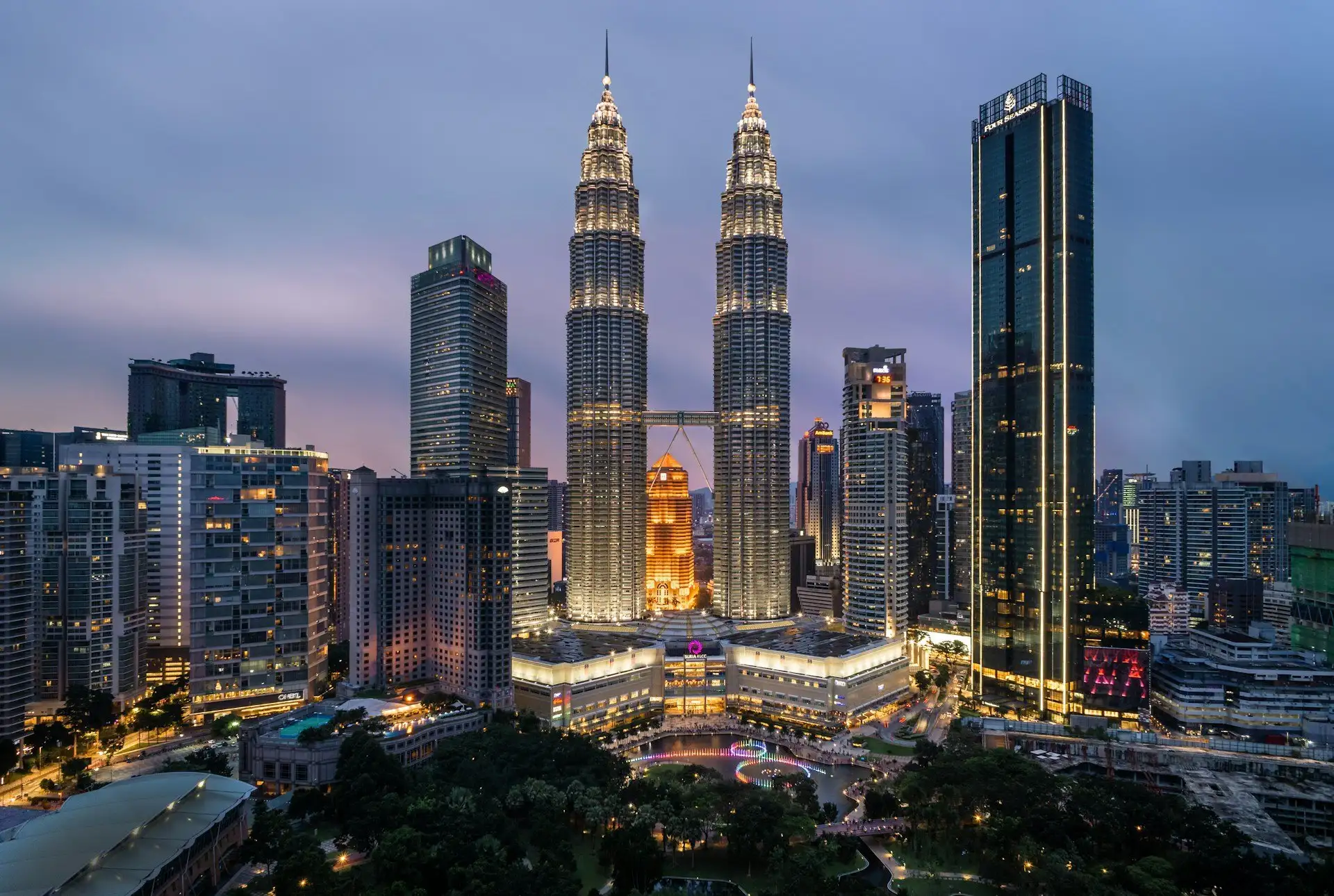
Modern Malaysia. The Petronas Twin Towers open in 1998 as the world's tallest buildings and become the country's defining modern symbol; tourism grows into one of the economy's major pillars.
Read the full history: the Malacca Sultanate, colonization, and how Malaysia's ethnic mix formed
The Malacca Sultanate's founding is traditionally credited to Parameswara, a Srivijayan prince who established a settlement on the strait around 1400. Its position on the narrowest, most sheltered sea route between India and China made it enormously wealthy within a century, and its ruling class's conversion to Islam set the pattern that most of the Malay world would follow. The Portuguese conquest of Malacca in 1511, one of the earliest European colonial seizures in Asia, ended the sultanate's independence but not its cultural legacy: the Malacca court's language, law and etiquette became the template for later Malay sultanates elsewhere on the peninsula.
The Dutch took Malacca from the Portuguese in 1641 but never invested in it the way they did in Batavia (Jakarta), and by the 1824 Anglo-Dutch Treaty, Britain traded Sumatran territory for full, unambiguous control of the Malay Peninsula while the Dutch kept the East Indies, a line that still roughly separates Malaysia from Indonesia today. Britain's colonial economy ran on tin mining and rubber plantations, and it needed labor at a scale the Malay population and economy weren't structured to provide: the British administration actively recruited Chinese workers for tin mines and Indian, largely Tamil, workers for rubber estates, arrivals that built the demographic backbone of the multi-ethnic country that exists today.
The Japanese occupation from 1942 to 1945 was harsh, particularly toward the Chinese population, and it broke the psychological hold of British invincibility across colonial Asia. Independence negotiations after the war culminated in the Federation of Malaya's Merdeka on 31 August 1957. The 1963 formation of Malaysia, merging Malaya with Singapore and the Borneo territories of Sabah and Sarawak, was meant to balance the federation's ethnic composition and give the new country a defensible economic base; Singapore's departure in 1965, driven by Lee Kuan Yew's clashes with Kuala Lumpur over race-based policy, left Malaysia's current borders in place.
May 13, 1969. Race riots following a contested general election left, by official count, close to 200 dead in Kuala Lumpur, a trauma that reshaped Malaysian politics: the government responded with the New Economic Policy, a decades-long program of affirmative action favoring the Bumiputera (ethnic Malay and indigenous) majority in business, education and civil service. The policy remains politically load-bearing and controversial, and it is the backdrop to Malaysia's ongoing, unfinished negotiation between ethnic Malay political dominance and Chinese and Indian economic and cultural presence. Visitors rarely encounter this directly, but it explains a great deal about how the country's institutions and public discourse work.
Top Destinations
Malaysia splits naturally into five zones: the capital region, Penang's UNESCO old town, the Langkawi archipelago, the Cameron Highlands hill country, and Malaysian Borneo, geographically separate and culturally distinct from the peninsula. Domestic flights on AirAsia and Malaysia Airlines connect all of them cheaply, so distance is rarely the constraint; picking two or three zones per trip is.
Kuala Lumpur, the natural hub
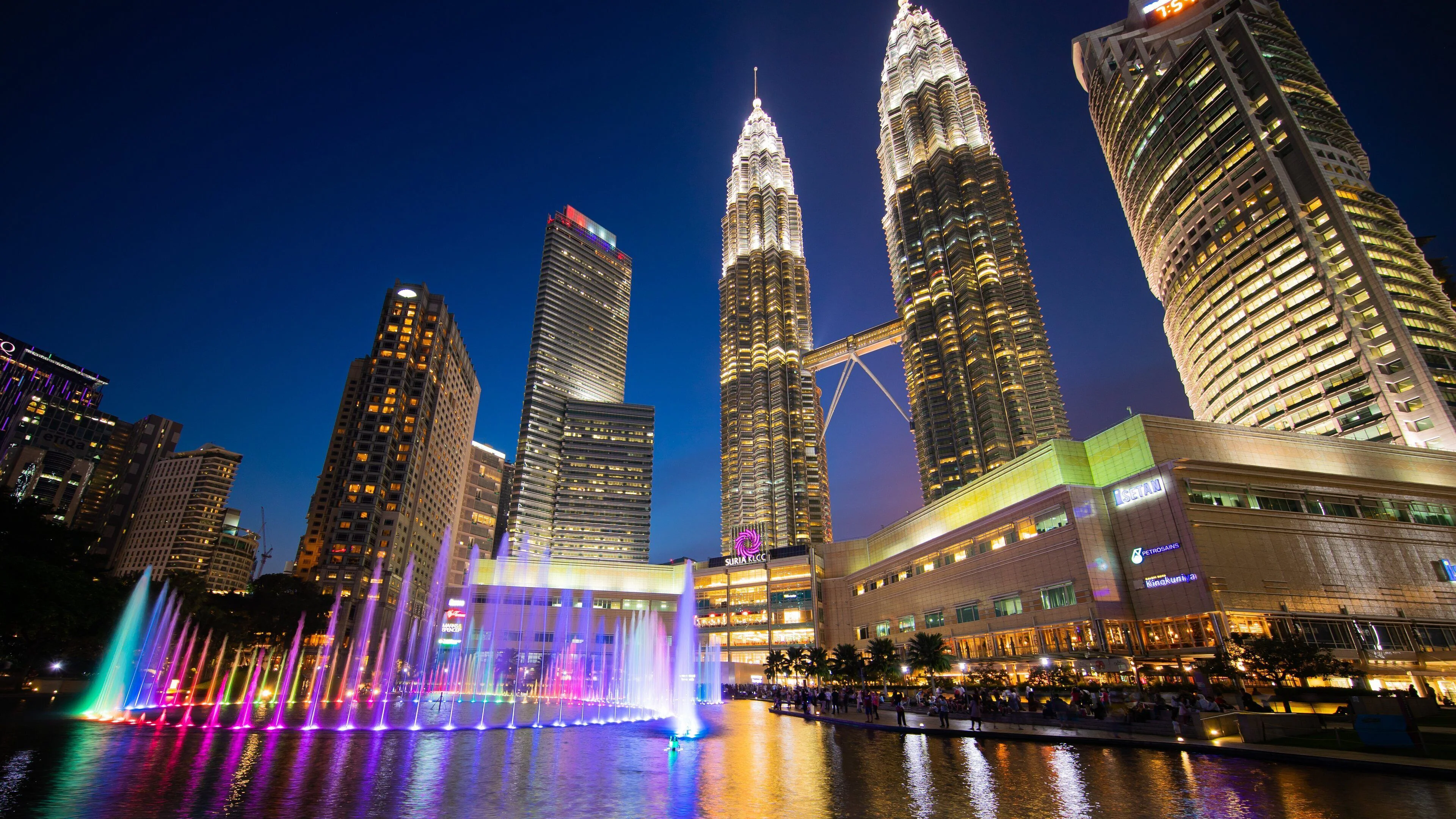
KL is where almost every Malaysia trip starts and ends, and it earns two to three days on its own merits: the Petronas Twin Towers and KLCC Park, the golden Lord Murugan statue and cave temple at Batu Caves, colonial-era Merdeka Square where independence was declared in 1957, and Chinatown's Petaling Street market. See our full Kuala Lumpur city guide for neighborhoods, hotels, restaurants and a full itinerary.
George Town, Penang's UNESCO old town
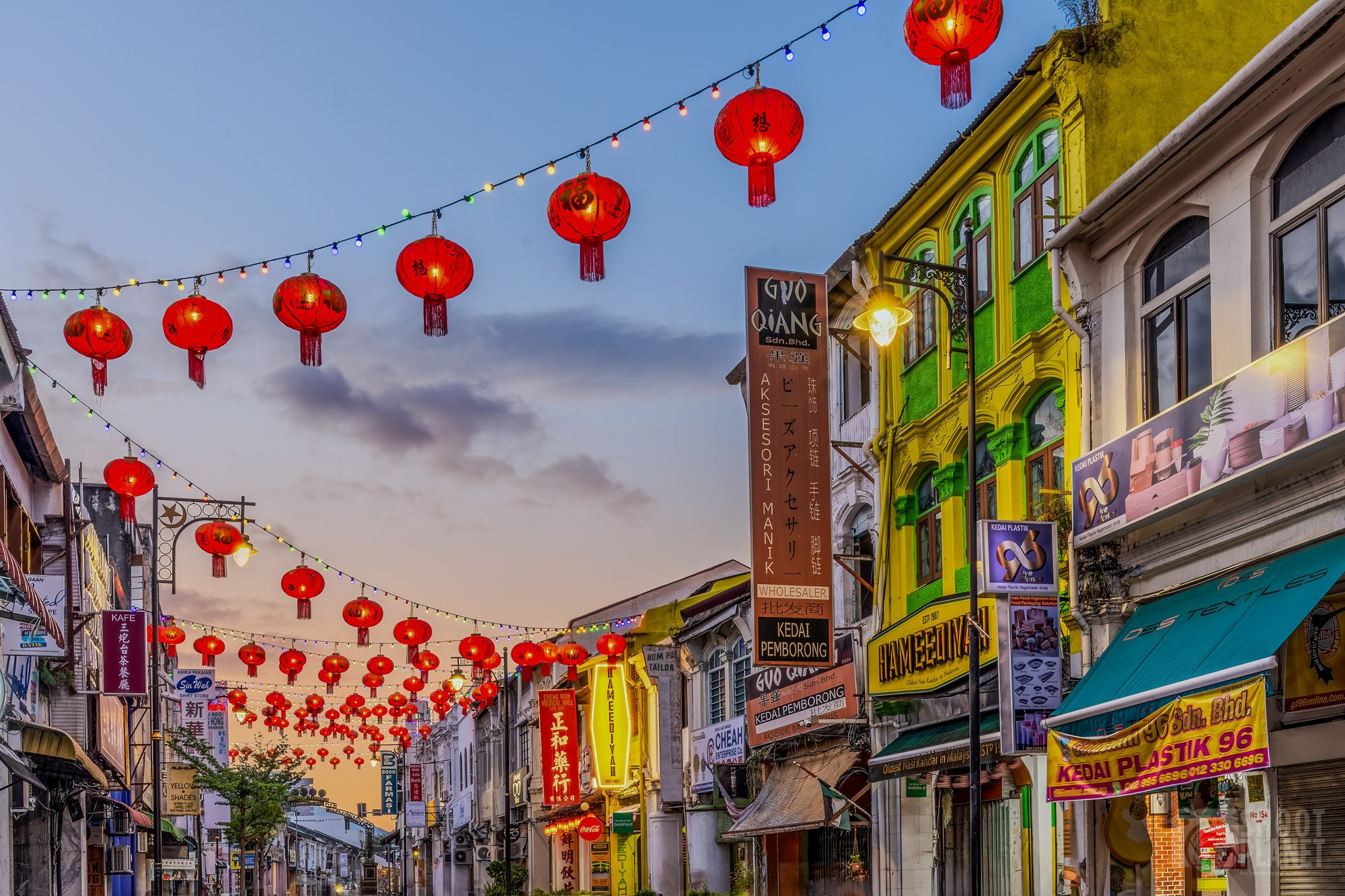
George Town is a UNESCO World Heritage Site of shophouses, temples, mosques and clan houses left behind by Chinese, Indian, Malay, Peranakan and British communities that all settled the same few streets. It is also, by wide consensus, where Malaysia's best food is: Penang laksa's sour-spicy tamarind broth, char kway teow cooked over real charcoal, and street art tucked into the same alleys as the food stalls. Penang Hill's funicular railway climbs to cooler air and views over the strait, and the hilltop Kek Lok Si Temple, one of the largest Buddhist temples in Southeast Asia, is a short trip from the old town.
Langkawi, the beach archipelago
Langkawi is an archipelago of 99 islands off the Andaman coast near the Thai border, Malaysia's most developed beach destination and a duty-free zone. The Langkawi SkyCab cable car and the SkyBridge, a curved pedestrian bridge suspended above the rainforest canopy, are the signature attraction; beyond them, island-hopping boat trips out to Pulau Dayang Bunting's freshwater lake and the mangroves around Kilim Geoforest Park fill out a few days easily.
Cameron Highlands, colonial hill country
Sitting at 1,100 to 1,800 meters, the Cameron Highlands were British Malaya's escape from the coastal heat and still function that way: tea plantations roll over the hillsides, strawberry farms line the roads, and Tudor-style architecture survives in villages like Tanah Rata. The BOH tea estate is the best-known plantation to visit, and the cooler climate makes it a popular add-on to a Kuala Lumpur trip when the capital's heat and humidity get old.
Sabah & Sarawak, a different country in feel
Malaysian Borneo is a separate flight, a separate ecosystem, and in many ways a separate trip: rainforest, orangutans and Mount Kinabalu rather than beaches and street food. Kota Kinabalu, Sabah's capital, is the gateway to Kinabalu National Park, home to Southeast Asia's highest peak, and to island-hopping in Tunku Abdul Rahman Marine Park just offshore. This zone needs its own week rather than a rushed add-on, and it's the part of Malaysia most first-time visitors skip and most repeat visitors regret not doing sooner.
Hidden gems beyond the main circuit
The zones above cover a first or second trip well. With extra days, these are the spots that rarely make the standard guides but reward the detour.
Melaka's Dutch & Portuguese quarter
The oldest colonial city in Malaysia, with Dutch Stadthuys, Portuguese A Famosa fort ruins and a Peranakan (Baba-Nyonya) heritage quarter, all walkable in a long day trip from KL.
Perhentian & Redang Islands
Clearer water and better diving than Langkawi, but on the opposite monsoon calendar: best May to September, largely closed and inaccessible by boat November through February.
Fireflies at Kampung Kuantan
A river boat trip near Kuala Selangor at dusk, watching mangrove trees light up with thousands of synchronized fireflies, a genuinely strange, memorable hour that most itineraries skip.
Culture & Etiquette
Malaysia's defining cultural fact is that it isn't one culture: roughly 60% ethnic Malay and indigenous Bumiputera, about a quarter Chinese, and around 7% Indian, each with their own language, religion and festival calendar, coexisting in the same cities. Islam is the official religion and the majority faith among Malays, but the constitution guarantees freedom of religion, and a single street in George Town or KL's Chinatown can hold a mosque, a Hindu temple and a Chinese clan house within a few hundred meters of each other.
Do
- Remove your shoes before entering mosques, temples and most Malaysian homes; watch for a shoe pile at the door as the cue.
- Dress modestly at religious sites. Covered shoulders and knees for mosques and temples; robes are usually available to borrow at major mosques if you arrive underdressed.
- Use your right hand for eating, giving or receiving items and shaking hands; the left hand is traditionally considered unclean in Malay and Indian custom.
- Try basic Malay greetings. Selamat pagi (good morning), terima kasih (thank you), and even a simple "boleh?" (may I / is it okay?) go a long way.
- Respect Ramadan. During the fasting month, avoid eating or drinking conspicuously in front of fasting Muslims in public during daylight hours, even though most restaurants stay open for tourists and non-Muslims.
Don't
- Point with your index finger, at people or at religious icons; use an open hand or your thumb instead, a common regional norm across Malay culture.
- Assume all Malaysian food is halal by default or that all restaurants serve pork and alcohol; Chinese- and Indian-run establishments vary, and clear signage usually indicates which.
- Touch someone's head, including children's, which is considered the most sacred part of the body in Malay and broader Southeast Asian custom.
- Underestimate drug laws. Malaysia enforces a mandatory death penalty for drug trafficking and serious penalties even for personal possession; this is not treated casually by authorities regardless of nationality.
- Assume "Malaysian" means one language or one cuisine. A Chinese-Malaysian, Malay-Malaysian and Indian-Malaysian household can differ as much from each other as three different countries.
Deeper culture: the Peranakan, festival calendar, and Malaysia's languages
The Peranakan (Baba-Nyonya). Descendants of early Chinese traders who settled the Straits Settlements and intermarried with local Malay communities, developing a distinct hybrid culture: Nyonya cuisine, ornate beaded slippers, and a distinctive architectural style visible in Melaka and Penang's heritage houses.
The festival calendar. Malaysia effectively runs three religious calendars at once: Hari Raya Aidilfitri (the end of Ramadan), Chinese New Year, and Deepavali (Diwali) are all public holidays, plus Christmas and various state-level festivals. Visiting during any of them means open houses, decorated streets and, for Hari Raya and Chinese New Year specifically, a lot of domestic travel and some closed businesses.
Languages in practice. Bahasa Malaysia is the national language and taught in all schools, but Malaysian English, inflected with Malay, Chinese and Tamil loanwords and known informally as "Manglish," is the genuine everyday lingua franca in cities. Mandarin, Cantonese, Hokkien and Tamil are also widely spoken within their respective communities.
Food & Drink
Malaysian food is what happens when Malay, Chinese, Indian and indigenous cooking share the same hawker centers for a century: the food itself is often the clearest, least complicated expression of the country's multi-ethnic identity. Hawker stalls and food courts, not restaurants, are where the best meals happen, and a full meal rarely costs more than a few ringgit.
Nasi Lemak RM5-15
Malaysia's unofficial national dish: coconut rice, sambal, fried anchovies, peanuts and a boiled or fried egg, traditionally wrapped in banana leaf. Order it with fried chicken (ayam goreng) for the fuller version.
Laksa RM8-15
A noodle soup with wildly different regional versions: Penang's assam laksa is sour and fish-based, curry laksa (common in KL) is coconut-rich and spiced. Both are worth trying to understand how differently the same dish name is used across the country.
Roti Canai & Teh Tarik RM1.50-4
Flaky flatbread torn and dipped in curry or dal, eaten for breakfast or as a late-night snack, alongside teh tarik ("pulled tea"), sweet milk tea theatrically poured between cups to aerate it.
Char Kway Teow RM8-15
Flat rice noodles stir-fried over high heat with prawns, egg, bean sprouts and Chinese sausage; Penang's charcoal-wok versions are considered the benchmark nationwide.
Satay RM0.80-1.50/stick
Skewered, grilled marinated meat served with peanut sauce, cucumber and compressed rice cakes (ketupat); sold by the stick at night markets across the country.
Banana Leaf Rice RM7-12
South Indian-style meal of rice with vegetable and meat curries served on a washed banana leaf, all-you-can-eat rice and gravy at most stalls. KL's Brickfields (Little India) is the classic place to eat it.
When to Go & Itineraries
Malaysia doesn't have one single travel season, because its regions run on different monsoon patterns. The peninsula's west coast, Kuala Lumpur, Penang and Langkawi, is driest December to February and again May to July. The east coast islands (Perhentian, Redang) flip the other way: their season runs roughly March to October, and many resorts close entirely from November to February when the northeast monsoon makes boat crossings unsafe. Malaysian Borneo sits closer to the equator and stays wet and humid year-round with less pronounced seasonality.
Regional seasons compared, with temperatures
| Region | Best months | Avoid | Notes |
|---|---|---|---|
| KL, Penang, Langkawi (west coast) | Dec-Feb, May-Jul | Oct-Nov peak rain | Rain possible year-round; these windows are relative, not dry-guaranteed |
| Perhentian & Redang (east coast) | Mar-Oct | Nov-Feb, many resorts close | Monsoon makes boat crossings genuinely unsafe in peak months |
| Cameron Highlands | Year-round | - | Cool climate (15-25°C) buffers it from the coastal wet/dry swing |
| Malaysian Borneo | Mar-Oct, driest | Oct-Feb, wettest | Humid and rainy year-round regardless; pack for rain always |
Year-round temperatures stay fairly constant across the lowlands: KL and Penang average 25-33°C, Langkawi 26-32°C. Cameron Highlands is the exception at 15-25°C. Humidity is high everywhere, always.
Itineraries
Seven days covers Kuala Lumpur plus one region well. Two weeks fits KL with two add-ons; Malaysian Borneo is worth treating as its own trip rather than squeezing in.
- Days 1–3
Kuala Lumpur. Petronas Towers and KLCC Park, Batu Caves, Merdeka Square and Chinatown, Jalan Alor for dinner.
- Days 4–5
Cameron Highlands. Bus or car from KL (3.5-4 hours). Tea plantations, strawberry farms, cooler air.
- Days 6–7
George Town, Penang. Fly or drive from Cameron Highlands or KL. UNESCO old town, street art, Penang laksa and char kway teow.
- Days 1–3
Kuala Lumpur. Full circuit, plus a day trip to Melaka's Dutch and Portuguese quarter.
- Days 4–6
Cameron Highlands. Tea estates, strawberry farms, a jungle trek, and the cooler climate as a break from the coastal heat.
- Days 7–9
George Town, Penang. Old town, street art, food-focused days, and a trip up Penang Hill.
- Days 10–14
Langkawi. SkyCab and SkyBridge, island-hopping boat trips, and beach time to close out the trip.
Getting there & around
Kuala Lumpur International Airport (KLIA) is the main international gateway, with direct flights from most world regions; KLIA Ekspres runs to KL Sentral in about 28 minutes for RM55. Domestic travel between regions runs mainly on AirAsia and Malaysia Airlines, cheap and frequent enough that flying, not driving, is often the practical way to link zones (KL to Penang or Langkawi both run under an hour and often under RM150 booked ahead). Within cities, Grab (the regional Uber equivalent) is the default: cheap, metered fairly, and far less hassle than flagging a taxi.
All transport options: trains, buses, ferries
| Option | Price | Notes |
|---|---|---|
| Domestic flights (AirAsia, MAS) | RM80-250 | KL to Penang or Langkawi under 1 hour; the practical way to cover Malaysia's separated regions |
| Intercity buses | RM12-60 | Extensive network from KL's Terminal Bersepadu Selatan; KL-Melaka about 2 hrs, KL-Penang about 5 hrs |
| ETS trains | RM30-80 | Electric trains connect KL with Ipoh and the north; useful for the KL-Cameron Highlands-Penang overland route via Tapah or Ipoh |
| Ferries (Langkawi, islands) | RM20-80 | Langkawi's ferry from Kuah to Penang or the mainland; island-hopping boats booked locally through resorts or tour desks |
| Grab (ride-hailing) | RM8-30 city rides | Available in all major cities; far more reliable and transparent than street taxis |
Practical prep: the Malaysia Digital Arrival Card (MDAC) is mandatory for nearly all visitors and must be submitted online within three days before arrival; it's free directly through the official portal, and third-party sites charging a fee for it are unnecessary. Buy a local SIM or eSIM before landing; coverage is strong even outside major cities.
Budget Planning
Malaysia is one of Southeast Asia's better travel values: noticeably cheaper than Singapore and generally on par with or slightly below Thailand for food and transport, while hotels often run cheaper than Thai equivalents at the same star rating.
- Hostel dorm RM30-70
- Hawker meals RM6-15
- Grab rides & public transport
- Free temples, mosques and viewpoints
- Boutique hotel or serviced apartment
- Restaurant meals RM25-60/person
- Occasional domestic flight
- Paid attractions & guided tours
- 5-star hotels (Ritz-Carlton, JW Marriott)
- Fine dining & tasting menus
- Private drivers & guided day trips
- Resort stays in Langkawi
Quick reference prices: food, transport, entry fees
| Hawker meal (nasi lemak, noodles) | RM6-15 |
| Coffee (local kopitiam) | RM2-4 |
| Restaurant meal (mid) | RM25-60 |
| Grab ride, central KL | RM8-20 |
| Domestic flight (KL-Penang) | RM80-200 |
| Petronas Twin Towers (non-Malaysian adult) | ~RM98 |
| Hostel dorm bed | RM30-70/night |
| Mid-range hotel | RM150-350/night |
Prices reflect August 2026 research (approx. RM4.09 to $1) and drift over time. Treat them as a planning baseline, not a quote.
Visa & Entry
Malaysia has one of the most generous visa-exemption regimes in Asia: US, EU, UK, Australian and Canadian citizens enter visa-free for up to 90 days. Nearly all visitors, visa-exempt or not, must also submit a free Malaysia Digital Arrival Card (MDAC) online within three days before arrival, through the official Immigration Department portal, not a paid third-party site.
✓ Valid passport
At least 6 months validity from date of entry, per standard Malaysian immigration requirements.
✓ MDAC submitted
Free online arrival card required within 3 days before landing; keep the confirmation accessible at immigration.
✓ Return/onward ticket
May be requested at immigration, particularly for longer stays.
✓ Proof of funds
Rarely checked for Western passport holders on short tourist stays, but technically part of entry requirements.
| Malaysia | Indonesia | |
|---|---|---|
| Daily budget | RM120-180 ($30-45); generally cheaper hotels | Comparable food costs, but Bali's tourist-zone prices have risen sharply |
| English | Widely and genuinely spoken as a second language | Common in tourist areas, less consistent elsewhere |
| Food scene | Malay, Chinese and Indian hawker food in one country | Regionally distinct Indonesian cuisines, Bali-specific warung culture |
| Islands & beaches | Langkawi, Perhentian, Redang | Bali, Gili Islands, Lombok; larger, more built-out beach tourism scene |
| Visa | Visa-free 90 days for most Western passports | Visa-free 30 days, extendable, for most Western passports |
Safety, Solo Women & Family
Malaysia is safe for tourists. The US State Department rates it Level 1, Exercise Normal Precautions, its lowest advisory tier, current as of February 2026. Violent crime against visitors is rare; the practical risks are petty theft and scams, not personal safety.
Petty theft
Purse-snatching (sometimes from moving motorbikes), pickpocketing in crowded markets, and smash-and-grab thefts from parked cars are the most common crimes. Wear bags cross-body, away from the road.
Scams
Online romance and investment scams targeting foreigners are common, along with unofficial currency exchangers who shortchange or pass counterfeit notes. Use licensed exchange counters and bank ATMs.
Eastern Sabah
A separate, geographically specific advisory covers the east coast of Sabah (Borneo) due to a real kidnapping-for-ransom risk from cross-border criminal groups. It does not affect Kuala Lumpur, Penang, Langkawi or Kinabalu National Park's main routes.
Two more things worth knowing: drug laws and haze season
Drug laws are severe and strictly enforced. Trafficking carries a mandatory death sentence and possession carries serious prison terms, applied without exception for foreign nationals. This is not a theoretical risk; do not carry, transport or accept packages from strangers.
Haze season. Seasonal agricultural burning in Indonesia occasionally drifts smoke haze across Peninsular Malaysia, typically between July and October in bad years, reducing air quality and visibility. It's unpredictable year to year; check air quality index readings if visiting in that window and you have respiratory sensitivities.
Solo women travelers
Malaysia rates well for solo women overall, particularly in Kuala Lumpur, Penang and the main tourist circuit, where street harassment is uncommon and women travel independently on public transport without much comment. Dress modestly around mosques and in more conservative, rural Malay areas; the coastal cities and tourist zones are considerably more relaxed. Use Grab rather than unmarked taxis late at night, and the standard advice that applies across Southeast Asia, trust instincts over politeness, applies here too. Full detail on our Solo Woman Explorer pages.
Emergency numbers
Embassies in Kuala Lumpur
999 is the unified national emergency number covering police, ambulance and fire (Bomba); 112 also connects to emergency services from any mobile phone, including without a local SIM. Most embassies are located in KL's diplomatic enclave around Jalan Ampang and Jalan Tun Razak.
- USA
- +60-3-2168-5000
- UK
- +60-3-2170-2200
- Australia
- +60-3-2146-5555
- Canada
- +60-3-2718-3333
- Germany
- +60-3-2170-9600
- France
- +60-3-2053-5500
Family travel
Malaysia is an easy family destination: English is widely spoken, hospitals in KL and Penang meet international standards, and attractions like KL Bird Park, Aquaria KLCC, and Genting Highlands' theme parks are built with families in mind. Langkawi's calmer beaches suit younger kids better than the surf-exposed east coast islands, and the food scene has enough mild, familiar options (fried rice, noodles, roti canai) to work around fussier eaters.
Malaysia FAQ
Is Malaysia safe to visit?
Yes. The US State Department rates Malaysia Level 1, Exercise Normal Precautions, its lowest tier. The main risks are pickpocketing and scams, not violent crime, though eastern Sabah carries a separate kidnapping-risk warning that doesn't affect the mainland tourist circuit.
Do I need a visa for Malaysia?
Citizens of the US, EU, UK, Australia and Canada can enter visa-free for up to 90 days. Nearly all visitors also need to submit a free Malaysia Digital Arrival Card (MDAC) online within three days before arrival.
How much does Malaysia cost per day?
Budget travelers manage on RM120-180 a day (about $30-45), mid-range on RM300-500. Malaysia is one of Southeast Asia's better travel values, cheaper than Thailand for hotels and about the same for food.
When is the best time to visit Malaysia?
December to February and May to July are the driest windows on the peninsula's west coast, where Kuala Lumpur, Penang and Langkawi sit. The east coast and Borneo's interior run on a different, wetter monsoon calendar, so timing depends on which region you're prioritizing.
How many days do you need in Malaysia?
Seven days covers Kuala Lumpur plus one add-on, Penang or the Cameron Highlands. Two weeks fits KL, Penang, Langkawi or the Cameron Highlands together, and three weeks or more makes room for Malaysian Borneo.
Is Kuala Lumpur worth visiting?
Yes, and two to three days covers it well. The Petronas Twin Towers, Batu Caves, colonial-era Merdeka Square and some of Asia's best hawker food more than justify a stop, and it's the natural hub for the rest of the country.
What language is spoken in Malaysia?
Bahasa Malaysia is the official language, but English is widely spoken in cities, hotels and tourist areas as a legacy of British rule. Mandarin, Cantonese, Hokkien and Tamil are also common given Malaysia's Chinese and Indian communities.
Is Malaysia a Muslim country?
Islam is the official religion and the majority faith among ethnic Malays, but Malaysia is constitutionally multi-religious: Buddhist and Taoist temples, Hindu temples and Christian churches are common, especially in Chinese- and Indian-majority neighborhoods.
Is Malaysia safe for solo female travelers?
Generally yes, particularly in Kuala Lumpur, Penang and the main tourist areas, where street harassment is uncommon and public transport is well used by local women. Dress modestly at religious sites and use Grab rather than unmarked taxis late at night.
Is Malaysia good for families with kids?
Yes. KL Bird Park, Aquaria KLCC, the Genting Highlands theme parks and Langkawi's beaches all work well for kids, English is widely spoken, and the food scene has enough mild options to keep fussy eaters fed.
Is Malaysia cheaper than Singapore?
Considerably. A hotel room, meal or taxi ride in Kuala Lumpur typically costs a third to half what the equivalent costs in Singapore, and Malaysia's budget and hostel scene is far larger.
Do I need to know Malay to visit Malaysia?
No. English is widely spoken in Kuala Lumpur, Penang and every tourist area, a legacy of British colonial rule that persists as a genuinely functional second language, not just tourist-facing signage.
What Stays With You
Malaysia doesn't ask you to choose between the modern skyline and the old town, the rainforest and the beach, or the mosque, temple and clan house on the same street. It just puts all of it within a cheap domestic flight of each other and lets you build the trip that fits. The nasi lemak wrapped in banana leaf that costs less than a coffee back home, the golden statue at Batu Caves catching the morning light, the tea plantations rolling over a hillside two hours from a tropical capital: none of it feels like it should fit together this easily, and that's exactly the point.
Go hungry, and go with a few days spare. Malaysia rewards the itinerary that leaves room to follow a hawker stall's queue instead of the guidebook.