
What You're Actually Getting Into
Poland spent the 20th century getting invaded, partitioned, flattened and occupied more thoroughly than almost any country in Europe, and it is still standing in a way that makes the visible layers of history feel less like museum pieces and more like scar tissue. Warsaw was deliberately razed after the 1944 Uprising and rebuilt from paintings and photographs; Krakow escaped that fate almost entirely and today has one of the best-preserved medieval old towns on the continent. Both facts explain more about how the country presents itself to visitors than any guidebook chapter can.
It is also, city for city, one of the better values left in the EU. A milk bar lunch costs the same as a coffee in Paris. A four-star hotel room in Krakow's old town runs a third of the Prague or Vienna equivalent in high season. The infrastructure, high-speed rail, new airports, an expanding metro in Warsaw, has caught up fast since EU accession in 2004, so the value doesn't come with the compromises it used to.
The honest complications
Krakow's old town and Auschwitz-Birkenau are genuinely crowded in July and August, and the Auschwitz-Birkenau Memorial now requires an online-only reservation made well in advance, so it cannot be a same-day decision. Polish is a difficult language to sound out on signage, though English coverage in tourist areas is strong. Winters are long, dark and properly cold from December through February, and some rural regions still move at a slower administrative pace than Warsaw or Krakow. None of this is a reason to skip the country; it's a reason to book Auschwitz-Birkenau before you book your flight.
A History Worth Knowing
Poland's borders have moved more than almost any country in Europe: a medieval kingdom and a 16th-century Polish-Lithuanian Commonwealth that was briefly the largest state in Europe, three partitions that erased it from the map entirely between 1795 and 1918, a brutal Nazi occupation and the Holocaust's epicenter, four decades behind the Iron Curtain, and a 2004 EU accession that capped one of the fastest post-communist transformations in the region.
- 1569
The Commonwealth. The Union of Lublin creates the Polish-Lithuanian Commonwealth, at its peak one of the largest and most populous states in Europe, with an unusually early elective monarchy.
- 1795
The Third Partition. Russia, Prussia and Austria complete the dismantling of Poland; the country disappears from the map for 123 years.
- 1918
Independence restored. Poland re-emerges as a sovereign state after World War I, only to be invaded from both west and east in 1939.
- 1939–1945
Occupation and the Holocaust. Nazi Germany builds Auschwitz-Birkenau and other camps on occupied Polish soil; roughly six million Polish citizens, half of them Polish Jews, are killed. Warsaw is razed after the 1944 Uprising.
- 1980
Solidarity. The Solidarność trade union, born in the Gdansk shipyards under Lech Wałęsa, becomes the first independent labor movement in the Soviet bloc and a catalyst for its eventual collapse.
- 2004
EU accession. Poland joins the European Union and, in 2007, the Schengen Area, cementing the fastest infrastructure and economic transformation in its modern history.
Read the full history: the Commonwealth, partitions, Solidarity and today
The Polish-Lithuanian Commonwealth's Golden Age in the 16th and early 17th centuries produced remarkable religious tolerance for its time and an elected monarchy that limited royal power well before most of Europe experimented with constitutional limits. Krakow was the Commonwealth's capital until 1596, when the seat of power moved to Warsaw, one reason the older city's architecture and university, the Jagiellonian, founded in 1364, feel so distinct from the capital's.
The three partitions between 1772 and 1795 divided Polish territory among the Russian, Prussian and Austro-Hungarian empires. Polish culture and language survived underground and in exile for over a century, through literature, the Catholic Church and a fierce sense of national identity that outlasted the empires that erased the state.
World War II is the darkest chapter. Germany invaded from the west on 1 September 1939 and the Soviet Union from the east sixteen days later. Nazi Germany built Auschwitz-Birkenau near Oswiecim as the largest of its extermination camps, murdering over a million people there, the majority Polish Jews. The 1944 Warsaw Uprising, a 63-day resistance against German occupation, ended with the city's deliberate, systematic destruction; roughly 85 percent of Warsaw's buildings were gone by 1945, which is why the meticulously reconstructed Old Town, rebuilt from 18th-century paintings by Bernardo Bellotto and prewar photographs, is itself a UNESCO World Heritage Site.
The postwar communist period lasted until 1989. The Solidarność movement, founded in the Gdansk shipyards in 1980 under the electrician Lech Wałęsa, became the first independent trade union in the Soviet bloc and, after years of martial law and suppression, a central force in the negotiated transition to democracy in 1989. Poland joined NATO in 1999 and the EU in 2004, and has since built one of the most consistently growing economies in the EU, visible in Warsaw's skyline and Krakow's tourism infrastructure alike.
Top Destinations
Poland is the EU's fifth-largest country by area, big enough that trying to see everything in one trip is a mistake. Krakow and the south hold the densest concentration of first-time-visitor sights; Warsaw is the modern capital; Gdansk and the Baltic coast are the country's most underrated region for Western Europeans; Wroclaw and the west reward a second trip. A week covers the first two well; two weeks adds a third region without rushing.
Krakow, the intact medieval capital
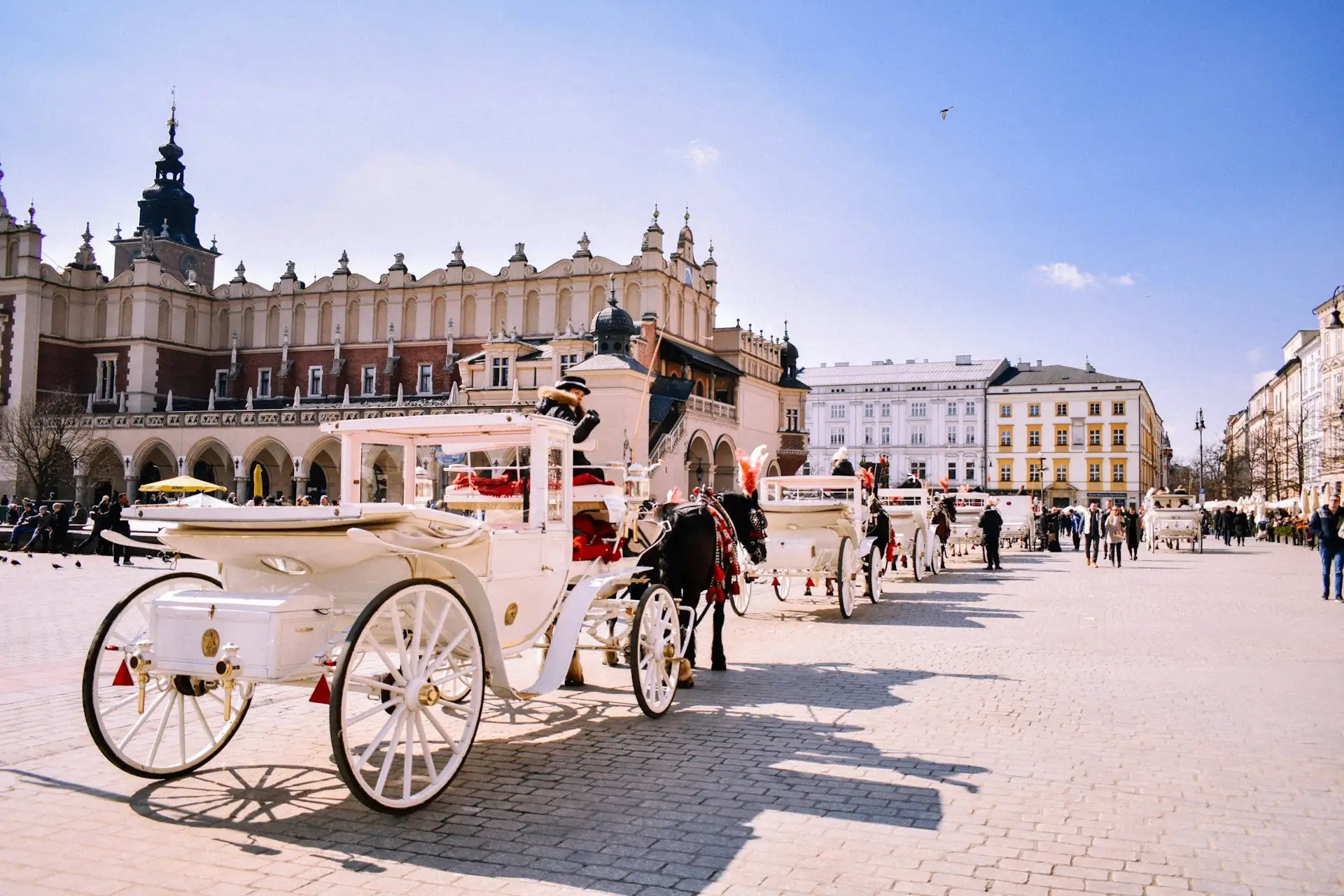
Krakow is Poland's cultural heart and, for most first-time visitors, the country's single best base: see our full Krakow city guide for neighborhoods, hotels and a street-by-street itinerary. The old town's Rynek Główny is one of the largest medieval market squares in Europe, ringed by the Cloth Hall and watched over by St. Mary's Basilica, whose hourly trumpet call still breaks off mid-note in memory of a 13th-century watchman. Wawel Castle and Cathedral sit on the hill above the Vistula, and the Kazimierz district holds Krakow's Jewish heritage alongside its best contemporary bars.
Warsaw, rebuilt from the ground up
Warsaw's Old Town looks medieval and is, in fact, mostly a 1950s reconstruction: roughly 85 percent of the city was destroyed after the 1944 Uprising, and what stands today was rebuilt from 18th-century paintings by Bernardo Bellotto and prewar photographs, precisely enough that UNESCO listed the reconstruction itself as a World Heritage Site. The POLIN Museum of the History of Polish Jews, in the former ghetto district, is one of the most sophisticated historical museums in Europe. Łazienki Park, the largest in the city, holds a neoclassical Palace on the Water and free Chopin piano recitals by his monument every Sunday in summer. The Palace of Culture and Science, a 1955 Stalinist gift from the Soviet Union that Varsovians have complicated feelings about, still dominates the skyline alongside a genuinely modern financial district of glass towers around it.
Gdansk, the Hanseatic port that started Solidarity
Gdansk's Long Market (Długi Targ) and the Royal Way it sits on are the Baltic coast's answer to Krakow: gabled Hanseatic merchant houses, the Neptune Fountain, and Mariacka Street lined with amber jewelers selling the fossilized resin that washes up on the coast for miles around. The city's real weight, though, is 20th-century: the Gdansk Shipyard is where Lech Wałęsa and Solidarność began the movement that helped end communism in Eastern Europe, and the European Solidarity Centre there is one of the most affecting modern museums in the country. Sopot, twenty minutes up the coast by commuter rail, has Europe's longest wooden pier and a proper seaside-resort feel in summer.
Wroclaw, the city of dwarves and bridges
Wroclaw changed hands between Poland, Bohemia, Austria and Prussia for centuries before returning to Poland after 1945, and its Germanic-Gothic Market Square, one of the largest in Europe, reflects that layered ownership. Over 350 small bronze dwarf statues (krasnale) are scattered around the city as a quirky, crowdsourced public art project that started as a 1980s protest symbol; hunting them is a genuine, family-friendly activity. Ostrów Tumski, the cathedral island where the city began, is lit by gas lamps every evening by a lamplighter, one of the last such traditions in Europe.
Białowieża Forest & the Tatra Mountains
Białowieża Forest, on the Belarus border about three hours from Warsaw, is the last significant remnant of the primeval forest that once covered most of the European lowlands, and the only place European bison survive in the wild rather than reintroduced from captivity elsewhere. It's a UNESCO World Heritage Site and Biosphere Reserve, best explored on foot or by bike with a licensed guide, since the strict reserve core is off-limits without one. In the south, the Tatra Mountains around Zakopane, Poland's answer to an alpine resort town, offer hiking and skiing a straightforward day trip or overnight from Krakow.
Hidden gems beyond the main circuit
The zones above cover a first or even second trip well. With extra days, these reward the detour.
Ojców National Park
Poland's smallest national park, a limestone valley of caves, cliff-top ruins and the Hercules Club rock formation, an easy half-day escape from Krakow by local bus.
Zamość
A perfectly preserved 16th-century Renaissance new town, UNESCO-listed and built in a single unified plan by an Italian architect, with almost none of Krakow's crowds.
Łódź
A 19th-century industrial textile city turned street-art and design hub, with Manufaktura, a former mill complex converted into galleries, shops and restored red-brick factory architecture.
Culture & Etiquette
Poland is a predominantly Catholic country where religion still shapes daily rhythms more visibly than in most of Western Europe, church bells, roadside shrines, and a genuine reverence around Pope John Paul II, born Karol Wojtyła in Wadowice near Krakow. Polish hospitality runs formal-then-warm: manners matter on first meeting, but once the formality is observed, Poles are direct, dryly funny and generous hosts.
Do
- Greet with a handshake and eye contact. Use titles (Pan/Pani plus surname) until invited to first names, especially with older Poles.
- Bring a small gift if invited to someone's home, flowers (in odd numbers, never yellow chrysanthemums, which are for funerals) or good chocolate.
- Dress respectfully in churches. Cover shoulders and knees, and stay quiet during services even as a visiting tourist.
- Learn a few Polish words. Dzień dobry (good day), dziękuję (thank you), przepraszam (excuse me/sorry). The consonant clusters are intimidating; the effort is still appreciated.
- Tip 10 percent at sit-down restaurants if service isn't already included; round up for taxis and casual meals.
Don't
- Joke about the Holocaust or wartime history casually. It remains a raw, present subject, not distant history, particularly around Auschwitz-Birkenau and in Warsaw.
- Confuse Poland with "Eastern Europe" dismissively. Many Poles consider the country Central European and take the distinction seriously after decades of being lumped in with the Soviet bloc.
- Assume everyone speaks Russian. Given the 20th-century history, some older Poles resent the assumption even if they technically can.
- Skip the queue etiquette. Poles queue formally, especially at milk bars and pharmacies; cutting in is a genuine faux pas.
- Photograph the memorial grounds at Auschwitz-Birkenau casually. Selfies and posed photos at the site are considered deeply disrespectful; the museum asks for quiet, contemplative behavior throughout.
Deeper culture: Catholicism, Polish hospitality and the language
Catholicism's role. Roughly 85-90 percent of Poles identify as Roman Catholic, and the church played a significant, well-documented role in the Solidarity movement and the fall of communism. Pope John Paul II, elected in 1978, remains a figure of near-universal national pride; his birthplace in Wadowice is a pilgrimage site an hour from Krakow.
Polish hospitality. "Gość w dom, Bóg w dom" (a guest in the house is God in the house) captures a hospitality tradition that runs deeper once you're past the initial formality. Expect to be fed generously and repeatedly if invited anywhere.
The language. Polish is a West Slavic language with seven grammatical cases and consonant clusters (Szczecin, Przemyśl) that intimidate visitors on sight. It's written in the Latin alphabet, unlike Russian or Ukrainian, with added diacritics: ą, ć, ę, ł, ń, ó, ś, ź, ż.
Food & Drink
Polish food is hearty, Slavic peasant cooking elevated by decades of quiet refinement: dumplings, soured soups, cured meats and preserved vegetables built for a long, cold winter. It's also cheap even by Central European standards, and the best of it is often at a no-frills milk bar rather than a restaurant with an English menu.
Pierogi €4-8
Poland's signature dumpling, boiled or pan-fried, filled with potato and cheese (ruskie), meat, sauerkraut and mushroom, or sweet fruit for dessert. A plate of eight to ten costs 20-35 zloty at most restaurants, less at a milk bar.
Żurek & Bigos
Żurek is a tangy, fermented rye soup served with sausage and hard-boiled egg, often in a bread bowl. Bigos, a slow-cooked hunter's stew of sauerkraut, fresh cabbage and mixed meats, is better the second or third day, and most restaurants know it.
Polish Vodka €2-4/shot
Poland disputes Russia's claim to having invented vodka and makes a strong case: try Żubrówka, flavored with bison grass from Białowieża Forest, drunk neat and cold, traditionally chased with apple juice (szarlotka).
Kiełbasa €3-7
Poland's sausage culture runs to dozens of regional varieties, smoked, fresh, or dried, sold by weight at markets and grilled whole at street stalls, especially around Christmas markets in winter.
Oscypek €2-4
A protected smoked sheep's cheese from the Tatra highlands around Zakopane, traditionally grilled and served with cranberry sauce. Look for the genuine article with the geographic protection mark, not tourist imitations.
Milk Bars €4-6/meal
Bar mleczny canteens are a communist-era holdover serving full traditional meals, soup, a main, a drink, for a fraction of restaurant prices. Order at the counter, pay first, and expect no English menu in smaller towns.
When to Go & Itineraries
May, June and September are Poland's sweet spot: long daylight hours, mild temperatures and manageable crowds in Krakow's old town. July and August are warmest and busiest, especially around Rynek Główny and Auschwitz-Birkenau. December brings genuinely good Christmas markets in Krakow and Wroclaw, but daylight is short and temperatures drop well below freezing.
All four seasons compared, with temperatures
| Season | Verdict | Temps | Prices & crowds |
|---|---|---|---|
| May-Jun & Sep | Best | 15-23°C | Mid prices, manageable crowds |
| Jul-Aug | Good (warm, busy) | 18-28°C | Peak crowds in Krakow and at Auschwitz-Birkenau |
| Oct-Nov | Good, quieter | 5-14°C | Lower prices, fewer tourists, more rain |
| Dec-Feb | Cold but festive | -3 to 5°C | Christmas markets in Dec; short days, low prices otherwise |
Year-round city averages: Krakow 9°C, Warsaw 9°C, Gdansk 9°C, Wroclaw 9.5°C, Zakopane 6°C. Winters can drop to -10°C or lower inland; summers occasionally reach 30°C in Warsaw and Wroclaw.
Itineraries
A week covers Krakow, Auschwitz-Birkenau and Warsaw comfortably. Two weeks adds Gdansk and the Baltic coast; three weeks fits Wroclaw and Białowieża Forest without feeling rushed.
- Days 1–3
Krakow. Rynek Główny, Wawel Castle, Kazimierz, and a full day for Auschwitz-Birkenau (book online well ahead) or Wieliczka Salt Mine.
- Days 4–5
Zakopane & the Tatras. Train or bus from Krakow (2-3 hours), a day of hiking or the cable car, oscypek cheese and highland folk architecture.
- Days 6–7
Warsaw. High-speed train from Krakow (about 2.5 hours). The reconstructed Old Town, POLIN Museum, and Łazienki Park.
- Days 1–4
Krakow extended. Old town, Kazimierz, Wieliczka, Auschwitz-Birkenau, and a day trip to Ojców National Park.
- Days 5–6
Zakopane & the Tatras. An overnight in the mountains rather than a rushed day trip.
- Days 7–9
Warsaw. Old Town, POLIN Museum, the Palace of Culture and Science, and a day trip to Łódź's Manufaktura.
- Days 10–12
Gdansk & the Baltic coast. Train from Warsaw (about 2.5-3 hours). Długi Targ, the European Solidarity Centre, and a day in Sopot.
- Days 13–14
Return via Wroclaw. A brief stop for the Market Square and the dwarf statues before flying home.
- Days 1–5
Krakow & the south extended. Old town, Kazimierz, Wieliczka, Auschwitz-Birkenau, Ojców, and Wadowice, John Paul II's birthplace.
- Days 6–8
Zakopane & the Tatras. Multi-day hiking base, including a trip to Slovakia's side of the Tatras if time allows.
- Days 9–12
Warsaw extended. Full city coverage plus Łódź's Manufaktura and street art district.
- Days 13–14
Białowieża Forest. A detour from Warsaw for the primeval forest and wild European bison, with a licensed guide for the strict reserve.
- Days 15–18
Gdansk & the Baltic coast. Długi Targ, the Solidarity Centre, Sopot, and the amber coast towns further west.
- Days 19–21
Wroclaw & the west. Market Square, Ostrów Tumski, and the dwarf-hunting that makes a good final, lighter note to end the trip on.
Getting there & around
Krakow's John Paul II International Airport (KRK) and Warsaw Chopin Airport (WAW) are the two main international gateways, with budget carriers connecting most of Europe from €30-100. Poland's rail network, run by PKP Intercity, is fast and improving: the Warsaw-Krakow express takes about 2 hours 20 minutes on the fastest services. Domestic flights and long-distance buses (FlixBus, Polski Bus) cover routes rail doesn't. A rental car makes sense for the Tatras or Białowieża Forest but is unnecessary and often a liability in Krakow's old town, which is largely pedestrianized.
All transport options with prices: trains, buses, city transit
| Option | Price | Notes |
|---|---|---|
| Warsaw–Krakow express train | €15-35 | 2h20 on the fastest PKP Intercity services; book ahead for the lowest fares. |
| Krakow airport train to city | ~€4 | 20 minutes to Kraków Główny station; runs roughly hourly around the clock. |
| Long-distance bus (FlixBus) | €8-25 | Slower than rail but covers more towns; useful for smaller destinations. |
| City tram/bus single ticket | ~€1 | Krakow and Warsaw both run efficient tram networks; buy from machines or apps before boarding. |
Practical prep: buy a Polish SIM at the airport or an eSIM before landing; coverage is excellent nationwide, including in the Tatras. From April 2026, US and UK travelers register biometrically at the border under the EU's new EES system on first entry; from late 2026 an ETIAS pre-travel authorization (€20, valid three years) begins rolling out with a grace period before it becomes strictly mandatory. Check the Polish Ministry of Foreign Affairs site for the current status before booking.
Where to stay
Krakow old town
The most walkable base for a first visit, with everything from budget guesthouses to five-star properties inside the medieval walls. See the full Krakow guide for specific hotel picks by budget.
Warsaw city center
Śródmieście, around the Palace of Culture and Science, puts you within walking distance of the Old Town, the main station, and the financial district's restaurant scene.
Gdansk & Sopot
Stay in Gdansk's Main Town for the Hanseatic architecture, or Sopot for a beach-resort pace; prices roughly double in July-August compared to shoulder season.
Zakopane guesthouses
Family-run pensjonaty in traditional highland-style timber buildings, often including breakfast, are the classic Zakopane stay and a genuinely different feel from the cities.
Budget Planning
Poland remains one of the better values in the EU, noticeably cheaper than Germany, France or the Netherlands, and close to or slightly below Czechia outside Prague. Milk bars and public transport keep costs low even in the cities; the main splurge categories are five-star hotels and organized tours.
- Hostel dorm or budget guesthouse €15-25
- Milk bar meals €4-6
- Trams and trains between cities
- Free sights: old town squares, parks
- Boutique hotel or Airbnb €60-100
- Restaurant dinners €10-20/person
- Museum and castle entry fees
- Organized day trips €20-40
- Five-star hotels in Krakow or Warsaw
- Fine dining and tasting menus
- Private guided tours and drivers
- Domestic flights over long train legs
Quick reference prices: coffee, beer, transit, entry fees
| Milk bar meal | ~€4-6 |
| Coffee (espresso) | ~€2.50 |
| Restaurant meal (mid) | €10-18 |
| Half-litre local beer | ~€2 |
| City tram/bus ticket | ~€1 |
| Warsaw-Krakow express train | €15-35 |
| Wieliczka Salt Mine entry | ~€31-36 |
| Wawel Castle combined ticket | €7-20 |
| Auschwitz-Birkenau guided tour | ~€35 (150 PLN), free unguided |
| Krakow airport train to center | ~€4 |
Prices reflect August 2026 research and drift over time. Treat them as a planning baseline, not a quote.
Visa & Entry
Poland is a full Schengen Area and EU member, so US, UK, Canadian, Australian and New Zealand citizens enter visa-free for up to 90 days in any rolling 180-day period, shared across all 29 Schengen countries rather than reset per country. From April 2026, first-time entries are registered biometrically under the EU's new Entry/Exit System (EES), and an ETIAS pre-travel authorization begins a phased rollout from late 2026. Rules do shift; the Polish Ministry of Foreign Affairs is the authoritative source, not third-party paid "e-visa" sites that rank well in search but charge for something that's often free or not yet required.
✓ Valid passport
At least 3 months validity beyond your planned departure from the Schengen Area. Keep a photocopy separate from the original.
✓ Track your Schengen days
Time in Poland counts against the shared 90/180-day Schengen allowance if you've also visited other Schengen countries; the EES system now enforces this automatically.
✓ Proof of accommodation
May be requested at the border for air arrivals; hotels and most short-term rentals register guests automatically.
✓ ETIAS from late 2026
A €20, three-year pre-travel authorization for visa-exempt nationalities begins phased rollout; check current status before booking flights.
| Poland | Czechia | |
|---|---|---|
| Daily budget | €35-50 gets you far; slightly cheaper outside Prague-equivalent cities | €40-55 outside Prague, more in the capital |
| Flagship city | Krakow: intact medieval old town, Auschwitz-Birkenau nearby | Prague: fairytale riverside setting, more crowded |
| History | WWII and Solidarity-era communist history, heavier and more present | Habsburg and Bohemian history, lighter tone overall |
| Food | Pierogi, milk bars, hearty and cheap | Goulash, dumplings, the best beer culture in Europe |
| Schengen | Yes, full member since 2007 | Yes, same advantage |
Safety, Solo Women & Family
Poland is one of the safer countries in Europe for visitors. The US State Department rates it Level 1, its lowest risk category, and violent crime against tourists is rare. The real, everyday risks are pickpocketing in crowded tourist zones and a handful of well-documented street scams around main squares, not personal safety.
Pickpocketing
Concentrated around main squares, major train stations and crowded tram lines. Keep bags zipped and in front of you in Krakow's Rynek Główny and on busy Warsaw and Krakow trams.
The "free gift" scam
Around main squares, someone presses a flower or bracelet into your hand as a "gift," then demands payment and becomes aggressive if you refuse. Decline firmly and keep walking; don't accept anything handed to you unsolicited.
Currency exchange (kantor) tricks
Some exchange booths near main squares and the airport advertise excellent rates for obscure currencies in large print while burying poor USD/EUR/GBP rates in small text inside. Use a bank ATM or a fee-free card instead, and always confirm the exact rate before handing over cash.
Two more things worth knowing: winter driving and nightlife zones
Winter driving and weather can be genuinely difficult from December through February, with icy roads and short daylight hours outside the cities. If renting a car for a winter Tatra trip, confirm winter tires are fitted.
Stag-party nightlife zones, particularly parts of Krakow's old town on weekend nights, see inflated bar tabs and aggressive club promoters. Sticking to reviewed venues and confirming prices before ordering avoids nearly all of it.
The 3 scams to actually know about
Poland is not a high-scam destination overall, but three patterns catch uninformed visitors in the main tourist cities. Knowing them going in avoids nearly all of it. The full country list lives on our Poland travel alerts page.
The unsolicited "free gift"
A vendor near a main square presses a rose or bracelet into your hand, then demands 20-50 zloty and becomes aggressive if you refuse. Never accept anything handed to you unsolicited on the street.
Kantor exchange booths
Rates for major currencies are sometimes buried in small print while obscure currencies get the large-print advertised rate out front. Use bank ATMs, always choose to be charged in złoty, and confirm the exact rate before committing.
Club promoters & inflated tabs
Aggressive promoters in Krakow's old town lure visitors into bars with vague promises, then present inflated bills. Only enter venues you've researched, and confirm drink prices before ordering.
Solo women travelers
Poland rates well for solo women travelers, and Krakow specifically has been highlighted in 2026 surveys as one of Europe's best cities for solo female travel: well-lit streets, reliable late-night transport, and a low rate of street harassment. The main practical advice is standard city awareness: use Bolt or Uber rather than unmarked taxis late at night, watch belongings on crowded tram lines 1, 6 and 8 in Krakow, and be firm and keep walking if approached by a street vendor with an unsolicited "gift." Full detail on our Solo Woman Explorer pages.
Emergency numbers
Embassies in Warsaw
112 is the EU-standard number and works from any phone, with English-speaking operators available. The US Embassy in Warsaw is at Aleje Ujazdowskie 29/31 (+48-22-504-2000, American Citizen Services +48-22-504-2784); most other Western embassies cluster in the same central Śródmieście and Ujazdów districts.
- USA
- +48-22-504-2000
- UK
- +48-22-311-0000
- Germany
- +48-22-584-1700
- France
- +48-22-529-3000
- Canada
- +48-22-584-3100
- Australia
- +48-22-521-3444
Family travel & pets
Poland is a solid family destination: milk bars are informal and unhurried with kids, city parks like Warsaw's Łazienki have room to run, and highland activities around Zakopane, hiking, the Kasprowy Wierch cable car, work well for families with older children. Auschwitz-Birkenau is not recommended for children under 14, per the museum's own guidance, given the site's nature.
Pets and traveling with children
Pets: EU pet passport holders can enter with dogs, cats and ferrets given valid rabies vaccination and a microchip. Non-EU visitors need a veterinary health certificate, current rabies vaccination and, in some cases, a tapeworm treatment certificate for dogs entering from certain countries. Check current EU pet travel rules before departure, as they are periodically updated.
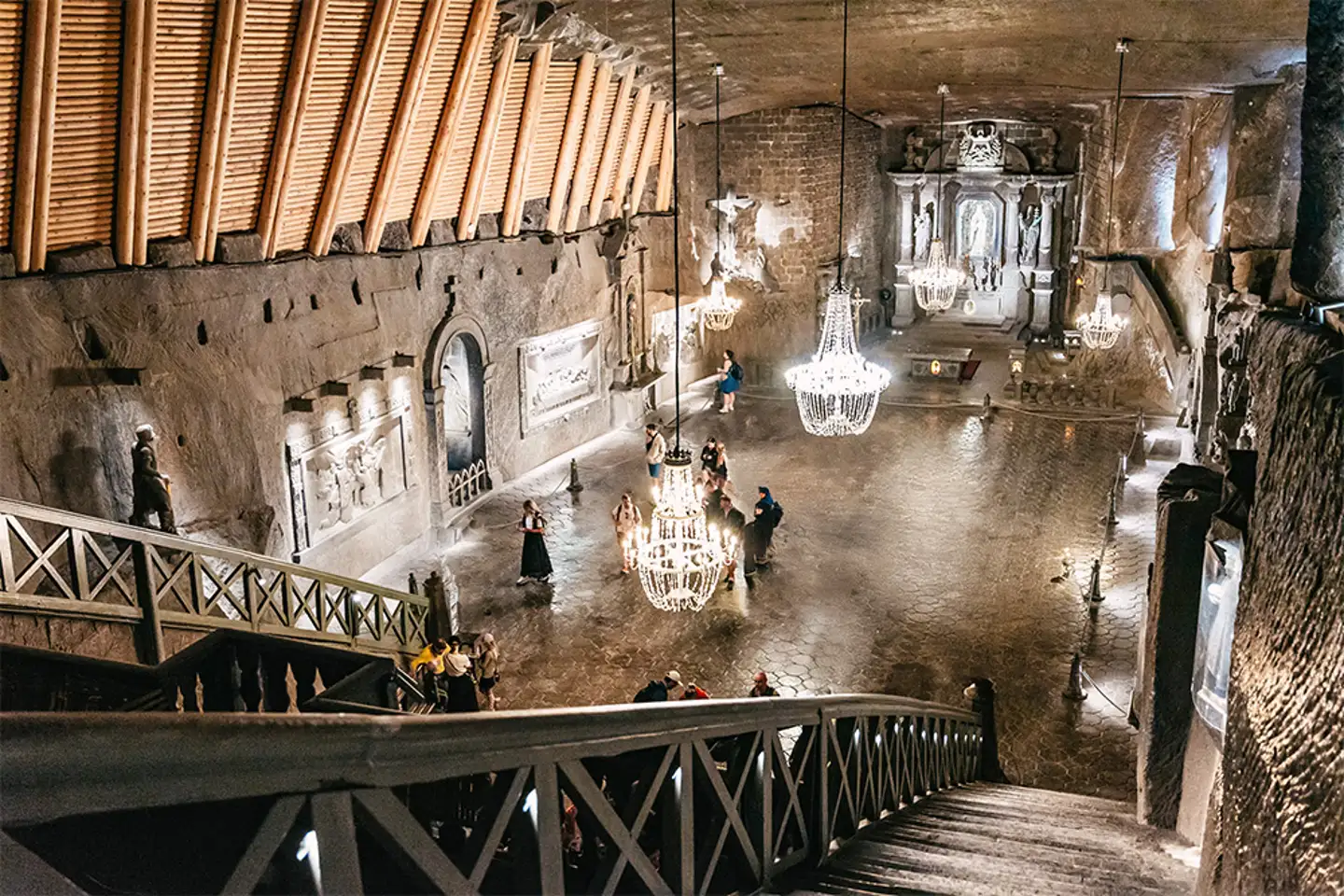
Kids in Krakow and Warsaw: both cities are stroller-friendly in the center though cobblestones in the old towns are uneven; trams have designated space for prams. The Wieliczka Salt Mine tour involves 800-plus steps down (an elevator back up), worth considering for very young children.
Poland FAQ
Is Poland safe to visit?
Yes, Poland is one of Europe's safest countries. The US State Department rates it Level 1, violent crime against visitors is rare, and the main risks are pickpocketing in tourist areas and minor tram scams, not crime against people.
Do I need a visa for Poland?
Citizens of the US, UK, Canada, Australia and New Zealand can enter visa-free for up to 90 days in any 180-day period, since Poland is a full Schengen member. From 2026 that stay counts toward the shared Schengen 90/180-day allowance and is tracked automatically by the EU's new EES border system.
How much does Poland cost per day?
Budget travelers manage on €35-50 a day, mid-range on €80-130. A milk bar meal costs €4-6, a restaurant dinner €10-18, and a half-litre of local beer around €2.
When is the best time to visit Poland?
May, June and September are ideal: mild weather, long days and manageable crowds. July and August are warmest and busiest in Krakow; December has Christmas markets but short, cold days.
How many days do you need in Poland?
A week covers Krakow, Auschwitz-Birkenau and Warsaw well. Two weeks adds Gdansk and the Baltic coast or Wroclaw and the west without rushing.
Is Krakow or Warsaw better for a first visit?
Krakow for atmosphere: an intact medieval old town, Auschwitz-Birkenau nearby, and the country's densest concentration of sights within walking distance. Warsaw for a modern, rebuilt capital with more business-city energy than old-world charm.
Should I book Auschwitz-Birkenau tickets in advance?
Yes, and since 1 March 2026 it is mandatory: all entry passes must be booked online through the museum's official reservation system, and on-site ticket sales have been discontinued entirely. Popular dates sell out six to eight weeks ahead.
Is Poland in the European Union and Schengen Area?
Yes to both. Poland joined the EU in 2004 and has been a full Schengen member since December 2007, with no border checks when arriving from another Schengen country.
What language is spoken in Poland?
Polish, a West Slavic language written in the Latin alphabet with several diacritical marks. English is widely spoken in Krakow, Warsaw and other tourist centers, especially among younger Poles; less so in small towns.
Is Poland safe for solo female travelers?
Yes, very. Poland ranks among the safer countries in Europe for solo women, and Krakow in particular scores highly in 2026 solo-travel surveys. Standard city precautions apply: watch belongings on crowded trams and avoid the aggressive "free gift" street vendors near main squares.
Does Poland use the euro?
No. Poland's currency is the złoty (PLN), despite EU membership. Cards are accepted almost everywhere in cities, but carry some cash for milk bars, markets and small towns.
Is Poland cheaper than Czechia?
They are close, with Poland slightly cheaper outside Prague. Both offer strong value versus Western Europe; the bigger differences are in what each country's flagship city delivers, an intact medieval old town in Krakow versus a fairytale riverside setting in Prague.
What Stays With You
Poland does not ask you to forget what happened here, and that's precisely what makes visiting it feel worthwhile rather than just pleasant. Krakow's old town square is genuinely beautiful in the ordinary tourist-brochure sense, and an hour and a half away, Auschwitz-Birkenau still stands as a testimony to what happens when a place like this is undefended. Warsaw was reduced to rubble and rebuilt stone by stone from paintings, which tells you something about the country's relationship with its own resilience that no single museum exhibit quite captures.
Go for the pierogi and the market squares and the astonishing value. Leave having understood something true about a country that has been erased from the map once and rebuilt from memory, and has no intention of letting either fact go unremembered.