
What You're Actually Getting Into
Austria is a small country that used to run a large one. For nearly 650 years the Habsburg dynasty ruled from Vienna over territory stretching from the Adriatic to the edge of Russia, and the palaces, opera houses and boulevards you're about to walk through were built for an empire of 50 million people, not a country of 9 million. That imperial infrastructure, oversized for its current population, is a large part of why Vienna feels so grand: you're touring the capital of a superpower that no longer exists, on the budget of a mid-sized European country that does.
What Austria has now instead of empire is competence. The trains run close to schedule, the tap water is drinkable everywhere, the hiking trails are signed to the minute, and the country's per-capita museum and concert-hall density rivals anywhere in Europe. It is also, still, recognizably itself in the details: strangers greet shopkeepers by name on entry, coffeehouses will let you nurse a single Melange for three hours undisturbed, and most shops still close on Sundays because the culture decided long ago that not everything needs to be for sale every day.
The honest complications
Austria is not a budget destination in the way Albania or the Balkans are; Vienna in July runs closer to Western European capital prices than to Central European ones, and the ski towns of Tyrol charge accordingly in winter. Hallstatt, the country's most photographed village, has become genuinely overwhelmed by day-tripper buses at points in peak season, to the extent that the local council has capped daily coach numbers. Sunday closing, charming in theory, means a supermarket run or a forgotten adapter can turn into a real problem if you don't plan around it. None of this changes the fundamentals: Austria remains one of the most reliably well-run, safe and rewarding countries in Europe to visit, it just isn't a secret, and it doesn't pretend to be cheap.
A History Worth Knowing
Austria's story for most of the last millennium is the Habsburg dynasty's story: a family that expanded its territory less through war than through calculated marriage, ending up ruling an empire that at its height covered much of Central Europe. The assassination that triggered the First World War happened on Habsburg soil, the empire didn't survive the war that followed, and what came after, Anschluss, occupation, and a hard-won declaration of permanent neutrality, is the short version of how the country you're visiting arrived at its current, quieter role.
- 1273
The Habsburgs arrive. Rudolf I becomes King of Germany and secures Austria for his family, beginning a dynasty that would rule the country in some form for nearly 650 years.
- 1526–1918
Empire building. Through marriage, inheritance and conquest, Habsburg territory grows to encompass Central Europe, parts of Italy and the Balkans, formalized as the Austro-Hungarian Empire from 1867.
- 1914
Sarajevo. The assassination of Archduke Franz Ferdinand, heir to the Austro-Hungarian throne, triggers a chain of alliances that becomes the First World War.
- 1918
Empire collapses. Defeat ends Habsburg rule; Austria emerges as a small republic, a fraction of its former territory and population.
- 1938–1945
Anschluss and war. Nazi Germany annexes Austria in March 1938; the country is absorbed into the Third Reich until Allied victory in 1945, then occupied by the four Allied powers.
- 1955
Neutrality declared. The State Treaty ends occupation; Austria's parliament declares permanent constitutional neutrality, joining no military alliance, a status that still holds.
- 1995
EU membership. Austria joins the European Union, later adopting the euro, while retaining its neutral status outside NATO.
Read the full history: the Habsburgs, two world wars, and neutrality
The Habsburg approach to empire-building was famously summarized in a Latin motto: "Let others wage war; you, happy Austria, marry." Through a sequence of strategic royal marriages across five centuries, the family accumulated the Spanish throne, the Holy Roman Empire, and territory stretching from the Netherlands to Hungary without needing to conquer most of it outright. Vienna became one of Europe's great imperial capitals as a direct result, and the Ringstrasse boulevard, the opera house, and the palaces you'll walk past were built specifically to project that power in the 19th century, right as the empire's actual influence had begun to wane.
The Austro-Hungarian Empire that emerged from the 1867 Compromise was a genuinely multi-ethnic state, home to German, Hungarian, Czech, Polish, Ukrainian, Croatian, Serbian, Slovenian, Italian and Romanian-speaking populations among others, governed from Vienna and Budapest under a shared emperor, Franz Joseph I, who reigned an extraordinary 68 years until his death in 1916. His heir Franz Ferdinand's assassination in Sarajevo in June 1914 set off the alliance system that dragged the continent into the First World War; the empire that had held together this patchwork of nationalities did not survive the war's end.
The interwar First Republic was politically unstable, and Austria's 1938 annexation by Nazi Germany, the Anschluss, was met with genuine public enthusiasm in many quarters, a historical fact the country has spent decades since working to reckon with honestly rather than deflect, unlike the more comfortable postwar narrative of Austria as Hitler's "first victim." Vienna's Jewish population, once one of Europe's largest and most culturally significant, was devastated by the Holocaust that followed.
Postwar Austria was divided into four occupation zones by the Allied powers, mirroring divided Berlin, until the 1955 State Treaty restored full sovereignty on the explicit condition of permanent neutrality: no foreign military bases, no joining a military alliance, a status enshrined in the constitution that October and still in force. That neutrality shaped Vienna's later role as a genuine East-West meeting point during the Cold War and as host to major UN and international agency offices today. EU membership in 1995 integrated the economy fully into Western Europe without requiring Austria to give up its neutral status, a balance the country still maintains.
Top Destinations
Austria divides naturally into five travel zones: the imperial capital and the Danube valley around it, Salzburg and its Mozart-and-mountains hinterland, the Salzkammergut lake district, the Tyrolean Alps around Innsbruck, and Graz and the wine-growing south. The country is compact by European standards, but the terrain isn't: a week covers the eastern lowlands and one Alpine stop well, and two weeks lets you add the west without rushing.
Vienna, the imperial capital
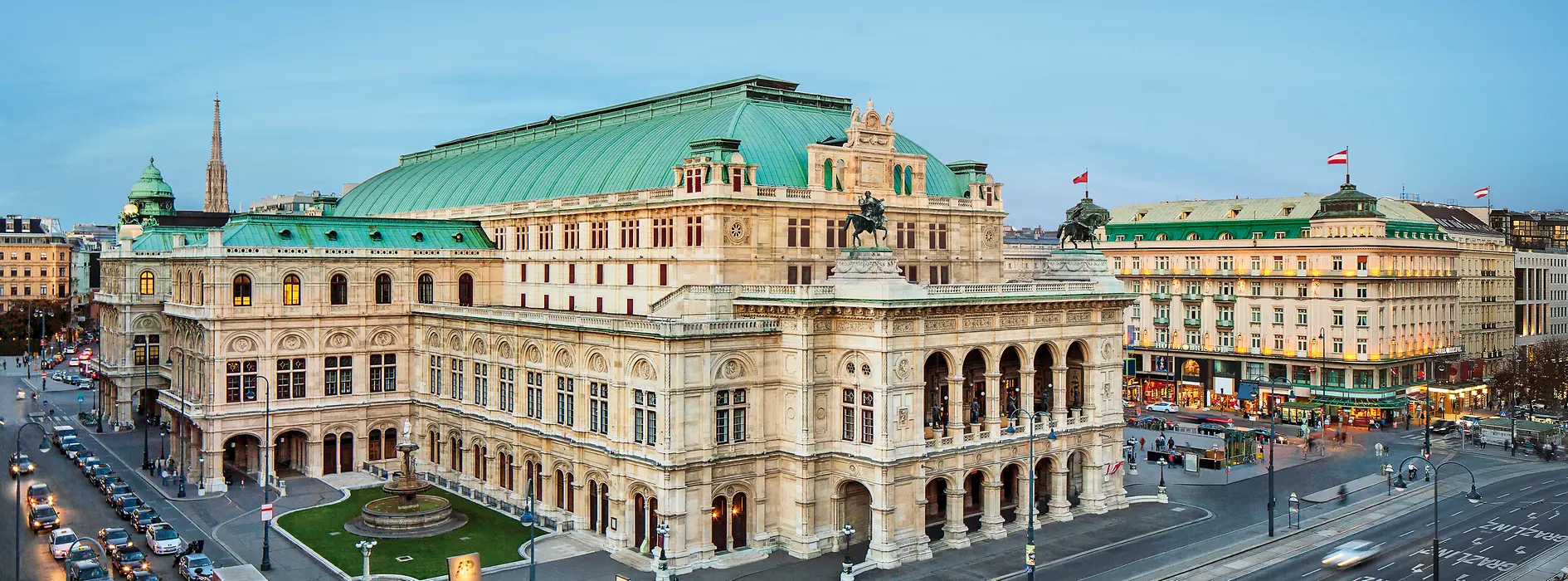
Vienna anchors any Austria trip and deserves at least three days on its own: St. Stephen's Cathedral and the Hofburg at the center, the Ringstrasse's museums and opera house circling the old town, and coffeehouses old enough to have hosted Freud and Trotsky at neighboring tables. Schönbrunn Palace, the Habsburgs' summer residence, and the Belvedere, with Klimt's "The Kiss," sit a short tram ride from the center. See the dedicated Vienna city guide for neighborhoods, hotels, restaurants and a full itinerary.
Salzburg, Mozart's city
Salzburg's UNESCO-listed old town sits in a bend of the Salzach River beneath the Hohensalzburg Fortress, one of Europe's largest surviving medieval castles, reachable by funicular for views over the Baroque rooftops below. Mozart was born here in 1756 at Getreidegasse 9, now a museum, and the city leans into both that legacy and its "Sound of Music" filming locations without becoming a caricature of either. Budget two to three days: the fortress, the old town's cathedral and abbey, Mirabell Palace's gardens, and at least one evening concert, Salzburg takes its classical music seriously and the summer Salzburg Festival draws performers from across the world.
Hallstatt & the Salzkammergut lakes
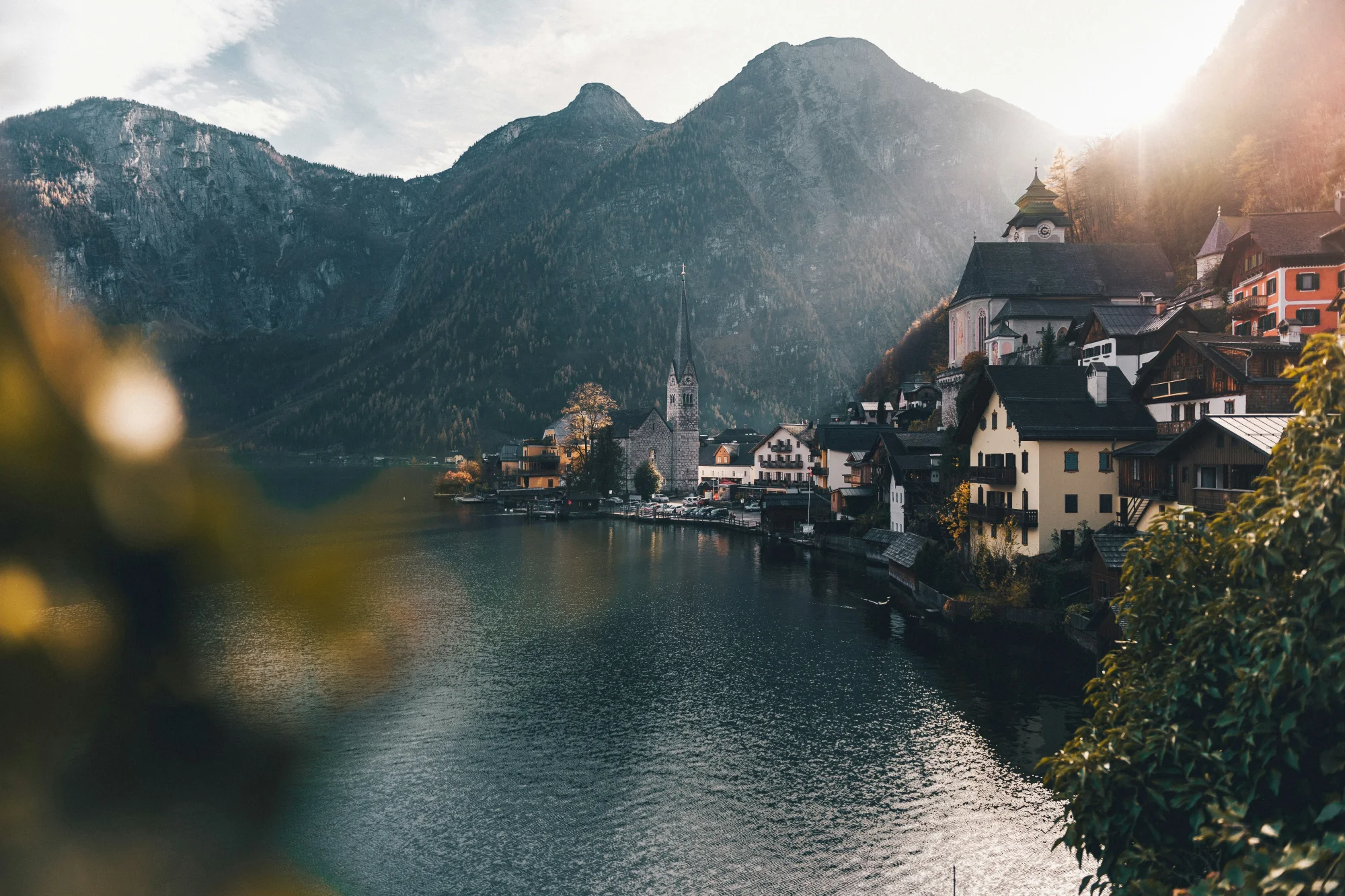
Hallstatt, wedged between a lake and a mountainside in the Salzkammergut, is Austria's most photographed village and, in peak midday hours, its most crowded: the local council now caps daily tour-bus numbers after visitor volume outgrew the village's capacity. The trick is timing, arrive by early morning train before the coach groups or stay a night to see it empty at dusk. The Salzwelten salt mine above the village, one of the world's oldest, and the Hallstatt Skywalk viewing platform are the main sights beyond the lakeside streets themselves. Quieter Salzkammergut alternatives with the same alpine-lake scenery include Gosau and St. Wolfgang, both a short drive or postbus ride away.
Innsbruck & the Tyrolean Alps
Innsbruck sits directly in the Alps, close enough that the Nordkette cable car lifts you from the medieval old town, home to the gilded Golden Roof, to a 2,300-meter ridge in under half an hour. A two-time Winter Olympic host (1964 and 1976), the city works equally well as a summer base for hiking and cycling in the surrounding Tyrol region as it does for winter skiing. It's Austria's most efficient gateway to genuine high-Alpine scenery without a multi-hour drive.
Graz & Styria's wine country
Graz, Austria's second city, has a UNESCO-listed Baroque old town, a hilltop Schlossberg clock tower reachable by funicular, and the Kunsthaus, a bulbous contemporary art museum locals nicknamed the "Friendly Alien" for how starkly it contrasts with the historic streets around it. It sees a fraction of Vienna and Salzburg's tourist traffic while offering a comparably rich old town and a strong food and wine scene, Styria's vineyards and pumpkin-seed-oil farms are a short drive out.

Hidden gems beyond the main circuit
The zones above cover a first or second trip well. With extra days or a rental car, these reward the detour.
Grossglockner High Alpine Road
A 48-kilometer high-mountain toll road climbing past Austria's tallest peak to the Pasterze glacier viewpoint at Franz-Josefs-Höhe. Open roughly May to October depending on snow, and one of the great Alpine drives in Europe.
Zell am See-Kaprun
A lake town backed directly by the Kitzsteinhorn glacier, workable as both a summer hiking and lake-swimming base and a winter ski resort, with far less international crowding than the bigger-name Tyrol resorts.
Eisriesenwelt Ice Caves
The world's largest accessible ice cave system, a network of ice formations carved into the mountain above Werfen village, reached by cable car and a guided walk through passages that stay below freezing year-round.
Bregenz & Lake Constance
Austria's westernmost city sits on Lake Constance's shore, with a floating summer opera stage on the water itself and the Pfänder cable car for panoramic views over three countries.
Krimml Waterfalls
The highest waterfalls in Austria and among the highest in Europe, a three-tiered 380-meter drop with a signed trail climbing alongside the cascades inside Hohe Tauern National Park.
Lake Wörthersee
Austria's warmest lake, ringed by resort towns like Velden and the regional capital Klagenfurt, popular with Austrian and German holidaymakers rather than international tourists.
Culture & Etiquette
Austrian social culture runs more formal than its reputation as a laid-back Alpine country might suggest, closer in register to Germany than to its Southern European neighbors. Titles and surnames matter until you're invited to switch to first names, punctuality is a genuine social expectation rather than a courtesy, and there is a real, well-documented cultural affection for orderliness, quiet hours and correct procedure that visitors sometimes mistake for coldness. It isn't; it just doesn't announce itself the way Mediterranean hospitality does.
Do
- Greet formally on entry. "Grüß Gott" or "Guten Tag" when entering a shop or small restaurant, and a goodbye on the way out, is expected rather than optional.
- Be on time, or a few minutes early. For anything from a restaurant reservation to a group tour, lateness reads as a real lapse, not a cultural quirk.
- Plan around Sunday closing. Almost all shops and supermarkets close Sundays and public holidays; stock up Saturday, and know that most museums and restaurants stay open.
- Dress smart-casual in cities. Vienna and Salzburg skew a notch more formal than jeans-and-sneakers tourist casual, especially for opera, concerts or a nicer restaurant.
- Learn a few German phrases. Bitte, Danke, Guten Tag. Austrian German has its own vocabulary and softer intonation from Germany's, and even a small effort is well received.
Don't
- Jaywalk, especially near schools or with children visible. Crossing against a red pedestrian signal, even with no traffic, draws disapproval and occasionally a fine.
- Be loud on early or late public transport. Quiet-hours etiquette on trains and trams before roughly 6am and after 10pm is taken seriously by fellow passengers.
- Assume Vienna's formality is unfriendliness. The reserved public manner coexists with genuine warmth once a conversation actually starts; it's a difference in default register, not in intent.
- Joke about the Nazi era or Anschluss casually. Austria has spent decades working through this history seriously; it is not material for light conversation with strangers.
- Expect English everywhere outside cities. Rural Tyrol and Salzkammergut villages have less reliable English than Vienna or Salzburg; a translation app helps.
Deeper culture: coffeehouse ritual, Gemütlichkeit, the Vienna Opera Ball and dialect
Coffeehouse culture. UNESCO added Viennese coffeehouse culture to its Intangible Cultural Heritage list in 2011. The defining rule is the absence of pressure: order one Melange, and the waiter will leave you with the newspaper for as long as you want to sit, an intentional counterpoint to fast consumption that dates to the 18th and 19th centuries when these rooms functioned as the city's informal salons for writers, artists and revolutionaries.
Gemütlichkeit. A word without a clean English translation, roughly "cozy conviviality," that Austrians use to describe the ideal social atmosphere of a Heuriger wine tavern or a mountain hut: warm, unhurried, unpretentious, the opposite of formal Vienna.
The Vienna Opera Ball. Held annually at the Vienna State Opera in February, this is the grandest of Vienna's hundreds of winter ball events, a genuinely living tradition of white-tie waltzing that dates to the 19th century, not a tourist reenactment.
Austrian German. The dialect spoken in Austria, and especially the Viennese "Wienerisch" variant, differs from Germany's Hochdeutsch in vocabulary, food words especially (Erdapfel not Kartoffel for potato, Paradeiser not Tomate for tomato), and a softer, more melodic intonation.
Food & Drink
Austrian food is central European comfort cooking with an imperial pedigree: dishes that trace back to the Habsburg court sit on the same menus as Hungarian- and Balkan-influenced staples the empire absorbed along the way. Portions run generous, prices in Vienna run mid-range Western European, and the coffeehouse and Heuriger wine-tavern traditions are as much a part of eating in Austria as any single dish.
Wiener Schnitzel €18-25
A thin, breaded, pan-fried veal cutlet, legally protected in Austria: only veal earns the name Wiener Schnitzel, pork versions must be labeled "Schnitzel Wiener Art." Served with lingonberry jam and parsley potatoes or potato salad.
Tafelspitz
Slow-boiled beef in broth with root vegetables, apple horseradish and chive sauce, reportedly Emperor Franz Joseph's favorite meal and still a benchmark dish at traditional Viennese restaurants.
Kaiserschmarrn
A thick pancake torn into caramelized shreds and dusted with sugar, served with plum compote or apple sauce, filling enough to work as a full meal rather than dessert.
Sachertorte ~€7 a slice
A dense chocolate cake with apricot jam under dark chocolate icing, at the center of a century-long trademark rivalry between Café Sacher and Café Demel over who serves the true "original."
Apfelstrudel
Paper-thin pastry rolled around spiced apple, raisins and breadcrumbs, best fresh from a bakery oven with vanilla sauce, a genuinely different texture from the heavier strudels found elsewhere.
Grüner Veltliner wine €15-30/bottle
Austria's signature white grape, grown along the Danube terraces of the Wachau Valley: crisp, peppery, and underrated outside German-speaking Europe relative to its quality.
When to Go & Itineraries
May, June and September are the best months for a first Austria trip: warm enough for the cities and Alpine hikes, ahead of or past the peak crowds and prices of July and August. July and August bring the Salzburg Festival and reliable Alpine weather but the highest prices and the worst of the Hallstatt day-tripper crush. December has the Christmas markets, genuinely worth timing a trip around; January through March is ski season in Tyrol and Salzburg province.
All four seasons compared, with temperatures
| Season | Verdict | Temps | Prices & crowds |
|---|---|---|---|
| May-Jun & Sep | Best | 15-24°C lowlands | Mid prices, manageable crowds |
| Jul-Aug | Good (busy) | 20-28°C, warmer in Vienna | Peak prices, Salzburg Festival crowds, Hallstatt at its worst |
| Dec | Good (markets) | -2 to 5°C | Christmas markets, festive but cold; book early |
| Jan-Mar | Good (ski regions) | -5 to 5°C, colder in Alps | Peak in Tyrol ski resorts; quiet and cheap in the cities |
Year-round city averages: Vienna 11°C, Salzburg 9°C, Innsbruck 8°C, Graz 10°C. Alpine valley towns like Zell am See run several degrees cooler, and mountain summits hold snow well into early summer.
Itineraries
Seven days covers Vienna and Salzburg comfortably with one more stop. Two weeks adds Tyrol and the Alps without rushing; three weeks lets Graz and the south into the mix.
- Days 1–3
Vienna. St. Stephen's Cathedral, the Hofburg, Schönbrunn, one Heuriger evening, at least one coffeehouse afternoon.
- Days 4–5
Salzburg. Train from Vienna (about 2.5 hours). Hohensalzburg Fortress, the old town, Mirabell Gardens.
- Days 6–7
Hallstatt. Train and postbus from Salzburg (about 2 hours); overnight to see the village without the day-trip crowds before heading back to Vienna or flying out of Salzburg.
- Days 1–3
Vienna. The full circuit, plus a Wachau Valley day trip to Melk Abbey and Dürnstein.
- Days 4–6
Salzburg. Old town, fortress, and a day trip to the Eisriesenwelt ice caves near Werfen.
- Days 7–8
Hallstatt & the Salzkammergut. Overnight in Hallstatt, a half-day in quieter Gosau or St. Wolfgang.
- Days 9–11
Innsbruck & Tyrol. The Golden Roof old town, the Nordkette cable car, and hiking or a scenic drive further into the Alps.
- Days 12–14
Return via Salzburg or Munich. Or extend west into Vorarlberg and Bregenz if flying out from Zurich.
- Days 1–4
Vienna extended. Add the Belvedere's Klimt collection, a MuseumsQuartier afternoon, and the Wachau Valley overnight.
- Days 5–7
Salzburg extended. The city, the Eisriesenwelt caves, and the Grossglockner High Alpine Road as a day trip by rental car.
- Days 8–10
Salzkammergut lakes. Hallstatt, Gosau and St. Wolfgang at an unhurried pace.
- Days 11–14
Tyrol. Innsbruck, Zell am See-Kaprun, and multi-day hiking if the season allows.
- Days 15–18
Graz & Styria. The Kunsthaus, the old town, and the Styrian wine country by car.
- Days 19–21
Return to Vienna. A slow final stretch, or a detour to Lake Wörthersee in Carinthia on the way back north.
Getting there & around
Vienna International Airport (VIE) is the main international gateway, with Austrian Airlines and most major European carriers connecting from global hubs (about 2 hours from London, 1.5 from Munich). Salzburg and Innsbruck have smaller airports with seasonal and regional connections. The ÖBB rail network is the backbone of getting around: fast, generally on schedule, and connecting Vienna to Salzburg in about 2.5 hours and to Innsbruck in about 4. A rental car (€35-55/day) is worth it specifically for the Salzkammergut lakes, the Grossglockner road and rural Tyrol, where trains thin out; the cities themselves are better without one.
All transport options with prices: trains, postbus, rental cars
| Option | Price | Notes |
|---|---|---|
| ÖBB trains | €19-60+ | Vienna–Salzburg from about €19 with advance Sparschiene fares, full price €50-60. Vienna–Innsbruck similar range, about 4 hours. |
| Postbus (rural routes) | €3-15 | Covers Salzkammergut villages and Alpine valleys the rail network misses, including Hallstatt from Salzburg. |
| Rental car | €35-55/day | Best for the Grossglockner road, rural Tyrol and the lake district; tolls (vignette) required on Austrian motorways, buy at the border or online. |
| Vienna Airport CAT train | €14.90 one way | 16 minutes nonstop to Wien Mitte; the ÖBB S7 covers the same route in 23 minutes for €5.40. |
The vignette: Austrian motorways require a toll sticker (vignette) for any rental car, sold at borders, petrol stations and online; a 10-day pass costs around €10.90. Rental agencies sometimes include it, confirm before driving onto the Autobahn.
Practical prep: an eSIM before landing covers most of the country's excellent mobile coverage, though Alpine valleys can lose signal. Standard travel insurance works well; add winter sports cover specifically if skiing. GetTransfer offers fixed-price airport pickups from VIE.
Where to stay
Vienna 1st district hotels
Walking distance to the cathedral, opera and Hofburg; pricier than outer districts but unbeatable for a first visit. See the Vienna guide for specific picks.
Salzburg old-town guesthouses
Family-run pensions inside or just outside the old town put the fortress and Mozart sites within walking distance; book early for the Salzburg Festival period.
Hallstatt lakeside guesthouses
A limited number of rooms in a village with a genuine visitor cap; staying overnight is both the best way to see Hallstatt calm and the only way to guarantee a bed in peak season.
Tyrol gasthofs & chalets
Traditional Alpine guesthouses around Innsbruck and Zell am See, often with half-board dinner included; winter ski-season rates run well above summer.
Budget Planning
Austria runs mid-range Western European prices, higher than Central or Eastern Europe but noticeably below Switzerland for comparable Alpine scenery. Vienna and the Tyrol ski resorts sit at the top of the range; rural Salzkammergut and Styria run cheaper.
- Hostel dorm bed €25-35
- Bakery & market meals €5-10
- Regional trains & city transport
- Free sights: churches, parks, old town streets
- 3-star hotel or pension €90-140
- Restaurant dinners €18-30/person
- Palace & museum entries
- Intercity ÖBB trains
- Boutique & historic hotels
- Fine dining, Michelin-starred options
- Private tours & guides
- Ski passes & equipment in winter
Quick reference prices: coffee, transport, entry fees
| Coffeehouse Melange | €4-5 |
| Beer (0.3L Seidl) | ~€4 |
| Restaurant Wiener Schnitzel | €18-25 |
| Vienna 24-hour transport ticket | €10.20 |
| Vienna–Salzburg train (advance fare) | from ~€19 |
| Schönbrunn Palace Grand Tour | ~€28 |
| Hostel dorm bed | €25-35/night |
| 3-star hotel, outside Vienna 1st district | €90-140/night |
Prices reflect August 2026 research and drift over time, especially Vienna accommodation during the Christmas market season and Tyrol during ski season. Treat them as a planning baseline, not a quote.
Visa & Entry
Austria is a full Schengen Area member. US, UK, Canadian, Australian and New Zealand citizens, among 59 visa-exempt nationalities, enter visa-free for up to 90 days in any rolling 180-day period, shared across the entire Schengen zone rather than counted per country. The planned ETIAS pre-travel authorization system has slipped its 2026 target and is now expected in 2027; no additional registration is required to enter in the meantime.
✓ Valid passport
Issued within the last 10 years, valid at least 3 months beyond your planned departure from the Schengen Area.
✓ Proof of onward travel
May be requested at the border, particularly for one-way tickets.
✓ Sufficient funds
Border officials can, rarely, ask for proof of funds for the length of stay; not routinely checked for most Western passport holders.
✓ Schengen 90/180 tracking
Time in Austria counts against the same 90-day allowance as time in France, Italy or any other Schengen country, track total days across the zone.
| Austria | Switzerland | |
|---|---|---|
| Daily budget | €60-180 covers most trips comfortably | Runs 30-40% higher for comparable quality |
| Alps | Tyrol and Salzburg province, excellent and less crowded | Marginally more dramatic peaks, at a real price premium |
| Cities | Vienna and Salzburg: imperial architecture, deep music history | Zurich and Geneva: polished but less historically dense |
| Currency | Euro, same as most neighbors | Swiss franc, a real added friction for EU travelers |
| Trains | ÖBB, reliable and cheaper | SBB, famously punctual but pricier |
Safety, Solo Women & Family
Austria is one of the safest countries in Europe to visit. The US State Department rates it Level 1, Exercise Normal Precautions, its lowest risk category, and violent crime against visitors is genuinely rare. The practical risk that actually affects travelers is pickpocketing in crowded tourist areas, not violent crime.
Pickpocketing
Concentrated around Vienna's Stephansplatz, the Naschmarkt and the U3 subway line, often worked by pairs or small groups exploiting a crowd. Keep bags zipped and in front of you.
Distraction scams
Petition clipboards near transport hubs and the Danube Canal, or a "spill" on your clothing followed by an overly helpful stranger, are both classic setups for a second person to work your bag.
Mountain & ski safety
Weather changes fast at altitude even in summer. Check conditions before high-Alpine hikes or the Grossglockner road, and confirm ski insurance covers mountain rescue in winter.
Worldwide Caution alert and what it means for Austria
The State Department's broader March 2026 Worldwide Caution alert urges heightened vigilance globally due to threats connected to Iran-related tensions; no Austria-specific incidents accompany this, and it sits alongside, not instead of, Austria's own Level 1 rating. Standard situational awareness in any European capital applies.
Emergency numbers
Embassies in Vienna
112 is the EU-wide standard number with English-speaking operators. Most embassies cluster in Vienna's 3rd and 19th districts.
- USA
- +43-1-31339-0
- UK
- +43-1-716-130
- Germany
- +43-1-711-540
- France
- +43-1-502-750
- Italy
- +43-1-712-5121
- Canada
- +43-1-531-383-000
- Australia
- +43-1-506-740
- Netherlands
- +43-1-589-390
Solo women travelers
Austria rates highly for solo women travelers, with Vienna specifically noted for well-lit streets, weekend night U-Bahn service, and low rates of street harassment. Pickpocketing in tourist crowds is the realistic concern, not personal safety after dark in the way that matters in some capitals. Standard precautions apply on late-night transport and in quieter Alpine village outskirts after dark, but this is a country where solo travel by women is genuinely unremarkable.
Family travel & pets
Austria works well for families: efficient trains, clean and predictable cities, and attractions built with children in mind, Schönbrunn's zoo and children's museum, Vienna's Prater amusement park with its historic Riesenrad Ferris wheel, and the Salzkammergut lakes for swimming and boating in summer. Winter adds the Christmas markets, a genuine highlight for kids in Vienna and Salzburg alike.
Bringing pets to Austria
EU pet passport holders can enter with dogs, cats and ferrets given valid rabies vaccination and microchip. Non-EU visitors need a veterinary health certificate issued within 10 days of travel, current rabies vaccination, and to enter through a designated travelers' point of entry. Dogs must be leashed in most public areas and on public transport, with a muzzle sometimes required for larger breeds.
Austria FAQ
Is Austria safe to visit?
Yes, one of the safest countries in Europe. The US State Department rates it Level 1, Exercise Normal Precautions. Violent crime against visitors is rare; the main risk is pickpocketing in crowded tourist spots like Vienna's Stephansplatz.
How much does Austria cost per day?
Budget travelers manage on €60-90 a day, mid-range on €120-180. Vienna and the ski resorts of Tyrol run higher than rural Austria; a coffeehouse Melange costs about €4-5 and a restaurant Wiener Schnitzel €18-22.
Do I need a visa for Austria?
Austria is a full Schengen member. Citizens of the US, UK, Canada, Australia and New Zealand can enter visa-free for up to 90 days in any 180-day period, shared across the whole Schengen Area.
When is the best time to visit Austria?
May, June and September are best: warm without peak crowds. July and August are good but busier and pricier, especially around Salzburg Festival. December has the Christmas markets; January to March is ski season in the Alps.
How many days do you need in Austria?
Seven days covers Vienna, Salzburg and one more stop like Hallstatt. Two weeks adds Innsbruck and the Tyrolean Alps at an unhurried pace.
Is Vienna expensive?
Moderate by Western European capital standards, and noticeably cheaper than Zurich or Geneva. Budget travelers manage on €70-110 a day in Vienna; a 24-hour transport ticket costs €10.20 and a Wiener Schnitzel dinner runs €18-25.
Do I need a car in Austria?
No for the main cities: the ÖBB rail network connects Vienna, Salzburg, Innsbruck and Graz efficiently. A car helps for the Salzkammergut lakes, Grossglockner High Alpine Road and rural Tyrol, where trains run less often.
Is Austria in the EU and Schengen?
Yes to both. Austria joined the EU in 1995 and is a full Schengen member, though it also maintains constitutional permanent neutrality declared in 1955 and joins no military alliance.
What language is spoken in Austria?
German, in an Austrian dialect distinct from Germany's. English is widely spoken in Vienna, Salzburg and tourist areas; less reliably in rural villages, though most younger Austrians speak it well.
Is Austria safe for solo female travelers?
Yes, consistently rated among the safer countries in Europe for solo women. Vienna has well-lit streets, weekend night U-Bahn service, and low rates of street harassment. Pickpocketing in crowds is the main practical concern.
Is Austria good for families with kids?
Yes. Efficient trains, clean cities, and attractions built for children like Schönbrunn's zoo and children's museum, Vienna's Prater amusement park, and lake towns in the Salzkammergut all work well with kids.
Is Austria cheaper than Switzerland?
Noticeably. Austria runs roughly 30-40% below Switzerland on hotels, food and car rental while offering comparable Alpine scenery, plus culturally richer cities in Vienna and Salzburg.
What Stays With You
Austria doesn't ask you to discover it the way Albania or Georgia might. It knows exactly what it is: the retirement home of a dissolved empire, run with the same competence it once ran half a continent, now scaled down to palaces you can actually walk through in an afternoon and coffeehouses that will let you sit undisturbed for as long as you like. The Habsburgs are 108 years gone and the Ringstrasse still looks like it's expecting them back any minute.
What's worth taking home isn't a single sight but the pace: a country that decided, deliberately, that not everything needs to move fast or stay open every day, and built an entire coffeehouse culture around proving the point. Sit with a Melange somewhere old before you leave and let the waiter ignore you exactly as much as you want.